
Southeast Asia
Khmer kingdom
The early kingdoms of Southeast Asia were heavily influenced by China and India. From the 3rd century AD, traders and religious men from India introduced Hinduism and Buddhism to the local inhabitants, particularly the Khmer. The kingdoms of Funan and, later, Chenla grew up in this period. The golden age of Khmer civilization began in the 9th century when the Khmer kingdom was founded. It was ruled from its capital, Angkor, until the 15th century.


Angkor
The building of a new capital city, called Angkor (in modern-day Cambodia), which would grow into a vast complex of temples and houses for up to 1 million people, was begun in about AD 900. The temples, many of whose sandstone walls were covered by beautiful carvings of god-kings, dancers and animals, were surrounded by a network of dams and irrigation channels.
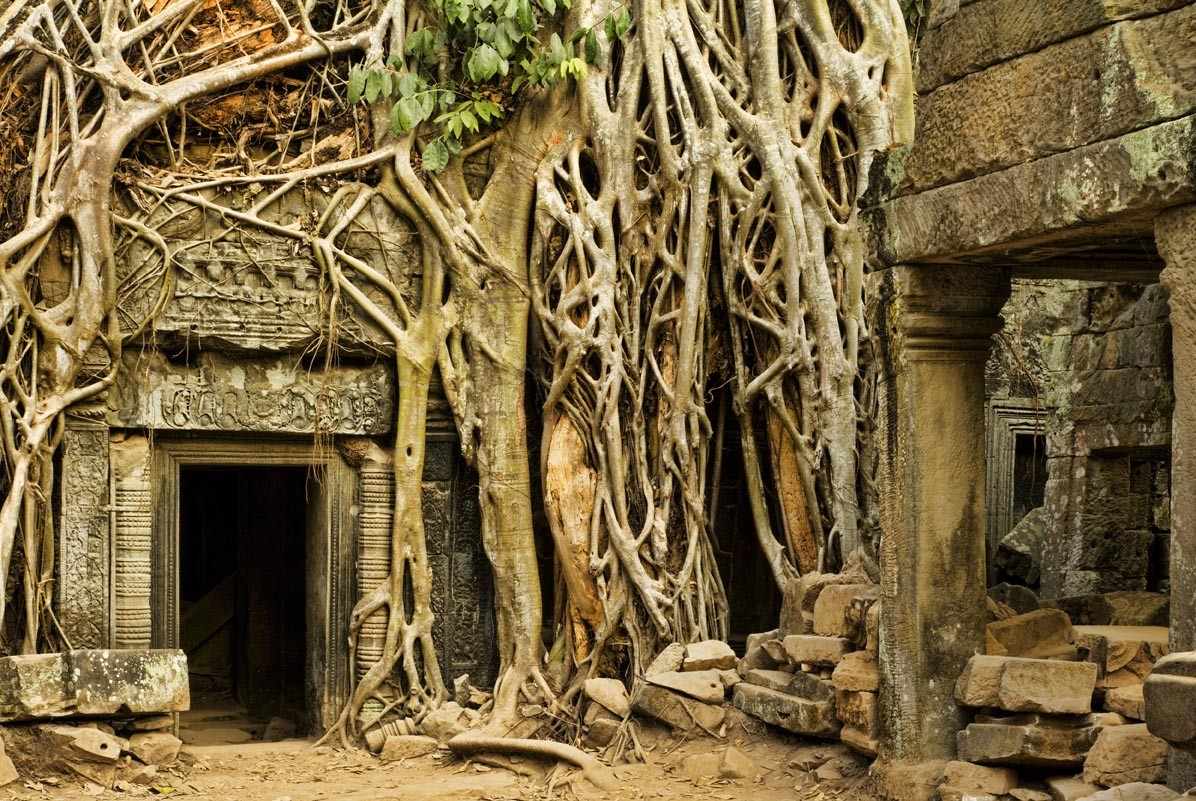
The Khmer kingdom was finally overrun by armies of the neighbouring Thai kingdom in the mid-15th century. Angkor was abandoned to the jungle and not known outside Cambodia until 1860, when a French naturalist, Albert Henri Mouhot, came across it by accident.
Consultant: Philip Parker