
Marine reptiles
Plesiosaurus
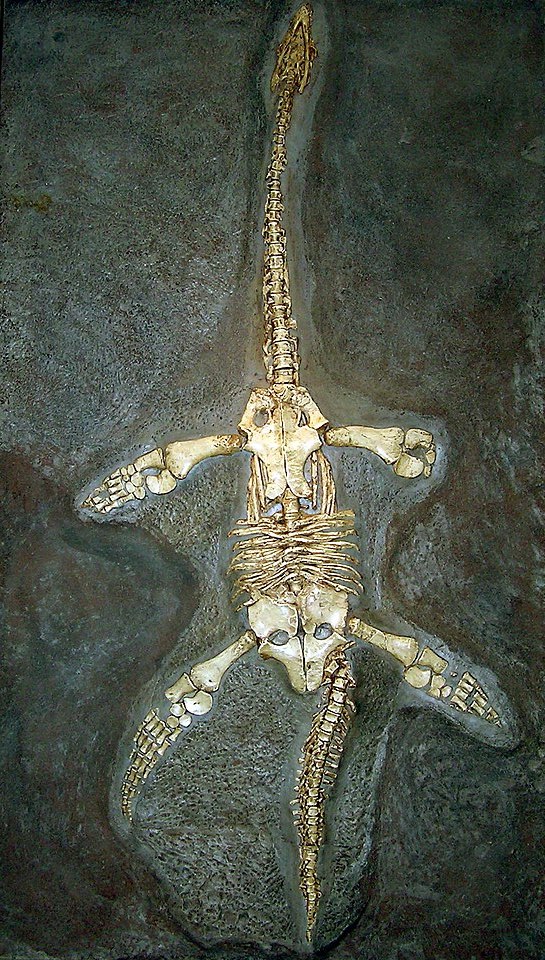
Plesiosaurus was a marine reptile that lived in the Early Jurassic Period. It gives its name to a wide range of related animals called the plesiosaurs. It had a short head, a long neck, a sturdy, bulky, finless body and a relatively short, tapering tail. Its skin was smooth, rather than scaly. It had long narrow flippers, each containing five internal fingers, made up of a number of smaller bones. There were many conical teeth, set in sockets. Plesiosaurus's large nostrils were on top of its head. They gave it a keen sense of smell, allowing it to detect prey from far off.

Fishing technique
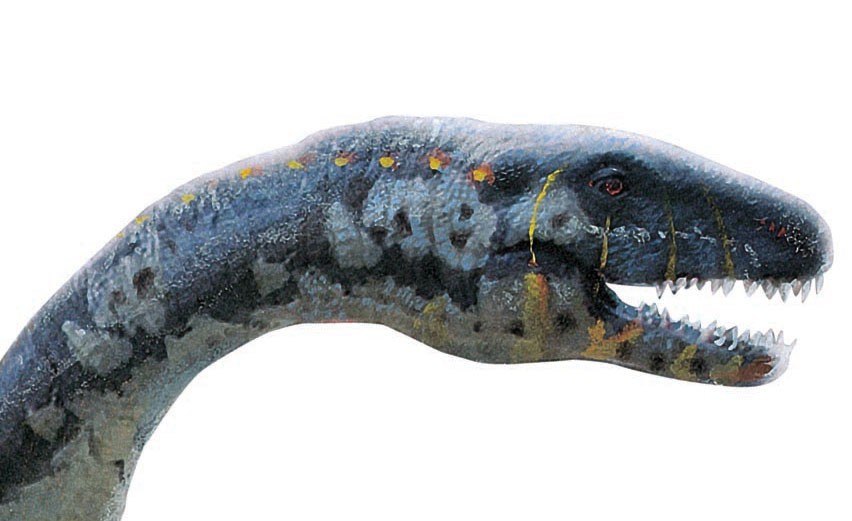
Plesiosaurus used its long neck to good effect, craning forward to snap up small marine creatures in its jaws. Its lower jaw and sharp, interlocking teeth worked well as a fish trap. Although its snout was short, its jaws opened extremely wide.
Propulsion
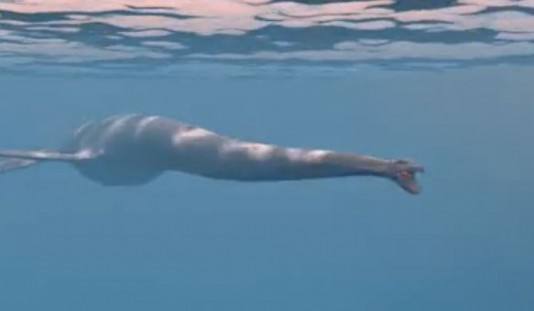
Palaeontologists once thought that plesiosaurs used their flippers like large oars in a back-and-forth motion to propel themselves through the water. Now it is thought that they worked them in the same way that a bird flaps its wings: with strong, steady, up-and-down strokes. The flippers’ structure is closer to that of modern penguins and sea turtles, which “fly” in this way.

Elasmosaurus
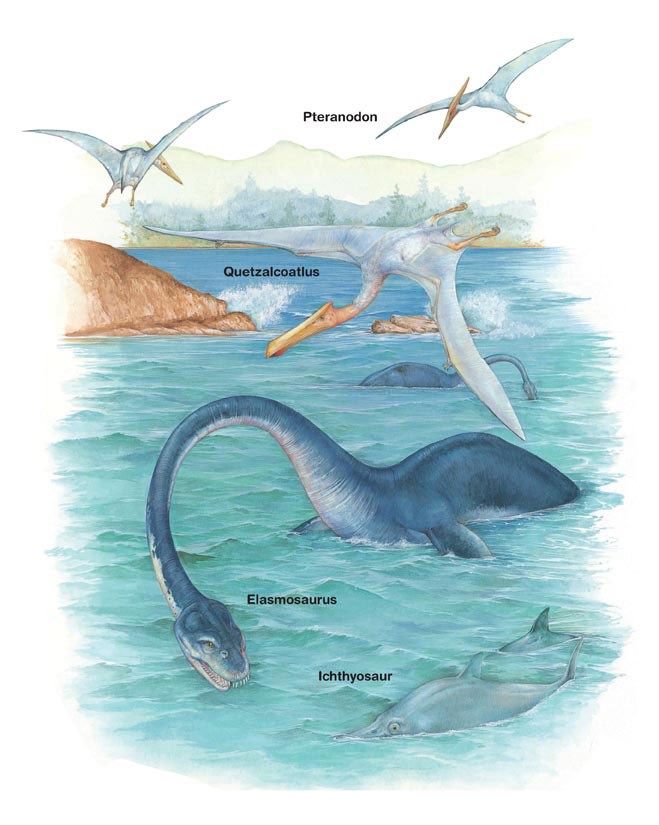
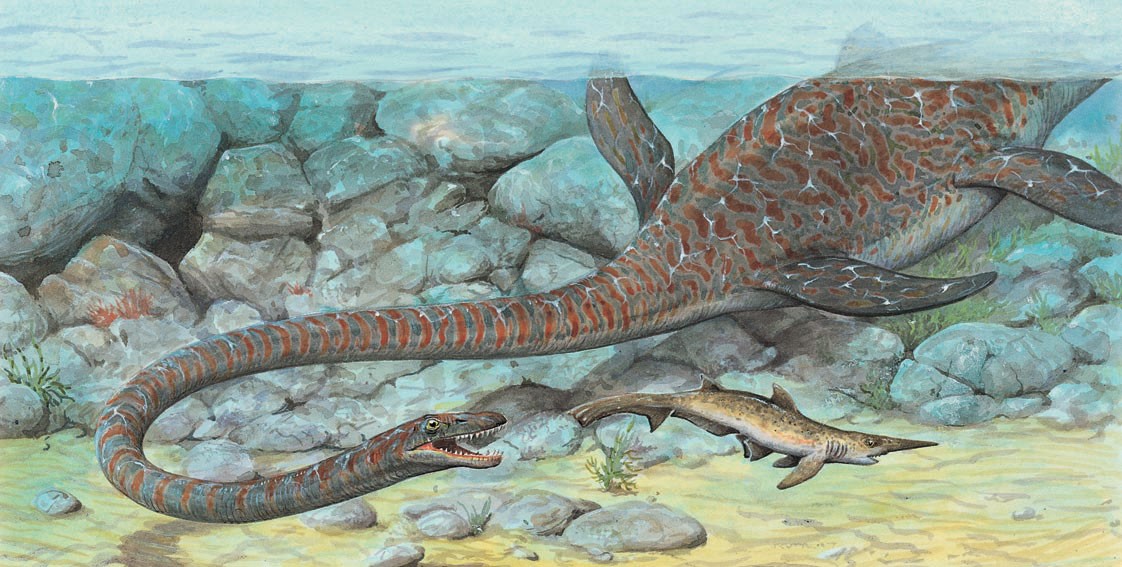
Elasmosaurus, a plesiosaur, had an extremely long neck: 8 metres out of a total length of 14 metres (26 feet out of 46 feet)—making it one of the longest-necked creatures ever to have lived. What did it use it for? It could have reached upwards to catch fish by surprise. Or it could have worked as a rudder, to change direction while chasing prey.
It was one thought Elasmosaurus could have raised its head high above the water to spot fish and other prey from a higher vantage point. Scientists now think it would probably have been impossible for any plesiosaur to do this. The structure of its bones would have prevented it from lifting its neck at such an angle. In any case, its neck and head were simply too heavy.
Is the Loch Ness
Monster a plesiosaur?
The Loch Ness Monster is thought by some to be a giant animal living in Loch Ness in the Scottish Highlands—although it is now widely regarded as a myth. Some believers suggested the Loch Ness Monster could have been a plesiosaur. Unfortunately, lakes are far too cold for such a large, cold-blooded animal to survive in. Appearances would also have been much more frequent than reported sightings of “Nessie” because of a plesiosaur's need to surface regularly to breathe.

Facts about Plesiosaurus
Pronunciation: PLEEZ-ee-oh-SAW-rus
Size: 5 m (16 ft) long
Where and when: Surface waters in seas off Europe, 200 million years ago (Early Jurassic)
Diet: Fish, squid, belemnites, cephalopods
Predators: Sharks and large pliosaurs such as Macroplata
Features: Keen sense of smell; wide jaws with interlocking teeth to act as a fish trap; a long neck for extra reach
Relatives: Other plesiosaurs, including Attenborosaurus, Macroplata, Muraenosaurus, Pistosaurus (Europe); Thalassomedon (North America); Elasmosaurus (Asia and North America)

Consultant: Chris Jarvis