
EASY READ Our world
What are fossil fuels?
Fossil fuels include coal, oil and gas. They are formed from the remains of living things that died millions of years ago. Planes, vehicles and power stations all give off exhaust gases from burning these fuels. These add billions of tonnes of carbon dioxide to the atmosphere, which contributes to global warming. Oil and gas are used as a fuel in power stations, cars, ships and aircraft, but they are also essential for many chemical industries.
Formation of coal
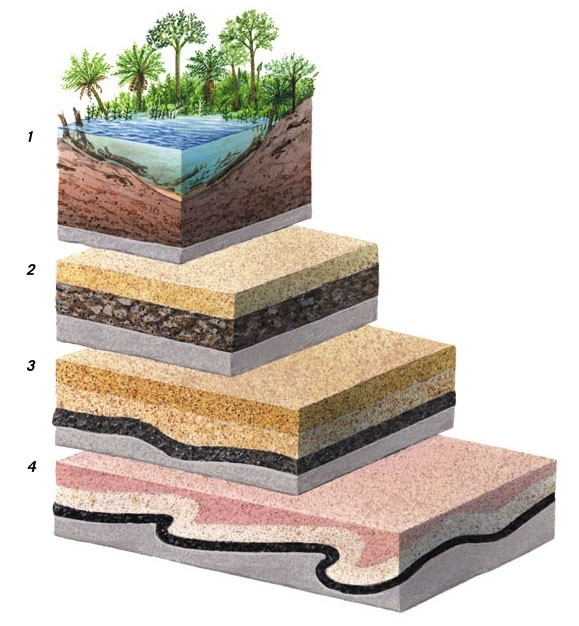
Coal began to form about 350 million years ago in the Carboniferous Period. At that time, vast areas of the Earth’s surface were covered with swamps where trees and giant ferns grew. When these plants died, they rotted down and gradually changed into a dark soil called peat (1). As the centuries passed, the peat was buried under layers of sand and mud (2).
As these layers pressed down more and more tightly on the peat, it eventually turned into hard, black, shiny rock: coal (3). Folding of these rocks has brought some coal layers close to the surface (4).
Coalmining

Today, much of the world’s coal can be reached only by mining it underground. The coal is found in layers called seams. Vertical shafts are drilled down to the level of the coal. A network of tunnels leads from the bottom of the shafts to the coal face.
Powerful coal excavating machines scrape the coal from the seam. The loosened coal falls on to a conveyor belt which carries it away from the seam. The coal is then brought to the surface in large containers.
Coal is still used in power stations around the world to produce electricity. Coke, a baked form of coal, is a smokeless fuel used in making iron and steel.

Oil and gas
Oil and gas come from the remains of tiny plants and creatures that lived in the oceans millions of years ago. These accumulated on the seabed and were buried under layers of sand and silt (1). The layers were gradually compressed into layers of rock (2). The heat action of bacteria changed the remains of the plants and creatures into crude oil, also known as petroleum, and natural gases.
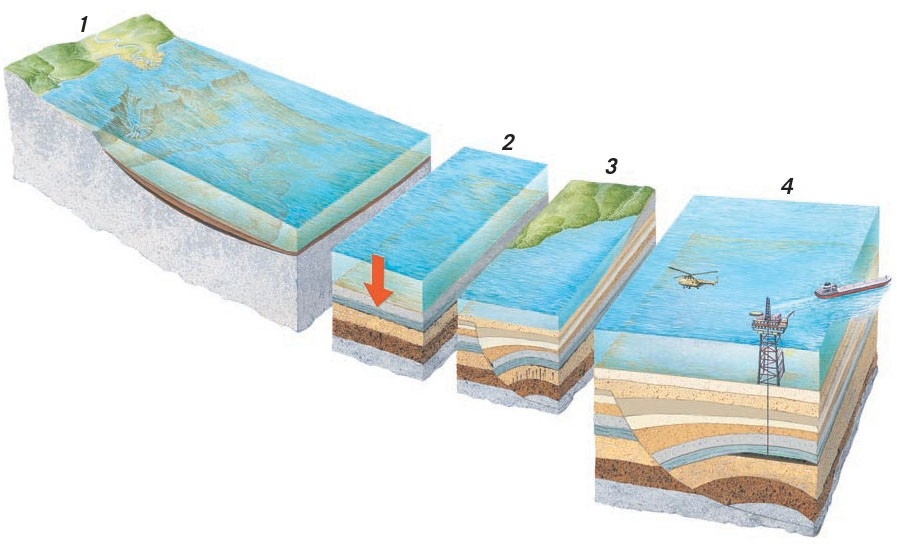
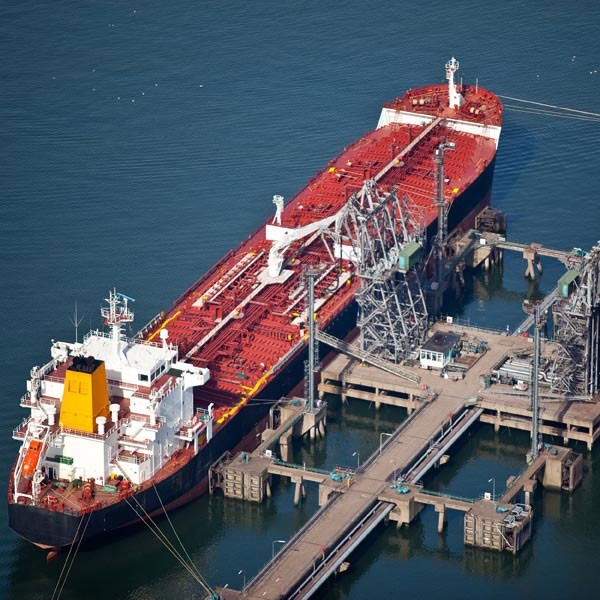
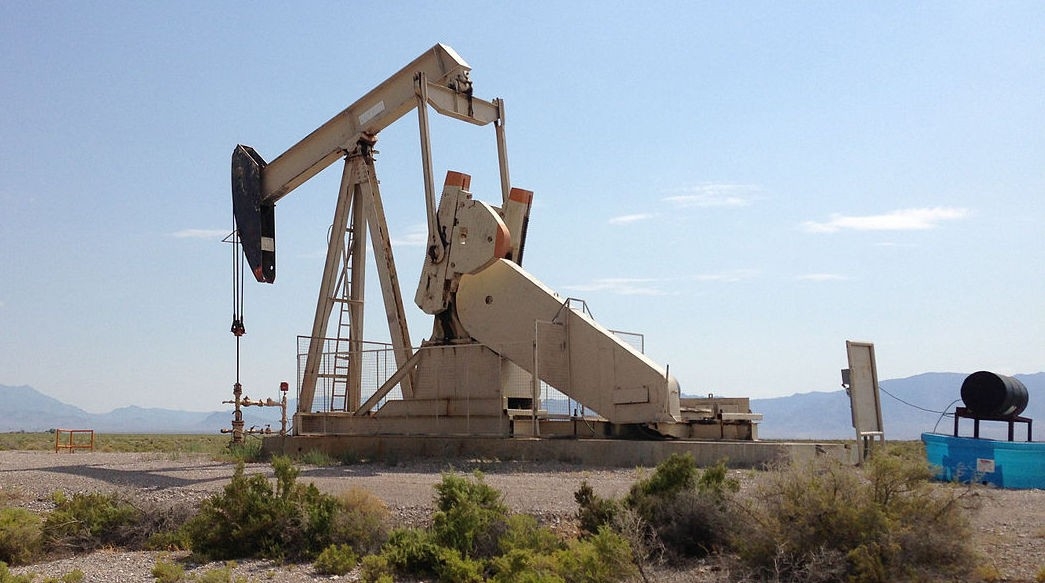
Over time, some oil becomes trapped underneath layers of hard rock, forming a well (3). Drilling through the rock may cause the oil to gush up to the surface, or it may need to be pumped up. The crude oil from the well is sent by pipeline or tanker to a refinery (4).

Oil platform
Oil under the seabed is mined using drills from an oil platform (oil rig). The structure may be fixed to the seabed, or it may float. Drilling equipment is fixed inside a derrick, a steel tower. The drill is made of lengths of pipe with a drill bit, a rotating head fitted with sharp "teeth", at the tip. The platform also has a helicopter landing pad.
Tar sands
Tar sands, also known as bituminous sands, are another source of crude oil. The sands are mixed with clay, water and a thick, sticky form of oil called bitumen or tar. It must be mined out of the ground, or made to flow into pipes by adding liquids to it.

Oil refinery
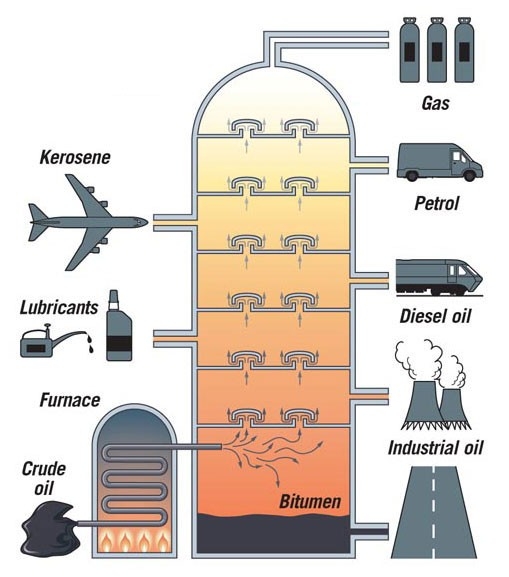
In a refinery, oil is separated into different substances by a process called distillation. The oil is boiled at the bottom of a huge tank called a fractionating tower. The gases that are formed float upwards. They cool and condense into liquids at different temperatures. Trays at different heights in the tower collect these liquids.
The distilled liquids are different forms of oil, such as petrol, kerosene and diesel oil. At the top of the tower, gas comes off. The thickest, heaviest products, such as bitumen (asphalt), which is used for making roads, sink to the bottom.
Natural gas
Natural gas consists mostly of methane. It is found in rocks underground, often close to crude oil seams and coal beds. It was produced by micro-organisms that lived in bogs and marshes millions of years ago. Natural gas is widely used for heating and cooking, generating electricity and as fuel for vehicles. It is also used in the manufacture of cattle feed, plastics and other chemicals.

Ready to find out more?
Here are some pages in other parts of Q-files you might like to explore:
Coal
Oil and gas