
EASY READ Our world

CITE
We have made every effort to follow citation style rules, but there may be some minor differences. If in doubt, please refer to the appropriate citation style manual.
EASY READ How many people live on our planet?. (2026). In Q-files Encyclopedia, Geography, EASY READ Our world. Retrieved from
https://www.q-files.com/geography/easy-read-our-world/easy-read-how-many-people-live-on-our-planet
"EASY READ How many people live on our planet?." Geography, EASY READ Our world, Q-files Encyclopedia, 1 Apr. 2026.
https://www.q-files.com/geography/easy-read-our-world/easy-read-how-many-people-live-on-our-planet.
Accessed 13 Sep. 2026.
EASY READ How many people live on our planet? 2026. Geography, EASY READ Our world. Retrieved 13 September 2026, from
https://www.q-files.com/geography/easy-read-our-world/easy-read-how-many-people-live-on-our-planet
Geography, EASY READ Our world, s.v. "EASY READ How many people live on our planet?," accessed September 13, 2026.
https://www.q-files.com/geography/easy-read-our-world/easy-read-how-many-people-live-on-our-planet


How many people live on our planet?
The world’s population increased massively during the 20th century. In 1900 it stood at 1.6 billion. By the end of the century, it topped 6 billion. It passed the 7.5 billion mark in 2017, and now (2025) stands at 8.2 billion. Although population growth is slowing, the population is still increasing at a rate of 79 million people a year. According to the United Nations, the world's population may be greater than 10 billion people by the 2060s.


Population growth
Rapid population growth began in about 1800 with the Industrial Revolution. Most of the increase was in Europe and North America because people received better food and health care. In 1900 most of the world’s largest cities were in these continents.
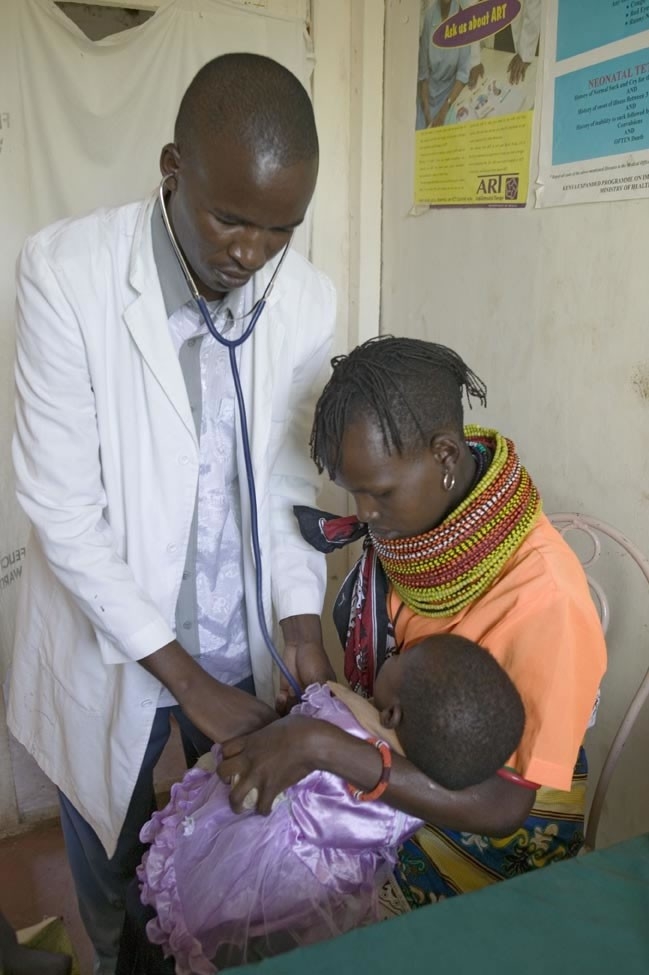
In the 20th century, most of the growth took place in Africa, Asia and Central and South America. Better health care in these continents today means that fewer children die of disease, and fewer women die in childbirth.
Countries in the developing world now have large populations of young people. Half of India’s population, for example, is under 25 years old. These people are having children of their own, so the number of births remains high. Regions such as Europe have ageing populations, and there are far fewer children being born. More than 24% of Italy's population, for example, is over 65.

Migration
Migration is the movement of people from one region to another in order to settle. The term migration usually refers to movement between one country and another, but sometimes it is used to mean movement within countries, such as from the countryside to cities. People who enter a new territory are called immigrants, while on leaving their home territory they are called emigrants. In 2020, some 281 million people lived in a country other than their country of birth. This is because they had migrated from one country to another.

Most people move in search of a better job or higher wages. But people also move because of natural disasters, war and religious or racial persecution. These people are often called refugees.
Urbanization
Urbanization is the term given to describe the movement of population from rural to urban areas. The growth of industry from the late 18th century onwards led to migration on a large scale and the rapid growth of cities. Some of these cities were once small towns or villages. This process began first in Europe and North America.


By the end of the 20th century, urbanization had slowed in the developed world, but was rapidly increasing in the developing world. It continues to do so. People move to the cities to earn more money than they could as farmworkers. Today, more than half the world's total population live in cities. Some of these cities have grown into giants. In Asia the built-up areas of, for example, Delhi, Jakarta, Dhaka, Shanghai, Guangzhou, Manila and Ho Chi Minh City, are each home to more than 20 million people.
Shantytowns
Many developing countries are unable to provide jobs or housing for the huge numbers of migrants from the countryside. This leads to severe overcrowding and the growth of slums. Shantytowns are commonly found on the edges of cities in Latin America, Africa and South and Southeast Asia. They have grown as people, unable to find or afford somewhere to live, build their own homes, constructing shelters and shacks from any material they can find.


Dormitory towns
In some parts of the world, many people move away from cities to the countryside—the opposite of urbanization. Some people in wealthier countries do this because they find villages or smaller towns more attractive places to live. Good transport links allow them to get to work easily from what are called "dormitory towns" or "bedroom suburbs".
Consultant: Nicholas Harris
Ready to find out more?
Here are some pages in other parts of Q-files you might like to explore:
Population
Urbanization
Cities
Population A-Z
pics


Without in any way limiting Q-files Ltd’s exclusive rights under copyright, any use of this publication to “train” generative artificial intelligence (AI) technologies to generate text is expressly prohibited. Q-files Ltd reserves all rights to license use of this work for generative AI training and development of machine learning language models.