
EASY READ Our world

CITE
We have made every effort to follow citation style rules, but there may be some minor differences. If in doubt, please refer to the appropriate citation style manual.
EASY READ What is renewable energy?. (2026). In Q-files Encyclopedia, Geography, EASY READ Our world. Retrieved from
https://www.q-files.com/geography/easy-read-our-world/easy-read-what-is-renewable-energy
"EASY READ What is renewable energy?." Geography, EASY READ Our world, Q-files Encyclopedia, 1 Apr. 2026.
https://www.q-files.com/geography/easy-read-our-world/easy-read-what-is-renewable-energy.
Accessed 13 Sep. 2026.
EASY READ What is renewable energy? 2026. Geography, EASY READ Our world. Retrieved 13 September 2026, from
https://www.q-files.com/geography/easy-read-our-world/easy-read-what-is-renewable-energy
Geography, EASY READ Our world, s.v. "EASY READ What is renewable energy?," accessed September 13, 2026.
https://www.q-files.com/geography/easy-read-our-world/easy-read-what-is-renewable-energy


What is renewable energy?
Renewable energy comes from natural resources that are constantly replenished. These resources include rivers, oceans, wind, sunlight, geothermal heat (heat from inside the Earth) and biomass (material from living things such as plants). Unlike fossil fuels—coal, oil and natural gas—renewable energy resources cannot be used up. They are always available. Renewable energies are used for generating electricity, heating buildings and water, cooking and powering vehicles.
Why use renewable energy?
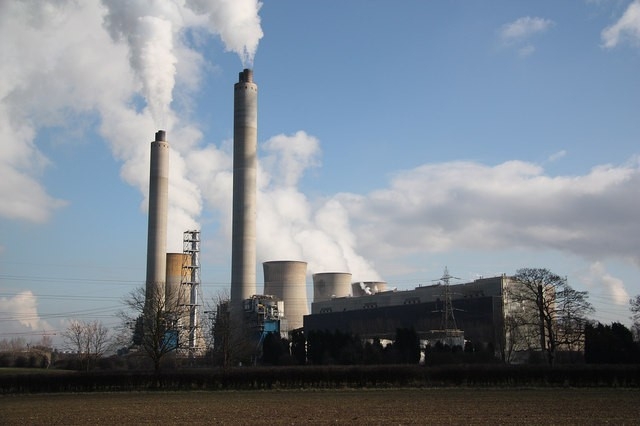
Using fossil fuels in vehicles and power stations adds billions of tonnes of carbon dioxide to the atmosphere, contributing to global warming. To avoid catastrophic climate change, alternatives to fossil fuels need to be found—and fast. Burning fossil fuels also creates air pollution. Many people are also concerned by the radioactive waste created by nuclear power.
Reserves of fossil fuels are being used up and may soon run out. These fuels are also not spread evenly across the world. Those countries that lack them have to pay the high costs of importing them. Many renewable energy technologies, such as wind turbines or hydropower, can be used anywhere, including in developing countries.

Hydropower
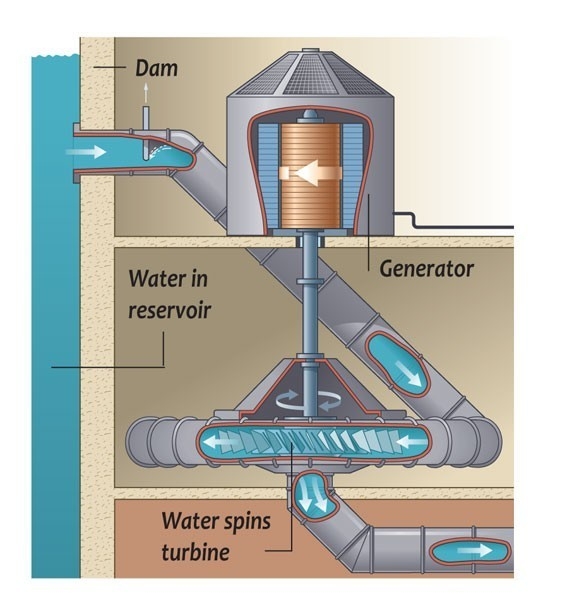
Hydropower, which uses the energy of falling and running water, is used to generate electricity. In a hydro-electric power station, the water from a river is stored in a reservoir behind a dam. Some of the water from the reservoir is allowed to flow out through pipes into the turbines inside a power station. A turbine has blades that are spun by the force of the water. The turbine is connected to a generator, which produces an electric current.
Tidal power

The energy of tides, the rise and fall of sea levels, can be used to generate electricity. As tides sweep in and out, especially in long estuaries (the wide stretches of rivers where they flow into the sea) the water flows with great power. Tidal stream generators are machines that use this power to turn turbines. Tidal barrages make use of dams across the full width of an estuary. At high tide, water flows in behind the dam. At low tide, this water is allowed to flow out, spinning turbines as it does so.
Wave power
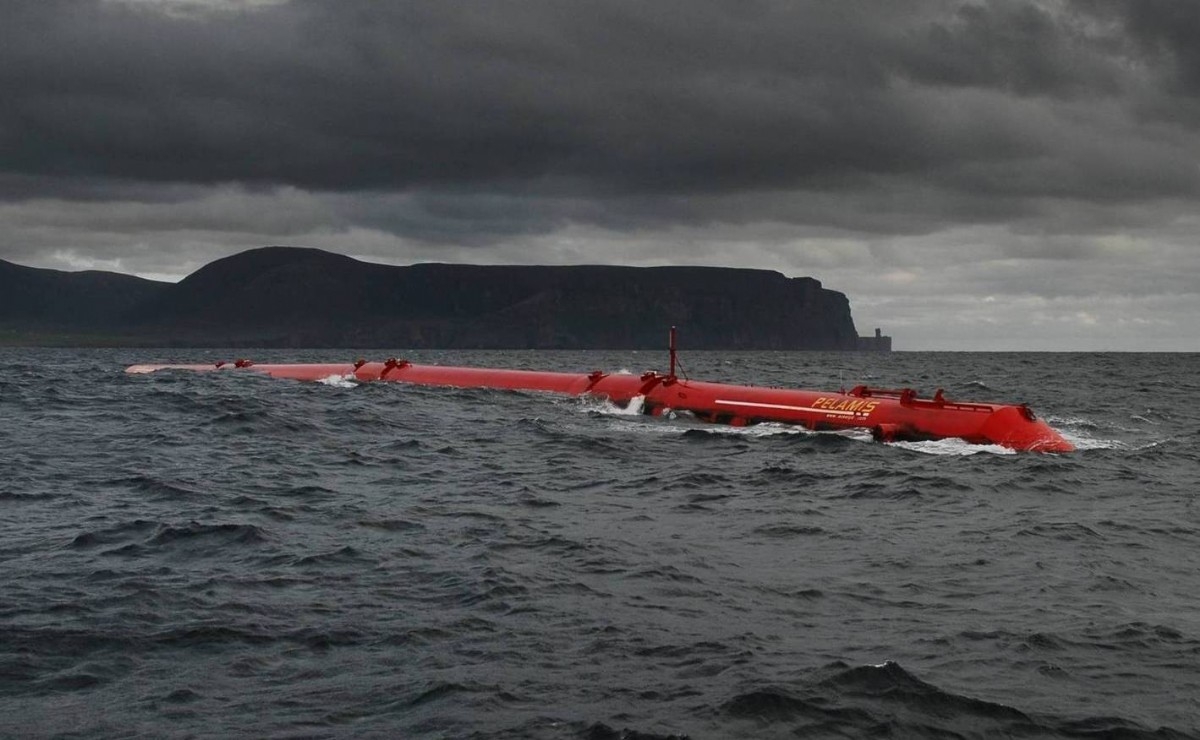
Wave power captures the energy of ocean waves and uses it to generate electricity. Some wave power devices float on the water's surface. The rise and fall of the waves drives pumps, which are linked to generators.
Wind power

In the future, all the world’s electricity could be produced by wind power. For this to happen, wind farms would need to be built over vast areas, particularly on uplands and in the sea, where the wind is strongest. Wind farms consist of up to several hundred turbines. The wind spins a rotor, which drives an electrical generator.
Solar power
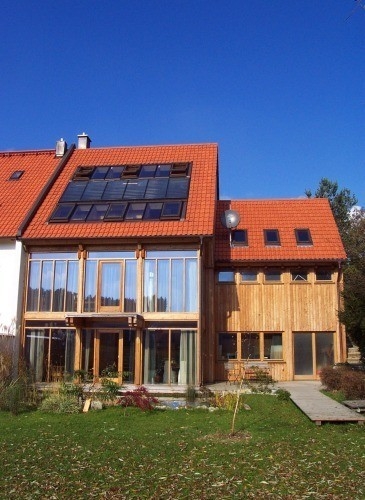
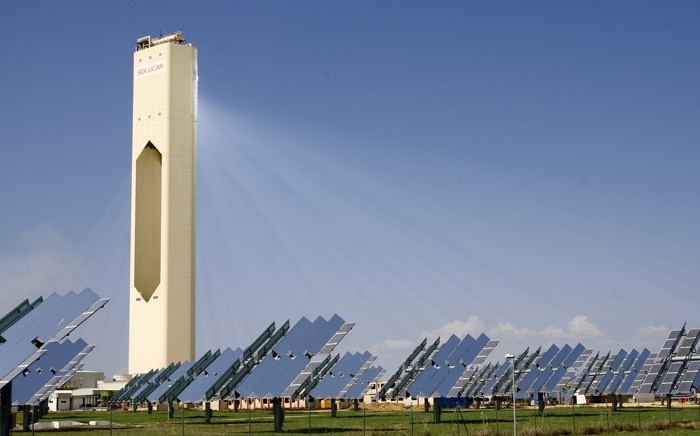
Solar power converts sunlight into energy. Photovoltaic cells, also called solar cells, convert light into electric current. Photovoltaic cells are often installed on roofs.
Concentrated solar power is used in sunny regions to generate electricity in power plants. This method uses mirrors or lenses to focus sunlight into a small area, making it very hot. This heats water to drive a turbine, which is connected to an electrical generator.
Geothermal energy
Geothermal energy is heat generated and stored inside the Earth. It is commonly used in areas where hot rocks underground are close to the Earth’s surface. These are places where there is frequent volcanic activity, such as Iceland, New Zealand and the Philippines. Electricity is generated by using the geothermal heat to boil water, creating steam which turns turbines.

Biomass
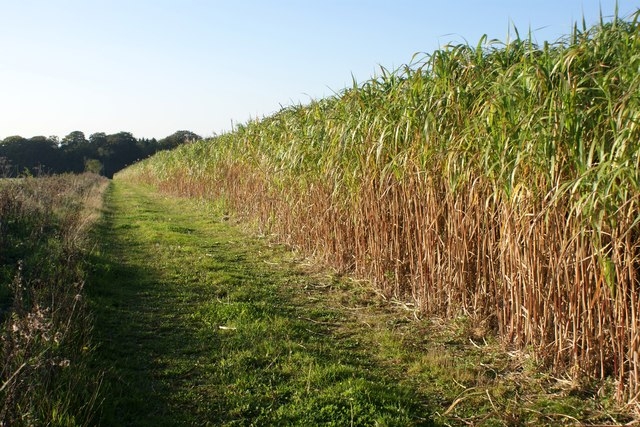
There are five main types of biomass used for fuel: wood, crops grown especially for fuel, farming waste, food waste and industrial waste. Some biomass is turned into pellets or cubes for burning. Although biomass fuels are less polluting than fossil fuels, they do release some carbon dioxide when burnt.
Biofuels
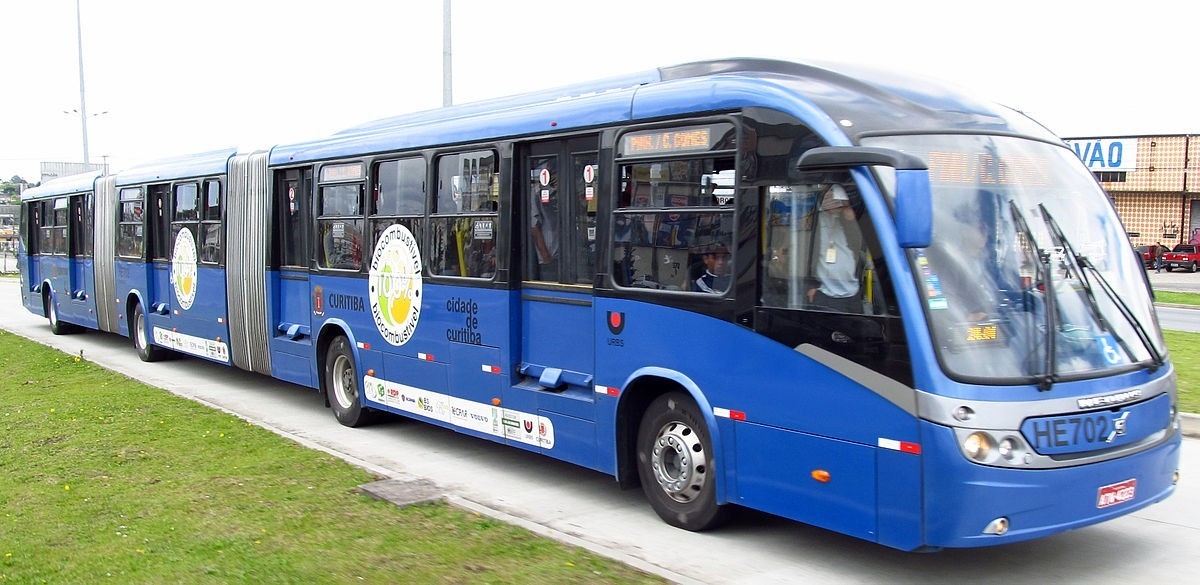
Biomass can be converted into biofuels, which can be used to power vehicles. Usually they are mixed with petrol or diesel to reduce harmful emissions. They can be made out of crops such as maize, sugar cane, soya beans or rapeseed. Gas biofuels or biogas is produced from crops, waste or sewage. It can be produced at landfill sites.
Waste-to-energy
Burning is the commonest way of converting waste products into energy. After the materials have been collected, and recyclables and hazardous materials removed, the waste is burned in a waste-to-energy plant. This heats water to create steam, which powers turbines linked to electrical generators.

Waste-to-energy plants cause lesser air pollution than coal-fired power stations, but more than gas-powered power stations.
Ready to find out more?
Here are some pages in other parts of Q-files you might like to explore:
What is electricity and how is it made?
Electrical power
Electric generators and motors
Renewable energy
Natural resources
Global warming
pics
Without in any way limiting Q-files Ltd’s exclusive rights under copyright, any use of this publication to “train” generative artificial intelligence (AI) technologies to generate text is expressly prohibited. Q-files Ltd reserves all rights to license use of this work for generative AI training and development of machine learning language models.