
Ancient Greece
Trojan War
The Trojan War was fought between the Greeks and the city of Troy in Anatolia (modern Turkey), probably some time in the 1200s BC. A war, or series of wars, between the Mycenean Greeks and the Hittites, the people who inhabited the region of Troy at the time, may well have taken place, but the story of the Trojan War as told by the poet Homer in the Iliad (the Greek name for Troy was Ilion, its Latin name Ilium) and composed during the 8th or 7th century BC, is more myth than reality.
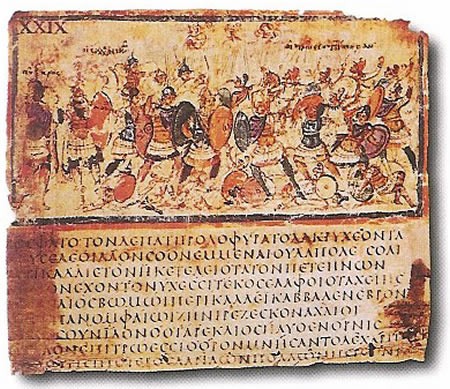
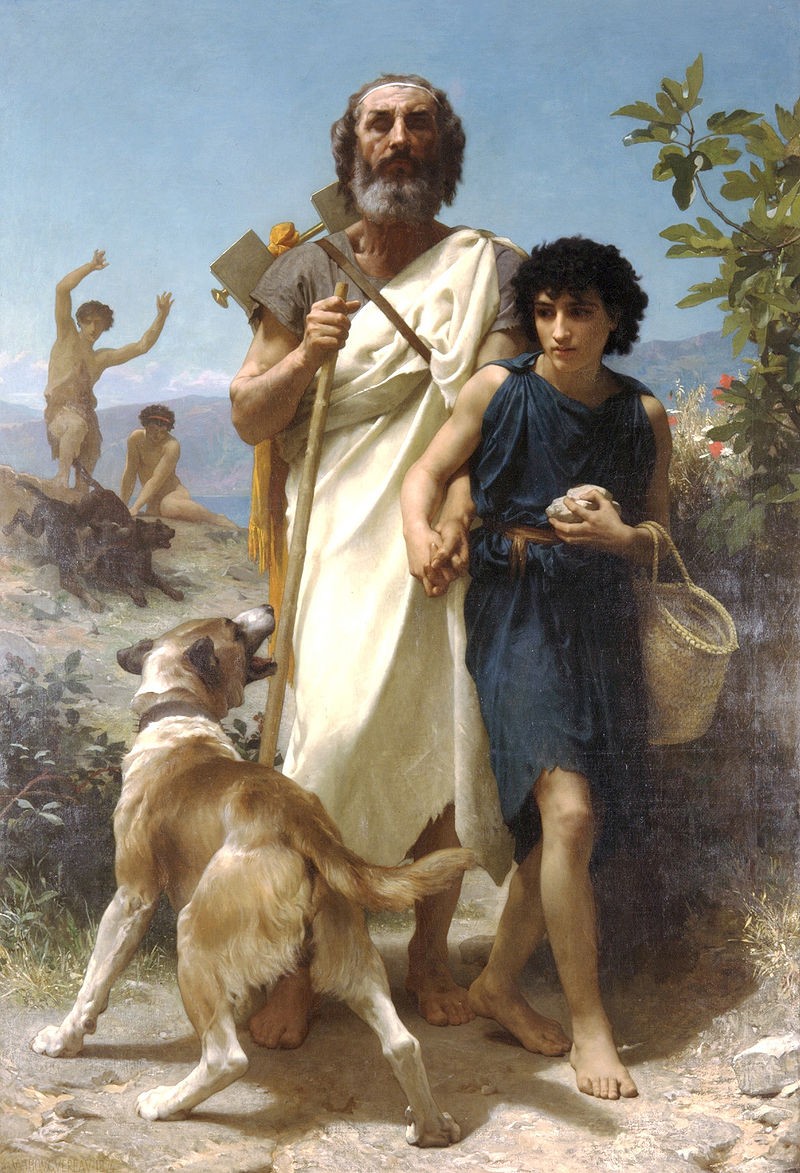
Homer
Homer was the author of the Iliad and the Odyssey, two epic poems which are central works of Greek literature. They were probably compiled around the late 8th or early 7th century BC, although it is likely that the poems were first recited orally before being written down centuries later. Very little is known about who "Homer" was—whether he was indeed an individual man or woman, or even a group of people, all of whom contributing to the creation of the poems over a period of time.
The most popular description of Homer is as a blind bard (a professional storyteller) from Ionia, a region of western Anatolia (present-day Turkey), but there is no historical evidence for this.
How the war started
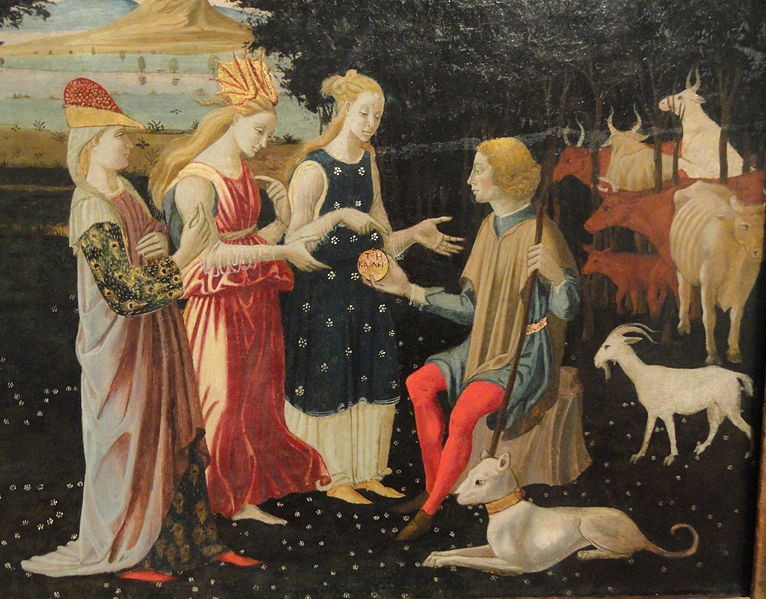
Helen, wife of Menelaus, King of Sparta, was carried off by the Trojan prince Paris. She was his prize for choosing Aphrodite as the most beautiful goddess in competition with Athena and Hera. Menelaus and his brother Agamemnon, King of Mycenae, vowed to win her back—and avenge the Trojans by destroying their city.
Gods and heroes
A coalition of forces from a number of Greek states, including Athens, Sparta, Boeotia, Argos and Corinth, were led by Agamemnon. Among the Greek warriors were some special heroes, men who had a divine mother or father and a mortal other parent. These heroes included Achilles, Odysseus, Ajax, Diomedes, Patroclus and Idomeneus.
The Greeks were helped by several of the gods, including Athena, Poseidon, Hera and Hermes. Each god had their favourites, and they often protected them by deflecting spears or even spiriting them away during the heat of battle.
The Trojan army was led by King Priam, and had assistance from numerous allies among nearby kingdoms. The Trojans had their semi-divine heroes, too, including Hector, the son of Priam, Aeneas, Sarpedon and Rhesus of Thrace. The Trojans also received help from the gods, chief among whom were Apollo, Aphrodite and Ares.
The siege of Troy
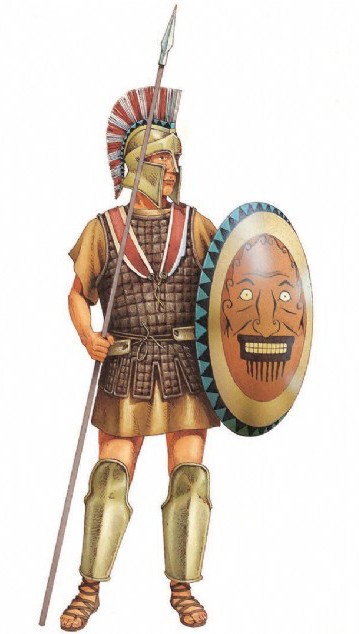
Most of the Trojan War consisted of one long siege, lasting 10 years. The city was able to resist the invaders because of its strong fortifications, said to have been built by the gods Poseidon and Apollo. Battles were also fought outside the city walls on the plains between Troy and the Aegean Sea, mostly between footsoldiers using spears and swords and protected by shields, armour and helmets. The most significant battles took place during the final year of the siege, and it is these that are described in Homer’s Iliad.

Single combat
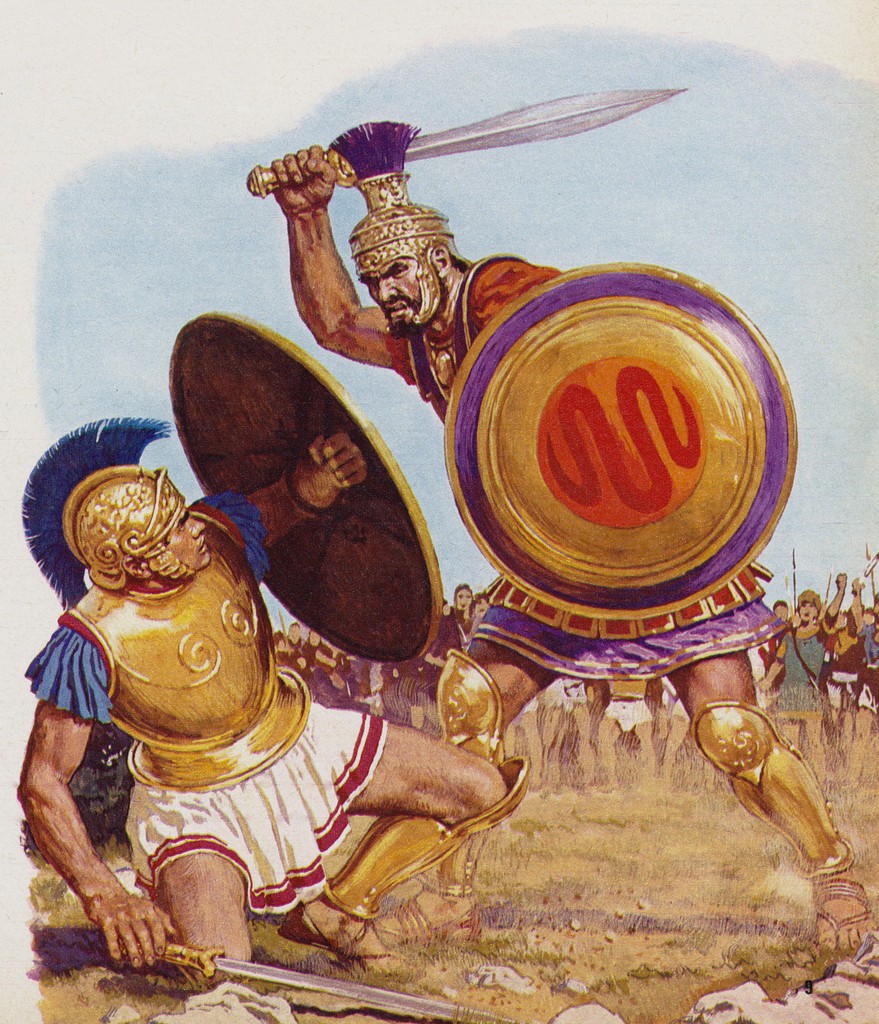
Menelaus offered to fight Paris in single combat. Whoever won would win the war for their side. They drew lots to decide who would have first throw with their spear. Paris threw first but his spear rebounded harmlessly off Menelaus’s shield. The Greek king then threw his weapon, which narrowly missed striking Paris. Menelaus then followed up with his sword and, when that shattered in pieces, he grabbed Paris’s helmet and began to drag him along the ground. Aphrodite, however, intervened, breaking Paris’s helmet strap and spiriting him away in a thick mist.
Two great heroes, Ajax for the Greeks and Hector for the Trojans, also fought in single combat. They hurled rocks at one another before drawing swords. Neither gained an advantage and the two mighty warriors withdrew with honour—even exchanging gifts.

The death of Patroclus
Achilles was the Greeks' greatest warrior—but he sat out most of the war. Agamemnon had stolen his prize, Briseis, and so Achilles refused to fight. With the Trojans starting to gain the upper hand, Agamemnon made an appeal to Achilles with promises of riches to fight once more, but Achilles could not be persuaded. His friend Patroclus then asked for permission to wear Achilles’ armour and lead his Myrmidon warriors into battle himself. Seeing the Greek ships already set alight, Achilles reluctantly agreed, but told Patroclus not to pursue the enemy to the walls of Troy.
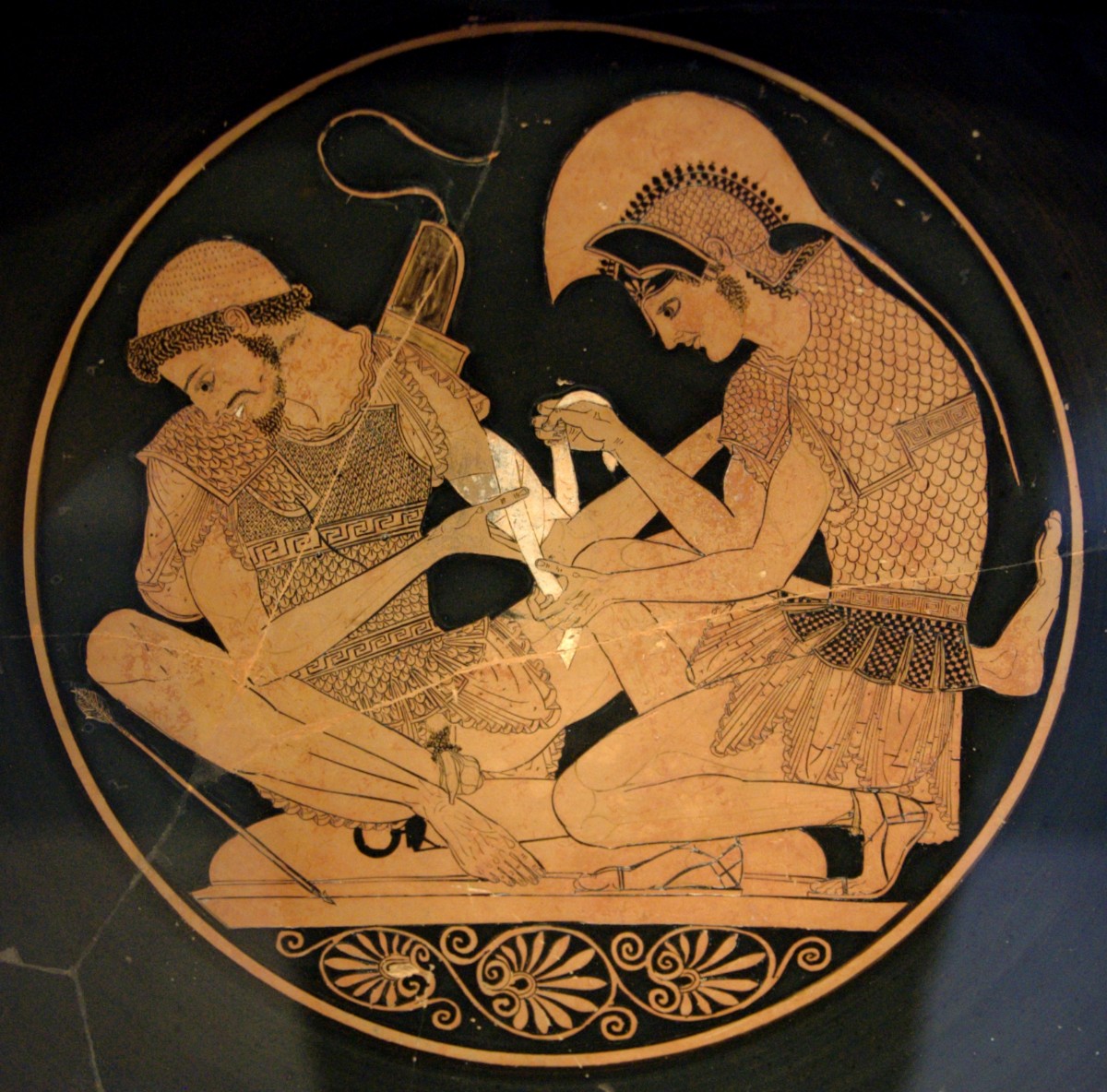
Patroclus was successful at first, forcing the Trojan armies back. But he ignored Achilles’ advice and carried the fighting on towards Troy. Apollo intervened, stripping his armour from his body and shattering his weapons. Hector then killed Patroclus with his spear.
Achilles' revenge
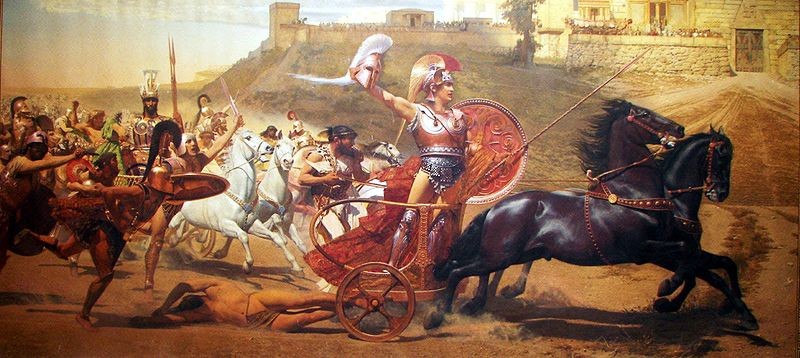
When Achilles found out what had happened to Patroclus, he swore to take revenge on Hector and the Trojans. Immediately returning to battle, Achilles routed the Trojans, who fled in panic. Hector initially stood firm, but Achilles chased the Trojan prince three times around the city walls, finally stabbing him in the throat. Achilles then tied Hector’s body, stripped of armour, to his chariot and dragged it back to the Greek camp in full view of Hector's father, Priam, who was watching from the city walls.
Priam later entered the Greek camp in disguise and begged Achilles to return the body so he might be given a proper burial. Achilles gave his consent.

The death of heroes
Achilles was eventually killed by Paris. He shot an arrow which was guided by Apollo to his only weak spot, his heel. Odysseus and Ajax squabbled over who should have the hero’s armour. When he lost out on the prize, Ajax, driven mad by disappointment, slaughtered a herd of sheep he thought were Greeks. He then fell on his sword.
The Trojan horse
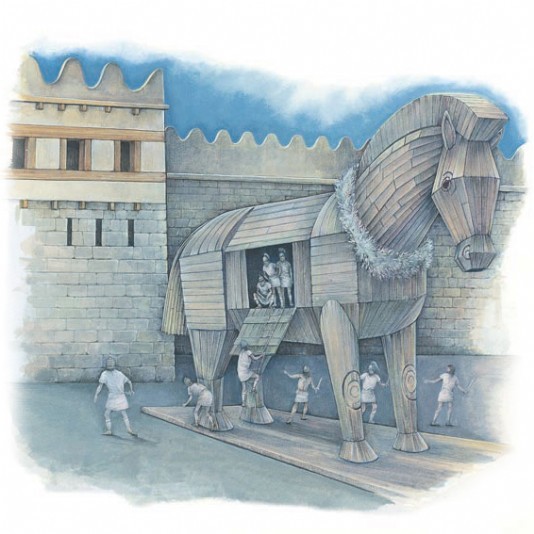
Inspired by Athena, Odysseus thought up a clever idea to get a small number of men inside the walls of Troy. Pretending to give up their fight, the Greeks sailed away, leaving behind a mysterious offering to the Trojans: a gigantic wooden horse. Thrilled with their apparent victory, Trojans wheeled the horse inside the city walls. But while the inhabitants of Troy were enjoying their drunken celebrations, some Greek soldiers concealed inside the horse silently climbed out. They then threw open the city gates for the returning Greek army, and the city was sacked. The population was slaughtered; of the Trojan heroes, only Aeneas escaped alive. Helen was reunited with her husband, Menelaus.
The gods punished the Greeks for their merciless attack on Troy by sending storms to wreck their ships. Those who who did make it back to their homeland faced further misfortune.
Discovering Troy
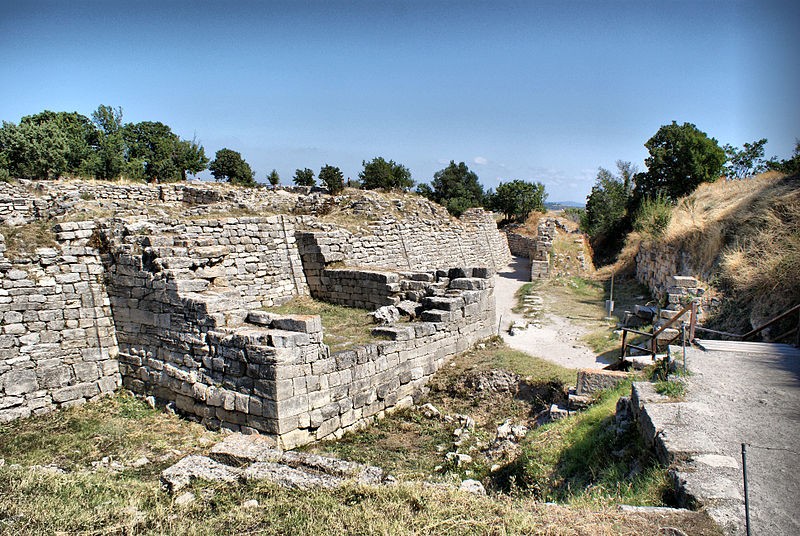
The German archaeologist Heinrich Schliemann (1822–1890) decided to use the evidence in Homer’s poems to search for Troy. In 1871 he discovered the remains of what he believed to be Troy near the Dardanelles in Turkey.
In fact, several cites, built one on top of the other, were discovered at the site. One, known to archaeologists as Troy VIIa (c. 1300–1240 BC), is the most likely candidate for the besieged city of Homer’s Trojan War. It had thick walls with several towers and was surrounded by a rock-cut ditch. Weapon finds, along with evidence of burning and at least partial destruction, suggest that the city had been involved in a conflict leading to its fall, just as in Homer’s story.
Consultant: Philip Parker