
EASY READ British history
When did the Romans conquer Britain?
For almost 400 years, Britain was part of the Roman Empire. The province was governed from the capital, Londinium (London). Roman soldiers put down rebellions and defended the country from invasion. Local people carried on worshipping their own gods, but also joined in the worship of the Roman gods and emperors.


Roman invasions
In 55 BC, Celtic tribes from Britain sent men to fight with the Gauls in France against the invading Roman army of Julius Caesar. Caesar decided to punish them. He invaded Britain twice. The second time, he pushed the British forces back to north of the River Thames.
Rome then largely forgot about Britain until Claudius became emperor in AD 41. Claudius wanted a military victory, so in AD 43 he decided to send a large army to conquer Britain. The Romans landed in Kent. They then marched north across the Thames and on to Colchester. Here they defeated the powerful ancient British tribe, the Catuvellauni. After that, they gradually took over the whole of England and Wales.
Roman London
Soon after their conquest, the Romans founded a town at a crossing point on the River Thames. Built on the north bank of the river, it was called Londinium. The new town had a large amphitheatre for games and gladiator fights, an open space (forum) for public gatherings, markets, baths, temples and a number of other grand buildings. A bridge connected the town to the south bank of the Thames, while, later, a 6-metre (20-foot) high wall protected the city to the north. The remains of the wall roughly form the boundary of the City of London today.


Hadrian’s Wall
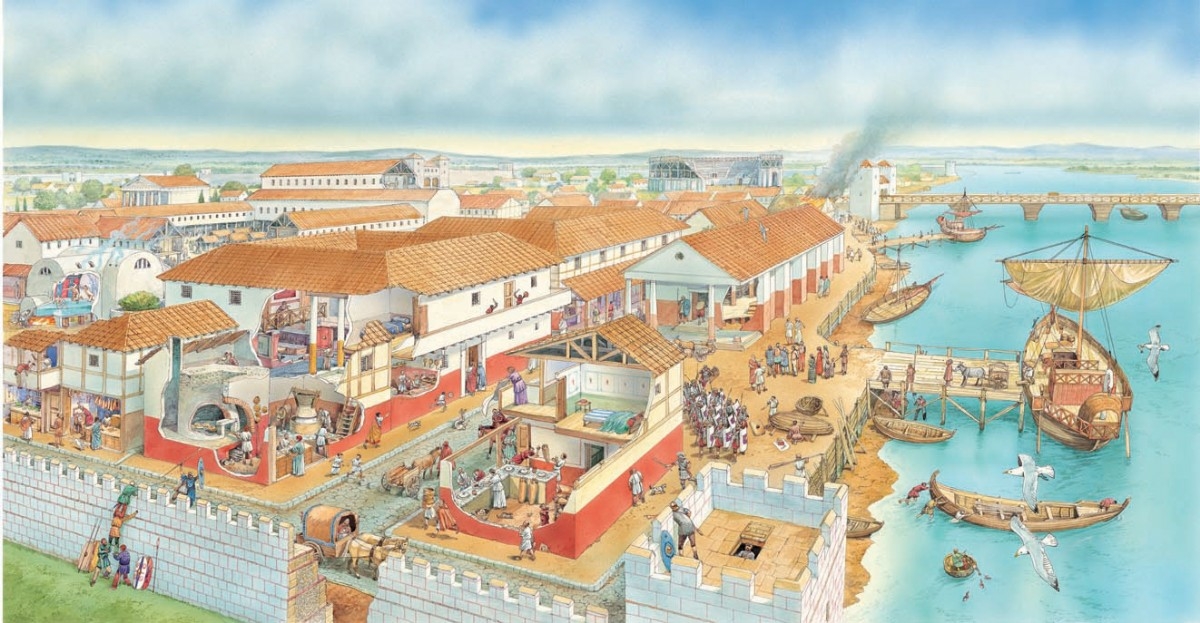
In AD 122, Emperor Hadrian ordered the construction of a long wall along the northern border of Roman England. No one knows why it was built, but it allowed the Romans to control the movement of people who lived in the far north of its vast empire. The wall, which stretches from the Irish Sea to the North Sea, was 117 kilometres (73 miles) long, 3 metres (10 feet) wide and up to 6 metres (20 feet) high. It was built mainly of stone. Soldiers manned the forts and watchtowers along its length.
Roads and buildings
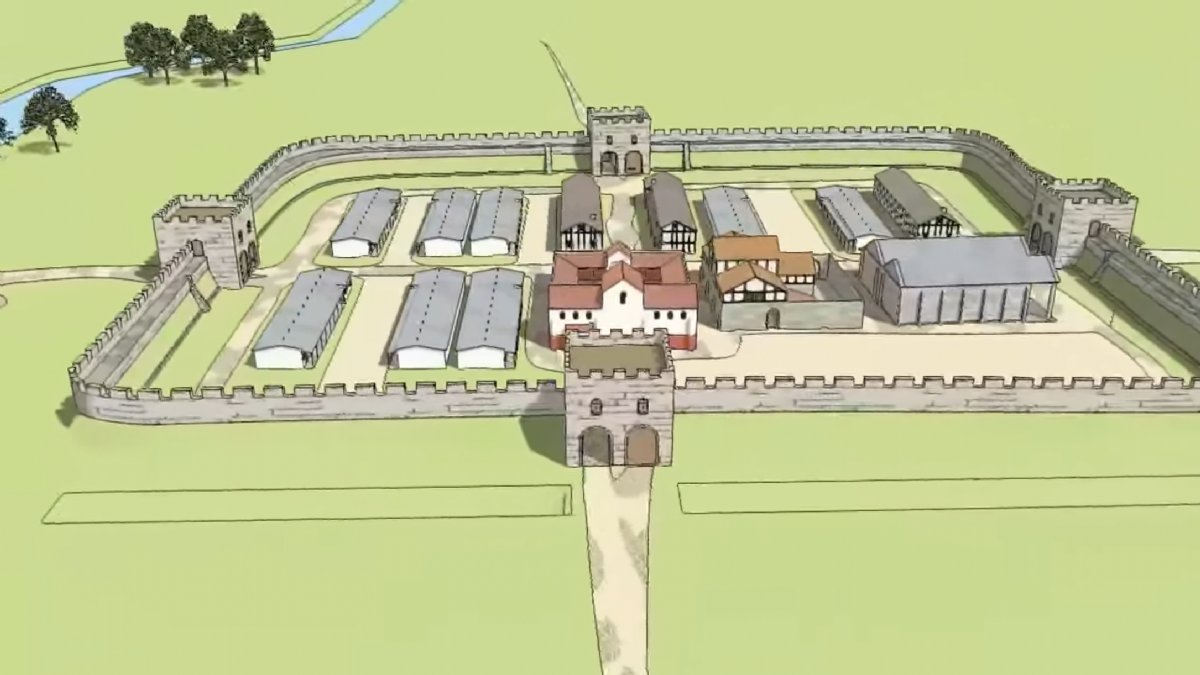
The Romans built straight, paved roads across the British countryside. These allowed their soldiers to march quickly from place to place and in all seasons.
The Romans also built many new towns. Besides Londinium, these included Eboracum (York), Lindum (Lincoln), Deva (Chester) and Verulamium (St Albans). All had theatres, temples, baths and other fine buildings laid out in a grid pattern. Rich Romans built luxury villas in the countryside. In Bath, the Romans constructed a large building to house the hot springs that still flow today.

Boudicca


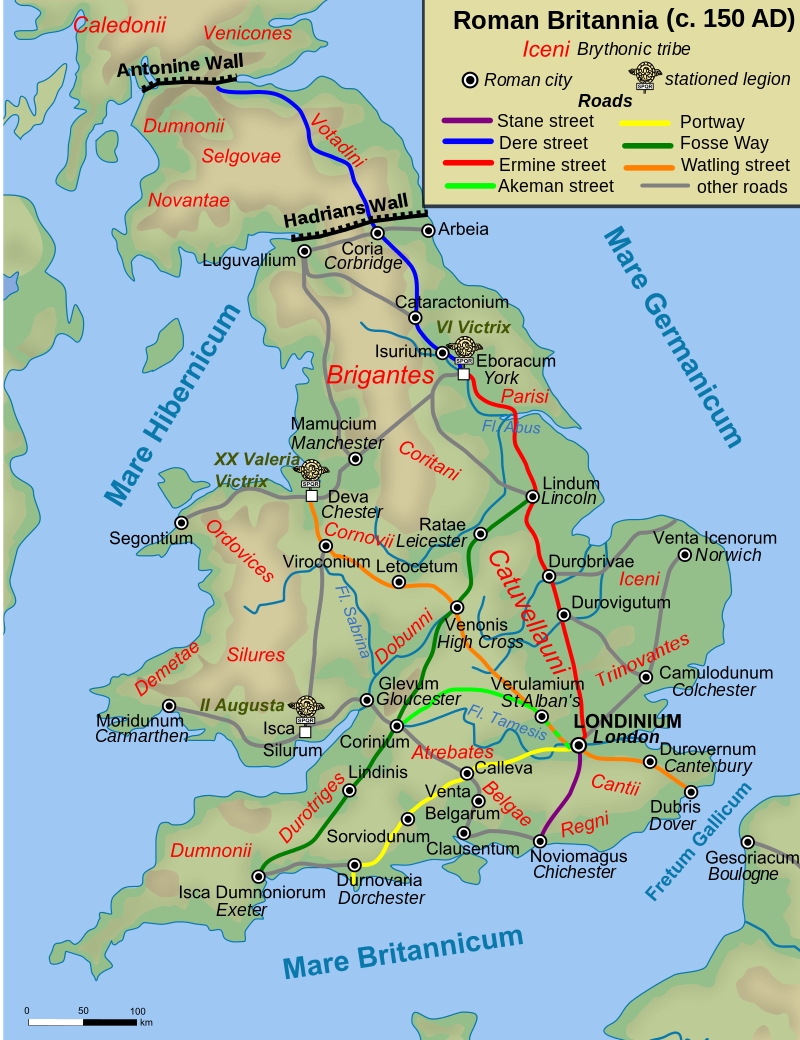
In AD 60 or 61, the Iceni tribe of eastern England, a Celtic people, rose in revolt against the Romans. The king of the Iceni had died and left his kingdom jointly to his daughters and to the Roman Emperor. The Romans ignored his wishes and took over the kingdom entirely. The old king's wife, Boudicca, led the rebellion. Her armies destroyed Colchester, London and St Albans. Eventually, the Romans overcame the Iceni at the Battle of Watling Street. Boudicca killed herself and the rebellion ended.
The end of Roman rule
In AD 375, the Roman Empire was invaded by tribes such as the Visigoths, Goths and Vandals. In 410, the city of Rome itself was sacked by the Visigoths. It was clear the Roman Empire could no longer defend all its territories. The emperor decided to withdraw the Roman army from Britain. With no means of defending itself, Britain was gradually conquered by incoming Angles, Saxons, Jutes and other tribes from northern Europe.
Ready to find out more?
Here are some pages in other parts of Q-files you might like to explore:
Roman Britain
Roman Empire
Roman fort
Roman engineering
Roman baths
Consultant: Philip Parker