
Jewish history

CITE
We have made every effort to follow citation style rules, but there may be some minor differences. If in doubt, please refer to the appropriate citation style manual.
The Jews in the ancient world. (2026). In Q-files Encyclopedia, History, Jewish history. Retrieved from
https://www.q-files.com/history/jewish-history/the-jews-in-the-ancient-world
"The Jews in the ancient world." History, Jewish history, Q-files Encyclopedia, 30 Mar. 2026.
https://www.q-files.com/history/jewish-history/the-jews-in-the-ancient-world.
Accessed 6 Aug. 2026.
The Jews in the ancient world 2026. History, Jewish history. Retrieved 6 August 2026, from
https://www.q-files.com/history/jewish-history/the-jews-in-the-ancient-world
History, Jewish history, s.v. "The Jews in the ancient world," accessed August 6, 2026.
https://www.q-files.com/history/jewish-history/the-jews-in-the-ancient-world


The Jews in the ancient world
The Jews are an ethnic and religious group who originated in the Middle East thousands of years ago. A people called the Israelites, or Hebrews, are known to have lived in Canaan in around 1200 BCE. Canaan was part of the Fertile Crescent, an area of cultivated land that curves around the north of the Syrian Desert, from the head of the Persian Gulf, up the valley of the Euphrates then south through Syria and Palestine to Egypt. In ancient times, possession of this land was much prized, so the Fertile Crescent became a battleground over which a succession of empires, Egyptian, Assyrian, Babylonian, Persian and Greek, fought for control. At the mercy of powerful rulers, Jews were forced to spread out from their homeland, known to them as the Land of Israel, firstly to other parts of the Fertile Crescent, then, after the Roman conquest, across Europe and North Africa.

(BCE = Before the Common Era, equivalent to BC, Before Christ; CE = Common Era, equivalent to AD)
Biblical origins
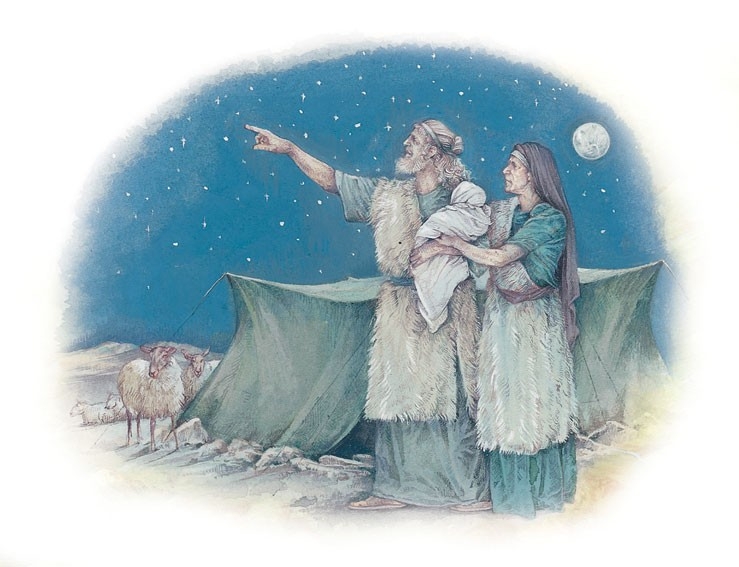
Jews trace their history back to a nomadic people called the Hebrews. According to the Bible, one of them, Abraham, settled in Canaan—broadly the land between the eastern shores of the Mediterranean Sea and the Jordan valley. Jews believe that God made a covenant (promise) to Abraham that he would have as many descendants "as there were stars in the sky", and that these people—the “chosen people”—would inherit the land of Canaan, known to Jews ever since as the Promised Land. Abraham’s son was Isaac, and Isaac’s son was Jacob, whom God named Israel. So Abraham’s descendants, the “Children of Israel”, became known as the Israelites.
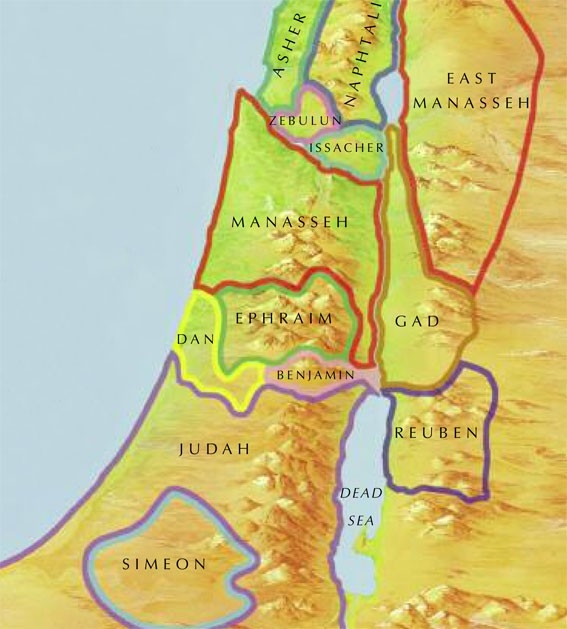
The Children of Israel consisted of Twelve Tribes, each descended from one of Jacob's twelve sons: Reuben, Simeon, Levi, Judah, Issachar, Zebulun, Dan, Naphtali, Gad, Asher, Joseph and Benjamin.
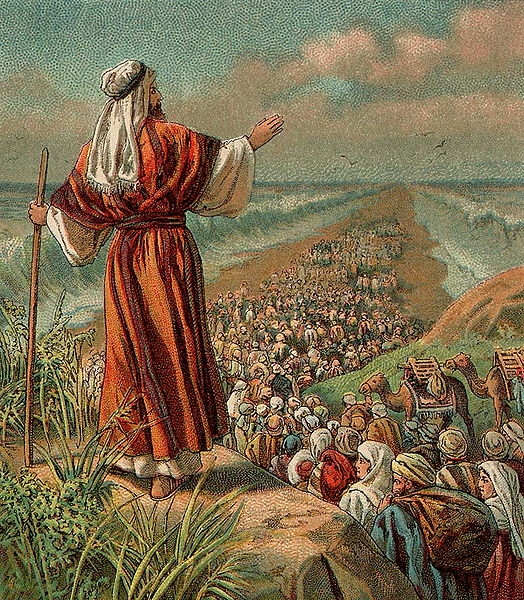
The Book of Genesis tells the story of Jacob and his sons, who left Canaan during a severe famine and settled in Egypt. Here, their descendants, the Twelve Tribes, were enslaved by the Egyptian Pharaoh. The God of Israel sent Moses of the tribe of Levi to release the Israelites, and they miraculously emigrated from Egypt (an event known as the Exodus) and returned to their homeland in Canaan.
Canaan
According to modern archaeologists, the Israelites originated in Canaan; there is no evidence that they travelled from Egypt. We know that in around 1200 BCE a people began to identify themselves as “Israelite”, separating themselves from their Canaanite neighbours by family history and religion.
According to the Bible, after returning to Canaan, each of the Twelve Tribes received a portion of land. For several hundred years, the Land of Israel was divided into lands of the Twelve Tribes, each ruled by a series of Judges. They became united into a single kingdom under Saul, and continued under King David and his son, Solomon. During the reign of David, the city of Jerusalem became capital of the United Monarchy of Israel and Judah. Solomon built the First Temple on Mount Moriah in Jerusalem. After Solomon’s death, war broke out between the ten northern Israelite tribes on one side, and the tribes of Judah and Benjamin on the other. The nation split into the Kingdom of Israel (Samaria) in the north, and the Kingdom of Judah in the south.

Conquest and exile
It is not known how historically accurate this version of events is, although it is thought that a United Monarchy did exist between 1050 and 930 BCE. The Assyrian ruler Tiglath-Pileser III is known to have conquered the Kingdom of Israel in about 722 BCE. The people of that kingdom, the ten northern tribes, were forcibly removed to other parts of the empire, and never heard of again (they are known as the Lost Tribes of Israel).
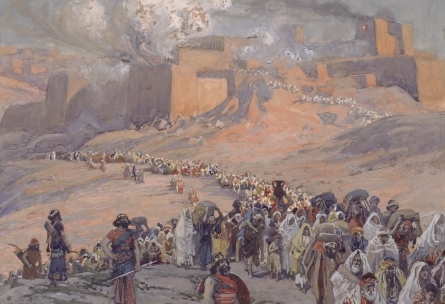
The Kingdom of Judah eventually fell to King Nebuchadnezzar II of Babylon in 586 BCE. He destroyed Solomon's Temple and exiled Judah’s elite and many of their people to Babylon. It is around this time that the people of Judah become known as the “Jews”.
Persian rule
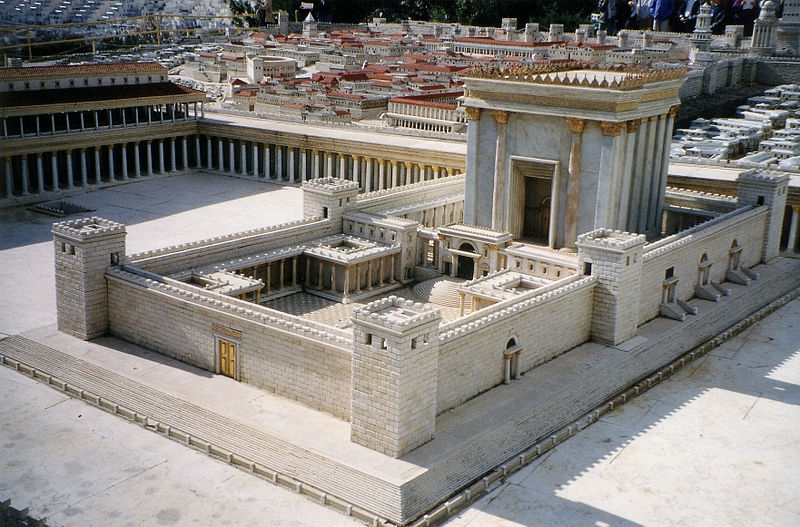
In 539 BCE, Cyrus the Great of Persia conquered Babylon and took over its empire. The following year Cyrus issued a proclamation granting the Jewish nation their freedom. Some Jews returned to Judah. There, with Persian approval and financing, they set about constructing the Second Temple in Jerusalem, which was completed around 515 BCE. Other Jews were content to remain in in Babylon.

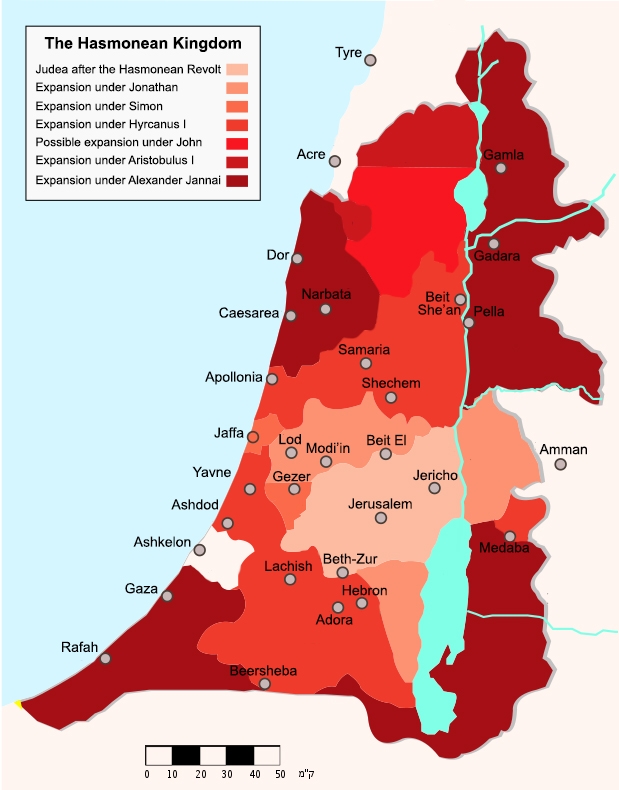
Hasmonean Kingdom
In 332 BCE, the Persians were defeated by the Macedonian Greeks under Alexander the Great. After Alexander’s death in 323 BCE, his empire was divided among his generals, with Judah (known to the Greeks as Judea) coming under the rule first of the Ptolemaic Kingdom, then, in around 200 BCE, of the Seleucid Kingdom.
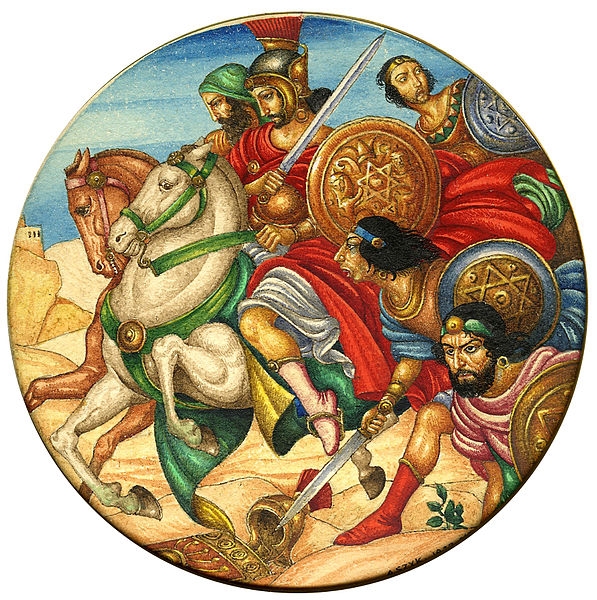
In about 167 BCE, the Seleucid King of Syria, Antiochus IV, imposed a series of laws aiming to wipe out Judaism in favour of the worship of Greek gods. This act sparked a revolt by the Jews under the leadership of Judas Maccabeus, a member of the Hasmonean family. The Jewish festival of Hanukkah ("Dedication") commemorates the restoration of Jewish worship at the Temple in Jerusalem, after Judas Maccabeus removed all of the statues depicting Greek gods and goddesses.
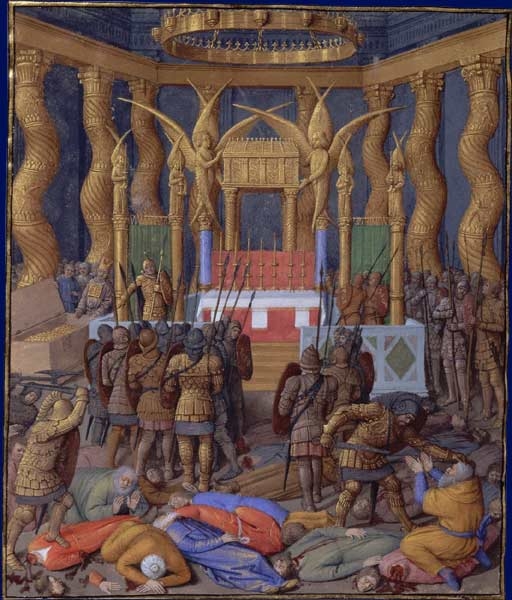
The Maccabean Revolt eventually led to the formation of an independent Jewish state, known as the Hasmonean Kingdom, which lasted until 63 BCE when civil war broke out. The Roman commander Pompey intervened in the war and, after a three-month siege, captured Jerusalem.
Roman rule

The Romans made Judea a “client state” (self-governing, but dependent on Rome) and appointed one of the Hasmoneans, John Hyrcanus II, as Jewish High Priest. With the help of the forces of the Parthian Empire, Antigonus, another Hasmonean, took back control of Judea in 40 BCE. Meanwhile, Herod, son of Hyrcanus's general, Antipater, was elected "King of the Jews" by the Roman Senate. With Roman support Herod reconquered Judea in 37 BCE. A cruel dictator, he ruled it on behalf of the Romans until his death in 4 BCE. After Herod, Judea was administered by a series of governors appointed by Rome. They were resented by the Jewish population.
The Jewish priests, called Sadducees, allied themselves with the hated rulers and so lost favour with the people, who gave their support to the Pharisees (“separatists”) instead. The Pharisees were a group who wanted to preserve the laws and traditions of the Jewish people. They were forerunners of rabbis (“teachers”). The rabbis encouraged Jews to observe God’s laws, prayer and festivals in their homes and at synagogues. This was the origin of Rabbinic Judaism.
Revolt and diaspora
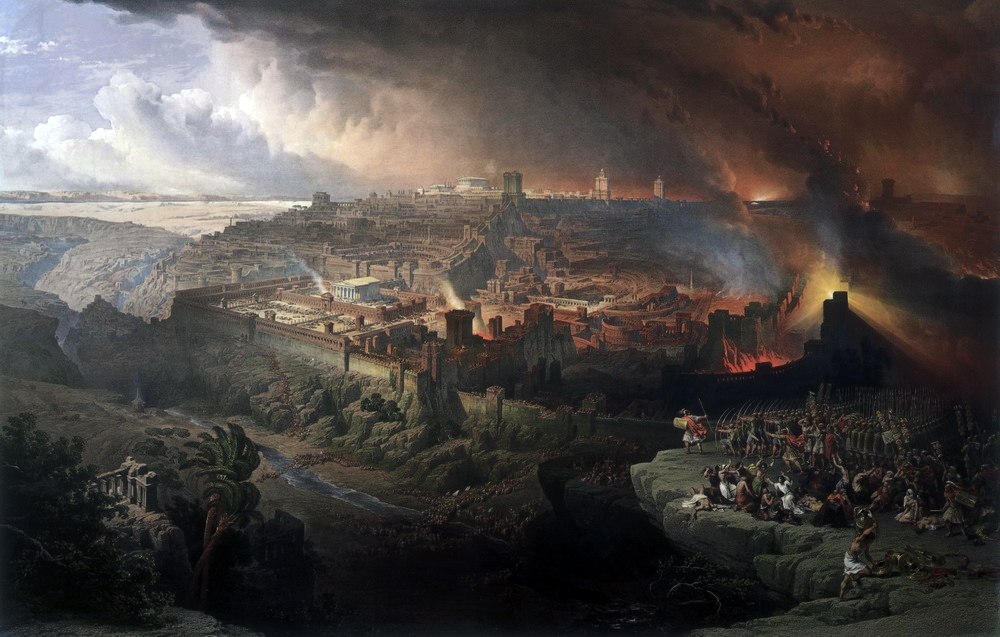
The Roman Empire was often brutal in its treatment of its Jewish subjects. In 66 CE, the Jews began a revolt against the Roman rulers of Judea, which was put down by Roman troops. In the Siege of Jerusalem in 70 CE, the Romans destroyed the Temple. After a further rebellion, the Bar Kokhba revolt of 132–136 CE, the Roman emperor Hadrian inflicted severe punishment on the Jews. Fifty towns and nearly a thousand villages were destroyed. More than half a million Jews were killed, while others were sold into slavery or forced to flee, many to Galilee. The Romans banished the Jews from Jerusalem and renamed the city Aelia Capitolina. Judea became part of the province of Syria Palaestina, established by the merger of the Syria with Judea.
The Roman expulsions began what is known as the Jewish diaspora: the dispersal of the Jews far from their homeland. Many Judean Jews became citizens of other parts of the Roman Empire, although a significant number of Jews remained in the Land of Israel or emigrated to Babylonia.
Aware of the threat to their very existence as a people, Jews felt it vital to write down the teachings of the rabbis so that Judaism could continue. So it was that in around 200 CE, scholars compiled the Mishnah, the collection of teachings, sayings and interpretations of the early rabbis.

Babylonia
Continued persecution of the Jews by the Roman Empire in the 3rd century triggered further migration from the land of Israel to the more tolerant Persian Sassanian Empire. Here in Babylonia a prospering Jewish community had existed ever since the exile of the 6th century BCE.
The region became the centre of Jewish life for many centuries until the 13th century, even after it became part of the Arab Islamic Empire. Its Jewish population doubled to around 2 million between the years 200 and 500 CE. It was in Babylonia that Jewish scholars wrote the Babylonian Talmud in the two languages used by the Jews: Hebrew and Aramaic. Talmudic Academies, also known as the Geonic Academies ("Geonim" means "splendour" or ”geniuses" in Hebrew), which became the centre for Jewish scholarship, were established in Babylonia.
Consultant: Philip Parker
pics

Without in any way limiting Q-files Ltd’s exclusive rights under copyright, any use of this publication to “train” generative artificial intelligence (AI) technologies to generate text is expressly prohibited. Q-files Ltd reserves all rights to license use of this work for generative AI training and development of machine learning language models.