
Religions

CITE
We have made every effort to follow citation style rules, but there may be some minor differences. If in doubt, please refer to the appropriate citation style manual.
Judaism. (2026). In Q-files Encyclopedia, Culture, Religions. Retrieved from
https://www.q-files.com/culture/religions/judaism
"Judaism." Culture, Religions, Q-files Encyclopedia, 13 May. 2026.
https://www.q-files.com/culture/religions/judaism.
Accessed 6 Aug. 2026.
Judaism 2026. Culture, Religions. Retrieved 6 August 2026, from
https://www.q-files.com/culture/religions/judaism
Culture, Religions, s.v. "Judaism," accessed August 6, 2026.
https://www.q-files.com/culture/religions/judaism


Judaism
Judaism is the religion of the Jewish people. Jews believe in one God who created heaven and Earth. God has a covenant (an agreement) with the Jews: God offers his guidance and protection to the Jews, and in return Jews lead a moral life and obey God. The Jewish holy book is the Hebrew Bible (similar to the Old Testament of the Christian Bible). The most important part is the Torah, which contains God’s laws. The Bible, along with many Jewish festivals, commemorates events in the history of Israel, from where the Jews originally came. The history of Judaism goes back about 4000 years, making it the oldest religion based on a belief in a single god.
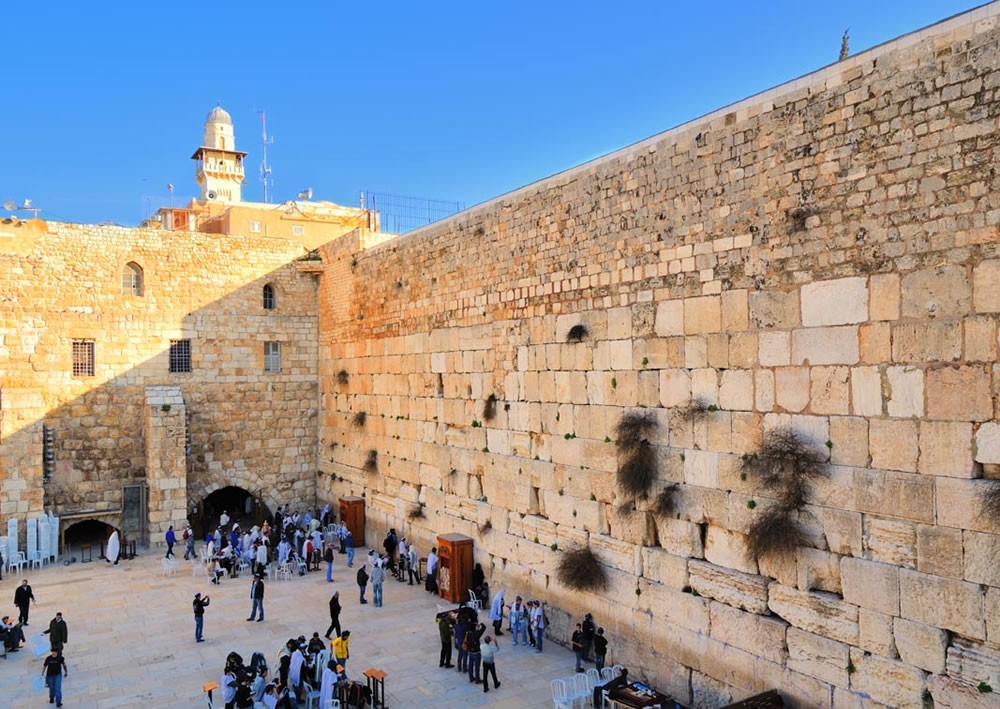

Abraham
Jews trace their history back to a nomadic people called the Hebrews. One of them, Abraham, settled in Canaan—broadly the land between the eastern shores of the Mediterranean Sea and the Jordan valley. Jews believe that God made a covenant (promise) to Abraham that he would have as many descendants "as there were stars in the sky", and that these people—the “chosen people”—would inherit the land of Canaan, known to Jews ever since as the Promised Land.
Abraham’s son was Isaac, and Isaac’s son was Jacob, whom God named Israel. So Abraham’s descendants became known as the Israelites. The story of the Israelites—the early history of the Jews—is told in the Hebrew Bible.
Diaspora and persecution
In the first century AD, Israel, the home of the Jews, was under Roman rule. Many Jews were forced into exile. Eventually, they spread to new lands around the Mediterranean and to central and eastern Europe. The scattered population of Jews became known as the diaspora. In order to preserve their identity, the Jews followed their laws and traditions strictly.
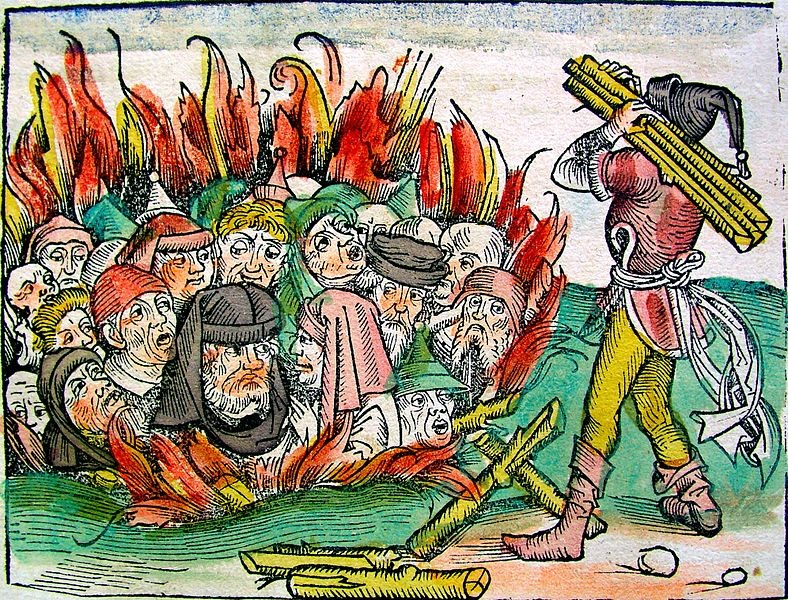
Over the centuries, Jews suffered persecution by Christians and others, involving antisemitism (hostility and prejudice against Jews), mass expulsions and even large-scale massacres, known as pogroms. The worst of this persecution was the Holocaust during World War II, when six million European Jews were rounded up by the Nazis and brutally murdered in death camps.
The creation of Israel
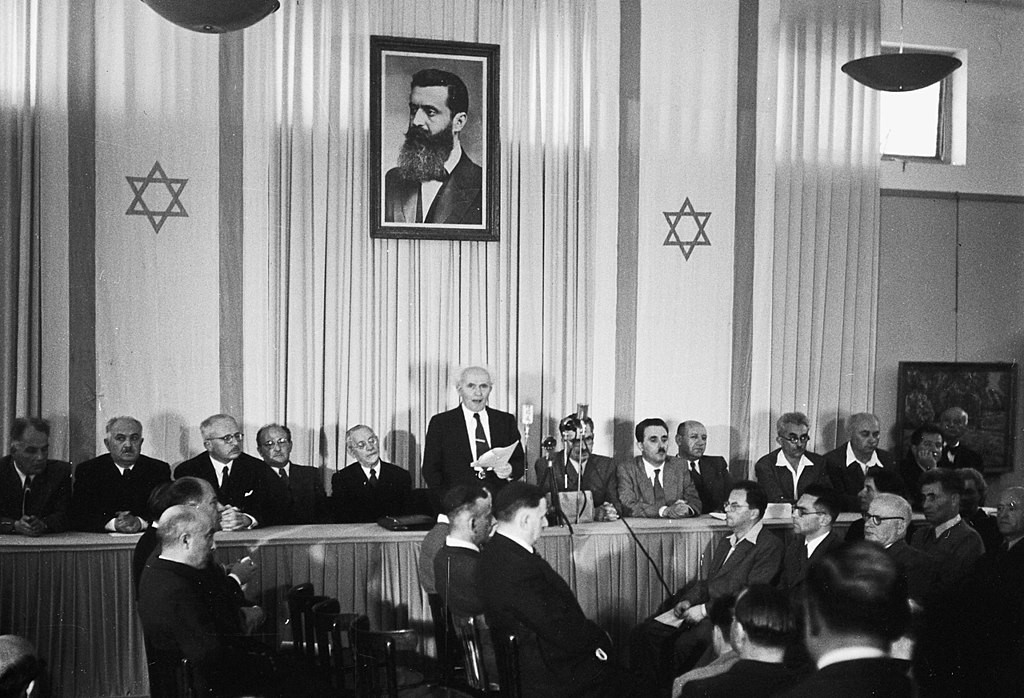
Moves to form a separate Jewish state in Canaan (later known as Palestine), begun by a group called the Zionists back in the 19th century, resulted in the creation of Israel in 1948. Since then, many Jews have moved to make Israel their home—although many remain living in countries all over the world, especially the US. But the birth of Israel created hostility between Israel’s Jewish population and the displaced Palestinians, mostly Muslim Arabs. War broke out between Israel and the surrounding Arab nations on more than one occasion. Efforts to find a peaceful solution continue to this day.
Sacred texts

The first five books of the Tenakh, a collection of 24 books that also contain histories, poems and prophecies, are known as the Torah (which means “teachings”). The Torah contains the laws, or commandments, God gave to Moses after the Exodus, when the Israelites returned from exile in Egypt. Another important text is called the Talmud. It is collection of writings about Jewish law, written and commented upon by rabbis, Jewish scholars.
Branches of Judaism
Jews divide into a number of branches, some traditional, other less so. Traditional Jews believe that the laws set out in the Torah are binding and unchanging, while others adapt Jewish practices to modern life. (Jews are sometimes described as either "Orthodox" and "non-Orthodox", but Judaism has more varieties than this.)
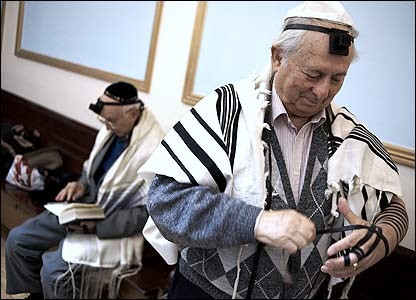
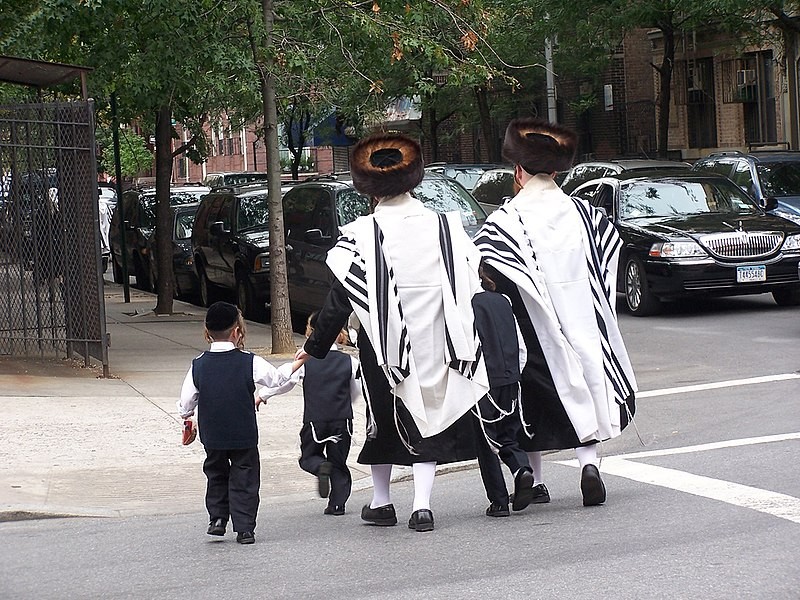
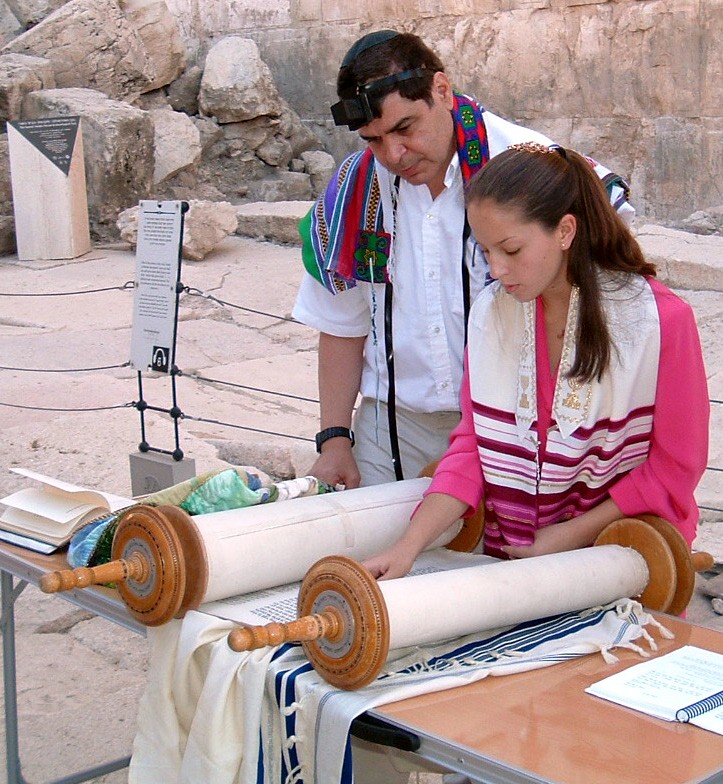
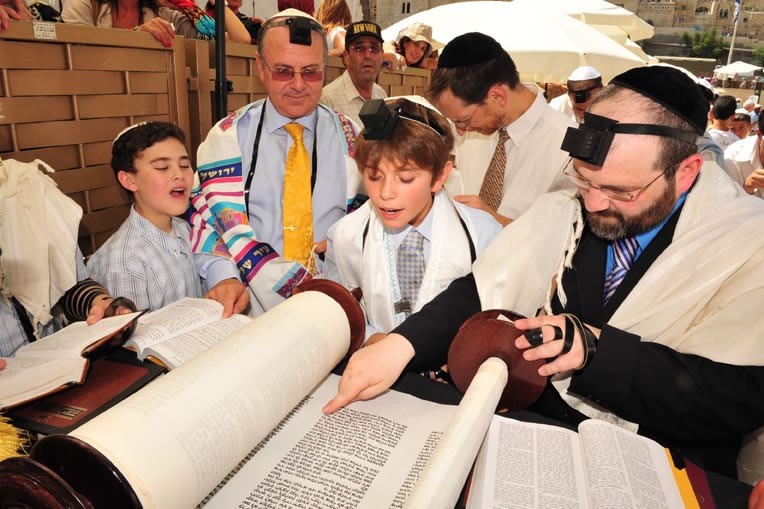
When they pray, many Jewish men—and some women—wear a skullcap called a kippah. They may also wear a tallit, a prayer shawl with knotted fringes. The fringes remind a Jew of the commandments of the Torah. Some wear a kippah and tallit all the time. When praying, the men may also wear tefillin, small leather boxes containing passages from the Torah, on their forehead and left arm, close to the heart. These are reminders to keep the laws of the Torah in both heart and mind.
Hasidic Judaism
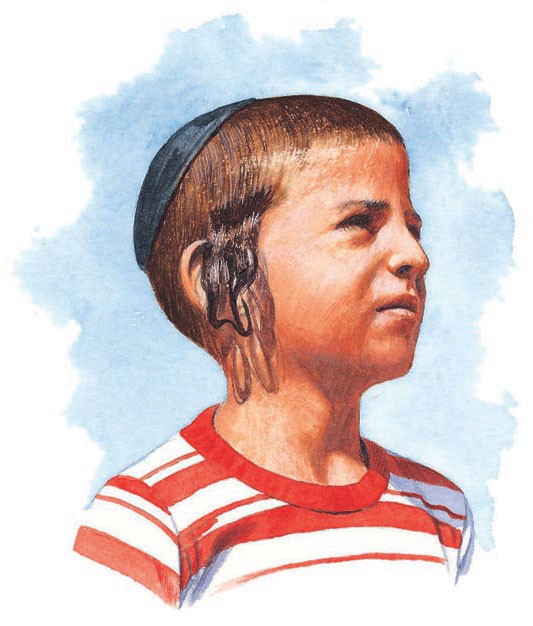
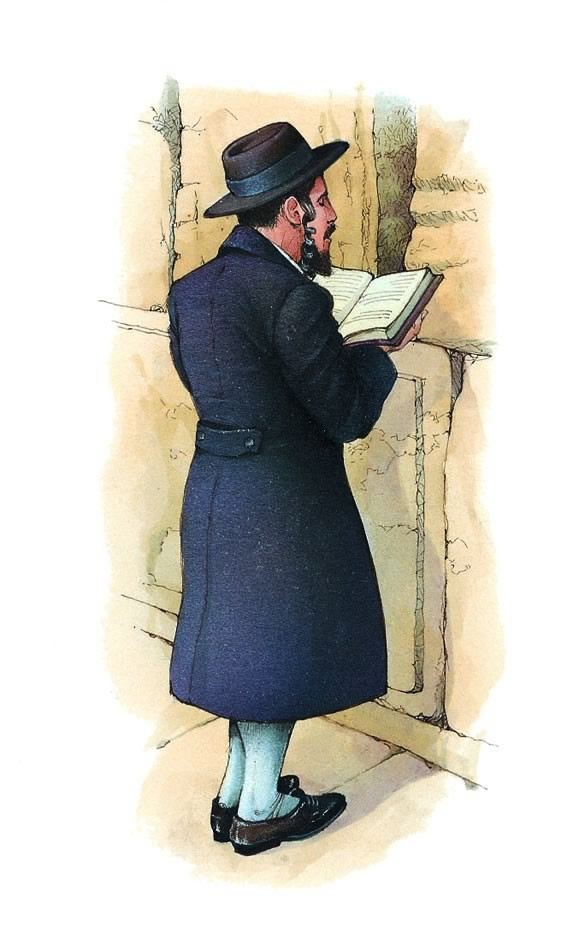
Hasidic Judaism is a branch of Judaism named after the Hebrew word hasid, meaning “pious”. This group of Jews was founded in the 18th century and had a particularly large following in Poland and western Ukraine, which is why Hasidic Jews (Hasidim) wear some traditional items of clothing from that region. Hasidic men and boys wear their hair in sidelocks, called payot. The Hasidim also speak the Yiddish language (a form of German with Hebrew words) that was spoken in eastern Europe centuries ago. Today there are around 400,000 Hasidic Jews.
Food laws
Especially in Orthodox homes, food must prepared in accordance with God’s laws: it must be kosher (“fit”). Because blood is seen to represent the life of an animal, it is too sacred to be consumed, so animals must be slaughtered in such a way that their blood is drained first. The Torah forbids eating certain foods such as pork and shellfish. Meat and dairy foods must be prepared separately.
Sabbath
Traditionally, Jews are not allowed to work on Saturday, the Sabbath. This is because, according to the story of creation, God made the world in six days, then rested on the seventh day. The word sabbath comes from the Hebrew shabbat, meaning “rest”. Like many Jewish customs, Sabbath revolves around the home and family. Sabbath starts a few minutes before sunset on Friday evening, when Jewish families traditionally gather for a meal. They eat a special bread called challah.

Synagogue

The Sabbath is the main day of Jewish worship. Jews go to a synagogue (“meeting place”) to worship. Services contain readings from the Torah and prayer, often led by a rabbi (who is not a priest, but a teacher) or a cantor, who leads the congregation in songful prayer. In some synagogues, men and women sit apart and the service is conducted in Hebrew. In many others, men and women sit together and the service is held in the local language.
Ceremonies
When a Jewish baby boy is eight days old, the Brit Malah ceremony is held. The foreskin of his penis is removed, a practice known as circumcision. It is done as a sign of the covenant between God and Abraham.
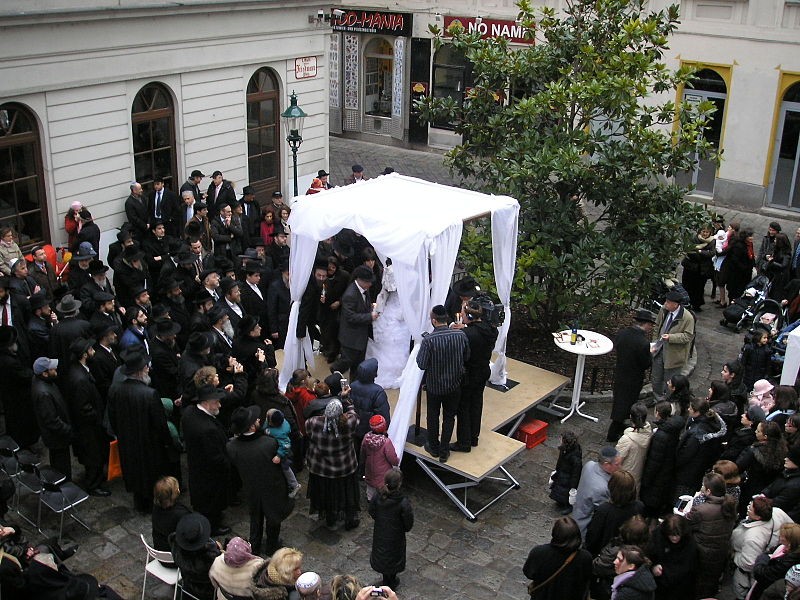
A traditional wedding ceremony takes place under a chuppah, a cloth canopy supported by four poles, symbolizing the home the couple will make together. The chuppah may be a tallit.
Bar Mitzvah and Bat Mitzvah
In Judaism, parents are reponsible for a young child's actions. But when Jewish boys reach the age of 13, they are considered old enough to be accountable for their own actions and be a Bar Mitzvah ("son who is subject to the law"). Girls become a Bat Mitzvah ("daughter who is subject to the law") at the age of 12. The Bar or Bat Mitzvah ceremony usually takes place on the first sabbath after the boy's 13th or girl's 12th birthdays. Many families also hold a party to mark the day. Boys (and some girls) who have had their Bar or Bat Mitzvah can wear a kippah and tallit while praying.

Festivals
The Jewish calendar is based on the phases of the Moon. The year begins around September or October with Rosh Hashanah. Jews believe that God created humanity on the first Rosh Hashanah. On this day, God decides what will happen to them in the coming year. It is customary to eat sweet foods such as cake and honey.
Ten days after Rosh Hashanah comes Yom Kippur (“the Day of Atonement”), the most sacred day of the Jewish year. It is a day of fasting and of prayers asking for forgiveness. On this day, Jews are forbidden to wash, put lotions on their skin or wear anything made of leather.
Lasting for eight days, Passover, also known as Pesach, marks the escape of the Israelites from Egypt. The angel of death, who was sent by God to kill the eldest son of each Egyptian family, “passed over” the houses of the Israelites. The main ceremony is a family meal, called the seder, in which certain symbolic foods, including unleavened bread (made without yeast) called matzah, is eaten. In answer to the traditional question asked by the youngest present, “Why is this night different from all other nights?”, the story of the Exodus is told.


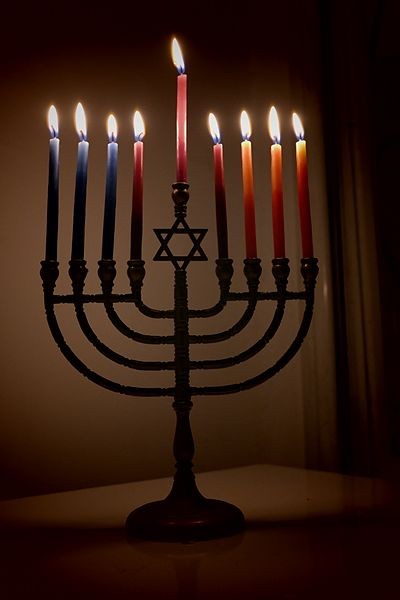
Chanukah (also spelled Hannukah), the festival of lights, is another eight-day festival. Held between late November to December, it celebrates the re-dedication of the Temple in Jerusalem after it had been looted by invading Seleucid Greek armies in 165 BC.
A nine-branched candelabrum, called a menorah (or hanukkiah), is lit, one candle on the first night of the festival, two on the second night, and so on, ending up with all eight being lit on the final night. The extra candle, with which all the others are lit, is called a shamash, or servant candle.
Consultant: Philip Wilkinson
The Jewish calendar (2026)
3rd March (14th Adar)
Purim (commemorates the saving of the Jews from Haman)
2nd–9th April (15th–22nd Nisan)
Pesach (Passover)
22nd–23rd May (6th–7th Sivan)
Shavuot (Festival of Weeks; commemorates the giving of the Torah at Mount Sinai)
12th–13th September (1st–2nd Tishri)
Rosh Hashanah
21st September (10th Tishri)
Yom Kippur
26th September–1st October (15th–20th Tishri)
Sukkot (Feast of Tabernacles)
4th October (23rd Tishri)
Simchat Torah (Day of Celebrating the Torah)
5th–12th December (25th Kislev–2nd Tevet)
Chanukah (Hannukah)
✡︎
Holidays begin at sundown on the evening before the date listed. Equivalent dates in the Hebrew calendar are given in brackets.
pics

Without in any way limiting Q-files Ltd’s exclusive rights under copyright, any use of this publication to “train” generative artificial intelligence (AI) technologies to generate text is expressly prohibited. Q-files Ltd reserves all rights to license use of this work for generative AI training and development of machine learning language models.