
Religions

CITE
We have made every effort to follow citation style rules, but there may be some minor differences. If in doubt, please refer to the appropriate citation style manual.
Christianity. (2026). In Q-files Encyclopedia, Culture, Religions. Retrieved from
https://www.q-files.com/culture/religions/christianity
"Christianity." Culture, Religions, Q-files Encyclopedia, 13 May. 2026.
https://www.q-files.com/culture/religions/christianity.
Accessed 13 Sep. 2026.
Christianity 2026. Culture, Religions. Retrieved 13 September 2026, from
https://www.q-files.com/culture/religions/christianity
Culture, Religions, s.v. "Christianity," accessed September 13, 2026.
https://www.q-files.com/culture/religions/christianity


Christianity
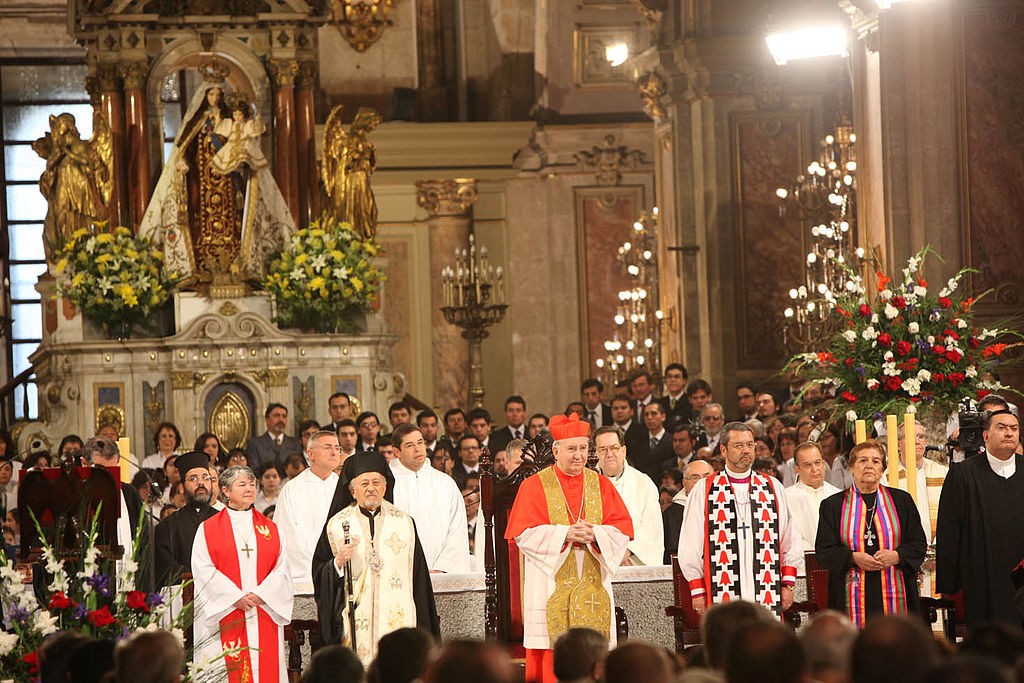
Christians believe in one God who sent his son Jesus Christ to Earth to save people from sin by sacrificing his own life. The name Christ is from a Greek word meaning “the anointed one” (touched with holy oil). The Christian holy book, the Bible, contains both the Old Testament (similar to the Hebrew Bible, which is also a holy book for Jews) and the New Testament, which describes the life and work of Jesus and his disciples. There are around 2.5 billion Christians, making it the world's largest religion. Christianity has three main branches—Roman Catholic, Protestant and Eastern Orthodox. In the Roman Catholic church, the Pope (from the Latin papa, "father") has supreme authority. Orthodox followers believe that their bishops are supreme. Protestants believe that the Bible is the only authority.

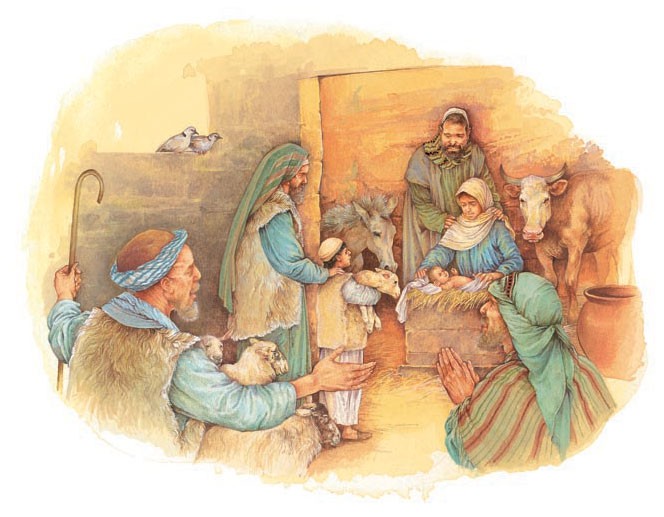

Jesus Christ
Jesus was born around 2000 years ago in Judaea (Judah), then part of the Roman Empire. He spent his life teaching people about love and forgiveness. He had many followers, but he made enemies among the Jewish priests. Disappointed that Jesus would not help them overthrow the hated Romans and re-establish a Jewish kingdom, the people of Jerusalem turned against him as well. The priests persuaded the Roman governor to condemn Jesus to death by crucifixion. Three days after his crucifixion, Jesus’s tomb was found to be empty: he was resurrected (risen from the dead). He then rose to heaven in what is known as his ascension.
Teachings of Jesus
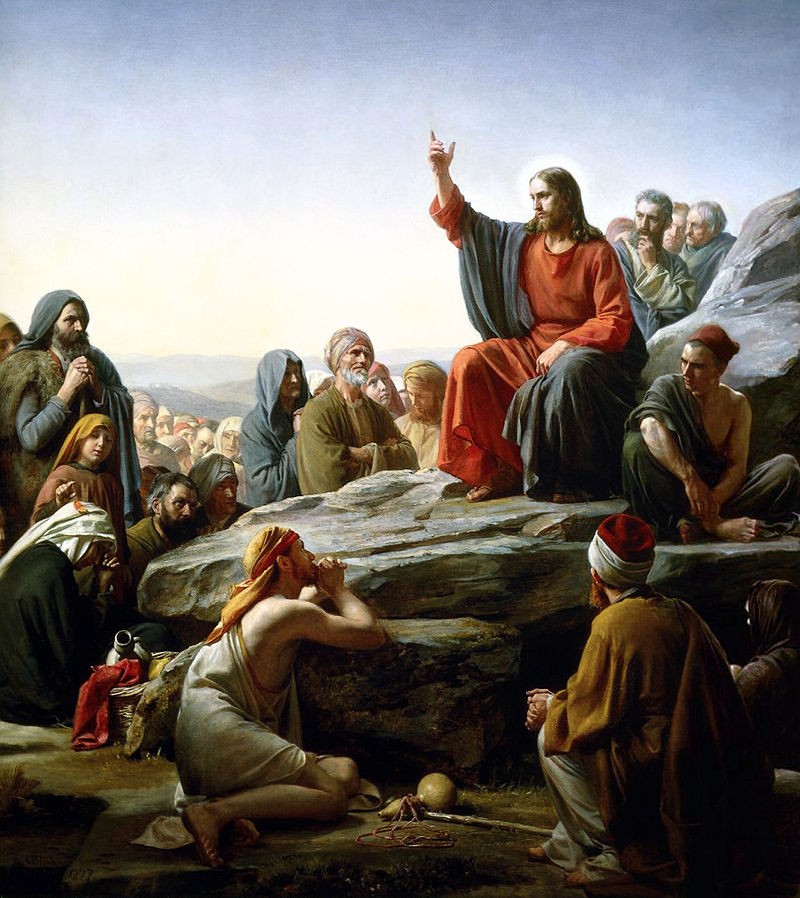
In the Sermon on the Mount, Jesus outlined his teachings and a gave a blessing to everyone, including the poor and the persecuted. He said that people should love their enemies and not judge others. The Sermon included the Lord’s Prayer, which is committed to memory by nearly all Christians.
Through a series of parables—stories that carried a message—Jesus taught that love is more important than religious laws and that people should help others regardless of differences in race or beliefs.

Spread of Christianity
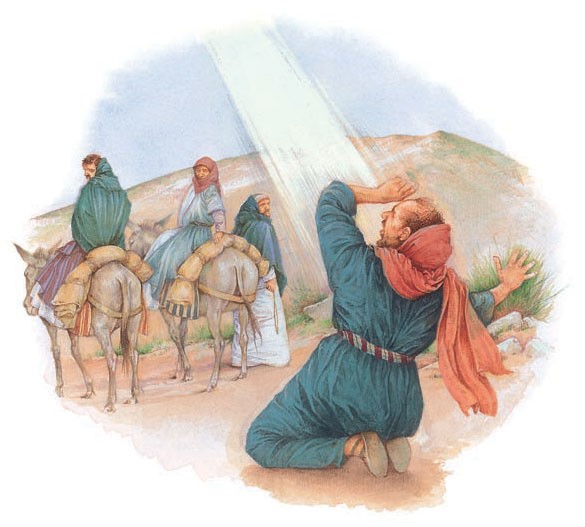
After Jesus's death, his followers, especially St Paul, preached the message of Christianity throughout the Roman Empire. The Romans condemned Christianity for many years, but it eventually became the official religion of the empire under Emperor Constantine (ruled AD 306–337).
In 325, Constantine summoned a council at Nicaea (today, Iznik in Turkey) to draw up a statement of Christian beliefs. This statement, called the Nicene Creed, introduced the idea of the Trinity. God could be described as three persons in one: God the Father (the creator of all), God the Son (Jesus) and God the Holy Spirit (his presence everywhere in the world).
After the fall of the Roman Empire in western Europe, Christianity continued to spread across Europe, including the Byzantine Empire, which grew out of the Eastern Roman Empire. More and more people converted to Christianity.
in 1054, there was a dispute between the head of the church (Patriarch) in Constantinople (today, Istanbul, also in Turkey), capital of the Byzantine Empire, and the head of the church in Rome (Pope). It lead to a major split in the Christian Church, called the Great Schism.

The Church in the West became known as Roman Catholic, while the Eastern Church became known as Orthodox. The different branches still exist today.
Protestantism
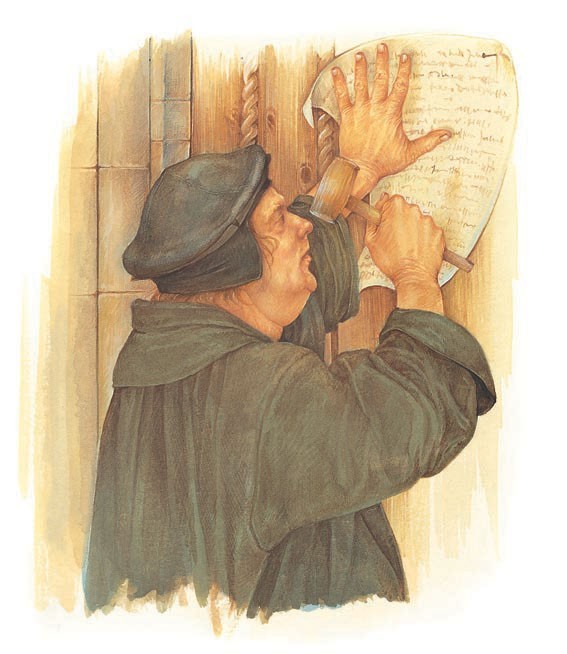
The Christian Church experienced another split in the 16th century, during what became known as the Reformation. It came about after the German monk Martin Luther criticized the Catholic Church, which he believed had become too powerful, too rich and corrupt. Although Luther wished to reform the Catholic Church, his ideas—that an individual’s personal faith and the teachings of the Bible were more important than Church rituals—formed the basis of a new form of Christianity called Protestantism. The Lutheran Church is based on Luther’s ideas.
John Calvin went further, putting forward the idea of “predestination”: God had a plan for each person, including whether or not they would go to heaven or hell. The Reformed Christians, as Calvinists are also known, include Congregationalists (whose church congregations each run their own affairs independently) and Presbyterians (whose church is governed by a body of elected elders).
The Church of England, founded during the reign of Queen Elizabeth I after her father Henry VIII’s split with the Pope and declared himself head of the Church in England, represents a middle way between Catholicism and Protestantism. Also known as the Anglican or Episcopalian Church, its approach to worship is set out in the Book of Common Prayer, Common Worship and other books. Anglicanism is the third largest branch of Christianity after the Roman Catholic and Eastern Orthodox churches.


Despite Catholicism’s efforts to reform itself, Europe became divided between countries that adopted a version of Protestantism and those that continued to follow the Catholic tradition, accepting (unlike Protestants) the supremacy of the Pope. Intolerance, persecution and even war dogged Christianity in Europe for centuries. Since the early 20th century, efforts have been made to unite all the Christian groups into a single universal Church. This is called the Ecumenical movement.
The Bible

Christian teaching is written in the Bible, a book that, for Christians, contains guidelines for how to live their lives. The Christian Bible is divided into two parts: the Old and New Testament. The Old Testament, also called the Hebrew or Jewish Bible, contains the sacred writings of the Jewish religion. The New Testament, originally written in Greek, tells the story of Jesus and teaches that salvation comes through belief in the resurrection of Jesus. It includes the four gospels (four different versions of Jesus’s life), the Acts, which focuses on Jesus’s disciples, or apostles, and epistles, letters written by St Paul to give advice and encouragement to the early Christians.

Christian beliefs
Christians believe that there is one God in three divine persons, the Trinity: God the Father, God the Son—Jesus Christ, who was sent to save mankind from sin—and God the Holy Spirit.
Christians believe that the universe was created by God, that it is wrong to act against God’s laws, or commit a sin, and that on the Day of Judgment Jesus will decide, according to how someone has behaved in their life on earth, whether their soul will go to heaven or hell. Christians believe that Jesus sacrificed his life to make possible the forgiveness of people’s sins—so a way to heaven is always attainable.
Church
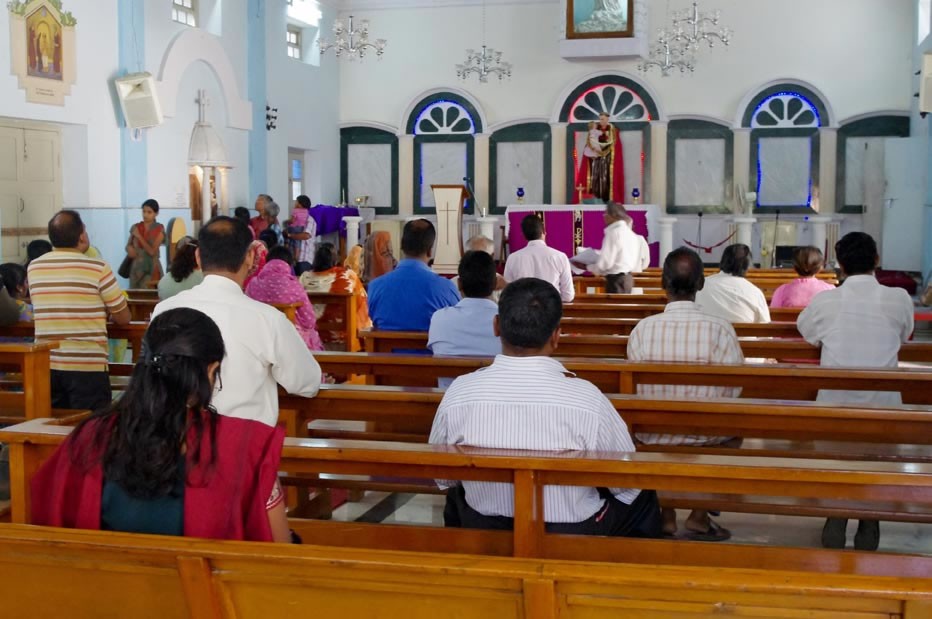
Christians worship in a church or a cathedral, which is the main church of a diocese, the area under the control of a bishop. They are built in various styles, but many Western European churches are built with a floor plan in the shape of a cross. The long part of the cross (the nave and chancel) runs west-east and an altar at the east end—because it points towards Jerusalem. Many churches and cathedrals have a tall spire or tower or dome.


Worship
Services are usually led by a priest, a minister, or another person authorized to do so. Usually held on Sundays, they involve praising God in music and speech, readings from scripture, prayers, a sermon and various holy ceremonies, called sacraments. The sermon may be given from a raised platform called a pulpit. Prayers, the way in which Christians talk to God, may be spoken aloud or silent; they may be spoken individually or together with others. Prayers are often used to ask God for his help or forgiveness.
Sacraments
Most Christians recognize a number of sacraments, rituals that have deep spiritual significance and affirm (declare) the believer's relationship with God. The two most widely celebrated sacraments are baptism and Mass (also known as Holy Communion or Eucharist). Baptism welcomes people into the faith in a ritual involving water, a sign of washing away sin. Children and babies have water sprinkled on their heads.
Mass or Holy Communion involves sharing bread and wine that have been blessed, in a ritual that recalls Jesus' Last Supper with his disciples.


Christian festivals
Christian festivals are based on events in the life of Jesus. The start of the Church’s year is Advent (which means “coming”), the fourth Sunday before Christmas. Christmas itself celebrates the birth of Jesus. The exact date of his birth is not known, but the celebration is held in the West on 25th December, a date chosen by Emperor Constantine to coincide with a Roman Sun festival. Orthodox Christians celebrate Christmas on 6th January. Christmas is a time when families and friends gather for a special meal and exchange gifts. In church, carols (hymns about the story of his birth) are sung.
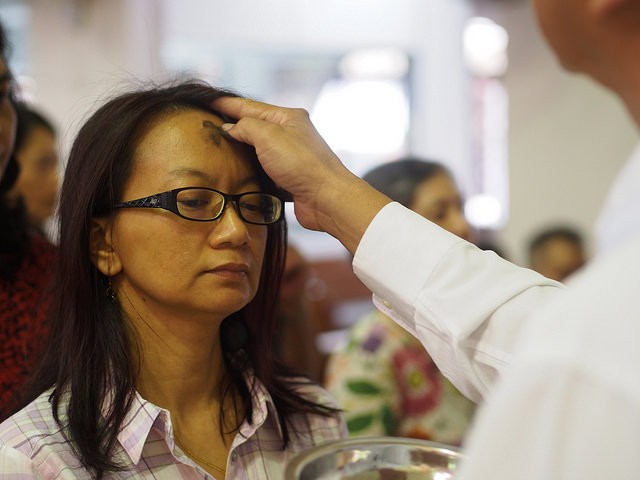
Lent is the period before Easter which commemorates the 40 days and nights that Jesus spent fasting in the wilderness. Today, many Christians mark Lent by giving up something that they enjoy. The day before Lent begins—Ash Wednesday—is known as Mardi Gras, or Shrove Tuesday. In many countries it is celebrated with lavish parades along with singing and dancing; in others, there is a tradition of making pancakes.


The Sunday before Easter (also called Pascha) is known as Palm Sunday in memory of the time when Jesus entered Jerusalem welcomed by crowds waving palm leaves. It marks the beginning of Holy Week. Friday is Good Friday, when Christians commemorate the death of Jesus. Easter Day—which coincides with, and is named after, a pre-Christian spring festival, the Feast of Eostre—celebrates Jesus’s resurrection.
Nonconformists
Some Protestants refused to conform to the new practices that were established by the Church of England after the Reformation. Known as nonconformists, they broke away to organize their own style of worship. They include the Presbyterians, a largely Scottish movement. In 17th century England, a group called the Puritans expressed their dissatisfaction with the Church of England's continued tolerance of what they saw as Catholic practices. Other groups emerged from these and other “dissenters”. They include the Congregationalists, the Quakers or the Religious Society of Friends (whose members believe each person has a direct relationship with God, so they do without priests or rituals) and Baptists (who hold that the Bible alone is the guide in all matters of practice, and that baptism should be performed only for professing believers). Methodists separated from the Church of England in the 18th century. They campaign for justice to the disadvantaged.


Other nonconformist groups emerged later in the US. They include: Jehovah’s Witnesses (who believe that that the establishment of God's kingdom over the world is the only solution to the problems faced by humanity), Christian Scientists (who believe that sickness can be cured by the power of prayer alone), Seventh-day Adventists (who believe that Jesus will soon return to the world in a Second Coming) and Pentecostalists (who believe in baptism in the Holy Spirit, which gives them spiritual gifts, such as the ability to “speak in tongues” and perform “divine healing”).
Another important Protestant nonconformist group is the Salvation Army. Founded in London in 1865 by William Booth, it focuses on the need to fight poverty and social injustice and to carry out social work.

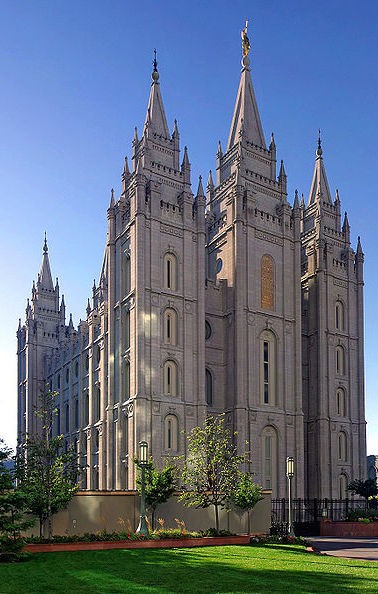
Latter-day Saints or Mormons believe that all people are spirit-children of God, with each having the potential to become at one with God in the same way as Jesus is. Mormons think of themselves as Christian, although some of their beliefs differ from those of mainstream Christianity. Mormons believe in the Bible, as well as other books of scripture, such as the Book of Mormon.
Consultant: Philip Wilkinson
The Christian calendar (2026)
6th January Epiphany
18th February Ash Wednesday
25th March Annunciation (Lady Day)
29th March Palm Sunday
2nd April Maundy Thursday
3rd April Good Friday
5th April Easter Sunday
12th April Orthodox Easter
14th May Ascension Day
24th May Whit Sunday (Pentecost)
4th June Corpus Christi
15th August Assumption of the Blessed Virgin Mary
1st November All Saints
26th November Thanksgiving (USA)
29th November First Sunday in Advent
6th December St Nicholas Day
25th December Christmas


pics






Without in any way limiting Q-files Ltd’s exclusive rights under copyright, any use of this publication to “train” generative artificial intelligence (AI) technologies to generate text is expressly prohibited. Q-files Ltd reserves all rights to license use of this work for generative AI training and development of machine learning language models.