
Europe

CITE
We have made every effort to follow citation style rules, but there may be some minor differences. If in doubt, please refer to the appropriate citation style manual.
Byzantine Empire. (2022). In Q-files Encyclopedia, History, Europe. Retrieved from
https://www.q-files.com/history/europe/byzantine-empire
"Byzantine Empire." History, Europe, Q-files Encyclopedia, 24 Nov. 2022.
https://www.q-files.com/history/europe/byzantine-empire.
Accessed 6 Aug. 2026.
Byzantine Empire 2022. History, Europe. Retrieved 6 August 2026, from
https://www.q-files.com/history/europe/byzantine-empire
History, Europe, s.v. "Byzantine Empire," accessed August 6, 2026.
https://www.q-files.com/history/europe/byzantine-empire


Byzantine Empire
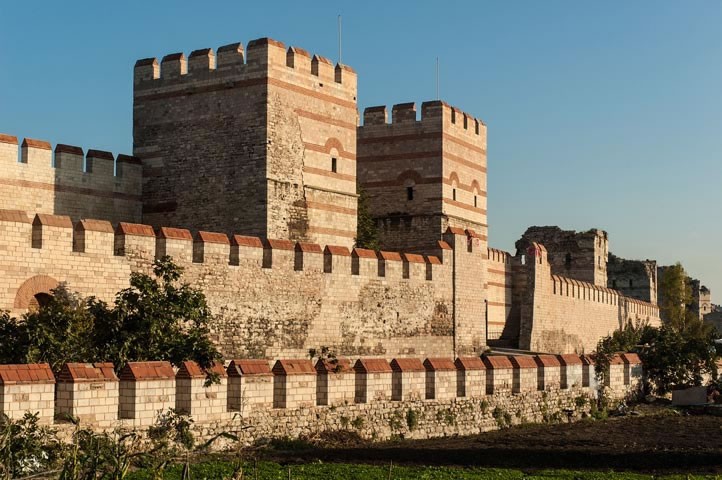
While the western half of the Roman Empire collapsed, overrun by Germanic tribes, the eastern half continued to flourish. In AD 330, the Roman emperor Constantine I had founded a new capital at Byzantium, a city-port on the European side of the Bosporus. This capital was renamed Constantinople, and it became the flourishing centre of the eastern half of the Roman Empire, which historians call the Byzantine Empire. Today that city is known as Istanbul. Under Roman emperor Theodosius I, Christianity became the official religion of the Roman Empire. Constantinople became the Christian capital of the East.

Justinian
The greatest of the emperors that ruled the Byzantine Empire was Justinian (reigned 527–565). Under Justinian, the Byzantine Empire expanded to its largest size. The Byzantine armies, under their commander Belisarius, reconquered much of the land lost from the Roman Empire in North Africa, Greece, Turkey, Italy and parts of Spain. Justinian is remembered for his legal and administrative skills. He tried to stamp out injustice and corruption in his empire, issuing a code of laws that has since been used to form the basis for legal systems in many countries.

It was during Justinian’s reign that the Byzantines built the magnificent church of Hagia Sophia in Constantinople, with its massive dome, beautiful wall paintings and golden, glittering mosaics.
Later years
The conquests of Justinian’s reign used up nearly all the empire’s funds, and even before the emperor’s death in 565, barbarian tribes were reconquering western parts of the Byzantine Empire. After 565, the Byzantine Empire was never as powerful again. A new enemy appeared in the 7th century as Arab armies began to invade after the death of Mohammed (c.570–632). The Arabs quickly took control of the empire’s territories in the Middle East.
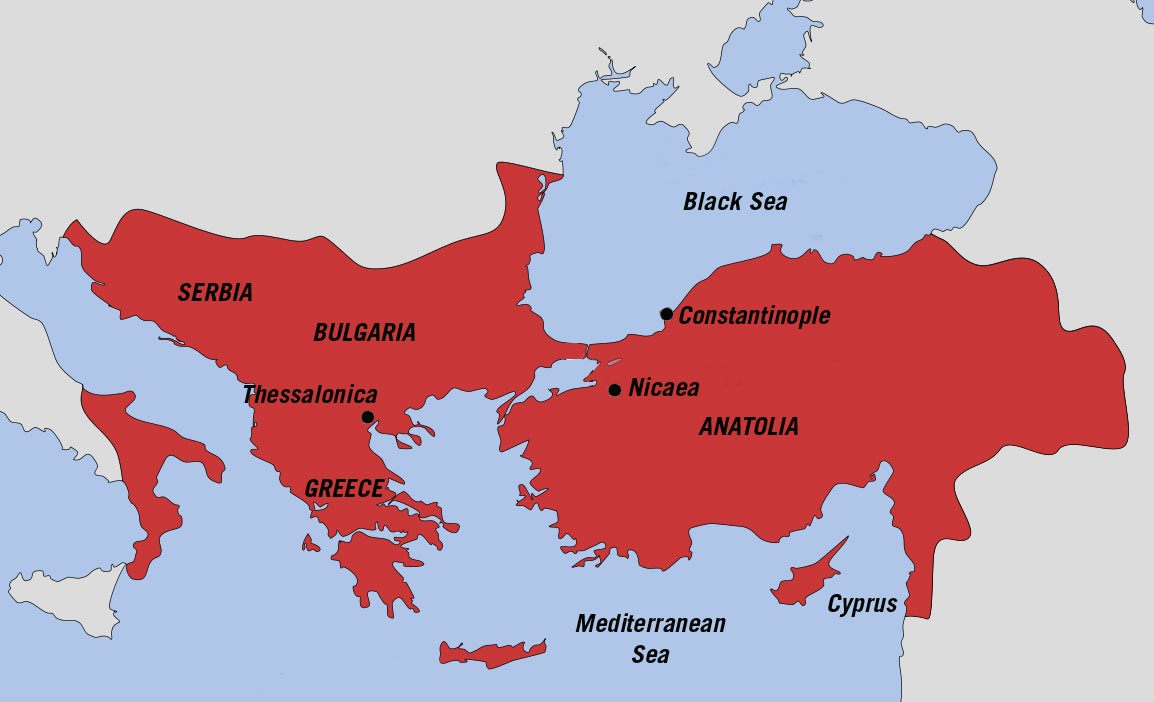
The Byzantine Empire flourished once more in the late 9th century under the rule of Basil I and the emperors of the Macedonian dynasty. But, after the 11th century, the empire was weakened by further invasions, and it finally came to an end when Constantinople fell to the Ottoman Turks in 1453.
Consultant: Philip Parker
pics
Without in any way limiting Q-files Ltd’s exclusive rights under copyright, any use of this publication to “train” generative artificial intelligence (AI) technologies to generate text is expressly prohibited. Q-files Ltd reserves all rights to license use of this work for generative AI training and development of machine learning language models.