
Europe

CITE
We have made every effort to follow citation style rules, but there may be some minor differences. If in doubt, please refer to the appropriate citation style manual.
French Revolution timeline. (2022). In Q-files Encyclopedia, History, Europe. Retrieved from
https://www.q-files.com/history/europe/french-revolution-timeline
"French Revolution timeline." History, Europe, Q-files Encyclopedia, 10 Feb. 2022.
https://www.q-files.com/history/europe/french-revolution-timeline.
Accessed 22 Sep. 2026.
French Revolution timeline 2022. History, Europe. Retrieved 22 September 2026, from
https://www.q-files.com/history/europe/french-revolution-timeline
History, Europe, s.v. "French Revolution timeline," accessed September 22, 2026.
https://www.q-files.com/history/europe/french-revolution-timeline


French Revolution timeline
1788
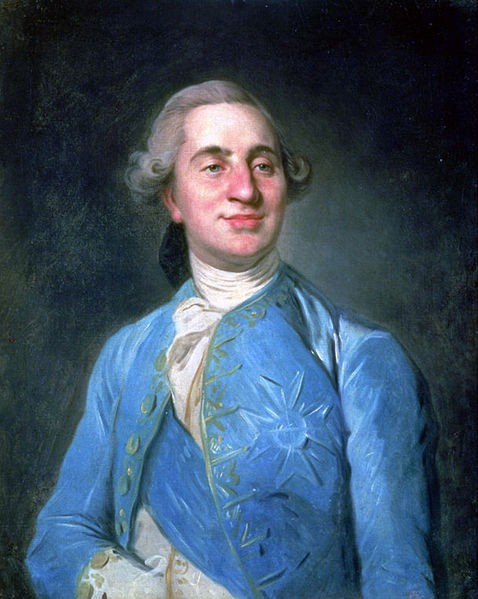
8th August The Parlement of Paris, an assembly of nobles, refuses to lend the Crown further funds or to pay taxes. The Minister of Finance calls a meeting of the Estates General, an assembly of the three traditional orders, or Estates, of French society: nobility, clergy and commoners (known as The Third Estate). The Estates General has not met since 1614.
19th November French bankers and businessmen agree to lend the Crown money, on condition that the Estates General will have power to reform the system.
1789
24th January The process of elections to the Estates General begins. The Third Estate start to prepare their Cahiers de Doléances (lists of grievances).
5th May Opening of the Estates General at Versailles. The nobility refuses to meet together with the Third Estate. The Third Estate deputies decide to hold their own meeting and invite the other Estates to join them.
17th June The Third Estate deputies declare the establishment of the National Assembly.
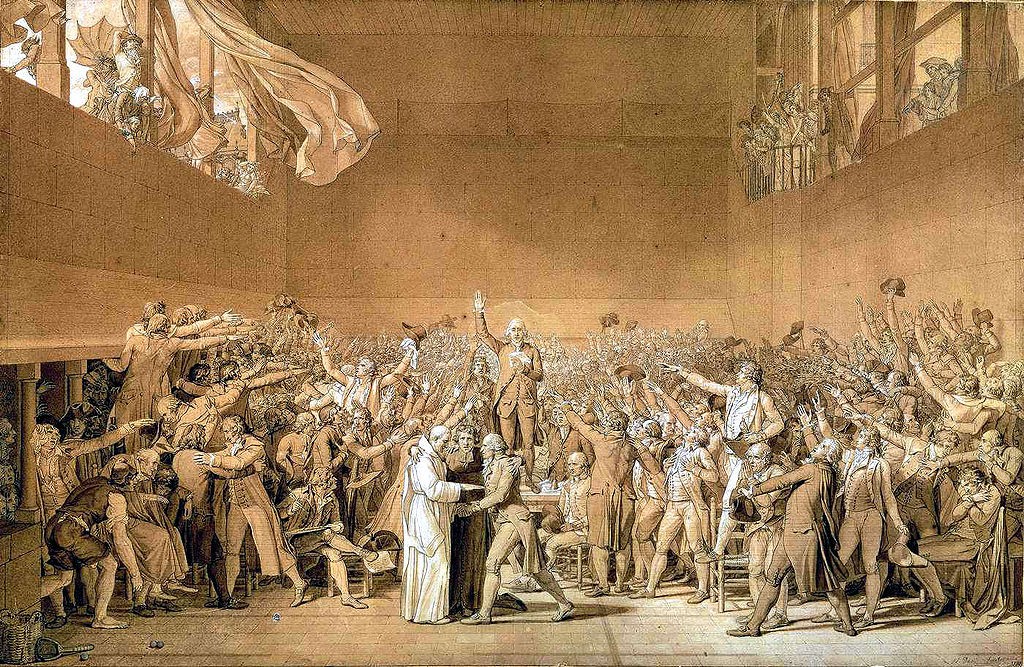
20th June On the orders of King Louis XVI, the meeting hall of the Third Estate is closed and locked. The deputies, along with some clergy, gather instead in the indoor tennis court and swear not to disband until France is given a new constitution. This becomes known as The Tennis Court Oath.
25th June Forty-eight nobles, headed by Louis Philippe II, Duke of Orléans, join the National Assembly.
27th June Louis XVI recognizes the new National Assembly. He instructs the nobility and clergy to meet with the Third Estate.
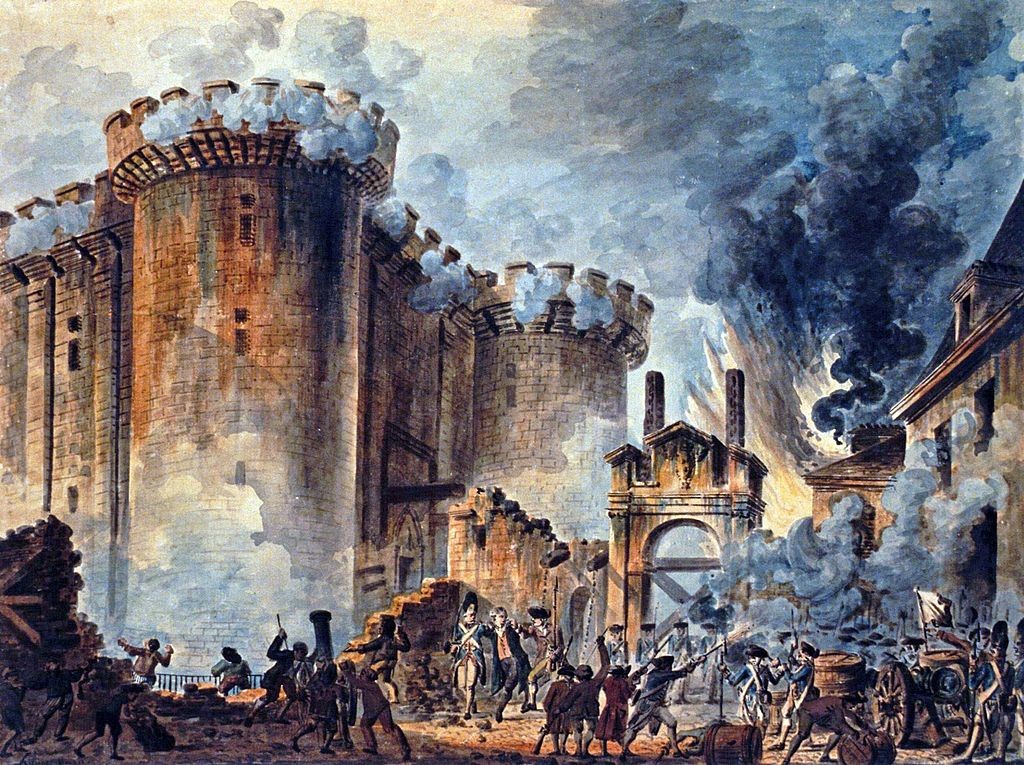
14th July Storming of the Bastille. The French Revolution begins when a large crowd besieges the Bastille prison in Paris, which has a supply of weapons and gunpowder. After several hours of resistance, the governor surrenders and he is killed by the crowd.
15th July The National Assembly appoints Gilbert du Motier, Marquis de Lafayette, a hero of the American Revolutionary War, as commander-in-chief of the newly formed National Guard.
17th July Beginning of the “Great Fear”, the peasant revolt against feudalism. There are uprisings in towns across France, including Strasbourg (21st July), Le Mans (23rd July) and Colmar (25th July). Several nobles emigrate from France.
4th August August Decrees. The National Assembly votes to abolish the privileges and feudal rights of the nobility and the church, marking an end to the ancien régime (the name for the French ruling class before the Revolution).
7th August Jean-Paul Marat demands a much more radical revolution. He heads the sans-culottes (Paris militants) movement of the Revolution.
26th August The National Assembly adopts the Declaration of the Rights of Man.
5th October Women’s March on Versailles. Thousands of women take part in a march to the royal palace in Versailles to demand lower bread prices.
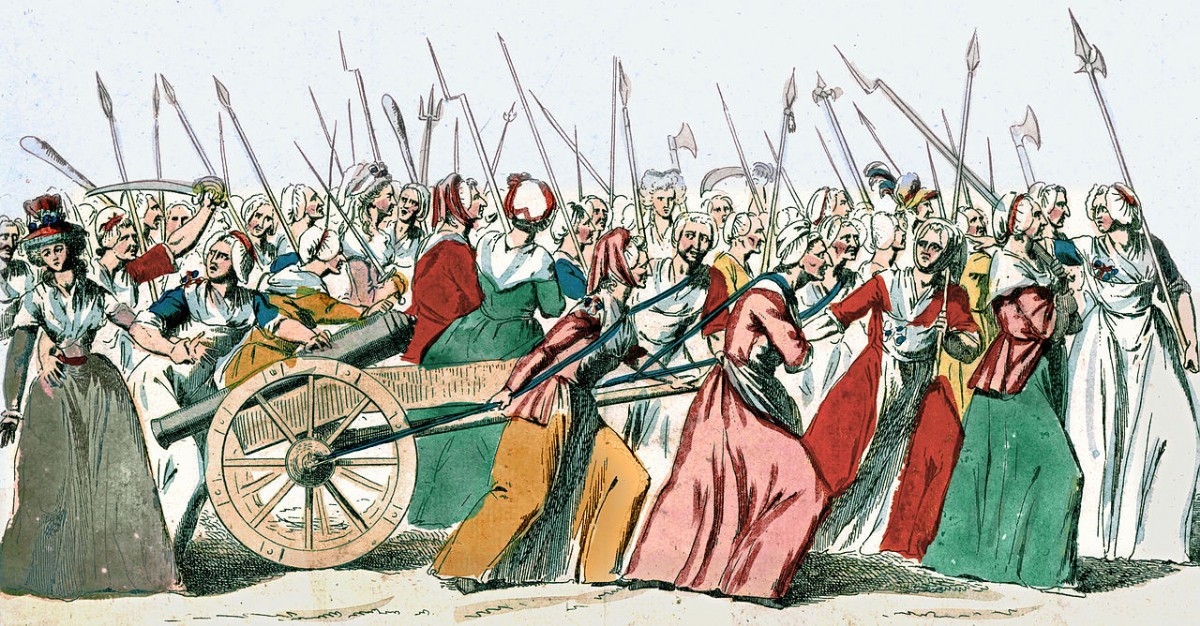
6th October The women invade the palace, and force the king and his family to return to Paris. The king is kept under house arrest at the Tuileries Palace.
6th October The Jacobin Club is formed. Among its members are the most radical leaders of the Revolution.
10th October The Assembly changes the royal title from "King of France" to "King of the French”.
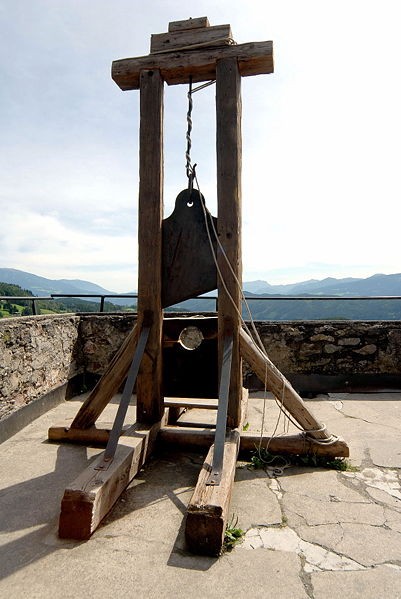
10th October Joseph-Ignace Guillotin, a doctor and member of the Assembly, proposes a beheading machine, a new and more humane form of public execution, which will come to be known as the guillotine.
1790
14th July The Fête de la Fédération is held on the Champ de Mars in Paris to celebrate the first anniversary of the Revolution. The event is attended by the king and queen.
26th July Marat demands the immediate execution of hundreds of nobles to save the Revolution.
24th October The Assembly decrees that the tricolour will replace the white flag and fleur-de-lys of the French monarchy as the emblem of France.
1791
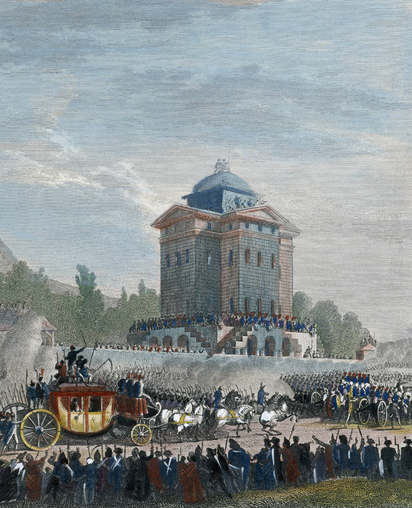
20th June King Louis XVI and his family attempt to flee Paris but are captured at Varennes near France’s northeastern border and forced to return (22nd June).
17th July Massacre of the Champs de Mars. National Guard fire on crowd during protests against the king's reinstatement.
13th–14th September King Louis XVI formally accepts the new Constitution: France is to become a constitutional monarchy with the king as little more than a figurehead. The elected Legislative Assembly makes laws, although the king retains his veto and the ability to select ministers.
1792
9th February The Assembly decrees the confiscation of the property of émigrés (nobles who have emigrated) for the benefit of the Nation.
20th March The guillotine becomes the official method of execution.
20th April The Assembly votes for war against Austria-Hungary and Prussia, marking the beginning of the French Revolutionary Wars (1792–1802)
25th April La Marseillaise, composed by army officer Rouget de Lisle, is sung for the first time in Strasbourg.
9th August Georges Danton and his supporters, the Cordeliers, take over the Paris city government and establish the Revolutionary Paris Commune.

10th August Storming of the Tuileries Palace. The Paris Commune and allies attack the Tuileries Palace. The king and his family take refuge in the Legislative Assembly. The Assembly provisionally suspends the authority of the king, and orders the election of a new government, the Convention.
17th August The Assembly votes to create a Revolutionary Tribunal.
19th August Armies of Austria-Hungary and Prussia led by the Duke of Brunswick invade France in support of King Louis XVI.
2nd–7th September Paris Commune orders massacre of aristocrats and priests held in Paris prisons (although most of those slaughtered are common criminals, around 1400 in number).
19th September Creation of the Louvre Museum to display art taken from royal collections.
20th September The French army defeats the Prussians at the Battle of Valmy.
20th–21st September The National Convention, which replaces the Legislative Assembly, holds its first session. The Jacobins take their seats in the highest benches in the hall, the Montagne (Mountain), and are thus known as Montagnards, the "Mountaineers".
22nd September The Convention proclaims the abolition of royalty and the First French Republic.
19th November Edict of Fraternity. The Convention claims the right to intervene in any country "where people desire to recover their freedom".
20th November Discovery in the king's apartment in the Tuileries Palace of his secret correspondence with foreign monarchs urging them to invade France and restore him to power.
10th December Opening of the trial of King Louis XVI before the Convention. The Jacobin Maximilien Robespierre declares that "Louis must die so that the nation may live."
1793
15th January The Convention declares Louis XVI guilty of conspiracy.
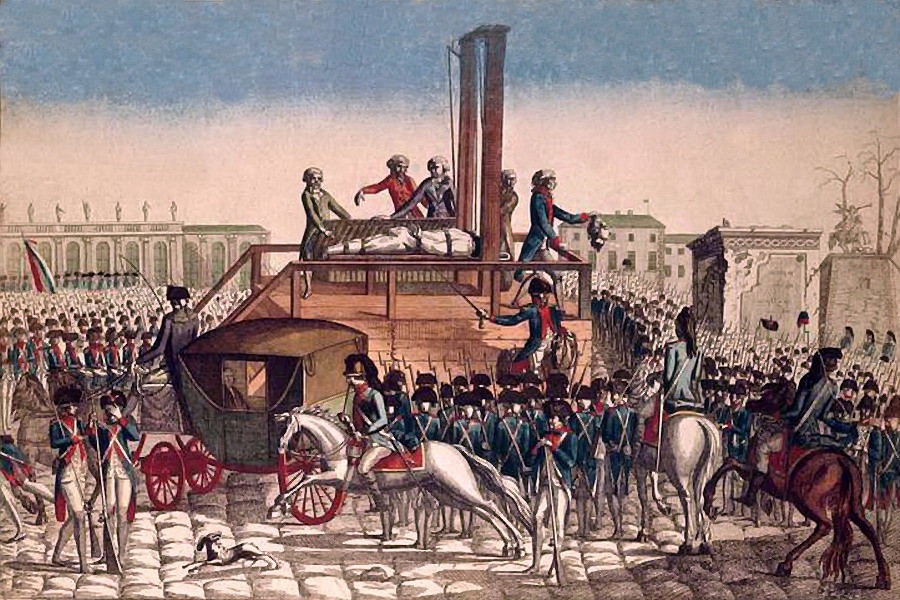
21st January King Louis XVI is executed by guillotine in the Place de la Révolution. The commander of the execution, Antoine Joseph Santerre, orders a drum roll to drown out his final words to the crowd.
11th March An armed uprising against the rule of the Convention, and particularly against conscription into the army, begins in the Vendée.
5th April Jean-Paul Marat is elected head of the Jacobin Club.
6th April Committee of Public Safety established by the Convention to be chief executive body of the government.
13th April The Convention votes to arrest Marat for inciting violence and murder. He is later released.
26th May The Jacobin leaders Robespierre and Marat call for an uprising against the Convention.
31st May–2nd June An armed crowd of sans-culottes organized by the Paris Commune storms the hall of the Convention and demands that it be disbanded. The deputies resist.
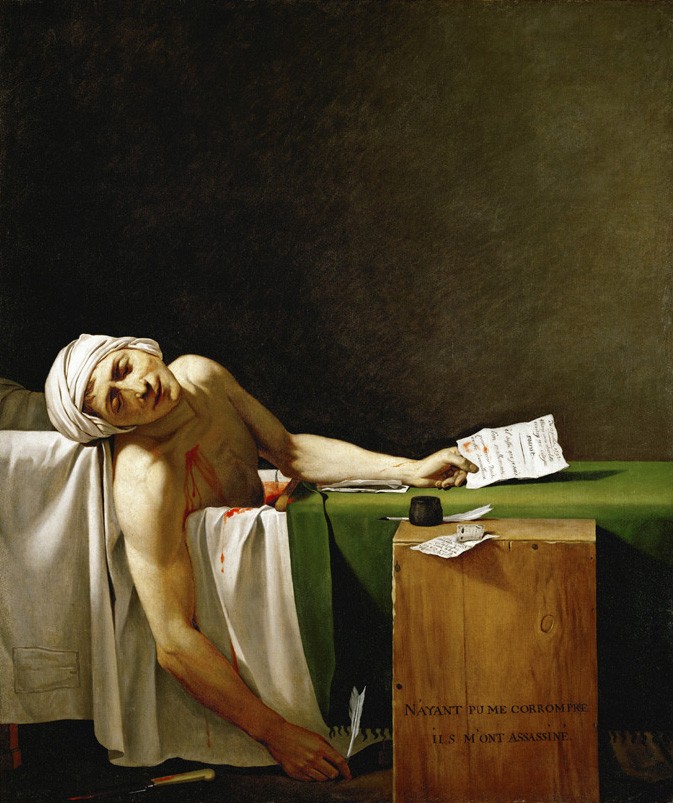
13th July Charlotte Corday assassinates Jean-Paul Marat in his bath. At her trial, she declares, "I killed one man to save a hundred thousand." She is guillotined after her trial (17th July).
22nd August Robespierre is elected the president of the Convention.
17th September Convention adopts a new Law of Suspects, permitting the arrest of anyone suspected of opposing the Revolution. It marks the start of the Reign of Terror.
5th October The new French Republican Calendar is adopted by the Convention.
12th October Marie-Antoinette, wife of Louis XVI, is summoned before the Revolutionary Tribunal and charged with treason. She is convicted and guillotined in the Place de la Révolution (16th October).
30th October–8th November Purge of the moderate Girondins. Before her execution, Madame Roland cries: "Liberty, what crimes are committed in your name!"
23rd December The French army defeats the last of the Vendée rebels at Savenay. Six thousand prisoners are executed.
1794
30th March Danton and his supporters are arrested. He is put on trial before the Revolutionary Tribunal and is convicted and guillotined (5th April).
8th May The scientist Antoine Lavoisier is guillotined for having been involved with tax collection before the Revolution.
26th June French army defeats the Austrians at the Battle of Fleurus.
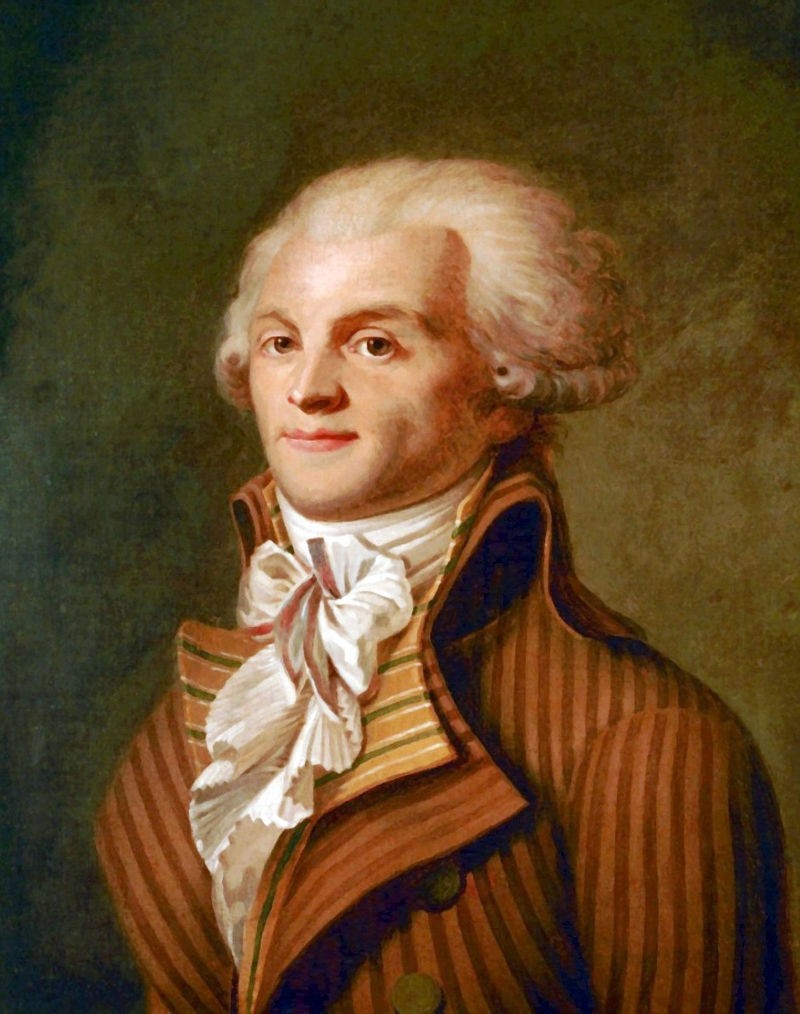
27th July The Thermidorian Reaction begins. The Convention votes to arrest Robespierre.
28th July Robespierre and his allies are guillotined. This brings an end to the Reign of Terror during which up to 40,000 people may have met their deaths.
16th December Jean-Baptiste Carrier, a Jacobin, is convicted of ordering the mass execution of up to 10,000 prisoners in the Vendée and is executed himself.
1795
10th January A French army under general Charles Pichegru crosses the frozen rivers that traditionally protect the Netherlands from invasion and defeat the forces of the Dutch Republic and its Austrian and British allies. Revolution breaks out in Dutch cities and towns even before the French arrive. Dutch head of state William V is forced to flee to England. Batavian Republic, a "sister republic" to France, is proclaimed in the Netherlands on 19th January.
14th February Several former Jacobin leaders are assassinated, beginning the White Terror.
20th–23rd May Armed uprising against the Convention by Jacobins and sans-culottes. The army arrests the participants.
14th July La Marseillaise is adopted as the national anthem of France.
21st July Rebel royalist army surrenders at Quiberon, where 748 émigrés and their allies are executed.
23rd September The Directory, consisting of five members, is formed and takes control of the government of France. Also created are two councils, the Council of the Five Hundred and the Council of Elders.
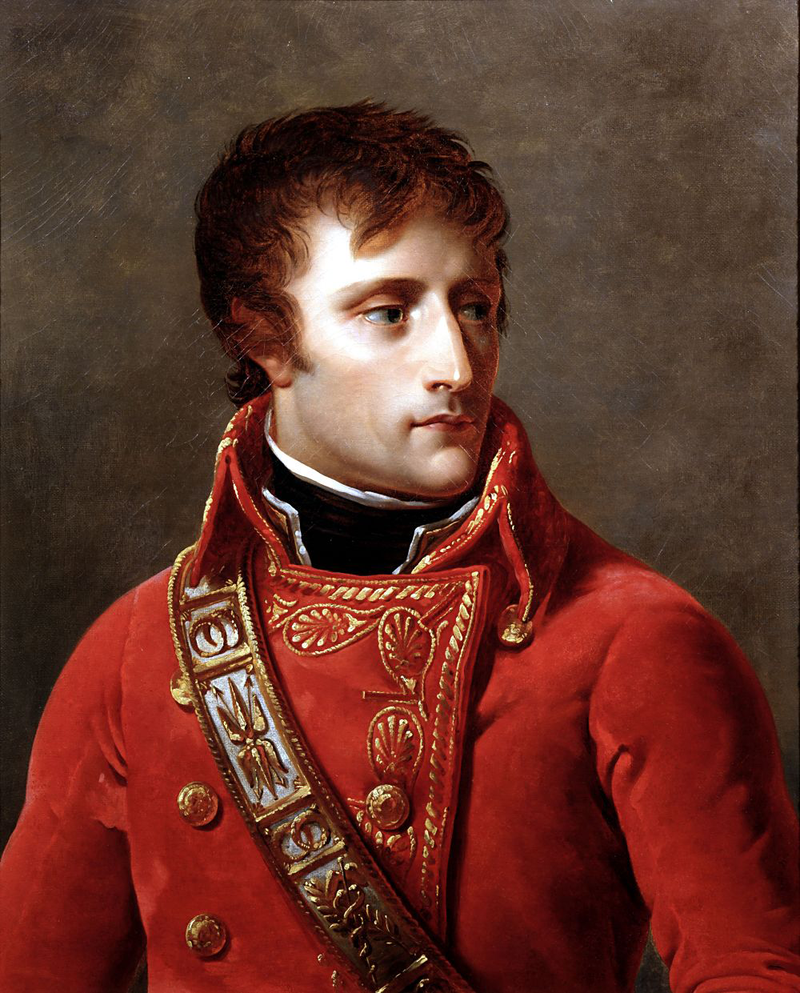
5th October Napoleon Bonaparte comes to public attention by suppressing a royalist rebellion in Paris with what he describes as a "whiff of grapeshot".
26th October Place de La Révolution renamed Place de la Concorde.
1796
2nd March Napoleon Bonaparte becomes commander of the French Army in Italy.
9th March Marriage of Napoleon Bonaparte and Joséphine de Beauharnais, the widow of a Alexandre de Beauharnais, a political leader guillotined during the Reign of Terror.
10th April Napoleon begins his victorious Italian campaign against the Austrian army.
1797–99
17th October 1797 Treaty of Campo Formio ends war between Austria and France.
21st July 1798 Napoleon defeats the Egyptian Mamluk forces at the Battle of the Pyramids.
1st August 1798 Admiral Horatio Nelson and the British fleet destroy the French fleet at the Battle of the Nile.
16th October 1799 Napoleon arrives back in Paris to public acclaim.
9th November 1799 Napoleon organizes a military coup (a takeover of the government). French troops loyal to him occupy key posts in Paris.
24th December 1799 The new Consulate is established with Napoleon given sweeping powers as First Consul.
Consultant: Philip Parker
pics
Without in any way limiting Q-files Ltd’s exclusive rights under copyright, any use of this publication to “train” generative artificial intelligence (AI) technologies to generate text is expressly prohibited. Q-files Ltd reserves all rights to license use of this work for generative AI training and development of machine learning language models.