
Europe

CITE
We have made every effort to follow citation style rules, but there may be some minor differences. If in doubt, please refer to the appropriate citation style manual.
Industrial Revolution. (2022). In Q-files Encyclopedia, History, Europe. Retrieved from
https://www.q-files.com/history/europe/industrial-revolution
"Industrial Revolution." History, Europe, Q-files Encyclopedia, 10 Feb. 2022.
https://www.q-files.com/history/europe/industrial-revolution.
Accessed 6 Aug. 2026.
Industrial Revolution 2022. History, Europe. Retrieved 6 August 2026, from
https://www.q-files.com/history/europe/industrial-revolution
History, Europe, s.v. "Industrial Revolution," accessed August 6, 2026.
https://www.q-files.com/history/europe/industrial-revolution


Industrial Revolution
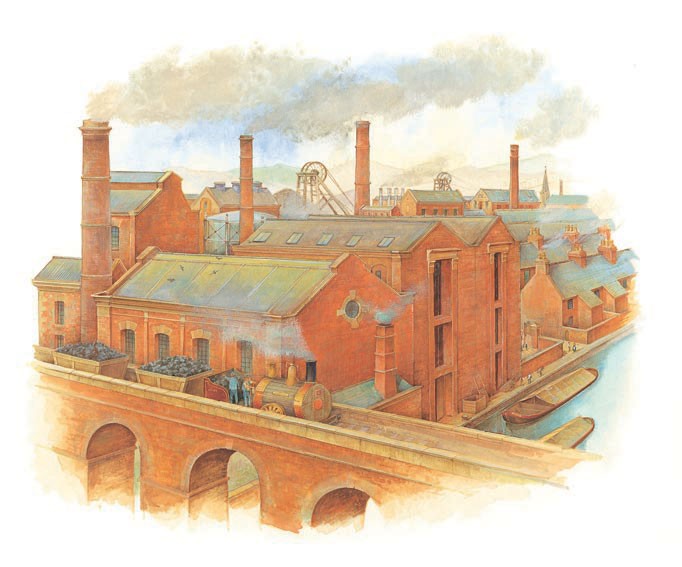
The Industrial Revolution is the name given to a series of changes that took place in the late 18th and 19th centuries when industry was transformed by the development of new machinery. Large factories were built where goods were manufactured on a large scale. Towns grew up around the factories and many people moved to the towns looking for work. The development of the railways made transport quicker and easier than ever. As people flocked to the cities, poverty and overcrowding became serious problems. The Industrial Revolution began in Britain, but during the 19th century it quickly spread to other European countries and to North America.
Spinning machines
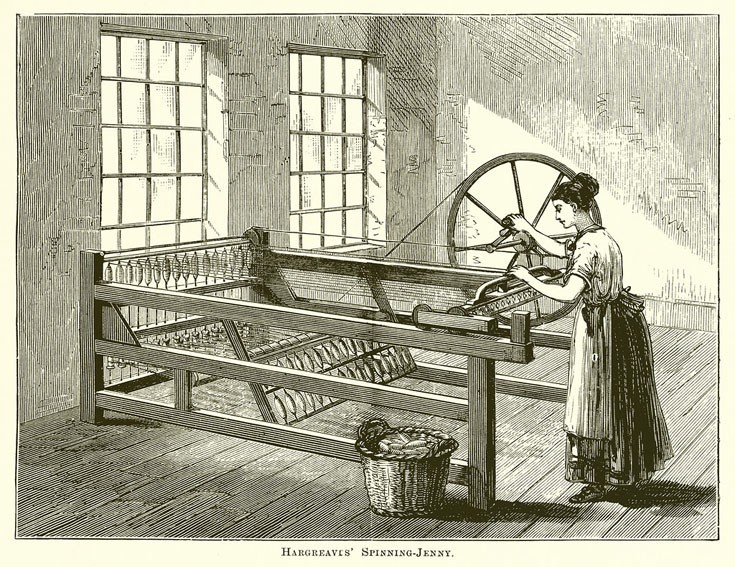
The textile industry—the production of cloth—was the first to use modern production methods. In 1764, Englishman James Hargreaves (1720–78) invented the spinning jenny, a multi-spindle spinning frame. Enabling a person to work eight or more spools at once, the spinning jenny greatly reduced the amount of work needed to produce yarn (thread). It mean that much more yarn could be produced.
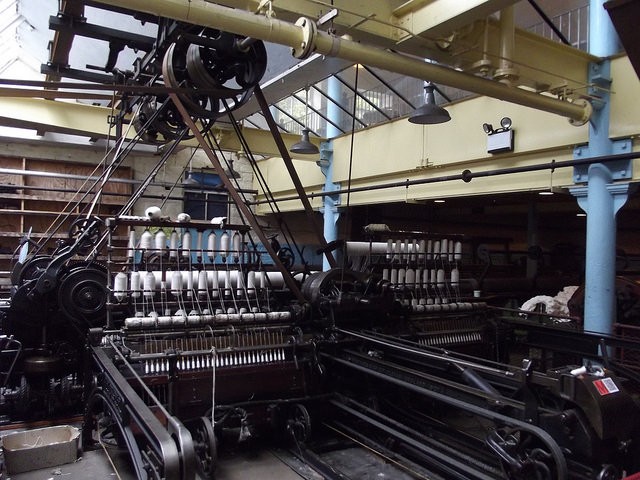
Just five years later, the spinning frame, invented by Richard Arkwright (1732–92), improved on the spinning jenny. Able to drive 128 spindles at a time, it was too large to be hand-operated, so Arkwright decided to harness the power of the water wheel instead. In 1771 he installed his new machine in a purpose-built mill on the banks of the River Derwent in Cromford, Derbyshire. Arkwright's mill was the first modern factory.
The spinning mule, which combined parts of the mechanisms from both the spinning jenny and spinning frame, was invented between 1775 and 1779 by Samuel Crompton (1753–1827). It became the standard machine in the textile industry until the 20th century.
The rise of steam power
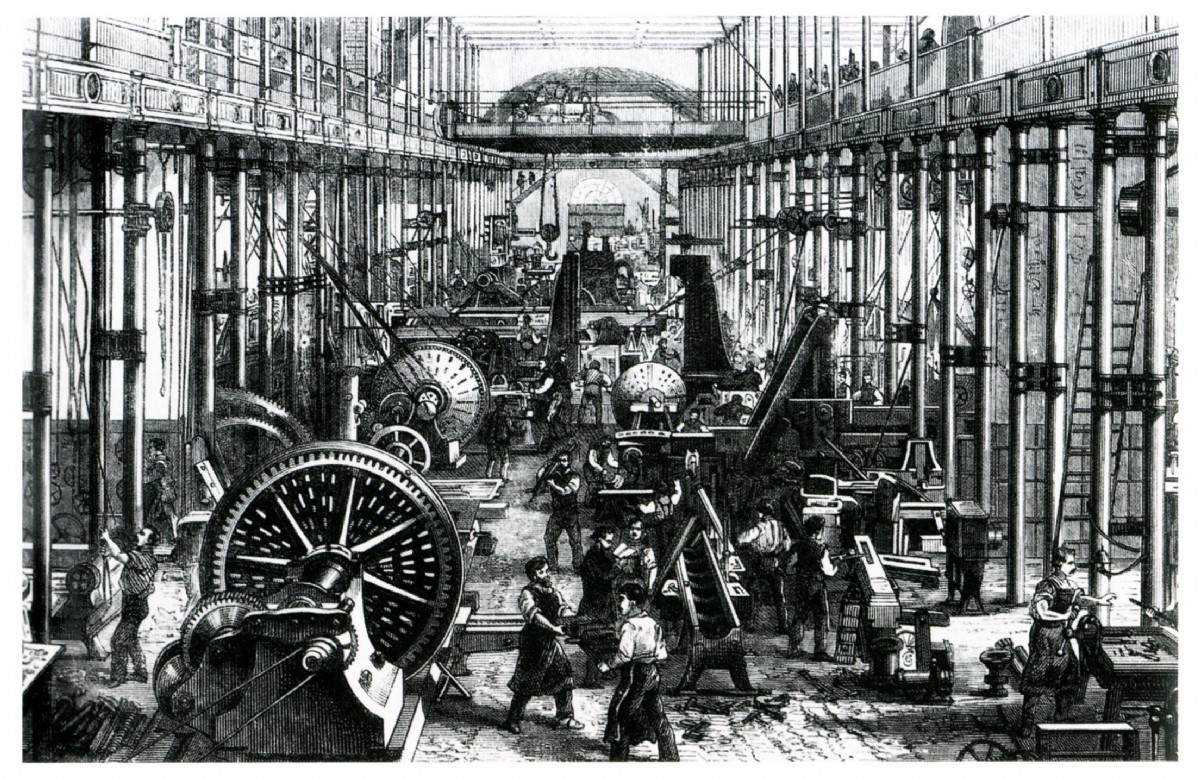
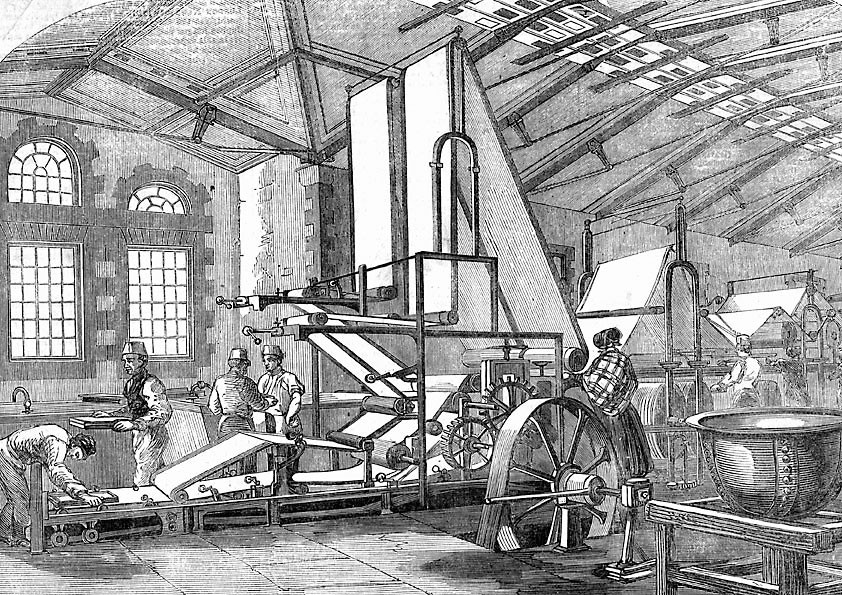
Up until the mid-1700s, most manufacturing was carried out on a small scale in people’s homes or in small workshops. Machines were driven by hand, or sometimes by water- or animal-power. Then, in the late 18th century, new and bigger machines were invented in Britain, making it possible to produce goods more quickly and efficiently. These new machines needed more power than could be provided by animals or water. The development of the steam engine answered this need. This new machinery was too big for homes or workshops, so manufacturing moved into mills and factories.
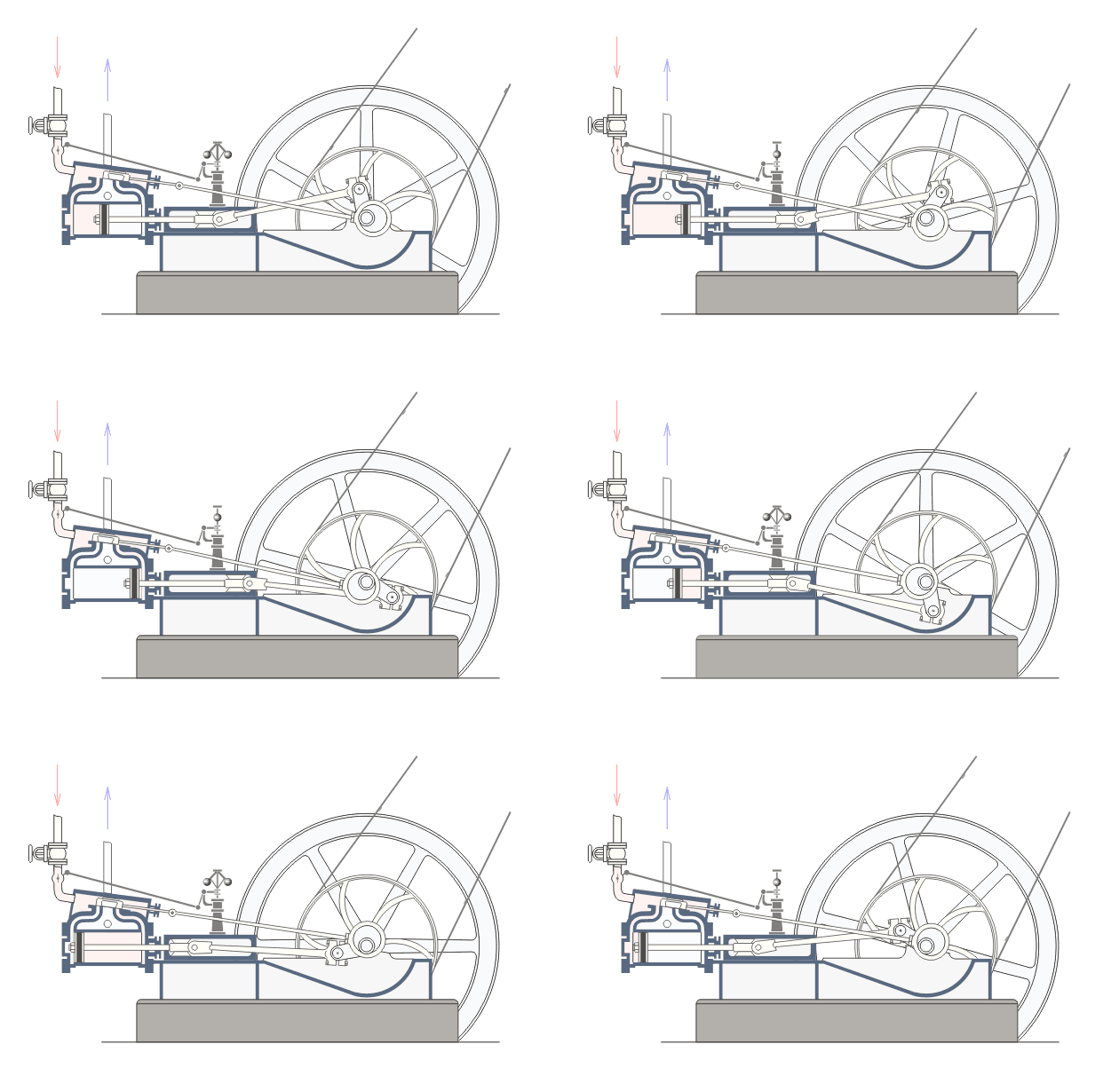
Scottish engineer James Watt (1736–1819) built his first steam engine in 1769. In partnership with manufacturer Matthew Boulton, Watt added a mechanism that converted the up-and-down movement produced by the engine into a turning movement, called rotary motion. Wheels and belts could now link the engine to grinding, spinning and weaving machines in a factory or mill. Fully developed by 1783, it was called the double action rotation engine.
Coal and iron
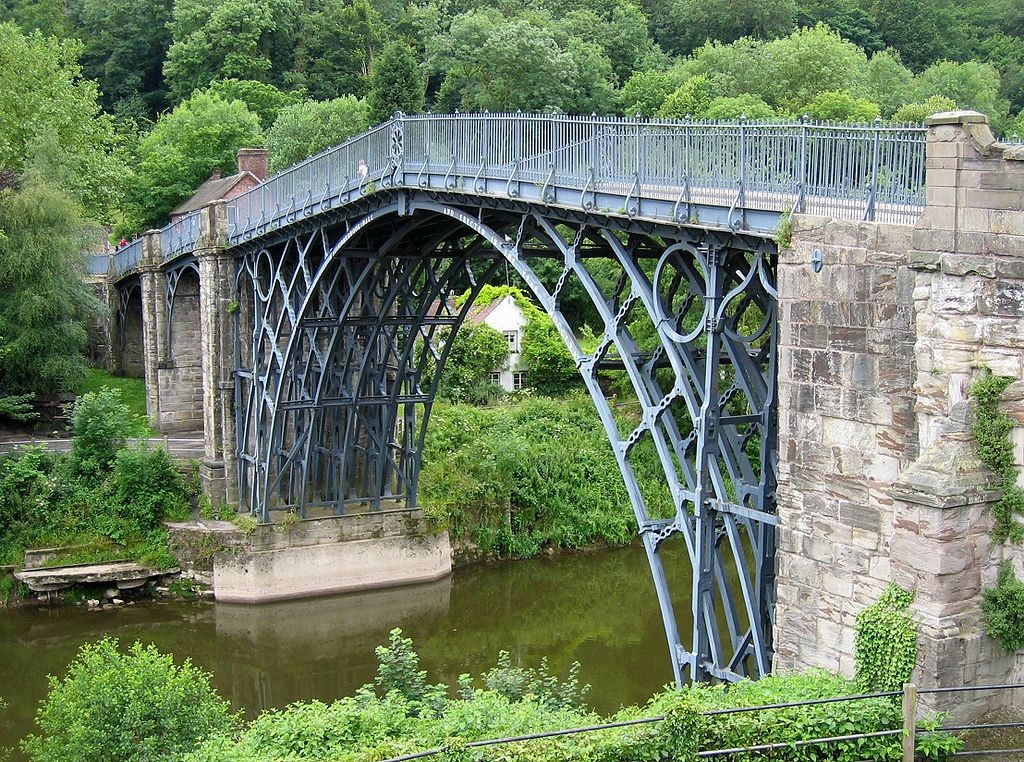
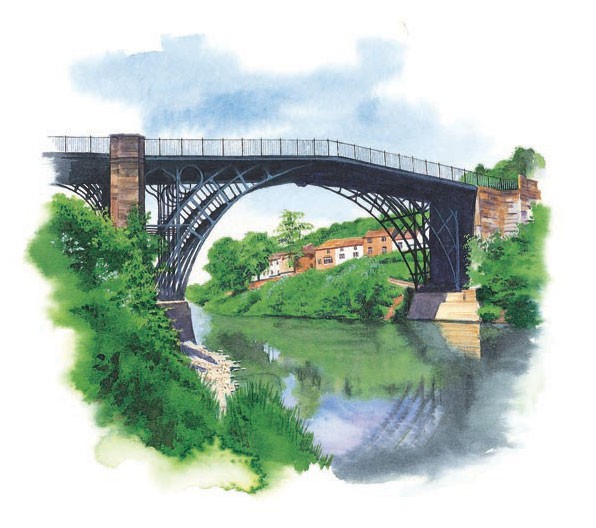
One of the reasons the Industrial Revolution developed rapidly in Britain was that there were plentiful supplies of coal and iron. Coal heated the furnaces where iron was separated from its ore (smelting). Coal also provided fuel for steam engines. Iron was used to make engines and machines, as well as bridges and railways. Completed in 1779, the Iron Bridge in Shropshire was the first bridge to be made out of iron.
As industry grew, it became vital to be able to transport goods around the country. This resulted in a period of canal-building, followed by the development of the railways.

Industrial towns
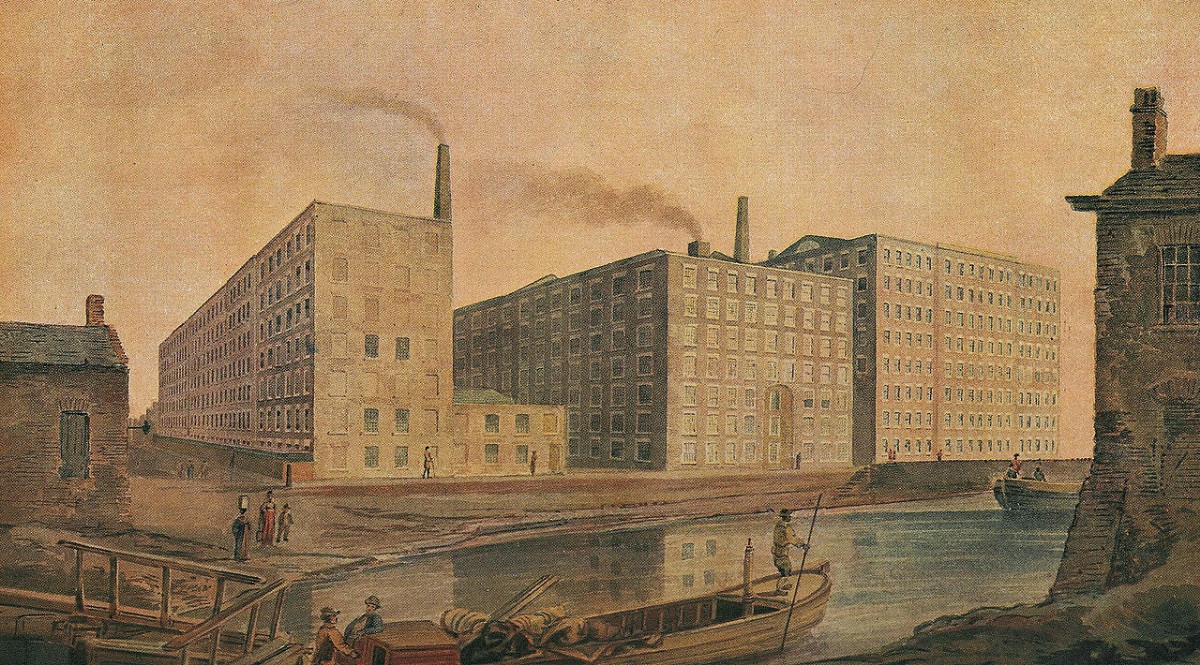
The development of steam engines led to the growth of larger, steam-powered mills and factories in the 1780s. Now mills did not need to be located next to rivers, but could be concentrated in towns. Manchester acquired the nickname "Cottonopolis" by the early 19th century, because of its sprawl of textile factories.
Living and working conditions
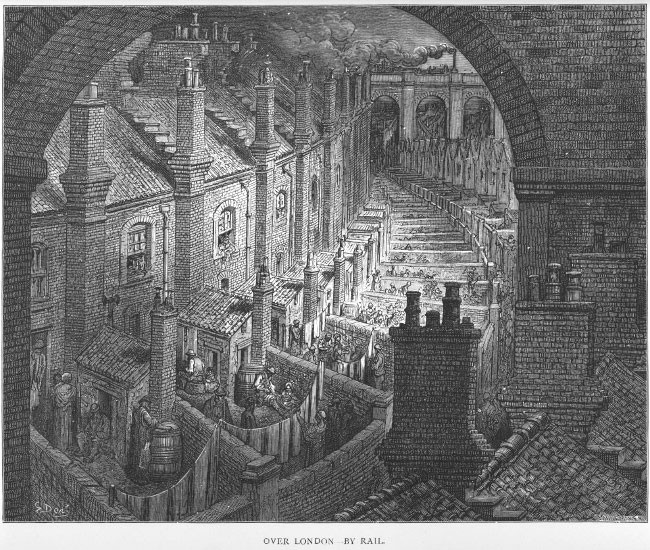
The Industrial Revolution caused great changes in the way people lived and worked. Millions of people moved from rural areas to work in the new factories, mills and mines. However, in some places, working conditions were appalling and dangerous. Women and children worked long hours for little pay. Housing was often overcrowded and insanitary. Under pressure from the workers and reformers, governments eventually passed laws that aimed to improve workers’ conditions.

Consultant: Philip Parker
pics

Without in any way limiting Q-files Ltd’s exclusive rights under copyright, any use of this publication to “train” generative artificial intelligence (AI) technologies to generate text is expressly prohibited. Q-files Ltd reserves all rights to license use of this work for generative AI training and development of machine learning language models.