
Europe

CITE
We have made every effort to follow citation style rules, but there may be some minor differences. If in doubt, please refer to the appropriate citation style manual.
Europe 15th–18th centuries. (2025). In Q-files Encyclopedia, History, Europe. Retrieved from
https://www.q-files.com/history/europe/europe-15th-18th-centuries
"Europe 15th–18th centuries." History, Europe, Q-files Encyclopedia, 7 Nov. 2025.
https://www.q-files.com/history/europe/europe-15th-18th-centuries.
Accessed 21 Sep. 2026.
Europe 15th–18th centuries 2025. History, Europe. Retrieved 21 September 2026, from
https://www.q-files.com/history/europe/europe-15th-18th-centuries
History, Europe, s.v. "Europe 15th–18th centuries," accessed September 21, 2026.
https://www.q-files.com/history/europe/europe-15th-18th-centuries


Europe 15th–18th centuries
The history of Europe between 1400 and 1800 is one of religious conflict and almost continual warfare. The Renaissance, a time when the arts and learning of ancient Greece and Rome were being rediscovered, had started in the 14th century in Italy, and began to spread across the rest of Western Europe during the 15th century. During this time, the leading nations began to unite behind powerful monarchies. France, Spain, Austria and England (later Britain) gradually built up substantial kingdoms, although Italy and Germany continued to remain divided into numerous independent states.

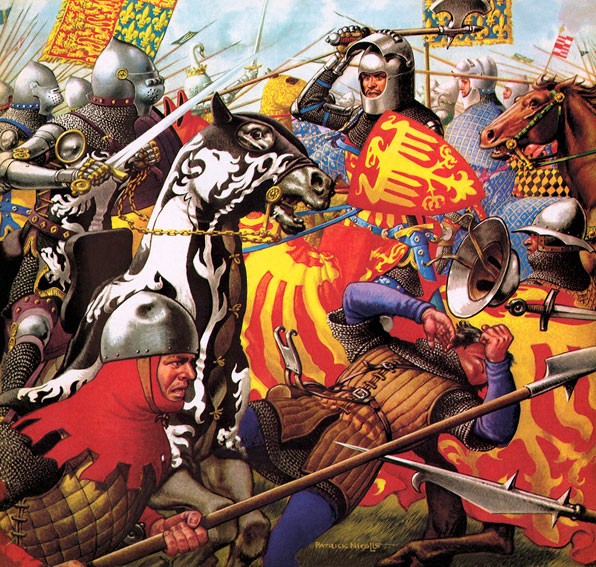
England and France
In France, the French eventually emerged victorious from the Hundred Years’ War (1337–1453) with England. The English kept only the port of Calais and gave up the rest of their French possessions to France. England descended into a civil war between two rival royal houses known as the Wars of the Roses. The conflict came to an end when Henry Tudor seized the throne in 1485 and, as King Henry VII, established a strong government.
France went to acquire more territory, including Brittany and Provence. In 1494, she invaded Italy in order to seize Naples, which Pope Innocent VII had granted to her, leading to a lengthy conflict in Italy that involved Spanish and German armies fighting against them.
Burgundy
An attempt by the dukes of Burgundy to carve out an independent kingdom between France and the Holy Roman Empire ended when Charles the Bold was defeated and killed in battle by the Swiss at Nancy in 1477. The Duchy of Burgundy then became part of France. When Charles's heiress, Mary, married Maximilian of Habsburg, the Franche-Comté and the Netherlands, former Burgundian territories, became part of the expanding Habsburg Empire in central Europe.


Holy Roman Empire
and Spain
Since 1452 the Habsburgs had ruled the Holy Roman Empire, an area of central Europe made up of hundreds of small kingdoms, principalities and duchies. As the 15th century progressed, the Habsburgs became more and more powerful.
In Spain, the marriage of Ferdinand of Aragon to Isabella of Castile in 1469 led to the unification of Spain in 1479. In 1492 Granada, the last Moorish (Muslim) kingdom in Spain, was finally conquered.
Reformation
Two events in the early part of the 16th century dominated European history for the next century and more. The first was when Martin Luther (1483–1546) prompted the religious Reformation that was to spread rapidly throughout Europe. His Ninety-five Theses, published in 1517, contained a series of attacks on the corruption of the Roman Catholic Church. His and other "protests" gave the name to the new Protestant movement.

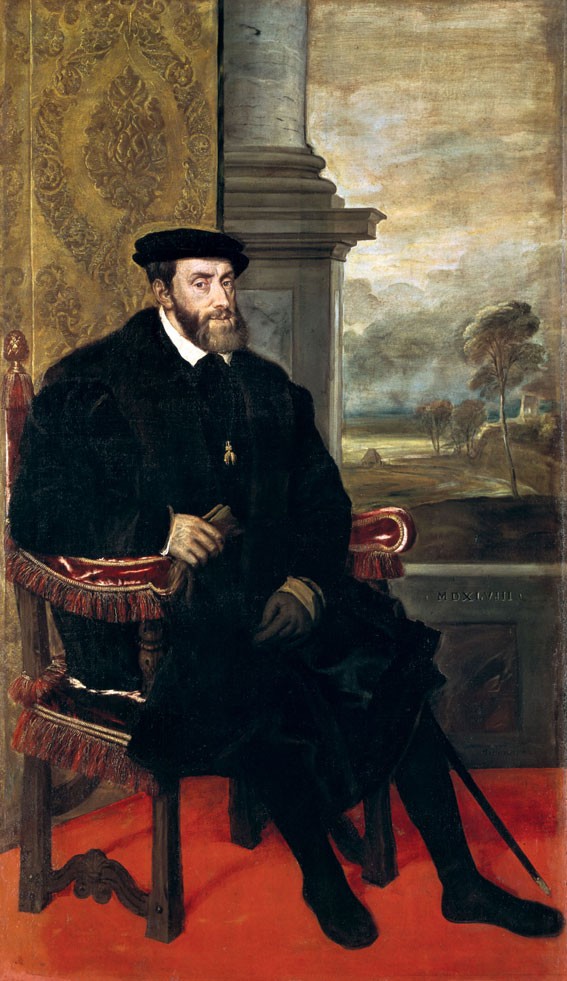
The second event took place two years later when Charles, a member of the Habsburg dynasty, who had been king of Spain since 1516, also became Holy Roman Emperor as Charles V. His vast empire included (as well as Spain): Bohemia, Austria, the Low Countries, parts of Italy, and Spain's conquered lands in the Americas and Philippines.
Wars of religion
Following the Reformation, the states of Scandinavia, the Netherlands, much of Germany, Switzerland and later England and Scotland became Protestant, creating a divide between them and the rest of Catholic Europe. Religious wars soon broke out in Germany. In 1547 the Holy Roman Emperor Charles V defeated the leading German Protestants at Mühlberg but was unable to stem the tide of Protestantism. The absolute authority of the Roman Catholic Church was now broken. Charles also had to deal with a conflict between the Habsburgs and France. The French feared being surrounded by the Habsburgs (who ruled both Spain to the southwest and nearly all the lands to the east) and often fought against them—particularly in Italy.
Settlements and reform
These various issues were eventually settled during the 1550s. The 1555 Peace of Augsburg brought an end to religious conflict in Germany, while the 1559 Treaty of Cateau-Cambrésis ended the war between France and the Habsburgs in Italy. In 1556 Charles V abdicated (gave up his throne) and split his empire in half. His son Philip II governed Spain, Italy and the Netherlands while his brother Ferdinand I governed the Habsburg territories in Germany and became Holy Roman Emperor. Meanwhile, the Catholic Church resolved at a meeting at Trent in 1545 to reform itself and launch what came to be known as the Counter-Reformation.

Revolts
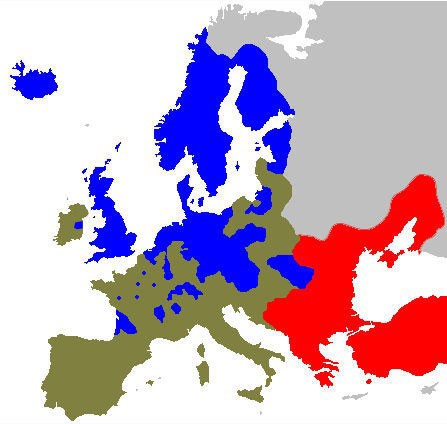
The various settlements of the 1560s did not, however, bring peace to Europe. In 1562 the Calvinist Huguenots of France took up arms against the French throne, while in 1566 the Dutch rose in revolt against Spanish rule. By 1600, almost 40% of the European population was no longer Catholic. Meanwhile, Spain took over the throne of Portugal in 1580, adding to her already immense power. Eight years later, Philip II of Spain sent an Armada against Protestant England. The Armada was defeated in the English Channel, seeing off the threat of invasion.

The Habsburgs
The Habsburgs took their name from Habsburg Castle in Switzerland. In the early 1100s, Otto II became the first Count of Habsburg. By 1276 Habsburgs gained power in neighbouring Austria, which they ruled continuously right up until 1918. From then on, a series of clever marriages and territorial conquests massively expanded their lands in Europe.
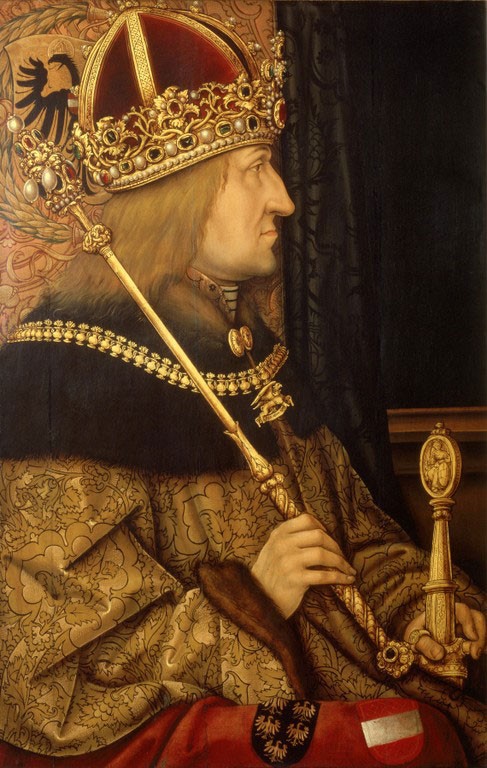
In 1453 Frederick III became Holy Roman Emperor, the family keeping the title and its power until the empire was abolished in 1806. By the early 1500s the Habsburgs controlled Austria, Hungary, Bohemia, Burgundy, the Netherlands, southern Italy, Spain and its New World empire. This vast collection of territories proved too big to govern, so in 1556 the Habsburg empire was split into Spanish and Austrian branches. The Spanish branch died out in 1700 while the Austrian branch continued to rule Austria until its defeat in 1918 at the end of World War I.
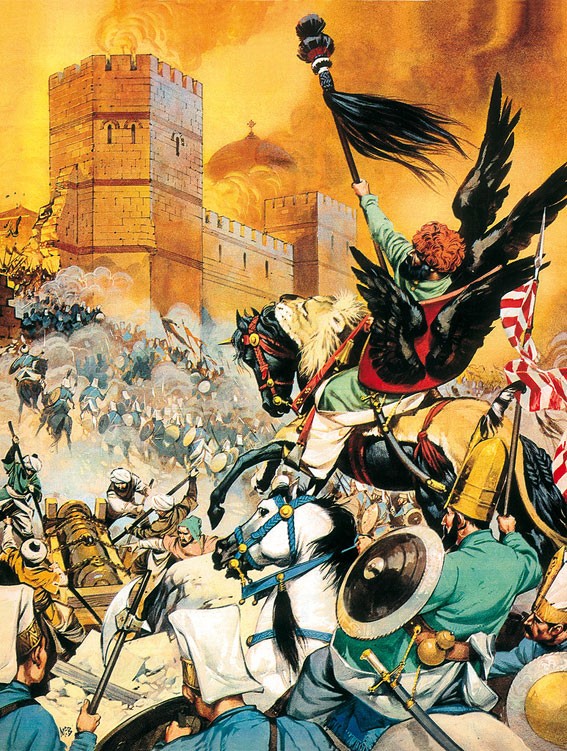
Wars with the Turks
Having gained control of Turkey, the Ottomans turned their attention to Europe. In 1354, they began to expand throughout the Balkans, finally capturing Constantinople, capital of the once-mighty Byzantine Empire, in 1453. Ottoman armies were held at Belgrade in 1456 but returned to defeat the Hungarians at Mohacs in 1526. In 1529, and again in 1683, the Ottomans reached the gates of Vienna, but failed to capture the city. By now their vast empire stretched across North Africa and from Hungary and the Balkans down through the Middle East to the Persian Gulf. The Ottomans posed a constant threat to Christian Europe throughout this period, although their power began to wane after the 1680s.
Sweden
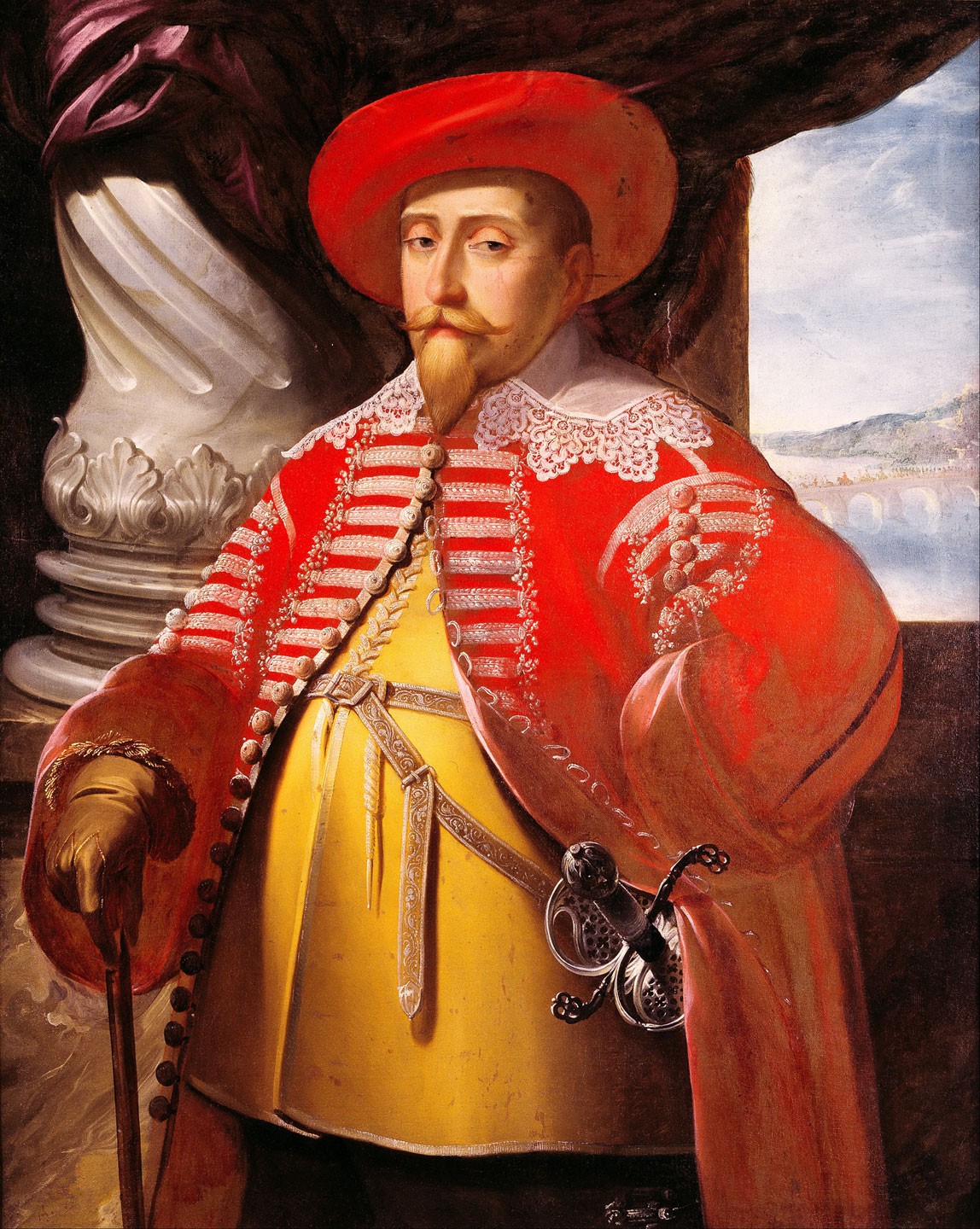
In 1397 Sweden became united with Denmark but broke free in 1523. From then on she steadily expanded around the Baltic Sea, gaining Estonia in 1561 and what is now Latvia in 1629. In 1630 Swedish forces under King Gustavus Adolphus (ruled 1611-32) intervened in the Thirty Years’ War, eventually gaining parts of northern Germany. Wars with Denmark brought it the Baltic island of Gotland and territories in southern Sweden as well as, for a short time, a port on the Atlantic coast at Trondheim in Norway.
Swedish expansion threatened the nations all around the Baltic. In 1700 they formed an alliance against the Swedes. The Swedes succeeded in defeating the Russians at Narva in 1700, and in 1708 invaded Poland. But in 1709 they were decisively defeated by the Russians at Poltava. When peace was declared in 1721, Sweden lost all its Baltic territories to Russia, and her supremacy was brought to an end.

The Thirty Years' War
The Thirty Years’ War was one of the most complex—and bloodiest—wars ever fought in Europe. It broke out in 1618 when Protestants in Bohemia (now the Czech Republic) revolted against Catholic Habsburg rule. Troops from the Habsburg Holy Roman Empire and Spain put down the revolt and also conquered the Protestant state of the Lower Palatinate. In 1625–29 Denmark intervened to support German Protestants but was defeated at Lutter in 1626.

Four years later, Sweden intervened to help the Protestants, and was joined by France in 1635. From now on, the war became a contest between France and Sweden on the one side and Spain and the Holy Roman Empire on the other for dominance in Europe. Spain, however, became seriously weakened after revolts broke out in 1640 in both Catalonia and Portugal against Spanish rule.
Almost every nation in Western Europe was involved in the Thirty Years' War—except England, which was torn by civil war in 1642. By the time the Peace of Westphalia was signed in 1648, much of Germany was ruined and Spanish power broken. After 80 years of struggle, the Dutch finally won their independence from Spain and Switzerland’s independence from the Holy Roman Empire was confirmed.


Louis the Sun King
In 1643 Louis XIV became king of France, aged five. At first, Cardinal Mazarin ruled the country on his behalf, but in 1661 Louis took full control and remained in power until his death in 1715. Louis set out to make France the most important nation in Europe. In a series of wars against the Dutch Republic and the Holy Roman Empire, he extended the French frontiers east to the River Rhine and north into what is now Belgium.
When Louis tried to place his grandson, Philip, on the vacant throne of Spain in 1700, Britain and the Netherlands—both now jointly ruled by William III of Orange—combined to oppose him. By the Treaty of Utrecht that ended the war, called the War of the Spanish Succession, in 1713, Philip V was confirmed as the Spanish king but was unable to unite his throne with that of France. Spain gave up many of her possessions in Italy and the Netherlands to Austria, and Britain gained Gibraltar.
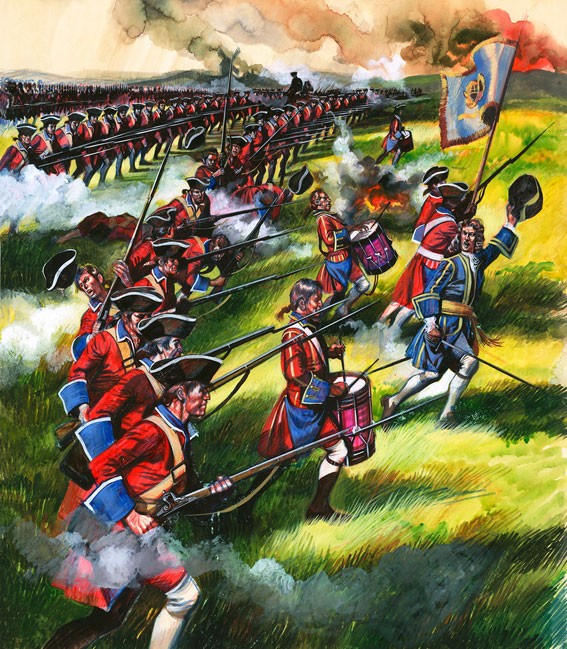

In France, Louis XIV ruled as an absolute monarch. He governed without a parliament, ruling instead with the assistance a series of highly competent ministers. He built a massive palace for his court at Versailles and became known as the Sun King. A staunch Roman Catholic, he brought to an end the toleration of Protestants, known as Huguenots in France, in 1685. More than 200,000 fled into exile, many to Britain, to other Protestant countries or to the newly established Dutch Cape Colony in South Africa.
Rise of the great powers

Europe was dominated during the 1700s by the great military powers of France, Britain and Austria-Hungary, and the trading nation of the Netherlands. At first they kept the peace between them. In 1740 the rising state of Prussia seized Silesia from Austria-Hungary, which took its revenge when the Seven Years' War broke out in 1756. Austria-Hungary, France and Russia allied against Britain and Prussia, which was saved from defeat only when Russia pulled out of the war in 1762. By the Treaty of Paris that ended the war in 1763, Britain made considerable gains from the French in North America, acquiring large parts of what is now Canada.
In central and eastern Europe, Austria-Hungary continued to expand its territories in the Balkans at the expense of the Ottoman Empire. As a result of agreements made in 1772, 1793 and 1795, Poland disappeared from the map as its lands were divided up between Austria-Hungary, Prussia and Russia.
Consultant: Philip Parker
pics
Without in any way limiting Q-files Ltd’s exclusive rights under copyright, any use of this publication to “train” generative artificial intelligence (AI) technologies to generate text is expressly prohibited. Q-files Ltd reserves all rights to license use of this work for generative AI training and development of machine learning language models.