
Islamic world

CITE
We have made every effort to follow citation style rules, but there may be some minor differences. If in doubt, please refer to the appropriate citation style manual.
Ottoman Empire. (2023). In Q-files Encyclopedia, History, Islamic world. Retrieved from
https://www.q-files.com/history/islamic-world/ottoman-empire
"Ottoman Empire." History, Islamic world, Q-files Encyclopedia, 30 Aug. 2023.
https://www.q-files.com/history/islamic-world/ottoman-empire.
Accessed 13 Sep. 2026.
Ottoman Empire 2023. History, Islamic world. Retrieved 13 September 2026, from
https://www.q-files.com/history/islamic-world/ottoman-empire
History, Islamic world, s.v. "Ottoman Empire," accessed September 13, 2026.
https://www.q-files.com/history/islamic-world/ottoman-empire


Ottoman Empire
The Ottoman Empire was the one of the largest and longest-lasting empires in history. Bolstered by its powerful army, the empire was at its height during the reign of Suleiman I "the Magnificent" (1520–66), when it encompassed southeastern Europe, most of the Middle East and large parts of North Africa. The Ottoman capital, Istanbul, stood at the centre of a wealthy and glittering Islamic empire. The Ottoman Empire began its long decline after being driven back in Europe by an alliance of Habsburg, German and Polish forces at the Siege of Vienna in 1683. It survived long enough, however, to fight in World War I in 1914–18, before defeat led to its collapse.

Rise of the Ottomans
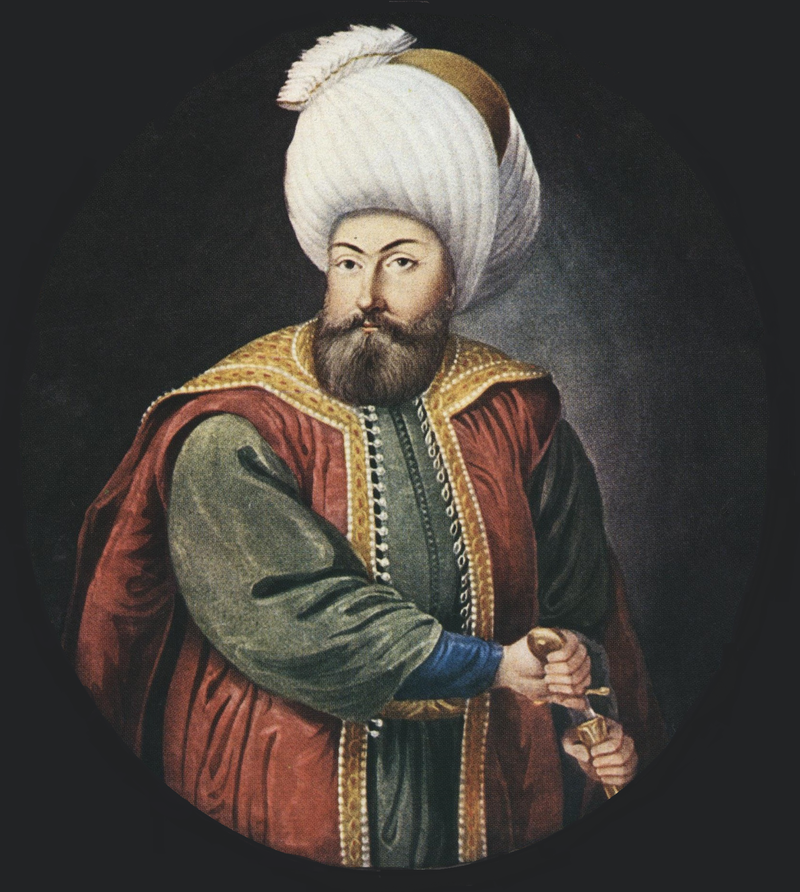
The Turks originally settled in Anatolia (modern-day Turkey) in the late 1200s. At that time, the land was under the rule of the declining Seljuk Empire. Osman, a Turkish tribal leader, overthrew the local Seljuk ruler in 1299 and proclaimed himself Sultan. The word “Ottoman” comes from his name.
In the century after the death of Osman in 1326, Ottoman rule began to extend over Anatolia and the Balkans in southeastern Europe. There they inflicted a series of defeats on the Christian Byzantine Empire. The port city of Salonica was captured from the Venetians in 1387 while their victory at Kosovo in 1389 crushed Serbian resistance. The Ottomans were driven back when the Mongol leader Tamerlane (Timur), founder of the Timurid Empire, invaded Ottoman Anatolia from the east. But they renewed their onslaught on the Balkans in the early 1400s, defeating the Hungarian, Polish and Wallachian armies that stood in their way.
Army
To build their empire the Ottoman sultans formed armies of highly-trained fighters committed to the cause of Islam. These included the Janissaries, slaves from captured Christian territories who rose to become elite military servicemen.
The soldiers were among the first to use muskets and cannons. The Ottoman cavalry, called ghazis, depended on high speed and mobility rather than heavy armour, using bows and short swords on swift horses.


Fall of Constantinople
Ottoman forces took nearly all the former Byzantine lands surrounding Constantinople, but the city's heavy defences made it difficult to conquer. Eventually, in 1453, under Mehmet II "the Conqueror" they captured the once-mighty Byzantine capital It marked the end of more than 1000 years of Byzantine rule.
Mehmet had many of Constantinople's inhabitants slaughtered or banished, before bringing in people from elsewhere in Ottoman lands. He made the city his capital and it came to be called Istanbul. Benefitting from its position at the junction of Europe, Africa and Asia, it could control and profit from the overland trade routes between east and west. Mehmet encouraged merchants, including Jewish traders, to move to Istanbul.

Suleiman I
One of the most famous sultans of the Ottoman Empire was Suleiman I (ruled 1520–1566). The empire was at the peak of its power during Suleiman's reign. He came to the throne as one of the wealthiest rulers in the world. His father Selim had already conquered the Mamluk Empire of Egypt and Syria.
Suleiman personally led Ottoman armies in conquering much of southeastern Europe. He captured Belgrade in 1521 and defeated the Hungarians at Mohacs in 1526 before his advance was checked at the Siege of Vienna in 1529.


During his reign, the Ottoman Empire took over much of the Middle East from the Safavid rulers of Persia, including Baghad in 1535, along with substantial parts of North Africa as far west as Algeria. His navy controlled much of the Mediterranean Sea.
Suleiman made his empire, which now extended over three continents, a power to be feared and respected. Craftwork, literature, education and architecture flourished during his reign. Suleiman, whose lands included much of the territory where Islam was followed, came to be regarded the religious leader of Islam. Suleiman was called "The Magnificent" by Europeans, but his own people knew him as "The Lawgiver".
Sultan and court
The sultan lived in the Topkapi Palace in Istanbul. He held absolute power, unrestrained by any parliament. He claimed also to be caliph, the successor to the Prophet Mohammed, and so the head of all Muslims. Although all laws and decisions were made in his name, the sultan ruled with the help of his council of ministers, called the diwan, headed by his chief minister, the Grand Vizier. Over the centuries, the Grand Vizier acquired considerable powers. By the late 16th century, the Grand Vizier became the effective head of state of the Ottoman Empire.
Islam played an extremely important part in the Ottoman government. The legal system accepted religious law, called sharia, over its subjects, as well as a secular (non-religious) law, the qanun.


Millet
The Ottoman Empire was home to large number of non-Muslims, known as dhimmi. These communities were given their own areas of towns in which to live and worship, and followed their own laws. This system was called the millet. Influenced by the Islamic rule that Muslims should show respect to all religions—but also mindful that peaceful co-existence was preferable to conflict—sultans tolerated Orthodox and Armenian Christians. Mehmet II and his successor Bayezid made special efforts to attract Jews to Istanbul and other port cities like Salonica (the Greek city today called Thessaloniki). This was most welcome to the Jews, who had been persecuted in other parts of Europe such as Spain.
Devshirme
Non-Muslims in the Ottoman Empire, such as the conquered Christian communities in the Balkans, suffered in other ways, however. Parents were forced to hand over some of their children to the state as a form of tax. This was known as devshirme. The children were then converted to Islam and served as slaves—though not without wealth and privilege. Some were trained for government service, where they could reach high rank, even that of Grand Vizier. Many served in the Janissaries, the elite military corps. The devshirme system continued until the end of the 17th century.

Ottoman decline
In the second half of the sixteenth century, the Ottoman Empire came under increasing strain from the rapidly rising costs of warfare. The discovery of new trade routes to the east by the Spanish and Portuguese enabled their merchants to avoid the Ottoman stranglehold on trade. Meanwhile, in southern Europe, Catholic forces led by Philip II of Spain won a victory over the Ottoman fleet at the Battle of Lepanto in 1571.


A huge Ottoman army attempted a second siege of Vienna in 1683, but were driven back by an alliance of Habsburg, German and Polish forces led by the Polish king John III Sobieski The Ottomans surrendered control of significant territories. Although the Ottomans' vast empire still stretched across North Africa and from Hungary and the Balkans down through the Middle East to the Persian Gulf, their power was starting to wane. A number of defeats to the growing Russian Empire in the 18th century accelerated this decline.
Selim III (ruled 1789–1807) attempted to modernize the army by reforming the Janissaries, who had up to now resisted all change. The corps were eventually abolished by his successor, Mahmud II, in 1826.

Loss of territory
The Ottoman Empire slowly declined throughout the 1800s and early 1900s, earning it the title "The Sick Man of Europe". Greece won its independence from Ottoman control with European agreement in 1830 following an uprising that began in 1821. The French invaded and captured Algeria in 1830.
But most European nations wanted to keep the Ottoman Empire alive as they did not want the Russian navy to gain access—via the Bosporus Strait (through Ottoman lands)—to the Mediterranean Sea. In 1853 the Crimean War broke out between Russia and the Ottoman Empire. Britain and France supported the Ottomans against the Russians and attacked Russian-held Crimea. The war ended without either side being able to claim victory.


But other Ottoman possessions in Europe and Africa were beginning to break free of the empire's rule. Another war between Russia and the Ottomans in 1877–78 ended with a decisive victory for Russia—and a loss of Ottoman territory. A new Bulgarian state in the Balkans protected by Russia was created. Romania, Serbia and Montenegro became independent. Britain gained Cyprus and later Egypt, while France took Tunisia. Austria-Hungary took over Bosnia-Herzegovina.
The Ottoman Empire finally collapsed in Europe in 1912–13. A coalition of Greece, Serbia, Montenegro and Bulgaria attacked the Ottoman lands in Europe and divided them up between them. This left the Ottomans with just a small corner of European territory around Constantinople. (Bulgaria objected to the settlement, however, and fought its former allies. It ended up losing land to both them and Romania.) Albania gained its independence while, in 1912, Italy seized Libya.
As the Ottoman Empire shrank in size, millions of Muslims from its former territories migrated to Anatolia and Eastern Thrace, the last remaining Ottoman European territory. By the outbreak of World War I in 1914, the empire—despite military reforms and the introduction of parliamentary elections as part of the Young Turk Revolution—was on the point of collapse.


World War I
The first months of World War I saw an attack by Ottoman troops on the Russian Black Sea coast in October 1914. This led Russia and its allies, France and Britain, to declare war on the Ottoman Empire.
In February 1915, Britain launched an attack against the Ottoman Empire, called "soft underbelly" of Europe because it was seen as weak. Britain wanted to open up a sea route for its ally, Russia, to draw German forces away from the Western Front, and, if possible, force Turkey out of the war. An attempted invasion of the Gallipoli Peninsula resulted in disastrous defeat for the Allies, however.
Attacks made on other parts of the Ottoman Empire were more successful. British forces captured Baghdad in March 1917. When Ottoman forces invaded Persia, in an attempt to cut off the Allies’ access to oil wells in the Caspian Sea, British and Russian forces halted their advance. Arab groups, rising up against their Ottoman overlords in what was called the Arab Revolt, waged a guerrilla war in the Middle East, aided by British officer T.E. Lawrence, known as Lawrence of Arabia. It ended with the Ottoman surrender at Damascus.
Armenian Genocide
Following the Ottoman Empire's disastrous losses in the 1912–13 Balkan Wars, anti-foreign feeling ran high. Three members of the Young Turk leadership, known as the "Three Pashas", who had seized power in 1913 began to expel non-Turks from the Empire—Turkey's significant populations of Greeks, Assyrians and Armenians.
After a heavy defeat of Ottoman forces at the hands of the Russians soon after World War I began, the government accused the Armenians—falsely—of treachery. In April 1915 they began the extermination of the ethnic Armenian population. No one knows for sure how many died; estimates range between 300,000 and 1.5 million people.

There were mass killings of the male population, while women, children, elderly and sick people were forced to march across the Syrian desert while being deprived of food and water. Around the world, these events came to be regarded as acts of genocide.

End of the Ottomans
The Armistice of Mudros, signed on 30th October 1918, ended the Ottomans' participation in World War I. The Treaty of Sèvres, signed on 10th August 1920, marked the beginning of the partitioning of the Ottoman Empire. Mustafa Kemal Atatürk (1881–1938) organized the resistance to the peace settlement, winning the Turkish War of Independence (1919–23).
The sultanate was abolished in November 1922 and Turkey became a republic with Atatürk as its president the following year. The caliphate was abolished in March 1924.
Consultant: Philip Parker
pics

Without in any way limiting Q-files Ltd’s exclusive rights under copyright, any use of this publication to “train” generative artificial intelligence (AI) technologies to generate text is expressly prohibited. Q-files Ltd reserves all rights to license use of this work for generative AI training and development of machine learning language models.