
Religions

CITE
We have made every effort to follow citation style rules, but there may be some minor differences. If in doubt, please refer to the appropriate citation style manual.
Islam. (2026). In Q-files Encyclopedia, Culture, Religions. Retrieved from
https://www.q-files.com/culture/religions/islam
"Islam." Culture, Religions, Q-files Encyclopedia, 13 May. 2026.
https://www.q-files.com/culture/religions/islam.
Accessed 31 Oct. 2026.
Islam 2026. Culture, Religions. Retrieved 31 October 2026, from
https://www.q-files.com/culture/religions/islam
Culture, Religions, s.v. "Islam," accessed October 31, 2026.
https://www.q-files.com/culture/religions/islam


Islam
Islam means “submitting to the will of God”. The followers of Islam are called Muslims. The Prophet of Islam was Mohammed, who was born in Mecca (Makkah), Arabia, in about AD 570. He was praying at Mount Nour, near Mecca, when the angel Jibril (Gabriel) came to him and told him that there is only one God, who is called Allah, and that he, Mohammed, should become the prophet of Allah and teach God’s will. Today, Islam is the world's second largest religion (after Christianity) with more than 1.8 billion followers.
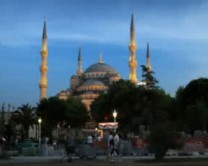

Prophet Mohammed
The Prophet Mohammed was orphaned as a young boy. When he was about 12 years old, he began work as a trader for his uncle and soon became known for his honesty. He married the widow of a wealthy merchant and became a successful businessman. When he was about 40, Mohammed began to go to the mountains outside Mecca to be by himself and think. It was here that the angel Jibril came to him with a message from Allah. Jibril told him that people should worship one God, Allah, and only Allah. Mohammed began to preach Jibril’s message to the people of Mecca.
Most people in Mecca worshipped many different gods. At first people refused to believe what Mohammed told them. Pilgrimages to Mecca brought money into the city and people did not want this to change. In AD 622, Mohammed and his followers were forced to flee from Mecca to the town of Yathrib, later renamed Medina (Madinah), “the City of the Prophet”. This flight, called the hijra, marked the start of the Islamic calendar. Mohammed continued to preach in Medina. He said that Allah had told him that people should live peacefully together, rather than fighting between tribes.
The origins of Islam
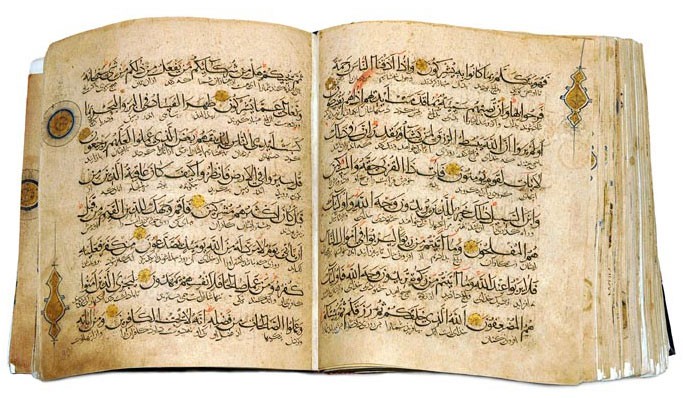
The appearances of Jibril to the Prophet Mohammed marked the revelation of the Islamic faith. Followers became known as Muslims. Muslims believe that there is only one God, Allah, and that Mohammed was the last messenger (prophet) of Allah. They believe that the messages given to Mohammed by Jibril were the words of Allah. These messages were eventually brought together to form the holy book of Islam, the Qur'an (Koran), which all Muslims must follow.
The verbal record of Mohammed’s words and deeds is known as the Sunnah. Reports of what the prophet Muhammad said or approved are known as the Hadith. Reading the Hadith helps Muslims to understand and follow the Qu’ran more clearly.


Sunni and Shi'a
Soon after Mohammed’s death, two branches of Islam, Sunni and Shi’a, were formed after his followers quarrelled over who should lead them. One group (later, the Sunnis) argued that Abu Bakr, the Prophet’s friend and father-in-law, who became the first caliph (leader of Islam), should be their leader. The other group (later, the Shi’a group, or Shi’ites) insisted that Ali, the Prophet's son-in-law, who eventually became the fourth caliph, had been chosen by Mohammed as his successor, and was therefore his rightful heir. Shi'a is short for shi' at Ali, meaning "followers of Ali".
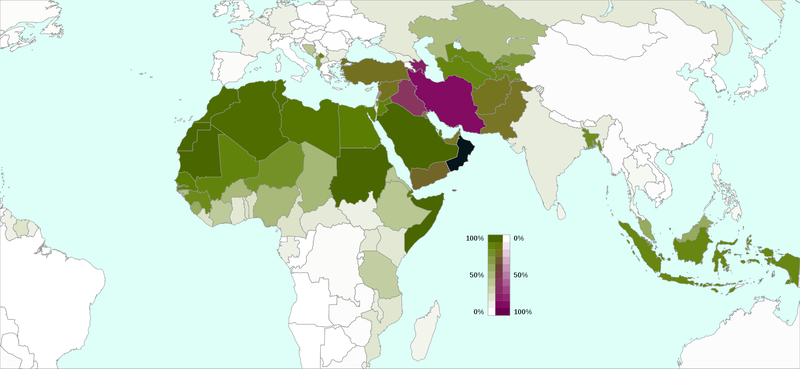
Today the Sunni branch forms the majority (up to 90%) of the world's Muslims. Shi’ites live in a number of Muslim countries, but are dominant in Iran. Both Sunnis and Shi’ites follow the Qu’ran. For Sunnis, in matters where the Qur'an does not offer guidance, they draw on a large body of religious writings, based on the Prophet's sayings and actions. The word Sunnah means "custom"; Sunni Muslims choose the most traditional Muslim way. Shi’ites, by contrast, tend to follow the religious writings of the Prophet's family and others close to him. They often feel they are fighting against what they regard as injustice and oppression.
Beliefs
Muslims believe that there is one God and that Mohammed is his prophet. Essential to their beliefs are: Allah; angels; the holy books; the prophets; the Day of Judgment; life after death; that God controls everything that happens. After death, Muslims believe that the deeds of everyone will be weighed. On the Day of Judgment, only those whose good deeds outweigh their bad ones will be allowed to reach Paradise.


Five pillars
To Muslims, Islam is a way of life, supported by five rules or “pillars”. First, the Shahadah: Muslims declare that there is no God except Allah; Prophet Mohammed is His messenger. Secondly, a prayer, or Salat, to Allah is to be made five times a day, at times set down in the Qur’an. Thirdly, the duty (Zakah) to give alms to the poor at least once a year. Fourthly, Muslims should fast (Sawm) between dawn and dusk during the month of Ramadan. Finally, Muslims should make a pilgrimage to Mecca, the Hajj, once in their lives.


Imam
A Muslim religious leader is called an Imam. During prayers in the mosque, worshippers stand in straight rows behind the Imam. The men and boys stand together while the women and girls stand separately from them. Everyone watches the Imam and follows what he does.
Friday is an important day for Muslims. They gather in the mosque to listen to a talk by the Imam at salat-ul-jumu’ah (Friday prayers). This occasion also gives Muslims a chance to get to know each other, particularly in places where there is not a large Muslim community.
Prayer
Before entering the mosque, Muslims must prepare for prayer by first washing their hands, arms, feet and face, as a sign of respect for Allah. This is called wudu. They take off their shoes. There are no seats in the mosque’s prayer hall, so they sit or kneel on the floor. When praying, they kneel on a prayer mat facing in the direction of the Kaaba in Mecca. In the mosque, this indicated by the mihrab, a niche in the wall that faces Mecca.


Islamic art
The Qu’ran forbids images of any person or thing. This is because the worship of images, including any person or animal, is considered a sin against God. For this reason, Islamic art has focused on the depiction of patterns, whether purely geometric or floral (known as arabesques), and the art of writing, known as calligraphy.
Religious laws
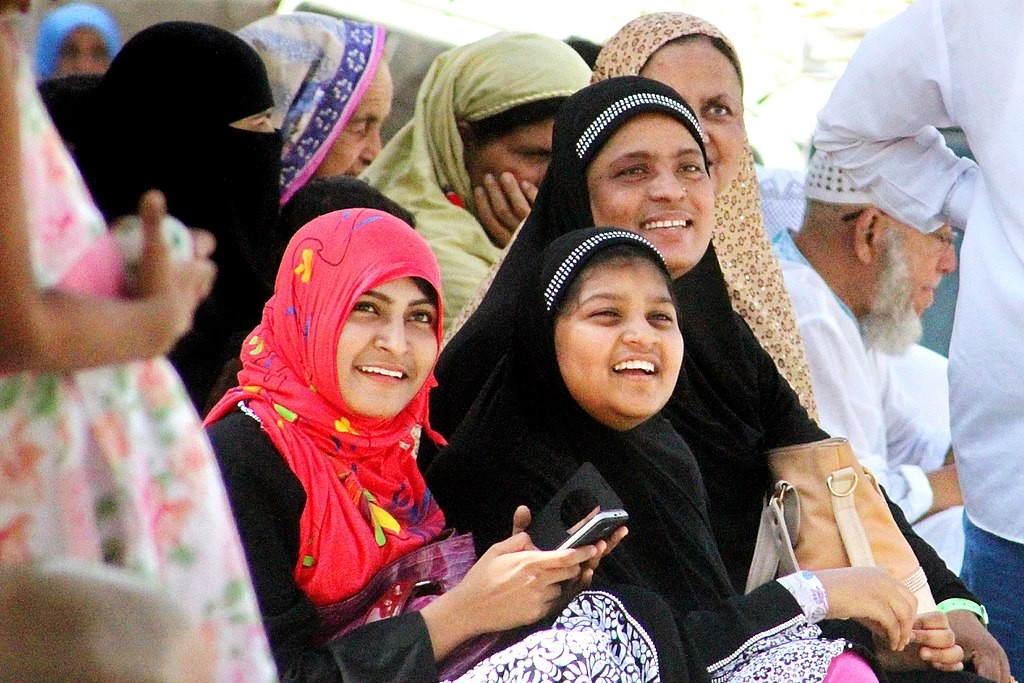
The religious laws of Islam, set out in the Qu’ran and the Sunnah, are known as the Shari’a, meaning the “clear, straight path”. They give guidelines on all aspects of Muslim life. Men and women are expected to act and dress modestly. Dressing modestly is known as hijab. For some women, this involves covering their whole body by wearing either a niqab or a burqa (a niqab covers the face but not the eyes, while a burqa also covers the eyes but has a cloth grille to allow the wearer to see in front of her). This practice, along with restrictions on mixing freely with men, is called purdah. It is considered necessary to protect women from unwanted male attention. Many Muslim women wear a headscarf, or veil, often with loose-fitting, long-sleeved clothes, instead.
Food laws
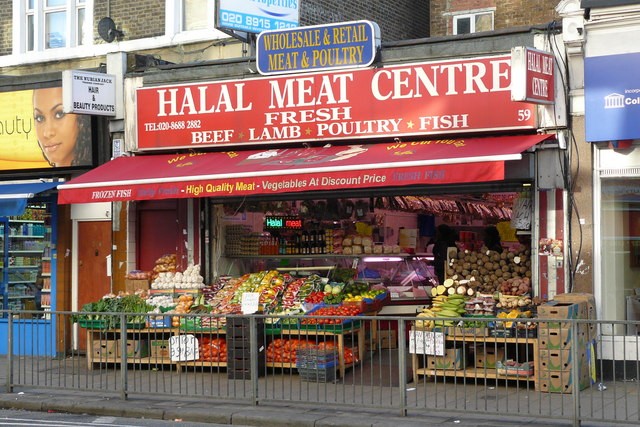
For Muslims, meat must be prepared in a certain way for it to be halal (“permitted”). The animal’s slaughter must be performed by a Muslim, and blood must be drained from its veins while the name of Allah is uttered. Both the eating of pork, which is considered impure, and the drinking of alcohol—which could make people forget their duties to Allah—is haram (“forbidden”).
Madrasa
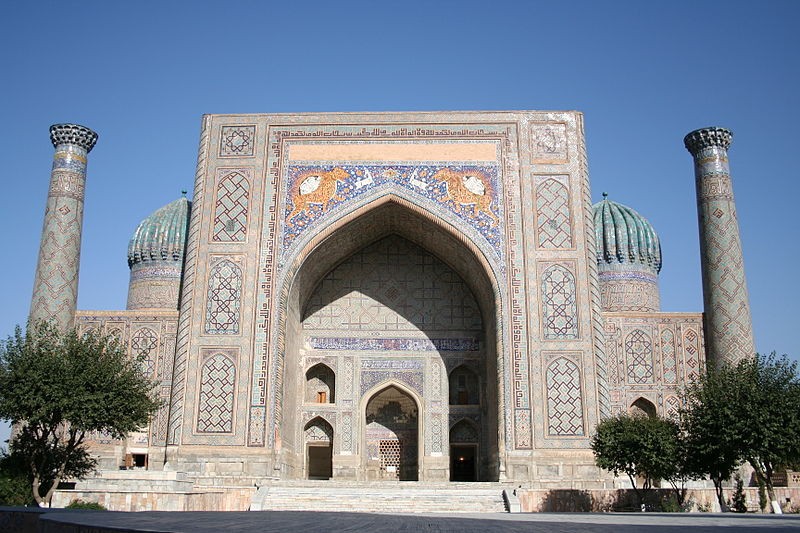
Education is very important in Islam and there are schools and colleges, known as madrasas, all over the Islamic world. Some are specialist religious colleges where people go to learn how to be teachers or prayer leaders of Islam. Madrasas were established in the Middle East and other Islamic lands from the 7th century onwards. By the 12th century, every major city in the Islamic world had several madrasas. Many Central Asian madrasas have a monumental gateway, called a pishtaq, decorated with thousands of coloured tiles.
Eid al-Fitir festival
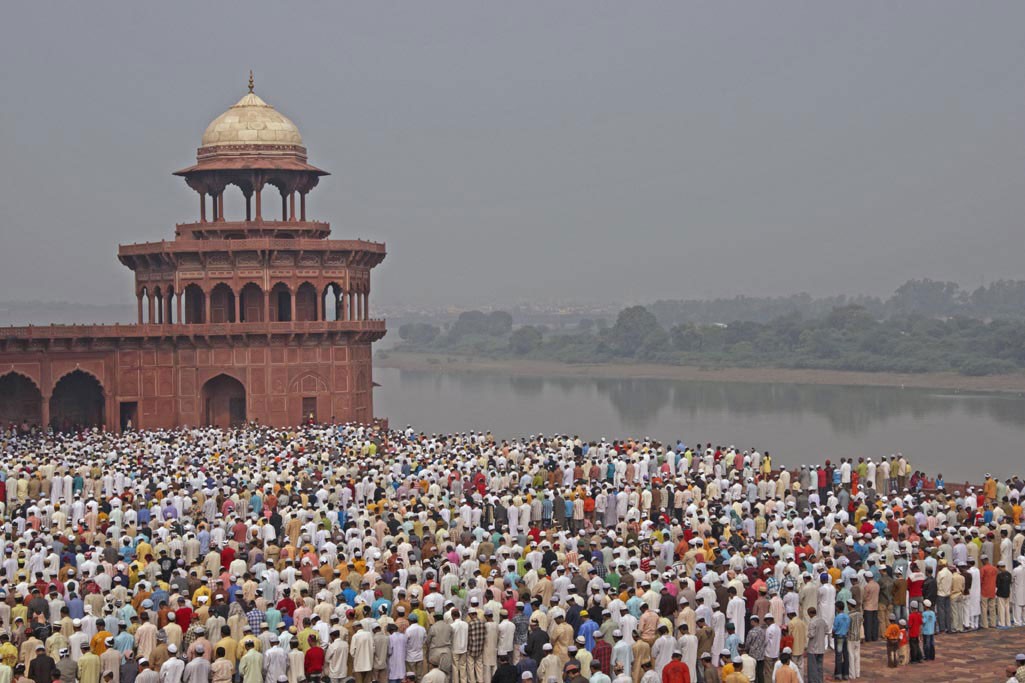
There are two main religious festivals in Islam. The first is Eid al-Fitir, the festival that marks the end of fasting in the month of Ramadan. Ramadan lasts for a month and marks the time when Prophet Mohammed was visited by the angel Jibril. All Muslims over the age of 12 should fast between dawn and dusk during Ramadan. As soon as the new moon appears at the end of Ramadan, everybody celebrates with Eid al-Fitir, which lasts for three days. People dress up in their best clothes and give each other presents. Prayers are said in mosques.
Eid al-Adha festival
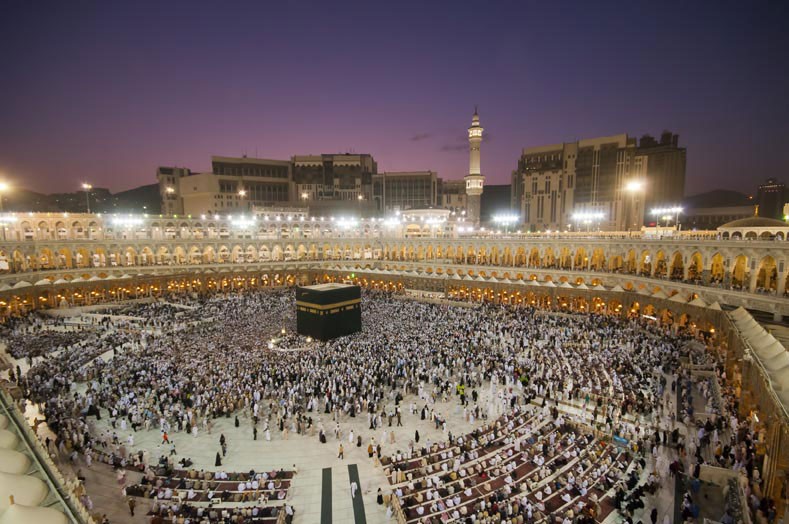
The second festival is Eid al-Adha, the Festival of Sacrifices, which celebrates the willingness of the Prophet Ibrahim (known in the West as Abraham) to sacrifice his son when God told him to. It is marked by prayers, charitable giving (including the sharing out of meat) and gatherings of family and friends.
Eid al-Adha is celebrated during the month of Hajj, or pilgrimage. All Muslims are expected to make a pilgrimage to Mecca at least once in their lives if they are well enough and can afford the journey. The events of the Hajj take a few days but pilgrims may stay in Arabia for two or three weeks and visit Prophet Mohammed’s mosque in Medina and other sacred places. About 2 million people from all over the world make the pilgrimage each year. Muslims mark the end of the Hajj with prayers and thanks in the mosque.
Sufism
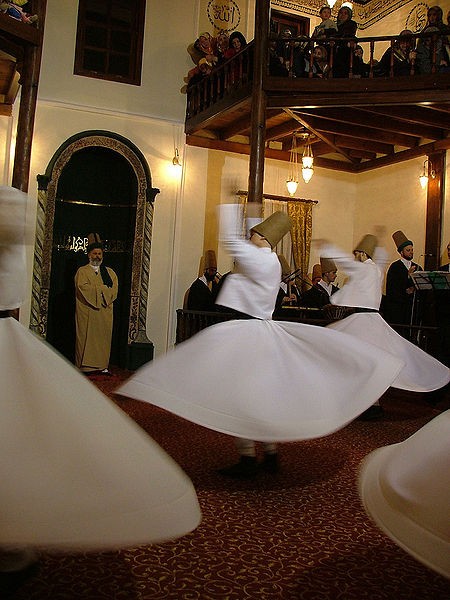
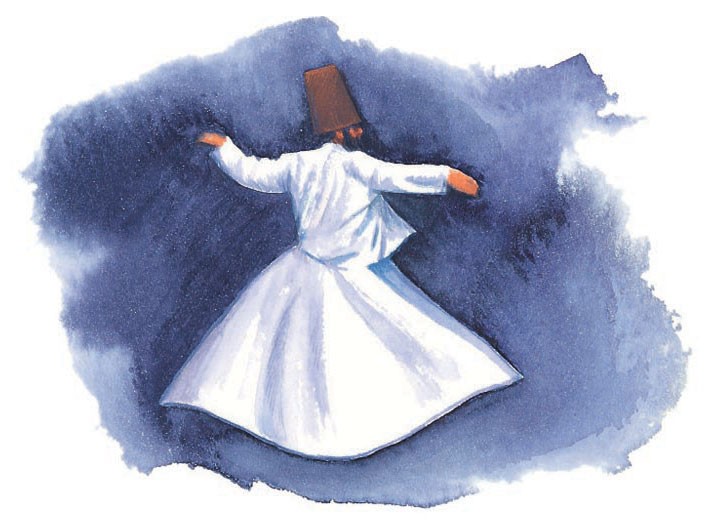
Some devout Muslims seek an even more personal relationship with God. They follow an approach to Islam called Sufism, which is mostly concerned with developing the spirituality, or inner character, of a Muslim. Sufis may be either Sunni or Shi’a. Worship includes chanting, dancing and meditation. The Persian Sufi poet Rumi (1207–73), author of the Divan and the Masnavi (Mathnawi), was known for spinning round while reciting his poetry, and it is this dance, called the sema, which formed the basis for the Mevlevi Order, or Whirling Dervishes, a group of Turkish Sufis, after his death.
Consultant: Philip Wilkinson
The Islamic calendar (2026)
16th January (27th Rajab): Lailat al-Miraj (commemorates the night when Prophet Mohammed ascended to the Heavens)
16th March (27th Ramadan): Lailat al-Qadr (celebrates the revelation of the Qu’ran to Prophet Mohammed)
20th March (1st Shawwal): Eid al-Fitir (festival of successfully fasting in the month of Ramadan)
26th May (9th Zul-Hijja): Hajj (commemoration of Prophet Mohammed's final sermon)
27th May (10th Zul-Hijja): Eid al-Adha (commemorates Ibraham’s willingness to sacrifice all that he cherished—his own son Ismail—for Allah’s sake)
16th June (1st Muharram): Hijra (celebrates the first day of the Muslim calendar)
26th June (10th Muharram): Ashura (when Muslims remember when Hussain was martyred at Karbala)
25th August (12th Rabi al-Awwal): Mawlid al-Nabi (celebrates the birthday of the Prophet Mohammed)
Note Holidays begin at sundown on the evening before the date listed. Equivalent dates in the Islamic (Hijri) calendar are given in brackets.


pics



Without in any way limiting Q-files Ltd’s exclusive rights under copyright, any use of this publication to “train” generative artificial intelligence (AI) technologies to generate text is expressly prohibited. Q-files Ltd reserves all rights to license use of this work for generative AI training and development of machine learning language models.