
Islamic world

CITE
We have made every effort to follow citation style rules, but there may be some minor differences. If in doubt, please refer to the appropriate citation style manual.
Rise of Islam. (2023). In Q-files Encyclopedia, History, Islamic world. Retrieved from
https://www.q-files.com/history/islamic-world/rise-of-islam
"Rise of Islam." History, Islamic world, Q-files Encyclopedia, 16 Jun. 2023.
https://www.q-files.com/history/islamic-world/rise-of-islam.
Accessed 7 Aug. 2026.
Rise of Islam 2023. History, Islamic world. Retrieved 7 August 2026, from
https://www.q-files.com/history/islamic-world/rise-of-islam
History, Islamic world, s.v. "Rise of Islam," accessed August 7, 2026.
https://www.q-files.com/history/islamic-world/rise-of-islam


Rise of Islam
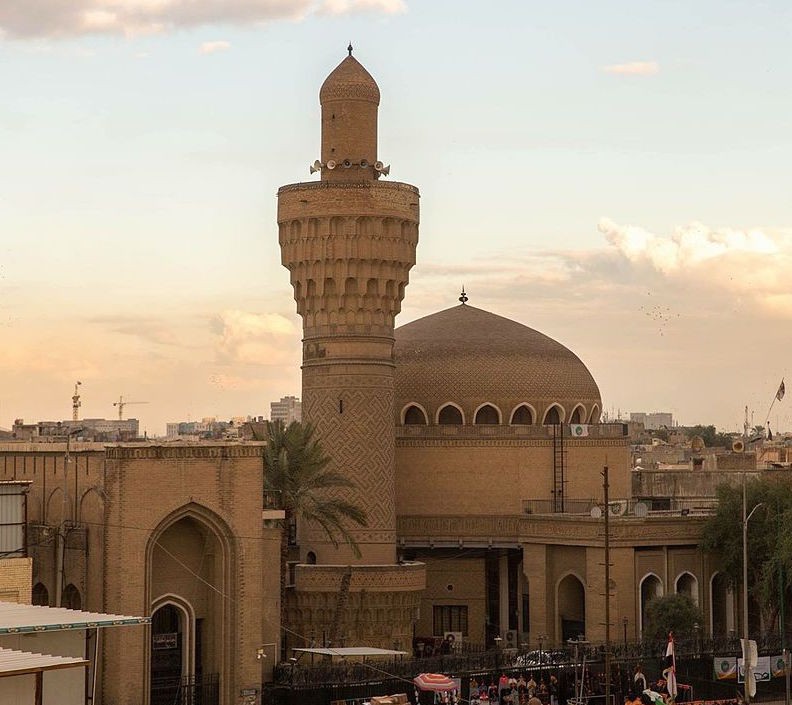
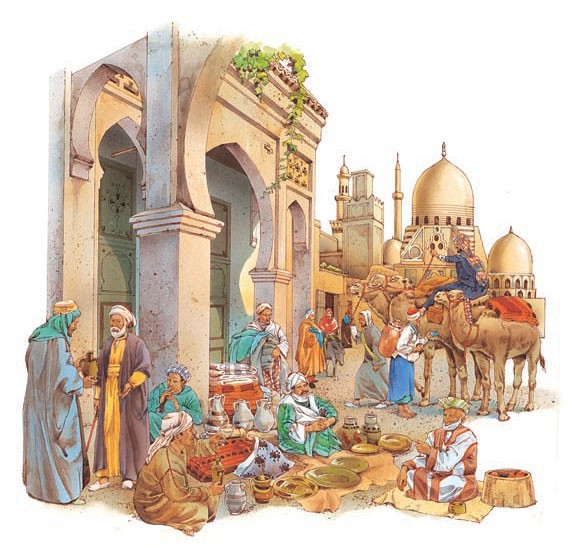
Inspired by the Prophet Mohammed, the founder of the Islamic religion, Muslim armies conquered vast territories during 7th and 8th centuries AD. At its height, the Islamic empire, or caliphate, stretched from Spain, through North Africa, the Arabian peninsula, the Middle East and across southern Asia as far as India. In the following centuries, the Islamic world experienced a Golden Age, when Muslim mathematicians, astronomers, inventors and doctors made great breakthroughs. Aboard their ships, known as dhows, Arab merchants traded goods around the Mediterranean Sea and between Africa and Asia.
Expansion of the Caliphate
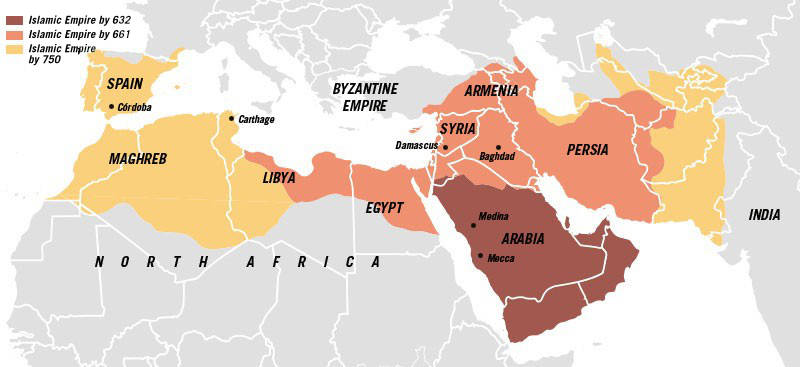
Following the Prophet Mohammed’s death in 632, a series of leaders, known as caliphs (meaning "successors") took control of Arabia. Under their command, Muslim armies invaded the countries that bordered Arabia, aiming to spread the word of the Prophet. People were not usually forced to convert to the Islamic faith, but over time many chose to do so. People across the Caliphate also began to speak the language of the caliphs, Arabic. The Islamic world expanded fast. Within 200 years, it stretched from Spain in the west to India in the east.
Muslim warriors
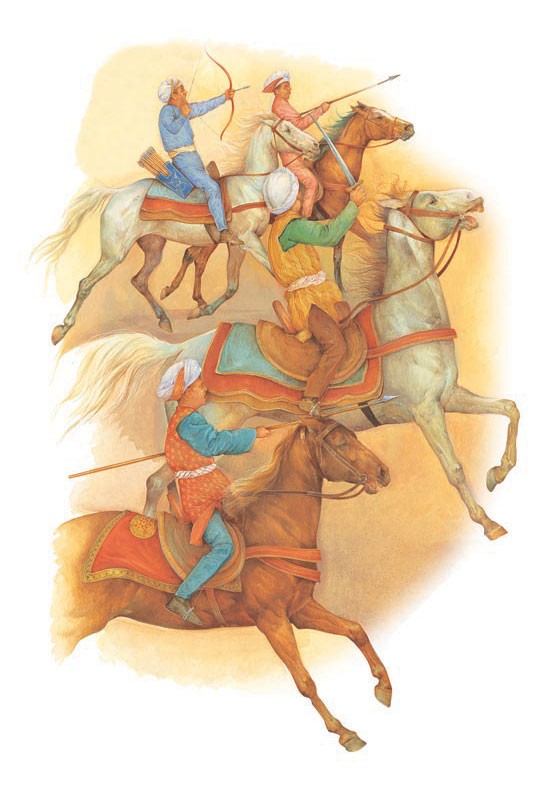
By the late 7th century the Muslim army numbered up to 100,000 men, which was at least ten times larger than the largest European armies of the time. Warriors often travelled to the battlefield on horseback. They also used camels to cross dry and inhospitable desert regions where horses would not survive. However, on reaching the battlefield, most dismounted and fought on foot, armed with spears, bows and arrows, and swords. But from the 9th century, horse-mounted soldiers, known as cavalry, became an increasingly important part of the battle plan. These warriors could fire an arrow without stopping their horses, making them particularly dangerous. Muslim warriors bred highly prized horses for use in battle.

Umayyads and Abbasids
The first four caliphs after the death of the Prophet Mohammed ruled what was known as the Rashidun Caliphate. Rashidun comes from the Arabic for "rightly guided", because these caliphs were companions of the Prophet's. In 661, the first caliph of the Umayyad clan came to power as leader of the Islamic world. The Umayyad dynasty greatly expanded the territory of the Caliphate and held on to power until 750, when the Abbasid dynasty seized control.
Golden Age
It was under the Abbasids and science-loving caliphs like Al-Ma’mun (ruled 813–833) that the empire experienced what has become known as the Islamic Golden Age. Al-Ma'mun turned the library in his capital, Baghdad, into a public academy, known as the House of Wisdom (Bayt al-Hikma). By the middle of the 9th century, it contained 400,000 books.
The Abbasid rule came to an end in 1258, when Baghdad was captured by the Mongols (a people from Central Asia) and the last Abbasid caliph, Al-Musta’sim, was killed. However, the Islamic faith continued to spread across North and Central Africa, and to Turkey, Central Asia and India.

Consultant: Philip Parker
Timeline
570–632
Life of the Prophet Mohammed
650
The holy book of Islam, the Koran, is written down.
661–750
Umayyad dynasty holds power.
711
Arab armies conquer part of Spain.
750–1258
Abbasid dynasty holds power.
762
Baghdad becomes the capital of the Islamic Empire.
c.957
Death of Al-Masudi, geographer and historian.
1115–1166
Al-Idrisi travels across Europe and the Near East.
1258
The Mongols seize Baghdad.
1325–1353
Ibn Battuta travels throughout the Islamic world.
pics


Without in any way limiting Q-files Ltd’s exclusive rights under copyright, any use of this publication to “train” generative artificial intelligence (AI) technologies to generate text is expressly prohibited. Q-files Ltd reserves all rights to license use of this work for generative AI training and development of machine learning language models.