
Crafts

CITE
We have made every effort to follow citation style rules, but there may be some minor differences. If in doubt, please refer to the appropriate citation style manual.
Crafts A-Z. (2026). In Q-files Encyclopedia, Culture, Crafts. Retrieved from
https://www.q-files.com/culture/crafts/crafts-a-z
"Crafts A-Z." Culture, Crafts, Q-files Encyclopedia, 13 May. 2026.
https://www.q-files.com/culture/crafts/crafts-a-z.
Accessed 31 Oct. 2026.
Crafts A-Z 2026. Culture, Crafts. Retrieved 31 October 2026, from
https://www.q-files.com/culture/crafts/crafts-a-z
Culture, Crafts, s.v. "Crafts A-Z," accessed October 31, 2026.
https://www.q-files.com/culture/crafts/crafts-a-z


Crafts A-Z
Batik
Batik is a technique used to decorate fabric. Batik artists paint a design on to fabric using melted wax, and then soak the piece in dye. The wax resists the dye so that any areas covered by wax are not dyed. When the wax is washed off, the pattern is revealed. The process can be repeated several times to make multi-layered designs. Batik is especially associated with the Indonesian island of Java, although many cultures around the world have a history of patterning cloth using wax and dye.


Beadwork
Beadwork is the art of making things from beads, such as jewellery, accessories and decorations. It is done by sewing or stringing beads together on threads or wires. Some types of beadwork can be done using a loom in a process similar to weaving. The loom holds a set of threads (known as the warp) tightly, and the weaver passes another thread across it at a right-angle (the weft), strung with a row of beads. The thread is passed back through the beads in the row above to hold the new row in place. This technique can also be used to make small pieces without a loom.
Bookbinding
Making and repairing books by hand is a craft known as bookbinding. There are various ways of attaching—or binding—papers together. Sewn bindings are the oldest; Coptic binding, invented in Egypt, has existed since the 2nd century AD. To make a hardbound (hard-backed) book, bookbinders gather together folded pages in groups, called signatures. They use a sharp tool called an awl to make holes in the signatures, then sew them together into a stack known as the text block. The spine of the text block is usually glued to hold the signatures together, and then the text block is attached to the cover.


Calligraphy
Calligraphy is the art of handwriting. Calligraphers use brushes or pens with tips (nibs) of different shapes and sizes. The shape of the nib affects the look of the drawn line. Chinese calligraphers use brushes, while Islamic calligraphy is done using a reed pen with a broad, flat nib. In Islamic culture, calligraphy is an art form used to decorate holy manuscripts.
Crochet
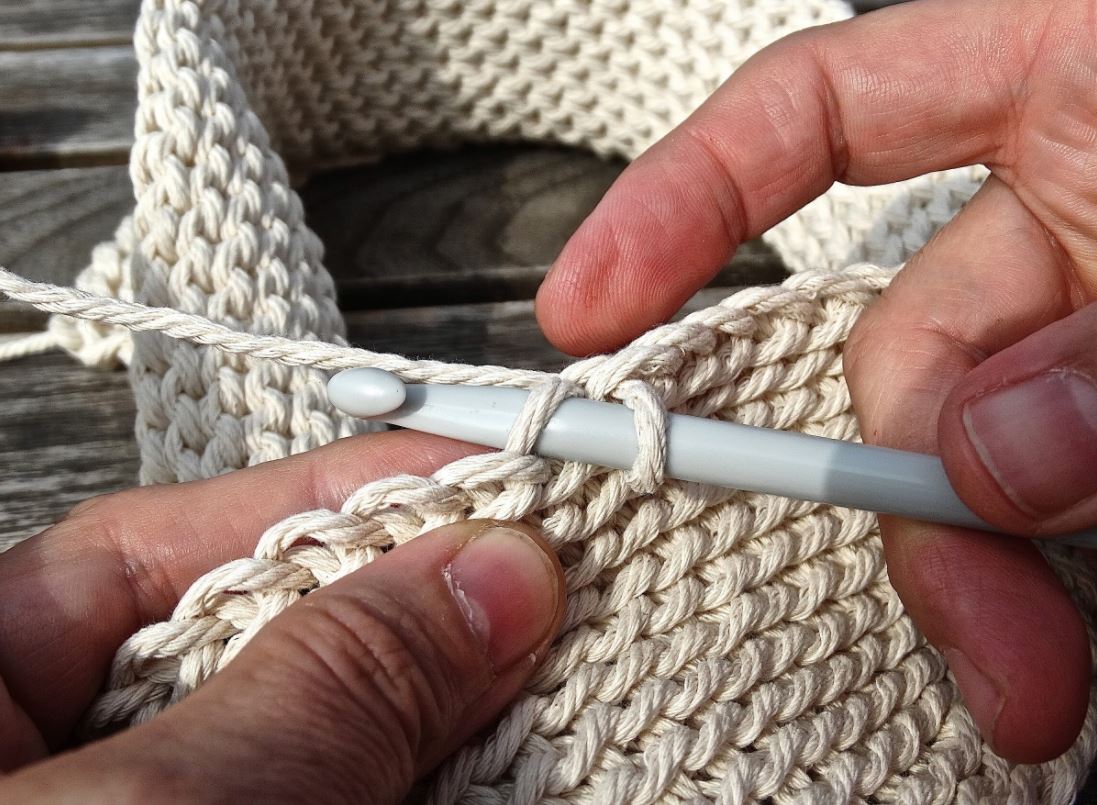
Crochet is a textile craft. As in knitting, crocheted fabrics are made up of a series of loops of yarn, pulled through one another with a tool called a crochet hook. A larger crochet hook will make larger loops and a looser fabric. Crochet is used to make clothes, accessories such as bags, gloves, hats and scarves, and decorative blankets and cloths.


Enamelling
Enamelling is a technique used to create shiny, decorative coatings for jewellery, beads, signs, toys and ornaments. It is made by covering a small object—usually made from metal—with enamel powder, which is a mixture of finely-powdered, coloured glass. The coated piece is then fired (heated) at a high temperature, either using a blow torch or an oven called a kiln. This melts the powder and fuses it to the metal, creating a hard, shiny surface. Different kiln temperatures and firing lengths have different effects on the appearance of the finished piece.
Felting
Felting is a textile craft used to make clothes, accessories and ornaments from wool. Wool is said to be felted when its long fibres twist together and bond securely. Felted fabric is soft with a stiff structure, so felting has traditionally been used to make hats and gloves.
One method of felting is to knit a piece with spun wool and then agitate (stir) it in a bucket of soapy water until the fibres start to loosen and merge together. This is used to make large objects such as gloves and slippers. Another type of felting is done with raw (unspun) wool and a felting needle, which has a sharp point and barbs (backwards-facing hooks) along it. When the needle pokes into the wool, the barbs push its fibres together and bond them to one another. This technique, called needle felting, is used for making felted models and smaller decorative items such as flowers.

Glass blowing
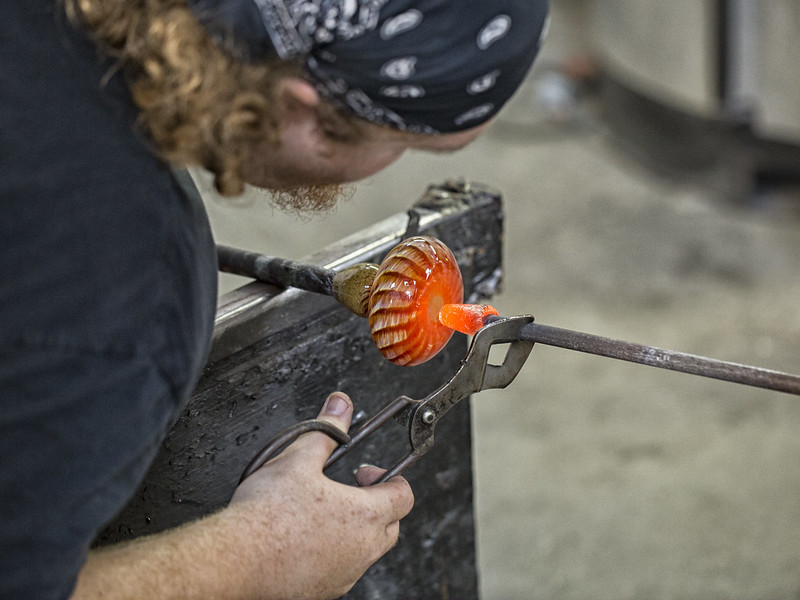
Glass blowing is the art of shaping glass by heating it and blowing air into it to form hollow objects. It is used to make vases, bowls, glasses, jewellery and ornaments. Glass blowing was invented in Syria in the 1st century BC, when the first blown glass drinking cups were in demand across the Roman Empire. Today, the process is almost exactly the same as when it was first invented. The blower heats a blob of glass—known as the “metal”—until it is red-hot and molten. This is then inflated by blowing air down a long tube. The glass can be shaped with tools, or by rolling it at the end of the stick. When the piece is finished, the glass blower carefully cuts it from the stick.
Joinery
Joinery is the craft of joining pieces of wood together. There are many different ways of joining wood, each suited to a different type of construction or furniture. Dovetail and box joints are joints made by cutting out shapes and interlocking the two pieces. Dowel joints are common in modern furniture-making. They are made by gluing two pieces of wood together and strengthening them with a small plug of wood called a dowel, which sits like a nail between the two pieces.


Lace making
Lace is a type of fabric known as “openwork” fabric because it is made up from a pattern of many tiny holes. There are two main types of lace: needlelace, which is woven from a single piece of thread, and bobbin lace, which is made using several different threads woven together. In Europe, lace making emerged as a craft during the 15th century. Lace makers used linen, silk and sometimes even gold threads to create luxurious trims for dresses and sleeves. Lace was also used to make accessories such as caps, scarves and handkerchiefs.
Metalwork
Craftspeople work with metals to make everything from tiny, delicate pieces of jewellery to huge metal gates. Like wood, metal can be punched and drilled, or shaped into smooth, circular objects using a machine called a lathe. Its properties also allow it to be bent and melted to form intricate shapes. In jewellery-making, jewellers use soft metals such as gold and silver, which typically come in the form of thin sheets that can be cut to size. The piece can be pressed on to a mould to create raised shapes on the other side: a technique called embossing. Carving a design into the metal’s surface with a sharp tool is known as engraving.

To join pieces of metal together, jewellers use a technique called soldering, by which a short length of filler metal (solder) is melted into the joint. The solder has a lower melting point than the metals it is joining together. When the solder cools and hardens, it creates a strong and invisible bond.

Blacksmiths work with metal in a workshop called a forge. A blacksmith heats metal—typically iron—until it melts, then shapes the molten lump with hand tools such as hammers and chisels. Blacksmiths traditionally made and repaired armour, weapons, tools and chains. Today, they craft pieces such as metal sculptures, ornamental furniture and fittings.
Mosaic
Mosaics are pieces of art made using many tiny pieces of coloured tile, glass or stone. The Romans were famous for their mosaics, which decorated hallways, floors and public baths. Many examples survive in excellent condition today. To make a mosaic, a craftsperson first prepares their materials by using a special cutting tool to cut tiles into many small pieces. They arrange the pieces into a design, glue them to a backing board, and fill the spaces in between them with a paste called grout.

Origami

Origami is the art of folding paper. It is named after the Japanese words ori (paper) and kami (folding). Traditional origami is folded from a single sheet of paper without cutting or gluing. Paper was expensive and rare when it first became available in Japan in the 6th century, and so it was not until the 17th century that origami became a widespread leisure craft. At around the same time, paper-folding flourished in China, and in Europe in the form of napkin-folding. Today, origami is practised all over the world.

Papercutting
Intricate patterns and designs can be made by cutting shapes from a sheet of paper, in a craft known as papercutting. Paper was invented in China in the 4th century, and papercutting emerged soon afterwards as a form of folk art. Some papercuts are cut from folded paper using scissors, so that when the paper is opened out, the design is symmetrical (mirrored). Others are done with a sharp knife on a flat sheet of paper.
Paper marbling
Paper marbling is the craft of decorating paper with inks. It became especially popular in the West during the 19th and early 20th centuries, when marbled paper was used to decorate the inside covers of books. Paper marbling requires special inks that float on water. Drops of these inks are added to a tray of water, and paper is then laid on the water’s surface. The inks transfer to the paper in a swirled pattern that is different every time.


Papier-mâché
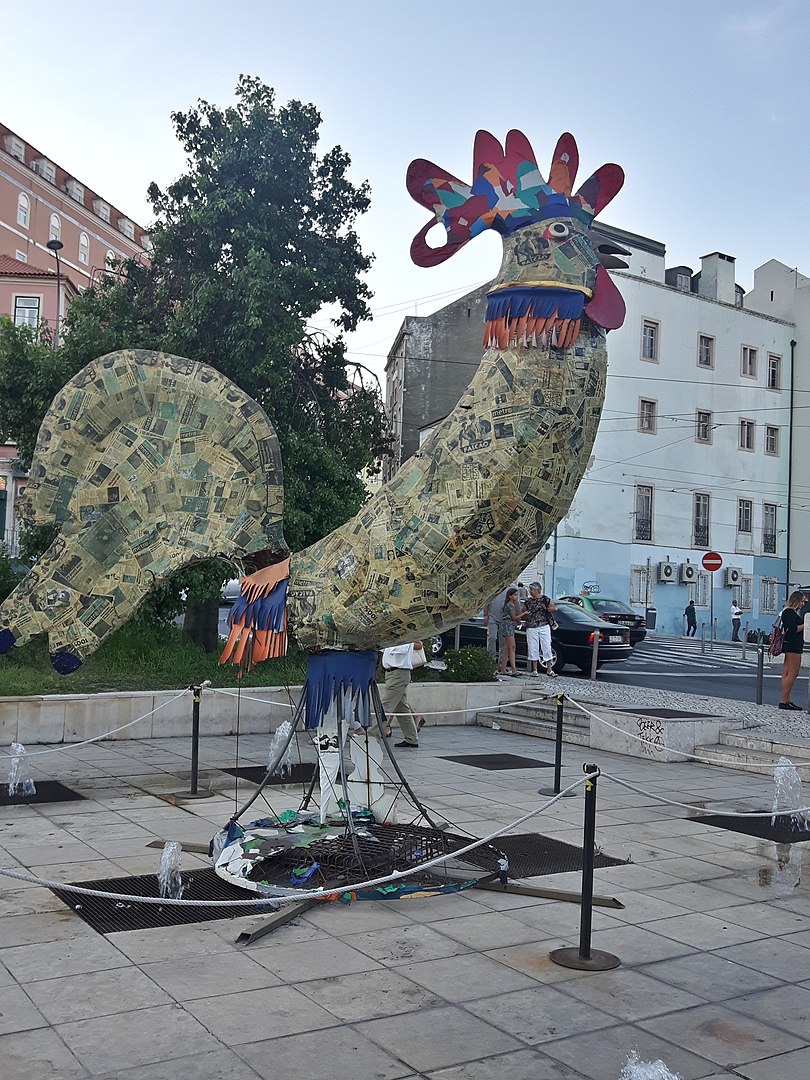
Papier-mâché is a craft technique used to sculpt lightweight, strong objects from paper. In papier-mâché, strips of paper are soaked in a paste made from flour and water, before being applied to a wire frame or mould. As the strips are laid over one another, they build up a strong material around the frame, which can be removed later when the paste is dry. An alternative technique is the pulp method, which involves soaking paper in water until it becomes a mushy pulp. This pulp can then be sculpted into shape. Papier-mâché is traditionally used in puppet-making, and to make the mascots for carnival floats.
Pottery
Pottery is the craft of producing objects made from clay, such as bowls and plates, pots, cups, teapots and vases. Potters work in a ceramics studio or workshop. They shape round, hollow objects by hand using a potter’s wheel. To make objects with more complex shapes—such as teapots—they use a process called slip casting, in which liquid clay is poured into a mould. After shaping, the piece is heated to a very high temperature in an oven called a kiln. This process, called firing, changes it permanently into a hard material called ceramic. The piece may then be coated with a solution of powdered glass and fired again to give it a strong, shiny coating. This process is known as glazing.

Quilting

Quilting is the craft of making quilts, large decorative blankets used for bedding and household decoration. Quilts are usually made from small pieces of fabric sewn together to make a larger design. A traditional patchwork quilt was made from the leftover scraps from other sewing projects. When the design is finished, it is sewn to a piece of soft, strong backing with a padding material in between.

Stained glass
When metal oxides such as copper, cobalt and iron are added during the glass-making process, they create glass in bright colours. This coloured, or "stained", glass can be cut into small shapes and arranged into detailed designs. Stained glass windows have been created in the West since the 12th century. The windows that survive from this period, especially those in churches, are some of the best surviving examples of medieval art.
Textile crafts
Textile crafts are ways of working with materials such as wool, yarn, thread and fabrics to make useful and decorative things. Sewing is a way of joining together pieces of fabric with needle and thread, either by hand or with a sewing machine. Mainly used for making clothes, it is also useful in other textile crafts such as embroidery, in which the embroiderer makes a decorative pattern from sewing stitches.

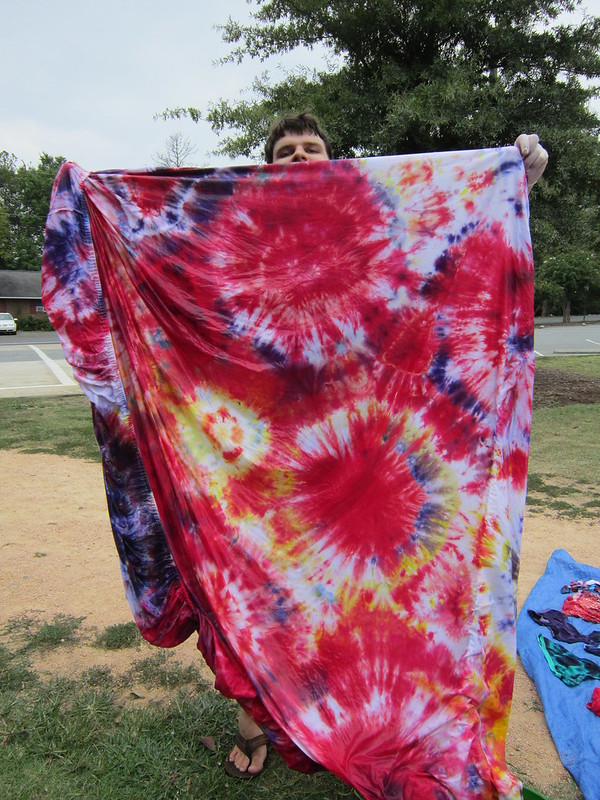
Spinning is the process of making yarn or thread by drawing wool or cotton fibres out into long pieces and twisting them together. It can be done by hand or using a spinning wheel. After it is spun, yarn can be coloured by dyeing. Dyeing was traditionally done using vegetable and plant dyes, which are made by boiling plant material with water. The yarn is then soaked in the dye to stain the fibres. Knitting is the craft of creating woollen fabrics or pieces of clothing from yarn. Knitters use two or more needles to make a series of connected loops, which build up a stretchy woollen fabric. A similar technique is used in crochet, but only a single needle, called a crochet hook, is required.
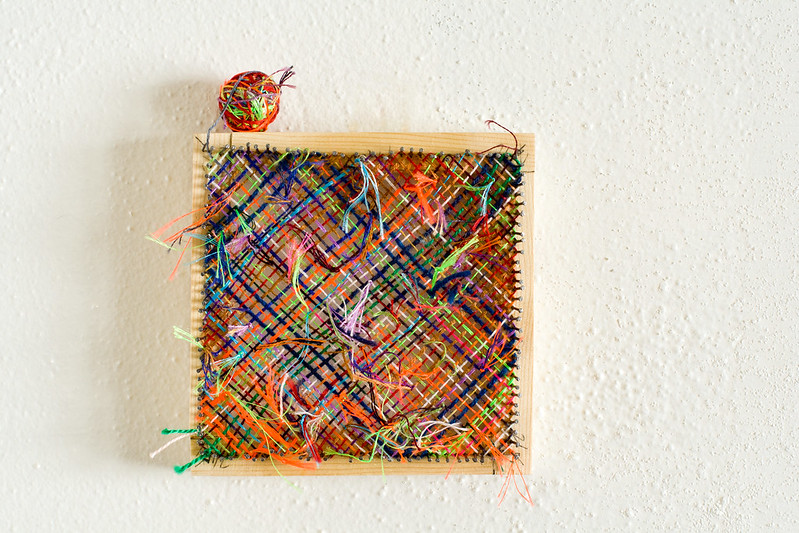
Weaving is a method of creating fabric by laying two sets of threads at right angles to one another, and then threading one set crossways in-and-out of the other. It is done using a machine called a loom. Woven fabrics made with cotton, linen and jute are strong, and were some of the first fabrics to be made in ancient times—the first woven fabrics were probably made in the Middle East around 6000 years ago.

Wood carving
Wood carving is a technique used to sculpt and decorate wooden objects. Wood carving has been used in furniture-making throughout history, and was especially popular during the 18th century. During the Rococo period there was a trend in the West for furniture featuring detailed carvings of flowers, vines and shells. These decorated the legs and backs of beds, tables and chairs.

Carving away pieces of wood by hand using a knife is called whittling. Larger pieces are carved using a hammer with a sharp, flat tool called a chisel, breaking small chips out of the wood a piece at a time. This technique is known as chip carving. Making a picture or raised design on the surface of the wood is called relief carving. A relief design is made by carving away the surrounding wood, so that the design emerges from the background. Woods such as pine, cherry, walnut and oak are good for carving.


Woodturning
Woodturning is the craft of carving wooden objects using a machine called a lathe. The lathe spins a piece of wood, which allows the craftsperson to shape it evenly, carving bits away with sharp tools until the finished shape is reached. Round objects such as bowls and plates can be made using woodturning. In furniture-making, it is used to carve the legs of tables and chairs.

pics

Without in any way limiting Q-files Ltd’s exclusive rights under copyright, any use of this publication to “train” generative artificial intelligence (AI) technologies to generate text is expressly prohibited. Q-files Ltd reserves all rights to license use of this work for generative AI training and development of machine learning language models.