
Africa

CITE
We have made every effort to follow citation style rules, but there may be some minor differences. If in doubt, please refer to the appropriate citation style manual.
European colonization of South Africa. (2026). In Q-files Encyclopedia, History, Africa. Retrieved from
https://www.q-files.com/history/africa/european-colonization-of-south-africa
"European colonization of South Africa." History, Africa, Q-files Encyclopedia, 20 Mar. 2026.
https://www.q-files.com/history/africa/european-colonization-of-south-africa.
Accessed 21 Sep. 2026.
European colonization of South Africa 2026. History, Africa. Retrieved 21 September 2026, from
https://www.q-files.com/history/africa/european-colonization-of-south-africa
History, Africa, s.v. "European colonization of South Africa," accessed September 21, 2026.
https://www.q-files.com/history/africa/european-colonization-of-south-africa


European colonization of South Africa
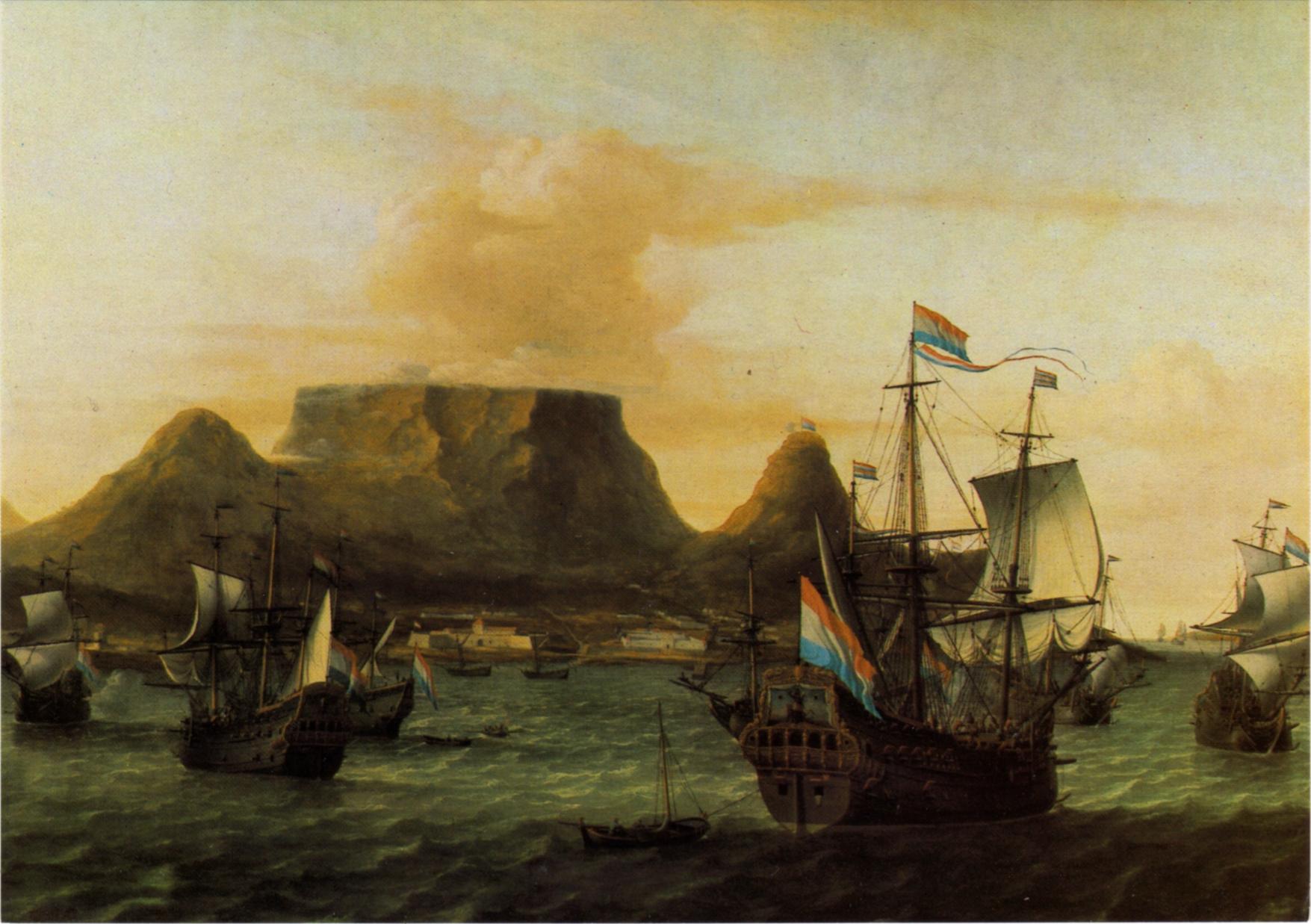
By the mid-17th century, the Cape had become an important re-supply point and naval base for the Dutch East India Company (Vereenigde Oostindische Compagnie, or VOC). The spice route between the Netherlands and Batavia (Jakarta) in the Dutch East Indies (present-day Indonesia) was now in regular use by VOC ships. Originally the company had no intention of colonizing the area, but because their need for supplies demanded the availability of fresh farm produce, they decided to bring in Dutch farmers to cultivate the fertile land near the Cape. A small group of men—former employees of the VOC—led by Jan van Riebeeck duly arrived on 6th April 1652 to found the Dutch Cape Colony.
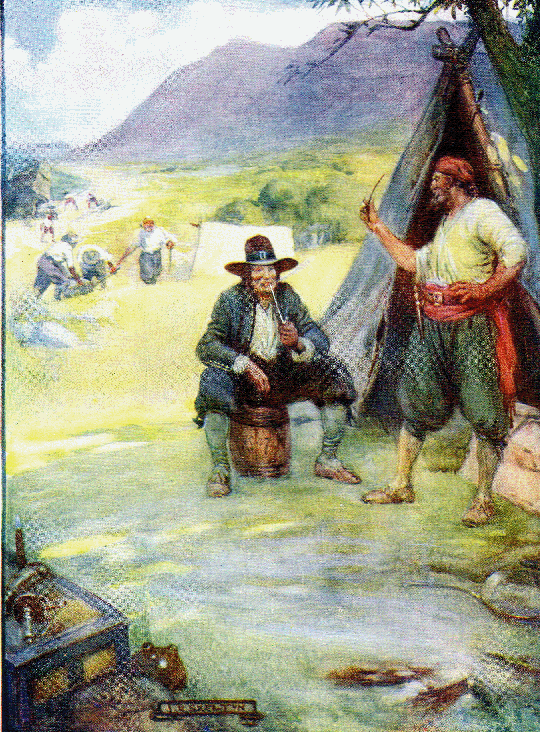
Dutch Cape Colony

These Vrijburghers ("Free citizens"), as the ex-VOC farmers were known, soon increased in number. They began to expand their lands further north and east of the Cape. Aided by slaves imported from other parts of Africa, Madagascar, India, Ceylon (present-day Sri Lanka), the Malay Peninsula and the Dutch East Indies, the farmers grew wheat, tended vineyards and grazed sheep and cattle.
The Vrijburghers, who belonged to the Dutch Reformed Church, were joined by German Lutherans, also once employed by the VOC. Then, after Louis XIV of France revoked (cancelled) the Edict of Nantes in 1685, which had protected the right of French Protestants to worship without persecution, many Huguenots (as they were called) migrated to the Cape Colony. They eventually mixed with the resident Vrijburghers and, over the years, their descendants became known as Afrikaners.
Khoikhoi-Dutch Wars
As the settler population increased, their demand for new lands to farm grew, leading to more and more clashes with the native Khoikhoi herders. But the indigenous people were no match for the settlers and their far superior weapons. Defeat in several wars in the late 17th century saw many of the Khoikhoi being expelled from the Cape. The San were driven away from their traditional hunting grounds or were forced into servitude. In 1713, and again in 1755, the Khoikhoi population was devastated by outbreaks of smallpox introduced by the European settlers, a disease against which they had no natural resistance.

The Khoikhoi who stayed behind at the Cape had no choice but to work for the Europeans as servants, shepherds or herders. The offspring of unions between European men and Khoikhoi, black and Asian women are the ancestors of today's Coloured population.
Trekboers

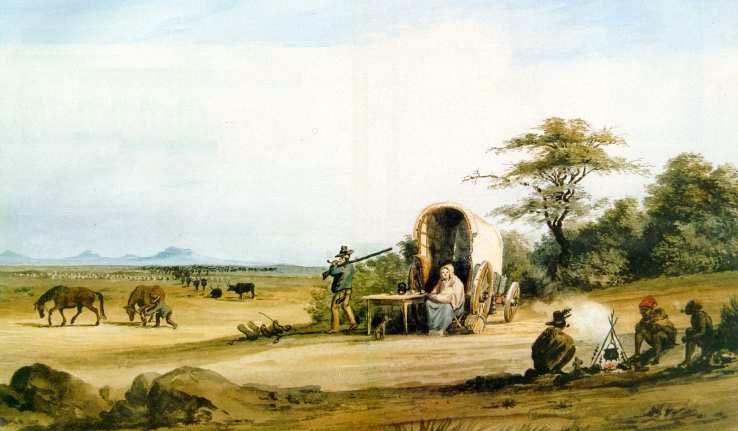
While most European settlers lived in the fertile region around the Cape of Good Hope, in the second half of the 18th century, some farmers began to venture north and east from the Cape in search of new lands—and to escape the VOC's strict regulations. These were the first of the Trekboers ("wandering farmers"), later shortened to Boers. Devout Christians, they sought to live their lives in the harsh, isolated surroundings they found themselves in according to the teachings of the Bible. In order to avoid conflict with the Bantu, whose lands lay to the east, the VOC decided to make the Great Fish River the eastern boundary of the Dutch Cape Colony in 1780.
Griqua
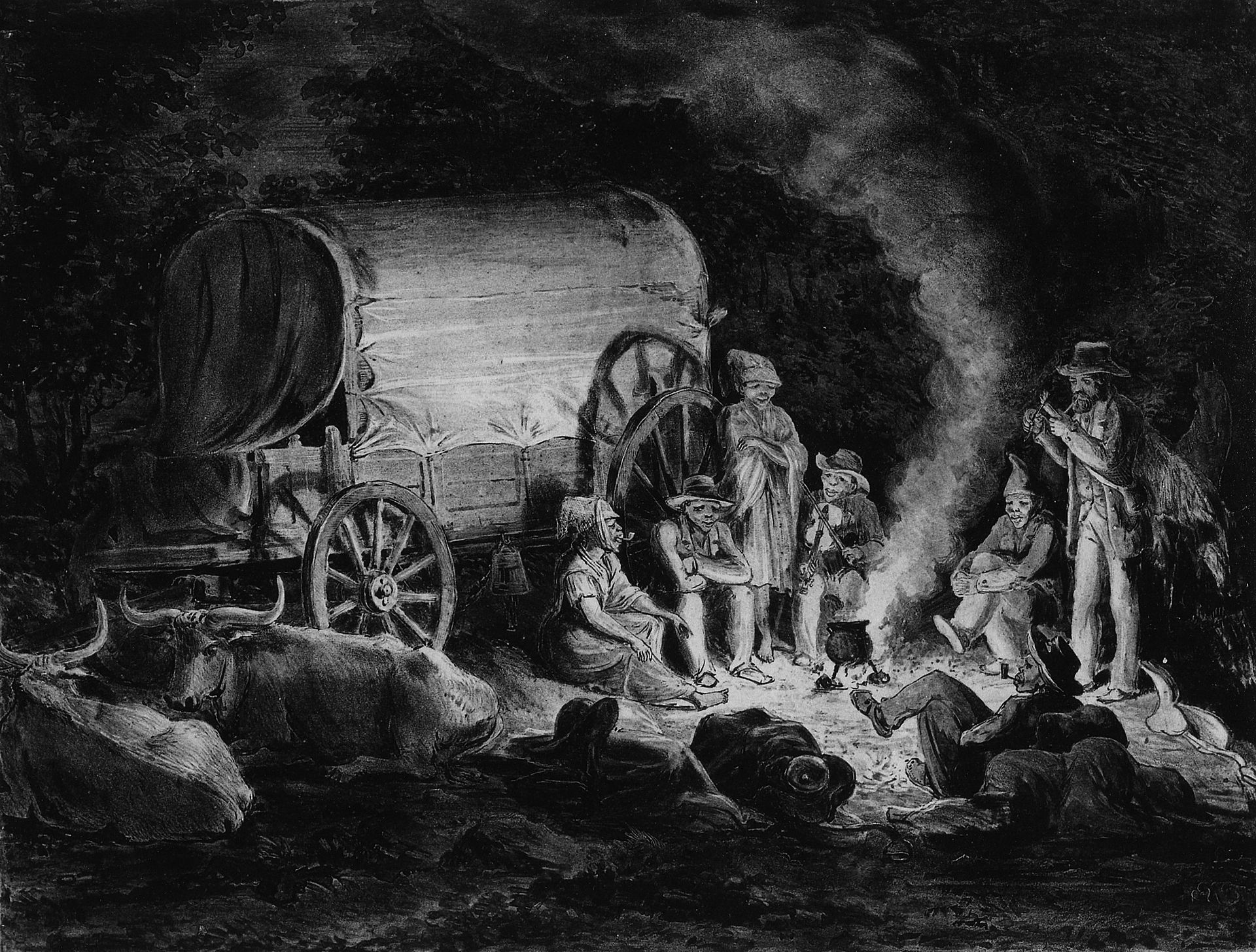
The Trekboers were not the only group determined to escape the strict Dutch rule of the Cape Colony in the late 18th century. The Coloureds, the mixed-race offspring of interbreeding between Europeans, their slaves and the Khoikhoi—by now, a sizeable Dutch-speaking population—were refused both citizenship and land rights by the authorities. Consequently, under the leadership of former slave Adam Kok, some left the Cape and started trekking northeastwards into the interior. As they travelled, other Khoikhoi groups joined them. Around 1800, they crossed the Orange River, marking the northern frontier of the colony, and arrived in a largely uninhabited area. In possession of guns and horses, they gained a reputation as a formidable military force. These people became known as the Griqua and the land where they settled was named Griqualand.
British Cape Colony


In the winter of 1794–95, during the French Revolutionary Wars, French troops invaded the Dutch Republic. The British took action to prevent the Dutch Cape Colony also falling into French hands. Following the Battle of Muizenberg (near present-day Cape Town), the Cape surrendered to British forces in September 1795. The British occupation continued until the Peace of Amiens in 1802, when the colony was returned to the Dutch. But in 1806, during the Napoleonic Wars, the British re-occupied it. This time, British control was agreed by the Anglo-Dutch Treaty of 1814, and then confirmed at the Congress of Vienna in 1815.
To begin with, the colony’s importance to the British Empire lay in its function as a naval base on the trade route to India. The British allowed the white colonial population to retain "all their rights and privileges which they have enjoyed hitherto", although they quickly outlawed the use of the Dutch language. They later began to populate the lands near the eastern border of the Cape Colony, the Eastern Cape, starting with the arrival in Port Elizabeth of a group called the 1820 Settlers.
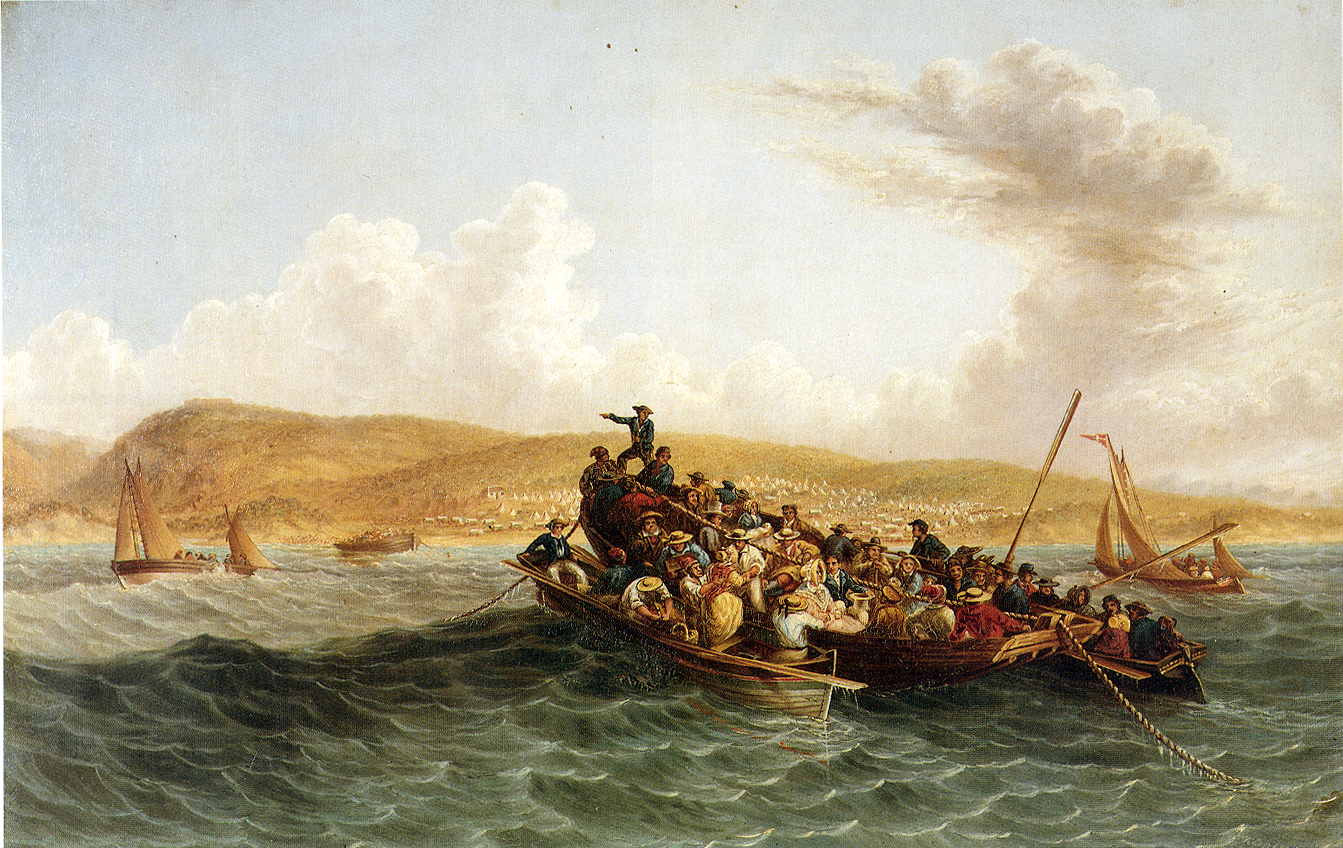
As the number of British immigrants rose, so the demand for new land to farm grew. In the early years of the 19th century, the British fought with the Xhosa, a Bantu-speaking people who lived in the Eastern Cape, in a long series of what were known as the Xhosa Wars or Cape Frontier Wars. After suffering a string of defeats to the British, whose firepower was far superior, the Xhosa were driven across the Great Fish River, the colony's eastern border.
Consultant: Philip Parker
pics

Without in any way limiting Q-files Ltd’s exclusive rights under copyright, any use of this publication to “train” generative artificial intelligence (AI) technologies to generate text is expressly prohibited. Q-files Ltd reserves all rights to license use of this work for generative AI training and development of machine learning language models.