
Africa

CITE
We have made every effort to follow citation style rules, but there may be some minor differences. If in doubt, please refer to the appropriate citation style manual.
Modern history of South Africa. (2026). In Q-files Encyclopedia, History, Africa. Retrieved from
https://www.q-files.com/history/africa/modern-history-of-south-africa
"Modern history of South Africa." History, Africa, Q-files Encyclopedia, 20 Mar. 2026.
https://www.q-files.com/history/africa/modern-history-of-south-africa.
Accessed 21 Sep. 2026.
Modern history of South Africa 2026. History, Africa. Retrieved 21 September 2026, from
https://www.q-files.com/history/africa/modern-history-of-south-africa
History, Africa, s.v. "Modern history of South Africa," accessed September 21, 2026.
https://www.q-files.com/history/africa/modern-history-of-south-africa


Modern history of South Africa
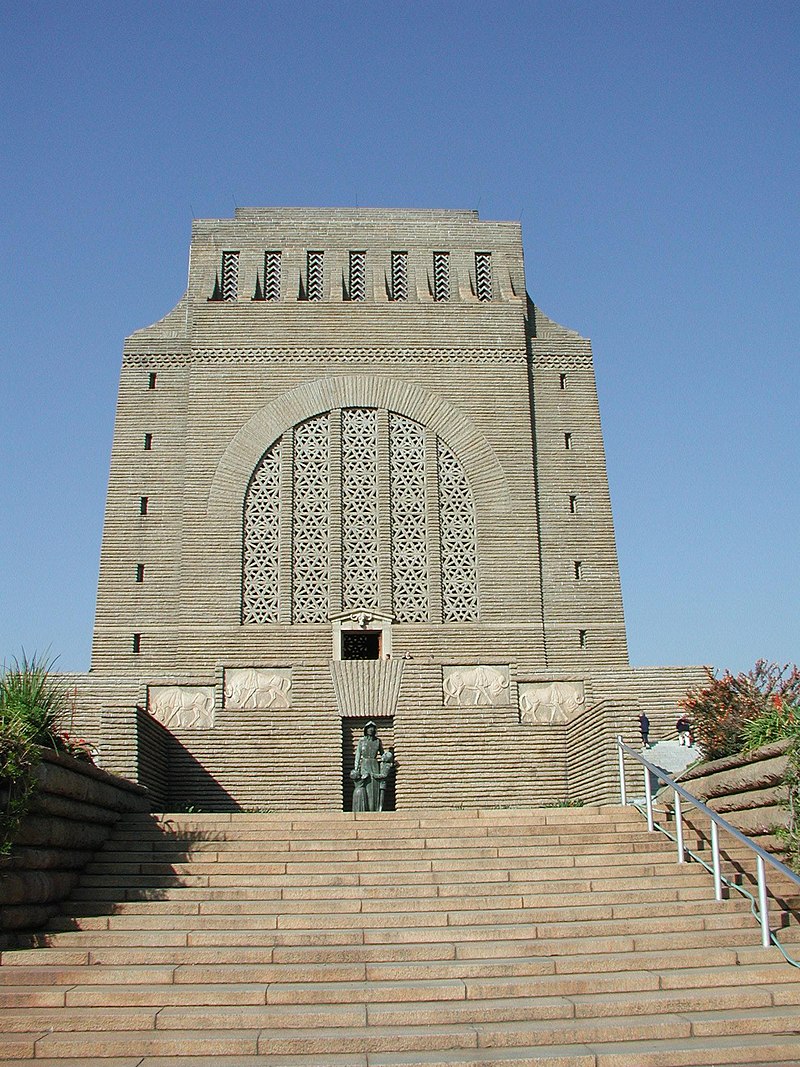
The South Africa Act 1909 brought the Cape Colony, Natal Colony, Transvaal Colony and the Orange River Colony into one nation, the Union of South Africa. Along with Canada, Australia and New Zealand, it became a self-governing (but not yet fully independent) Dominion of the British Empire. Louis Botha headed the government with Jan Smuts as his deputy. But the new country was essentially a "white union"—governed by white people. Black opposition began with founding of the African Native National Congress (the forerunner of the African National Congress or ANC) in 1912 to protest against the exclusion of black people from power.


Land Act
The colonies' black population were denied the right to vote or to stand for election to parliament. The authorities also imposed an unpopular tax on them in 1906. Some black farmers from Natal refused to pay it, and their resistance developed into an armed uprising led by Bhambatha, a Zulu chief. Up to 4000 black people were killed and many thousands imprisoned after the rebellion was put down.
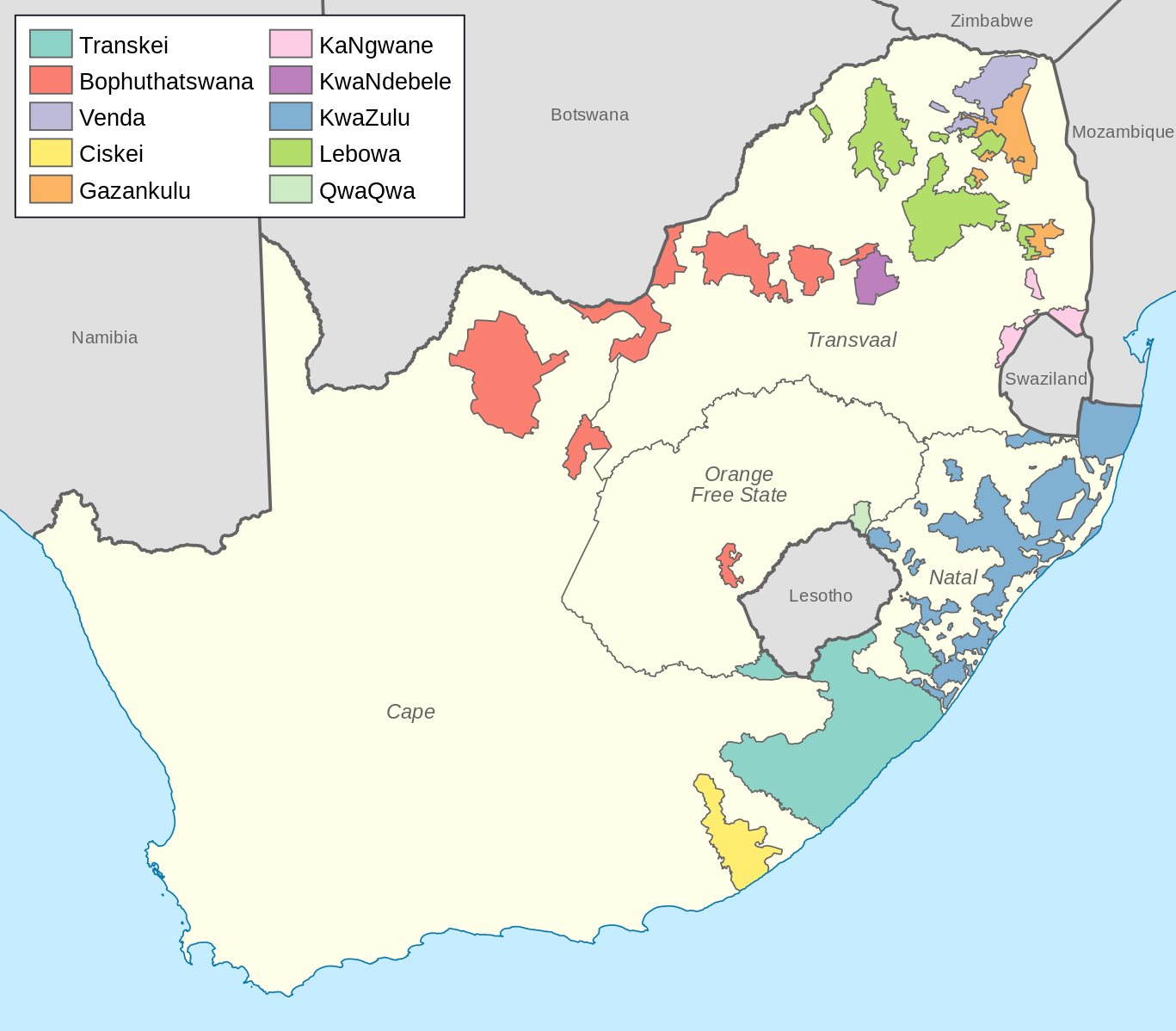
The Union parliament passed the 1913 Natives Land Act, which made available just 7% of South Africa's land for black or Coloured people. White people, who made up 20% of the population, held 90% of the land. The Native (Urban Areas) Act of 1923 segregated urban residential areas and created controls to restrict access by black people to the cities.

National Party
Many Boers (now known as Afrikaners), most of them poor farmers, also felt excluded. Britain's attempts to impose English as the official language in schools and workplaces caused them to regard their own language, Afrikaans, as a symbol of their nationhood. The National Party, formed to champion Afrikaner interests, was formed in 1914 under the leadership of Barry Hertzog. The party campaigned for independence from Britain. After it came to power in 1924, Afrikaans (replacing Dutch) became an official language of the Union alongside English. The South African parliament secured complete independence from Britain in 1934 when it passed the Status of the Union Act, declaring the country to be “a sovereign independent state”.

Apartheid era
By the end of World War II black people occupied vast squatter camps on the outskirts of South Africa's cities. In 1946, more than 60,000 black gold miners went on strike for higher wages and improved living conditions. In the 1948 general election, the National Party was returned to power. In response to growing unrest by the country's majority black population, it proceeded to introduce an even stricter policy of racial segregation and discrimination. This was known as apartheid.
Black opposition was also evolving with a younger, more determined political leaders such as Nelson Rolihlahla Mandela, Oliver Tambo and Walter Sisulu emerging. In 1952, the ANC planned a Defiance Campaign. The inspiration came from the example of Mahatma Gandhi in India, who had used the principles of non-violence to fight for independence for his country.
By law, the South African government required non-whites to carry documents with them in order to have access to "restricted" areas. The Defiance Campaign challenged this law. So the white government arrested thousands of protesters, and introduced even harsher measures. Mandela himself was arrested in 1952, and again in 1955, when he was charged with treason.

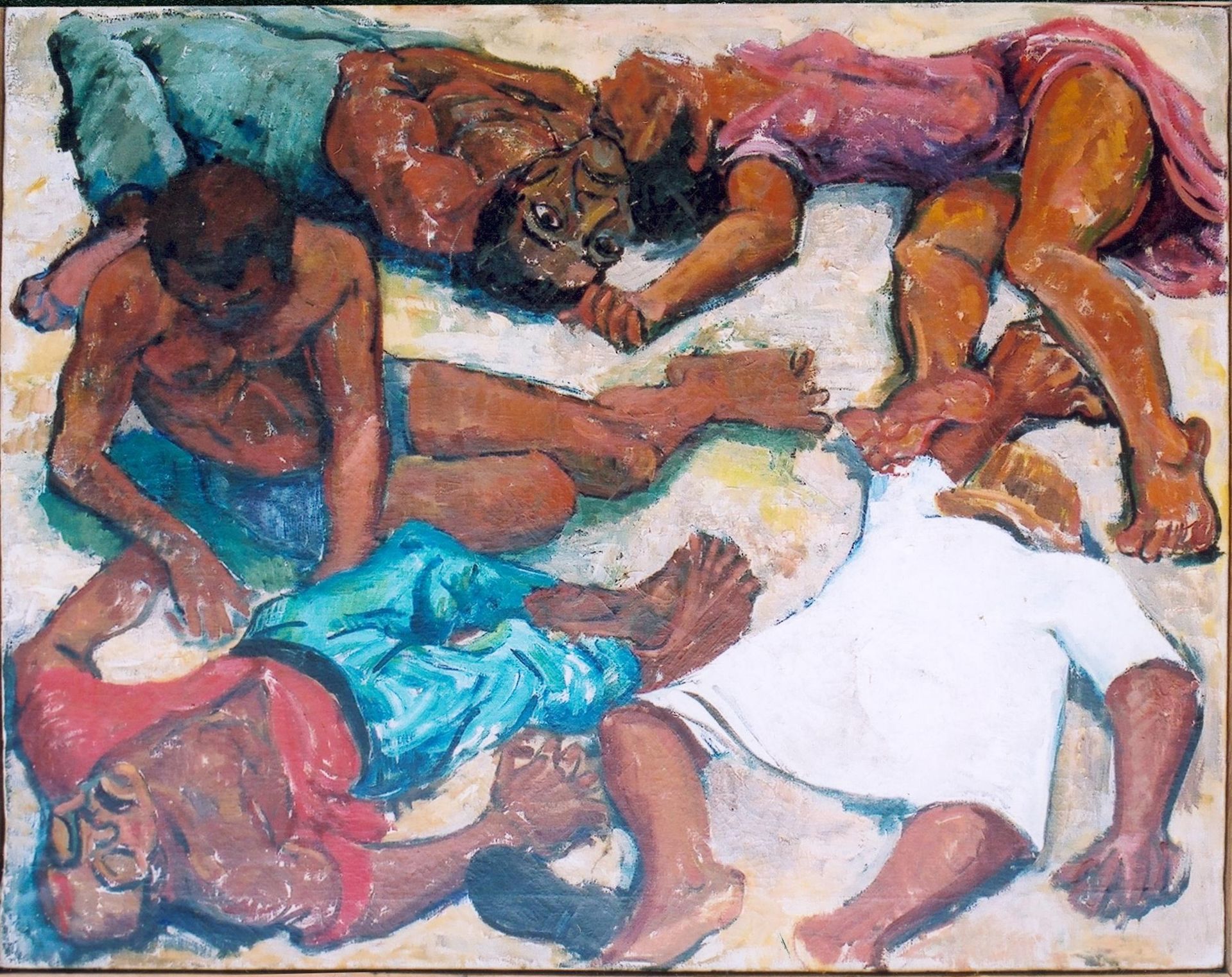
Meanwhile protests against the injustices of apartheid were increasing. In 1960, the police opened fire on a group of unarmed black protesters at Sharpeville, killing 69 people. Riots broke out, Mandela and other ANC leaders were arrested and the ANC was banned.

When other Commonwealth members criticized South Africa over its apartheid policies at a meeting in London in 1961, it withdrew from the organization and became the Republic of South Africa.
Mandela was now convinced that non-violent protest could not work against apartheid. He launched a new campaign of sabotage, aimed at targets such as power plants or telephone lines that would cause maximum disruption to the government while causing minimum risk to innocent civilians. He was one of the founders of Umkhonto we Sizwe ("Spear of the Nation", shortened to MK), the military wing of the ANC. In August 1962, Mandela was arrested once more and sentenced to five years in jail. The following year, he was tried for sabotage and attempting to overthrow the government. This time the sentence, passed in 1964, was life imprisonment.
Black resistance intensified in the 1970s. Stephen Biko and other black students founded the Black Peoples Convention (BPC) in 1972. The following year, black trade unions organized a series of strikes for higher wages and improved working conditions. On 16th June 1976, thousands of children in Soweto, an African township outside Johannesburg, demonstrated against government plans to force them to be taught in Afrikaans rather than in English. When the police opened fire with tear gas and bullets, the incident sparked nationwide protests. The government banned many organizations including the BPC, and within a year the police had killed more than 500 people, including Biko. These events focused worldwide attention on South Africa.

Not all opposition to apartheid was militant. During the 1970s and 1980s, Desmond Tutu (1931–2021), who became Archbishop of Cape Town in 1986, emerged as one of the most prominent anti-apartheid campaigners. A supporter of non-violent protest and foreign economic pressure, Tutu was popular among South Africa's black majority. For his efforts to secure change in South Africa, he received the Nobel Peace Prize in 1984.
The end of apartheid
As a result of continuous pressure from the anti-apartheid movement in South Africa and around the world, which had grown ever stronger during the 1980s, President FW de Klerk announced the lifting of the ban on the ANC and other banned organizations. He also ordered the release of Nelson Mandela on 11th February 1990, after 27 years in prison. In June 1991 all apartheid laws were finally withdrawn, opening the way for the country's first fully democratic elections.
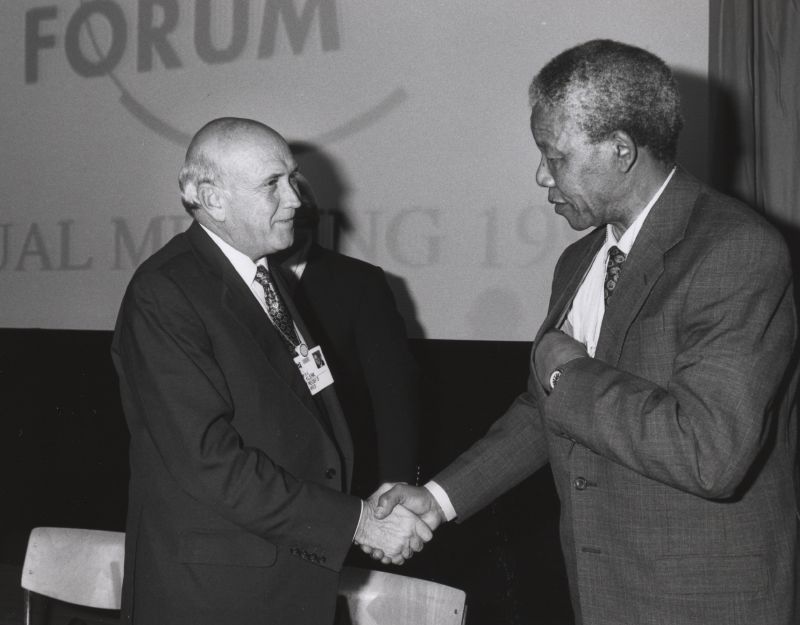

Mandela became president of the ANC in July 1991. In the general election of April 1994, the ANC won the first fully representative, multi-racial elections to be held in South Africa. Mandela became the country’s first black president. He worked hard to ensure that all people of the "Rainbow Nation" of South Africa were represented in government. So, although many posts went to ANC members, de Klerk became Deputy President. In 1995, Mandela also established the Truth and Reconciliation Commission, chaired by Tutu, to investigate crimes committed under apartheid. In 1996, a new democratic constitution became law.
Between 1995 and 2008 around 800,000 white South Africans—about a fifth of the entire white population—had emigrated to the UK, Australia, New Zealand and North America.
South Africa today
Today. nearly 50% of South Africans (mostly the black population) continue to live in poverty, making it one of the most unequal countries in the world. Widespread dissatisfaction with the slow pace of reform has led to many violent protest demonstrations.

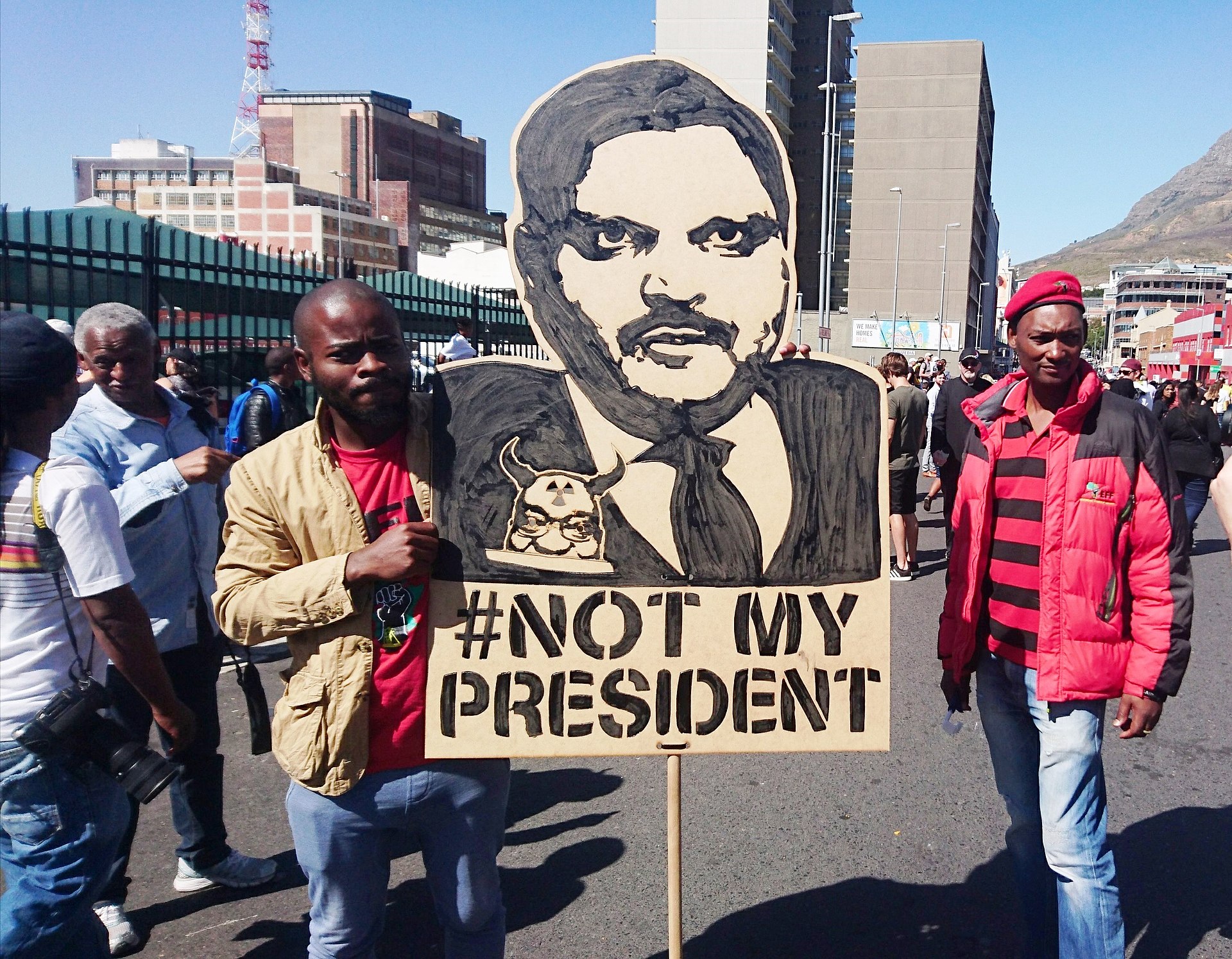
During the government of President Jacob Zuma, corruption in the South African government also became a major issue. Civil unrest broke out in KwaZulu-Natal and Gauteng provinces in July 2021. It was sparked by the imprisonment of Zuma, following his refusal to testify at an inquiry into allegations of corruption during his term as president from 2009 to 2018.
Consultant: Philip Parker
pics
Without in any way limiting Q-files Ltd’s exclusive rights under copyright, any use of this publication to “train” generative artificial intelligence (AI) technologies to generate text is expressly prohibited. Q-files Ltd reserves all rights to license use of this work for generative AI training and development of machine learning language models.