
Famous leaders

CITE
We have made every effort to follow citation style rules, but there may be some minor differences. If in doubt, please refer to the appropriate citation style manual.
Nelson Mandela. (2022). In Q-files Encyclopedia, History, Famous leaders. Retrieved from
https://www.q-files.com/history/famous-leaders/nelson-mandela
"Nelson Mandela." History, Famous leaders, Q-files Encyclopedia, 10 Feb. 2022.
https://www.q-files.com/history/famous-leaders/nelson-mandela.
Accessed 22 Sep. 2026.
Nelson Mandela 2022. History, Famous leaders. Retrieved 22 September 2026, from
https://www.q-files.com/history/famous-leaders/nelson-mandela
History, Famous leaders, s.v. "Nelson Mandela," accessed September 22, 2026.
https://www.q-files.com/history/famous-leaders/nelson-mandela


Nelson Mandela
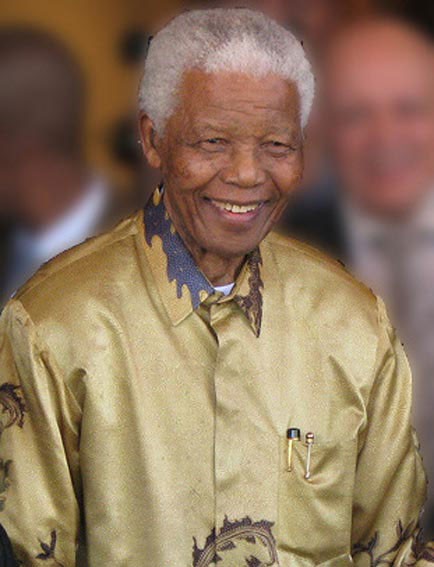
From the 1940s until 1994, Nelson Mandela (1918–2013) was a leader in the struggle against apartheid in South Africa. During that time he was held as a political prisoner for 27 years, 18 of them on Robben Island. In 1994, he became the first black president of South Africa—the first president to be elected in a fully representative, multi-racial election in that country. An inspiration to millions of people of all ethnic origins all over the world, Nelson Mandela's death, on 5th December 2013, was mourned around the globe.
Early life
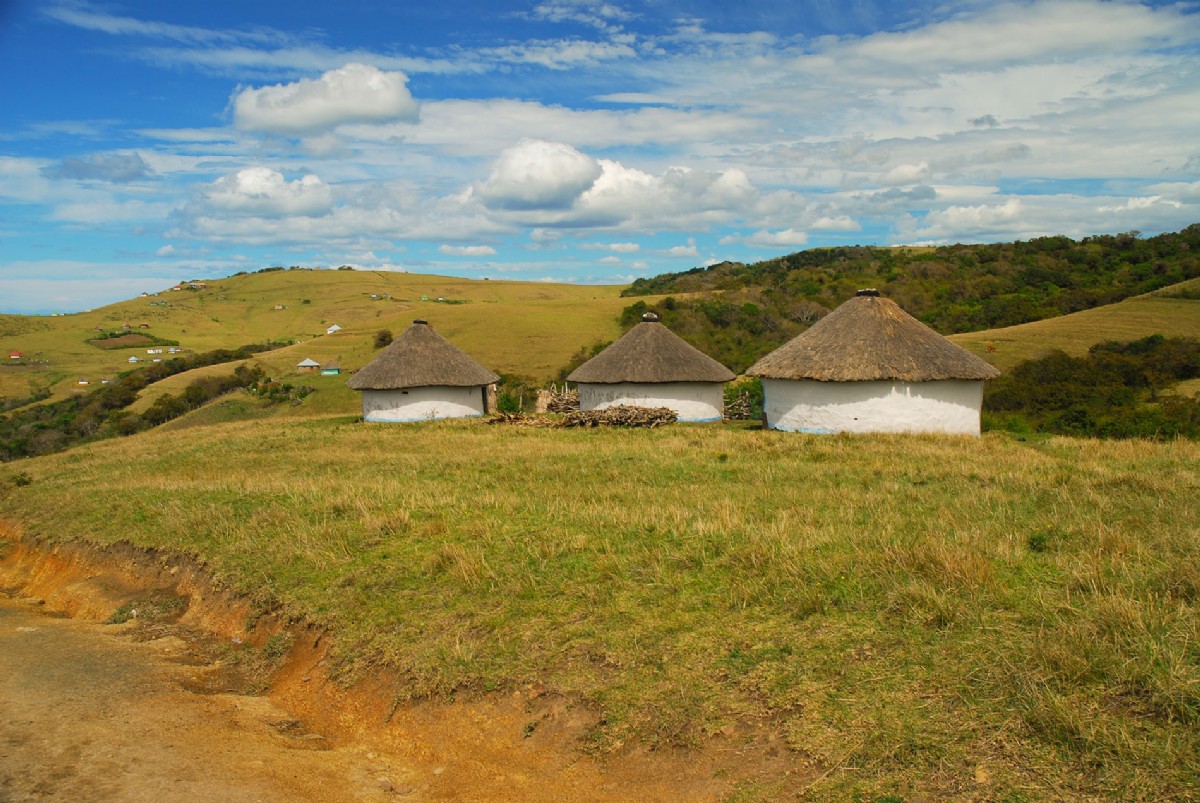
Rolihlahla Mandela was born on 18th July 1918 in a small village in the Transkei region, in the southeast of South Africa. His father was chief of the Thembu clan, a Xhosa-speaking people. He attended the local Methodist school, where the teacher gave him his English name, Nelson. His father died when he was nine, and he was cared for by Jongintaba Dalindyebo, the acting chief of the Thembu people.
Law student
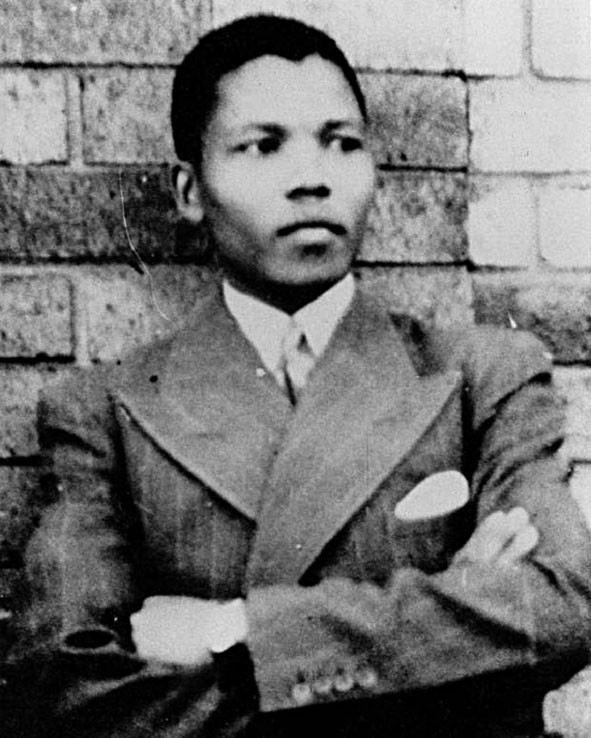
In 1941, Mandela ran away from home to avoid an arranged marriage. He went to Johannesburg, where he found work in a law firm to support himself as he studied for a degree at the University of South Africa. He continued his studies at the University of Witwatersrand, where he was the only black student in the law faculty. Here he met people of all races and backgrounds, as well as encountering racism and discrimination. In 1943, he joined the African National Congress (ANC), a nationalist organization dedicated to fighting for equal rights for black people.
Apartheid
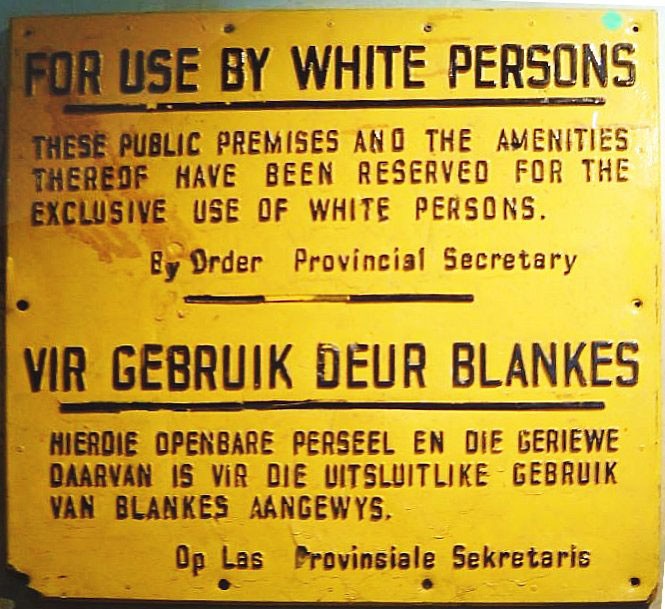
In 1948, there was a general election in South Africa. Only white people were allowed to vote. It resulted in victory for the National Party, which introduced an official policy of racial segregation and discrimination, known as apartheid.
In 1952, the ANC planned a Defiance Campaign. The inspiration came from the example of Mahatma Gandhi in India, who had used the principles of non-violence to fight for independence for his country.
By law, the South African government required non-whites to carry documents with them in order to have access to "restricted" areas. The Defiance Campaign challenged this law. In reaction, the white government arrested thousands of protesters, and introduced even harsher measures. Mandela himself was arrested in 1952, and again in 1955, when he was charged with treason. He was eventually acquitted in 1961.
Sharpeville and after
In 1958, Mandela married a social worker called Winnie Madikizela (he had previously been married to Evelyn Mase). Meanwhile protests against the injustices of apartheid were increasing. In 1960, the police opened fire on a group of unarmed black protesters at Sharpeville, killing 69 people. Riots broke out, Mandela and other ANC leaders were arrested and the ANC was banned.
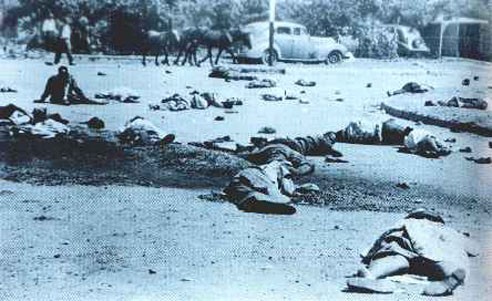
Mandela was now convinced that non-violent protest could not work against apartheid. He launched a new campaign of sabotage, aimed at targets such as power plants or telephone lines that would cause maximum disruption to the government while causing minimum risk to innocent civilians. He was one of the founders of Umkhonto we Sizwe ("Spear of the Nation"), the military wing of the ANC. In August 1962, he was arrested once more and sentenced to five years' imprisonment. The following year, he was tried for sabotage and attempting to violently overthrow the government. This time the sentence, passed in 1964, was life imprisonment.
In prison
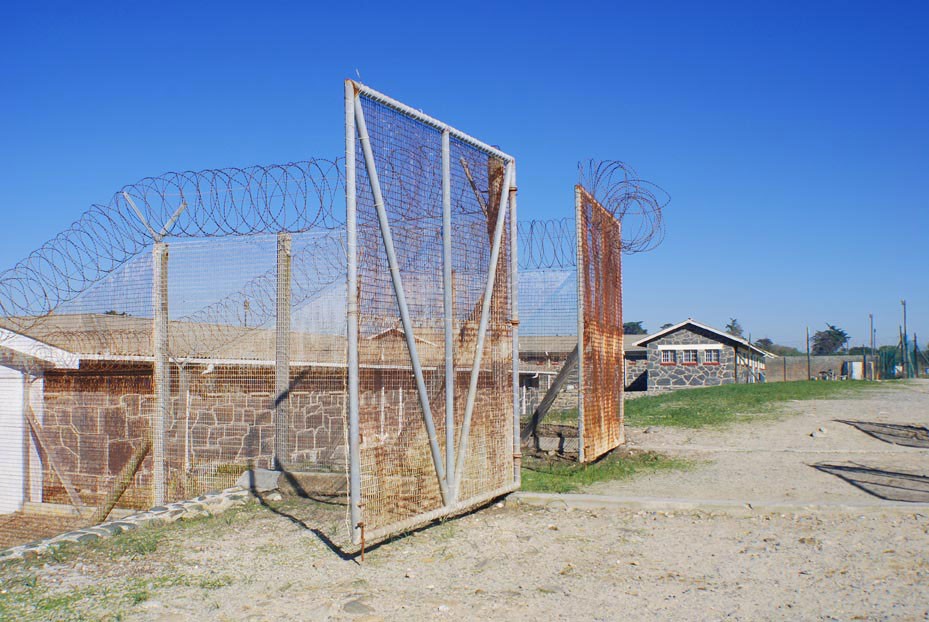
Mandela was sent to a prison on Robben Island, just off the west coast of South Africa. He spent 18 years there, living in a tiny cell, forced to work in a lime quarry, and permitted very few visits from family and friends. When his mother, and then his eldest son died, he was not permitted to go to their funerals. In 1982, he was moved to Pollsmoor Prison in Tokai, Cape Town. By this time there was an international campaign to free him, and many countries had imposed sanctions on South Africa. On his 70th birthday in 1988, a Nelson Mandela tribute concert was held in Wembley Stadium in London. It was broadcast around the world and attracted an audience of hundreds of millions of people.
Nobel Peace Prize
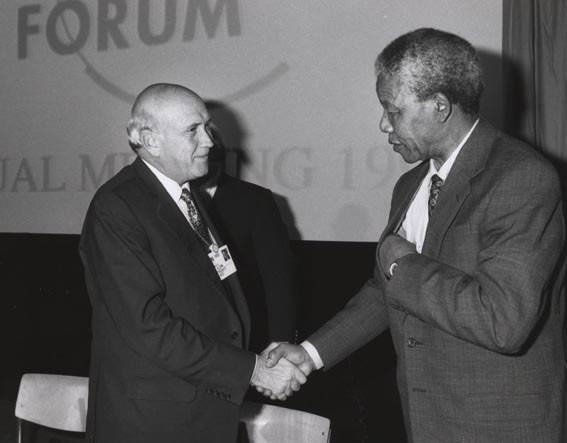
In 1990, the South African president FW de Klerk lifted the ban on the ANC, which had been in place since 1960. On 11th February, Nelson Mandela was released from prison. Mandela became president of the ANC in July 1991. He negotiated with de Klerk to end apartheid and bring about a peaceful change to non-racial democracy. In 1993, Mandela and de Klerk were jointly awarded the Nobel Peace Prize for their work.
President
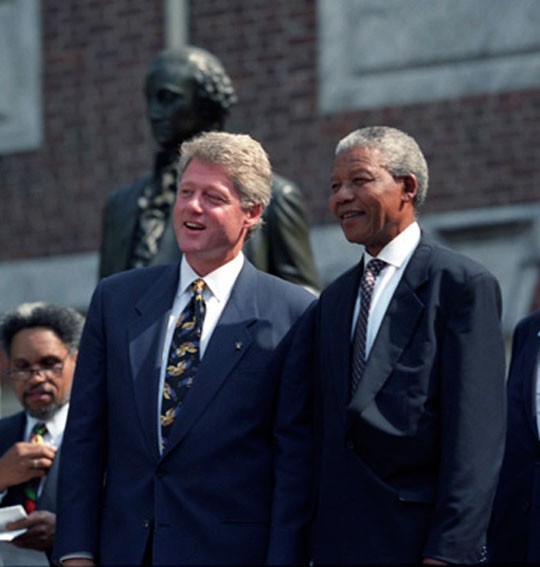
In April 1994, the ANC won the first fully representative, multi-racial elections to be held in South Africa. Mandela became the country’s first black president. He worked hard to ensure that all people of the "Rainbow Nation" of South Africa were represented in government. So, although many posts went to ANC members, de Klerk was Deputy President. In 1995, Mandela also established the Truth and Reconciliation Commission to investigate crimes committed under apartheid. In 1996, a new democratic constitution became law in South Africa.
Retirement and death
Mandela divorced his second wife, Winnie, in 1996. Two years later, he married again, on his 80th birthday. His bride was Graça Machel, widow of the president of Mozambique, Samora Machel, who had died in a plane crash in 1986. Mandela did not stand for a second term in office, and retired in 1999. He remained active in public life, working with the Mandela Foundation to combat AIDS, giving lectures and meeting with world leaders. In 2007, he established the Elders, a group of international leaders dedicated to resolving conflict around the world.
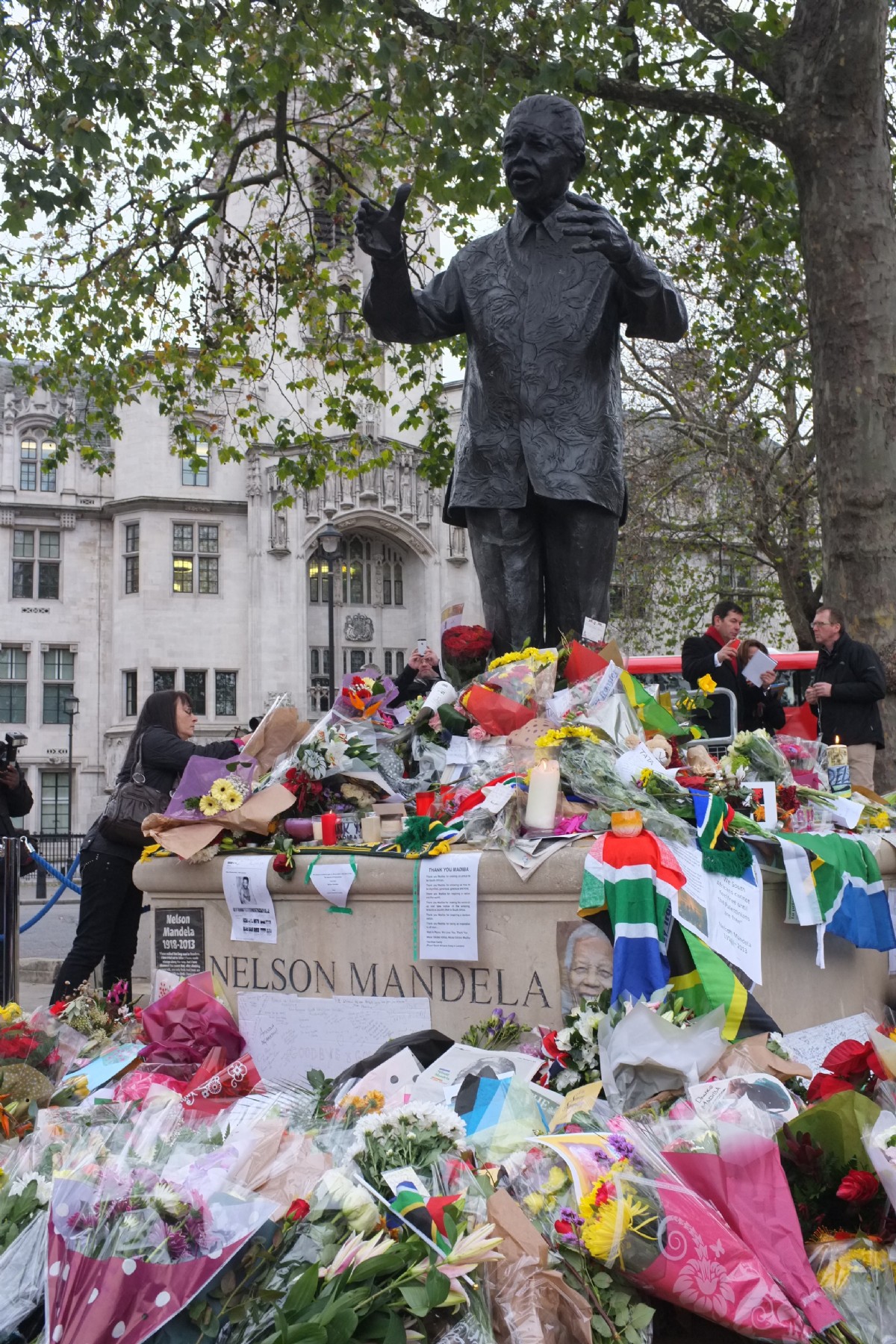
On 5th December 2013, at the age of 95, Nelson Mandela died after suffering from a lengthy respiratory infection. More than 90 world leaders, including American president Barack Obama, British Prime Minister David Cameron and the UN Secretary General Ban Ki-moon, attended his memorial service in Johannesburg.
Consultant: Philip Parker
pics
Without in any way limiting Q-files Ltd’s exclusive rights under copyright, any use of this publication to “train” generative artificial intelligence (AI) technologies to generate text is expressly prohibited. Q-files Ltd reserves all rights to license use of this work for generative AI training and development of machine learning language models.