
Famous leaders

CITE
We have made every effort to follow citation style rules, but there may be some minor differences. If in doubt, please refer to the appropriate citation style manual.
Mahatma Gandhi. (2022). In Q-files Encyclopedia, History, Famous leaders. Retrieved from
https://www.q-files.com/history/famous-leaders/mahatma-gandhi
"Mahatma Gandhi." History, Famous leaders, Q-files Encyclopedia, 10 Feb. 2022.
https://www.q-files.com/history/famous-leaders/mahatma-gandhi.
Accessed 22 Sep. 2026.
Mahatma Gandhi 2022. History, Famous leaders. Retrieved 22 September 2026, from
https://www.q-files.com/history/famous-leaders/mahatma-gandhi
History, Famous leaders, s.v. "Mahatma Gandhi," accessed September 22, 2026.
https://www.q-files.com/history/famous-leaders/mahatma-gandhi


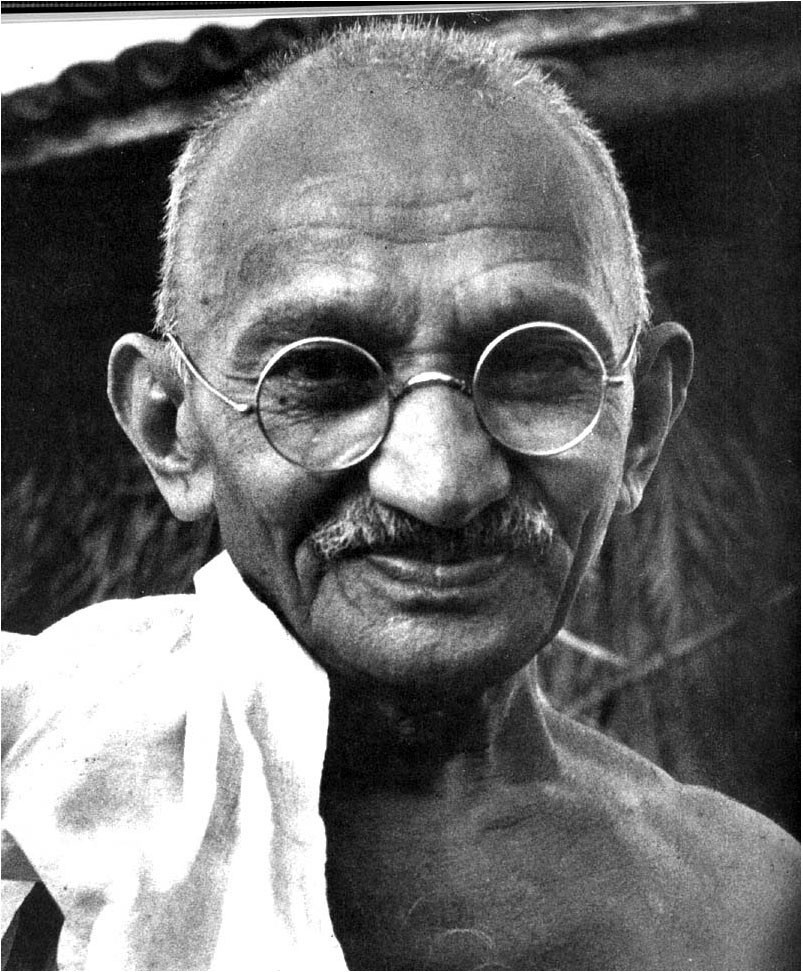
Mahatma Gandhi
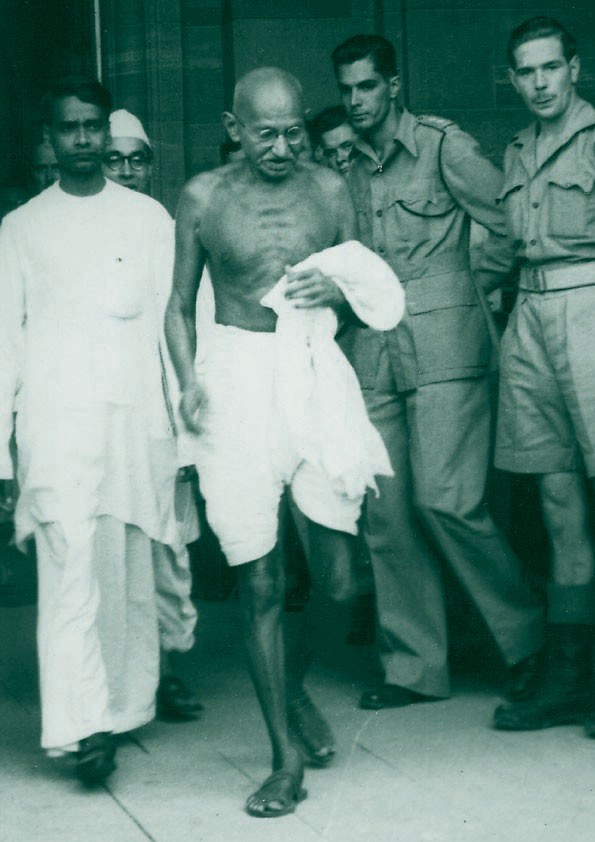
Mohandas Karamchand Gandhi (1869–1948) was a leader of the Indian nationalist movement against British rule, and an advocate of non-violent protest. Considered the "father" of India, Gandhi is a spiritual leader to Hindus—their Mahatma ("Great Soul"). His life and work had a huge influence in the fight against colonialism, racism and violence. He provided inspiration for the work of the black civil rights leaders in the United States, notably Martin Luther King, who also employed the strategies of non-violent direct action. His concern for the poor still has great relevance in today’s world.
Early life and marriage
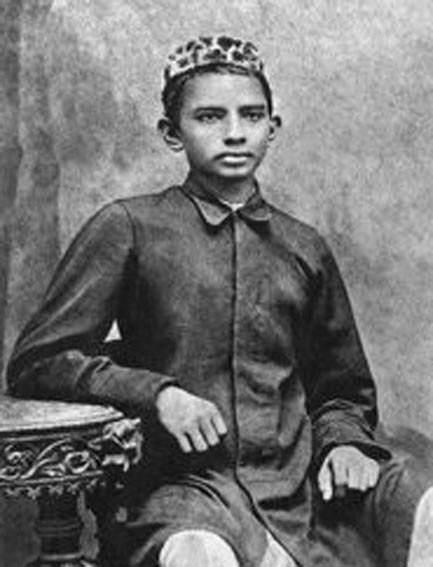
Gandhi was born on 2nd October 1869 in Porbandar, a coastal town in Gujarat which was then part of British India. His father was the dewan (chief minister) of Porbandar. His mother was deeply religious, and Gandhi grew up in a household where ahimsa (non-violence to living things), vegetarianism and fasting were all central to everyday life.
Gandhi married Kasturba at the age of 13, in an arranged marriage. Kasturba was a devoted and supportive wife to Gandhi throughout her life (she died in 1944), enduring many spells in prison, and joining with Gandhi when he fasted. The couple had four surviving children, all boys.
South Africa
At the age of 19, Gandhi left India to go to University College, London, to qualify as a barrister. He returned to India in 1891, but he had little success in starting his career as a lawyer. In 1893 he went to South Africa to work for an Indian law firm in Durban, Natal. He was soon appalled by the humiliating treatment of Indian workers in South Africa. He himself was kicked off a train halfway through his journey because a white passenger objected to travelling with a "non-white" in a first-class carriage. In 1894, Gandhi founded the Natal Indian Congress which campaigned for Indian workers’ rights in South Africa, and exposed injustices to the wider world.
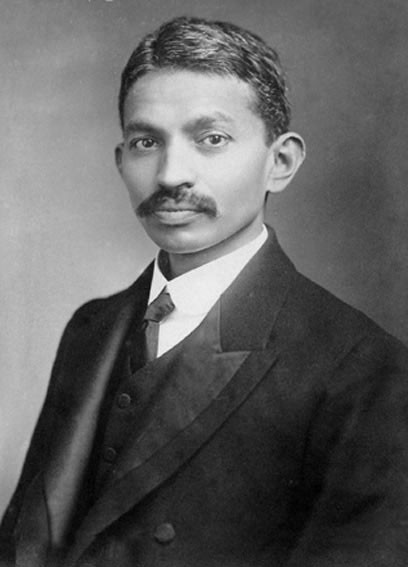
In 1906, an anti-Indian law sparked Gandhi’s first campaign of civil disobedience. During the seven-year campaign, thousands of Indians in South Africa were brutally treated and imprisoned. Gandhi himself went to prison numerous times. In 1914, the South African government finally compromised, and agreed to some of Gandhi’s demands.
Satyagraha

Gandhi returned to India in 1914. During World War I he threw his support behind the British war effort, recruiting Indian troops. Then in 1919, the British introduced a new law that permitted Indians suspected of sedition (any act that encourages rebellion against authority) to be imprisoned without trial. In response, Gandhi called for a national day of fasting, meetings and strikes as an act of satyagraha ("insistence on truth"), a form of non-violent resistance. But after a few days the resistance descended into violence, including the massacre by British troops of 400 Indians attending a meeting at Amritsar.
By 1920, Gandhi had become a powerful leader in the Indian National Congress party. His ideas about non-violent resistance formed the focus for the Indian nationalist movement.
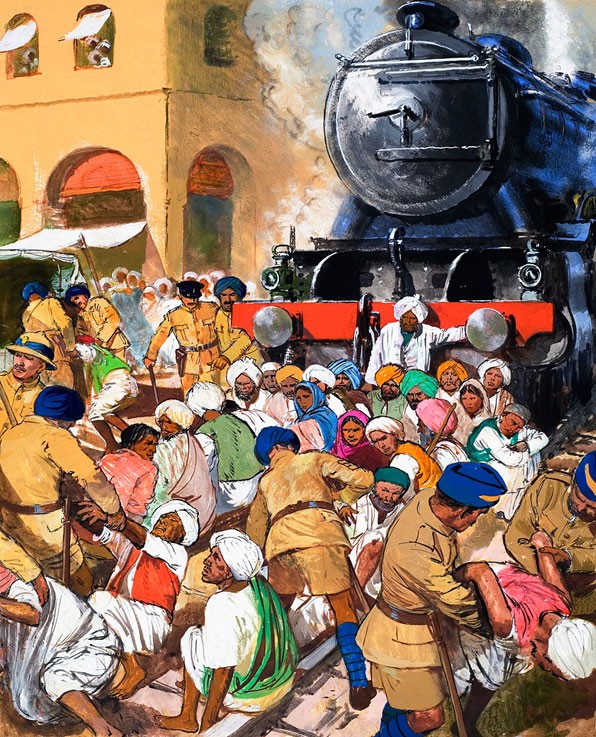
All over the country, Indians boycotted British goods, and refused to work in British institutions. Sometimes they took part in acts of resistance such as lying down in front of trains to stop them running, causing disruption. He struggled to control national protests to stop them from turning violent. Thousands of Indians were arrested during this period, including, in 1922, Gandhi himself. He went to prison for two years, finally being released due to ill-health after surgery on his appendix.
Salt March
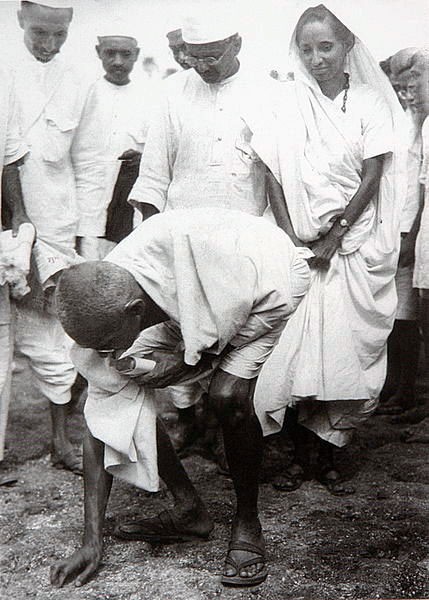
Gandhi became leader of the Indian National Congress once more in 1928. In 1930, he launched one of his best-known campaigns, against a tax the British government imposed on the sale of salt—a tax that affected the poorest Indians in particular. Together with 78 volunteers, Gandhi set out on a march to the coastal village of Dandi in Gujarat, with the intention of extracting salt from seawater. Along the way he gave speeches about the salt tax. The event soon attracted thousands of followers and was given worldwide coverage. It resulted in more than 60,000 Indians being sent
to prison.
"Untouchables"
In 1931, Gandhi was the only representative of the Indian National Congress at the Round Table Conference in London, held to discuss constitutional reforms in India. To his dismay the conference barely touched on issues of Indian independence. Back in India, Gandhi was once more imprisoned. In September 1932, he started a fast in protest against the British government’s treatment of the Dalits, the "untouchables"—the poorest and most oppressed people in India. This fast started the process of breaking down the barriers that divided Dalits (whom Gandhi called Harijan or "children of God") from other Indians.
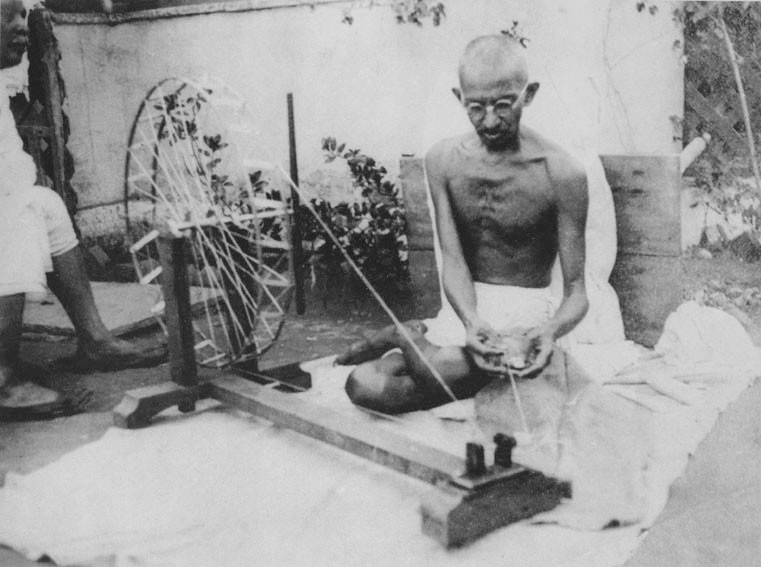
In 1934 Gandhi resigned from the Indian National Congress. He went to live in a village in central India. There he devoted himself to projects to help the rural poor, promoting cottage industries such as handspinning and weaving that allowed people to supplement their earnings.
World War II
During World War II, many in the Indian National Congress believed that Indian support for the Allies should be met with an assurance of Indian self-government from Britain. When this did not happen, Gandhi and others demanded immediate British withdrawal from India. In the British clamp-down that followed, Gandhi and other Congress leaders were imprisoned. It was during this time of imprisonment that Gandhi’s wife died in his arms.
Partition and independence
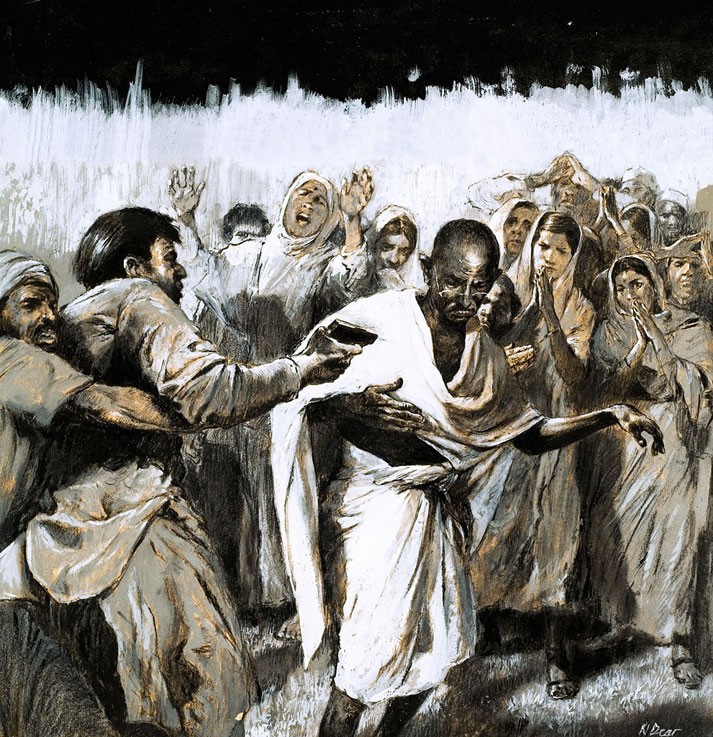
Indian independence from Britain came finally after the end of World War II, in 1947. All his life, Gandhi had worked to reconcile Hindus and Muslims in India, so it was a bitter blow to him when a decision to partition the subcontinent between Hindu- and Muslim-majority states was made. He did all he could to stop the violence between Hindus and Muslims that erupted. Once again he started to fast, bringing violence to an end in Calcutta and Delhi as a result. It was in Delhi, on his way to a prayer meeting, that he was shot dead by a Hindu fanatic on 30th January 1948.
Consultant: Philip Parker
pics
Without in any way limiting Q-files Ltd’s exclusive rights under copyright, any use of this publication to “train” generative artificial intelligence (AI) technologies to generate text is expressly prohibited. Q-files Ltd reserves all rights to license use of this work for generative AI training and development of machine learning language models.