
India

CITE
We have made every effort to follow citation style rules, but there may be some minor differences. If in doubt, please refer to the appropriate citation style manual.
British India. (2024). In Q-files Encyclopedia, History, India. Retrieved from
https://www.q-files.com/history/india/british-india
"British India." History, India, Q-files Encyclopedia, 20 May. 2024.
https://www.q-files.com/history/india/british-india.
Accessed 20 Oct. 2026.
British India 2024. History, India. Retrieved 20 October 2026, from
https://www.q-files.com/history/india/british-india
History, India, s.v. "British India," accessed October 20, 2026.
https://www.q-files.com/history/india/british-india


British India
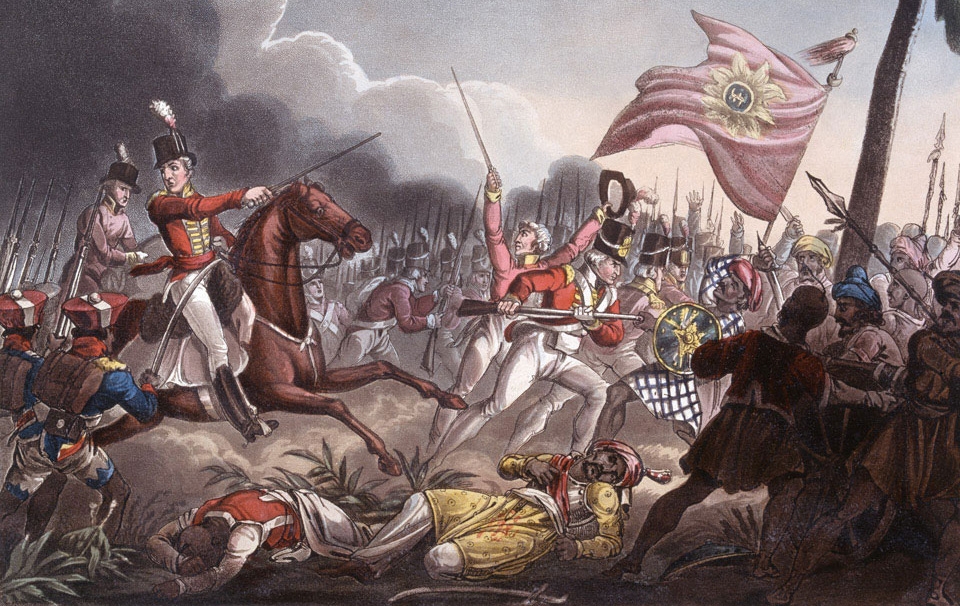
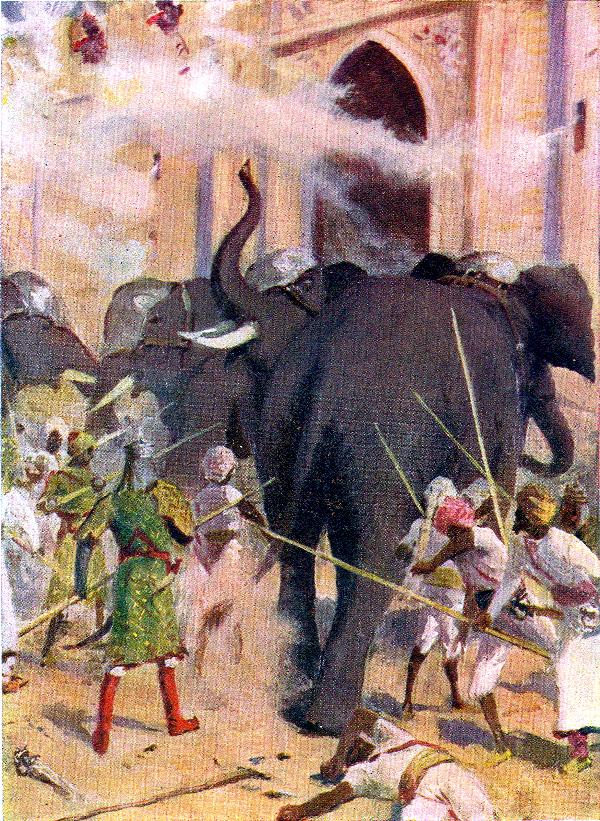
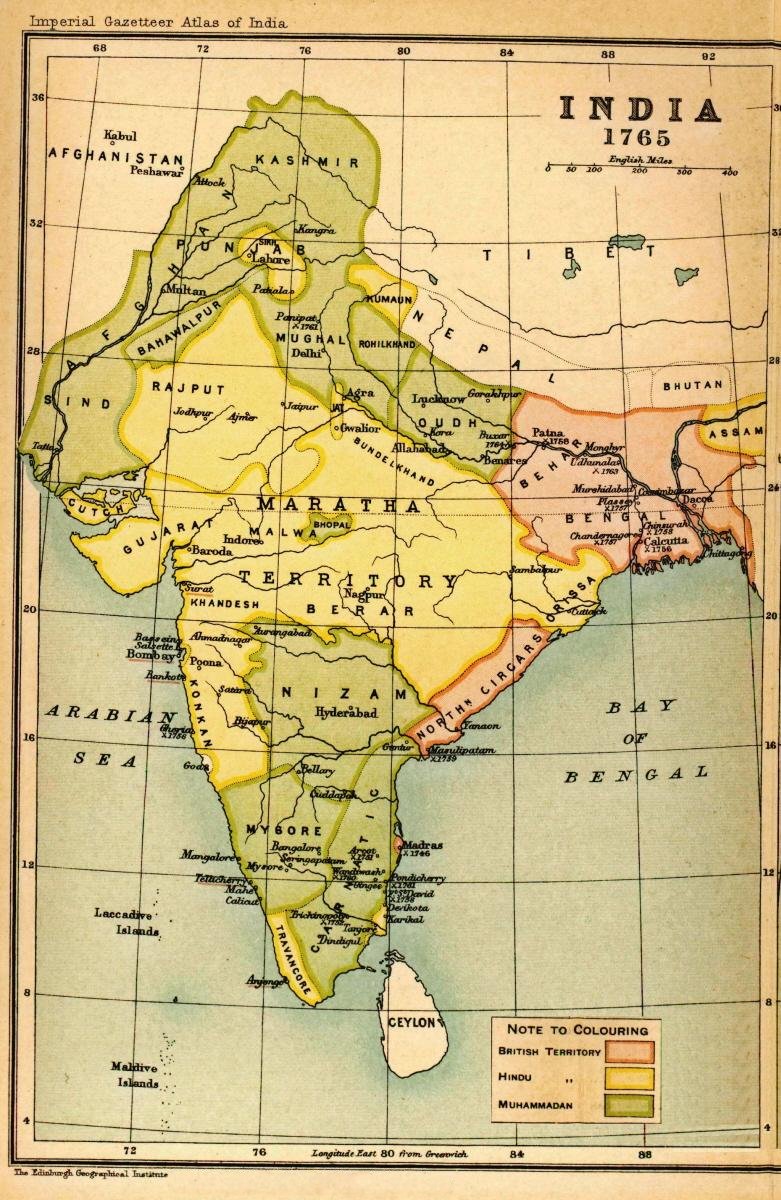
The English (later British) East India Company was set up in 1600 to trade with South and Southeast Asia. In 1617 it was given permission by the Mughal emperor Jahangir to trade in India itself. The Company acquired trading bases in Bombay, Madras and Calcutta and slowly extended its control. Under Robert Clive (1725–74), Company troops drove out the French from India, then defeated the Nawab of Bengal at the Battle of Plassey in 1757. Led by Hector Munro, they overcame the combined armies of Banaras, Bengal, Awadh and the Mughal emperor Shah Alam II at the Battle of Buxar in 1764. These victories gave the Company control over Bengal and Clive was appointed its first Governor. Over the following decades, the Company became the dominant political force in India, ruling over many former Indian kingdoms and influencing others from its capital in Calcutta (known today as Kolkata).

British expansion
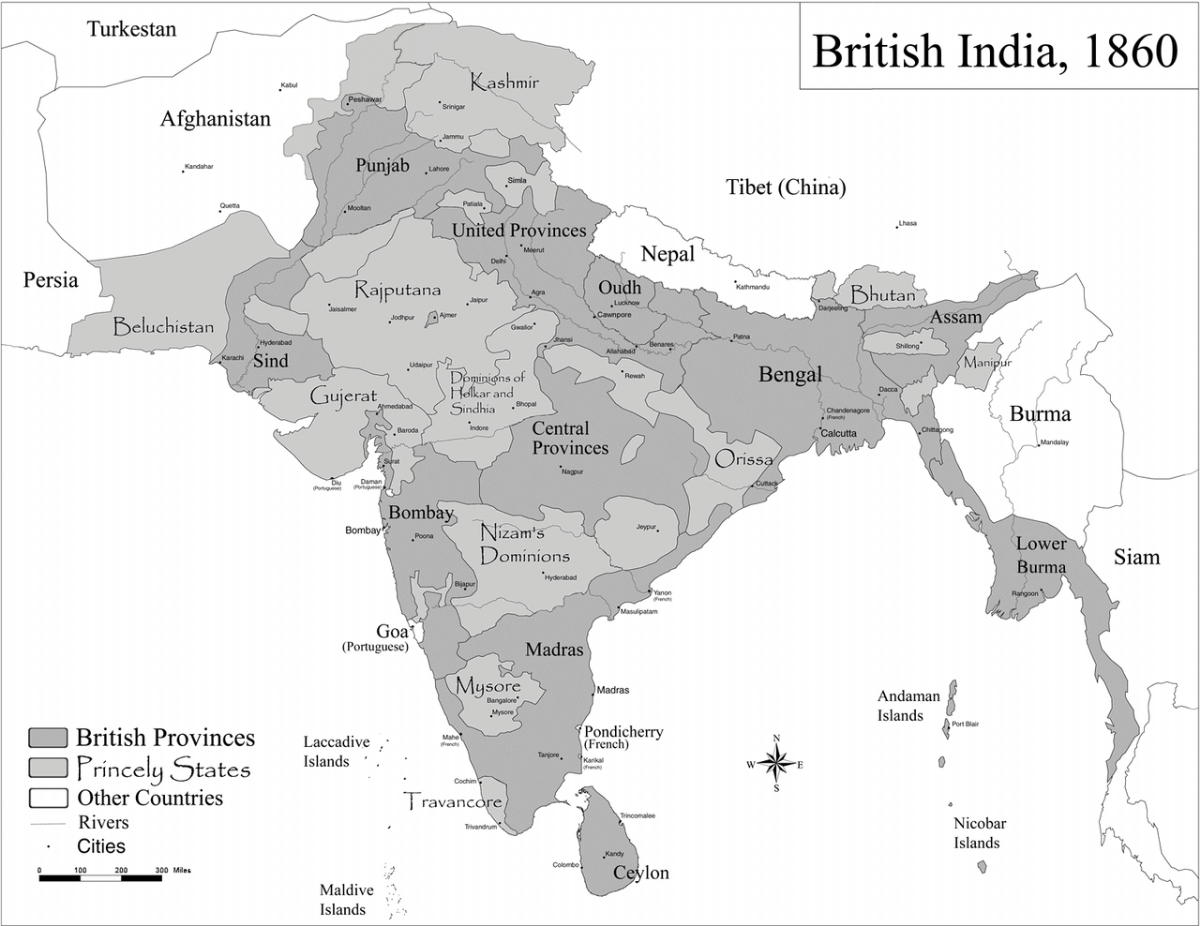
Following victory in the three Carnatic Wars, fought between 1746 and 1763, the East India Company gained control over southern India. The Company also expanded its territories around its bases in Bombay and Madras, while victory in the Anglo-Mysore Wars (1767–99) and later the Anglo-Maratha Wars (1775–1818) led to Company control of vast regions of India. The Ahom Kingdom of northeastern India fell to the British in 1826. Sikh lands in the Punjab, the Northwest Frontier Province and Kashmir were annexed in 1849. Other territory came under British influence through alliances with local rulers, creating the “princely states” of the Hindu maharajas and the Muslim nawabs (Kashmir was sold to Gulab Singh of the Dogra Dynasty of Jammu and became a princely state). By the 1850s, the Company controlled most of the subcontinent.
Company rule
In Bengal before 1765, zamindars, or "land holders", collected taxes on behalf of the Mughal emperor, whose representative, or diwan, supervised their activities. In 1765, the emperor Shah Alam II was forced to transfer tax collecting rights, or diwani, in Bengal, Bihar and Orissa (present-day Odisha) to the British East India Company. The Company made vast profits by taxation. It proceeded to strip the wealth of Mughal India—the world's richest empire at the time—over the next 100 years. At the same time, India, then the world's greatest producer of textiles, was forced to become a market for textiles produced in Britain.
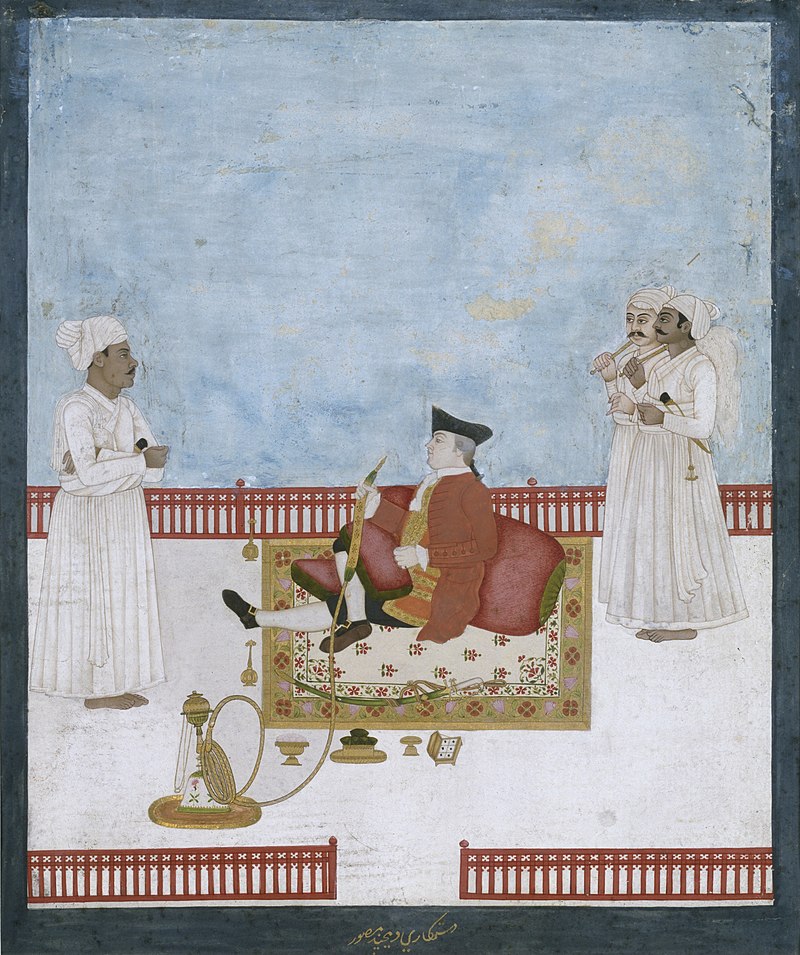
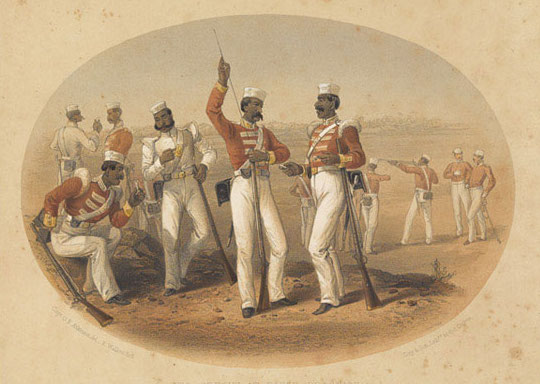
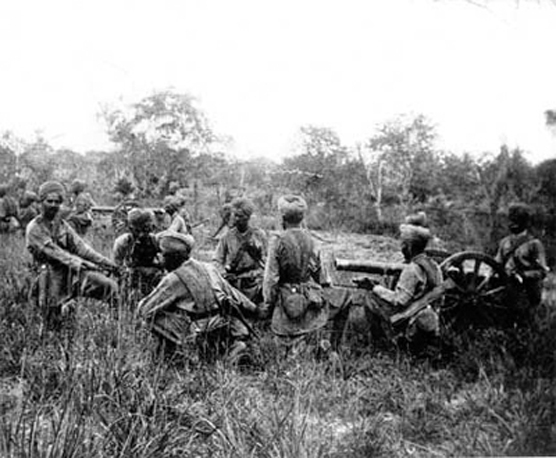
To expand their territories and defend their newly-acquired lands in India, the Company hired sepoys to fight on their behalf. Sepoys were locally raised—but British trained and equipped—soldiers. Supported by field cannon, just a few thousand Company sepoys easily outfought Indian forces vastly superior in number ranged against them.
Great Bengal
Famine of 1770
Drought and crop failure in 1768 and 1769, as well as a smallpox epidemic, triggered a terrible famine in Bengal and Bihar. It occurred after the East India Company had been granted the diwani but before it had taken over the nizamat, civil administration, which still lay with the Mughal governor, the Nawab of Bengal. Seemingly unprepared to take any action, the Company neither provided relief nor reduced taxes. Instead, it purchased a large portion of what rice there was available for its own army. Its officials and their Indian assistants, gomasthas, exploited the situation further by creating local monopolies of grain, ensuring prices were too high for local people to afford. By the summer of 1770, people were dying of starvation in large numbers. Although the monsoon of that year brought plentiful rains, it also brought floods and diseases. Between 7 and 10 million people died.
Indians overseas
The East India Company introduced a system to force Indian people to work in other colonies of the British Empire, mainly on sugar plantations. Each worker was made to declare he or she was going to work voluntarily and given a five-year paid contract—but in practice, the system, known as "indentured labour", was little different to slavery. The transportations began in 1838 (five years after the abolition of slavery in the British Empire), and continued until 1917. During this time, around 3.5 million Indian workers were shipped to places such as Malaysia and Myanmar in Asia, Mauritius in the Indian Ocean, Fiji in the Pacific, Jamaica, Trinidad and British Guiana (now Guyana) in the Caribbean, and Natal in South Africa. A number were also transported to French and Dutch colonies.

Rebellion
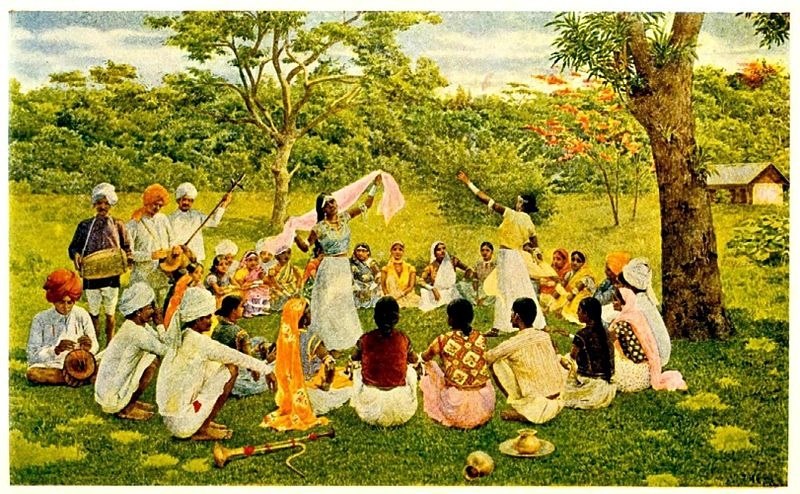
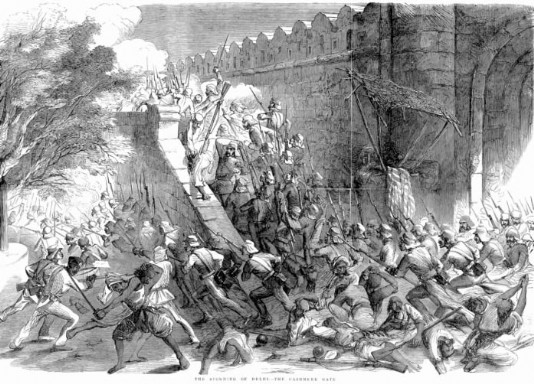
In 1857, a rebellion broke out among the British East India Company's sepoys in northern and central India. It began with a mutiny in Meerut in protest at the execution of one of their own, Mangal Pandey. Within weeks, dozens of Indian army units joined peasant armies in a widespread rebellion against the British. The rebel soldiers were then joined by the Indian nobility, many of whom had lost their lands under Company rule. British authority was eventually restored in 1858: the rebels were poorly equipped and received little support, and were brutally crushed by powerful British forces. The administration of India was then passed to the British Government, and the East India Company was eventually closed down.
In 1876, Queen Victoria was created Empress of India—India was described as the "jewel in the British crown". (Every later British monarch was given the title Emperor of India until the country gained independence in 1947.)

British Raj
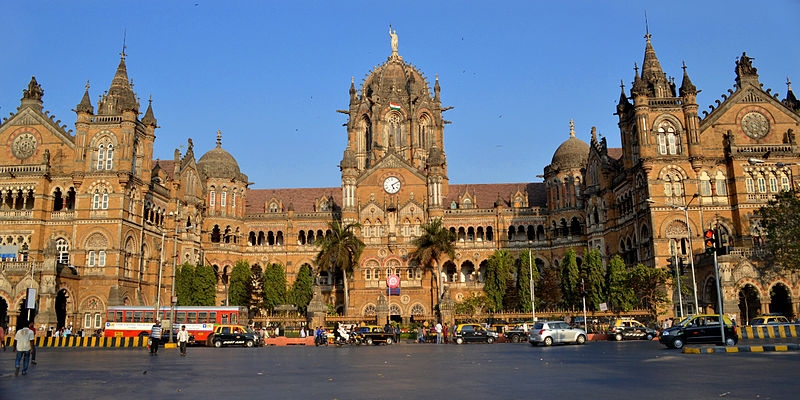
Rule over India by the British government was called the Raj. It included both those areas under direct administration (British India) and the princely states. A system of law, called the Indian Penal Code, came into being; English became the language of education; the Anglican Church was established. Work began on building a huge railway network across India in the late 19th century. Canals, irrigation systems, telegraph links, roads and ports were also built, while plantations for growing and exporting tea, coffee, sugar cane, cotton and jute were set up.
In 1905, the Viceroy of India (head of the British administration) Lord Curzon split the large province of Bengal into a mostly Hindu western half and a largely Muslim eastern half called Eastern Bengal and Assam. The people of Bengal were outraged by this act: it marked the beginning of the anti-colonial movement. Bengal was reunified in 1911, but many Muslims in Bengal had already begun to distrust both the British rulers and the Hindus, who dominated the region.

Hindu Renaissance
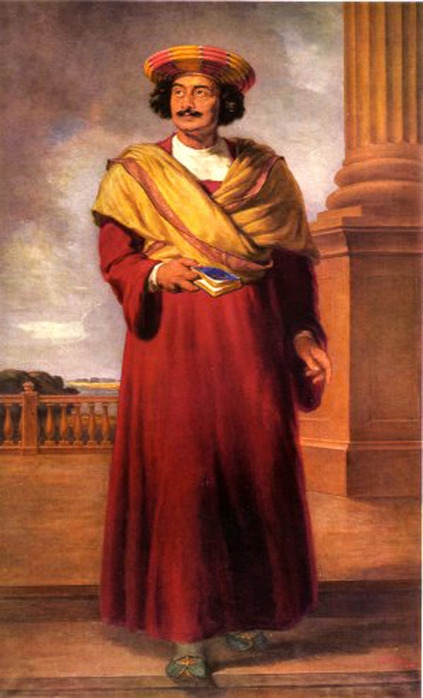
During the 19th and early 20th centuries, the Hindu Renaissance (also known as the Indian or Bengal Renaissance) emerged in Bengal. It was a social reform movement in which writers, scientists and other notable figures began to question the traditional pillars of Bengali society, including the position of of women, the importance of religion and the caste system (different social groups). Leading figures included the social reformer Ram Mohan Roy (1772–1833), writer and artist Rabindranath Tagore (1861–1941) and Hindu monk Swami Vivekananda (1863–1902), a major force in the revival of Hinduism as a world religion and who was responsible for the introduction of yoga to the Western world.
Famine
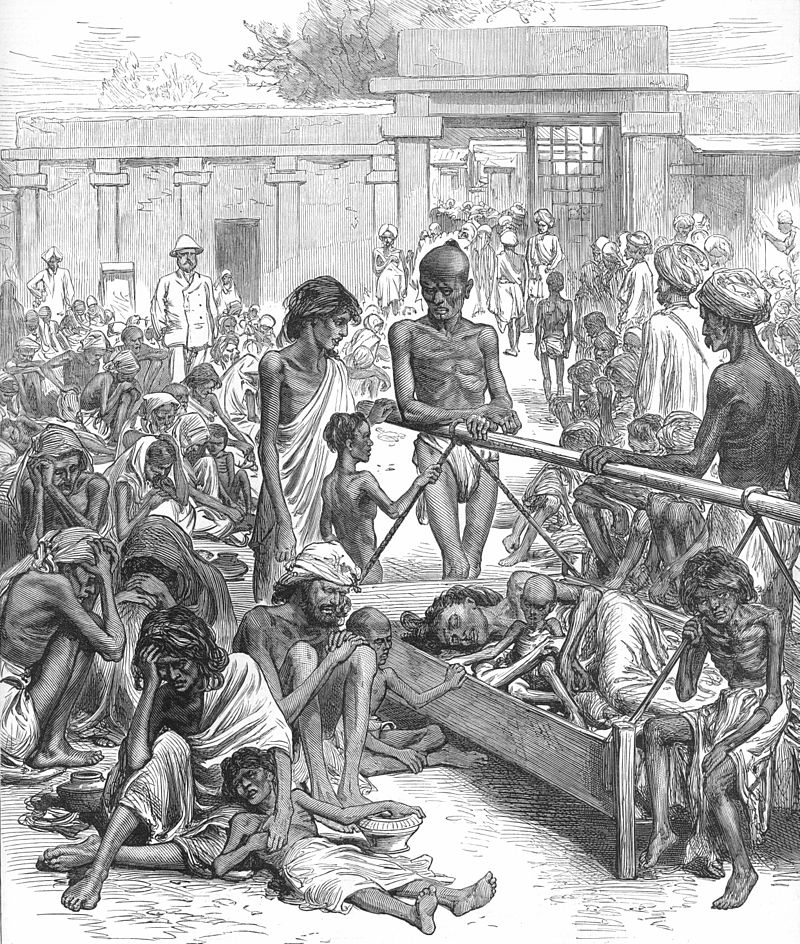
During the British Raj, famines in India were some of the most severe ever recorded. Some say they were made much worse by British government inaction. Besides the earlier Great Bengal Famine of 1770 (see above), they included the Great Famine of 1876–78, in which between 5 and 10 million people died and up to 60 million were affected, the Indian famine of 1899–1900, in which between 1.25 to 10 million people died, and the Bengal famine of 1943 when more than 3 million people died. An outbreak of plague in the mid-19th century killed 10 million people.
Indian National Congress
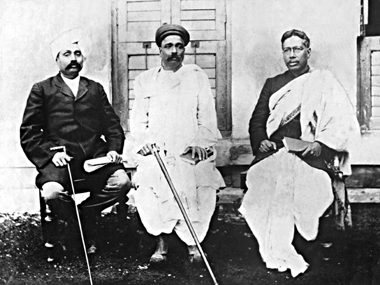
Three men, Lala Lajpat Rai of Punjab, Bal Gangadhar Tilak of Maharashtra and Bipin Chandra Pal of Bengal, together known as “Lal Bal Pal”, campaigned for independence at the beginning of the 20th century. The movement was led by the Indian National Congress, a political party founded in 1885. But Congress was split between the radicals, led by Tilak, who argued for a revolution to overthrow the British, and the moderates who wanted reform under British rule.
Mahatma Gandhi
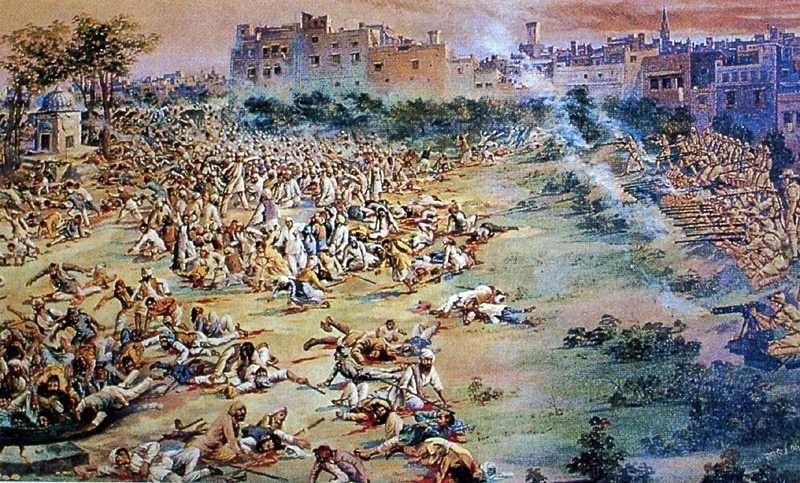
During World War I, Indian troops fought on Britain’s side. But after the war, in 1919, the British introduced a new law by which Indians suspected of sedition (any act that encourages rebellion against authority) could be imprisoned without trial. In response, one of Congress’s leading figures, Mahatma Gandhi, called for a national day of fasting, meetings and strikes as an act of satyagraha ("insistence on truth"), a form of non-violent resistance. But after a few days the resistance descended into violence, including the massacre by British troops of hundreds of Indians attending a peaceful meeting at Amritsar.
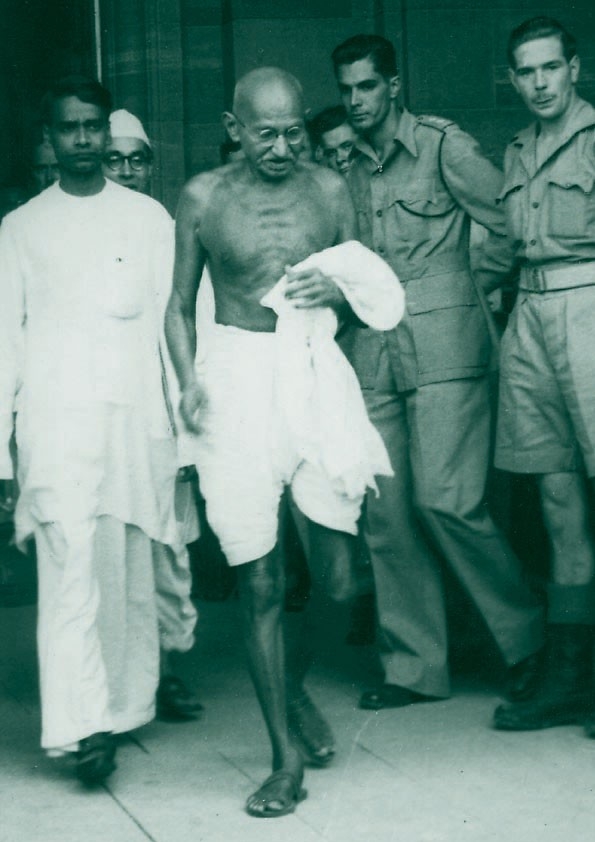

In 1920, Gandhi became leader of the Indian National Congress. His ideas about non-violent resistance formed the focus for the Indian nationalist movement. All over the country, Indians boycotted British goods, and refused to work in British institutions. Sometimes they took part in acts of resistance such as lying down in front of trains to stop them running, causing disruption. Gandhi struggled to control national protests to stop them from turning violent. Thousands of Indians were arrested during this period, including, in 1922, Gandhi himself.
During World War II, many in the Indian National Congress believed that Indian support for the Allies (2.5 million Indian soldiers fought under British command throughout the world and more than 87,000 died in action) should be met with an assurance of Indian self-government from Britain. When this did not happen, Gandhi and others demanded immediate British withdrawal from India. In the British clampdown that followed, Gandhi and other Congress leaders were imprisoned.
Independence and partition
Late in 1946, the British government decided to end their rule of India. Tensions between Hindus and Muslims had been growing over the years. Although the majority of people in India were Hindus, there were also millions of Muslims who did not want to live under Hindu rule. The Muslim leader Mohammed Ali Jinnah campaigned for a separate state for Muslims, and the British eventually agreed.
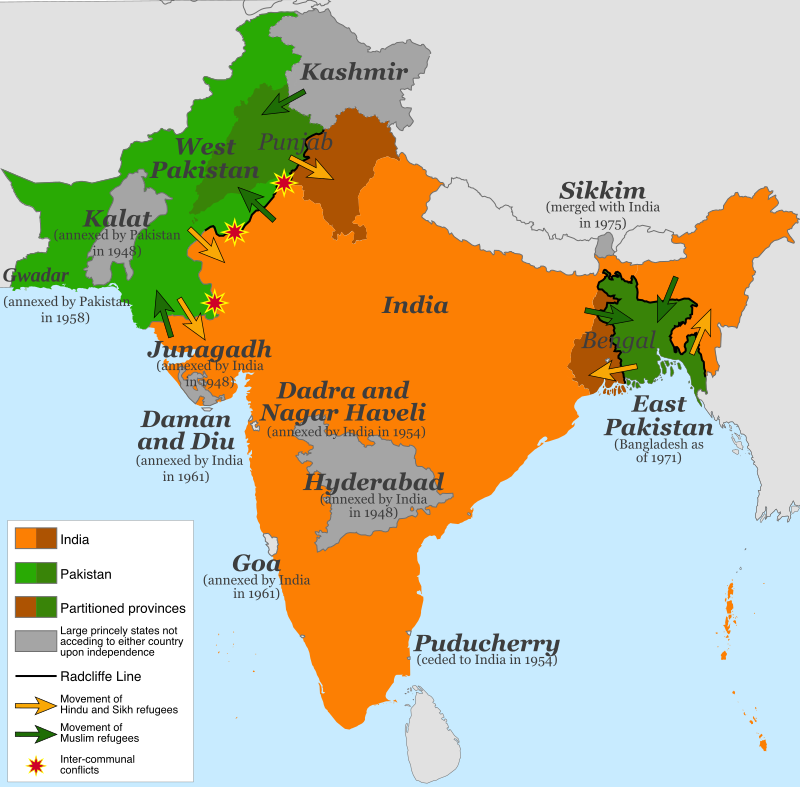
The mostly Hindu and Sikh areas of British India were assigned to the new nation of India, while areas in the northwest and northeast where there were Muslim majorities were to become part of the new nation of Pakistan. Two provinces, Punjab and Bengal, were divided along religious lines. Punjab's mostly Muslim western part went to Pakistan while its mostly Hindu and Sikh eastern part was handed to India. However, there were significant Muslim minorities in eastern Punjab and many Hindus and Sikhs living in Punjab's western areas. Rioting broke out between Sikhs, Hindus and Muslims in Punjab and Bengal and spread to several other parts of India.

On 14th August 1947, Pakistan became an independent nation, with Jinnah as Governor-General. India, with Jawaharlal Nehru as prime minister, followed just after midnight on 15th August 1947. Around 12 million Hindus, Sikhs and Muslims who lived on the “wrong” side of the new borders moved between the newly created nations of India and Pakistan. It was one of the largest mass migrations ever recorded in modern history. As people moved from one state to the other, violence on a massive scale broke out between the two sides: somewhere between 200,000 and 1 million people died.
Gandhi’s assassination
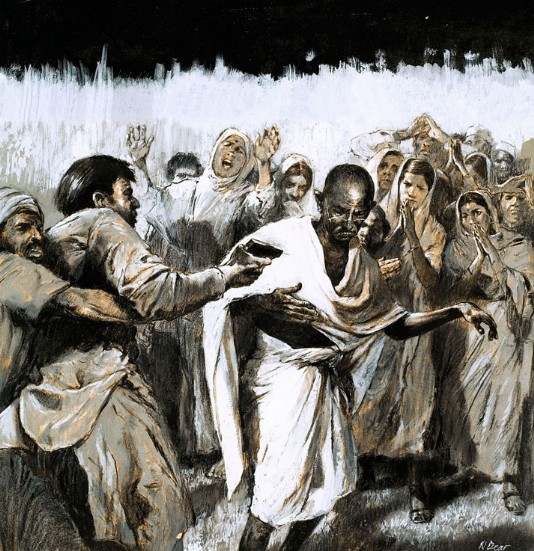
All his life, Gandhi had worked to reconcile Hindus and Muslims in India, so it was a bitter blow to him when a decision to partition the subcontinent between Hindu- and Muslim-majority states was made. He did all he could to stop the violence between Hindus and Muslims that erupted. In protest, he started to fast, bringing violence to an end in Calcutta and Delhi as a result. It was in Delhi, on his way to a prayer meeting, that Gandhi was shot dead by Nathuram Godse, a Hindu fanatic, on 30th January 1948.

After partition
India and Pakistan soon found themselves at war. British India had consisted of 17 provinces and 562 princely states. The provinces were given to either India or Pakistan, but the princely states had the choice either to remain independent or join India or Pakistan. Persuaded by Minister of Home Affairs Sardar Patel, most states within Indian territory agreed to join the Dominion of India, but Jammu and Kashmir delayed its decision. Facing an invasion of Pakistani tribesmen, Hari Singh, Maharaja of Kashmir, appealed to India for military help, in exchange for agreeing to become part of India. India and Pakistan went to war over the state in October 1947. A UN-overseen ceasefire was agreed in 1949; it left India in control of two-thirds of Kashmir. Two further Indo-Pakistan wars (1965 and 1999) broke out over Kashmir. The region is contested to this day.
India and Pakistan clashed again in 1971 during the liberation war in East Pakistan. Since independence in 1947, Pakistan had been made up of two parts: West Pakistan and, more than 1600 kilometres (1000 miles) to the east of India, East Pakistan. Pakistan’s president Yahya Khan suppressed demands for self-rule by the Bengalis in East Pakistan. The Pakistani army’s brutality towards the Bengali Hindu population led to some 10 million refugees crossing the border into India. India supported the Bengali nationalist forces and defeated the Pakistani army in just 13 days, making it one of the shortest wars in history. East Pakistan became the independent nation of Bangladesh.
Consultant: Philip Parker
pics


Without in any way limiting Q-files Ltd’s exclusive rights under copyright, any use of this publication to “train” generative artificial intelligence (AI) technologies to generate text is expressly prohibited. Q-files Ltd reserves all rights to license use of this work for generative AI training and development of machine learning language models.