
States and territories of India

CITE
We have made every effort to follow citation style rules, but there may be some minor differences. If in doubt, please refer to the appropriate citation style manual.
Jammu and Kashmir. (2026). In Q-files Encyclopedia, Geography, States and territories of India. Retrieved from
https://www.q-files.com/geography/states-and-territories-of-india/jammu-and-kashmir
"Jammu and Kashmir." Geography, States and territories of India, Q-files Encyclopedia, 9 Jun. 2026.
https://www.q-files.com/geography/states-and-territories-of-india/jammu-and-kashmir.
Accessed 6 Aug. 2026.
Jammu and Kashmir 2026. Geography, States and territories of India. Retrieved 6 August 2026, from
https://www.q-files.com/geography/states-and-territories-of-india/jammu-and-kashmir
Geography, States and territories of India, s.v. "Jammu and Kashmir," accessed August 6, 2026.
https://www.q-files.com/geography/states-and-territories-of-india/jammu-and-kashmir


Jammu and Kashmir
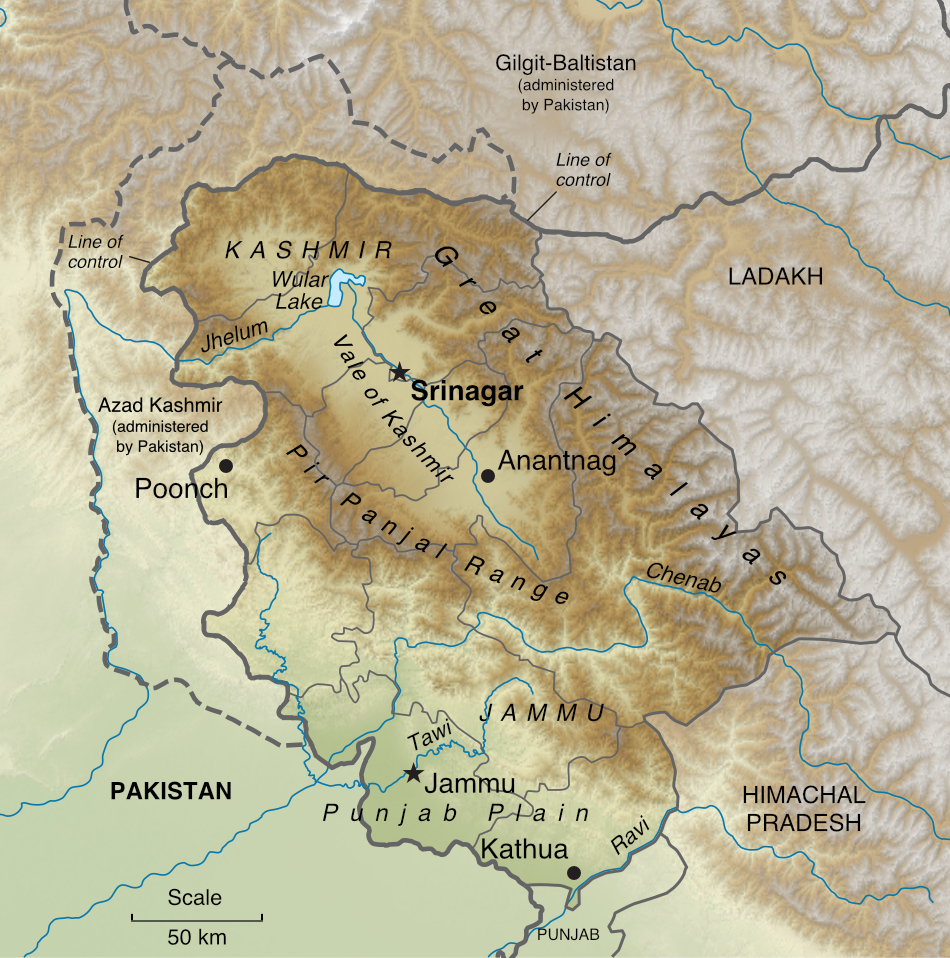
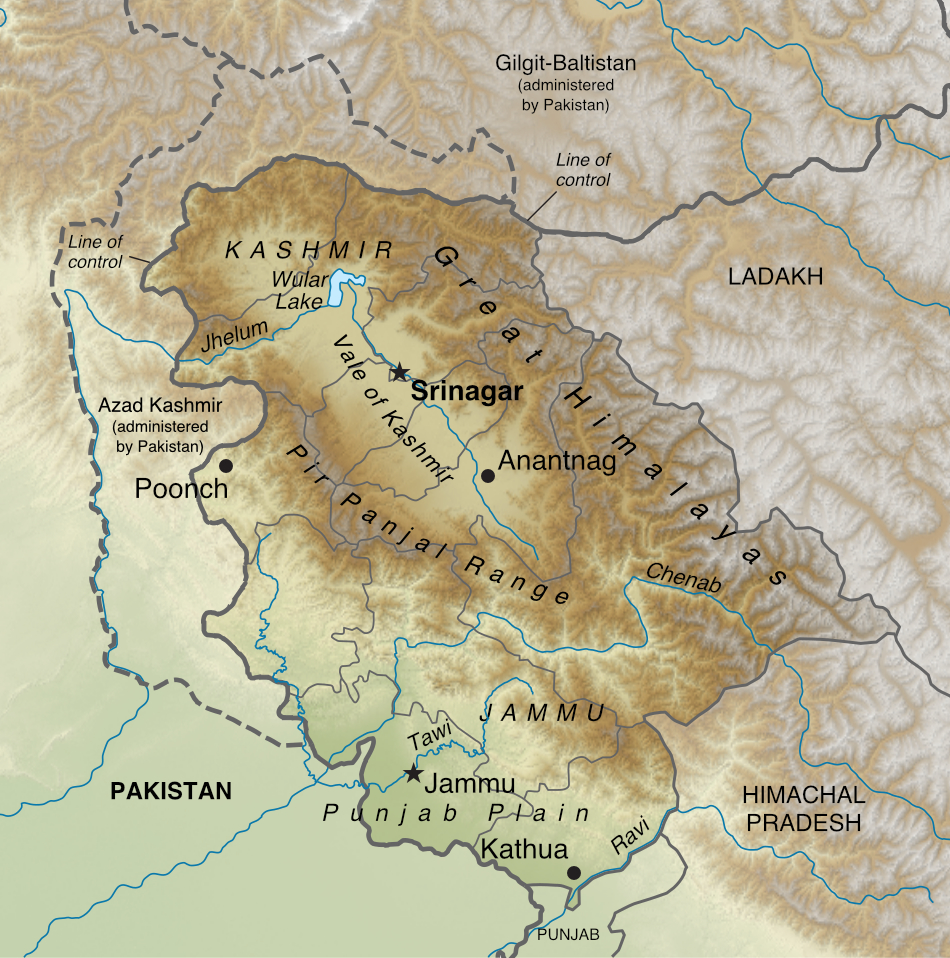
Jammu and Kashmir, in northern India, is administered as a union territory. It makes up the southwestern portion of the larger Kashmir region, which has been the subject of a dispute between India and Pakistan since 1947 and between India and China since 1959. The Line of Control separates Jammu and Kashmir from the Pakistani-administered territories of Azad Kashmir and Gilgit-Baltistan in the west and north. Under the Jammu and Kashmir Reorganization Act of 2019, the former state of Jammu and Kashmir was divided into two union territories: Jammu and Kashmir, and Ladakh, with effect from 31st October 2019. The Jammu part of the territory lies in the southeast and its population is roughly two-thirds Hindu, one-third Muslim. The Kashmir division is the northwestern part of the territory, which includes the Vale of Kashmir. Almost all of its inhabitants are Muslim.
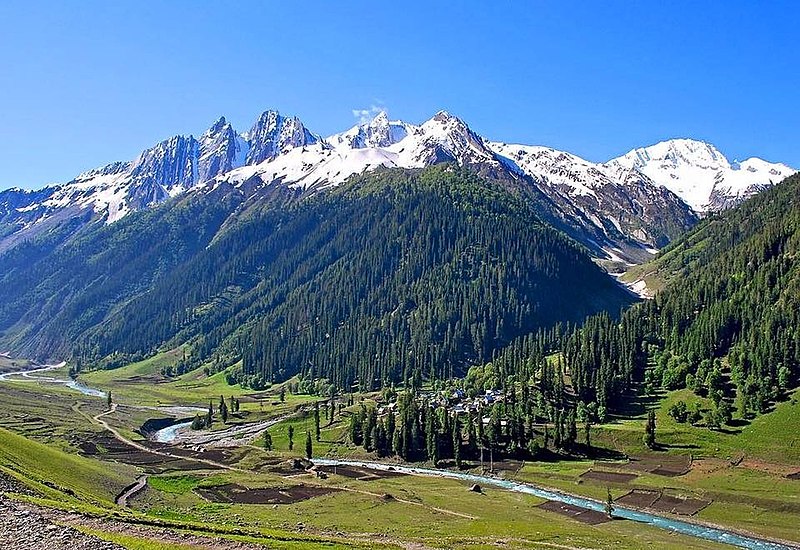
Geography
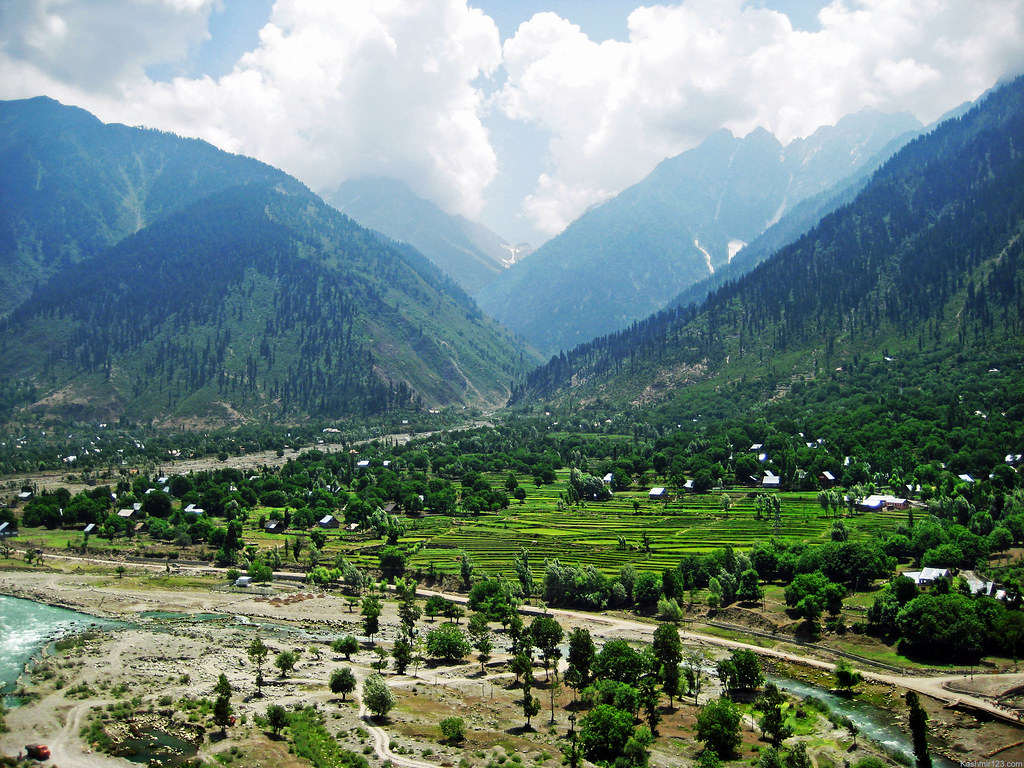
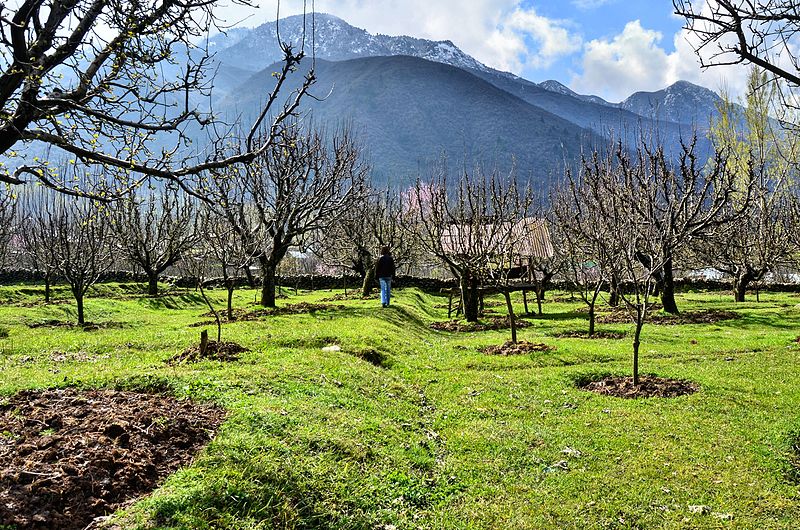
Jammu and Kashmir is mostly mountainous, with a narrow southwestern strip forming part of the Punjab Plain, itself part of the Indo-Gangetic Plain. The mountains are cut through by several river valleys, the main one being that of the River Jhelum and known as the Vale of Kashmir. About 100 kilometres (60 miles) wide, the Vale is the main area of agriculture and population.
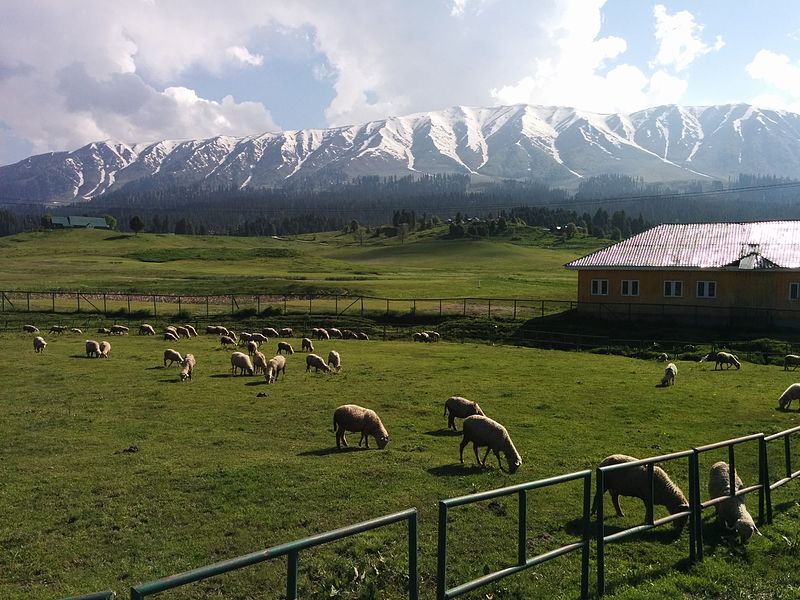
The Zanskar Range, part of the Great Himalayas, runs along the northeastern flank of the Vale, separating it and the Chenab valley from the Indus valley in Ladakh. The peaks of the Pir Panjal Range, part of the Lesser Himalayas, rise along the southwestern edge of the Vale of Kashmir. They merge into the Sivaliks, a range of foothills that descend to the Punjab Plain.
Climate
Southern and southwestern areas of Jammu and Kashmir have a humid subtropical climate, with hot summers and cool winters. This region receives most of its rainfall during the monsoon season. In the east and north, summers are cooler. The effect of the monsoon diminishes in the Vale of Kashmir, with the high Pir Panjal Range preventing the moist winds from crossing into it. Much of the rainfall happens in the spring season due to the "western disturbances"—moist, westerly winds arriving from the Mediterranean Sea.

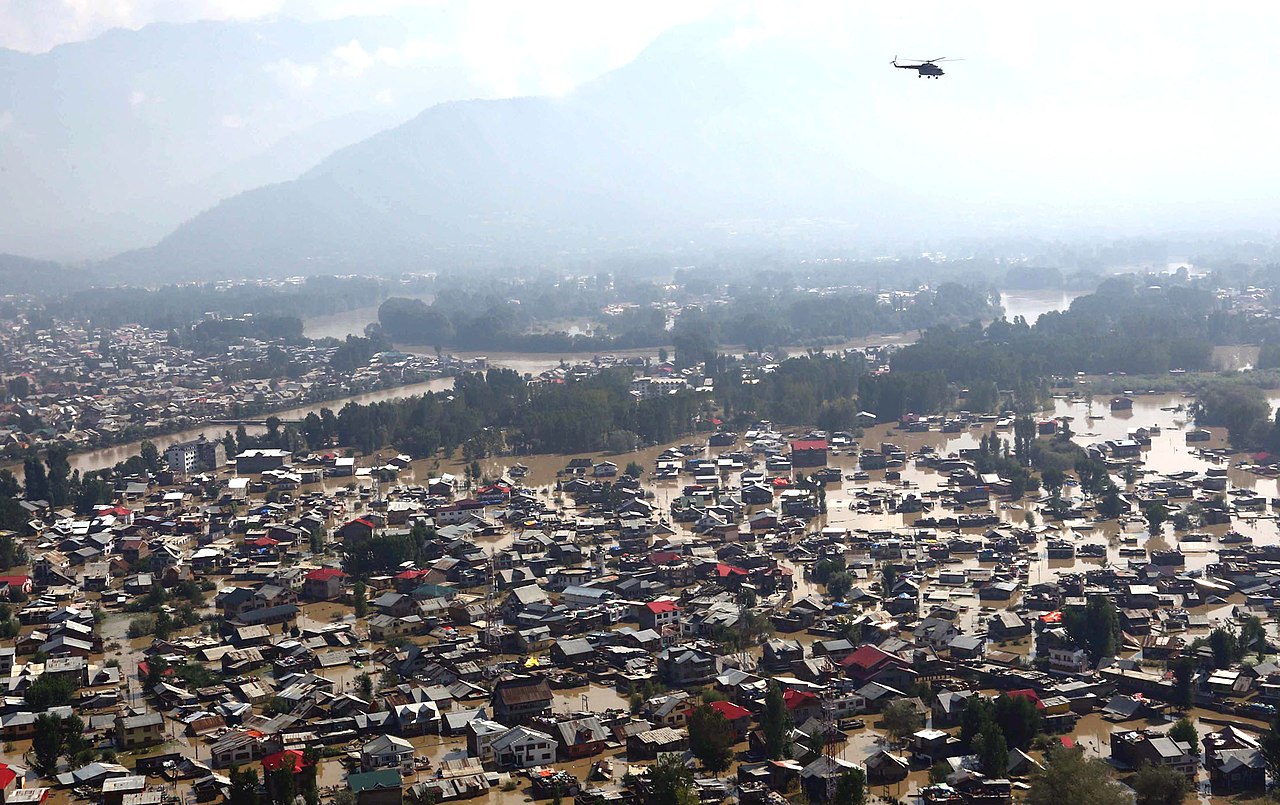
Winters in Jammu and Kashmir are cold, with temperatures dropping to below zero. Snowfall is common both in the Vale and the surrounding mountains. Snow melting on the mountain slopes—often leading to flooding at lower elevations—occurs mostly from March until June.

Economy
Apple-growing is a major source of employment in Jammu and Kashmir and exports contribute about 10% of the territory's GDP. The Vale of Kashmir accounts for 75% of India's entire apple production. Other major agricultural exports include pears, cherries, plums, saffron and walnuts.
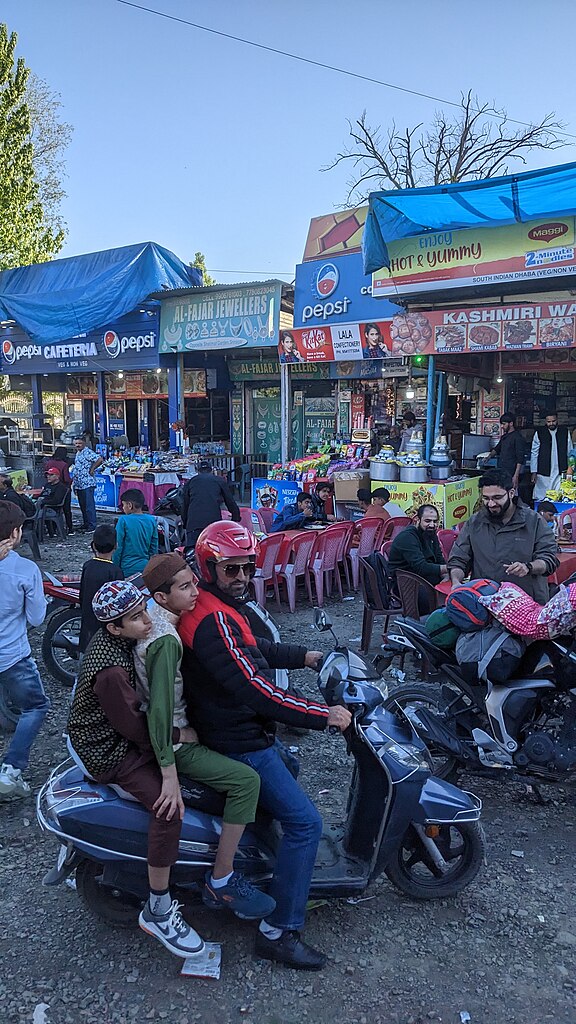
The Vale of Kashmir is also known for sericulture (silk production) and fisheries. Traditional Kashmiri craft industries, including carpet weaving, basketry and silverware, employ a large workforce. The territory's sapphire mines are a source of mineral wealth. Tourism is also an important industry.
History
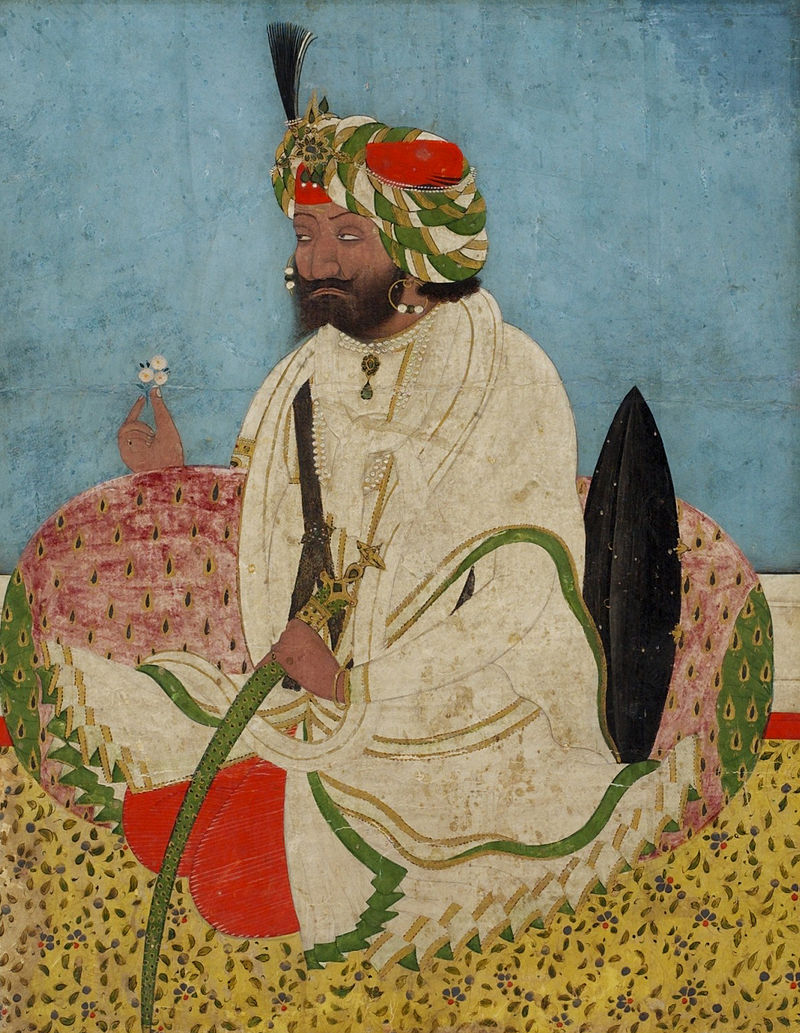
Throughout the early Middle Ages, the Kashmir region was ruled by a series of Hindu kings. In 1339 it came under Muslim control with the Shah Mir dynasty, whose rule lasted for more than 200 years. The region was part of the Mughal Empire from 1586 until 1751, when it fell to the Durrani Empire of Afghanistan. The Sikh army under Ranjit Singh conquered Jammu in 1808, then the Vale of Kashmir in 1819. In 1820, Ranjit Singh gifted Jammu as a fiefdom (land given in return for loyalty) to Kishore Singh of the Dogra dynasty. His son and heir, Gulab Singh, became Raja of Jammu in 1822. He annexed Ladakh in 1834.
In 1846, after the Sikh defeat in the First Anglo-Sikh War, all their lands in the Kashmir region passed to the British under the Treaty of Lahore. By the Treaty of Amritsar, signed a few days later, the region was sold on to Gulab Singh, who became the ruler, the maharaja, of the princely state of Jammu and Kashmir.

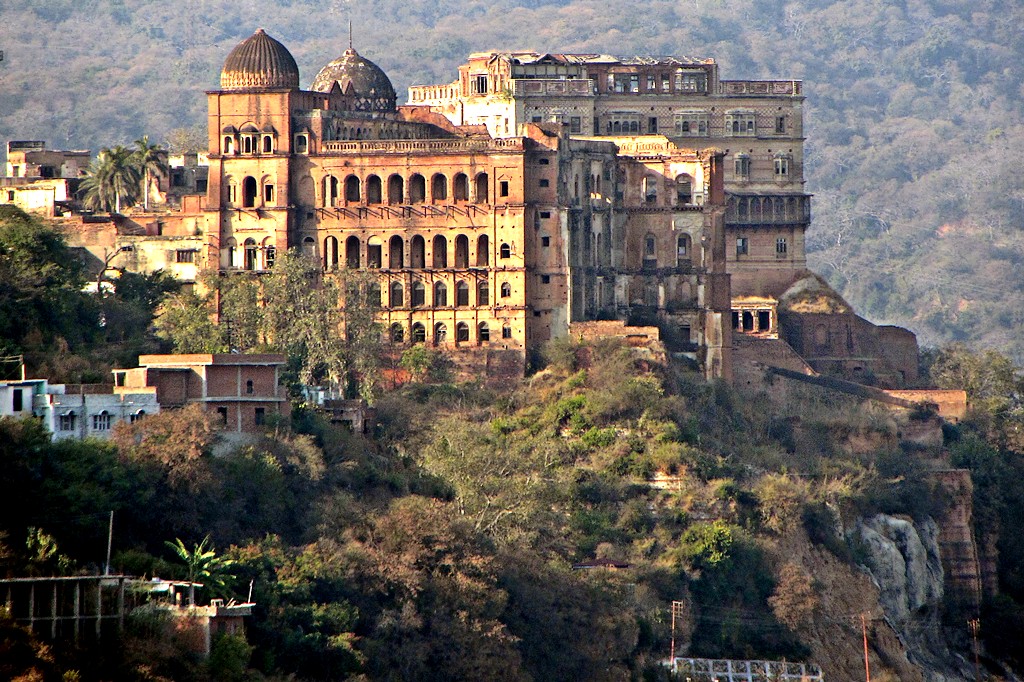
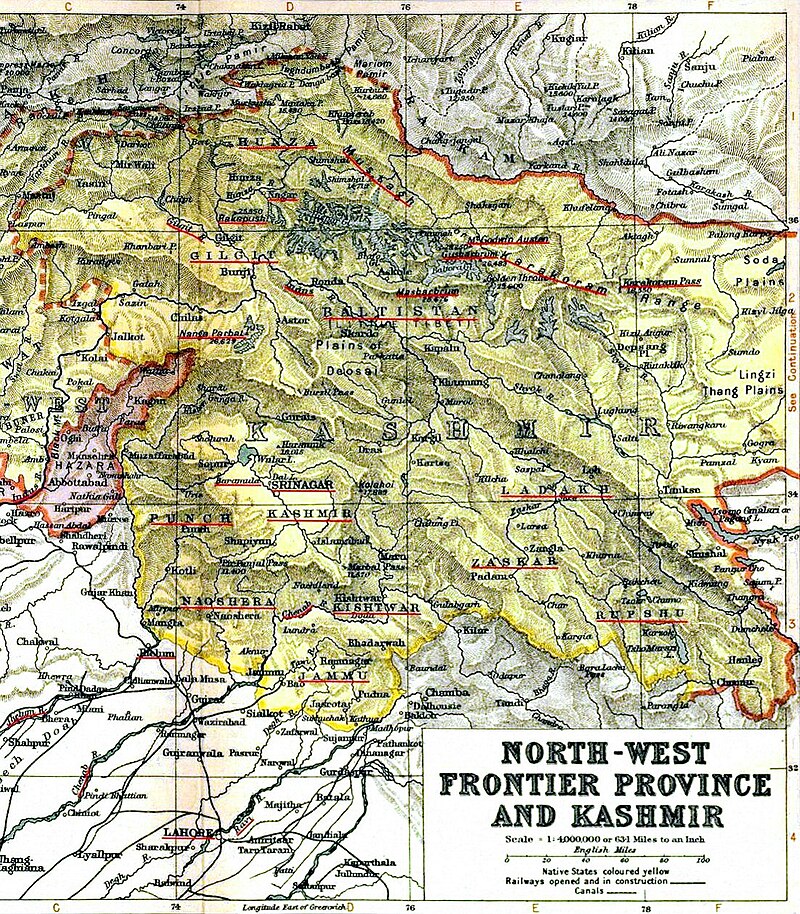
The rule of Gulab Singh's descendants lasted until Indian independence in 1947 and the partition of British India into India and Pakistan. Rulers of princely states across the subcontinent were expected to accede their states to either India or Pakistan according to their people's wishes. Because Jammu and Kashmir was 77% Muslim and shared a boundary with Pakistan, it was anticipated that Maharaja Hari Singh would accede to Pakistan. But when he hesitated to do this, Pakistan launched an invasion of guerrilla fighters in October 1947, a move intended to force the accession of Jammu and Kashmir to Pakistan.
Hari Singh appealed to the British for assistance. Governor-general Lord Mountbatten agreed, but on condition that the ruler agreed to accede to India. Indian soldiers then entered Kashmir and drove the Pakistani fighters from all but a small part of the state. A ceasefire was eventually agreed in late 1948, establishing the boundaries approximately as they are today: Pakistan holds roughly one third of Kashmir (the northwestern postion), India one half (central and south, plus Ladakh) with a dividing Line of Control established by the United Nations. To complicate the situation further, China controls the uninhabited northeast of the Kashmir region—Aksai Chin and the Trans-Karakoram Tract—territories that are also claimed by India.

Disputes between India and Pakistan over control of the Kashmir region have continued ever since, with neither country formally recognizing the accession of the areas claimed by the other. This has led to three more wars: in 1965, 1971 and 1999.
Consultant: Nicholas Harris
Facts about Jammu and Kashmir
Area 42,241 sq km (16,309 sq miles)
Highest point Nun Peak 7135 m (23,409 ft)
Population 13,831,000
Capitals Srinagar (May–October, pop. 1,180,570), Jammu (November–April, pop. 502,197)
Main languages Kashmiri (53%), Dogri (20%), Gojri (9%), Pahari (8%), Hindi (2%), Punjabi (2%)
Main religions Muslim 69%, Hindu 29%, Sikh 2%

pics
Without in any way limiting Q-files Ltd’s exclusive rights under copyright, any use of this publication to “train” generative artificial intelligence (AI) technologies to generate text is expressly prohibited. Q-files Ltd reserves all rights to license use of this work for generative AI training and development of machine learning language models.