
States and territories of India

CITE
We have made every effort to follow citation style rules, but there may be some minor differences. If in doubt, please refer to the appropriate citation style manual.
Kerala. (2026). In Q-files Encyclopedia, Geography, States and territories of India. Retrieved from
https://www.q-files.com/geography/states-and-territories-of-india/kerala
"Kerala." Geography, States and territories of India, Q-files Encyclopedia, 31 Mar. 2026.
https://www.q-files.com/geography/states-and-territories-of-india/kerala.
Accessed 6 Aug. 2026.
Kerala 2026. Geography, States and territories of India. Retrieved 6 August 2026, from
https://www.q-files.com/geography/states-and-territories-of-india/kerala
Geography, States and territories of India, s.v. "Kerala," accessed August 6, 2026.
https://www.q-files.com/geography/states-and-territories-of-india/kerala


Kerala
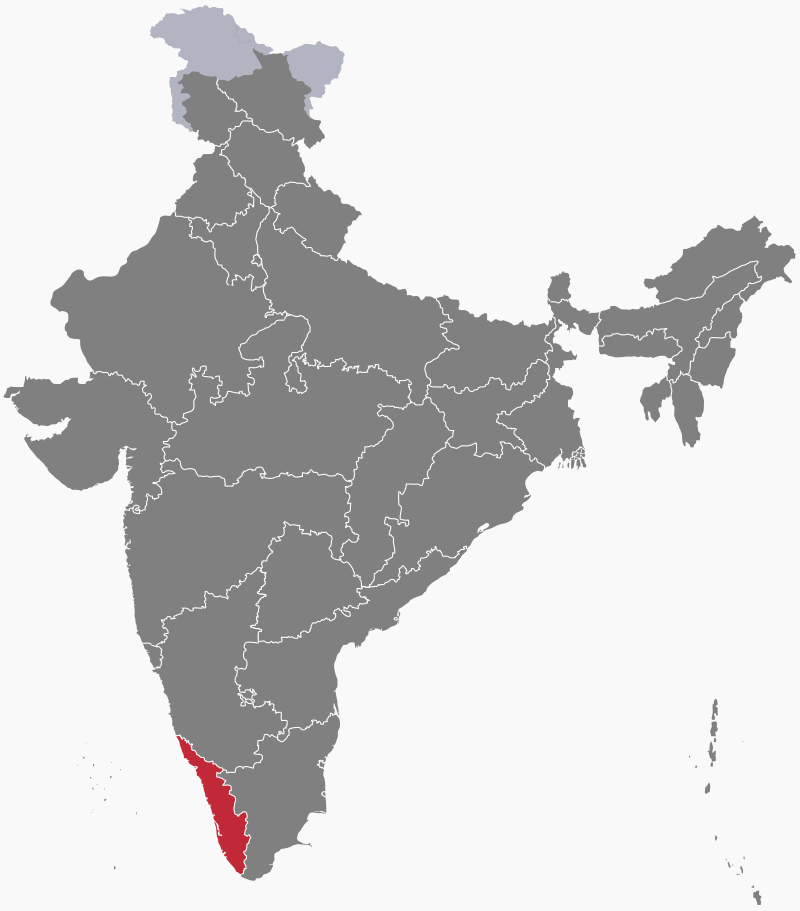
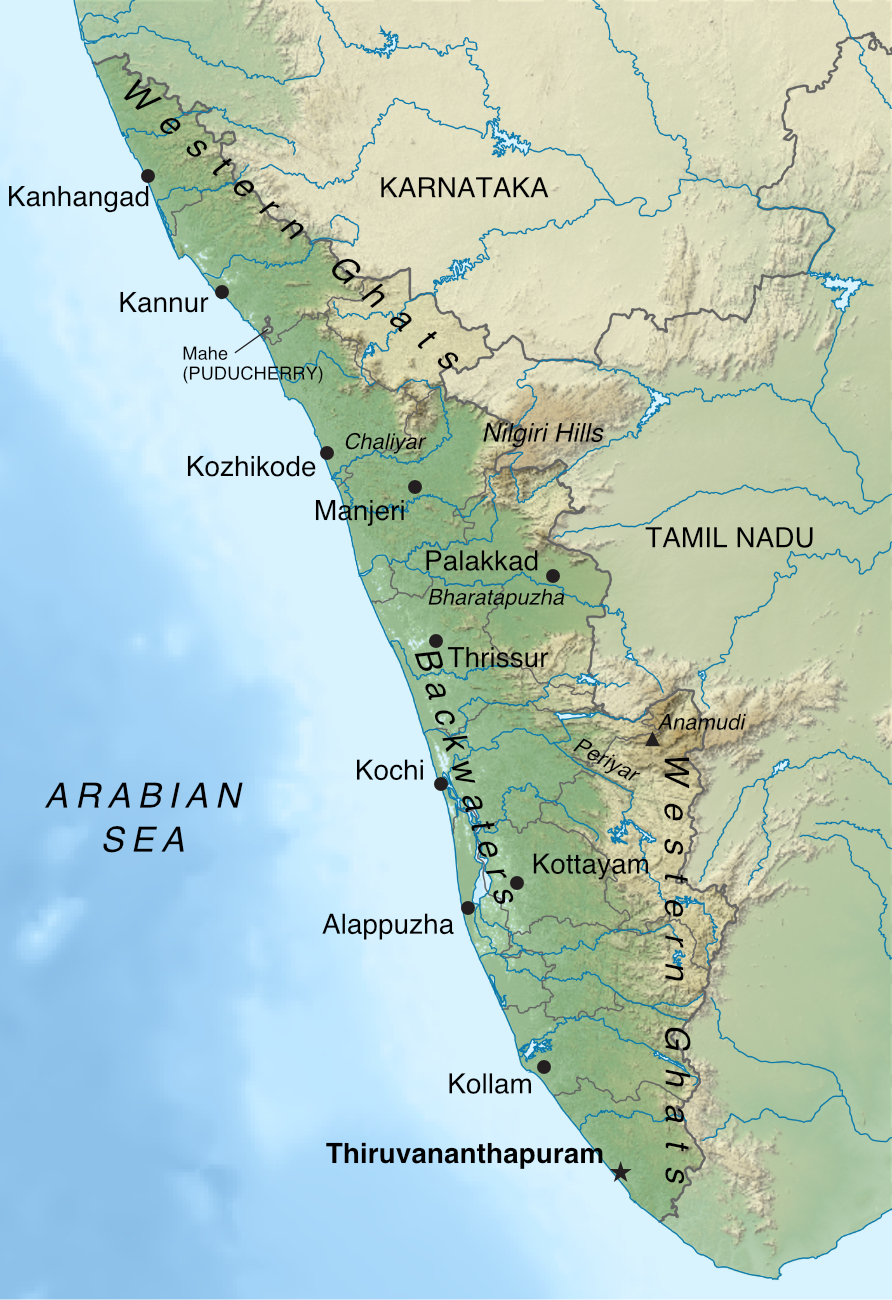
Kerala is a state in southwestern India, situated on the Malabar Coast. Two princely states once made up most of the area of modern-day Kerala: Travancore and Cochin. After India's independence in 1947, they united to form the State of Travancore-Cochin in 1949. The Malabar region, in the northern part of Kerala, which had been a part of the Madras province of British India, became a part of Madras State. After the States Reorganization Act of 1956, the Malayalam-speaking regions of Travancore, Cochin, Malabar and South Canara were merged to form the present-day state of Kerala. Thiruvananthapuram, formerly known as Trivandrum (and commonly shortened to TVM), is the capital.
Geography
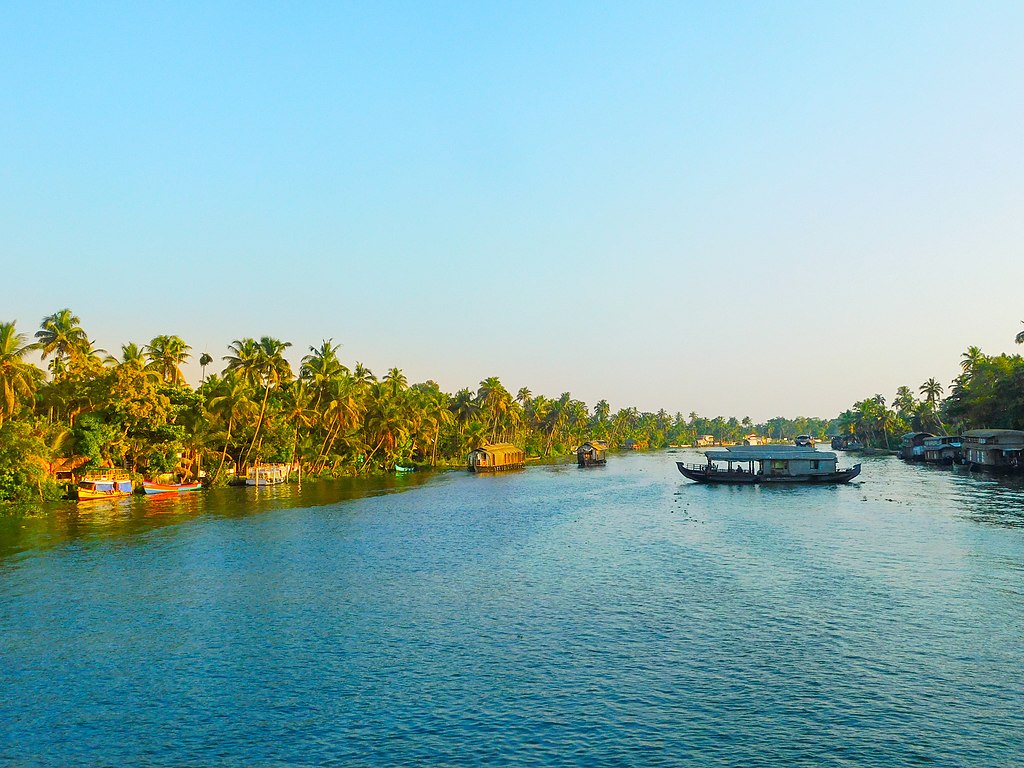
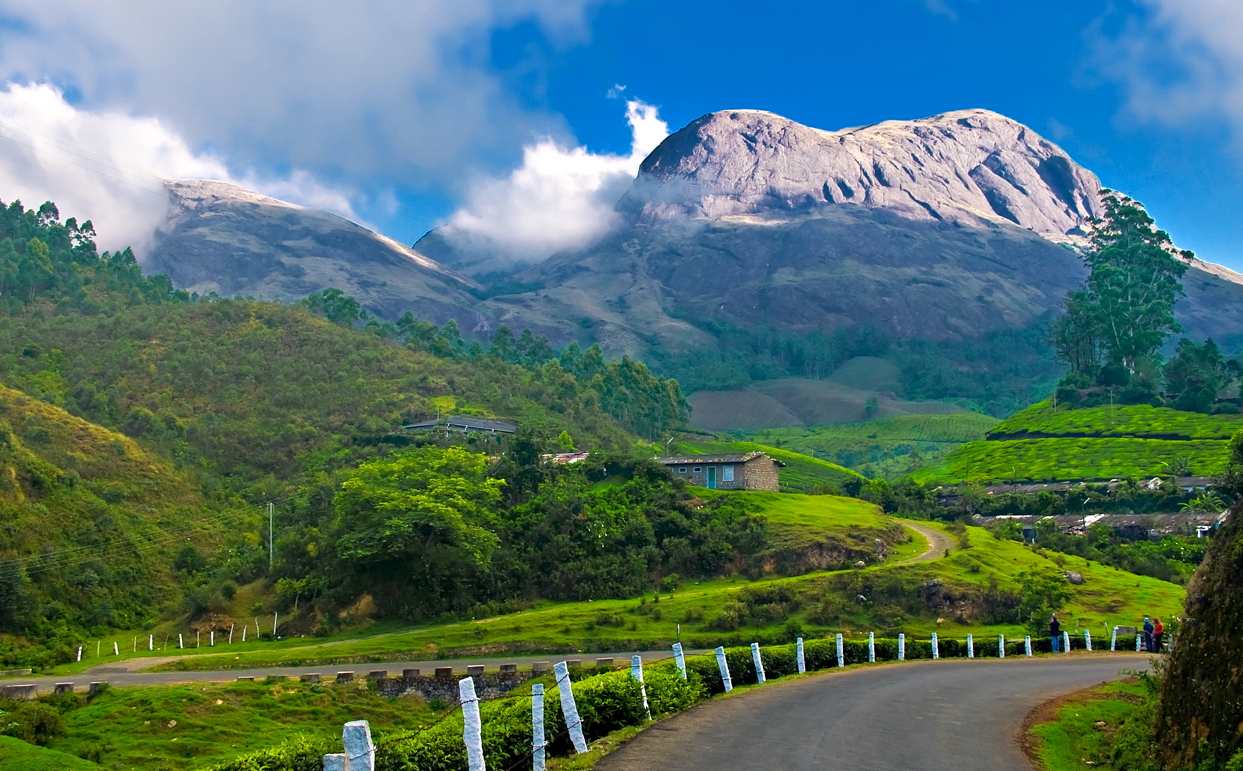
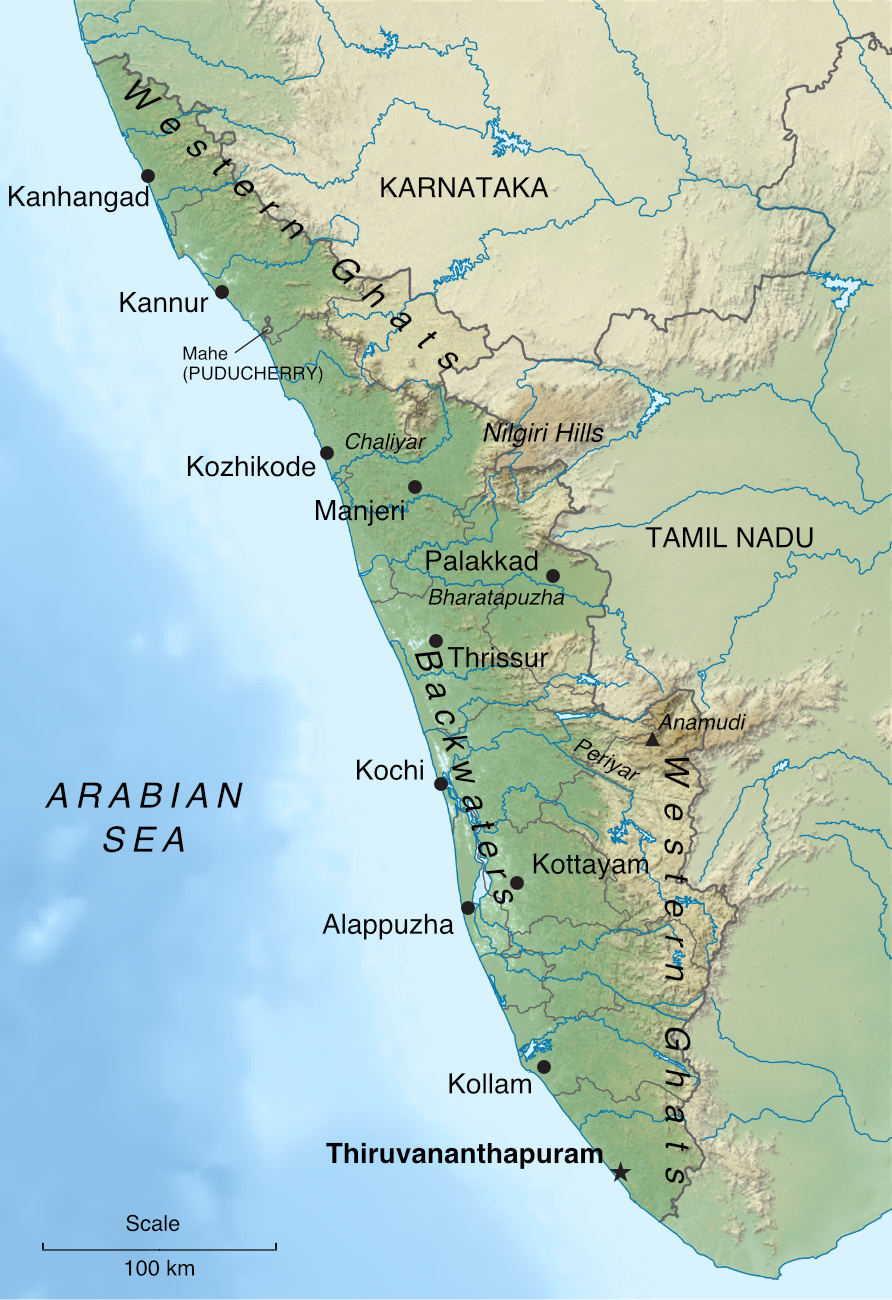
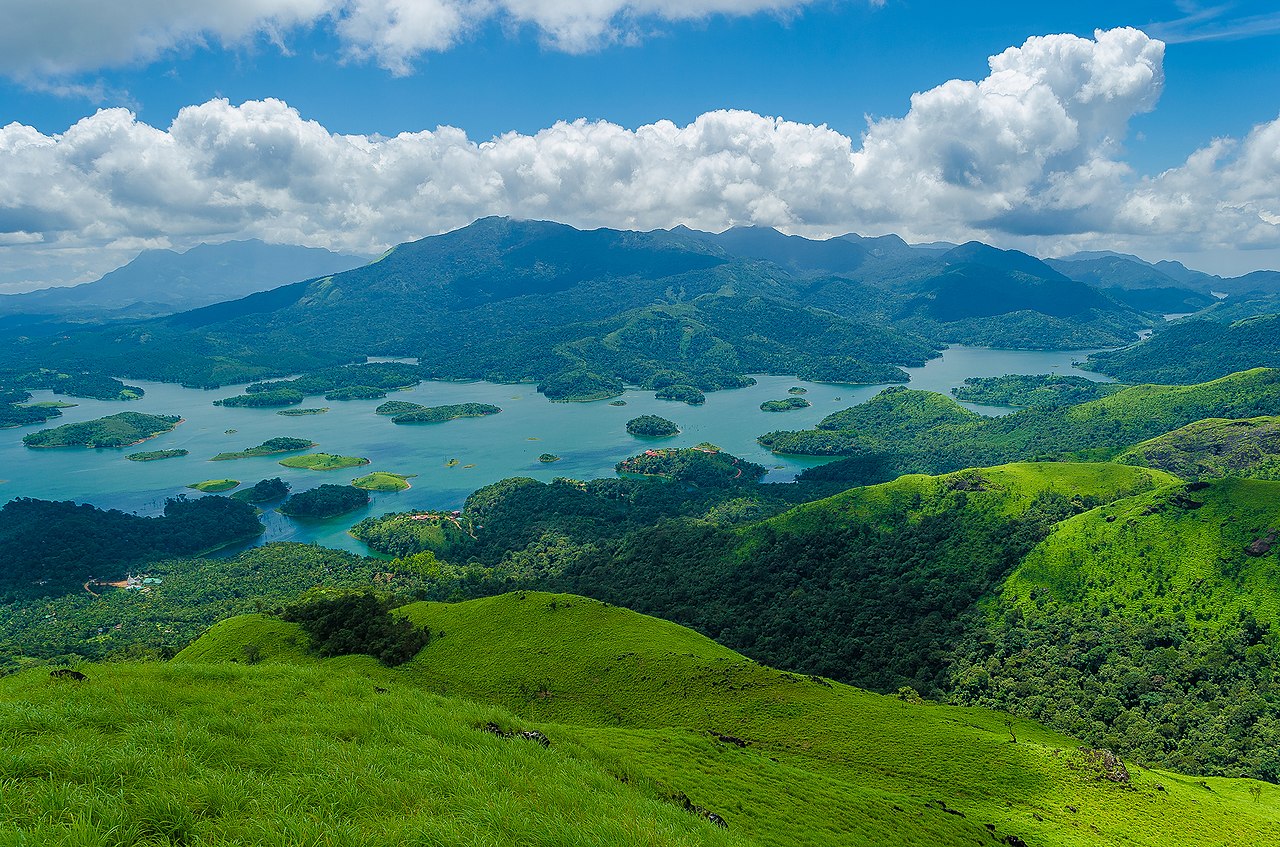
Kerala occupies the strip of land between the coast of the Lakshadweep Sea (part of the Arabian Sea) and the Western Ghats mountain range. The coastal plains are fertile agricultural lands. They are crisscrossed by the network of interconnected lakes, rivers, inlets and waterways that make up the Kerala Backwaters. Formed behind barrier islands that have built up along the coast across the mouths of rivers flowing down from the Western Ghats, the Backwaters extend to nearly half the length of the state.
Inland from Kerala's coastal plain are the central midlands, a region of rolling hills. To the east, the Western Ghats form a rugged wall of mountains, broken only by a gap near Palakkad. Their tallest peaks are around 2500 metres (8200 feet) high.

Climate
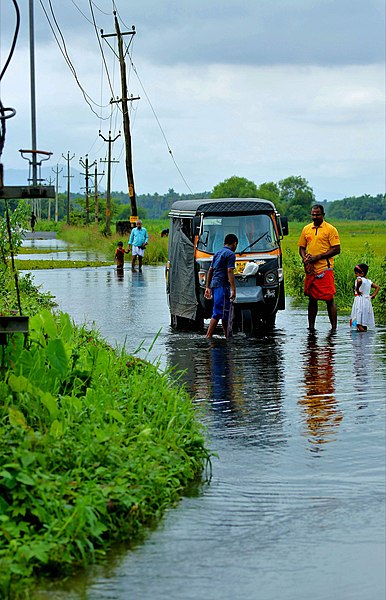
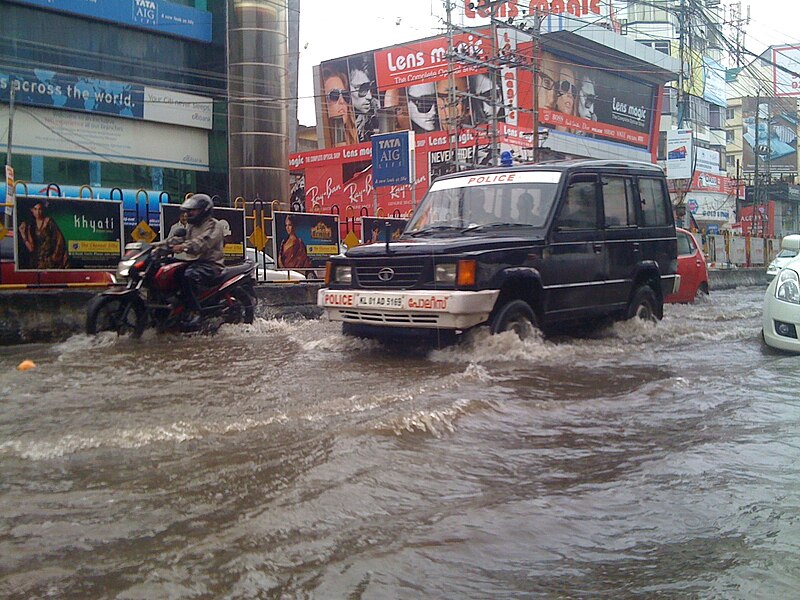
Kerala has a tropical wet climate. The dry summer season lasts from March until May. Mean annual temperatures normally range from 25 to 27.5°C in the coastal lowlands to 20 to 22.5°C in the highlands. The moisture-laden southwest monsoon winds arrive in June—Kerala is the first Indian state to receive them—and last until September. The northeast monsoon, coming from over the Bay of Bengal in November, affects only southern districts. Kerala's rainfall (two-thirds of it is brought by the southwest monsoon) averages 290 centimetres (115 inches) annually. Drier parts of the lowlands average only 125 centimetres (49 inches), while some mountainous areas receive more than 500 centimetres (197 inches). Winter begins in November and lasts until February.
Economy
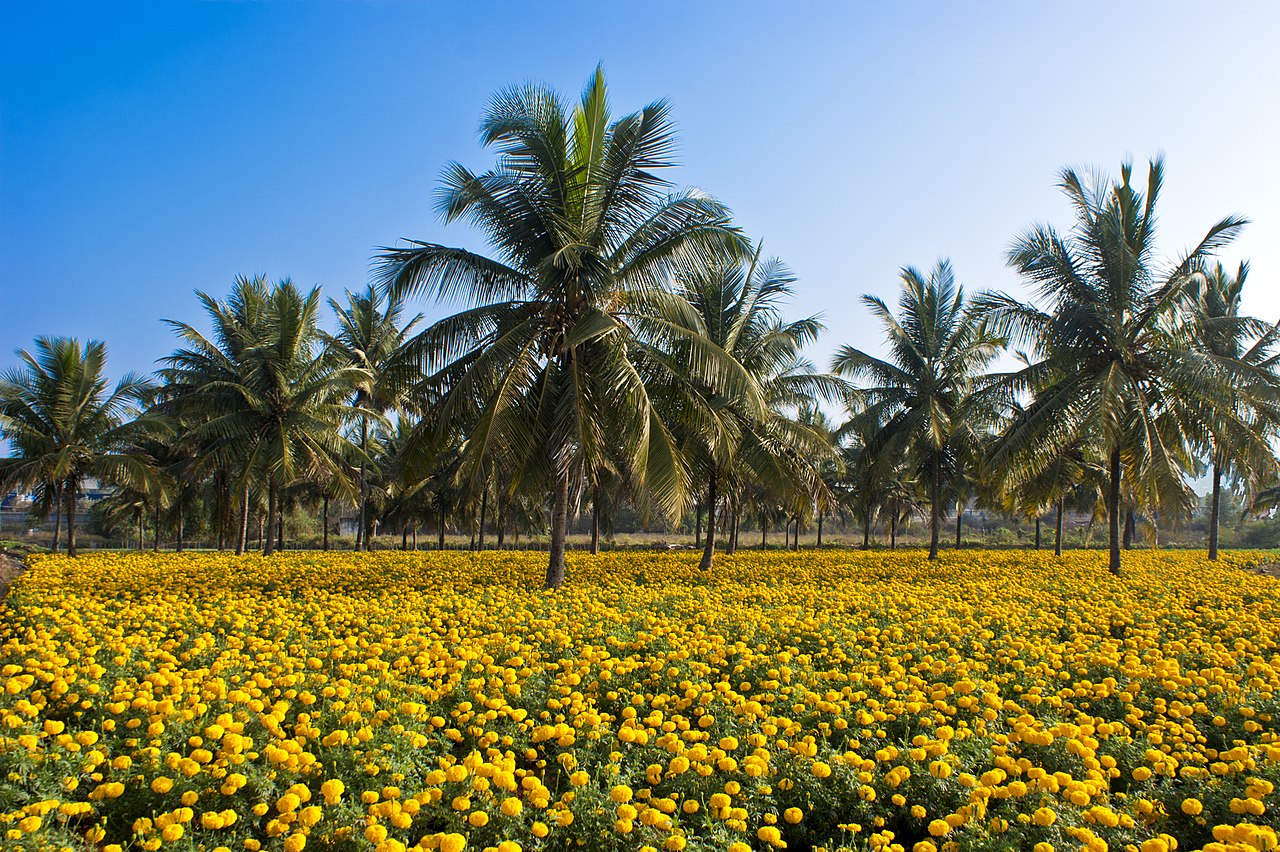
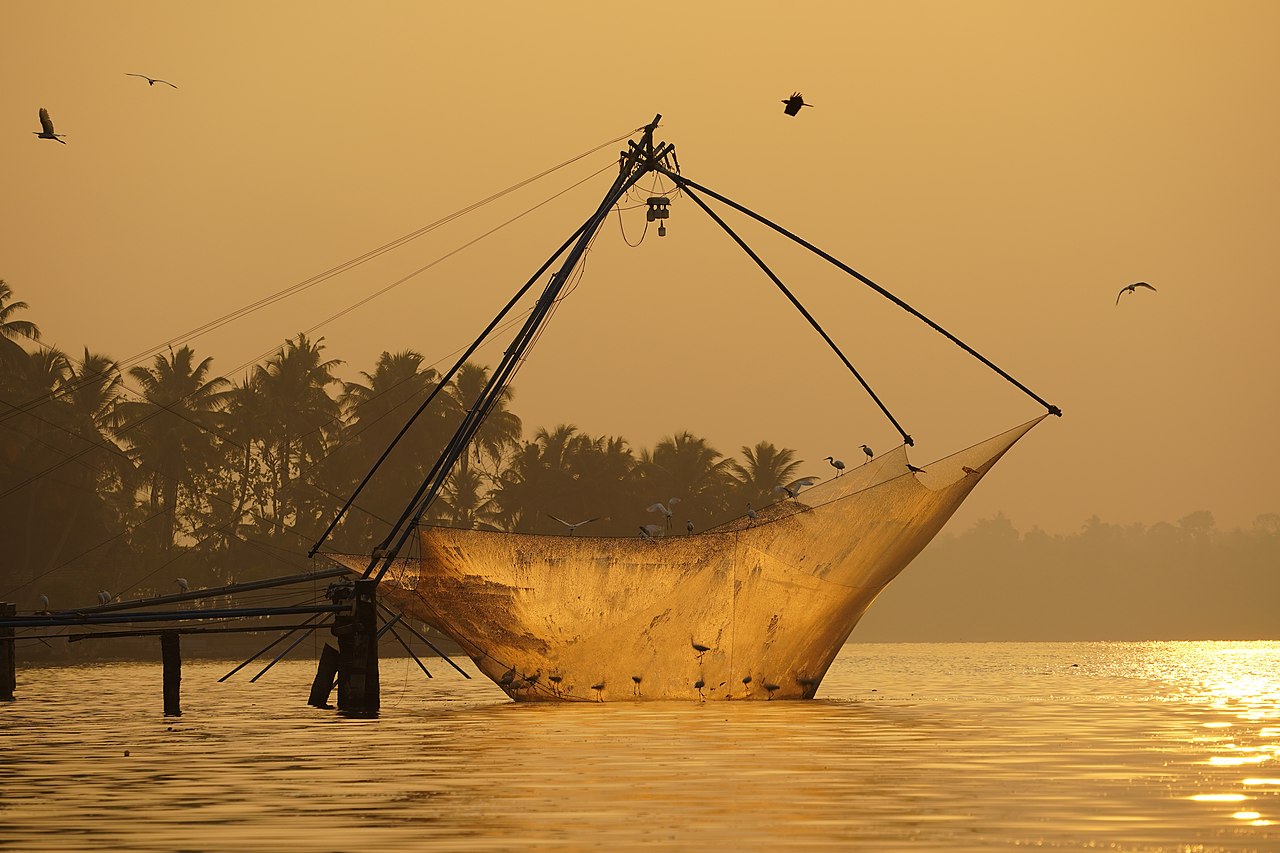
Just over a quarter of families in Kerala depend upon agriculture for their livelihood. Rice is Kerala's staple crop and is grown in paddies on the coastal lowlands. Cash crops include coconuts, tea, coffee, rubber, cashews and spices (including pepper, cardamom, vanilla, cinnamon and nutmeg). Kerala is a leading producer of fish. About 1.1 million people earn their livelihood from fishing and related activities. More than 200 fishing villages are strung out along the 590-kilometre (370-mile) coast.
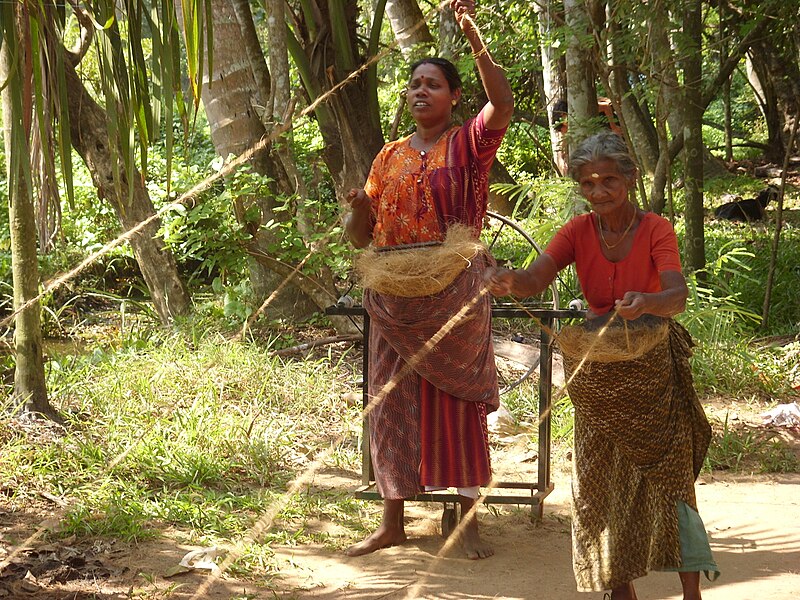
Major industries are shipbuilding, oil refinery, food processing, and home gardens. Traditional industries include the manufacture of coir, a natural fibre extracted from the husk of coconuts.
Karala's service sector, which includes tourism, Ayurveda (alternative medicine) and banking, accounts for around 63% of the state's earnings. Technopark at Thiruvananthapuram is a giant information technology park, one of India's largest.

A significant contrbution to Kerala's economy is made by migrant Keralite workers in the countries of the Persian Gulf: UAE, Saudi Arabia, Qatar and elsewhere. Most families in Kerala have at least one member working abroad, and they regularly send money home.
History
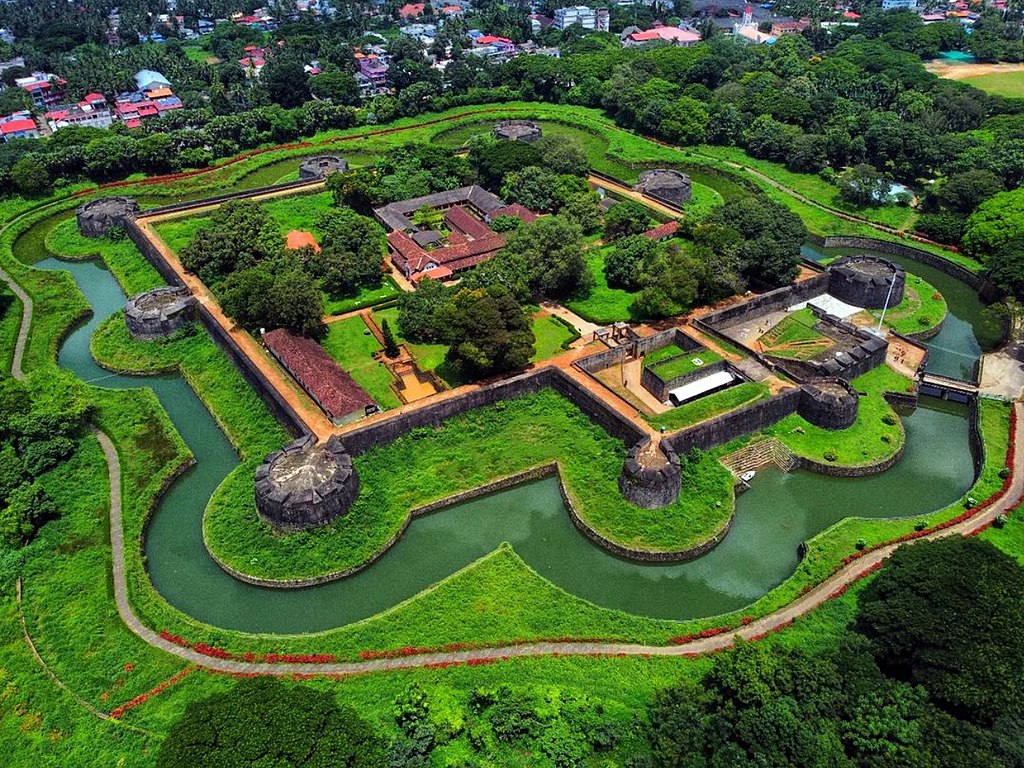
Long a major source of spices since ancient times, Babylonian, Assyrian, Phoenician and Egyptian traders were drawn to Kerala thousands of years ago. The Cheras, the first major dynasty to rule Kerala, had trading links with China, West Asia, Egypt, Greece and the Roman Empire. Calicut (present-day Kozhikode) became the most powerful kingdom in the Malayalam-speaking region from the early 12th century. Cochin (present-day Kochi) and Cannanore (present-day Kannur) came under the overlordship of the Zamorins (rulers) of Calicut.
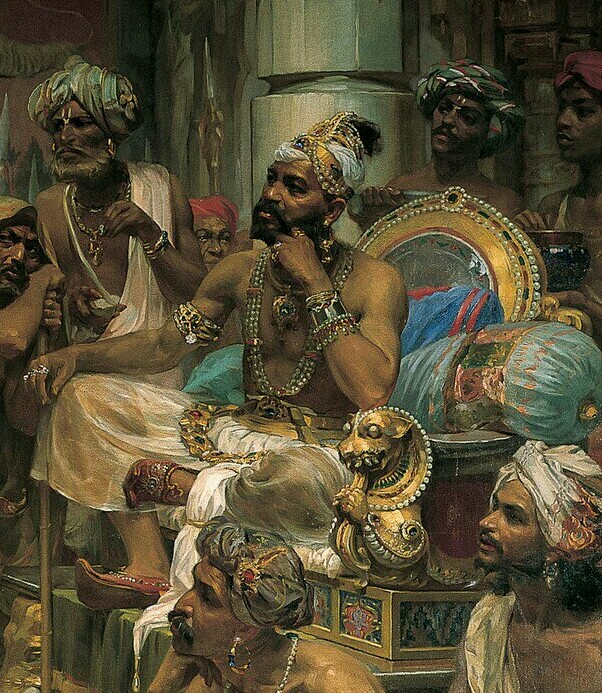
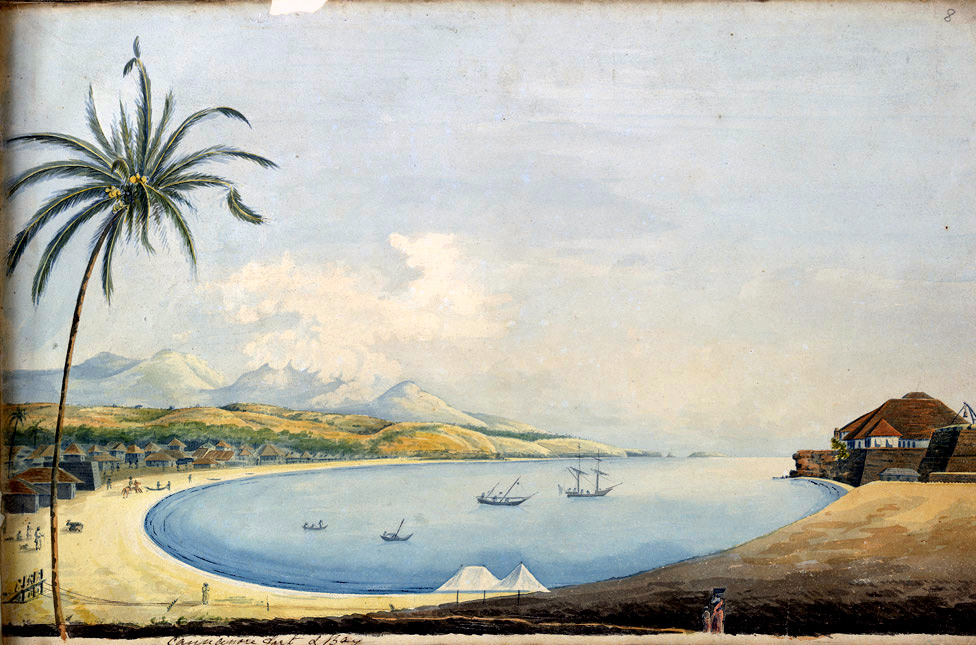
To Arab sailors, Kerala was known as Malabar, a combination of the Malayalam word mala meaning "hill" and the Arabic word bar meaning "land". The local people were known as Malabars. Arab dominance of the Malabar spice trade in the Arabian Sea was challenged in the early 16th century by the arrival of Portuguese merchants following Vasco Da Gama's discovery of a sea route from Europe to Malabar in 1498. The Portuguese established a trading centre in Quilon (present-day Kollam) in 1502 and built a series of forts along the Malabar Coast.
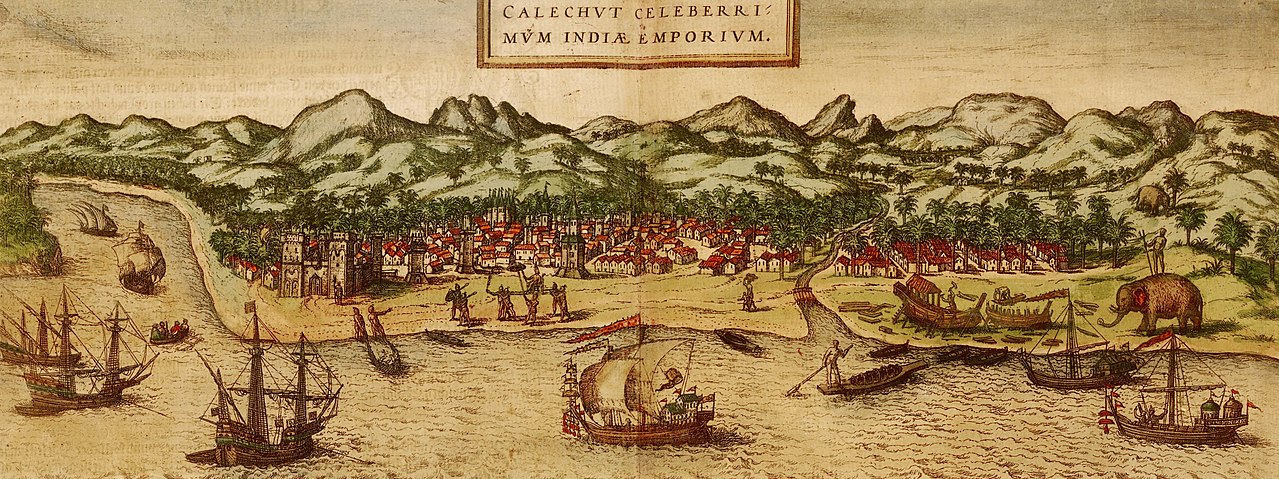
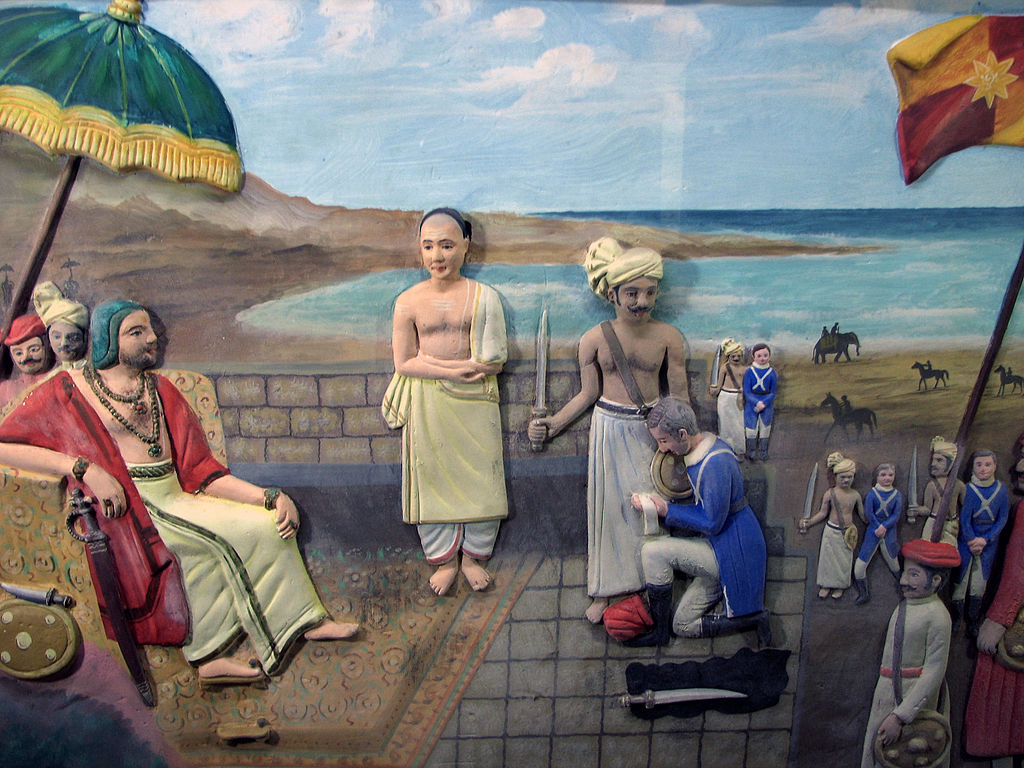
A century later, the Dutch East India Company made an alliance with the Zamorin of Calicut to drive out the Portuguese and take over the spice trade. But they, along with colonists from France, were themselves ousted by the British East India Company in the 1700s. Calicut, meanwhile, was conquered by the Muslim rulers of neighbouring Kingdom of Mysore. By the end of the 18th century, following British victory in the Anglo-Mysore Wars, the whole of Kerala came under British control, either governed directly or as princely states under their overlordship.
Consultant: Nicholas Harris
Facts about Kerala
Area 38,863 sq km (15,005 sq miles) Rank: 21st
Highest point Anamudi 2695 m (8842 ft)
Population 36,111,000 Rank: 15th
Capital and largest city Thiruvananthapuram (pop. 968,990)
Other large cities Kozhikode (pop. 609,224), Kochi (602,046), Kollam (388,288), Thrissur (315,957), Kannur (232,486)
Main languages Malayalam (97%), Tamil (1.5%)
Main religions Hinduism (55%), Islam (27%), Christianity (18%)
State bird Great hornbill
State flower Golden shower tree
State mammal Asian elephant
State tree Coconut
pics
Without in any way limiting Q-files Ltd’s exclusive rights under copyright, any use of this publication to “train” generative artificial intelligence (AI) technologies to generate text is expressly prohibited. Q-files Ltd reserves all rights to license use of this work for generative AI training and development of machine learning language models.