
States and territories of India

CITE
We have made every effort to follow citation style rules, but there may be some minor differences. If in doubt, please refer to the appropriate citation style manual.
Punjab. (2026). In Q-files Encyclopedia, Geography, States and territories of India. Retrieved from
https://www.q-files.com/geography/states-and-territories-of-india/punjab
"Punjab." Geography, States and territories of India, Q-files Encyclopedia, 31 Mar. 2026.
https://www.q-files.com/geography/states-and-territories-of-india/punjab.
Accessed 31 Oct. 2026.
Punjab 2026. Geography, States and territories of India. Retrieved 31 October 2026, from
https://www.q-files.com/geography/states-and-territories-of-india/punjab
Geography, States and territories of India, s.v. "Punjab," accessed October 31, 2026.
https://www.q-files.com/geography/states-and-territories-of-india/punjab


Punjab
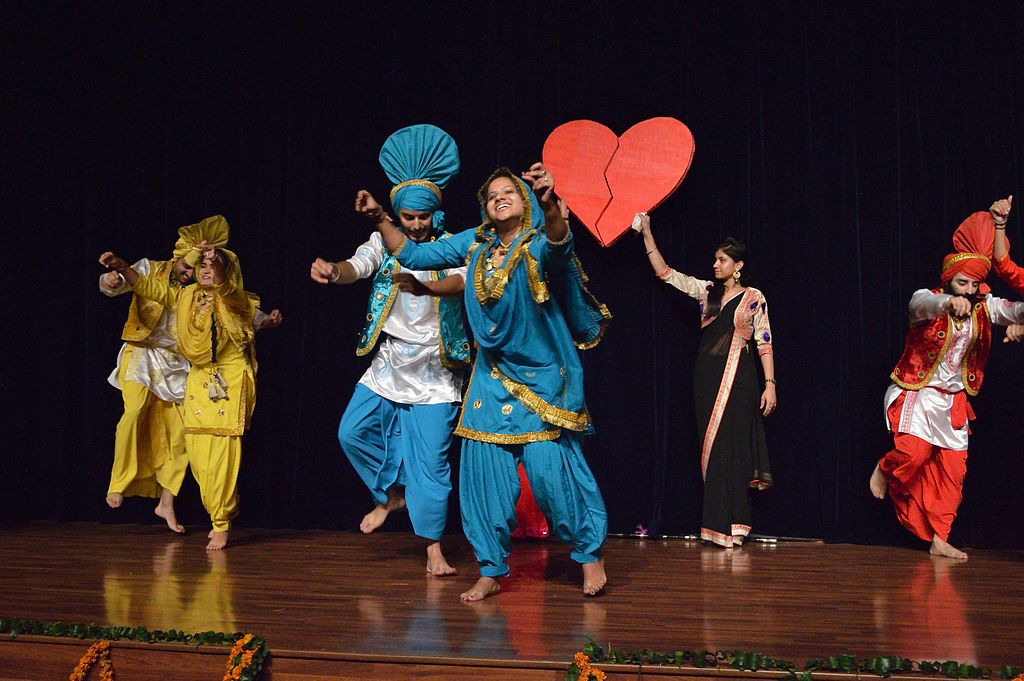
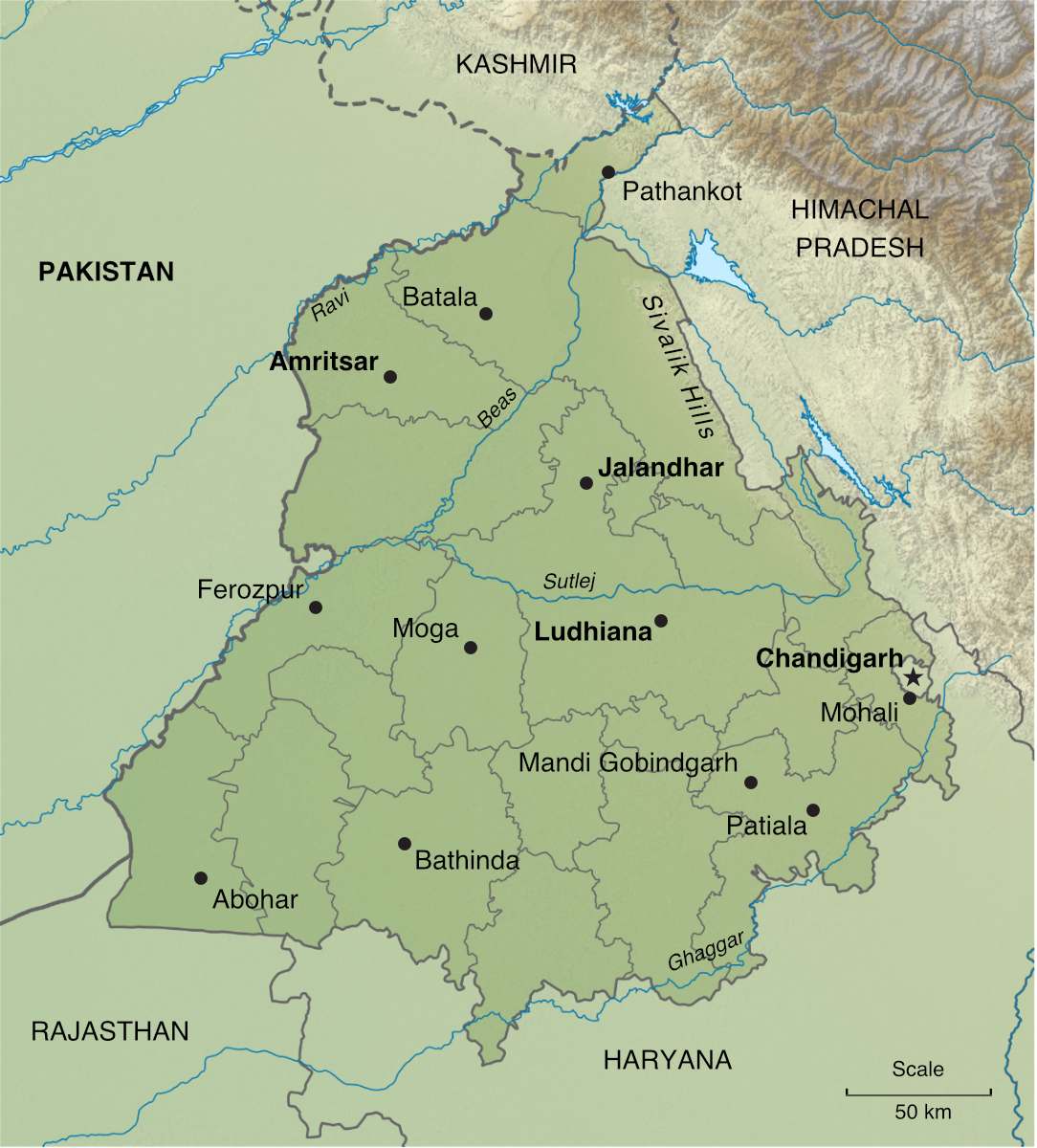
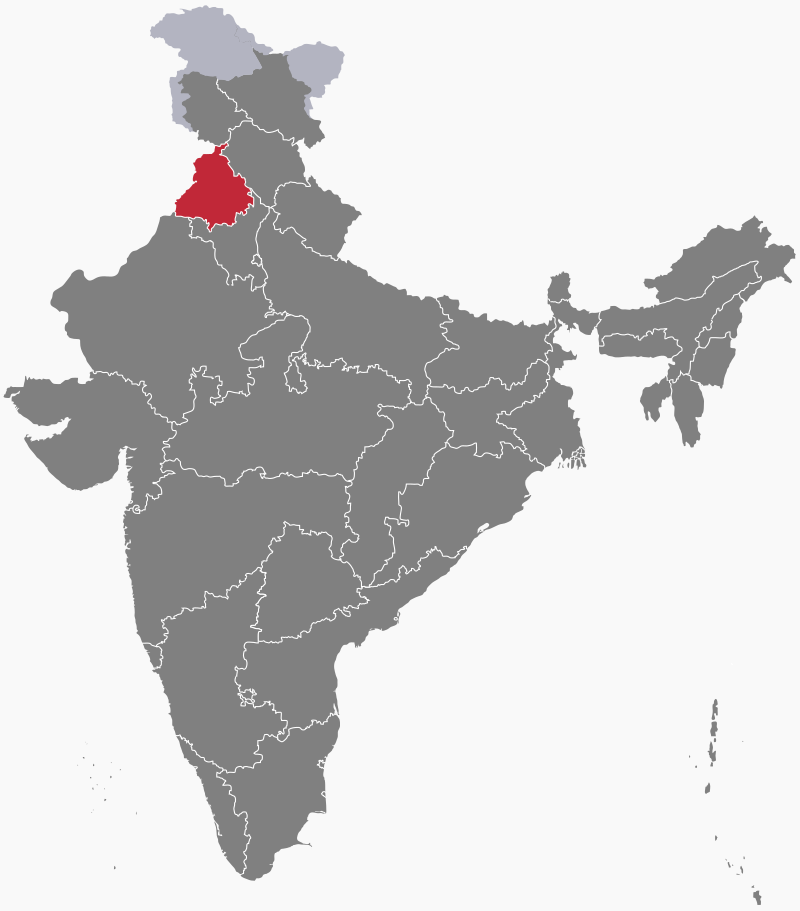
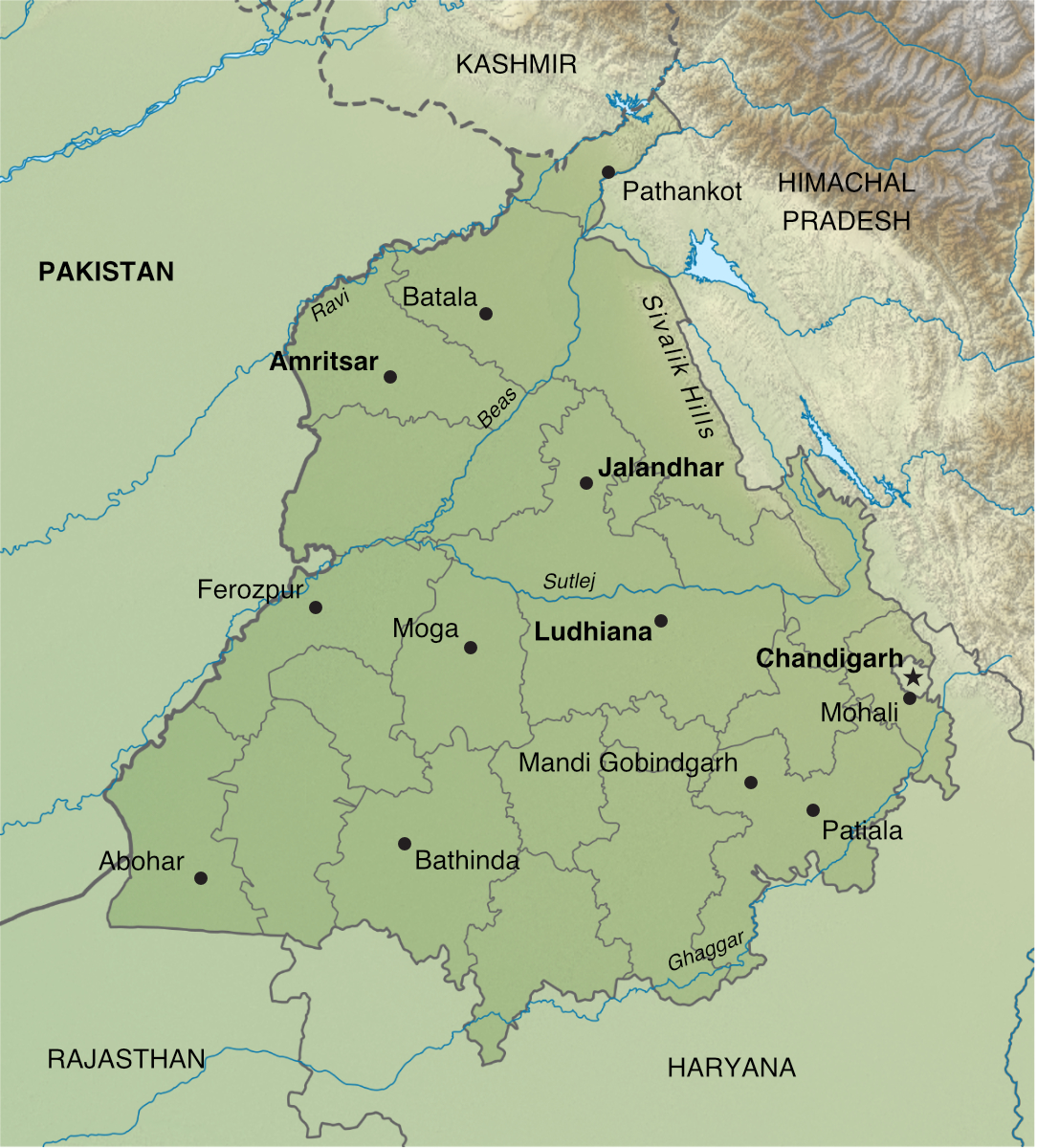
Punjab is a state in northern India. Forming part of the larger Punjab region of the Indian subcontinent (Punjab, a province of Pakistan, lies just to the west), Indian Punjab was itself divided according to language on 1st November 1966. Its mostly Hindi-speaking areas became the new state of Haryana, while its northern districts were attached to Himachal Pradesh. The remaining, mostly Punjabi-speaking areas became the current state of Punjab. The state capital is Chandigarh, a union territory and also the capital of neighbouring Haryana.

Name
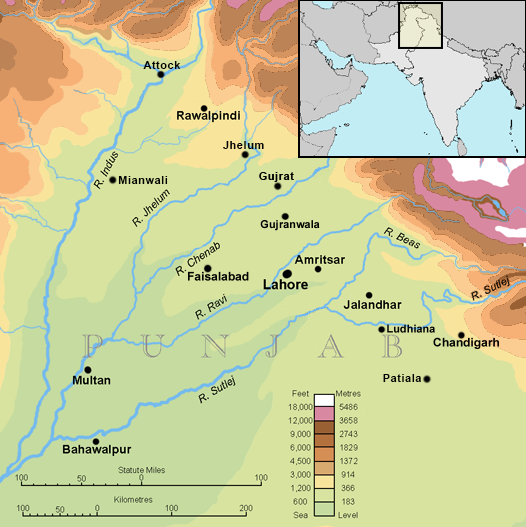
Although the name Punjab is of Persian origin, it is made up of two words that originally come from Sanskrit, the ancient language of India: panj meaning "five" and āb meaning "water". Thus Punjab means "The Land of Five Waters", and refers to the rivers Jhelum, Chenab, Ravi, Sutlej and Beas. All are tributaries of the River Indus. In the Mahabharata, an epic poem dating from the 3rd century BCE, the region is called Panchanada.
Geography
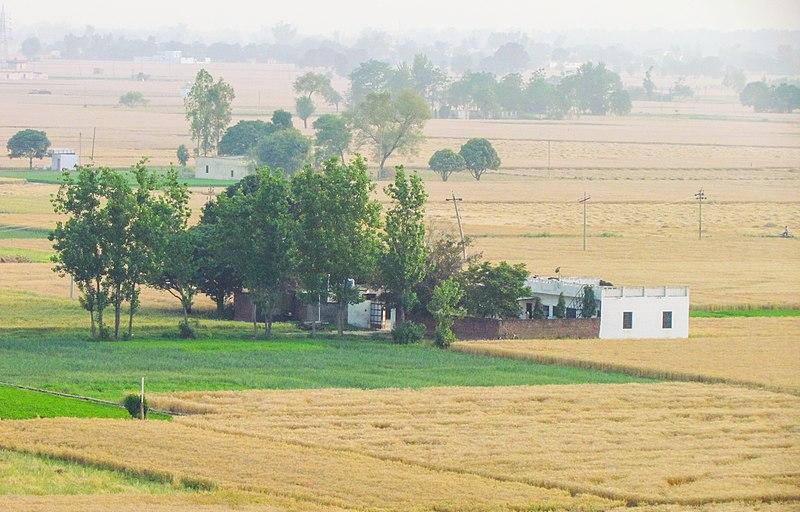
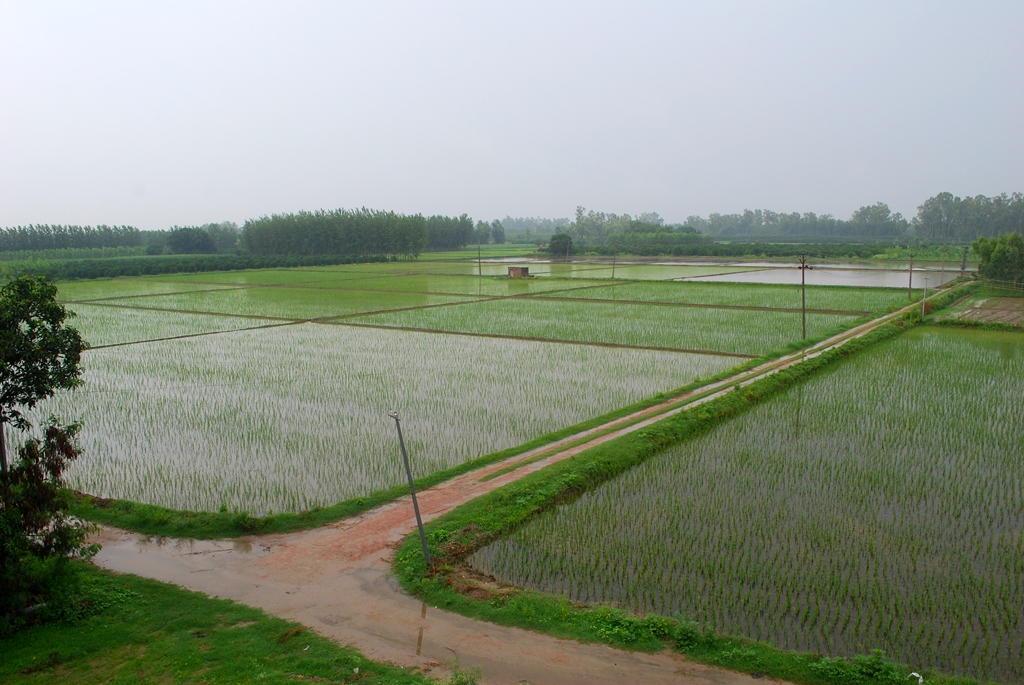
Punjab occupies a fertile, alluvial plain, the Indus Plain, which is part of the Indo-Gangetic Plain. The foothills of the Himalayas, the Sivalik Hills, run along the northeastern border with the state of Himachal Pradesh. The southwest of the state is semi-arid, merging with the Thar Desert. Of the five Punjab rivers (see above), three—the Sutlej, Beas and Ravi—flow through the state.
Climate
Punjab has a humid subtropical climate, becoming semi-arid in southwestern parts. Summers, lasting from April to June, are very hot, with daily temperatures ranging between 27 and 40°C (81–104°F), sometimes reaching 47°C (117°F). The rainy season begins in early July as the southwest monsoon arrives and stays until mid-September. Annual rainfall is highest in the Sivalik Hills, which may receive more than 115 centimetres (45 inches) and lowest in the semi-arid southwest, with less than 30 centimetres (12 inches).
While monsoon season usually brings heavy rain, occasionally extreme rainfall can result in flash floods. In September 2025, swollen rivers in both Indian and Pakistani Punjab breached their banks and overflowed into fields and villages, destroying crops and drowning cattle.
Winters in Punjab, largely dry and cool, run from early December to the end of February. Temperatures average 12°C (54°F) during the day but may fall to 5°C (41°F) or lower at night. Ground frosts are not unusual.

Economy
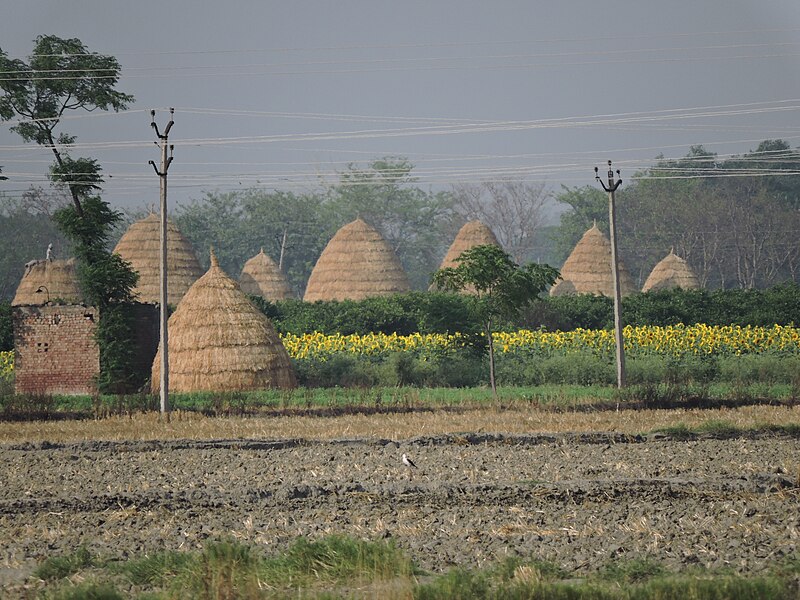
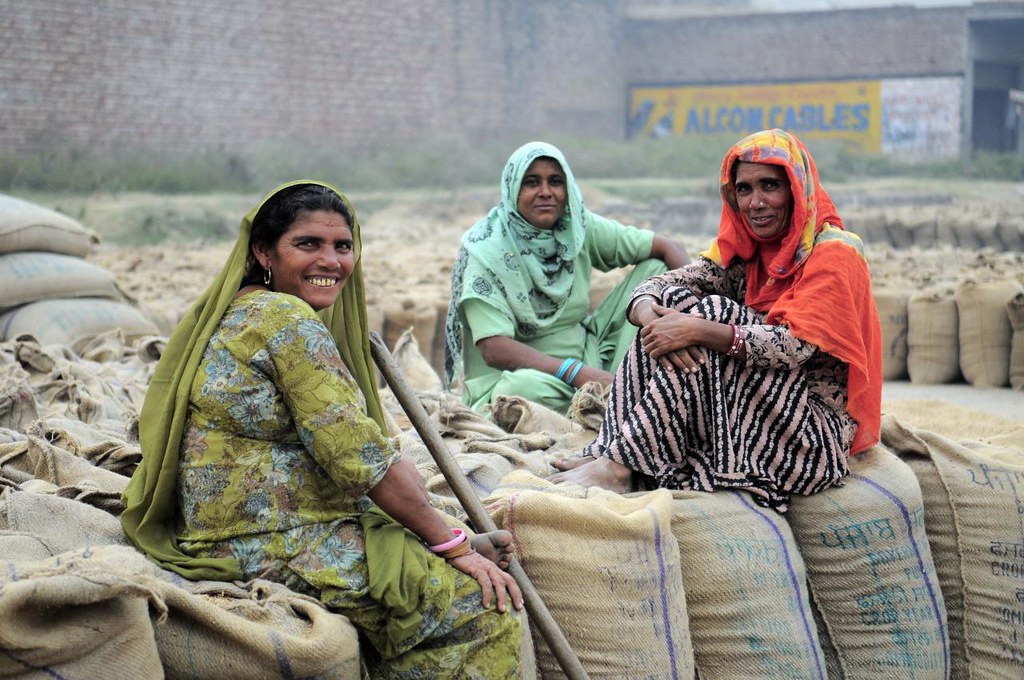
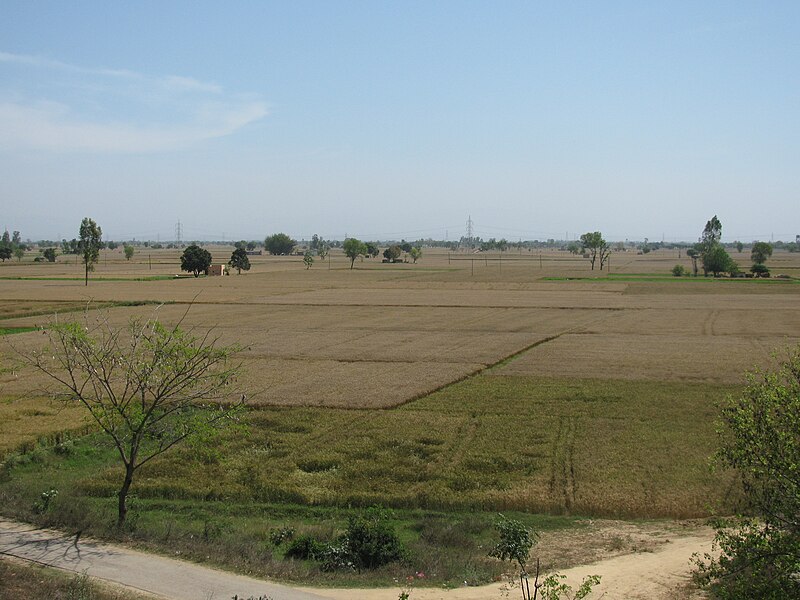
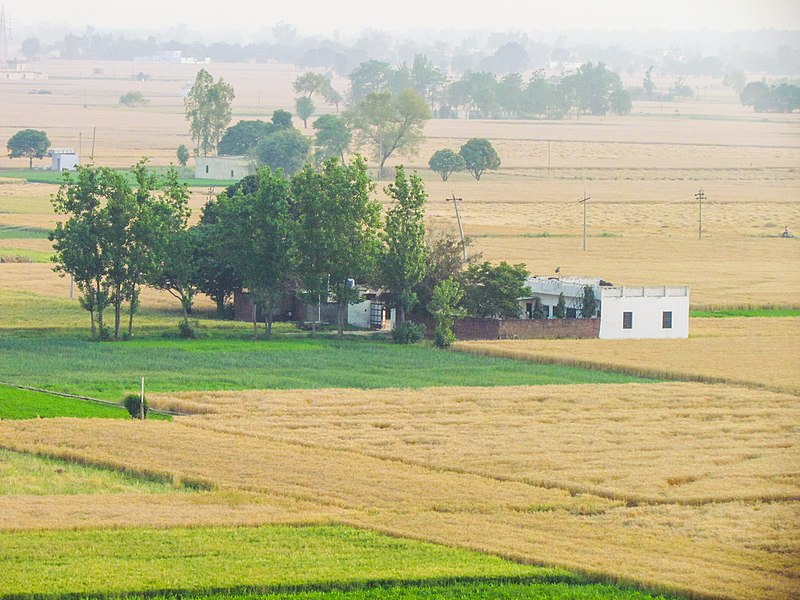
Thanks to fertile soils and an extensive system of irrigation canals (the Bhakra Dam project in neighbouring Himachal Pradesh provides much of its water), Punjab is one of the most agriculturally productive regions in India. The conditions are ideal for growing wheat. Rice, sugar cane, pearl millet, maize, barley, fruits and vegetables are also grown. Known as India's "breadbasket", Punjab produces 10% of the nation's cotton, 20% of its wheat and 11% of its rice.

Major industries in Punjab include financial services, manufacturing of scientific instruments, agricultural goods, electrical goods, machine tools, textiles, fertilizers and the processing of pine oil and sugar. Punjab's steel industry is based in Mandi Gobindgarh.
Punjabi emigrants living in the UK, US and Canada—numbering some 3 million people—send large amounts of money home to their families living in the state, contributing hugely to the local economy.
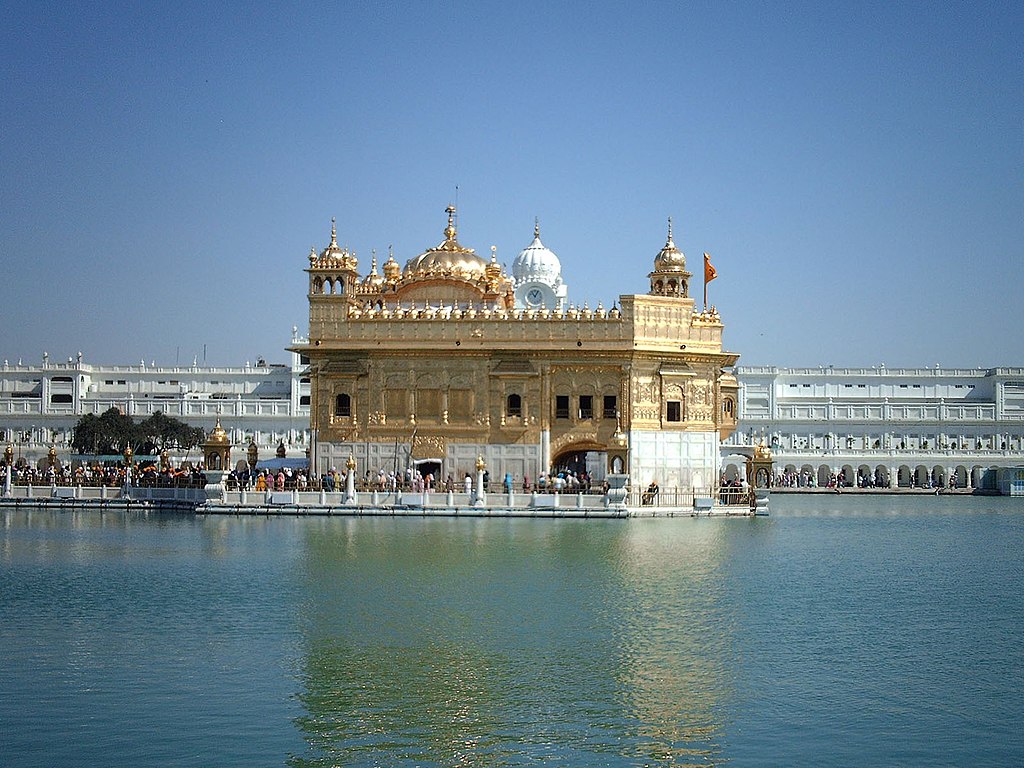
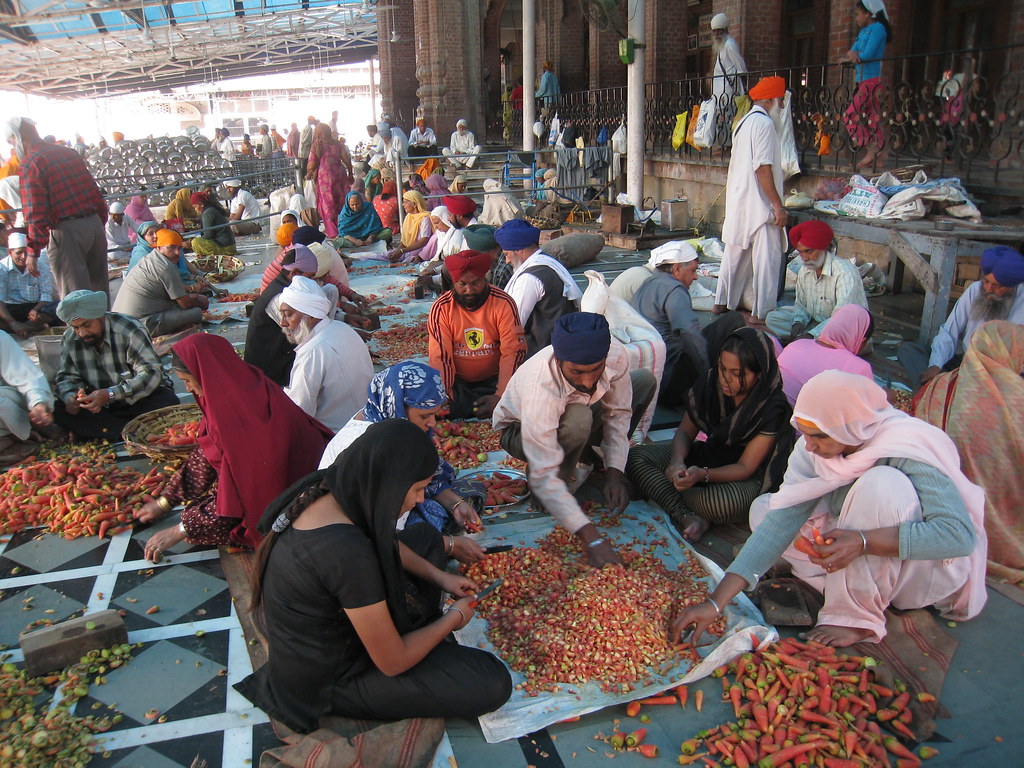
Tourism is a significant industry in Punjab. Harmandir Sahib (Golden Temple) at Amritsar is one of the major tourist destinations of India, attracting more visitors than the Taj Mahal.
History
The ancient Indus Valley Civilization flourished in the region of what is today Punjab. In later centuries, empires, including those of Alexander the Great, the Mauryas, Kushans and the Guptas, fought over it. Punjab came under Muslim rule in around 1000 CE, and was part of the Delhi Sultanate and the Mughal Empire.
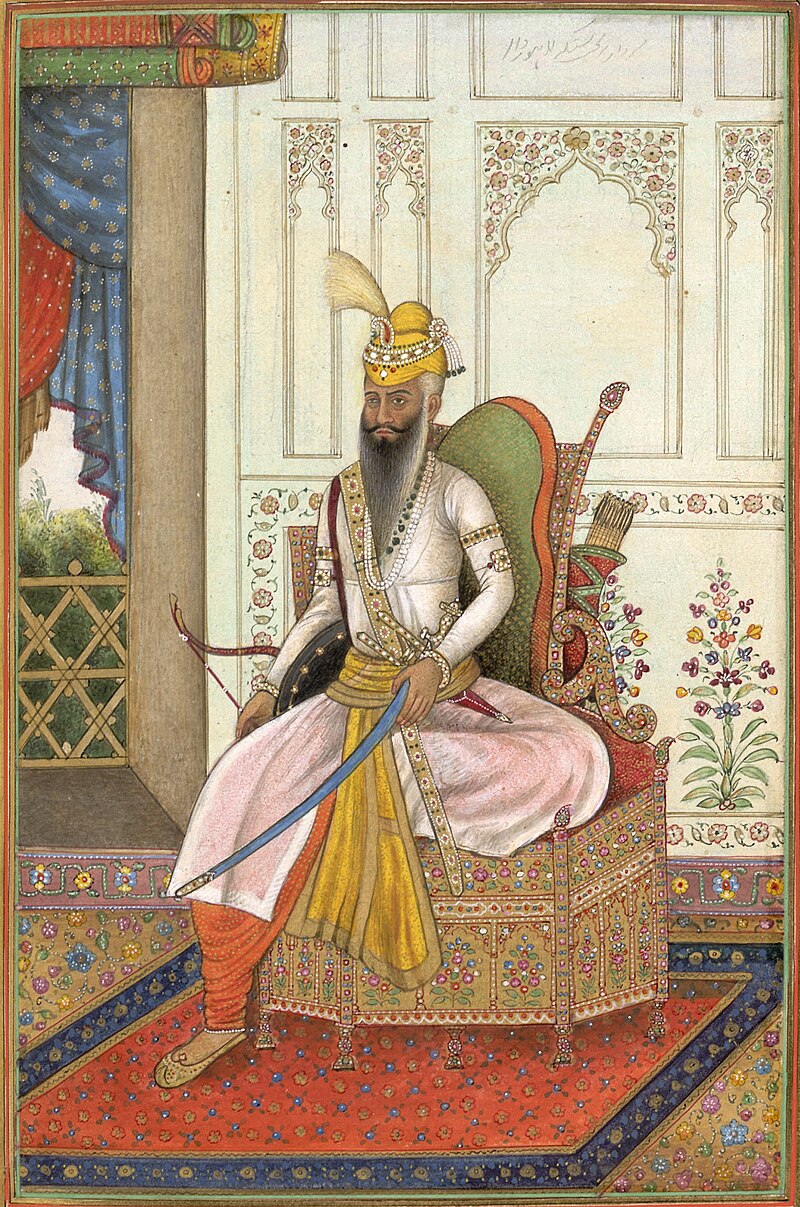
In the 18th century, the Sikhs, led by Banda Singh Bahadur until his death in 1716, fought against both the Mughals, and later the Afghans, for control of the Punjab. By the end of the century, Maharaja Ranjit Singh had expanded the powerful Sikh kingdom into an empire, ruling over Multan, Kashmir and Peshawar.
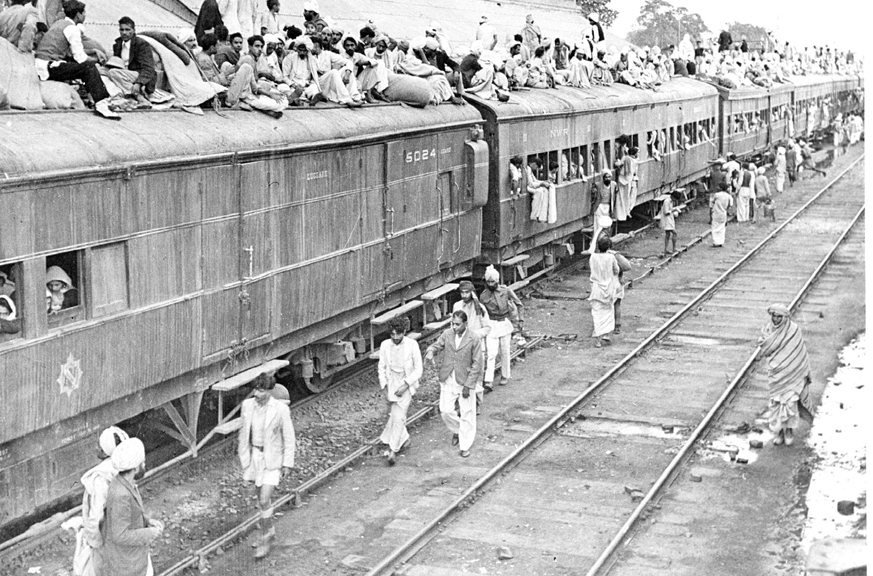
The larger Punjab region was annexed in 1849 by the British East India Company from the Sikh Empire following their victories in the Anglo-Sikh wars. At the time of Indian independence in 1947, the Punjab province was partitioned along religious lines, with the Muslim-majority western portion becoming part of Pakistan and the Hindu- and Sikh-majority eastern Punjab given to the Dominion of India. This led to a large-scale migration between the two areas, amid widespread violence. In 1966 the mostly Hindi-speaking Haryana was granted separate statehood. The present-day state of Punjab is thus largely Punjabi-speaking.

In the 1980s a movement demanding the establishment of an independent Sikh homeland, or Khalistan (“Land of the Pure”), began a terrorist campaign, targeting Punjabi Hindus. In June 1984, the Indian army carried out an attack on Sikh militants inside the Golden Temple at Amritsar. In retaliation, Prime Minister Indira Gandhi was assassinated by two of her Sikh bodyguards. Disorder persisted in Punjab until the early 1990s.
Consultant: Nicholas Harris
Facts about Punjab
Area 50,362 sq km (19,445 sq miles) Rank: 20th
Highest point Unnamed peak in the Sivalik Hills 1000 m (3281 ft)
Population 31,188,000 Rank 16th
Capital Chandigarh (union territory and joint capital with Haryana; pop. 1,259,000)
Largest cities Ludhiana (pop. 1,917,000), Amritsar (1,425,000), Jalandhar (1,053,895), Patiala (736,305), Bathinda (368,000)
Main languages Punjabi (90%), Hindi (8%)
Main religions Sikhism (58%), Hinduism (39%), Islam (2%)
State bird Northern goshawk
State flower Gladiolus
State mammals Blackbuck, Indus river dolphin
State tree Sheesham

pics

Without in any way limiting Q-files Ltd’s exclusive rights under copyright, any use of this publication to “train” generative artificial intelligence (AI) technologies to generate text is expressly prohibited. Q-files Ltd reserves all rights to license use of this work for generative AI training and development of machine learning language models.