
The world in the 20th century

CITE
We have made every effort to follow citation style rules, but there may be some minor differences. If in doubt, please refer to the appropriate citation style manual.
World War II. (2025). In Q-files Encyclopedia, History, The world in the 20th century. Retrieved from
https://www.q-files.com/history/the-world-in-the-20th-century/world-war-ii
"World War II." History, The world in the 20th century, Q-files Encyclopedia, 27 Oct. 2025.
https://www.q-files.com/history/the-world-in-the-20th-century/world-war-ii.
Accessed 21 Sep. 2026.
World War II 2025. History, The world in the 20th century. Retrieved 21 September 2026, from
https://www.q-files.com/history/the-world-in-the-20th-century/world-war-ii
History, The world in the 20th century, s.v. "World War II," accessed September 21, 2026.
https://www.q-files.com/history/the-world-in-the-20th-century/world-war-ii


World War II
Between 1939 and 1945, more than 30 countries, including all the world’s major powers, were drawn into World War II. The world’s nations formed two opposing military alliances, the Axis powers (including Germany, Italy and Japan) and the Allies (including Britain, the Commonwealth countries, France, the Soviet Union and the USA). The war started in September 1939 when Germany invaded Poland, prompting Britain and France to declare war on Germany. From 1939 to 1941, Germany and Italy overran or subdued much of mainland Europe. From December 1941, Japan joined the Axis, making conquests across the Far East and Pacific Islands. Battles raged all over the world as the Allies fought back. The Allies defeated Germany in May 1945. Japan surrendered in August 1945 following the dropping of atomic bombs on Hiroshima and Nagasaki.

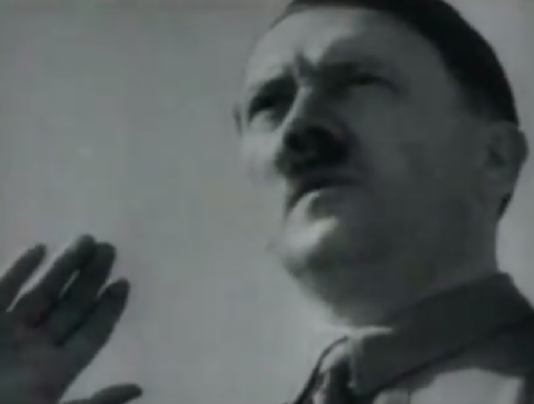
Rise of Nazism
People had called World War I the “war to end wars”, but the peace treaty that was drawn up at Versailles in 1919 punished Germany severely for its part in the war. This led to extreme nationalism in Germany and the rise to power of the National Socialist (Nazi) leader, Adolf Hitler, in the 1930s. The aim of Nazi Germany was the creation of a New Order (Neuordnung) with Germany the ruler of the whole of Europe.
All peoples believed to be inferior to the Aryan race (the German people and other native speakers of Indo-European languages) would be exterminated or expelled. On 1st September 1939, Germany invaded Poland, causing France and Britain to declare war on Germany two days later.

Worldwide conflict
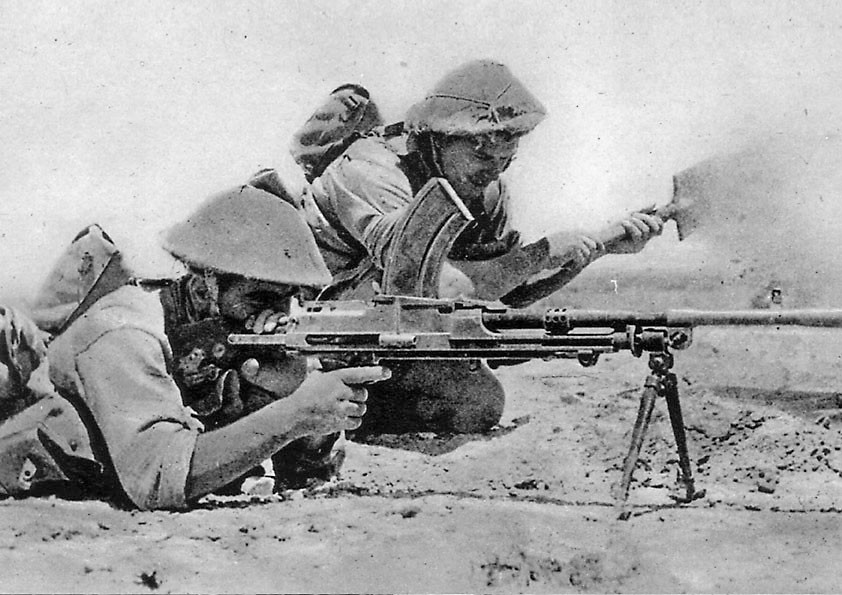
Japan had invaded China in 1937, and from 1941 it joined forces with the Axis powers, continuing its territorial expansion in Southeast Asia and the Pacific islands. By 1941, Germany and Italy had control of much of mainland Europe. With its allies subdued, Britain and the Commonwealth fought on against the Axis alone, battling in North Africa, the Mediterranean and the Atlantic.
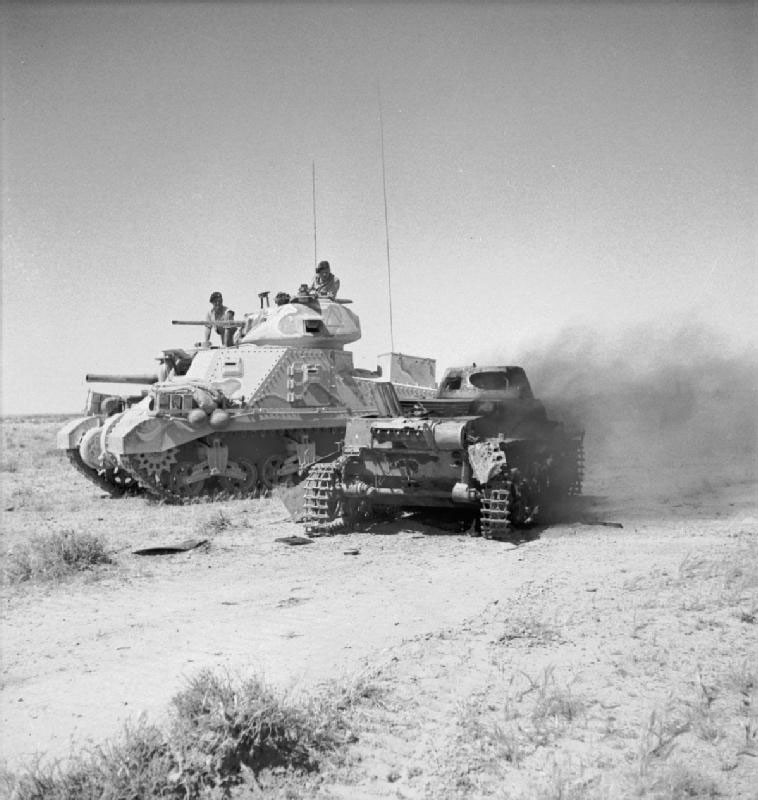
In June 1941, the Axis invaded the Soviet Union, drawing the USSR on to the side of the Allies. Then, on 11th December 1941, following the Japanese attack on the US navy at Pearl Harbor, the United States joined the Allies. Dozens of other countries soon made declarations of war against the Axis.
Victory for the Allies
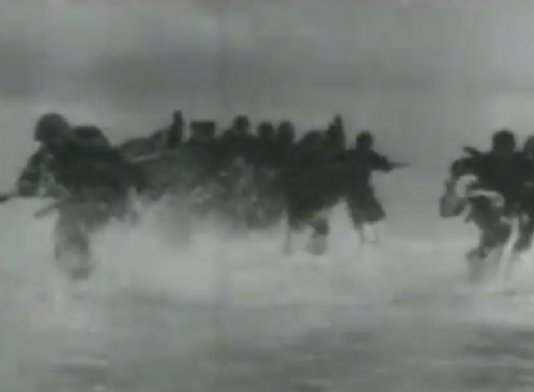
During 1942, Allied forces turned the tide in Asia, preventing further Japanese victories. In North Africa and the USSR, Axis advances were halted by Allied forces during 1942–3. In September 1943, the Italians signed an armistice with the Allies. On 6th June 1944, known as D-Day, the Allies invaded German-occupied France, and began to move towards Germany. Meanwhile, the Soviet Union advanced on Germany from the east.
Germany surrendered to the Western Allies on 7th May 1945. The following day, the 8th, is now known as VE Day (Victory in Europe Day). To force Japan to surrender unconditionally, the USA dropped two atomic bombs on the Japanese cities of Hiroshima (6th August 1945) and Nagasaki (9th August 1945), killing up to 240,000 people. Six days later, Japan surrendered.
Destruction of cities

Mass-bombings of the enemy’s cities were carried out by both the Axis and Allied air forces during World War II. Targeting cities and civilians was a psychological weapon aimed at breaking the enemy’s will to fight, although, in reality, by stiffening people's morale it often had the opposite effect.
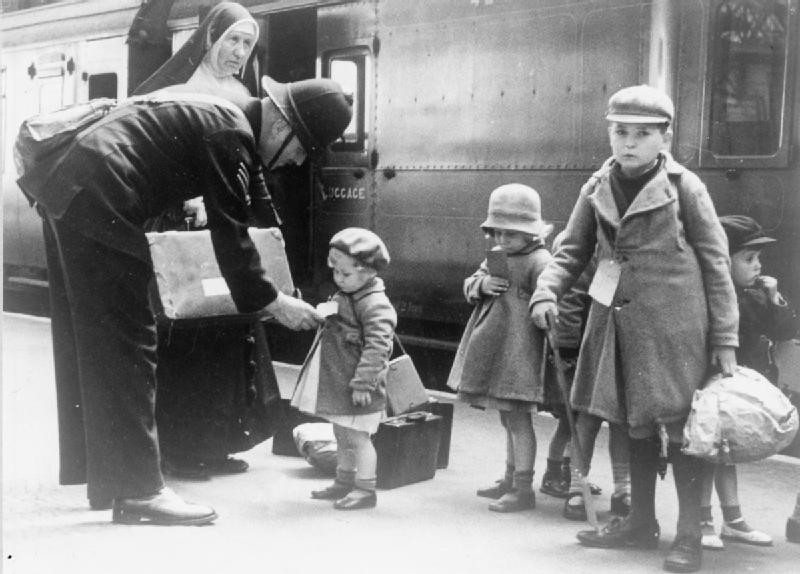
From September 1940 to May 1941, the German air force bombed 16 British cities, particularly London, during the Blitz (from the German for “lightning”). An estimated 60,000 civilians were killed. Air-raid shelters were built to protect city-dwellers, and people often sought shelter in tube stations and cellars. Children were evacuated (sent away) to live in small towns or the countryside away from the danger.
The Allied bombings of 160 German cities, including most notably the fire-bombings of Hamburg (1943) and Dresden (1945), killed 600,000 civilians.
The Holocaust
The Holocaust was the murder of 6 million Jews during World War II, by the government of Nazi Germany led by Adolf Hitler. Some historians believe the term “Holocaust” should be extended to include the systematic murder of another 6 million people by Nazi Germany, including up to 1.5 million Romani people, as well as Poles, Soviets, Communists, gay people and disabled people. This mass killing, known as genocide, took place throughout Nazi-occupied territory.

The systematic persecution of Jews had begun in Nazi Germany in the years before the outbreak of war, with Jews being stripped of their citizenship and barred from many jobs and public places. From 1933, concentration camps were built to hold people, such as Jews, considered to be “undesirable”. In 1941–1942, death camps, such as Auschwitz-Birkenau and Treblinka, were built with the sole purpose of killing Jews. As new territories were conquered in Europe, Jews were rounded up and shot, forcibly confined in overcrowded ghettos, or transported to death or slave-labour camps. In the death camps, men, women and children were forced into gas chambers, where they were killed by a cyanide compound dropped into vents. Not all Jews and other prisoners were killed immediately: many were used as slave labour until they died of exhaustion or disease.
Consultant: Philip Parker
World War II timeline
23rd August 1939
Germany and USSR sign the Nazi-Soviet Non-Aggression Pact.
1st September 1939
Germany invades Poland.
3rd September 1939
Britain and France declare war on Germany.
10th May 1940
Winston Churchill becomes British Prime Minister.
10th May 1940
Germany invades France, Belgium and the Netherlands in a rapid attack ("Blitzkrieg").
26th May 1940
The British Expeditionary Force is evacuated from Dunkirk, France.
22nd June 1940
France surrenders to Germany.
10th July 1940
Battle of Britain begins.
27th May 1941
German battleship, the Bismarck, is sunk.
22nd June 1941
Germany invades the USSR in Operation Barbarossa.
8th September 1941
The Siege of Leningrad begins.
7th December 1941
The Japanese attack Pearl Harbor, Hawaii.
11th December 1941
The USA declares war on Germany and Italy.
February 1942
Japanese forces take Singapore.
4th June 1942
The Battle of Midway begins in the South Pacific Ocean.
1st July 1942
First Battle of El Alamein starts in North Africa.
21st August 1942
The Battle of Stalingrad begins.
23rd October 1942
The Second Battle of El Alamein begins.
2nd February 1943
The Germans surrender to Soviet troops at Stalingrad.
19th April 1943
The Warsaw Ghetto Uprising takes place.
5th July 1943
The Battle of Kursk starts.
3rd September 1943
Italy surrenders to the Allies.
27th January 1944
The Siege of Leningrad is over.
6th June 1944
D Day: Allied forces land on Normandy beaches.
19th June 1944
The Battle of the Philippine Sea begins.
25th August 1944
The Allies liberate Paris.
16th December 1944
The Battle of the Bulge starts.
4th February 1945
The Yalta Conference takes place.
19th February 1945
The Battle of Iwo Jima begins.
12th April 1945
US President Franklin D. Roosevelt dies.
21st April 1945
Soviet troops enter Berlin.
30th April 1945
Adolf Hitler commits suicide.
7th May 1945
Germany surrenders to the Allies.
6th August 1945
The USA drops the first atomic bomb on Hiroshima, Japan.
9th August 1945
The USA drops a second atomic bomb on Nagasaki, Japan.
15th August 1945
Japan surrenders to the Allies.
pics

Without in any way limiting Q-files Ltd’s exclusive rights under copyright, any use of this publication to “train” generative artificial intelligence (AI) technologies to generate text is expressly prohibited. Q-files Ltd reserves all rights to license use of this work for generative AI training and development of machine learning language models.