
Peoples

CITE
We have made every effort to follow citation style rules, but there may be some minor differences. If in doubt, please refer to the appropriate citation style manual.
Who are the Romani?. (2026). In Q-files Encyclopedia, Culture, Peoples. Retrieved from
https://www.q-files.com/culture/peoples/who-are-the-romani
"Who are the Romani?." Culture, Peoples, Q-files Encyclopedia, 13 May. 2026.
https://www.q-files.com/culture/peoples/who-are-the-romani.
Accessed 31 Oct. 2026.
Who are the Romani? 2026. Culture, Peoples. Retrieved 31 October 2026, from
https://www.q-files.com/culture/peoples/who-are-the-romani
Culture, Peoples, s.v. "Who are the Romani?," accessed October 31, 2026.
https://www.q-files.com/culture/peoples/who-are-the-romani


Who are the Romani?
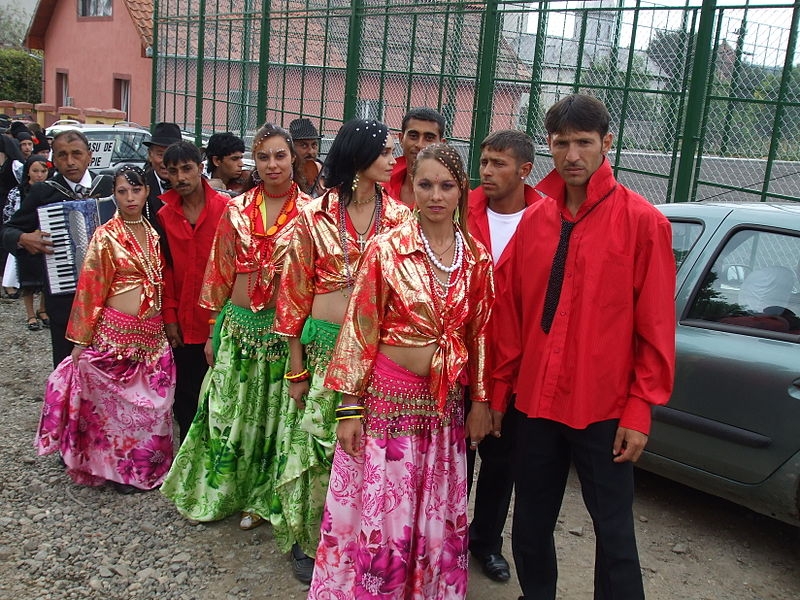
The Romani (also called Romany or Roma) are a group of nomadic peoples living across Europe and Asia—and the Americas, to where their ancestors emigrated in the 19th century. Around 10 and 12 million Romani live in Europe, mostly in Central and Eastern Europe, and in Turkey. They are Europe’s largest ethnic minority. There are a number of different groups who describe themselves as Romani. They include the Kale in Finland and Wales, the Sinti in Austria, Germany, Poland and Italy, and the Manouche in France. Many (but not all) Romani dislike the term “gypsy” or "tzigane", because it is seen as dismissive of their lifestyle and culture. A long history of persecution has meant that many Romani communities are still not represented properly in the countries where they live, and some are still struggling to escape poverty.

History
The ancestors of the Romani came from India. They were a people who travelled to Europe about 1000 years ago. No one knows exactly why the Romani left India, but the most likely explanation is that they began their migration as Hindu refugees from war. It is thought that they left their original homeland in northwest India to help fight a war in the Punjab—possibly against the invading forces of Mahmud of Ghazni, a Muslim emperor, in the 11th century. After the war, Islam became the main religion in this region, and Hindus were forced out. The Romani fled westwards towards the Middle East and Europe.
Over the next 200 years, most of the group settled in the Balkans, an area of southeast Europe which was then part of the Ottoman Empire, while some ventured on into what was then the Austro-Hungarian Empire. Forced into slavery, they split up into many small groups. Some Romani travelled as far as Western Europe, where they were met with suspicion and hostility. People did not want to share their land with these newcomers.


In the 19th century, slavery was made illegal in the Austro-Hungarian Empire and thousands of Romani were set free. Their troubled history made it difficult for them to find work and shelter, and they were treated badly in the countries where they tried to settle. As many as 1.5 million Romani were murdered in Nazi death camps such as Auschwitz-Birkenau during the Holocaust of World War II. In 1978, the International Romani Union was set up to protect the rights of Romani people everywhere.
Populations

Today, the countries with the largest Romani populations are Turkey (2.75 million) and Romania (1.85 million). Russia, Bulgaria and Spain are also home to large Romani populations. There are also small numbers of Romani communities in North and South America. In 2000, the International Romani Union officially declared the Romani to be a non-territorial nation, a people whose homeland is wherever they travel to.
Life today
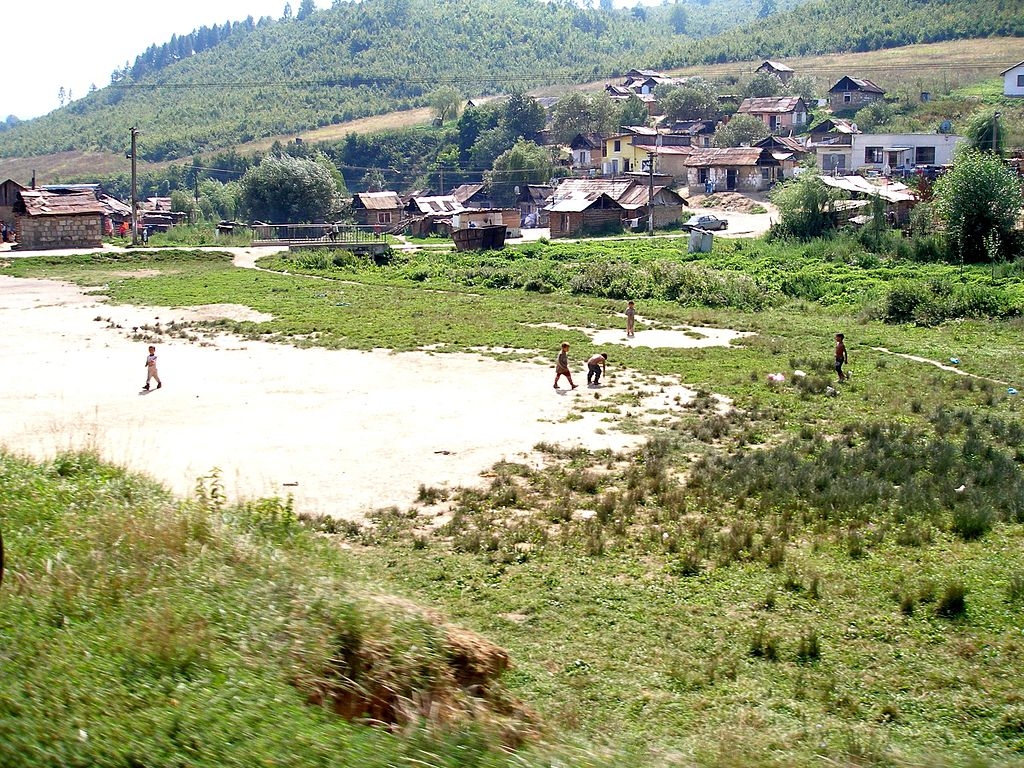
The Romani traditionally followed a nomadic lifestyle, moving from place to place with their community. They have lived this way for centuries, sometimes to flee persecution, sometimes simply in search of a better life. In the past they travelled with horses and wagons, but today most have modern caravans and cars instead. A few Romani still move around regularly, while most live a settled lifestyle in houses and flats. In many parts of Europe, Romani live in shantytown communities with very high unemployment.
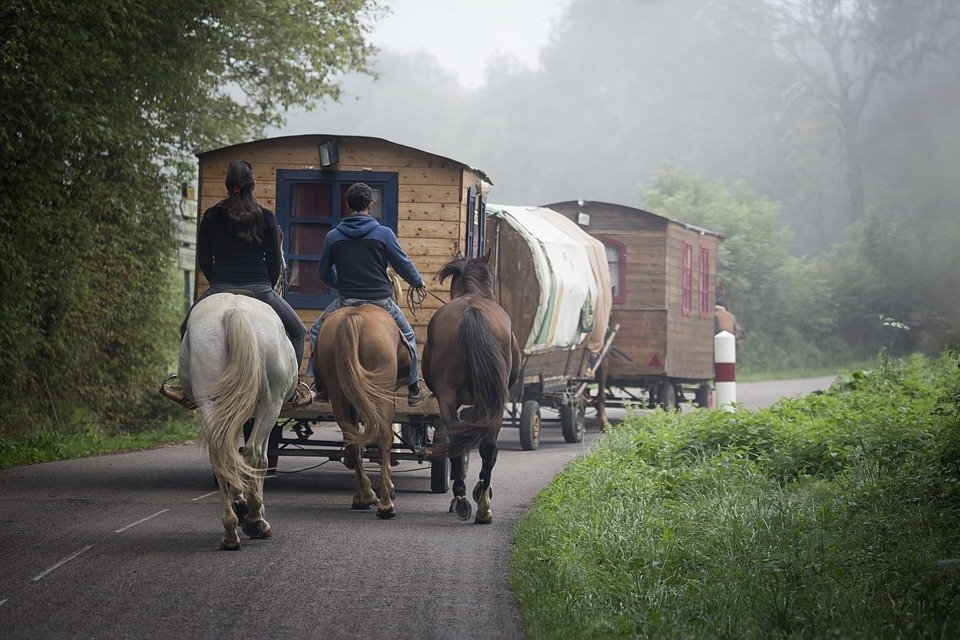

Traditionally, extended families (numbering up to several hundred people) form bands, or kumpanias. Smaller units, called vitsas, form from more closely related family groups within the bands. Each band is led by a chieftain, or voivode, who is elected for life. The matriarch, or senior woman in the band, is called the phuri dai. She is responsible for the welfare of the women and children.

Language and religion
Between 2 and 5 million Romani speak the Romani language along with the language of their adopted country. The Romani language is similar to Hindi and Sanskrit, reflecting the Romanis' roots in northern India. It has more than 60 dialects, which have become so different from one another over time that speakers of one dialect cannot always understand speakers of another.
The Romani have traditionally adopted the religion of the countries where they make their homes. Most are Christian, others Muslims. Some Romani combine Shaktism, a Hindu tradition, with Christianity, conducting prayers through the Virgin Mary.

Other Q-&-As to explore:
For a full list of all our Q&As, please click here.
If you have a question that you would like to see answered on Q-files, please send us an email to info@Q-files.com or use the contact us page.
pics
Without in any way limiting Q-files Ltd’s exclusive rights under copyright, any use of this publication to “train” generative artificial intelligence (AI) technologies to generate text is expressly prohibited. Q-files Ltd reserves all rights to license use of this work for generative AI training and development of machine learning language models.