
Peoples

CITE
We have made every effort to follow citation style rules, but there may be some minor differences. If in doubt, please refer to the appropriate citation style manual.
Languages. (2026). In Q-files Encyclopedia, Culture, Peoples. Retrieved from
https://www.q-files.com/culture/peoples/languages
"Languages." Culture, Peoples, Q-files Encyclopedia, 2 Jun. 2026.
https://www.q-files.com/culture/peoples/languages.
Accessed 13 Sep. 2026.
Languages 2026. Culture, Peoples. Retrieved 13 September 2026, from
https://www.q-files.com/culture/peoples/languages
Culture, Peoples, s.v. "Languages," accessed September 13, 2026.
https://www.q-files.com/culture/peoples/languages


Languages
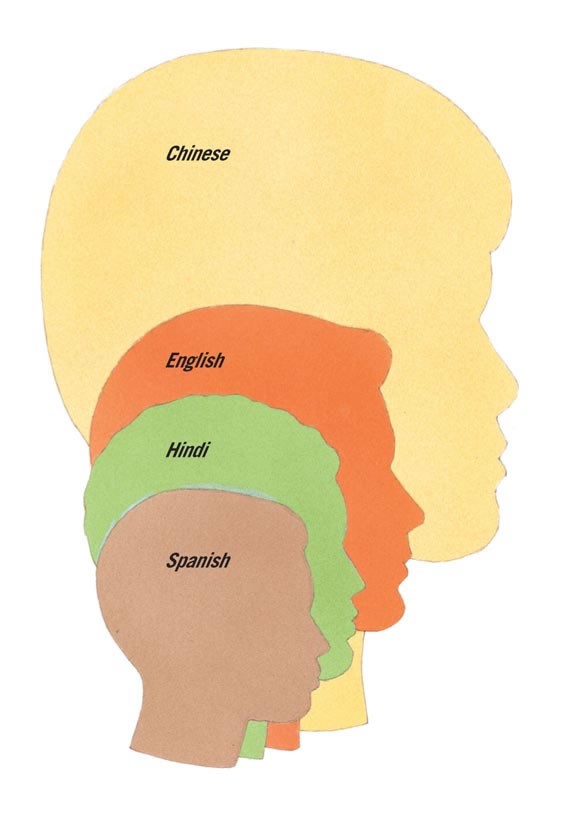
People first developed languages to communicate with one another. Languages spread and changed as people moved to new lands. There may be up to 7000 different languages spoken in the world today—no one is quite sure how many. Of these, 90% are spoken by just a few thousand people or fewer. Many of these languages may become extinct in the next 100 years. More than a third of the world’s population speaks one of six languages as native speakers: Chinese, Spanish, English, Hindi, Bengali and Portuguese. Languages fall into a number of different families. Most European languages and many of those of southwest Asia and India belong to a single family, known as the Indo-European language family. More than 80 languages in all, they developed from a single original language, probably spoken by farming peoples who lived in Eastern Europe about 5500 years ago. As these people spread out over a wider area, their language gradually changed as communities lost contact with each other.


Languages of the Indian subcontinent
The most widely spoken language in India is Hindi, but there are hundreds of others. Gujarati is the language of Gujarat, a state in western India. Spoken in Pakistan as well as five Indian states, Urdu, closely related to Hindi, is the first language of 68 million people. More than 20 million people in Gujarat and another state, Maharashtra, speak Gujarati. Hindi, Urdu and Gujarati, along with Marathi, Bengali (also the language of Bangladesh), Punjabi and Sinhalese (spoken by most Sri Lankans), are all from the Indo-European language family.

How languages develop
Many languages have changed and developed because of outside influences. English is an Indo-European language. Within that family, it is a Germanic language, descended from the proto-Germanic language of northern Europe. But modern English has many words adapted from other languages, such as Latin (from the days when England was part of the Roman Empire) and French (the language of England’s ruling classes following the Norman invasion of 1066).

Spanish, Italian, French, Portuguese and Romanian languages all have many similar words. This is because they are descended from Latin, the language of the Roman Empire, of which Spain, Italy, France, Portugal and Romania were once part. They are members of the Romance language group, which is part of the Indo-European family.

Click languages
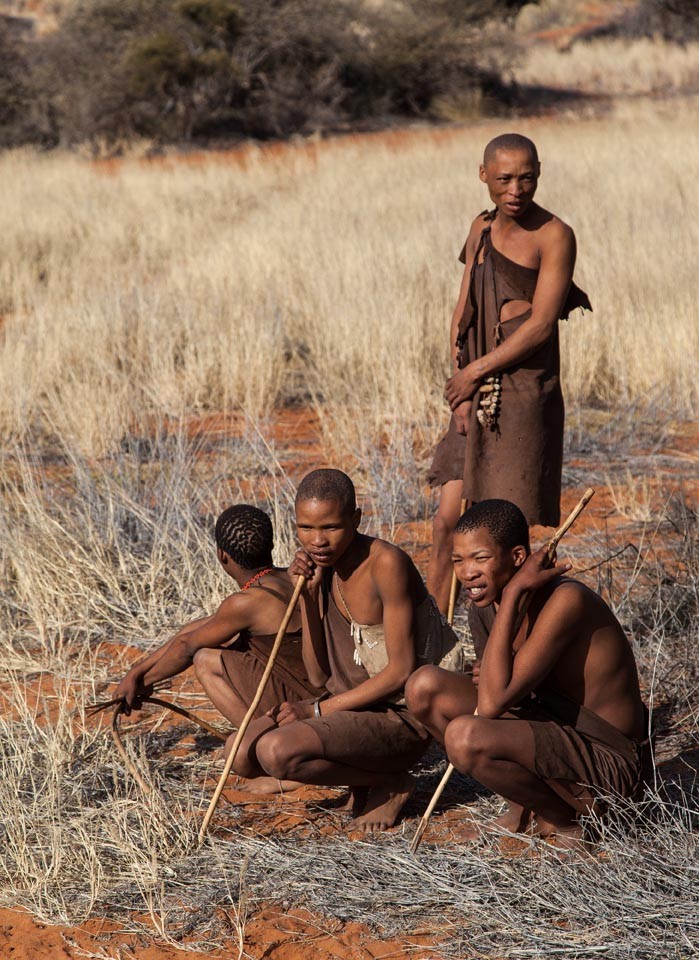
Many inhabitants of southern Africa speak languages from the Khoi-San group. These languages contain consonants made with clicks of the lips and tongue. One of these languages is spoken by the !Kung people of the Kalahari Desert. Zulu, an unrelated language also from southern Africa, uses about 15 different click consonants.
Standard language
In some countries there are so many languages that people from different regions may not understand one another. To avoid communication problems, countries select one “standard language”, which is used in schools, businesses and government. In the African country of Ghana, there are 79 tribal languages, so English is used as the standard, or "official", language.
Consultant: Philip Wilkinson
pics


Without in any way limiting Q-files Ltd’s exclusive rights under copyright, any use of this publication to “train” generative artificial intelligence (AI) technologies to generate text is expressly prohibited. Q-files Ltd reserves all rights to license use of this work for generative AI training and development of machine learning language models.