
The world in the 20th century

CITE
We have made every effort to follow citation style rules, but there may be some minor differences. If in doubt, please refer to the appropriate citation style manual.
Spanish flu pandemic. (2025). In Q-files Encyclopedia, History, The world in the 20th century. Retrieved from
https://www.q-files.com/history/the-world-in-the-20th-century/spanish-flu-pandemic
"Spanish flu pandemic." History, The world in the 20th century, Q-files Encyclopedia, 24 Oct. 2025.
https://www.q-files.com/history/the-world-in-the-20th-century/spanish-flu-pandemic.
Accessed 6 Aug. 2026.
Spanish flu pandemic 2025. History, The world in the 20th century. Retrieved 6 August 2026, from
https://www.q-files.com/history/the-world-in-the-20th-century/spanish-flu-pandemic
History, The world in the 20th century, s.v. "Spanish flu pandemic," accessed August 6, 2026.
https://www.q-files.com/history/the-world-in-the-20th-century/spanish-flu-pandemic


Spanish flu pandemic
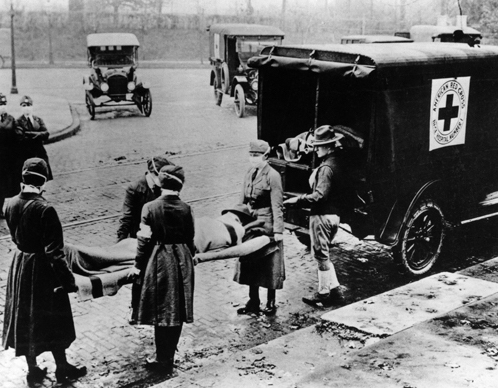
The influenza (flu) outbreak of 1918–19 was one of the most devastating pandemics (diseases which affect whole continents or the world) in human history. Spanish flu, as it was called, is believed to have infected 500 million people around the world, or about 27% of the total world population at the time. Over 50 million perished—more than double the number of people who were killed during World War I, which broke out in 1914 and came to an end in 1918. Many of the pandemic's victims were young adults.

Three waves
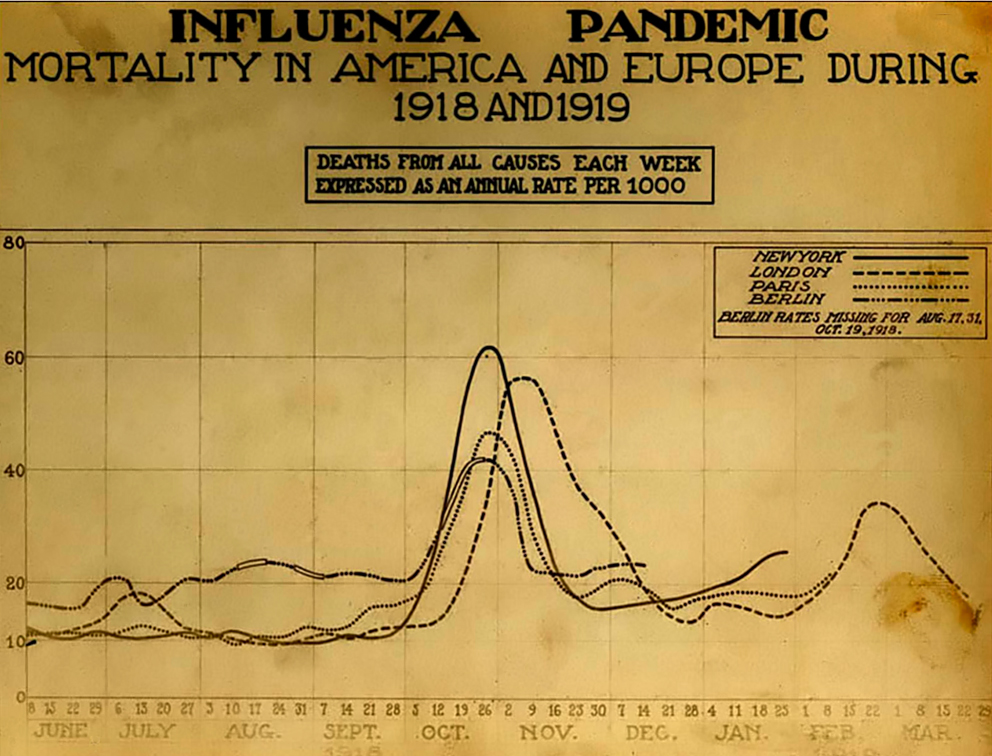
The pandemic arrived in three waves between the spring of 1918 and the summer of 1919. The spring 1918 wave was no different to typical flu epidemics: those most at risk were the sick and elderly, while younger, healthier people recovered easily. But by the time the second wave spread across much of the world in August 1918, the virus had mutated (its genetic structure had rapidly evolved) into a much deadlier form. Measured by numbers of deaths, October 1918 was the worst month of the whole pandemic.
The unusually severe disease killed more than 2.5% of those infected by the virus; the usual flu epidemic mortality rate is 0.1%. In the US, 105 million people, about 28% of the entire population at the time, became infected. Between 500,000 and 675,000 died. In Britain, as many as 250,000 people died, while in France, more than 400,000 perished. Oddly, the 1918 pandemic was at its peak in the summer and autumn in the Northern Hemisphere. Flu is usually worse in winter.
Why was it called "Spanish flu"?


With World War I still raging, when soldiers in Europe on both sides started to suffer from a new type of flu in spring 1918, the authorities in Britain, France, Germany and the US—anxious not to admit any potential weakness or lower morale—kept the outbreak a secret. It was only when the disease hit Spain (and making King Alfonso XIII gravely ill) that news emerged. This is because Spain was a neutral country during the war, so newspaper correspondents were free to report on the outbreak. It created the false impression that Spain was especially hard hit, so this is why the pandemic was nicknamed Spanish flu—although it was not called that in Spain itself.
Mortality blackspots
All over the world, the poor, immigrants and ethnic minorities were more susceptible to the disease, because they were more likely to be poorly nourished, to live in crowded conditions or to be suffering from other diseases. Africans and Asians suffered disproportionately more than Europeans, North Americans and Australians. Thus, while the average case mortality (sufferers who went on to die of the disease) in the developed world was about 2%, in India (where 18.5 million perished) it was 6%. In some isolated places where people had no immunity to flu at all, the impact was catastrophic: a quarter of the population of Western Samoa, for example, perished.

Most vulnerable
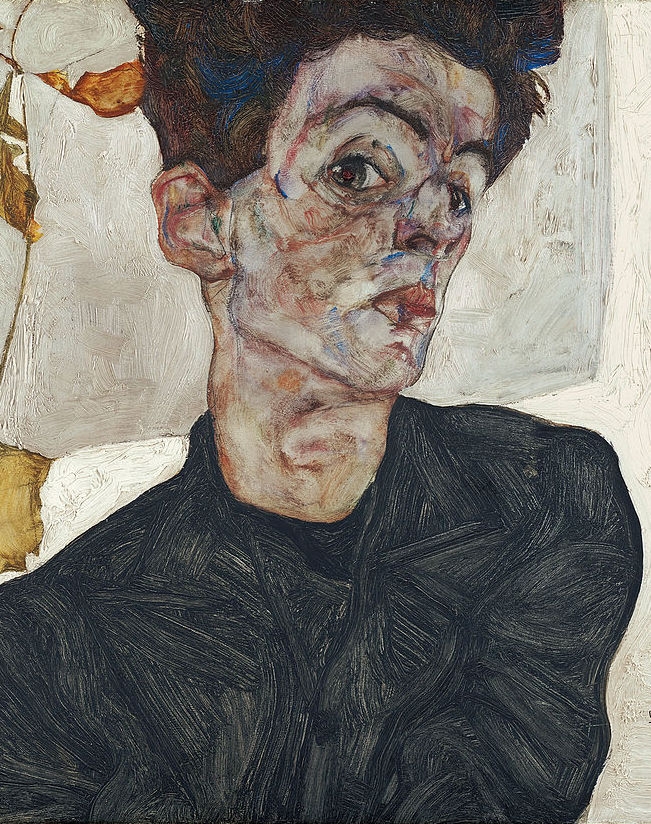
Austrian artist Egon Schiele died of Spanish flu in October 1918, just a few days after the death of his wife Edith, who was pregnant with their first child. Schiele was 28 years old—within the age group that was most vulnerable to the disease. In fact, nearly half of those who died in the pandemic were young, healthy adults, aged between 20 and 40. Men were at greater risk of dying than women, unless the women were pregnant. Nearly all the deaths in the US occurred in people under 65. This was the the opposite of most flu outbreaks, when deaths are normally the highest amongst the elderly and the very young.
Scientists think that the summer 1918 strain of the virus triggered a particularly intense response from the stronger immune systems that young adults typically have. This led to severe inflammation and a build-up of fluid in the lungs—ideal conditions for secondary infections such as pneumonia. This might help to explain why young adults were the worst affected. By contrast, the elderly may have been relatively protected in 1918 because they been exposed to a strain of flu that had circulating in the population throughout the 19th century, and had thereby built up some immunity.
Origins
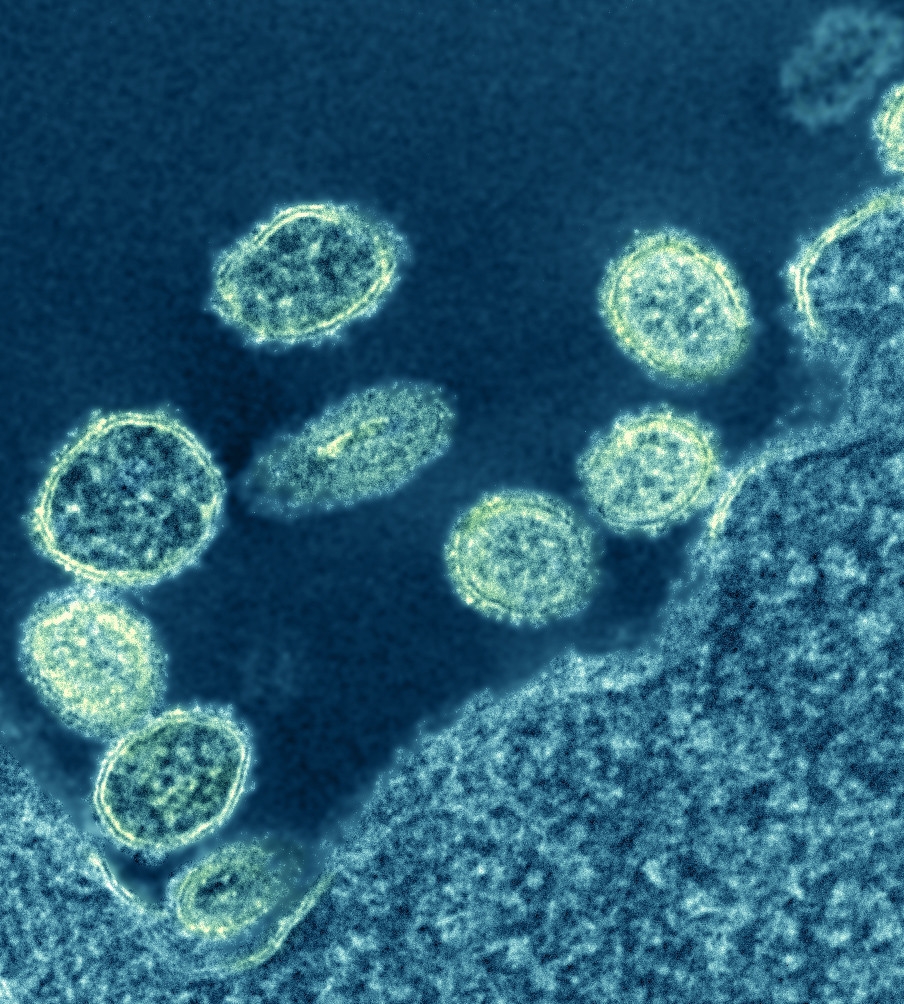
Despite its nickname, the pandemic almost certainly did not originate in Spain. Epidemiologists (experts in outbreaks of diseases) do not know for sure where it first emerged: Kansas, northern France or China are all cited as possibilities. It is thought the virus may have evolved in birds and jumped from to humans—possibly via another mammal. From modern studies of specimens of the Spanish flu virus (taken from American soldiers who had died of flu at US army camps in 1918), scientists have found that most of the virus's genes came originally from a flu virus found in birds.

It is known that there was an outbreak of a flu-like illness at an army camp in Kansas that supplied soldiers to the American Expeditionary Force in March 1918. This was followed by similar outbreaks on troop carriers that ferried American troops across the Atlantic Ocean to France to fight in World War I. However, there is no way of telling whether these outbreaks were caused by the Spanish flu virus, or simply ordinary seasonal flu.

Another theory is that the pandemic began at Étaples, a British military and hospital camp in northern France, close to the Western Front. In the winter of 1917, several hundred British soldiers went down with flu-like symptoms. It was an ideal site for the spreading of a respiratory virus (one affecting breathing). Some 100,000 soldiers, victims of gas attacks, passed through the camp every day. There were also many pigs close by, and poultry was regularly brought in for food supplies from surrounding villages. Perhaps a virus harboured in the birds mutated, then migrated to the pigs and from them to the soldiers.
A third theory is that Spanish flu originated in China. China was a common area for transmission of diseases from animals to humans because of dense living conditions in its cities at the time. It was, curiously, one of the regions of the world where there were relatively few deaths caused by the 1918 flu pandemic. Some scientists think this may because of immunity amongst the Chinese population gained from previous exposure. From China, the flu virus could have spread to the US and then to Europe's World War I battlefields.


Rapid spread
Spanish flu broke out in a world still at war. Wherever it originated, it is likely to have spread amongst the men in the trenches and crowded field hospitals just behind the Western Front. It may be that the viral infection was no more dangerous than previous types of flu, but that a combination of malnourishment, overcrowding and poor hygiene worsened the effects of infection.
When a person infected with a virus sneezes or coughs, more than half a million virus particles can spread to those nearby. The close quarters and massive troop movements of World War I probably both increased transmission from one person to another and led to its rapid mutation.
As the deadly second wave of the pandemic took hold in August 1918, the flu quickly spread from the Western Front. This was because many soliders who were suffering from the disease were, instead of being made to stay put, sent away on crowded trains. They went first to packed field hospitals behind the lines, and from there back to their home countries, taking the deadly mutated strain of the virus with them.
It was an era before vaccines were used and before national health services had been set up. In any case, vital public resources were diverted to the war effort. Authorities had no plan of action in place to contain the disease and public information campaigns were lacking. As a result, the virus spread unhindered among populations far from the fighting. The Spanish flu was particularly lethal for people with poor nutrition and sanitation, including many living in rundown city neighbourhoods.
Many flu deaths are caused by secondary bacterial infections that occur in a weakened body, leading to pneumonia. Antibiotics like penicillin, discovered in 1928, allow doctors today to eliminate that risk, but in 1918 there was no such treatment.

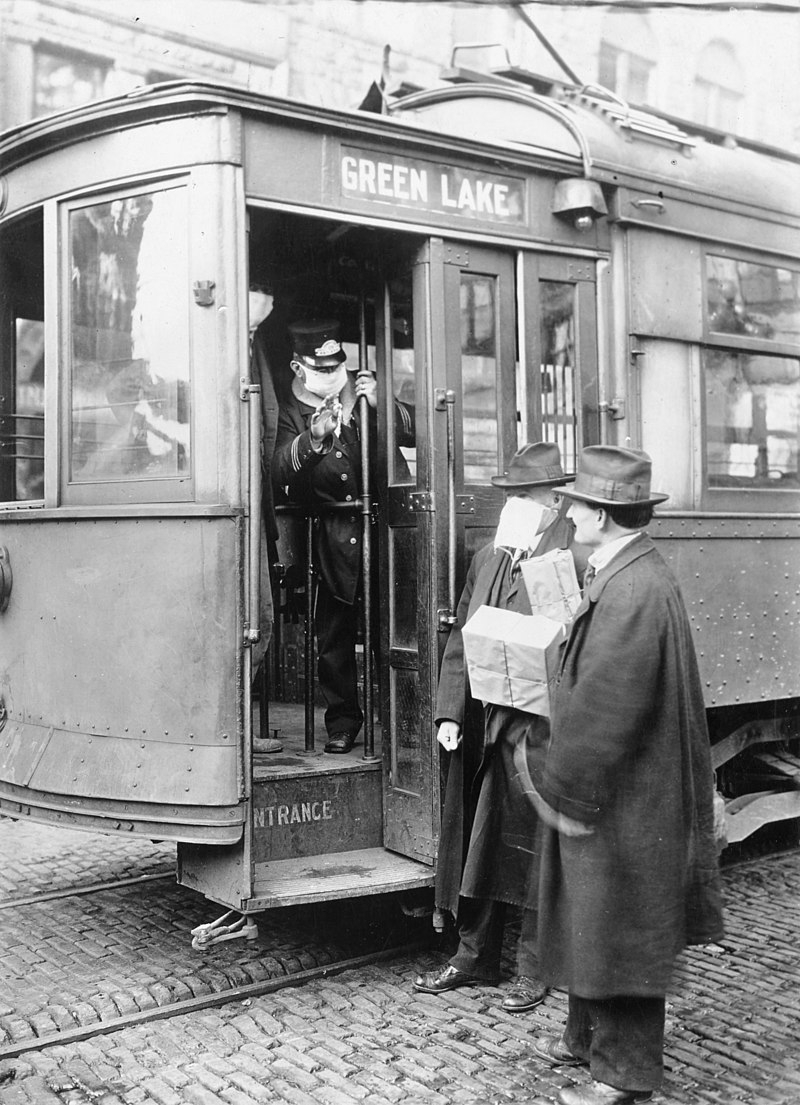
With air travel in its infancy when Spanish flu struck, the virus's passage across the world was assisted instead by people travelling by train or passenger steamer. Although the journey took days or weeks—rather than a few hours by today's jet airliners—there were few places on Earth the virus failed to reach. Some remote communities, however, were successful at keeping the flu at bay, often by using basic techniques that are being revived in in 2020–21 to keep Covid-19 at bay: closing schools, banning public gatherings and preventing people from moving around.
But many countries were slow to prevent people entering and leaving their ports, and paid the price. Nearly 1% of the population of New Zealand died within two months in late 1918.
The forgotten pandemic
After the lethal second wave struck in late 1918, the number of new cases dropped dramatically, possibly because the virus mutated again to a less lethal strain (just like other life-forms, viruses evolve to find improved ways to spread their genes—something that will not happen if their hosts die too soon). Spanish flu soon began to fade from public awareness. Until the outbreak of the Covid-19 pandemic in 2020 tiggered memories of the event, it was known as the "forgotten pandemic"—possibly because the outbreak coincided with World War I and its aftermath. The number of deaths of young adults in the fighting may have overshadowed those caused by flu—even though, worldwide, deaths from the pandemic were much higher than the casualties of war.

Consequences
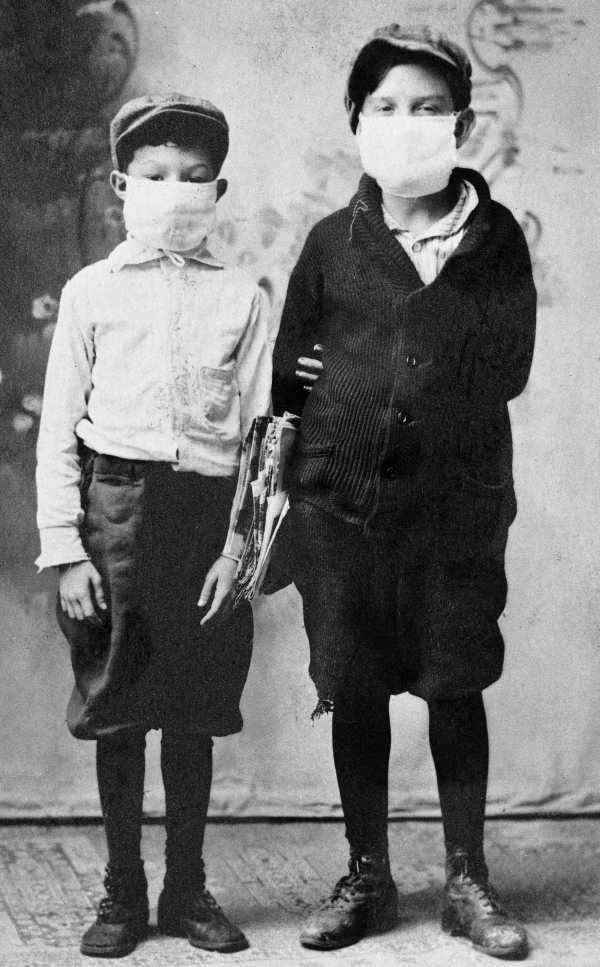

The human cost of the 1918 pandemic was so great that many doctors describe it as the “greatest medical holocaust in history”. One of the reasons Spanish flu was so devastating was because many communities lost their breadwinners—people aged between 20 and 40—leaving large numbers of elderly people and orphans to fend for themselves. At this time, there was little or no welfare safety net to support bereaved families.
The pandemic showed that, although the poor and immigrants died in higher numbers, nobody was immune: infectious diseases were a problem that had to be tackled across the whole population. As a result, many countries created ministries of health in their countries and adopted a policy of healthcare for all, free at the point of delivery. In Britain these efforts came to fruition in 1948 with the birth of the National Health Service.
Other flu pandemics, no less contagious than the deadly 1918 strain, broke out later in the 20th century. The worst was the 1957 outbreak of so-called "Asian flu", the "Hong Kong flu" of 1968 and swine flu in 2009. Yet while the death tolls for the first two—2 million or so—were calamitous, they were barely comparable to those of Spanish flu (up to 100 million). This was probably thanks to public health measures taken as well as improved sanitation and hygiene, associated with general reductions in poverty over the last 100 years.
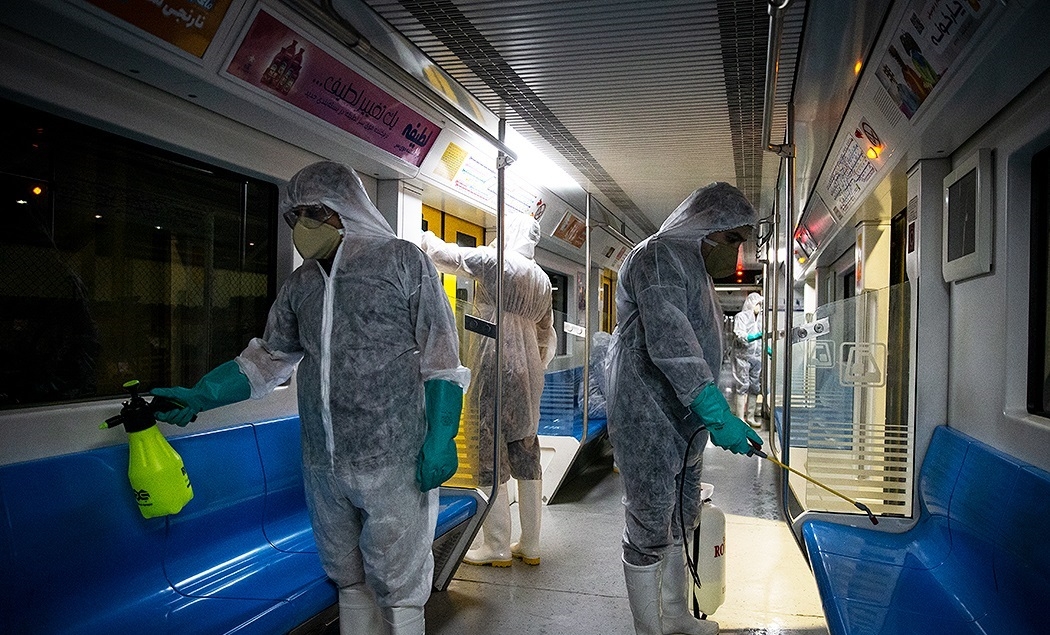
The public health measures enacted across the world in 2020–21 in an effort to contain the Covid-19 pandemic are one of the Spanish flu’s most important legacies.
Consultant: Philip Parker
pics


Without in any way limiting Q-files Ltd’s exclusive rights under copyright, any use of this publication to “train” generative artificial intelligence (AI) technologies to generate text is expressly prohibited. Q-files Ltd reserves all rights to license use of this work for generative AI training and development of machine learning language models.