
British history

CITE
We have made every effort to follow citation style rules, but there may be some minor differences. If in doubt, please refer to the appropriate citation style manual.
Britain in World War II. (2026). In Q-files Encyclopedia, History, British history. Retrieved from
https://www.q-files.com/history/british-history/britain-in-world-war-ii
"Britain in World War II." History, British history, Q-files Encyclopedia, 30 Mar. 2026.
https://www.q-files.com/history/british-history/britain-in-world-war-ii.
Accessed 21 Sep. 2026.
Britain in World War II 2026. History, British history. Retrieved 21 September 2026, from
https://www.q-files.com/history/british-history/britain-in-world-war-ii
History, British history, s.v. "Britain in World War II," accessed September 21, 2026.
https://www.q-files.com/history/british-history/britain-in-world-war-ii


Britain in World War II
When Nazi Germany under the leadership of Adolf Hitler invaded Poland in 1939, Britain went to war with Germany for the second time in 25 years. People prepared bomb shelters in their houses and gardens. Many children were evacuated from the cities and sent to the countryside for safety. Food, clothes and petrol were rationed. In 1940 British troops withdrew from mainland Europe and the country came under attack from the Luftwaffe, the German air force, during the Battle of Britain. A German bombing campaign, known as the Blitz, then flattened many cities. Under Winston Churchill’s leadership, Britain with its Empire stood alone against Hitler until they were joined by two powerful allies, the Soviet Union and the USA in 1941. The Allies defeated German forces in North Africa in 1943. In June 1944, the Allies carried out the successful D-Day landings in Normandy. The forces of Britain and its Empire drove the Japanese back in Burma later that year. Germany surrendered in May 1945, the Japanese in August, ending World War II.


Britain goes to war
Britain declared war on Germany on 3rd September 1939, two days after Germany invaded Poland. France also declared war on Germany later the same day. Britain and France had given guarantees to Poland that they would declare war if Polish independence came under threat. Britain's declaration was announced in a radio broadcast by the prime minister, Neville Chamberlain:
"This morning the British ambassador in Berlin handed the German government a final note stating that unless we heard from them by 11 o'clock that they were prepared at once to withdraw their troops from Poland, a state of war would exist between us. I have to tell you now that no such undertaking has been received, and that consequently this country is at war with Germany."
Minutes after Chamberlain spoke, an air raid siren sounded in London, causing Londoners to fear the much anticipated air attack by German bombers had begun. Thankfully, it was a false alarm.
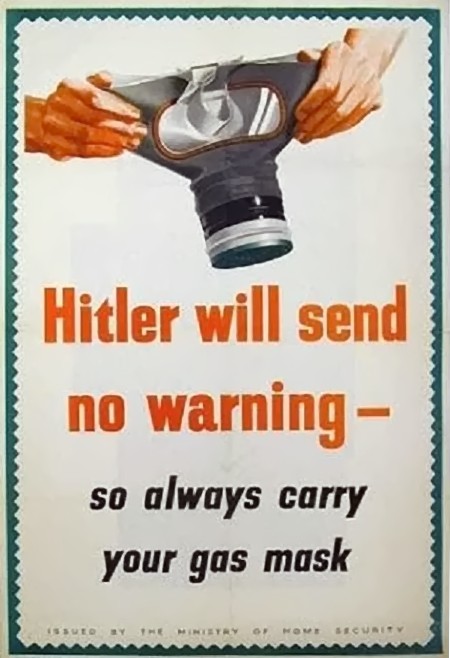
Everyone knew that this war would be different from World War I. There was none of the flag-waving patriotism of 1914. Watching newsreels of the Spanish Civil War, which raged between July 1936 and April 1939, people were shocked by the death and destruction the Luftwaffe had wreaked in places like Guernica. The British government launched a campaign to show people what they needed to do to be safe.
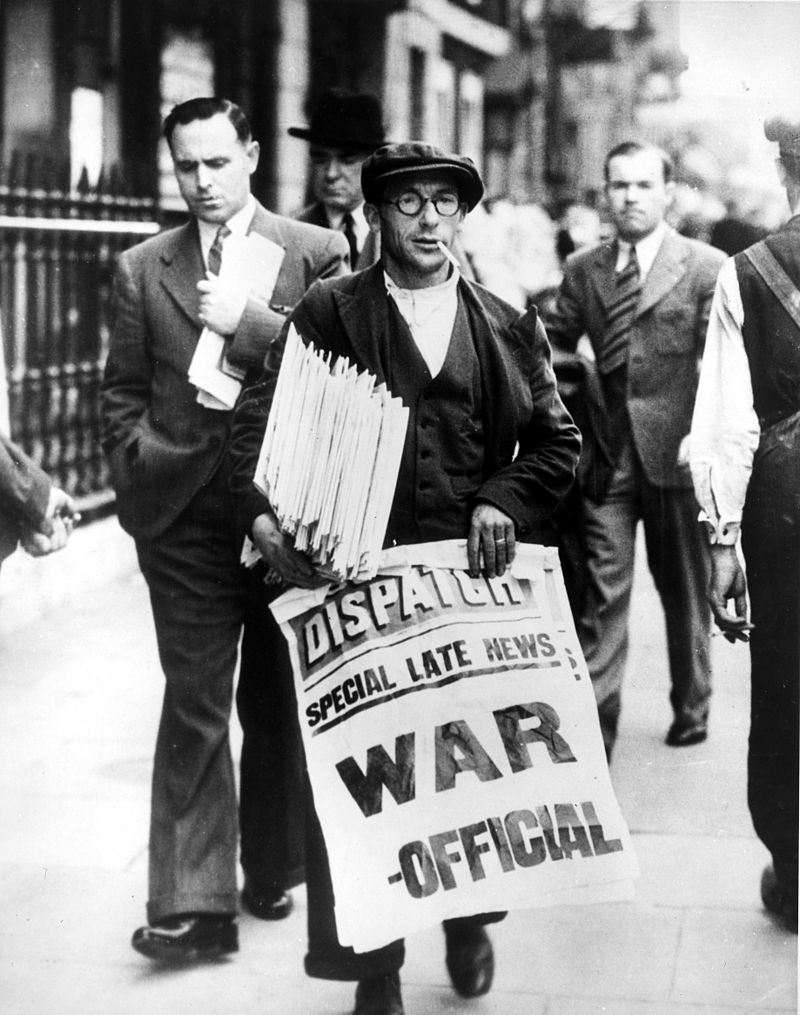
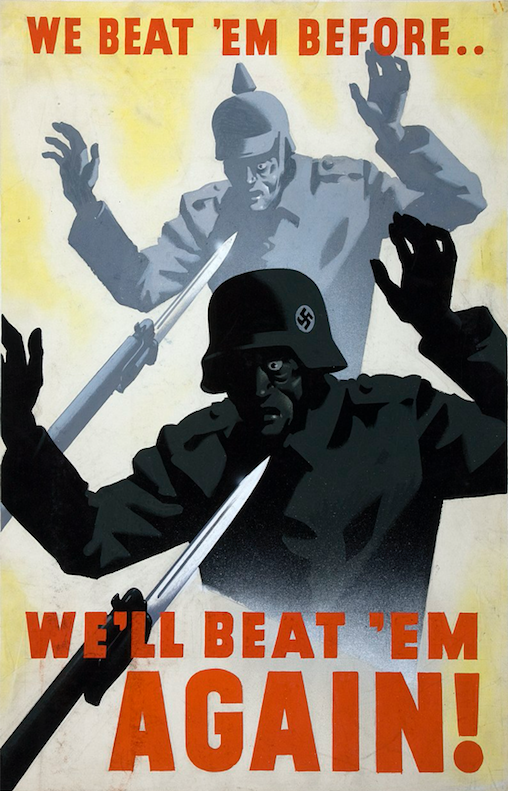
By the National Service Act, all men aged 18 to 41 years who were living in Britain were conscripted into (made to join) the armed forces. Exceptions were allowed for medical reasons or for those engaged in vital industries and "reserved" occupations, such as lighthouse keepers or police officers.
Conscientious objectors (people who refused to perform military service) were required to justify their case to a tribunal. Some were ordered to perform civilian duties, such as farm or hospital work. By 1942, all male British subjects aged between 18 and 51 and all females 20 to 30 were liable to be called up.
The Royal Navy began a naval blockade of Germany on 4th September 1939, but little practical assistance was given to Poland, which was soon overrun by German forces. Meanwhile German warships and U-boats (submarines) started to attack British merchant shipping.
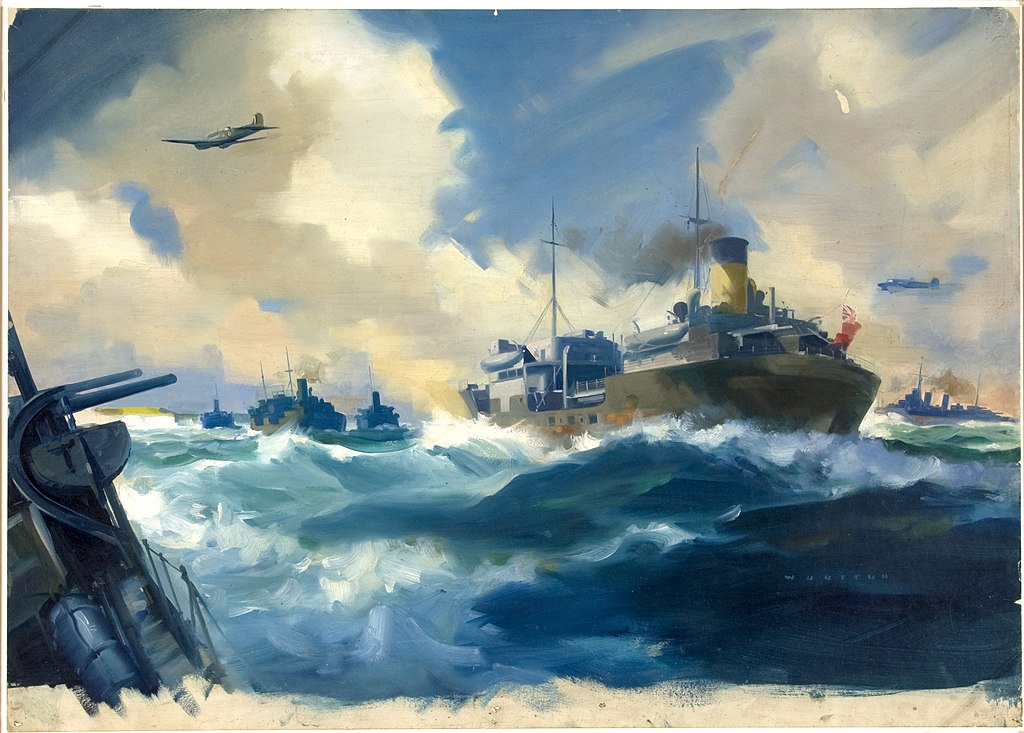
The Royal Navy quickly introduced a convoy system for the protection of cargo ships by warships and the Battle of the Atlantic was underway. The U-boats in particular remained a threat to Britain's vital supplies transported by sea until the Allies finally got the upper hand in the autumn of 1943. More than 30,000 sailors from the British Merchant Navy lost their lives between 1939 and 1945. Over 2400 British ships were sunk.
Evacuation
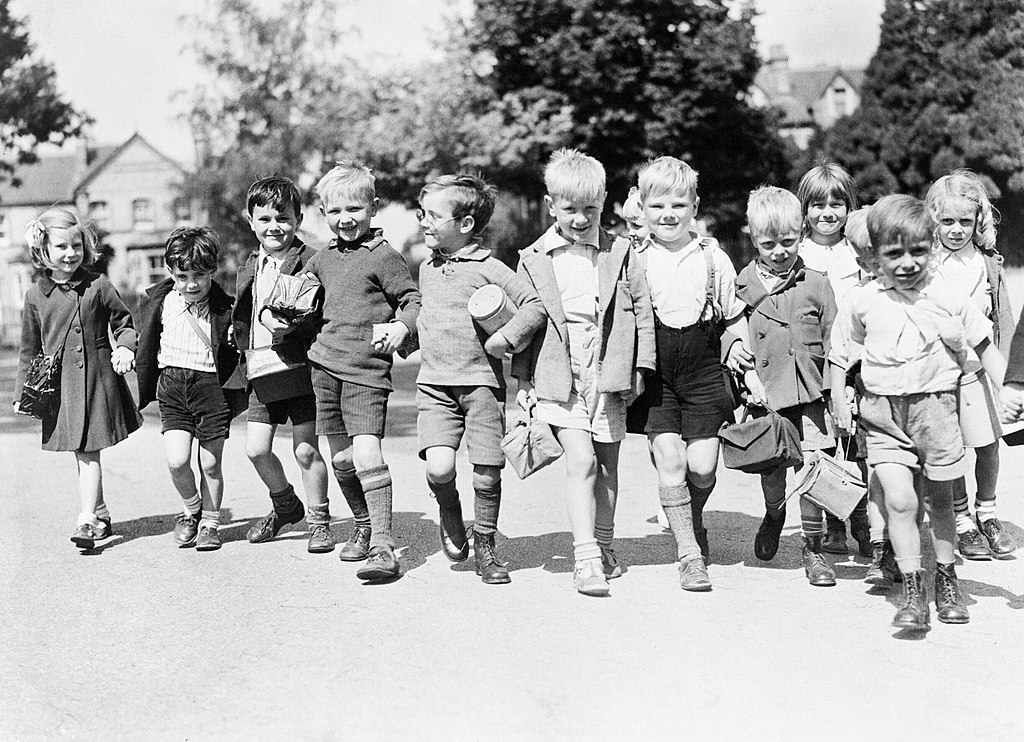
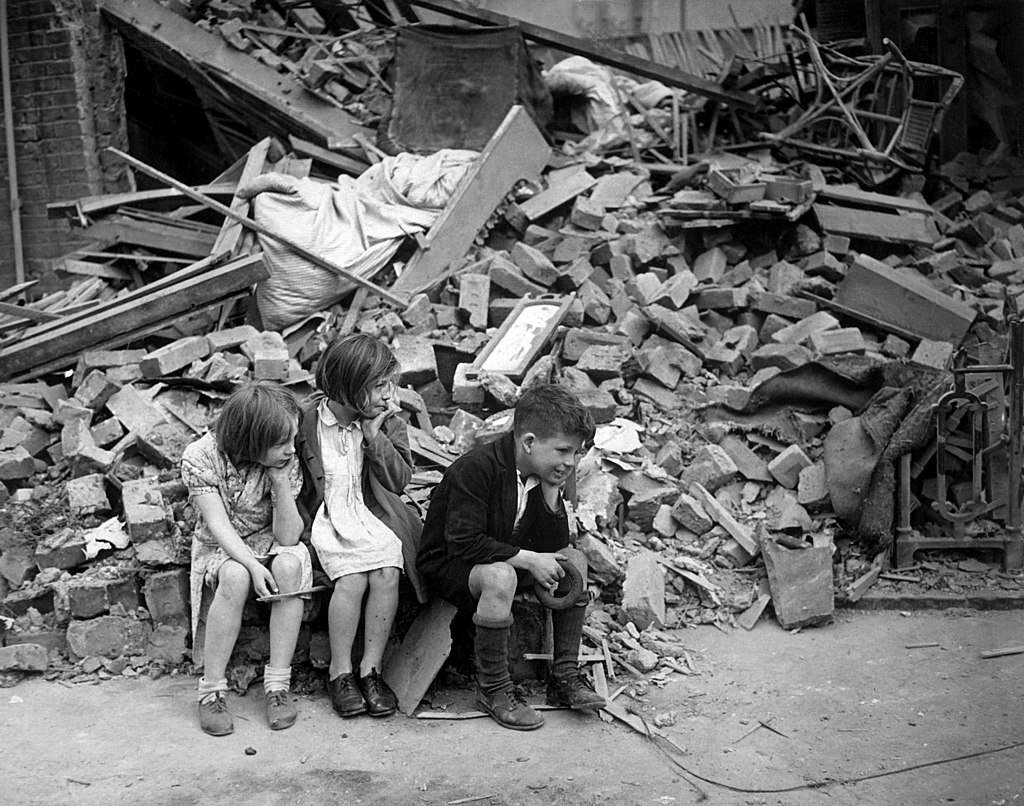
As the threat of war grew in the late 1930s, there had been fears that the Luftwaffe would carry out massive bombing of major British cities. So the government laid plans to evacuate city children to smaller towns and rural areas where they would be safer. Operation Pied Piper began on 1st September 1939, just before war broke out. About 800,000 children (not accompanied by their parents), 7000 disabled people and 13,000 pregnant women were evacuated—half of them from London—in just three days. Some 103,000 teachers travelled with their pupils.
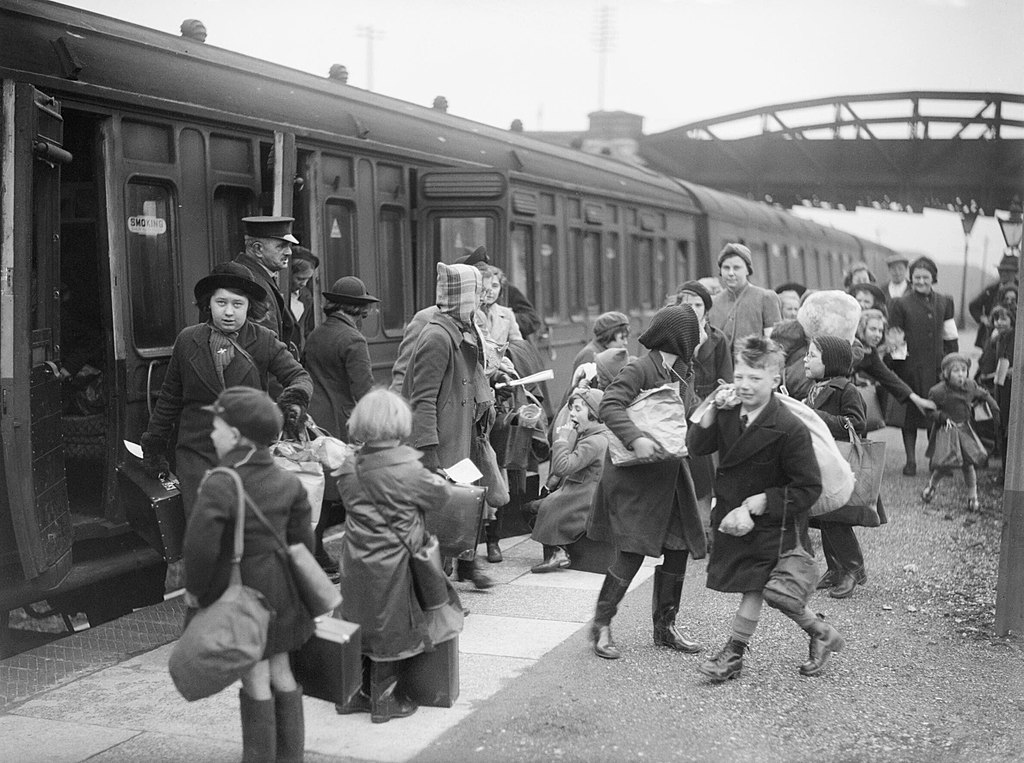
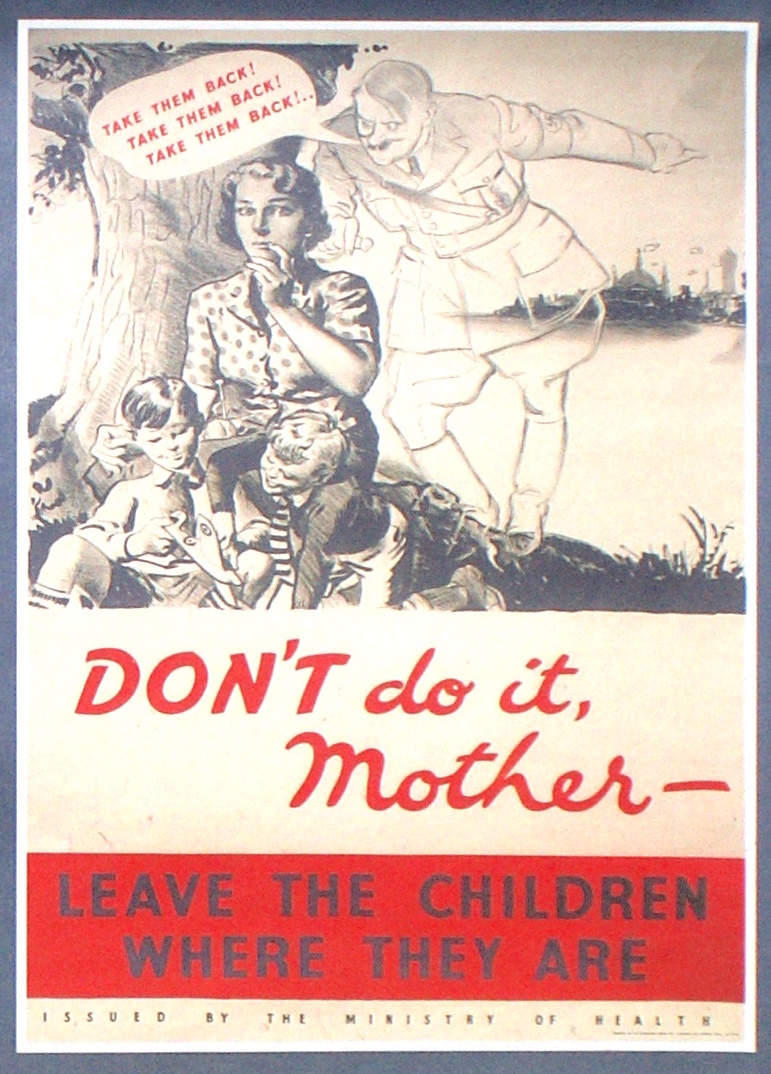
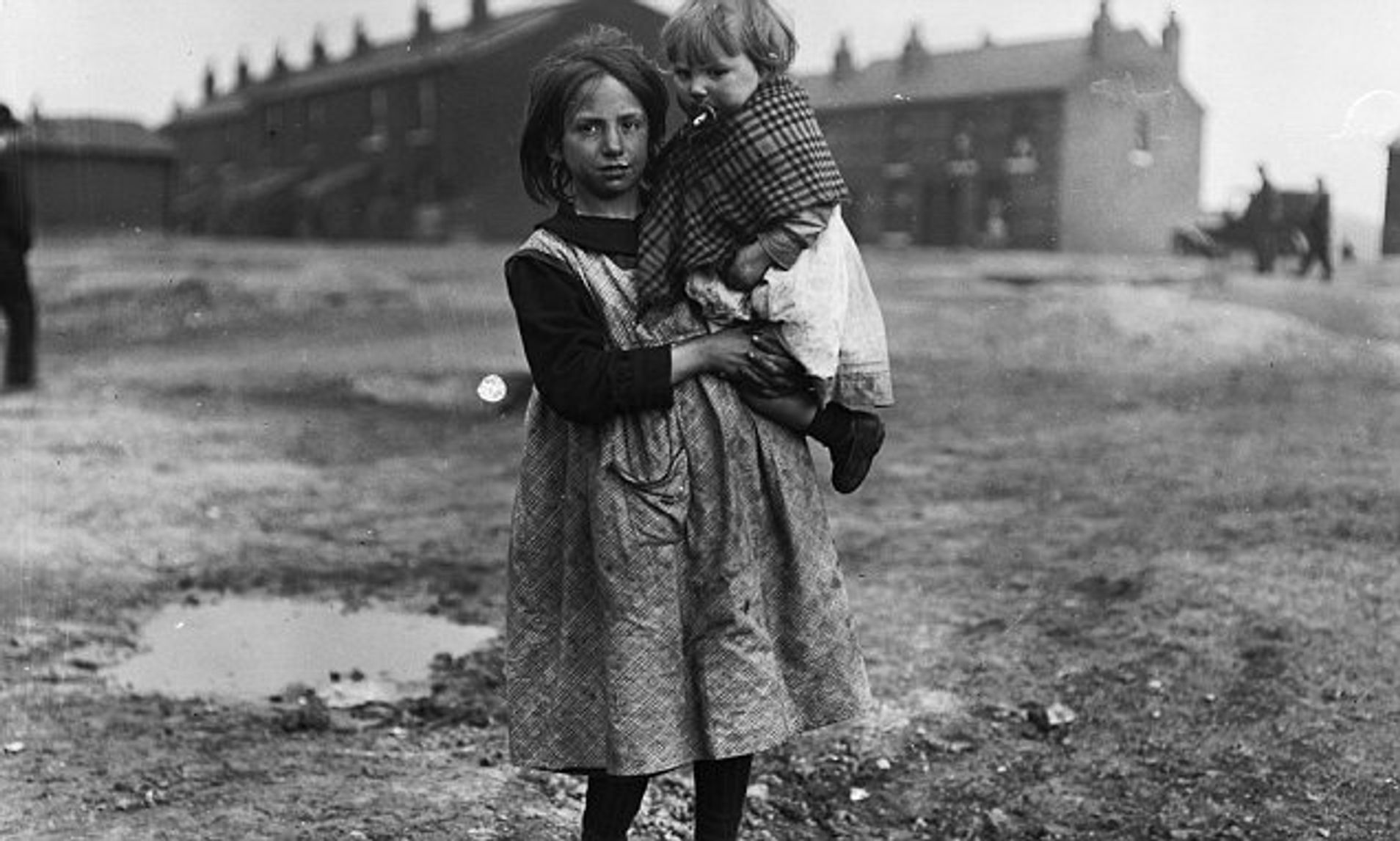
The evacuees were received by families who volunteered to host them. While the system largely worked well, some children struggled to cope with life in unfamiliar surroundings away from their own families. Some middle or upper class hosts were shocked by the levels of poverty that the city children had been living in. Many had inadequate clothing, suffered illnesses such as polio and rickets, and were poorly educated.
During the first months of the war (the Phoney War, see below), no bombing took place and around half of all evacuees returned home after just a few months away. With the outbreak of the Battle of Britain in July 1940, there was a second major wave of evacuation from the cities. This time many evacuees stayed away from their homes until the end of the war.
Kindertransport
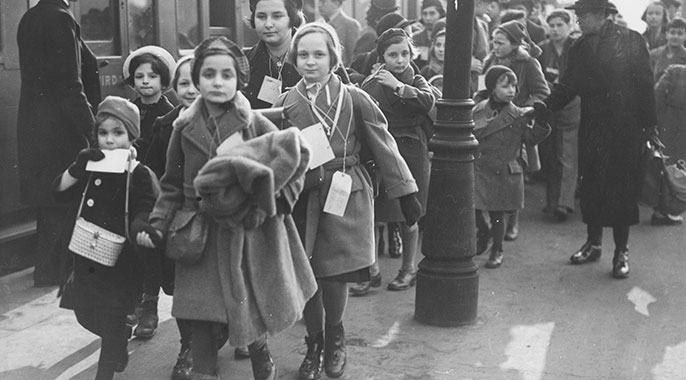
Before the war began, attacks on Jews in Nazi Germany—such as the devastation of Kristallnacht on the night of 9/10th November 1938—were widely reported. The Kindertransport (German for "children's transport") was an organized rescue of Jewish children from the danger they faced. A party of 196 children arrived in Harwich on 2nd December 1938, the first of thousands to make the journey over the next nine months. They were placed in British foster homes, hostels, schools and even on farms. Travelling without their parents, in many cases they were the only members of their families who survived the Holocaust. The start of World War II brought the operation to an end, by which time about 10,000 kindertransport children had been brought to Britain.

Phoney War
For some months after the declaration of war by Britain and France against Nazi Germany on 3rd September 1939, little actual fighting took place in Europe. The opening phase of the war, known for this reason as the "Phoney War", lasted until April 1940, when Germany invaded Denmark and Norway. Britain sent troops to support Norway but failed to prevent the German occupation. This military failure was the subject of a debate in the House of Commons, during which Prime Minister Neville Chamberlain was strongly criticized. Unable to lead a government that would support him, he was forced to resign. He was succeeded by Winston Churchill in 10th May 1940. Churchill formed a National Government, a coalition that included members of the Conservative, Labour and Liberal parties.
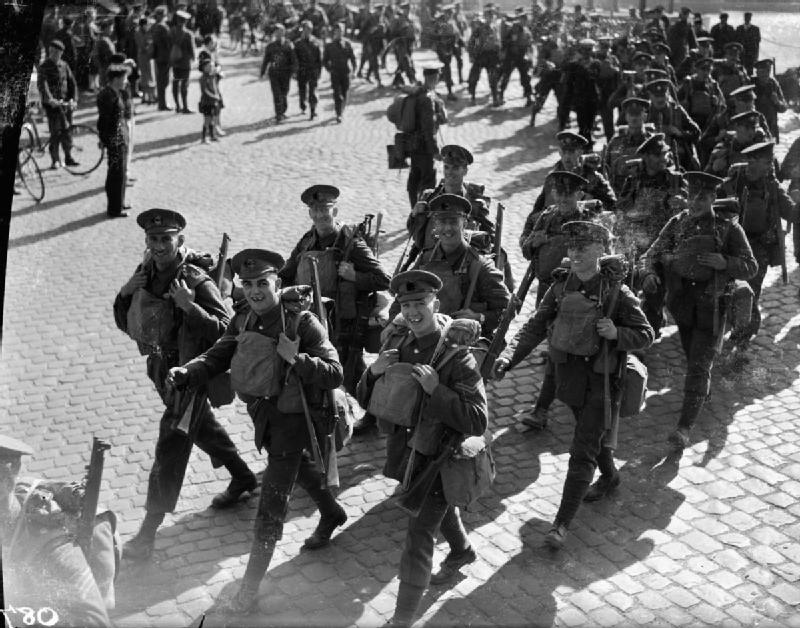
Dunkirk
Earlier that same day, 10th May, Germany had launched a Blitzkrieg, or “lightning war”, against Netherlands, Belgium and France. The British Expeditionary Force (BEF) had been sent to help defend France from the German onslaught. But the fast-moving German armoured tanks (panzers) combined with the superiority of the Luftwaffe, swept aside any resistance. Three panzer corps attacked through the Ardennes in southern Belgium and drove northwest towards the English Channel. By 21st May, German forces had trapped the BEF, along with Belgian and French forces, along the northern coast of France. The BEF had no choice but to make for Dunkirk, the nearest port, and retreat across the Channel. While some French troops fought a delaying action against the Germans and under attack by the Luftwaffe, thousands of British and French troops massed on the beaches of Dunkirk, ready for evacuation.
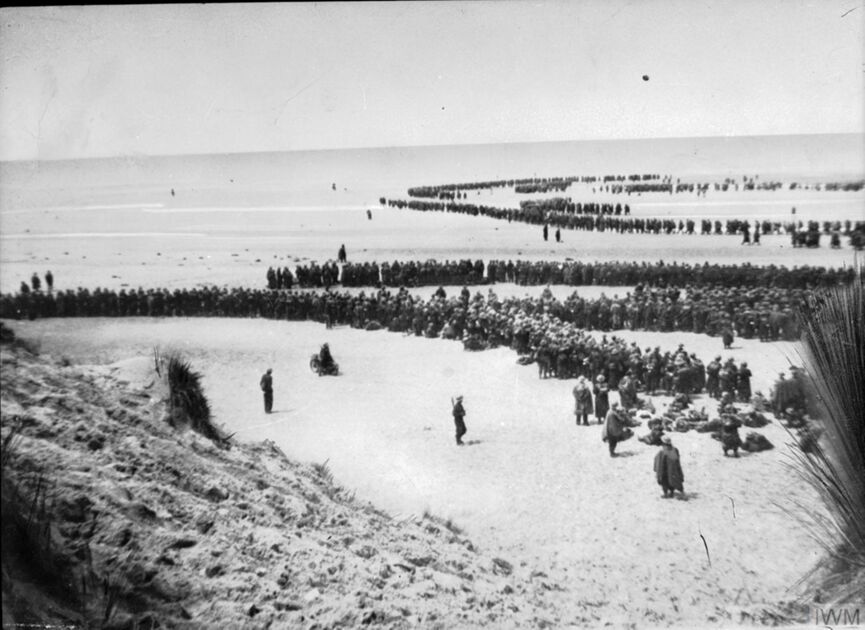
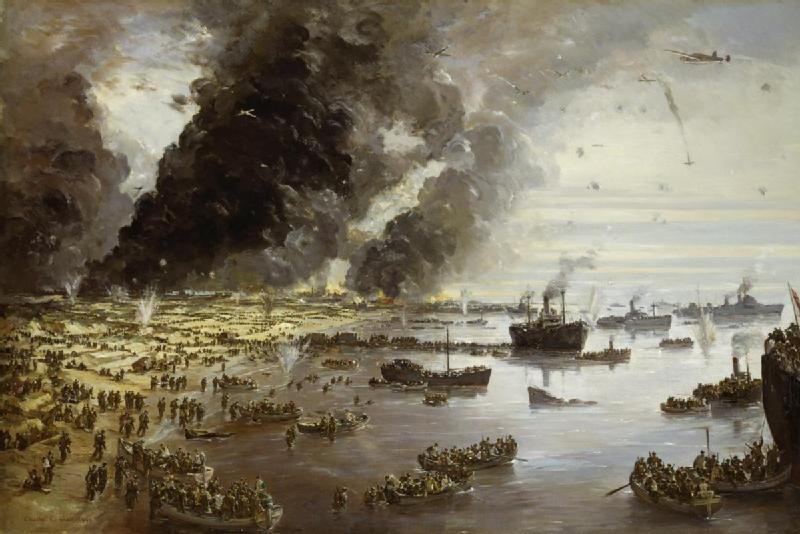
The shallow waters meant that large ships could only pick up soldiers from the East Mole, a sea wall which extended out into deep water. Many were able to embark from there, or wade out to sea. Others were ferried out to the larger ships in what became known as the "Little Ships of Dunkirk"— hundreds of fishing boats, pleasure craft, yachts or lifeboats called into service from southern England. Over 800 vessels of all shapes and sizes helped transport troops across the Channel under the protection of the Royal Air Force (RAF).

Operation Dynamo, the evacuation from Dunkirk, saw the rescue of more than 338,000 British and French soldiers between 26th May and 4th June 1940. Some 68,000 soldiers were left behind in France, either dead, wounded, taken prisoner or stranded further south. The BEF had to abandon nearly all of its tanks, vehicles and equipment, leading Churchill to describe the evacuation as "a colossal military disaster".
Nevertheless, the "Miracle of Dunkirk" was a boost for British morale. The "Dunkirk spirit", which helped Britain to fight on in the summer of 1940, was born. Churchill made a speech to the House of Commons on 4th June, underscoring the defiance of the British people:
"We shall fight on the beaches, we shall fight on the landing grounds, we shall fight in the fields and in the streets, we shall fight in the hills; we shall never surrender."
Winston Churchill
Winston Churchill (1874–1965), who had served in government during World War I, was First Lord of the Admiralty at the outbreak of World War II. Before the war, he had called for rearmament to counter the growing threat of Nazi Germany. As prime minister, Churchill’s qualities came to the fore. He knew the importance of strong leadership to unite the nation against a common enemy. He had great energy, often working late into the night. He took on the role of Minister of Defence (as well as being PM), and his government introduced sweeping emergency powers, placing all "persons, their services and their property at the disposal of the Crown" in the effort to defeat Nazi Germany.
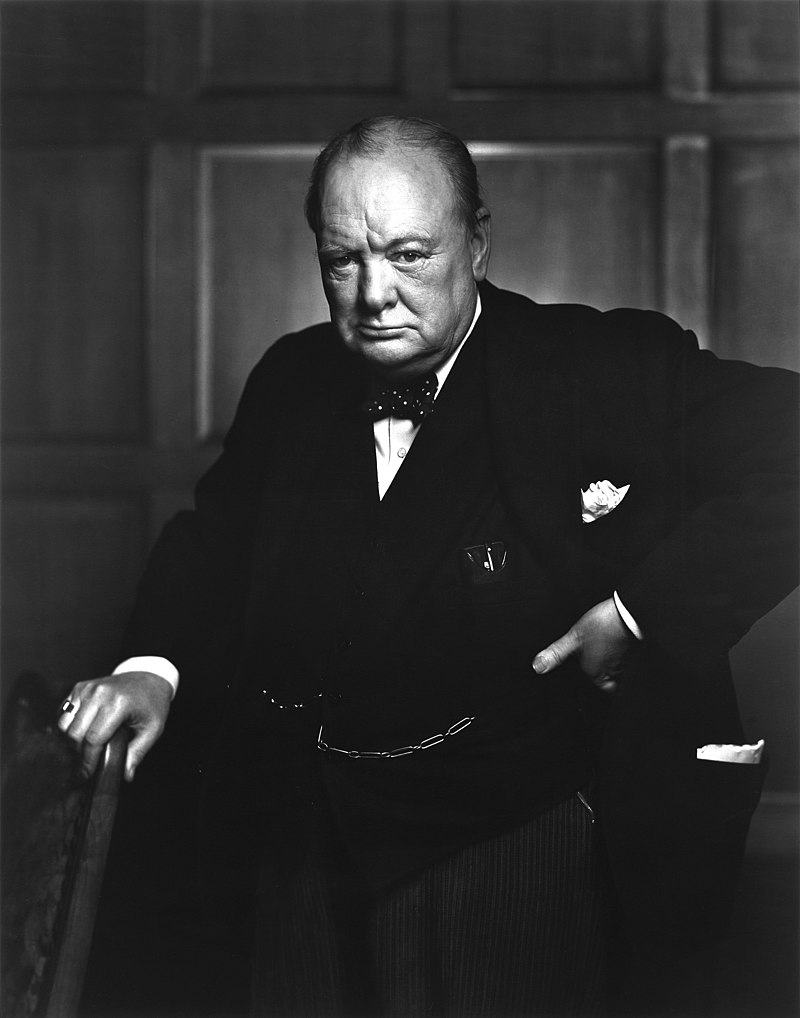
Churchill used the power of his oratory (making speeches) to great effect from his very first speech as prime minister on 13th May 1940:
"I have nothing to offer but blood, toil, tears and sweat... You ask, what is our aim? I can answer in one word: It is victory, victory at all costs, victory in spite of all terror… for without victory, there is no survival."
Home Front
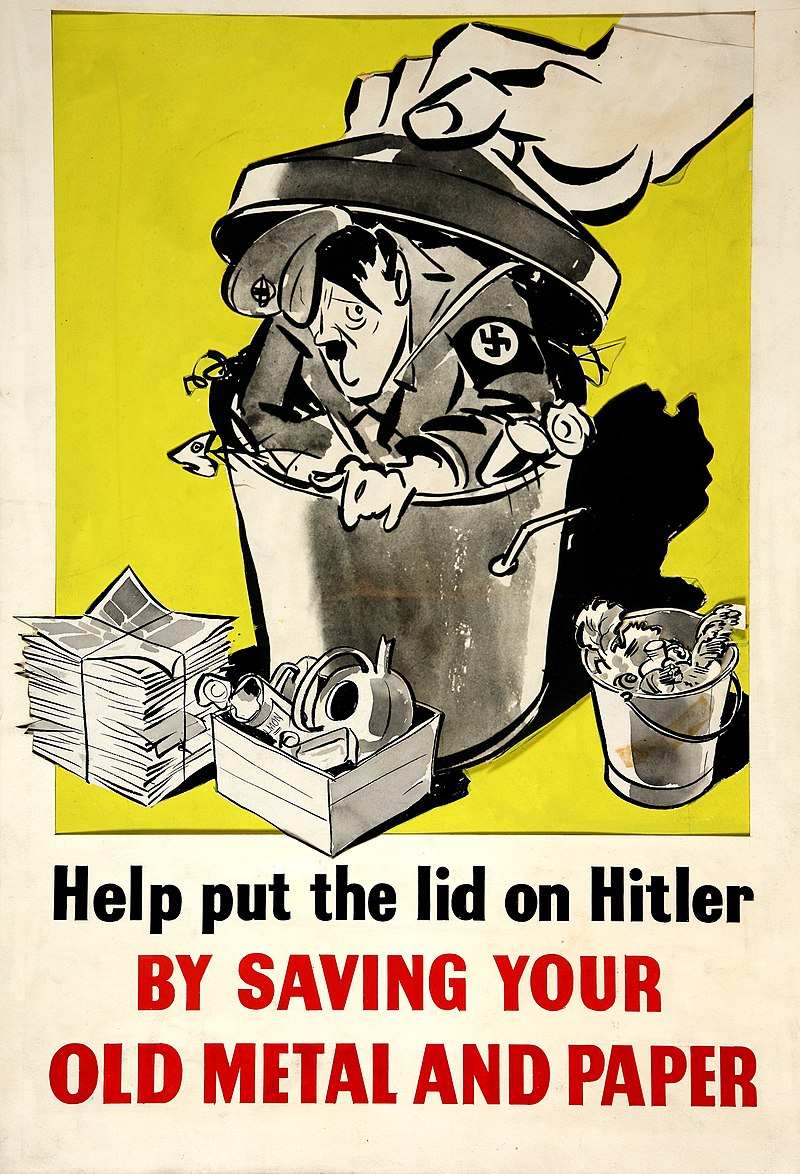
Churchill believed that the war could only be won through the involvement of Britain's entire population, not just its armed forces. The Home Front was as important as any battle. Getting people to join the "war effort"—anything from planting vegetables to building fighter planes—was like mobilizing, or readying troops, for war.
Britain was highly successful in mobilizing the Home Front: the production of munitions (weapons), aircraft and food rose dramatically. Women supported the war effort, both by joining the workforce in huge nuimbers and making the rationing of consumer goods a success. Many civilians—people not in the armed forces—also came forward to volunteer their services.
Keeping up morale was essential to this success. The happier, more hopeful of eventual triumph people were, the more determined they would be to get through setbacks. Throughout the war, the Ministry of Information tried to boost public morale through propaganda campaigns, persuading people to think things were going better than they actually were in order to keep spirits up. This included preventing the media from publishing anything that might endanger morale, such as photographs of bomb-damaged houses during the Blitz (see below). The Ministry also censored information about such things as planned military operations or details of troop movements.

Rationing
Before the war, Britain imported much of its food—meat, cheese, sugar, fruit and cereals—from the Empire and elsewhere. From the earliest days of the war, merchant ships transporting these and other goods, such as clothing and petrol, to British ports came under attack from German warships and U-boat submarines. This was a deliberate strategy of Nazi Germany both to cripple British industry and starve people into submission.
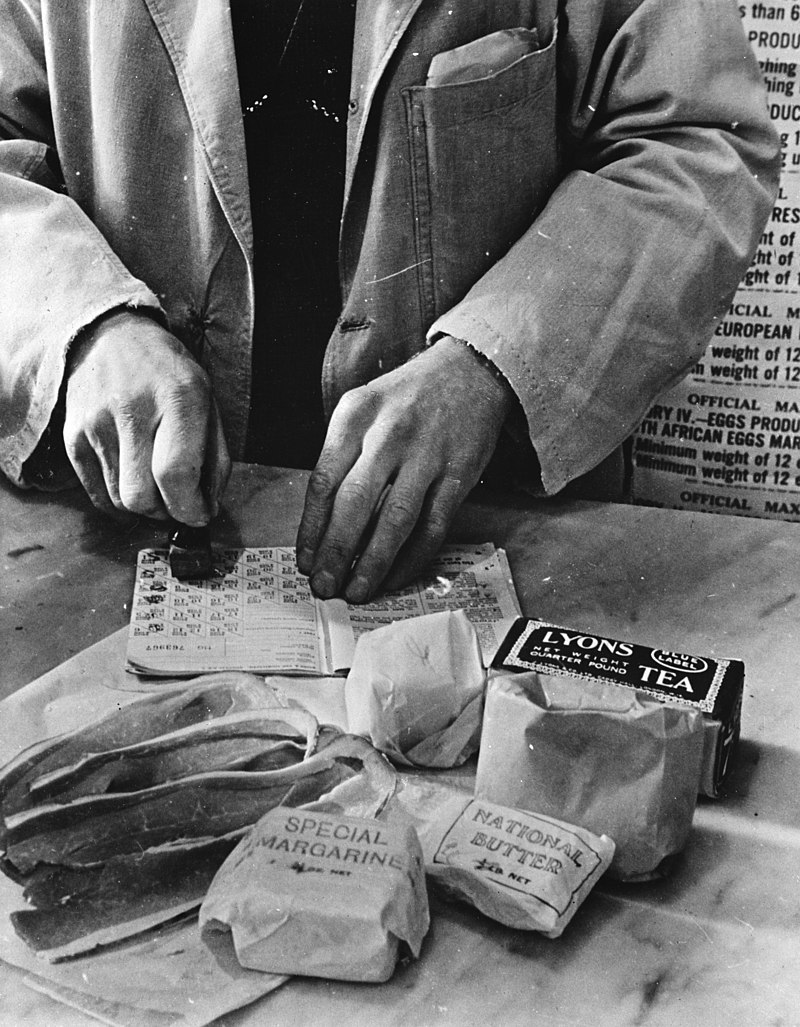
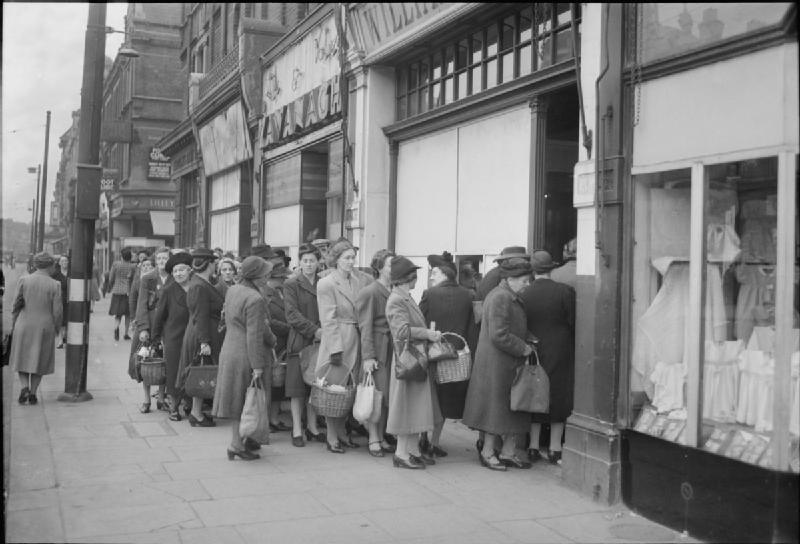
To deal with these shortages and ensure the nation did not go hungry, the Ministry of Food began a system of rationing in January 1940. Without rationing, prices of food would have soared and poorer people would have struggled to afford anything to eat. Rationing ensured there was enough food for all. Books of coupons were given out to everyone—children as well as adults. These had to be tendered before rationed goods such as sugar, meat and cheese could be purchased.
Fruit and vegetables were never rationed but were often in short supply, especially those shipped from overseas in normal times. Adapting to a limited diet, often including unfamiliar foods such as dried eggs, Spam (canned pork) and Snoek (canned mackerel), was not easy for many.
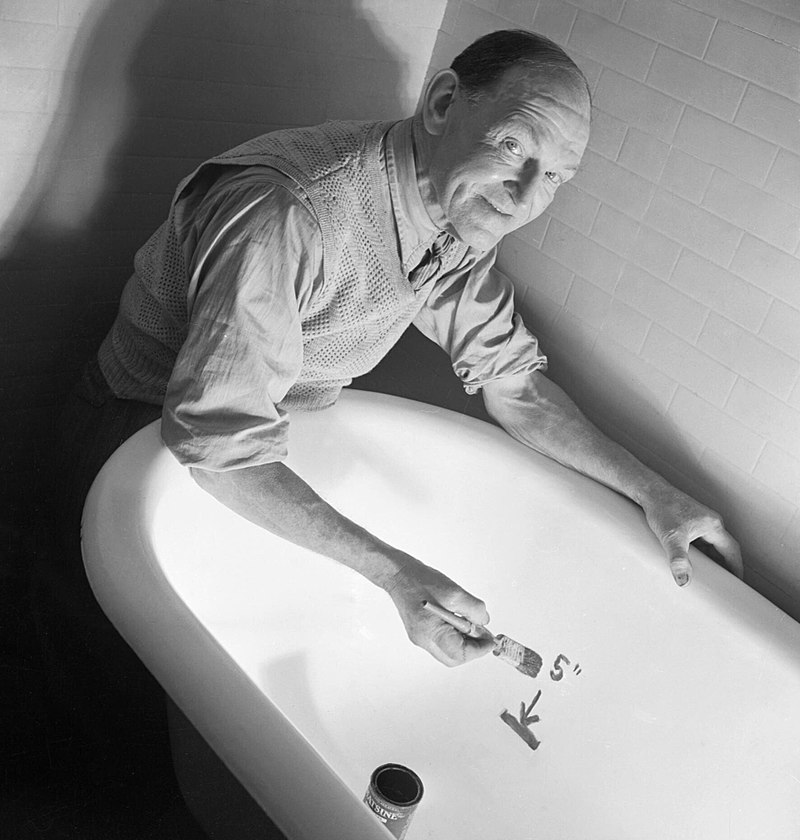
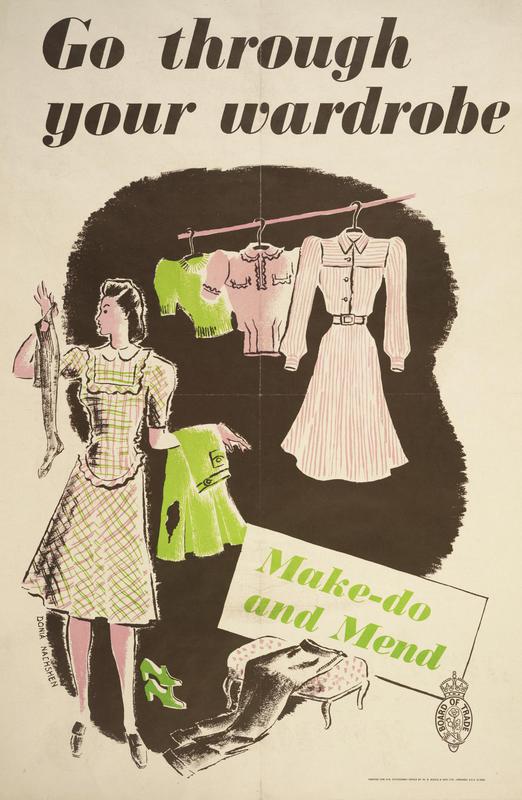
Other items such as soap and clothing were also rationed (many British factories producing consumer goods were turned over to producing supplies for the troops instead). Everyone was encouraged to "make do and mend" in order to make their clothes last longer.
Rationing carried on after the war was over because supplies were still low, but gradually items came off the rationing list. Rationing finally ended in 1954 when limits on the purchase of meat were lifted. As a system, rationing helped to change attitudes to the role of government in the nation's health and wellbeing. Because everyone was restricted to buying only a certain amount, the benefits of co-operation became clear.
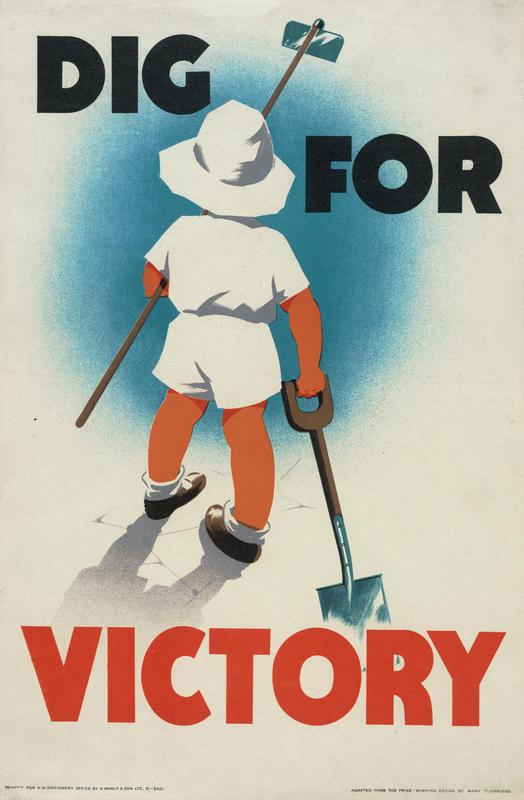
Dig for Victory
The government’s "Dig for Victory" campaign encouraged people to grow their own food to supplement their rations. So wherever space permitted—lawns, golf courses, even public parks—land was turned over to vegetable gardens. Some people started keeping chickens for their eggs. In towns and cities, Victory Gardens were established for growing vegetables, fruit and herbs.
Meanwhile, in the countryside, farmers increased the number of acres under cultivation by 50%. The agricultural labour force was also expanded by a fifth, thanks to the efforts of the Women's Land Army (see below) and also prisoners of war from Italy and Germany.
Home Guard

The Home Guard, originally known as the Local Defence Volunteers, was formed on 14th May 1940 in response to the government's call for "men of all ages who wish to do something for the defence of their country". Not all men could sign up to the regular British Army—some were too old or had jobs that were regarded as to be too important to give up, such as farmers, coalminers and shipbuilders. By November 1940, 1.7 million men had volunteered to join. With so many members of the Home Guard aged over 50 (some had served in the British Army during World War I), they were nicknamed "Dad’s Army".
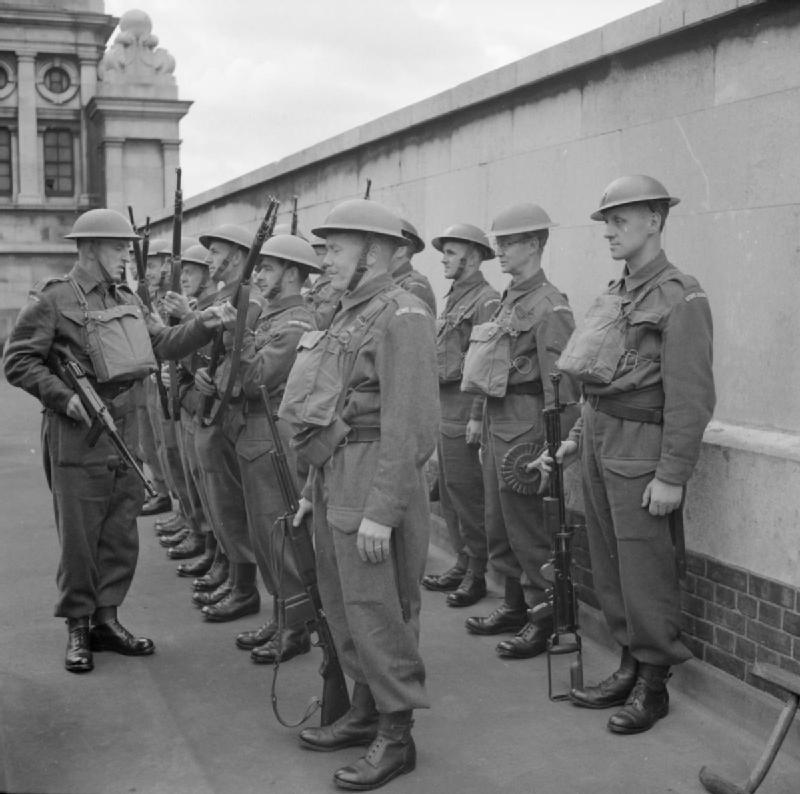
The Home Guard's main job was to defend Britain should there be an enemy attack. They also stood watch over factories, power stations, railway stations and other potential targets, and were on hand to capture enemy pilots whose planes had crash landed. In many cases, after finishing their day at work, volunteers would spend the night carrying out their Home Guard duties before turning up for work the next morning.
The last line of defence against a German invasion, the Home Guard was, in the end, never called upon to perform this task. It was stood down in December 1944 when an invasion was no longer regarded as likely.
Women
Women played a crucial role both on the Home Front throughout the war and, after December 1941, supporting the front line. Throughout the war, women of all ages were forced to cope with the daily grind of rationing, re-using and, where possible, food cultivation. As in World War I, women were also needed to take up work in factories and businesses to fill the places of men who had joined the armed forces. As a result, the manufacture of munitions and aircraft was boosted.
Over the course of the war, more than 80,000 women joined the Women's Land Army, Nicknamed "Land Girls", they endured long hours and tough living conditions working on farms. Here they helped to grow food, tend livestock and maintaining farm buildings—a job that sometimes involved killing rats. In cities, the Women's Voluntary Service provided support to those forced to take refuge in air raid shelters during the Blitz.
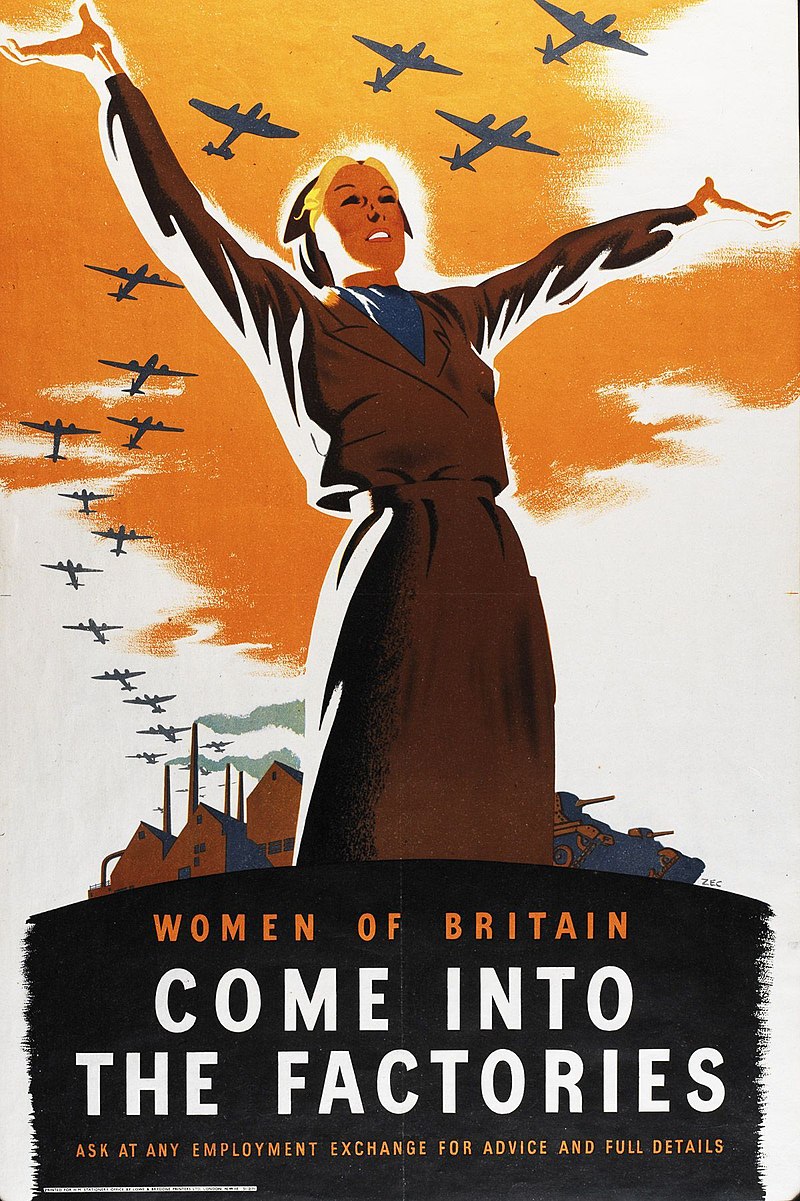
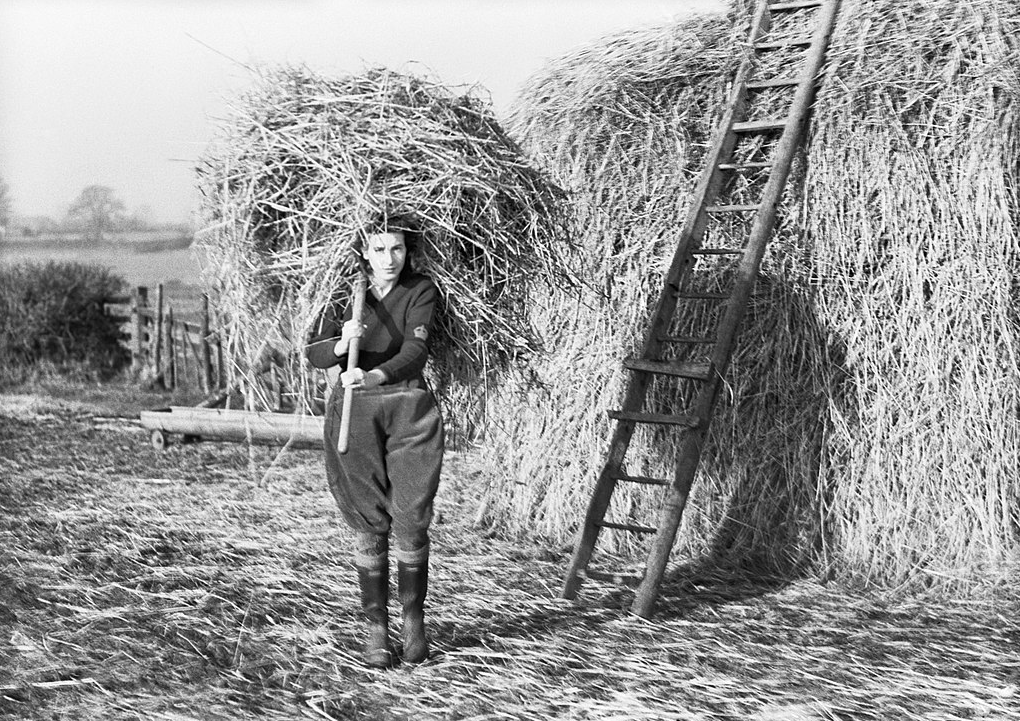

In December 1941, conscription was introduced for all unmarried women between the ages of 20 and 30. Many women worked as mechanics, engineers, munitions workers, air raid wardens and fire engine drivers. Those who joined the Women’s Auxiliary Air Force (WAAF) worked as administrators as well as on repairing and loading planes. Members of the Auxiliary Territorial Service (ATS) provided support for the Army, working as delivery drivers, cooks and anti-aircraft searchlight operators.
Women worked at Bletchley Park to intercept and decipher German communications (see below). During the Battle of Britain and the Blitz it was women who tracked German planes, working on information received from radar stations and the Royal Observer Corps.
Battle of Britain

The Battle of Britain was fought between Britain’s Royal Air Force (RAF) and the Luftwaffe, Nazi Germany’s air force. Lasting from July to October 1940, it was the first battle in history fought solely in the air. Pilots on both sides battled for control of airspace over Britain and the English Channel.
After France been defeated on 22nd June 1940, Hitler planned an invasion of Britain, codenamed Operation Sealion. Since this would involve moving troops across the English Channel where troop ships would be at risk from air attack, Hitler knew he needed to defeat the RAF before such a risky operation could be attempted.

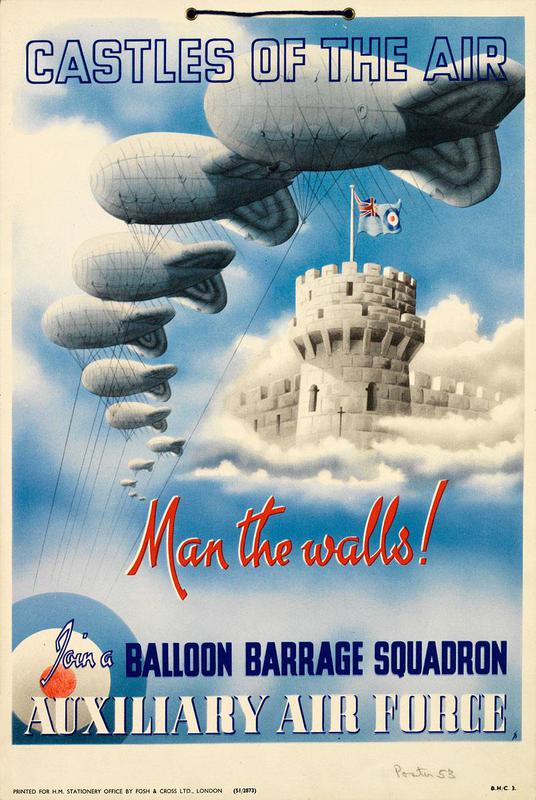
Hitler hoped the power of the Luftwaffe would be too great for Britain to resist. But he under-estimated its military strength, its superior technology and the resolve of the British people—including that of its new PM, Winston Churchill. Days before France’s surrender, Churchill gave a famous speech to the House of Commons:
"The whole fury and might of the enemy must very soon be turned on us. Hitler knows that he will have to break us in this Island or lose the war. If we can stand up to him, all Europe may be free and the life of the world may move forward into broad, sunlit uplands. But if we fail, then the whole world ... will sink into the abyss of a new Dark Age. Let us therefore brace ourselves to our duties, and so bear ourselves that, if the British Empire and its Commonwealth last for a thousand years, men will still say: this was their finest hour.”
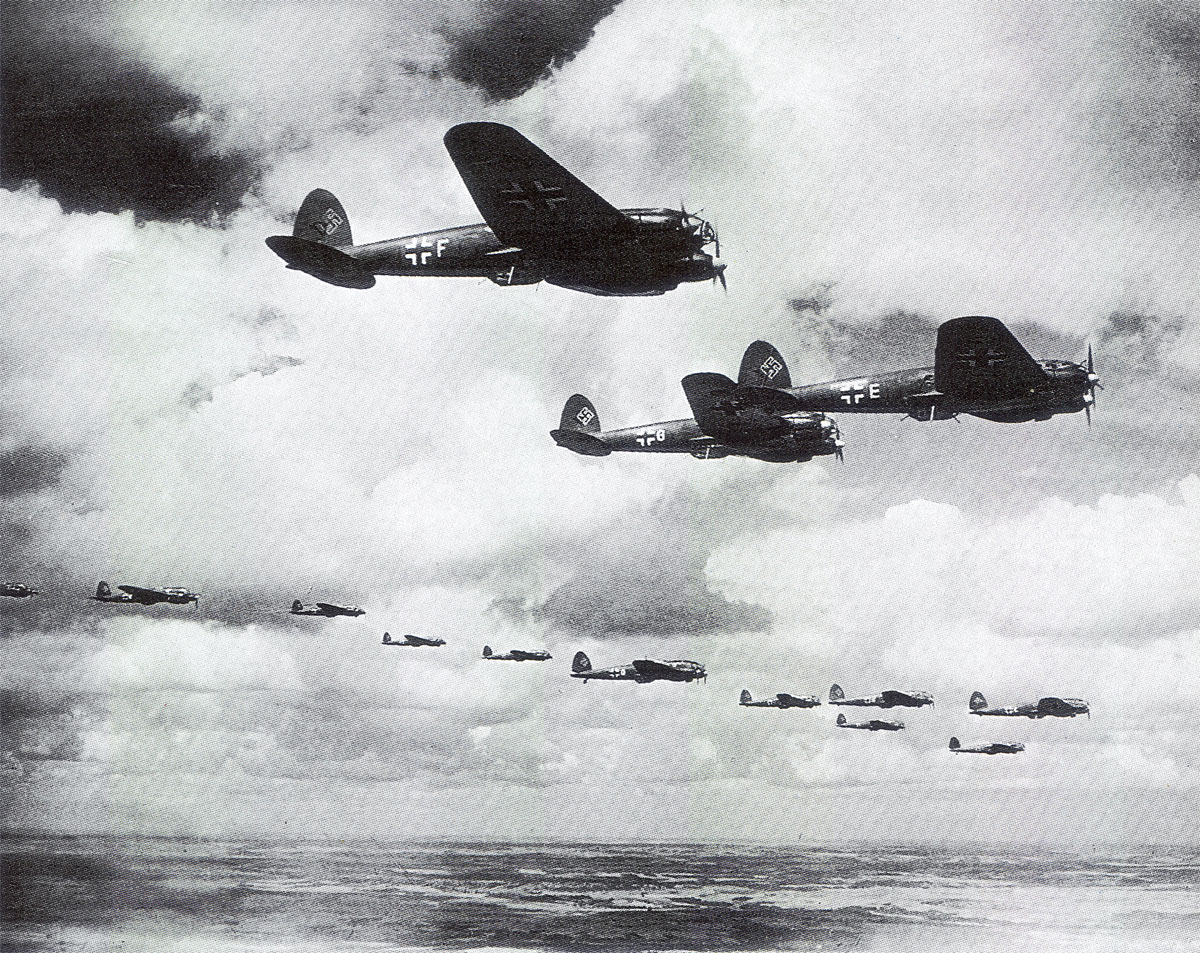
On 10th July 1940, Luftwaffe aircraft under the command of Hermann Göring, attacked Britain in what was called the the Kanalkampf (Channel battles). Bombers escorted by fighters targeted Britain's coastal defences, its ships sailing in the Channel and its naval ports, such as Portsmouth. From 12th August, Göring's focus switched to bombing airfields across southern England, later also targeting aircraft factories. As the RAF's fighter aircraft, Hurricanes and Spitfires, attempted to shoot down the German bombers, the Luftwaffe's Messerschmitt fighters took them on in air-to-air combat, known as "dogfights".
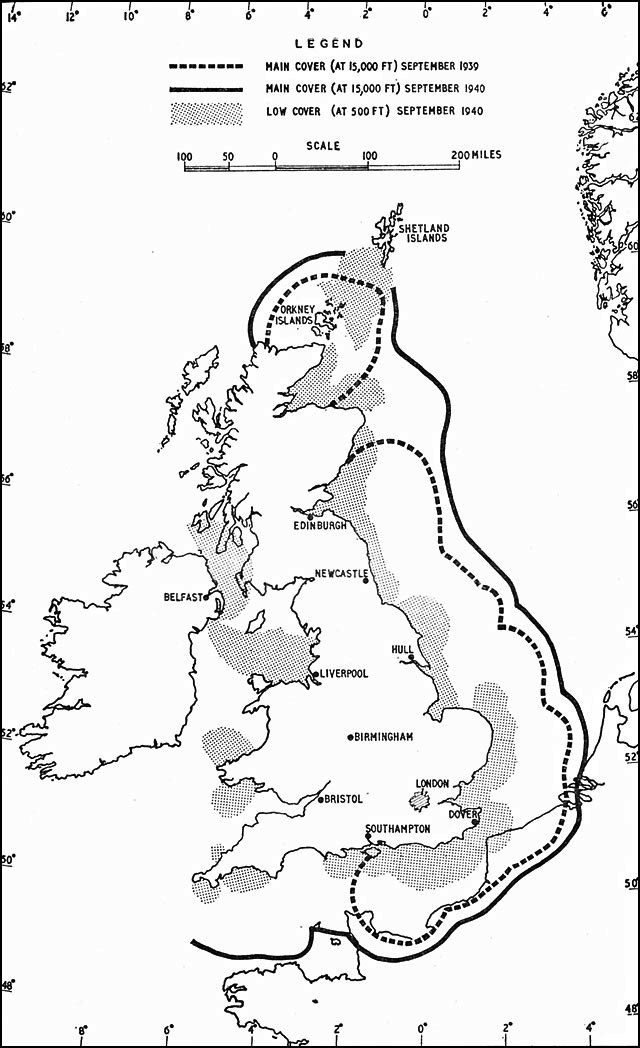
The RAF was greatly assisted by the ring of coastal Early Warning radar stations, together known as Chain Home, operating alongside the Royal Observer Corps—civilian volunteers trained to track and report enemy aircraft by sight. The flow of information was organized by what known as the "Dowding System", whereby reports and radar data were sent directly to Fighter Command Headquarters (FCHQ) at Bentley Priory. Once the direction of the raid was clearly established, the information was relayed to Sector Stations (fighter airfields), which would "scramble" fighter planes into action to intercept and attack the enemy.
Despite being outnumbered, the RAF retaliated by bombing Berlin on the night of 25th August 1940. Enraged by this, Hitler and Göring ordered a bombing campaign against British cities. On 7th September, a massive series of raids involving nearly 400 bombers and more than 600 fighters targeted docks in the East End of London.

On 15th September, the Luftwaffe launched two massive raids on London, with the aim of finally breaking British resistance. The RAF repelled the attack, shooting down 60 German planes. The events of that day, which became known as Battle of Britain Day, proved decisive. Having lost too many planes and unable to replace them fast enough, the Lufwaffe switched tactics once more. To avoid aerial dogfights with the RAF, German bombing was now carried out at night. In October Hitler decided to postpone preparations for the invasion of Britain. The Battle of Britain was won.

The Blitz

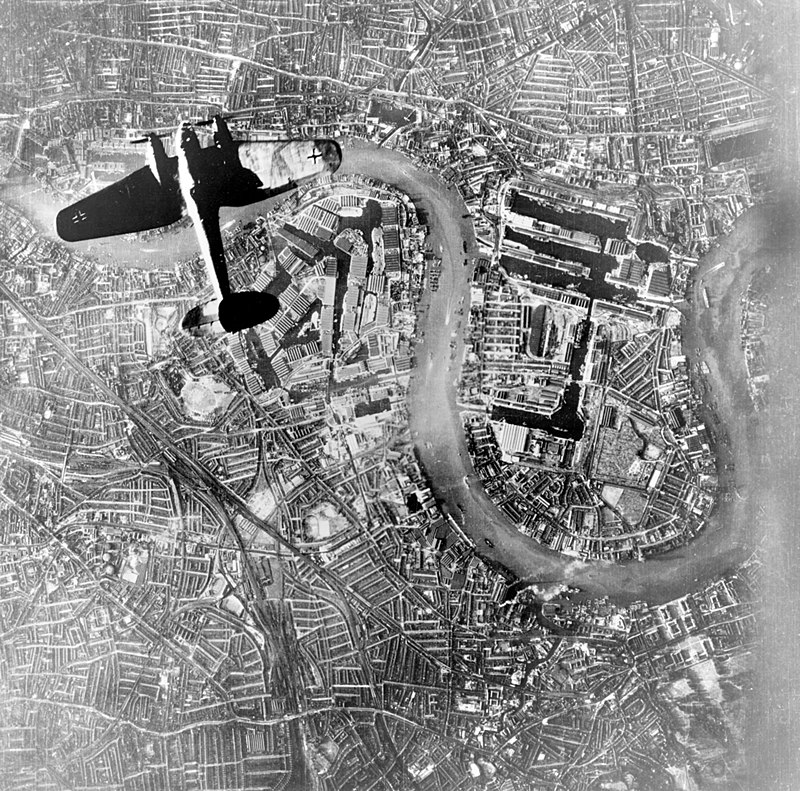
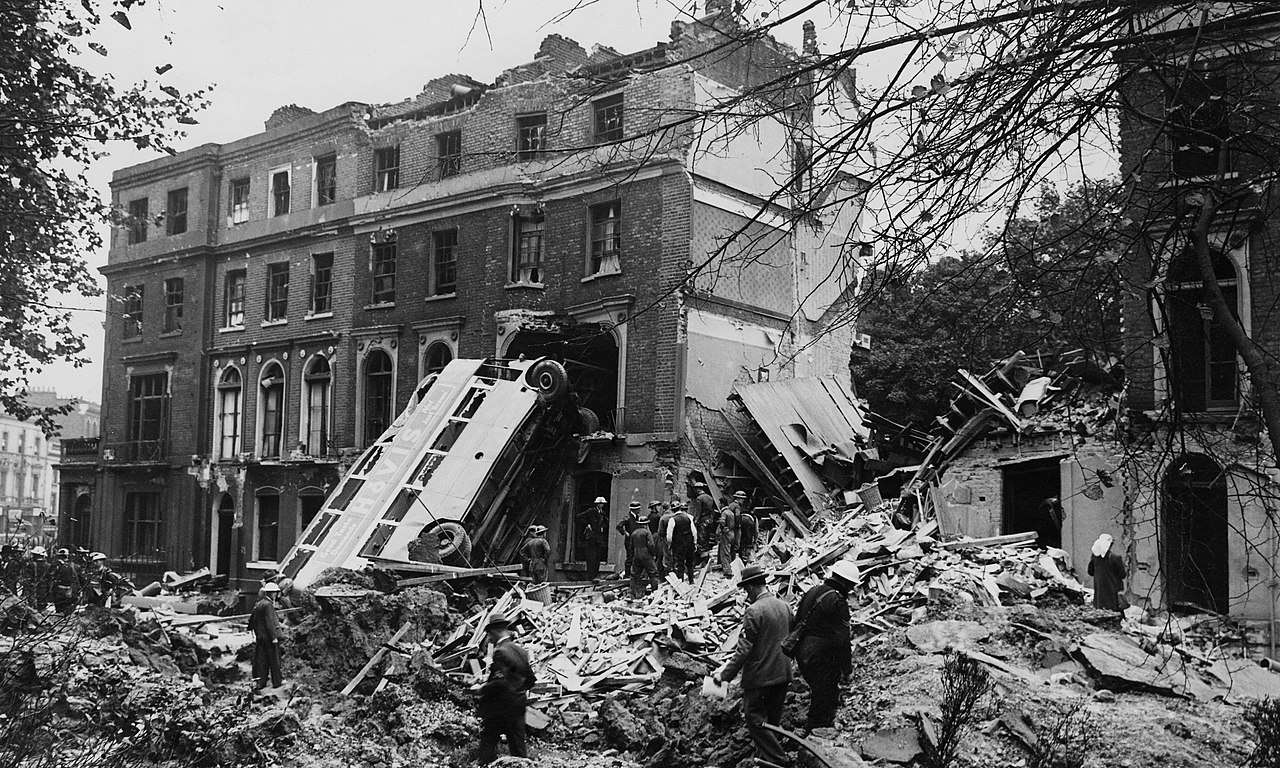
The Luftwaffe's campaign of bombing British towns and cities was known as the Blitz (the German word for "lightning"). It began on the afternoon of 7th September 1940—known as "Black Saturday"—when, in a series of massive raids, Luftwaffe bombers targeted the docks in the East End of London.
The air raids in London continued for the next 57 nights, and then on frequent occasions until 10th May 1941. Although German bombers were supposedly targeting factories, docks, railways and military installations, their bombs also landed in residential areas, killing thousands of people. Hitler clearly intended the bombing of London to terrorize the British population into submission.
From November 1940, other industrial cities were targeted, especially Birmingham and Coventry (see below) in the Midlands, Manchester and Sheffield. They were followed in March 1941 by assaults on ports: Plymouth, Liverpool, Hull, Cardiff, Swansea, Southampton, Portsmouth, Belfast, Clydebank, Bristol, Newcastle-upon-Tyne and Sunderland. Bombing them would cause the most damage to the economy. The appalling loss of life would, Germany hoped, crush people's morale.
By May 1941, with the Luftwaffe seriously overstretched and suffering increasing losses from RAF attacks, Hitler turned his attention to Operation Barbarossa, an attack on the Soviet Union. The Blitz was over.
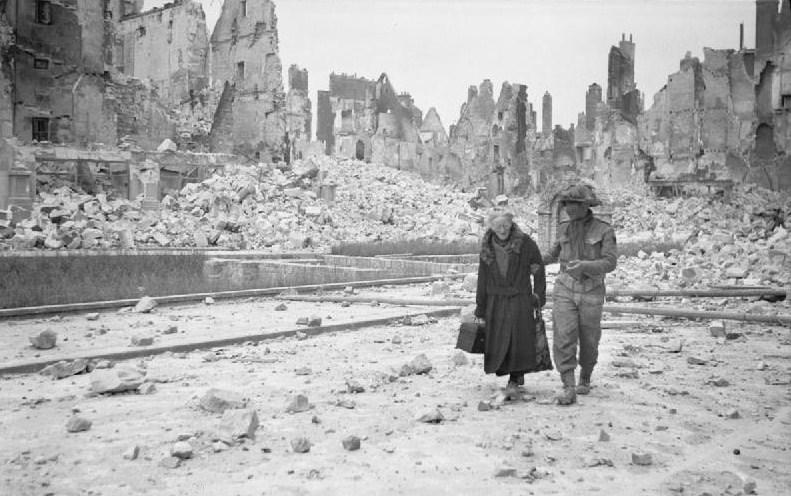
The German bombing campaign failed in its objectives. Britain's ports remained in operation, its industrial production recovered quickly and morale, the "Blitz Spirit", was undimmed. But the bombing took around 43,000 lives, injured up to 139,000 people and did enormous damage to British infrastructure (railways, power stations, factories etc.). In London alone, more than a million houses were damaged or destroyed.
Coventry
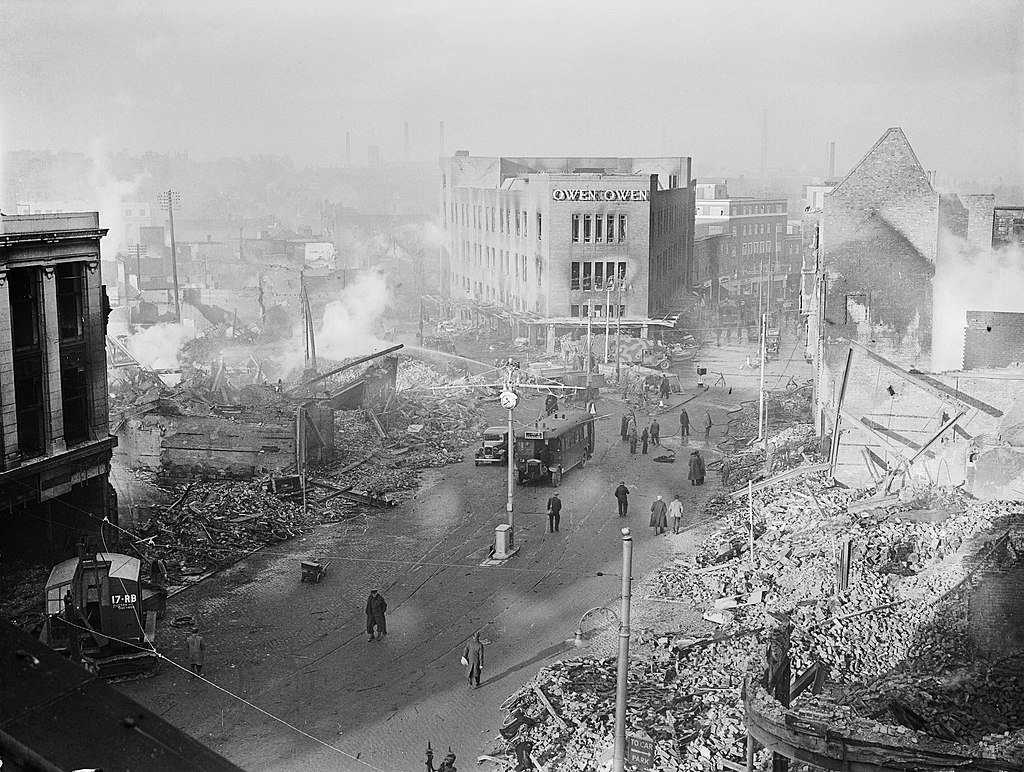
The air raid on Coventry on the night of 14th November 1940 was the single most devastating attack on a British city during the World War II. The air raid lasted for nearly 12 hours and involved nearly 500 Luftwaffe bombers. The aim was to knock out the war production industry, much of which was centred on Coventry, a city of 238,000 people. But it is likely that Hitler ordered the raid as revenge for an RAF attack on the German city of Munich, so damage to the rest of Coventry—and the terrorizing of its inhabitants—was inevitable.
That night, Coventry was lit by a full moon—so bright that the traffic could move around on the road without light—giving the German codename for the operation: "Moonlight Sonata". The moonlit night enabled German bombers to have clearer sight of their targets. The first wave of aircraft dropped marker flares enabling the bombers following behind to drop high explosive bombs more accurately. These knocked out power lines, the telephone network and water and gas mains. Cratered roads now made it difficult for fire engines to get across the city. Later waves of bombers dropped incendiary bombs, turning Coventry city centre into a raging inferno. The smell of the burning city reached into the cockpits of the German bombers, 2000 metres (6000 feet) above.
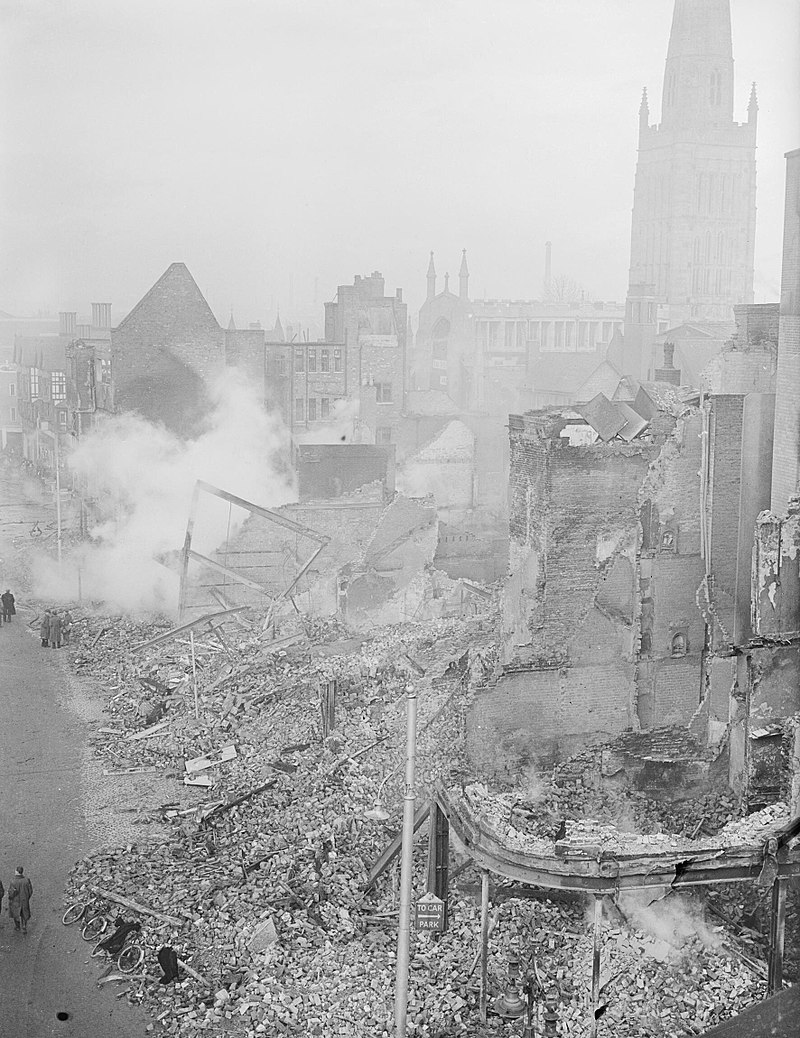
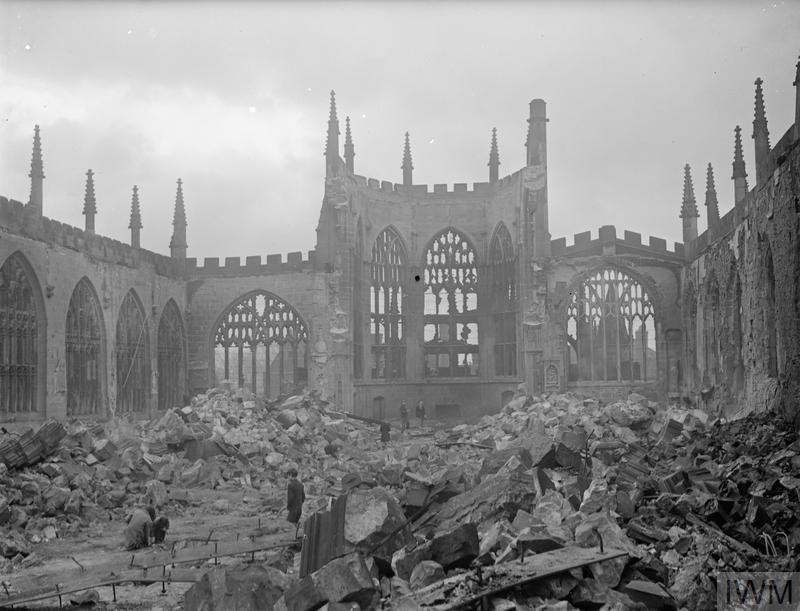
More than 43,000 homes—at least half of Coventry's housing stock—were damaged or destroyed in the raid. The city lost its great medieval cathedral, its central library and market hall. A third of the city's factories were completely ruined while another third were badly damaged. An estimated 568 people were killed in the Coventry Blitz, with more than a thousand injured. The figure would have been much higher but for the fact that people took to air raid shelters or "trekked" out of the city that night to sleep in nearby towns or villages.
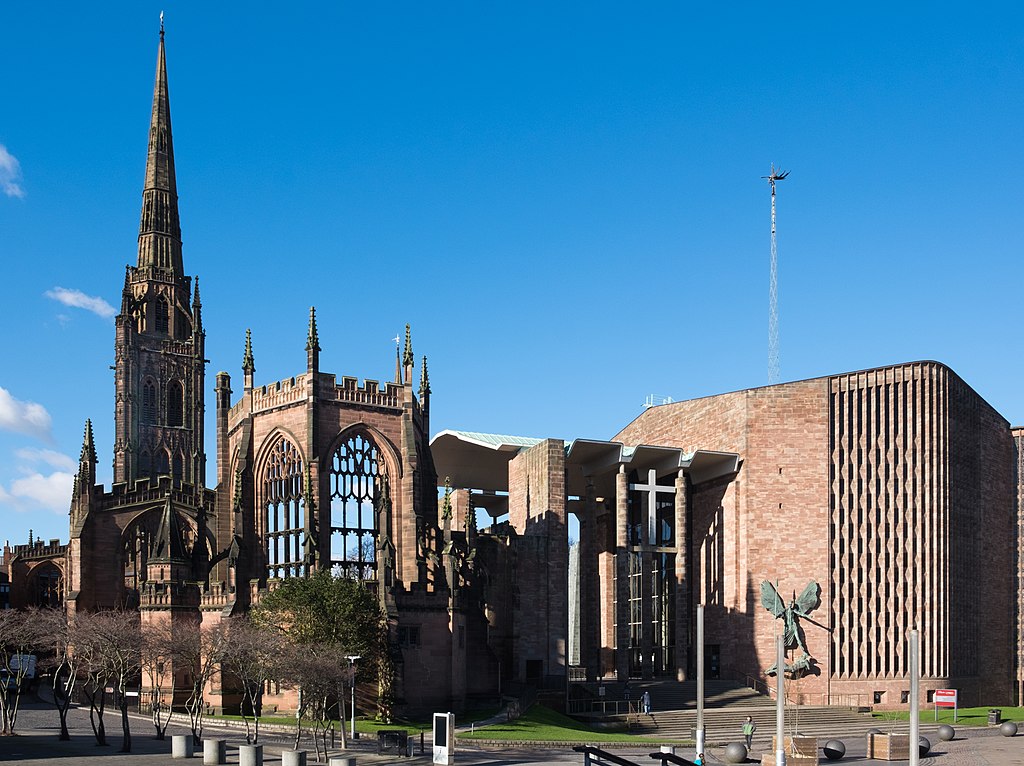
The British retaliated to the attack with an air raid of their own on Mannheim on 16th December 1940. It was not the first raid on a German city, but this time RAF bombers adopted a new strategy: "area bombing" the whole city, residential areas as well as military targets. Such attacks later saw the firestorming of Hamburg in July 1943 and Dresden in February 1945, as a result of which tens of thousands of civilians lost their lives.
Air raids and shelters
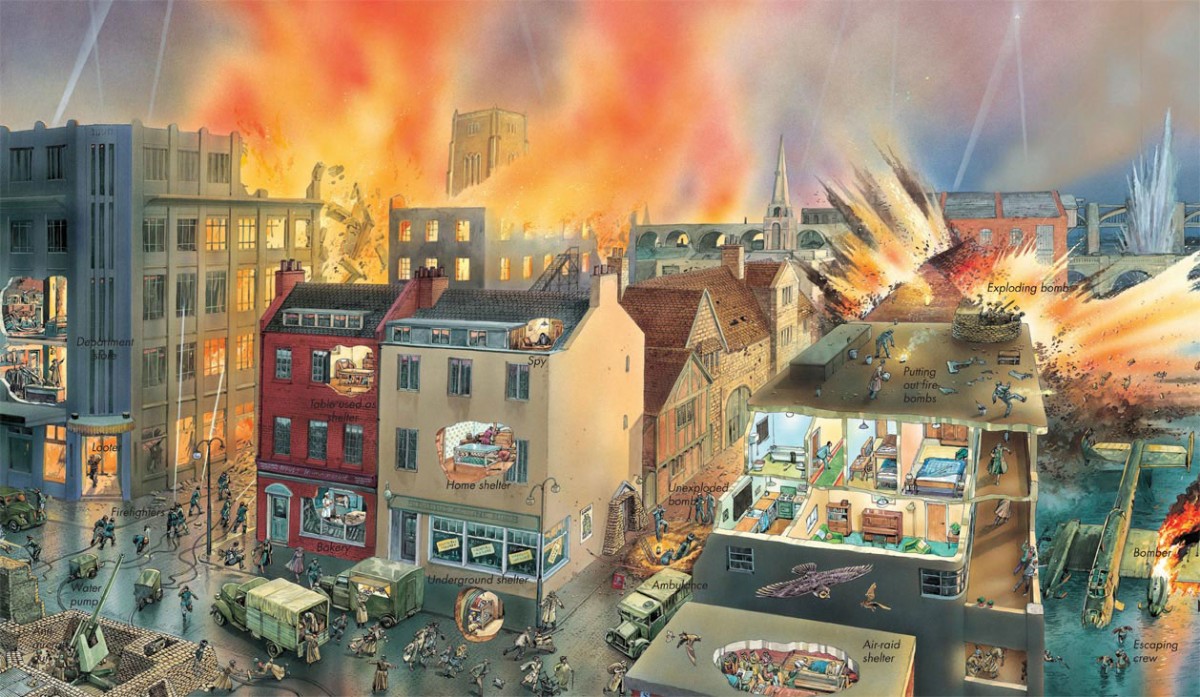
The Luftwaffe aircraft carried out their bombing raids often at night under cover of darkness in an attempt to evade RAF fighters. The original aim was to destroy "strategic targets" such as docks or factories, but many people lived nearby and the bombing was inaccurate, so residential areas were usually bombed too. Hitler always intended to terrorize the British population into submission, so the Blitz was effectively a direct attack on civilians.

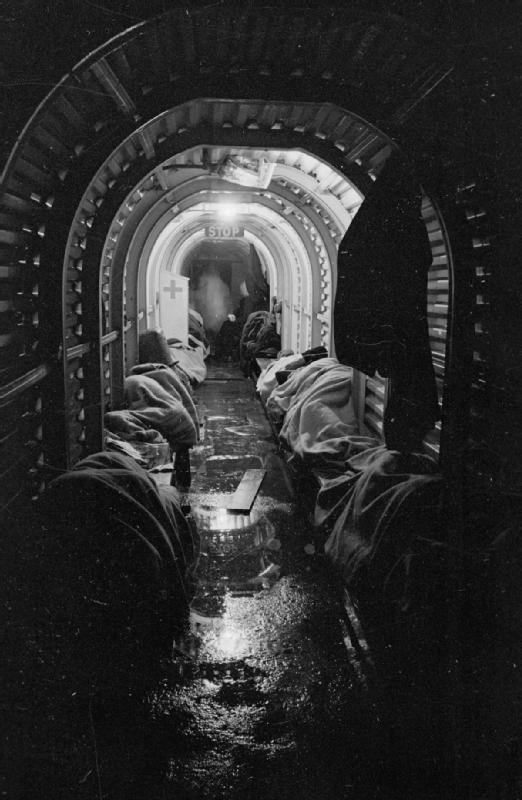
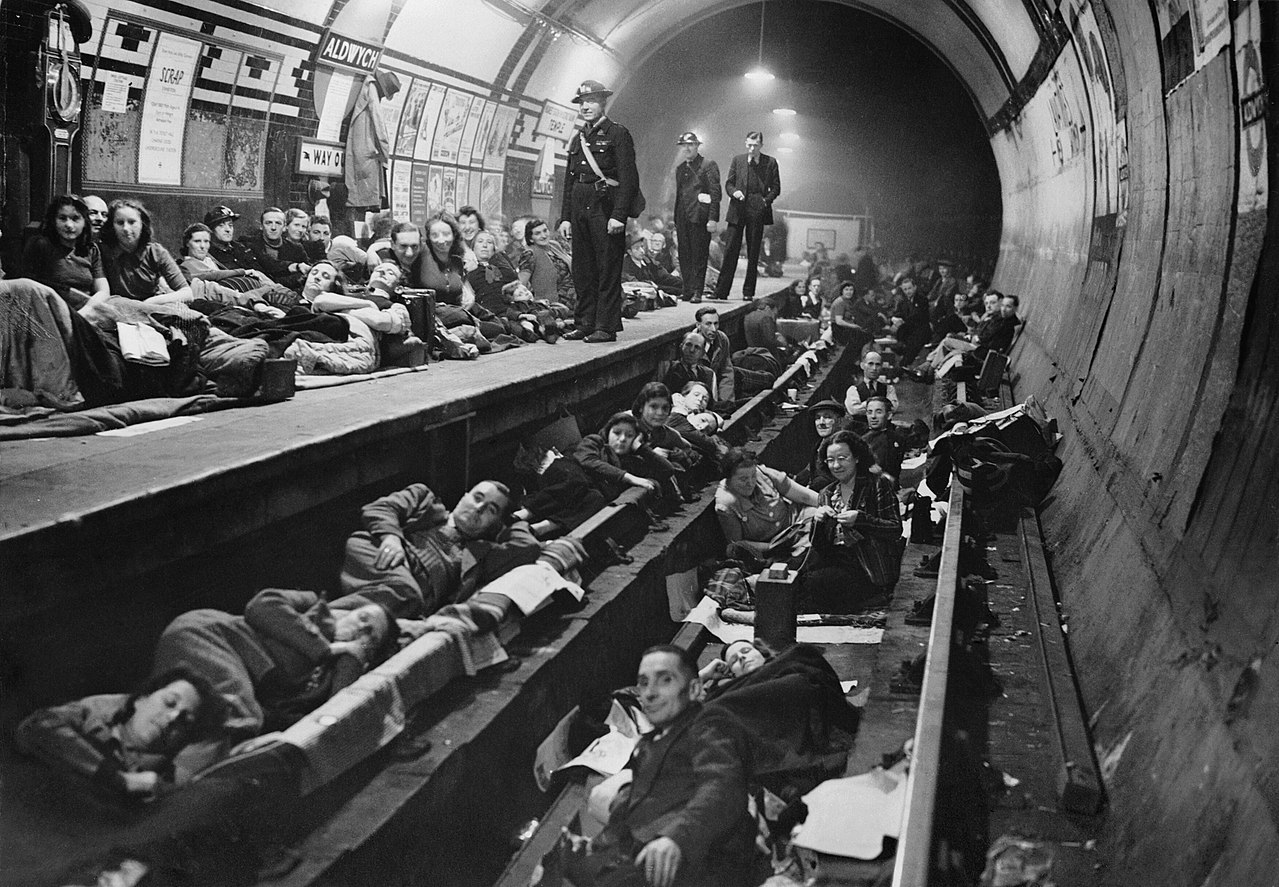
When an incoming air raid was detected, loud air raid sirens (nicknamed "Moaning Minnie") sounded to warn people urgently to seek shelter. They do so in corrugated iron Anderson shelters in their back gardens, cellars in their homes, brick-built public shelters, railway arches or basements of an office block or public building. Many people also had gas masks, to be worn if the air after an explosion was dirty or poisonous.
In London, Underground (Tube) stations were used as air raid shelters—but not at first, because of a government ruling that people and goods needed to be kept moving during the Blitz. It took a defiant stance by East Enders—who bought tickets for short journeys and refused to come up again—to force the authorities to relax the ban.
After the air raid had passed, another siren call with a different tone sounded the "all clear".
Every night during the Blitz, a "blackout" was enforced after dusk. The idea was to prevent any light from being visible to German planes overhead, making it more difficult for them to work out where cities were. There were no streetlights. Traffic lights and vehicle headlights were fitted with slotted covers to deflect their beams downwards to the ground. Inside homes, lights could only to be turned on in rooms with blackout curtains, specially made frames covered with black material that were placed over the windows.
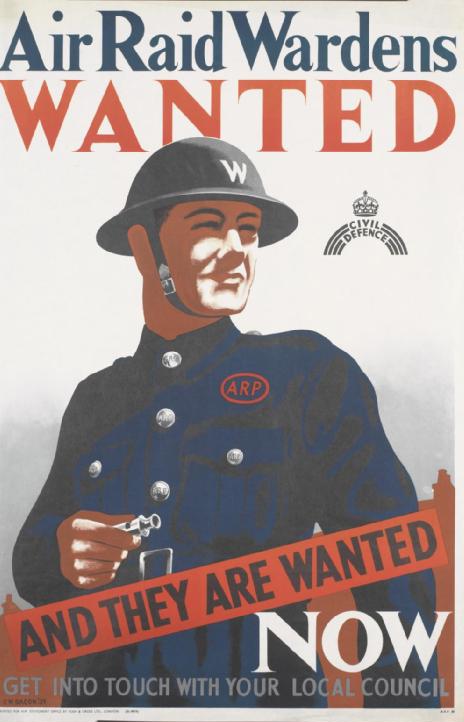
Air Raid Precaution (ARP) wardens, whose main job was to help people get to a shelter in the event of an air raid, patrolled the streets to ensure people were using blackouts. Trains also had blacked out windows. All the lights were turned off before the train stopped at a station so that no light showed when people opened the doors to get out.

Everyone was affected by the bombing during the Blitz: Britain's upper, middle and working classes were equally at risk of death or loss. The royal family played their part in keep up morale. They refused to leave their London home during the Blitz and visited troops, factories, dockyards and hospitals across the country. People appreciated how the royals appeared to share their hardships.
With people helping each other to construct shelters, or checking to see whether others needed help after a raid, a sense of community, the Blitz Spirit, soon emerged. People wanted to be seen as calm and courageous in the face of danger, and shared a determination to survive.
Operation Ultra
A vital contribution to the war effort was to intercept and read messages sent by German military commanders by radio or telegraph wire to their forces operating all over Europe and in vessels in the Atlantic Ocean. Knowing about the enemy's intended actions would be key to preparing defences against them. Messages were sent in code, so it was the job of cryptologists (code-breakers) to break them.
Monitoring German communications, which came to be known as Operation Ultra, began at Bletchley Park in Buckinghamshire in 1938—before the war even started. Code-breakers, linguists (experts in foreign languages), mathematicians and other experts were tasked with were charged with breaking German codes. These were produced by a machine nicknamed "Enigma". The challenge was to devise a means of transcribing them (making them readable) quickly enough for counter-measures to be taken.
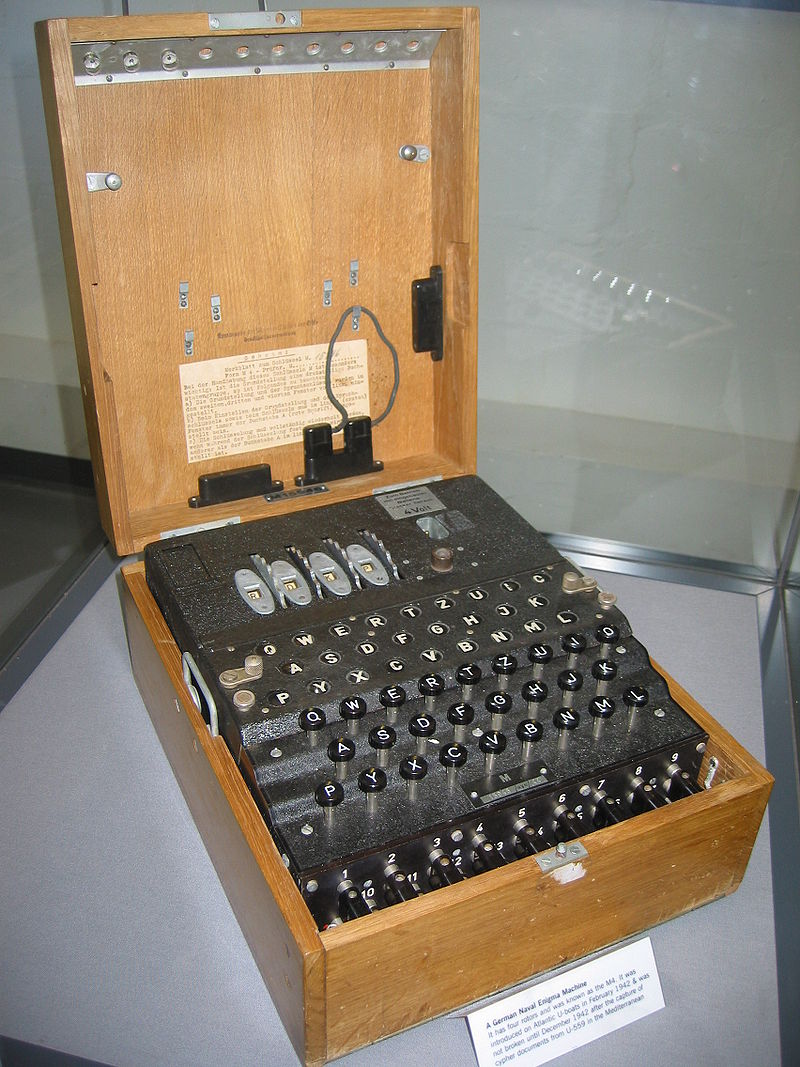
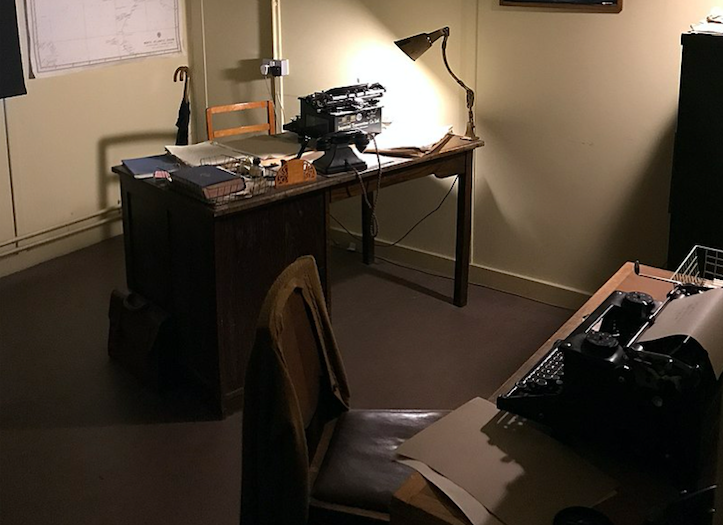
Bletchley Park staff were greatly assisted by work done years before. Polish intelligence had begun monitoring German communications in the 1930s and, thanks to the work of mathematician Marian Rejewski, broke their codes in 1932. However, between late 1938 and early 1939, the Germans made their system much more complex. So Ultra engineers at Bletchley Park constructed the bombe, a code-breaking machine designed by Alan Turing, who adapted the original Polish machine, or bomba.
From March 1940 onwards, members of the Royal Navy women's corps (WRNS or "Wrens") operated these bombes to decipher the new Enigma intercepts. An improved version, incorporating the "Diagonal Board" invented by Gordon Welchman, which made the bombes much more powerful, came into operation in August 1940.

British military signals and radio specialists, staffing thousands of stations on the coast and across Europe, carried out the gruelling task of intercepting German messages. Transmissions were often affected by bad weather or interference from jamming machines, so they could be difficult to understand. Nevertheless, over 50 messages a week were successfully decoded. But in 1942, German radio and wire traffic increased massively. The 1200 staff of Bletchley Park could no longer deal with them quickly enough for the information to be acted upon in time.
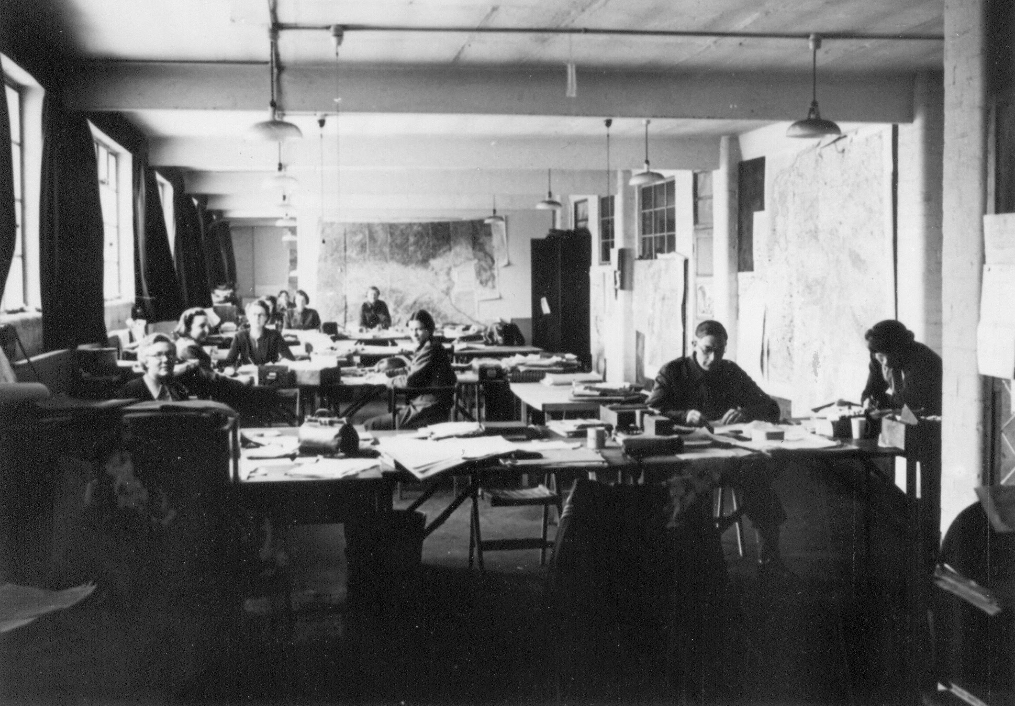

Alan Turing and his colleague Tommy Flowers devised a machine to decipher and transcribe the flood of German intercepts. Colossus, as it was known, could transcribe the messages directly on to a typewriter. Ultra intelligence became a key part of British strategy, giving commanders advance information on German military operations. Naval convoys delivering essential supplies across the Atlantic Ocean could now be diverted to avoid attack by German U-boats—which were now located and sunk with increasing frequency. Thanks to Ultra, the Allied invasion of Sicily was postponed until after the German had been convinced they intended to invade the Balkans instead and had repositioned their troops.
Concerned that the German military would change Enigma if they found out about Ultra, the operation was shrouded in absolute secrecy, and not revealed until 1974. Ultra was immensely valuable to the Allies. Winston Churchill told King George VI: "It was thanks to Ultra that we won the war."
Civilian internment
Internment (imprisonment) of civilians from all sides of the conflict was carried out by the powers fighting in World War II. At the outbreak of war, there were around 80,000 people of German and Austrian nationality (plus, later, Italians) living in Britain who could, it was feared, be willing to assist Britain's enemies in the event of an invasion, or who might even be spies. This was despite the fact that many of them had lived in Britain for decades or were refugees from Nazi oppression, including Jewish people.
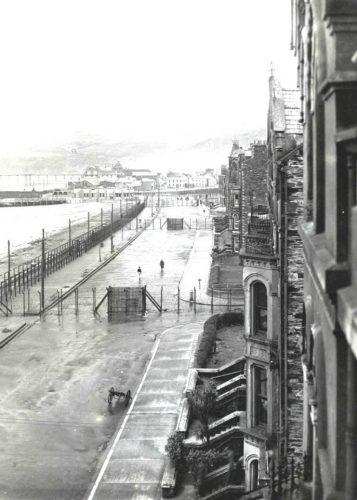
The majority were interned on the Isle of Man. Bored at their confinement, many internees organized educational and artistic projects, including lectures, concerts and publishing newspapers. An outcry in Parliament led to the interns' release, most of them by mid-1941. Many ex-internees then contributed to the war effort on the Home Front or served in the armed forces.
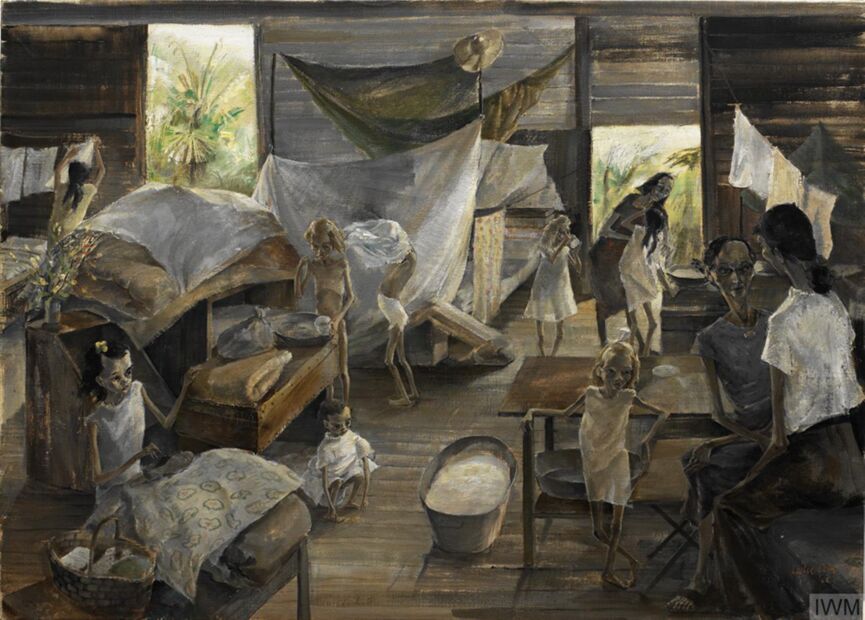
British citizens experienced internment themselves in other parts of the world. In September 1942, 2000 British-born civilians from the Channel Islands were sent to internment camps in Germany. In 1941–42, around 130,000 civilians from Allied countries living and working in colonies invaded by the Japanese were interned, with many of them being held in harsh conditions.
BBC
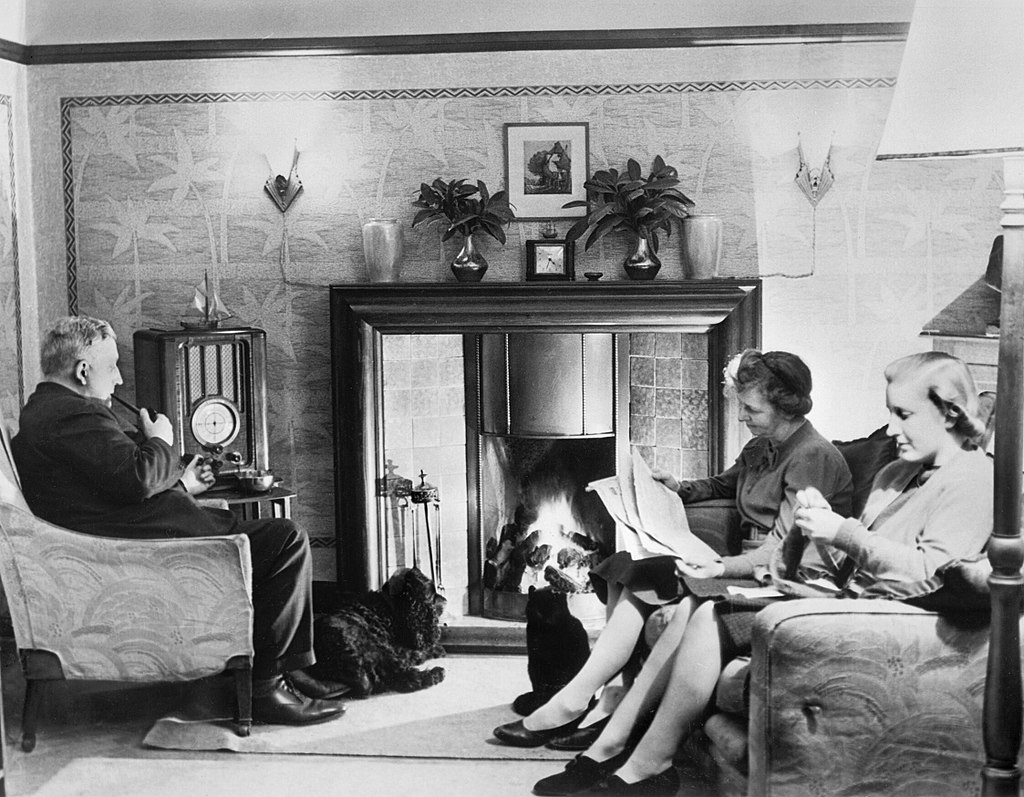
The BBC's television service—in those days, a limited operation since only 20,000 households possessed television sets—shut down on 1st September 1939. This was in response to fears that the signal from the transmitter at Alexandra Palace might aid enemy aircraft. It remained out of action until June 1946. In the meantime, listening to the radio, known as the "wireless", became an important feature of many British people's lives, the BBC news bulletins becoming an important source of information about the war's progress. While the BBC was trusted, it came in for criticism early in the war for seemingly agreeing to broadcast Ministry of Information propaganda.
Beveridge Report
There was a great and genuine community of spirit in wartime Britain which brought people of different social classes together—literally so, in the case of working-class children taken in as evacuees by middle class households. The description of World War II as a "people's war", caught on, signifying a general feeling that the country should not go back to the pre-war state of deep inequality and often terrible living conditions. A hope for a better Britain after the war ended was widely shared.
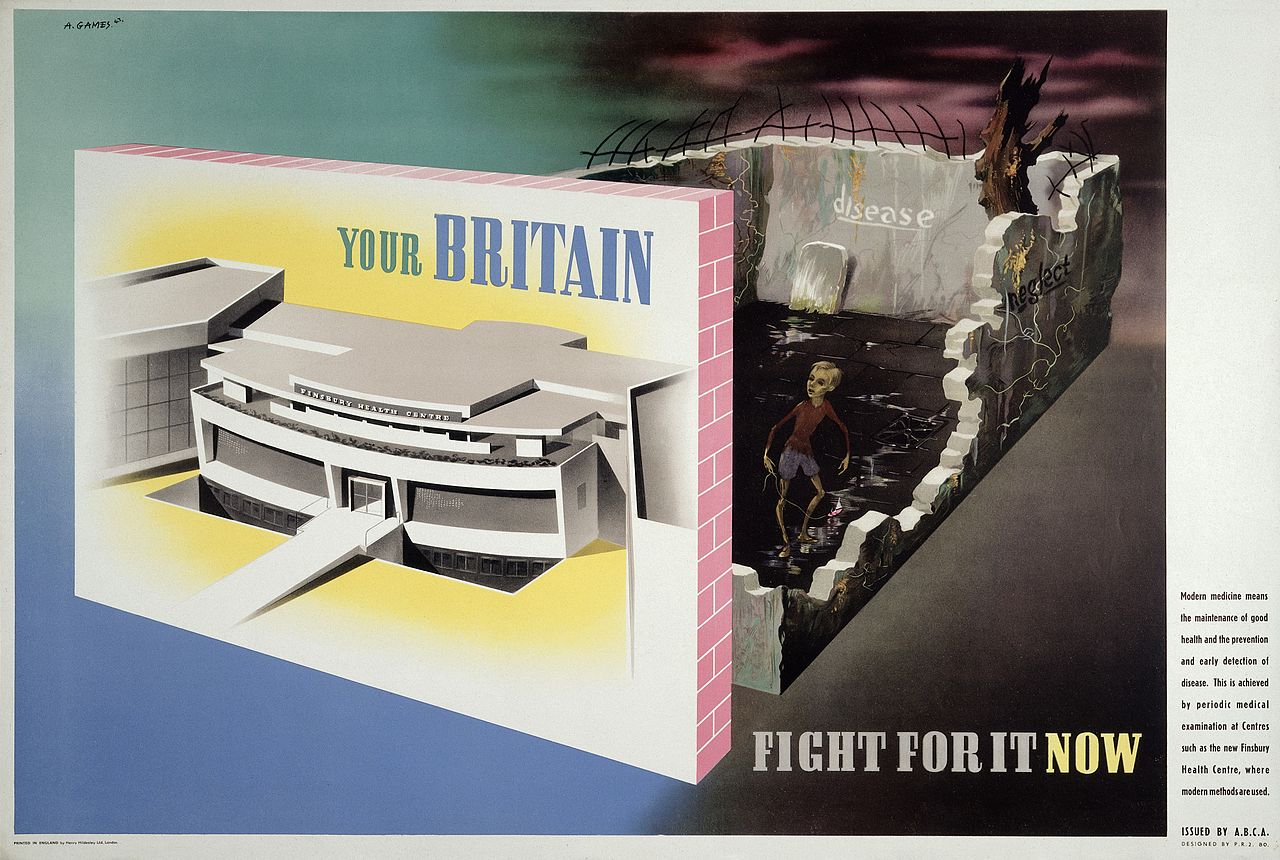
The success of the wartime government in providing new services, such as hospitals and school meals, led to widespread support for an enlarged welfare state—government involvement in providing healthcare, education and pensions to everyone.
The goal of a welfare state was put forward in a report by William Beveridge, a social policy expert who had worked with the Liberal Government in the early 1900s, published in December 1942. Beveridge declared war on the five "giant evils": Want (caused by poverty), Disease (caused by a lack of healthcare services), Ignorance (caused by poor education), Squalor (caused by poor housing) and Idleness (caused by unemployment).


The Beveridge Report recommended that unemployment and sickness benefits be made universal—that is, available to everyone. There should be new benefits for maternity, family allowances and an expanded old age pension system. A full-scale National Health Service should provide free medical care for everyone.
All the major political parties agreed with the principles and they were put into effect, beginning with the Education Act of 1944. This made secondary education free and compulsory for all children in England and Wales. When a Labour government under a new prime minister, Clement Attlee, came to power following the general election of 1945, it continued to expand the welfare state. Spearheaded by the Minister of Health, Aneurin Bevin, the National Health Service (NHS) was created in 1948 to provide free health care for everyone, regardless of income.
D-Day
By early 1944, the Allies' fortunes in the war had improved decisively. The Soviet Union's Red Army had halted Germany's advance in eastern Europe, while Allied troops had retaken large parts of Italy. The Americans, who had entered the war on the side of the Allies in 1941, were notching up victory after victory over the Japanese in the Pacific. Plans were now being made to land British, American and Canadian troops in France with the aim of liberating that country—and the rest of Europe—from German occupation.

A concerted effort was made to deceive German high command into thinking that the Allied invasion would take place on the beaches of Pas de Calais across the Strait of Dover. In fact, the plan was to land thousands of troops on the beaches of Normandy to the west. Thanks to the clever planting of false information—including the siting of hundreds of fake wooden planes near Dover—the Germans were, as confirmed by Ultra intercepts, convinced that the Pas de Calais would be the site of the Allied landings and so took steps to divert troops to defend the area.
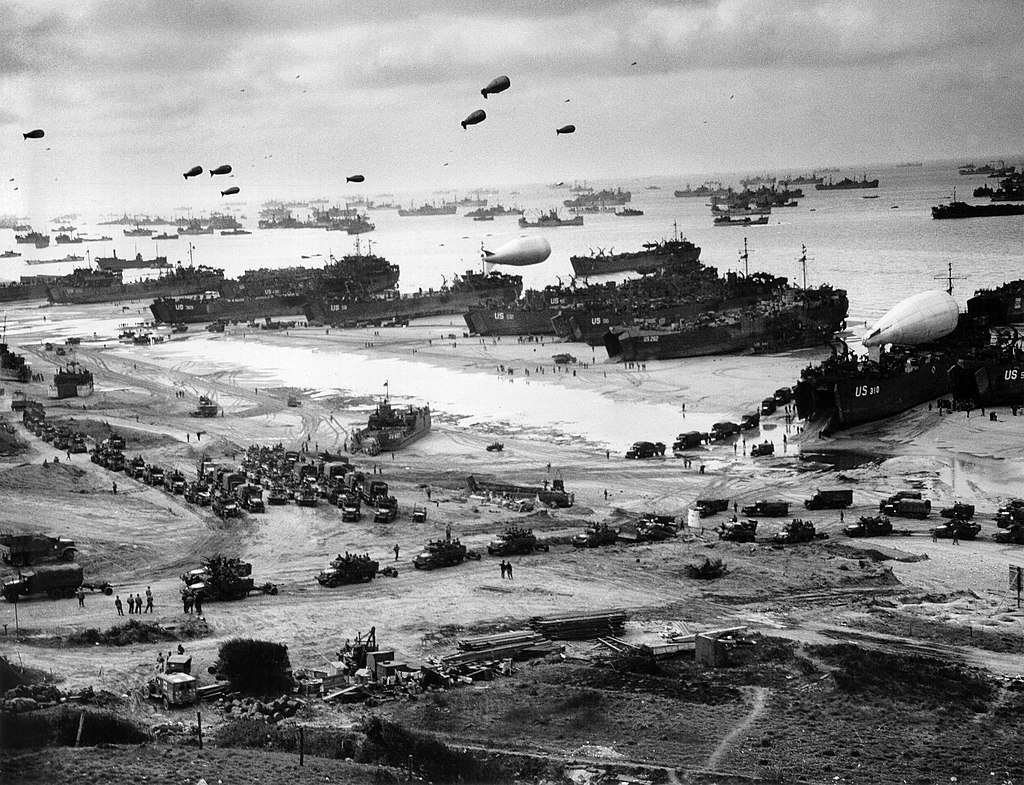
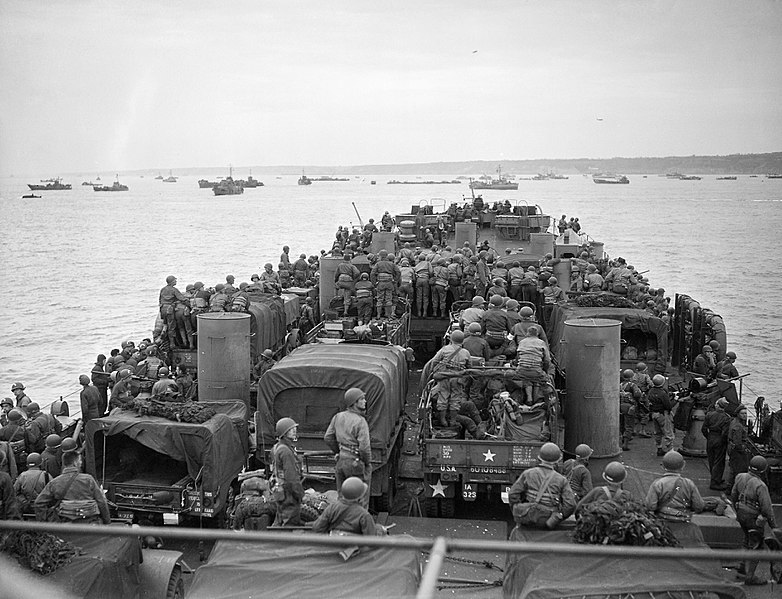
The landings took place on 6th June 1944 in an event known as D-Day, part of Operation Overlord. Following an overwhelming assault by 1200 Allied planes, around 5000 vessels successfully landed nearly 160,000 troops on the Normandy beaches. While over 4000 Allied servicemen lost their lives, German forces were driven back.
Flying bombs
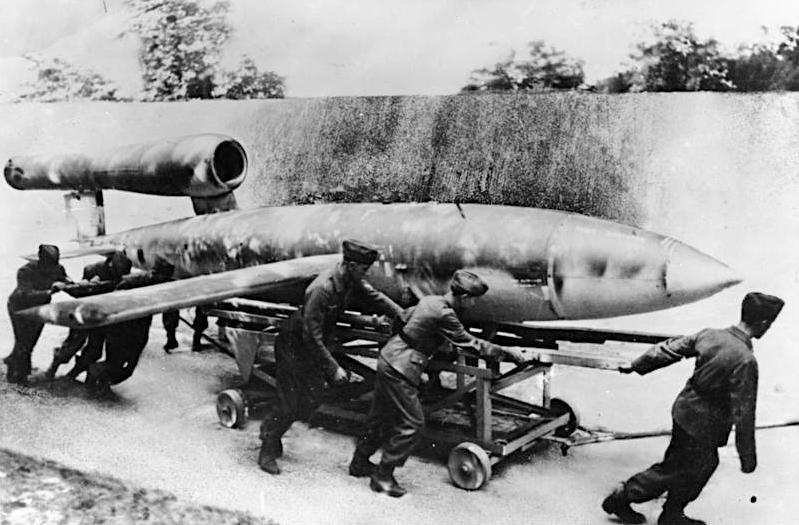

By June 1944, British and American bombers were carrying out heavy bombing of German cities. In response, Germany launched what it called Vergeltungswaffen ("revenge weapons"), an attempt to terrorize the citizens of London. The V-1 flying bombs, also known as the "doodlebugs" or "buzz bombs" because of the distinctive humming sound they made when in flight, were missiles fitted with wings and powered by a jet engine.
Defensive measures against them included massed batteries of anti-aircraft guns along the coast of southeast England. RAF fighter aircraft were also able to shoot them down before they reached their targets.
Germany launched 9521 V-I bombs on southern England, of which nearly 5000 got through defences. They killed more than 6000 people, wounded 18,000 and made countless more homeless.
The V-2 rocket, the second V-weapon, first hit London on 8th September 1944. It was of a different order of technology to the V-1. Powered by a rocket engine, the 14-metre (47-foot) long missile blasted to an altitude of 80 kilometres (50 miles)—the edge of space—before descending towards its target at supersonic speed.
The world’s first long-range guided ballistic missile, the V-2 could not be stopped once it had been launched. Although only 1100 rockets out of more than 5000 launched actually reached Britain, they killed 2724 people and badly injured 6000. The V-2 attacks came to an end only after Allied troops advancing through mainland Europe were able to capture the launch sites in March 1945.


Victory
Following the D-Day landings, Allied troops then began to advance on Germany from the west, while Soviet forces did the same from the east. By April 1945, Allied troops had reached Berlin, the German capital. Hitler, realising that defeat was now inevitable, committed suicide on 30th April. Germany surrendered on 7th May. The following day, 8th May, was declared VE Day (Victory in Europe Day), a national holiday in Britain.
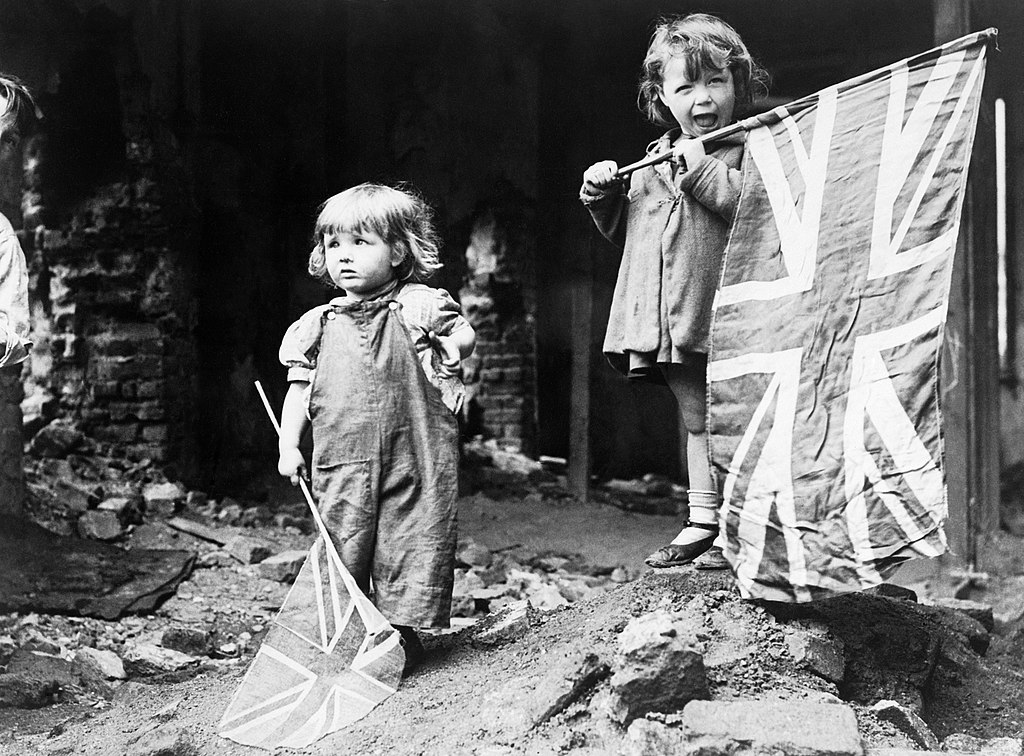
Many people could not wait for the official day of celebration and began the festivities as soon as they heard the news on 7th. After years of wartime restrictions and the horrors of the air raids, people let loose and enjoyed themselves. That evening, bonfires were lit, people danced and revellers filled the pubs. Bunting soon lined the streets of villages, towns and cities across Britain. In London, people flooded into the city centre. Buckingham Palace, Trafalgar Square and Piccadilly Circus became a focus for celebrations.
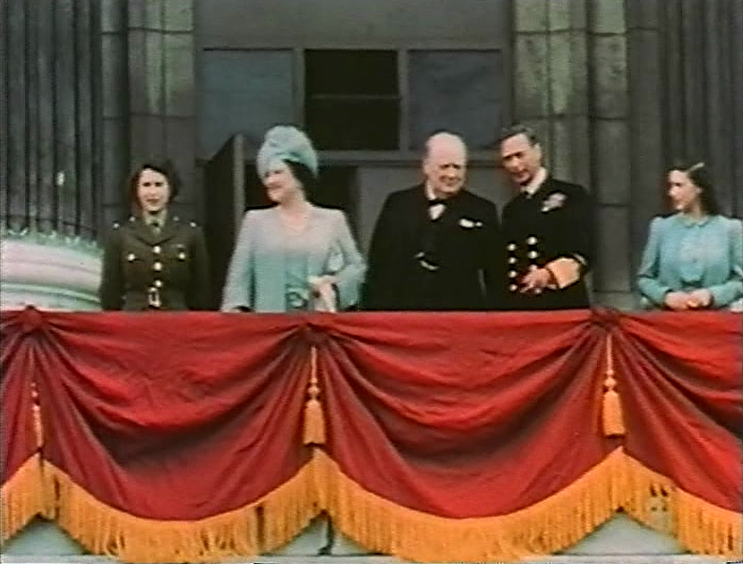
King George VI and Queen Elizabeth appeared on the balcony of Buckingham Palace on several occasions during VE day—at one point joined by Winston Churchill—to wave to cheering crowds. Their daughters, Elizabeth and Margaret, secretly mingled with the jubilant crowds below them while they made their last appearance that evening.
The war was not yet over in the Far East and Pacific. In May 1945, thousands of Allied servicemen, including British troops, were still fighting while many were still held as prisoners of war in terrible conditions. It was not until the Japanese act of surrender was signed on 2nd September that World War II was truly over.
For the people in Britain, the end of the fighting did not mean an instant return to normality. Shortages were still felt: clothes rationing lasted until 1949, while food rationing remained in place until 1954. The huge cost of the war nearly bankrupted Britain and resulted in post-war austerity.
Consultant: Philip Parker
pics


Without in any way limiting Q-files Ltd’s exclusive rights under copyright, any use of this publication to “train” generative artificial intelligence (AI) technologies to generate text is expressly prohibited. Q-files Ltd reserves all rights to license use of this work for generative AI training and development of machine learning language models.