
British history

CITE
We have made every effort to follow citation style rules, but there may be some minor differences. If in doubt, please refer to the appropriate citation style manual.
History of Wales. (2026). In Q-files Encyclopedia, History, British history. Retrieved from
https://www.q-files.com/history/british-history/history-of-wales
"History of Wales." History, British history, Q-files Encyclopedia, 30 Mar. 2026.
https://www.q-files.com/history/british-history/history-of-wales.
Accessed 21 Sep. 2026.
History of Wales 2026. History, British history. Retrieved 21 September 2026, from
https://www.q-files.com/history/british-history/history-of-wales
History, British history, s.v. "History of Wales," accessed September 21, 2026.
https://www.q-files.com/history/british-history/history-of-wales


History of Wales
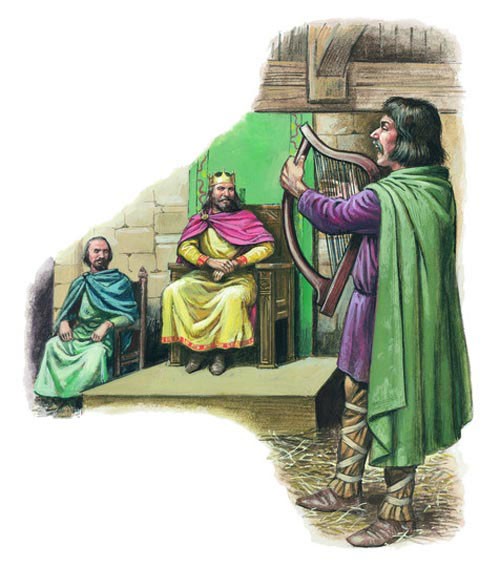
The Romans conquered the Celts living in Wales after AD 48, building a new town at Caerwent and a large military camp at Caerleon, both in the south. After the Romans left, Celtic Britons from England escaped the Anglo-Saxon invaders of England and joined their fellow Celts in the mountains of Wales. The Welsh, as they became known, then set up a number of independent princedoms that united in the early 1200s. Separated from England, the Welsh spoke their own language. In 1176, the first annual Eisteddfod, a festival of Welsh poetry and song, was held in Cardigan. Since 1998, Wales has had its own National Assembly in Cardiff.
The coming of Christianity
Christianity first arrived in Wales from England some time during the early 300s, when the Romans ruled the country. It continued to thrive after the Romans left in the next century. St David, the patron saint of Wales, set up monasteries during the 500s, including one in Pembrokeshire that is now the site of St David’s Cathedral. Norman lords built many new churches and monasteries in South Wales after 1066, while the massive abbey of Strata Florida in central Wales was built by Prince Rhys ap Gruffydd in 1164.
Welsh unity
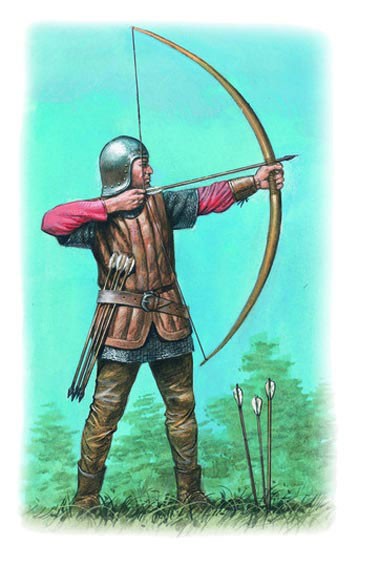
After the Normans invaded England in 1066, they began to conquer South Wales, building new castles at Chepstow and elsewhere. In 1094 a revolt against Norman rule broke out that gradually expelled the Normans from Wales and won back for the Welsh the lands they had lost. After 1200, the various independent princedoms were united into a single country by Llywelyn Fawr, "the Great", ruler of Gwynedd in the north until his death in 1240. The Welsh built their own stone castles, as at Dolbardan in North Wales, but often fought among themselves.
The English conquest
In 1272, Edward I came to the throne of England. He asked the Welsh prince Llywelyn ap Gruffydd to pay him homage—that is, to recognize Edward as his lord. Llywelyn refused, so in 1277 Edward invaded Wales and gained the homage by force. When Llywelyn rebelled, Edward invaded Wales again in 1282 and defeated Llywelyn, who was killed later the same year.

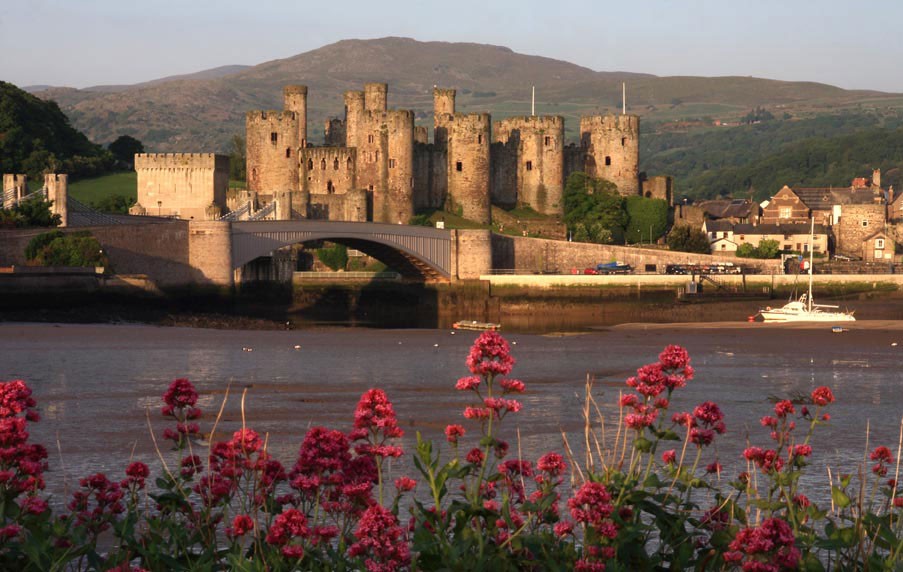
Welsh independence was ended in 1284 by the Statute of Rhuddlan, in which Wales came under direct rule from England. Edward began to build 10 large castles to subdue the Welsh, of which Caernarfon, Conwy and Harlech are the most magnificent.
The Prince of Wales
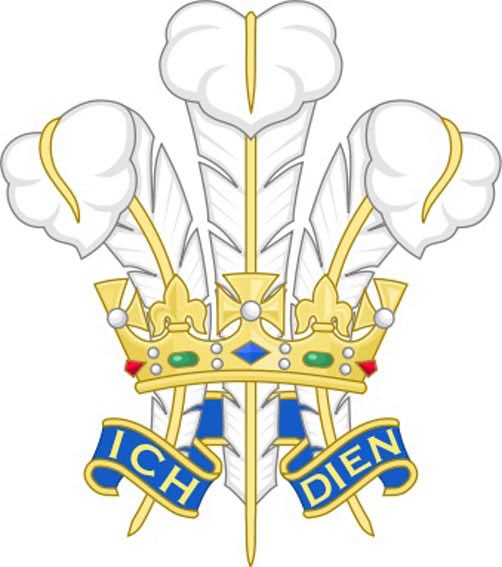
In 1284, the English king Edward I was staying in Caernarfon in Wales after his successful conquest of the country. His wife Eleanor gave birth there to a son, the future Edward II. In 1301, Prince Edward was created Prince of Wales, a title given ever since to the eldest son and heir of the English king. Since Edward, there have been 21 princes of Wales, up to and including the current prince, William. Every prince has as his motto the words adopted by Edward the Black Prince, son of Edward III and himself a Prince of Wales, from the King of Bohemia at the Battle of Créçy in 1346: Ich Dien, "I serve".

Owain Glyndwr
In 1401, Owain Glyndwr, a descendant of one of the last independent Welsh princes, rose in revolt against English rule. The French sent an army in 1402 to help him, and for the next 11 years Owain fought a lengthy campaign against the English forces. He set up an independent parliament at Machynlleth in central Wales, where it is believed he was crowned in 1404. Owain was driven out of his last strongholds in 1408–09 and was last sighted in 1412. Despite large rewards being offered by the English for his capture, he was never betrayed.
Union with England
Wales had been conquered by England in 1284 but it had remained legally a separate country. Under Henry VIII, laws were passed in 1535 and 1542 that finally united Wales with England. The laws integrated Wales into England, abolished the Welsh legal system, banned the Welsh language from having any official status, and set up five new Welsh counties on the English model. Each Welsh county now sent members to the English parliament in Westminster, where they still sit today.
Since 1998, Wales has had its own National Assembly with powers to make laws in Wales. Through various acts of parliament since the 1990s, the Welsh language has been given official status once more.
Consultant: Philip Parker
pics
Without in any way limiting Q-files Ltd’s exclusive rights under copyright, any use of this publication to “train” generative artificial intelligence (AI) technologies to generate text is expressly prohibited. Q-files Ltd reserves all rights to license use of this work for generative AI training and development of machine learning language models.