
British history

CITE
We have made every effort to follow citation style rules, but there may be some minor differences. If in doubt, please refer to the appropriate citation style manual.
Timeline of British history. (2026). In Q-files Encyclopedia, History, British history. Retrieved from
https://www.q-files.com/history/british-history/timeline-of-british-history
"Timeline of British history." History, British history, Q-files Encyclopedia, 3 Jun. 2026.
https://www.q-files.com/history/british-history/timeline-of-british-history.
Accessed 6 Aug. 2026.
Timeline of British history 2026. History, British history. Retrieved 6 August 2026, from
https://www.q-files.com/history/british-history/timeline-of-british-history
History, British history, s.v. "Timeline of British history," accessed August 6, 2026.
https://www.q-files.com/history/british-history/timeline-of-british-history


Timeline of British history
Early Britain
c.850,000 years ago The first people arrive in Britain from continental Europe. Known from their fossilized footprints on a beach at Happisburgh in Norfolk, they were a type of early human known as Homo antecessor.
c.44,000–41,000 years ago Modern humans, Homo sapiens, first reach Britain from the continental mainland but are later driven away by the advancing ice sheet in the Ice Ages.
c.11,500 years ago The climate warms up after the last Ice Age, allowing people to settle permanently in Britain.
c.6500 BC As the climate continues to warm, sea levels slowly start to rise; Britain and Ireland become islands and separate from the rest of mainland Europe.
c.4500 BC People begin to farm in Britain, beginning the Neolithic Period in Britain.
c.3180 BC Skara Brae, a Neolithic settlement consisting of 10 stone houses, is built in the Orkney Islands.

c.2500 BC Construction work on Stonehenge, Salisbury Plain, southern England, begins with the erection of large stones at the centre of a circular earthwork built 500 years earlier.
c.2500 BC Beaker people start to arrive in Britain from continental Europe, marking the start of the Bronze Age.
c.750 BC Celtic speakers begin to settle in Britain (or Celtic culture begins to be adopted by people already living in Britain and Ireland) and the Iron Age begins.
c.200 BC Celtic-speaking refugees known as the Belgae start to arrive from Gaul (modern-day France and Belgium) as the Roman Empire expands into their homeland. They settle along the coast of southern Britain.
Roman Britain
55 BC British tribes send men to fight with the Gauls in France against the invading Roman army of Julius Caesar. In response, Caesar sends a small force to Britain to punish them.
54 BC Julius Caesar returns with a large army and defeats the British north of the River Thames before returning to France.
43 AD Roman emperor Claudius sends a large army to conquer Britain. They defeat the powerful ancient British kingdom of the Catuvellauni at Colchester. By 48 AD, southern Britain is under Roman rule.
c.47–50 The Romans build a settlement on the north banks of the River Thames (the site of the City of London today), and build a bridge across the river. It is later called Londinium.
c.60-61 The Iceni tribe under Boudicca rises in revolt against Roman rule. Her forces sack Camulodunum, (modern Colchester), Londinium (London) and Verulamium (St Alban's) before being defeated by the Romans at the Battle of Watling Street.

71 Roman forces defeat the Brigantes tribe under Venutius, giving them control of northern England.
78 The Roman army defeats the Ordovices and Silures tribes of Wales. The Romans then invade Mona (Anglesey).
83 Gnaeus Julius Agricola defeats Caledonian tribes at the Battle of Mons Graupius, in the Scottish Highlands. He then withdraws south.
122 Emperor Hadrian orders the construction of a wall along the entire northern border of Roman Britain. It is known today as Hadrian's Wall.
208–211 Roman invasion of Caledonia (present-day Scotland). Roman emperor Septimius Severus travels to Britain and leads a Roman army into Scotland in a bid to cripple Caledonian raids on Roman Britain. The Romans withdraw after Severus's death in 211.
410 Last Roman troops are withdrawn from Britain, ending Roman rule in Britain.
Early Middle Ages
430 Angles, Saxons, Jutes and Frisians start to settle in Britain.
449 Vortigern, leader of the Britons, invites Saxon mercenaries to fight for him against the Caledonians (also known as Picts) in Scotland. By around 460, the Anglo-Saxons have gained enough power to force Vortigern to cede large parts of southeastern Britain to them.
c.500 British forces under a leader called Ambrosius Aurelanius defeat the Anglo-Saxon invaders at the Battle of Badon Hill, halting the invasion for almost 50 years.
c.563 Columba, an Irish monk from Derry, sets up a monastery on Iona off the west coast of Scotland. From here, missionaries set out to convert the Picts and the Scots to Christianity.
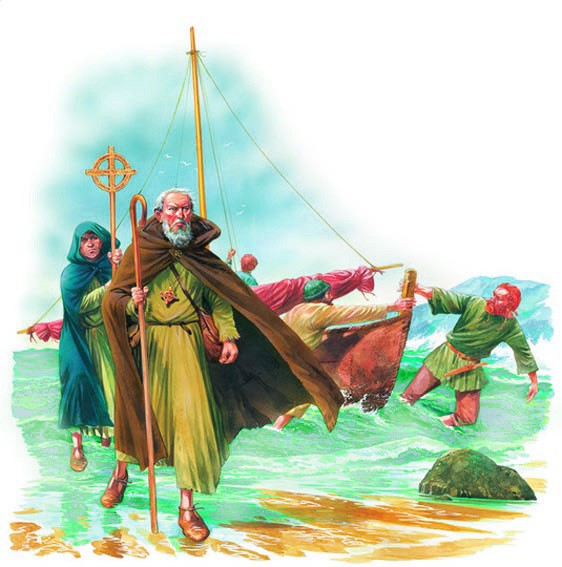
597 Pope Gregory I decides to persuade the Anglo-Saxon kings to convert to Christianity. He sends a monk called Augustine to Kent, who allow the monks to build a church at Canterbury.
613 The Anglo-Saxon king Aethelfrith of Northumbria defeats the Britons at Chester, finally ending their power in the country. The remaining Britons are exiled to Cornwall, Wales and Scotland.
600s The victorious Anglo-Saxons establish seven independent kingdoms in England: Kent, Sussex, Wessex, Essex, East Anglia, Northumbria and Mercia.
627 Edwin, King of Northumbria, is converted to Christianity and establishes a church in York.
757 Offa becomes King of Mercia. In 782–85, he builds a great defensive barrier to keep the Welsh invaders out, known today as Offa's Dyke.
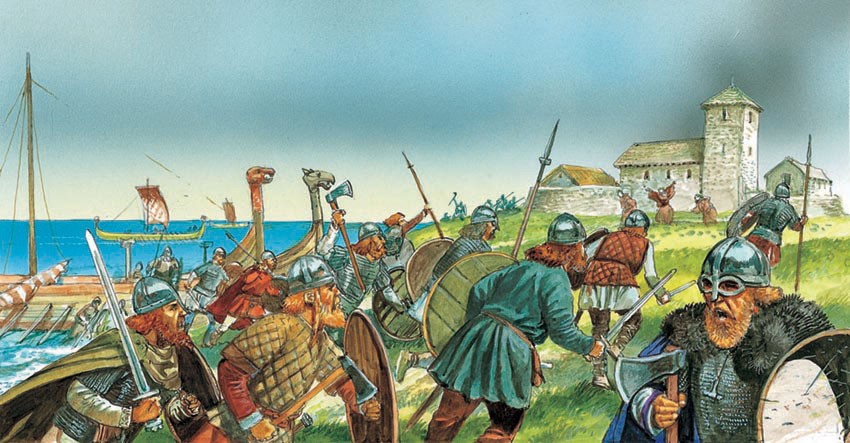
793 Viking raiders sack the monastery of Lindisfarne, situated off the Northumberland coast. Large invading armies will soon follow, seeking to establish permanent Viking settlements in England.
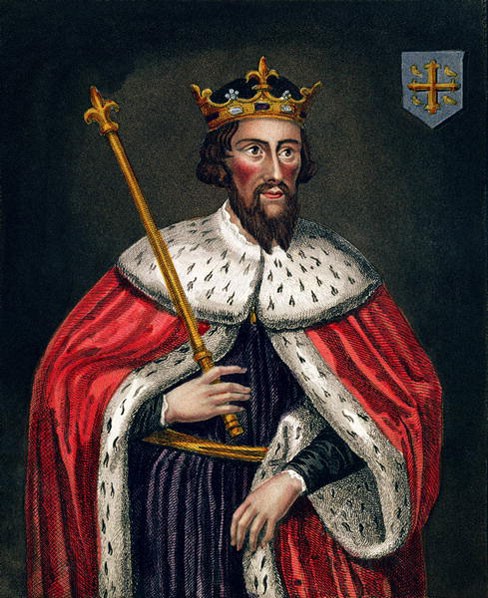
825 Egbert, King of Wessex, defeats Wiglaf, king of Mercia, at Ellandun and then receives the submission of the Northumbrians in 829. Egbert is recognized as the Bretwalda, overlord of all England.
843 Kenneth MacAlpin, a Gael, crushes the Picts and becomes the first king of Alba (a large part of present-day Scotland), ruling the country north of the River Forth.
871 Alfred becomes King of Wessex. After he defeats the Vikings in 878, he signs a treaty with their leader, Guthrum, dividing England in two along a line from London to Chester. Alfred rules the land to the south, but is recognized as overlord of the Viking-run territory, later known as the Danelaw, to the north.
924 Aethelstan, King of Wessex, becomes King of Mercia. In 927 he conquers the Viking kingdom of York, making him the first Anglo-Saxon ruler of the whole of England. He is accepted as overlord by the kings of Scotland and Wales, making him in effect, ruler of the whole of Britain.
937 Battle of Brunanburh: Aethelstan's forces defeat those of an alliance made up of Olaf Guthfrithson, King of Dublin, Constantine II, King of Scotland and Owain, King of Strathclyde.
991 Following his defeat by the Vikings at the Battle of Maldon, King Aethelred tries to buy them off by paying a a sum of money, called Danegeld. But Vikings continue to mount invasions.
1003 King Sweyn Forkbeard of Denmark invades England. In 1013 Aethelred is forced to flee to France and Sweyn becomes King of England until his death the following year.
1014 Sweyn's son Cnut becomes king, but is driven out by Aethelred returning to England to claim his throne. On Aethelred's death in 1016, Cnut contests the throne with Aethelred's son Edmund Ironside, defeating him at the Battle of Ashingdon. Cnut invades Scotland in 1027, forcing King Malcolm II to submit to him. Cnut rules until 1035.
1066 (January) Harold Godwinson is elected king of England after Edward the Confessor dies childless. His claim is challenged by Norwegian king, Harald Hadrada, whom Harold defeats at the Battle of Stamford Bridge in Yorkshire in September.
1066 (October) William, Duke of Normandy, who also claims the English throne, lands his forces in Pevensey Bay, Sussex, and defeats and kills Harold at the Battle of Hastings. William I the Conqueror becomes king, beginning Norman rule of England.

High and Late Middle Ages
1072 William I forces Malcolm III of Scotland to become his vassal under the Treaty of Abernethy. After Malcolm's death, the frontier between the kingdoms of Scotland and England is fixed for the first time.
1086 Domesday Book is published. It records the total population, the size, ownership and value of all the land, and the amount of livestock belonging to each landowner.
1120 Henry I’s two sons, including his heir, William Adelin, are drowned in the White Ship disaster, near the Normandy coast. Henry’s daughter Matilda is announced as his successor.
1135–54 Matilda's cousin Stephen seizes the throne. Matilda invades England in 1139 to press her claim, and civil war breaks out between the two rivals. Lasting throughout Stephen's reign, this period is known as The Anarchy.
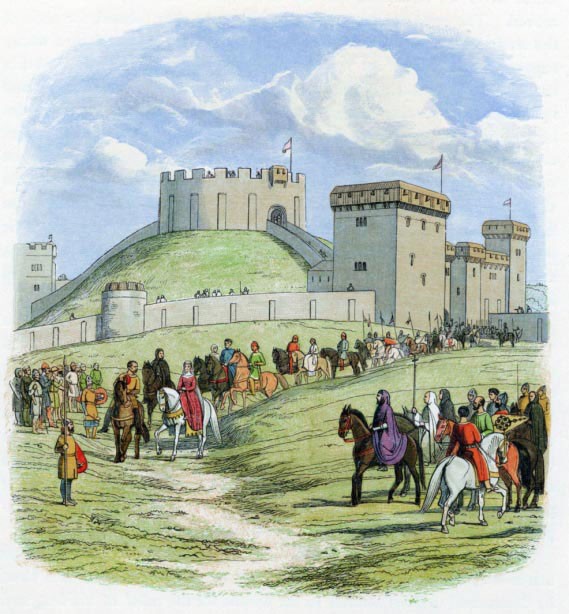
1139 David I of Scotland, having invaded England in support of Matilda, acquires Northumberland by the Treaty of Durham (and other territories later). But Scotland is forced to surrender them in the 1150s.
1154 By agreement, Matilda's eldest son, Henry Plantagenet, succeeds to the throne as Henry II. Through inheritance and marriage, Henry's realm expands to include parts of Wales and Ireland, Normandy, Anjou and Aquitaine, as well as England. It is known as the Angevin Empire.
1170 Appointed Archbishop of Canterbury by Henry II in 1162, Thomas Becket stands up to Henry over the rights and privileges of the Church. He is murdered by four knights, followers of Henry, in Canterbury Cathedral.
1173–74 Great Revolt: Henry's heir, known as "Young Henry", rebels against his father, and is joined by his brothers and mother, Eleanor. France, Scotland and Flanders all ally themselves with the rebels, but are defeated by Henry’s forces.
1195–1240 Rule of Llywelyn Fawr, "the Great", King of Gwynedd, who unites Welsh princedoms.
1215 King John is forced to sign Magna Carta, a treaty drawn up by powerful barons, which limits royal powers and guarantees certain individual rights.
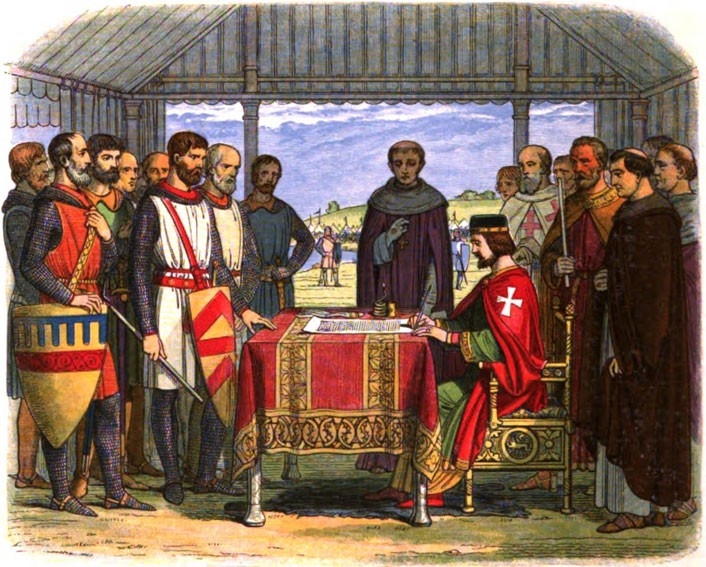
1216–17 First Barons' War: after John refuses to abide by the terms of Magna Carta, the barons rebel and invite French troops to invade England. John dies and is succeeded by Henry III. The civil war ends with the signing of the Treaty of Lambeth in 1217.
1258 Under the terms of the Provisions of Oxford, a Privy Council (selected by the barons) is set up to advise the king, and a Parlement (or Parliament) is established at Westminster.
1264 Led by Simon de Montfort, the barons are victorious over the Henry in alliance with King Louis XI of France at the Battle of Lewes, but de Montfort is defeated by royalist forces at Evesham the following year.
1284 Following the refusal by the Welsh prince Llywelyn ap Gruffydd to pay homage to Edward I of England, and Llywelyn's defeat by an English invasion force under Edward in 1282, Wales comes under direct rule from England.
1296 King Edward I invades Scotland and defeats an alliance of Scottish nobles under John Balliol and France (the Auld Alliance), taking over the rule of Scotland himself. In 1297 William Wallace leads a rebellion against Edward. After a success at the Battle of Stirling Bridge in 1297, Wallace is defeated by the English at Falkirk the following year.
1301 Edward, son of King Edward I, is proclaimed the first English Prince of Wales.
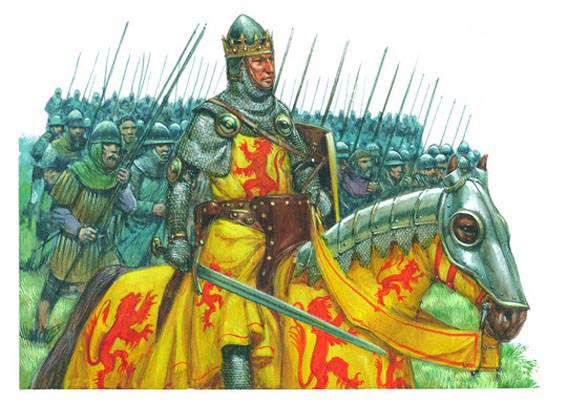
1306 Following the capture and execution of William Wallace by the English in 1305, Robert the Bruce leads another uprising and is crowned King Robert I of Scotland. in 1314 he besieges the English in Stirling Castle. An English army led by Edward II to relieve the siege is heavily defeated at Bannockburn.

1320 Declaration of Arbroath: Scottish lords and bishops declare Scotland's independence, winning the support of Pope John XXII. In 1327 Robert invades England to force the new English king, Edward III, to recognize Scottish independence, which is agreed to by treaty in 1328.
1332 Edward Balliol leads an English-backed invasion of Scotland and defeats Scots loyal to eight-year-old King David II. Edward takes the throne but is then forced into exile. In 1333 Edward III of England invades Scotland in support of him and defeats the Scots at the Battle of Halidon Hill.
1337 Claiming the throne of France through his mother Isabella, King Edward III declares war on France. Lasting until 1453, this is known as the Hundred Years' War.
1346 Edward III scores a victory of the French at the Battle of Crécy (August) and captures Calais. English forces crush a Scottish invading force at the Battle of Neville's Cross (October).
1348 Black Death, an epidemic of bubonic plague, arrives in England. It dies out in 1349 but returns several more times in the 14th century.

1381 Peasants’ Revolt: peasants throughout England rise in revolt in protest against a new poll tax, levied on everyone regardless of their wealth
1403 King Henry IV defeats the combined forces of Henry Percy, Earl of Northumberland, and leader of the Welsh rebels Owain Glyndwr at the Battle of Shrewsbury.
1415 Henry V renews his claim to the French throne and invades France, capturing Harfleur and defeating French forces at the Battle of Agincourt.
1455 Wars of the Roses: civil war breaks out between supporters of King Henry VI, from the House of Lancaster, and those of the regent (appointed to rule in Henry's place while he suffered a mental breakdown), Richard Duke of York and, later, his son, Edward IV.
1483 The 12-year-old Edward V and his brother Richard, the “Princes in the Tower”, are murdered in the Tower of London, reportedly on the orders of their uncle Richard, Duke of Gloucester, who succeeds to the throne as Richard III.
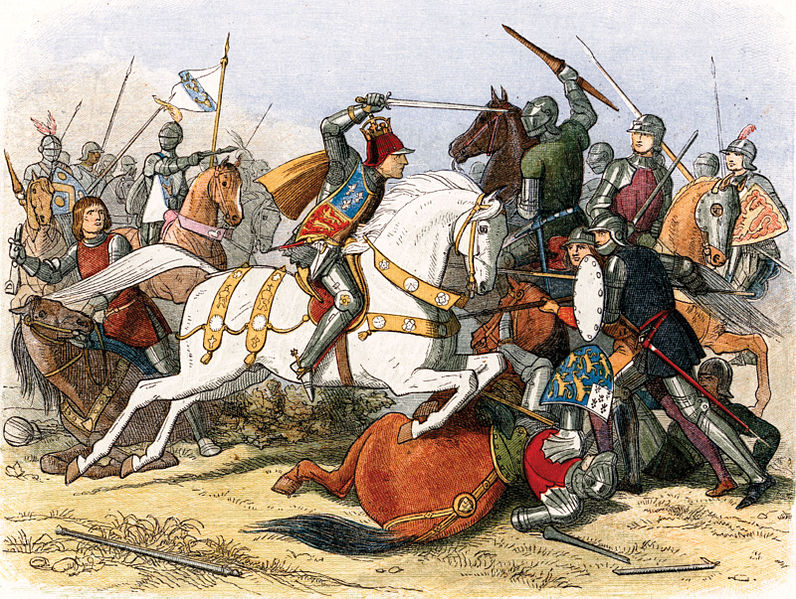
1485 Richard II is defeated at the Battle of Bosworth Field by Henry Tudor, the Lancastrian claimant to the throne of England, bringing the Wars of the Roses to an end. Henry is crowned Henry VII, the first Tudor king of England.
16th century
1513 Scottish forces under James IV invade England in support of France under the terms of the Auld Alliance, but are defeated by Henry VIII's army at Flodden.
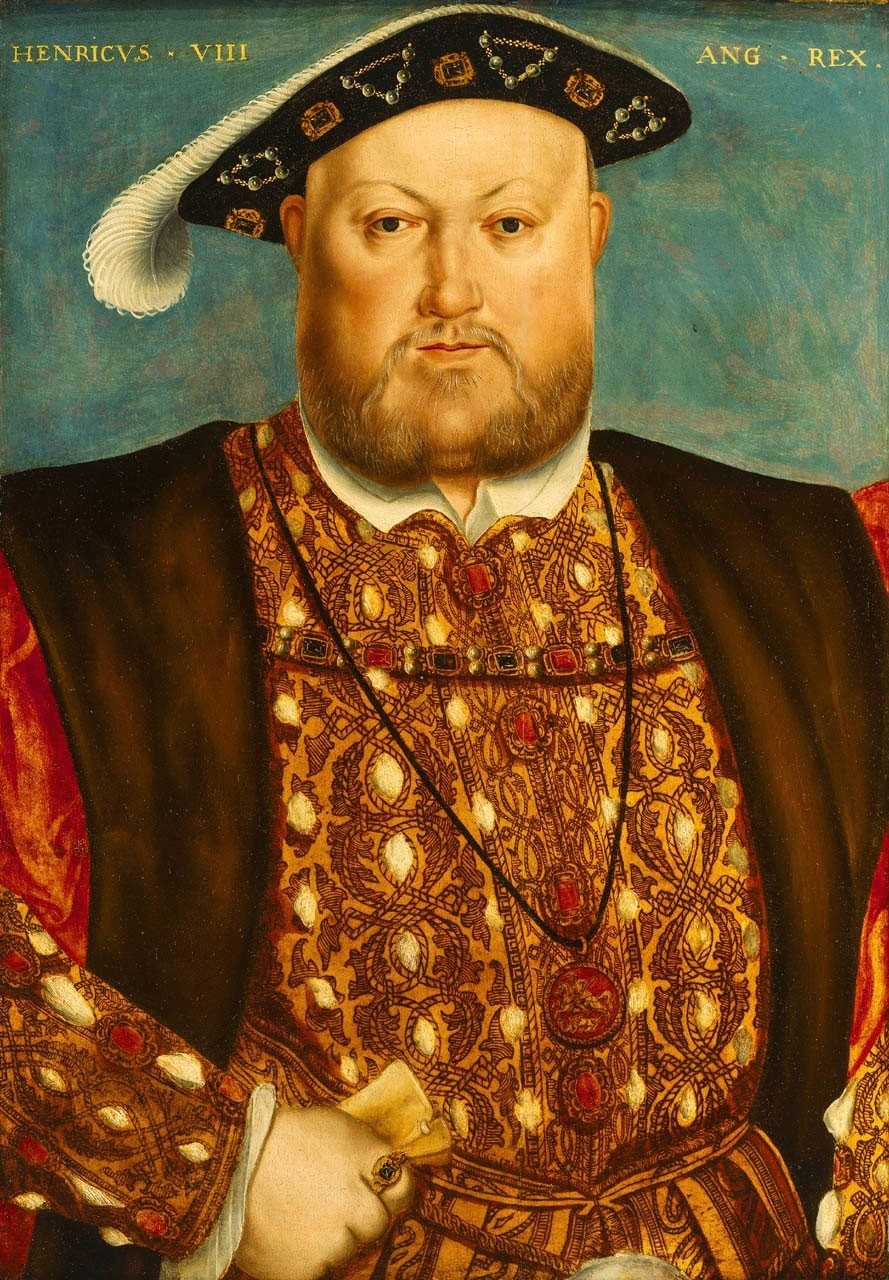
1534 Act of Supremacy: After Pope Clement VII refuses to agree to the annulment of his marriage to Catherine of Aragon, King Henry VIII declares himself Supreme Head of the English Church and cuts off all relations with Rome
1536–40 Dissolution of the Monasteries: under orders from Henry VIII, Thomas Cromwell closes and demolishes monasteries across the country.
1542 Under the Crown of Ireland Act, Henry VIII becomes King of Ireland. It begins the Tudor conquest of Ireland by which lands are confiscated and colonized by settlers from Britain, English law and language is imposed and Catholicism is banned.
1553–58 Reign of Mary I, the first queen to rule England in her own right. The Pope's control over the Church is restored and hundreds of Protestants are burned at the stake for heresy, for which Mary becomes known as "Bloody Mary".
1558 Queen Elizabeth I succeeds her sister Mary to the throne of England
1560 Scottish parliament adopts the Scots Confession, determining that Scotland will become a Protestant nation. The Scottish Reformation ends the Auld Alliance with Catholic France.
1565 Scottish nobles rebel against their Catholic queen, Mary, Queen of Scots, forcing her to give up her throne for her young son, James VI. She flees to England in 1568 where she is imprisoned by her cousin, Elizabeth I.
1577–80 Sailor and privateer Francis Drake sails around the world in the Golden Hind. On his return, he is knighted by Queen Elizabeth.
1587 Mary, Queen of Scots, is tried, found guilty of plotting to assassinate Elizabeth I and beheaded at Fotheringay Castle.
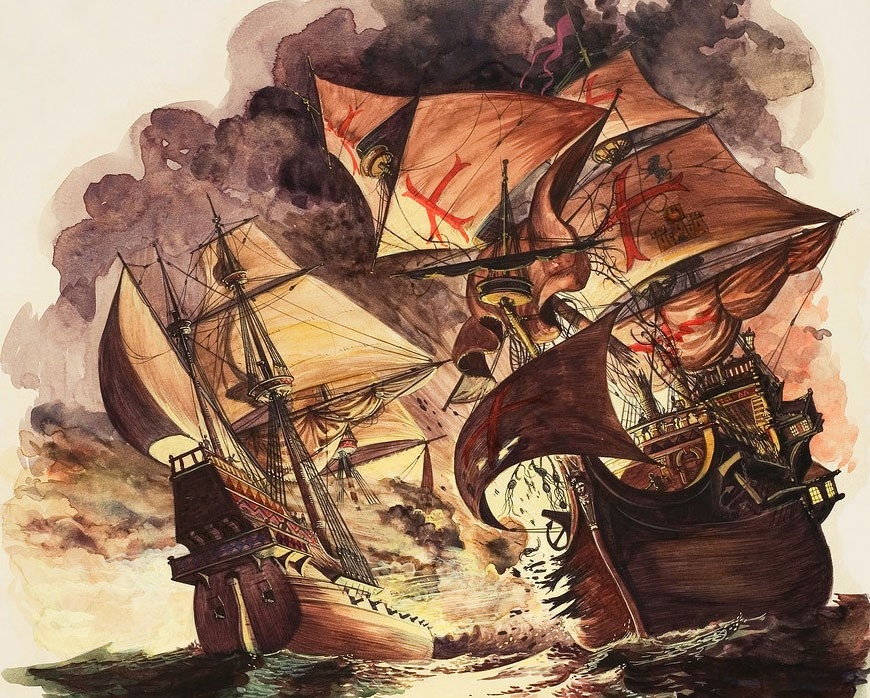
1588 The English navy, under the command of Lord Howard and Drake, scores a victory over the Spanish Armada, a huge fleet of warships assembled by King Philip II of Spain.
17th century
1600 The East India Company is founded to trade in the Indian Ocean region, initially with the East Indies. The company will gain control of large parts of the Indian subcontinent, which it conquers and rules with its own armed forces.
1603 Elizabeth I dies with no heir and King James VI of Scotland, the son of Mary, Queen of Scots, is named king, James I of England. The two kingdoms keep their separate parliaments, laws and other institutions.
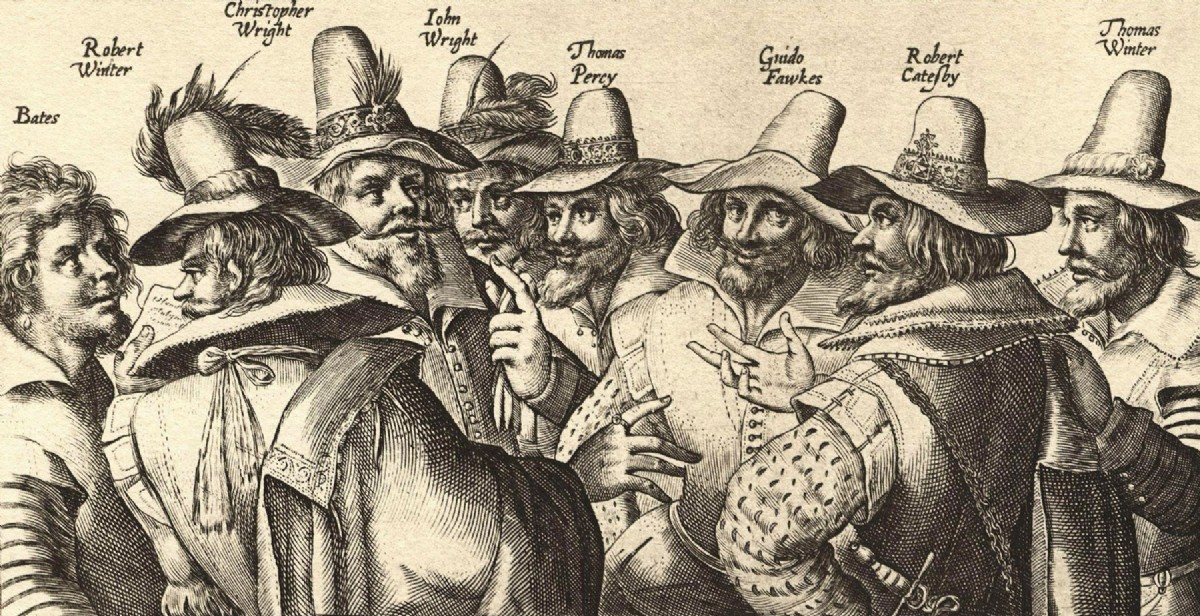
1605 Gunpowder Plot: a failed attempt to blow up Parliament and assassinate King James I by a group of Catholics led by Robert Catesby.
1607 The first English settlement in America, Jamestown, is founded and named in honour of the king.
1620 The Pilgrims, a small Protestant sect aiming to establish a separate church, set sail for Massachusetts on the Mayflower from Plymouth.
1620s–80s Colonies are founded on the Atlantic coast of North America by settlers from England and other parts of Europe seeking religious freedom. These territories will come to be known as the Thirteeen Colonies.
1639–40 Bishops' Wars: Scottish Covenanters, who oppose Charles' religious reforms, gain control of Scotland and briefly occupy northern England.
1642 Amid growing tension between King Charles I and Parliament, Charles enters the House of Commons in an attempt to arrest five MPs. He then raises his royal standard at Nottingham, calling for military support against Parliament, thus beginning the English Civil War.
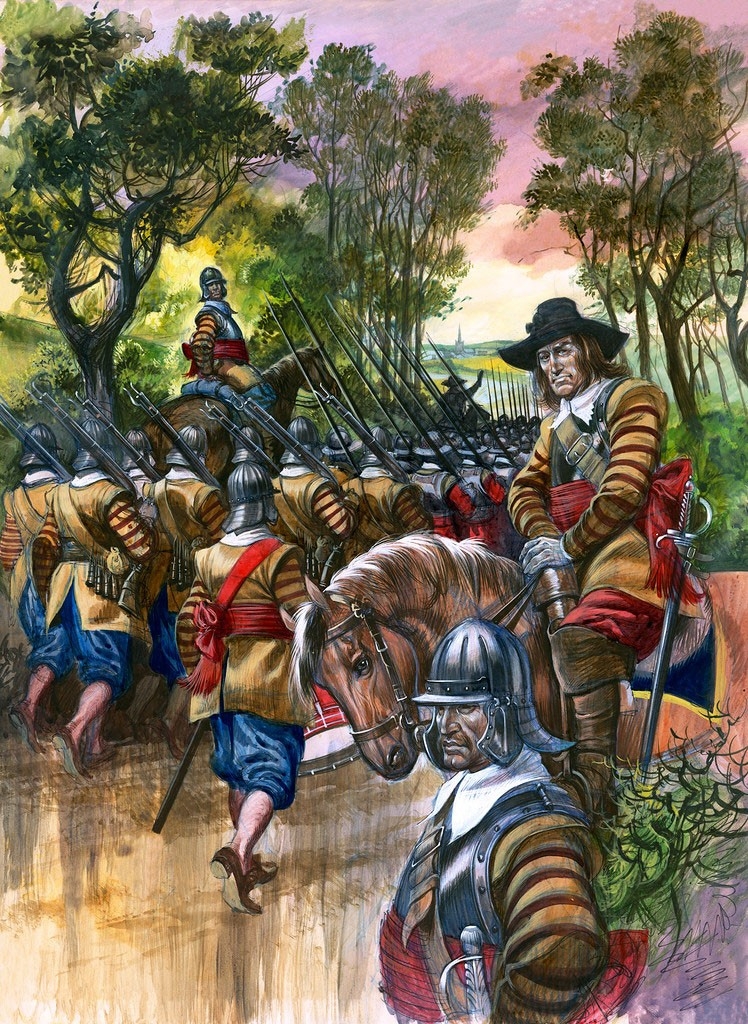
1645 Under the command of Sir Thomas Fairfax and Oliver Cromwell, Parliament's New Model Army scores a crushing victory over Royalist forces at the Battle of Naseby.
1646 Charles surrenders to Scottish forces, bringing the First English Civil War to an end. He is imprisoned by Parliament in 1647.
1649 Charles I escapes and allies with the Scots. Cromwell crushes the invading force at Preston in 1648. Parliament votes to arrest and execute the king, who is beheaded. The monarchy abolished, England is now ruled as a Commonwealth.
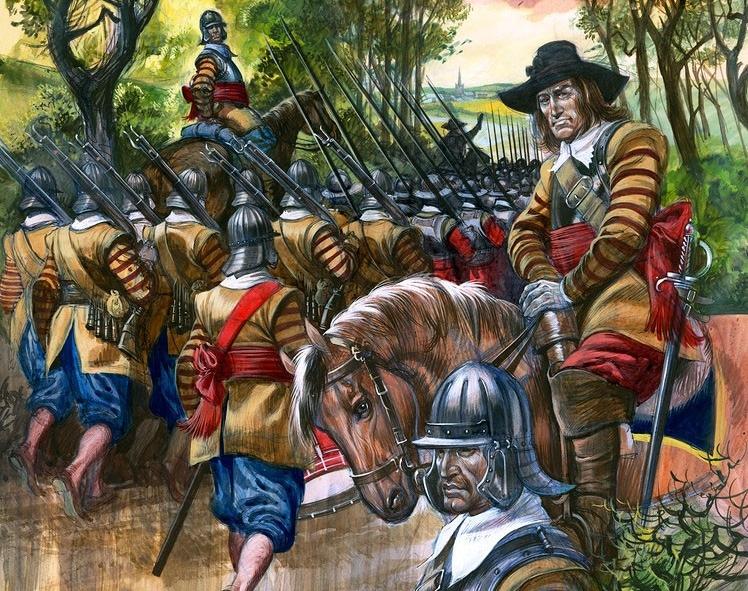
1650–52 Anglo-Scottish war: in the Treaty of Breda of 1650, the Scots agree to restore Charles II to the English throne in return for a guarantee of the rights of the Church of Scotland. Under Cromwell's command, the New Model Army defeats a Scottish army at Dunbar (1650) and Inverkeithing (1651), and under the Charles at the Battle of Worcester (1651). Charles escapes capture and flees to exile in France. The Kingdom of Scotland is absorbed into the Commonwealth.
1653 Cromwell dismisses Parliament and rules as Lord Protector. After his death, the monarchy is restored and Charles II becomes king (1660).
1664 English capture the Dutch colony of New Netherland in North America. They later rename the settlement of New Amsterdam, New York.
1665 Great Plague strikes the country, claiming around 200,000 lives.
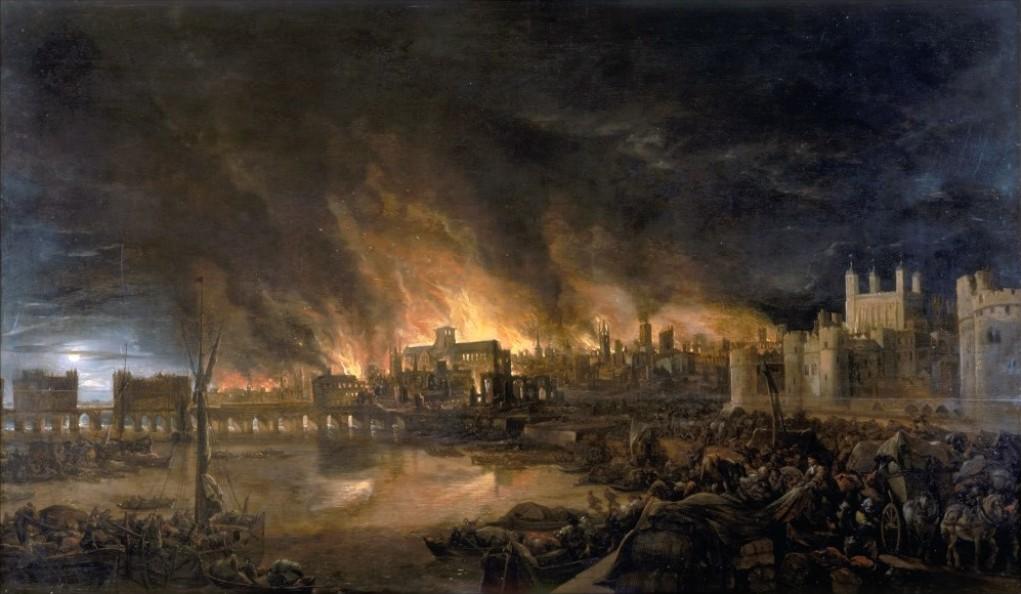
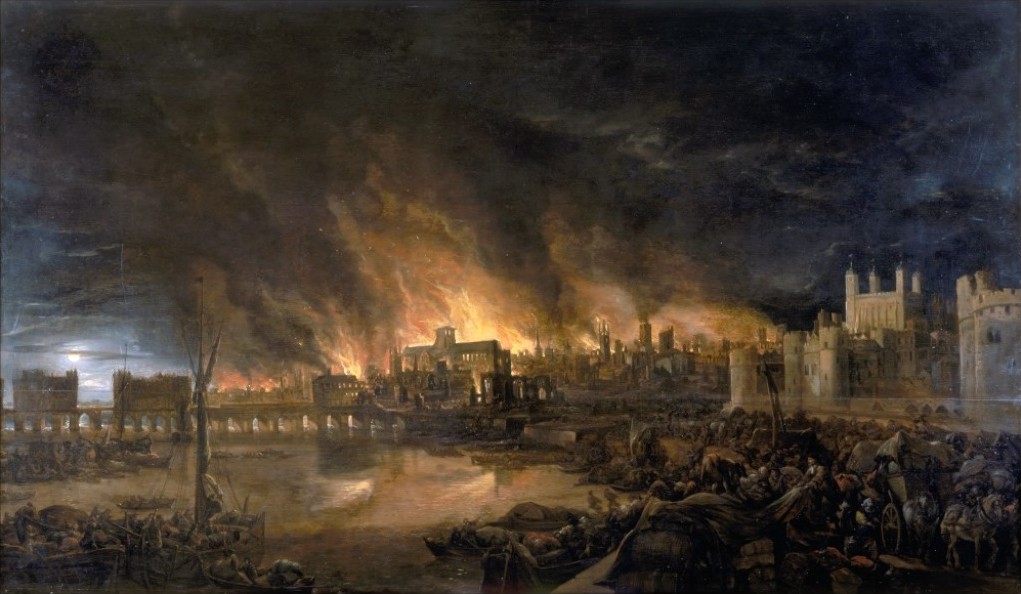
1666 Great Fire of London: fire breaks out in a bakery in Pudding Lane and spreads throughout the whole city, burning for four days until it finally burned itself out. More than 13,000 buildings, including St Paul’s Cathedral, are destroyed.
1667 Raid on the Medway: Royal Navy ships are attacked and destroyed by Dutch warships sailing up the Medway estuary in Kent during the second of three Anglo-Dutch Wars, fought between 1652 and 1674.
1672 Royal African Company is set up to organize the capture and transportation of African slaves to English colonies on Caribbean islands to work on the sugar plantations established there. Between the 1680s and the 1780s millions of Africans are shipped across the Atlantic in chains and sold as slaves in the Caribbean, South America and the British colonies in North America, two-thirds of them carried in British ships.
1688 Glorious Revolution: opposed to King James II's intentions to restore Catholicism, Protestant lords revolt and offer the crown to William of Orange, husband of James's daughter Mary. William lands with an army and marches on London. James flees to France, enabling William and his wife Mary to take the throne in 1689 as joint monarchs, William III and Mary II.
1690 James II attempts to regain the throne by landing a French army in Ireland, but he is defeated at the Battle of the Boyne.
18th century
1707 The Scottish Parliament votes to agree a union with England, creating the United Kingdom of Great Britain.
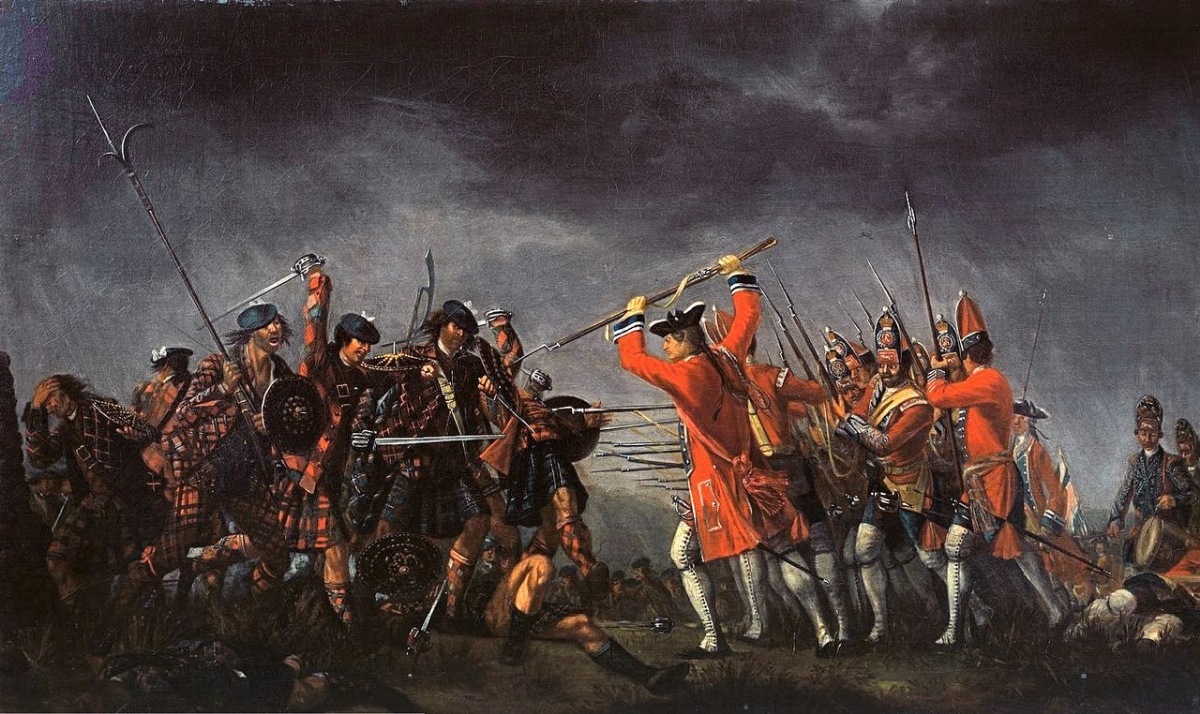
1745 The grandson of James II, Charles Edward Stuart, the Young Pretender, known as "Bonnie Prince Charlie", raises an army in Scotland to back his claim to the throne. The Scots are heavily defeated at Culloden and Charles escapes into exile.
1757 East India Company troops under Robert Clive defeat Nawab of Bengal and his French allies at the Battle of Plassey, giving the Company control over Bengal, India.
1763 Following victory against France in the Seven Years' War, Britain gains Canada from France and Florida from Spain. France recognizes British rule over the East India Company's possessions in India.
1770 Captain James Cook claims New South Wales, Australia, for Britain.
1775 War breaks out between Britain and the Thirteen Colonies on the Atlantic coast of North America. In 1776, the colonies issue their Declaration of Independence.
1779 The world’s first iron bridge is built over the River Severn in Shropshire, heralding the Industrial Revolution.
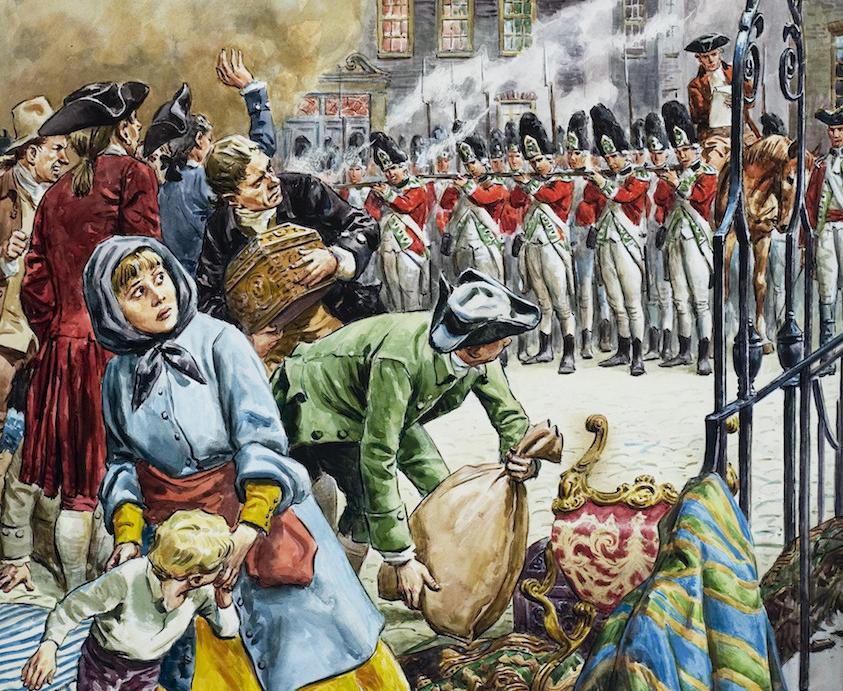
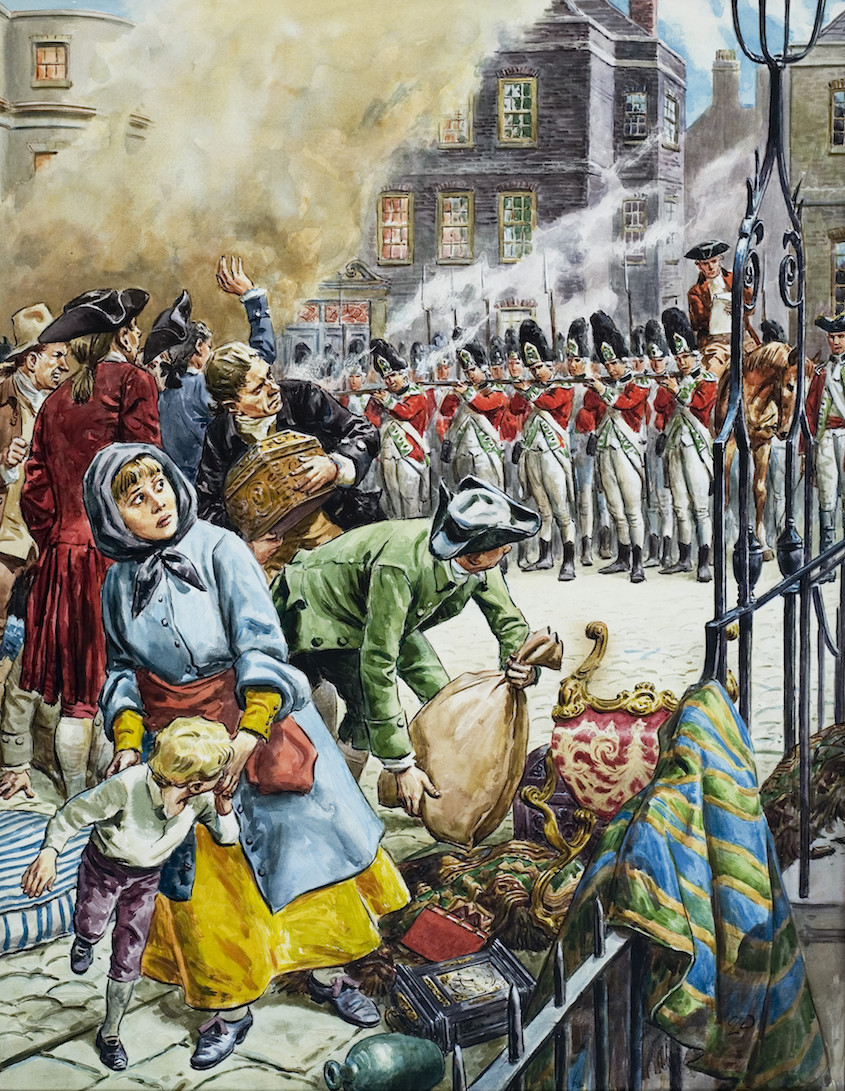
1780 Gordon Riots: anti-Catholic riots break out in London and are suppressed by the army.
1783 After a major defeat at Yorktown in 1781, the British agree to recognize the independence of the new United States of America.
19th century
1801 Irish Act of Union unites Britain and Ireland as the United Kingdom of Great Britain and Ireland, with a single parliament at Westminster.
1803–15 Napoleonic Wars: a series of major wars fought by Britain and other European powers against France and its allies under Napoleon Bonaparte.
1805 Battle of Trafalgar: the British Royal Navy under the command of Admiral Horatio Nelson is victorious over a Franco-Spanish fleet.

1807 Slave Trade Act abolishes the slave trade—but not yet slavery itself—in the British Empire.
1815 Battle of Waterloo: a coalition of British, Dutch and Hanoverian forces led by the Duke of Wellington and Prussian forces under Marshal Blücher defeat the French army under the command of Napoleon.
1819 Peterloo Massacre: a protest at the lack of suffrage (the right to vote in elections) in Northern England, where many large cities have no representation in Parliament, is brutally dispersed by armed soldiers in St Peter's Field, Manchester.
1825 Stockton and Darlington Steam Railway opens, the world’s first public railway to use steam locomotives.
1832 Great Reform Act: parliamentary seats are reallocated to the English and Welsh counties and the larger industrial towns and cities. Scotland and Ireland both gain more MPs. The qualifications to vote are made fairer. Despite these changes, only 1 in 5 men can vote, and no women at all.
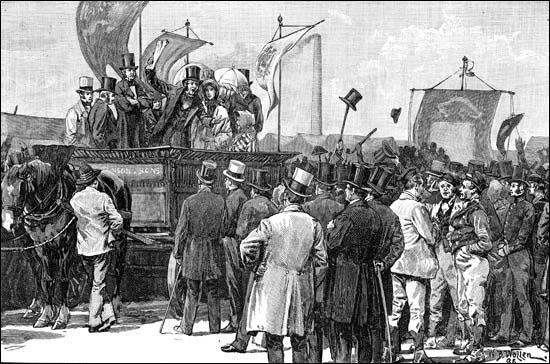
1833 Factory Act: Limitations on working hours for children and young people are extended to include woollen and linen mills. A system of factory inspectors to enforce regulations is also introduced.
1833 Slavery Abolition Act: enslavement is banned everywhere in the British Empire, effective from 1834, except territories administered by the East India Company (until 1843).
1834 New Poor Law: payments to poor families are abolished, forcing the poor into workhouses.
1845–49 Severe famine in Ireland, leading to an estimated 1 million deaths, while another 1.5 million Irish people emigrate to the United States, Canada and Great Britain
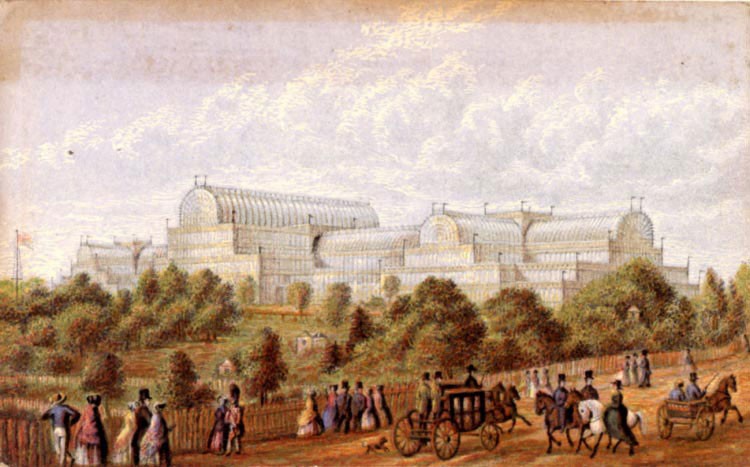
1851 Great Exhibition, the world’s first international exhibition, takes place in a vast, purpose-built glass hall known as the Crystal Palace in London's Hyde Park.
1857 Mutiny breaks out among the East India Company's Indian troops, known as sepoys. Order is eventually restored in 1858. The administration of British India is then passed to the British Government.
1880s Scramble for Africa: African territory is shared out between the European powers, with Britain one of the main claimants. It gains control of Egypt, Sudan, Sierra Leone, Gold Coast, Nigeria, parts of East Africa and vast areas of southern Africa.
1899–1902 Second Boer War: British troops are victorious over the Boers in South Africa. The two independent Boer republics are absorbed into the British Empire.
20th century
1909 People's Budget: the Liberal government introduces unprecedented taxes on the lands and incomes of Britain's wealthy to fund new social welfare programmes. Despite opposition in the House of Lords, it is eventually passed in 1910.
1911 The Parliament Act, introduced to prevent the House of Lords blocking government policy, restricts the powers of the House of Lords.
1912 The passenger ship RMS Titanic, sailing from Southampton to New York across the Atlantic Ocean on its maiden (first) voyage, collides with an iceberg, causing it to sink with more than 1500 people on board.
1914 Outbreak of World War I: Britain declares war on Germany after it invades Belgium. Many thousands of young British men volunteer to fight.
1916 (April) Easter Rising: a group of Irish Nationalists stage an uprising in Dublin to make Ireland an independent republic outside the United Kingdom.
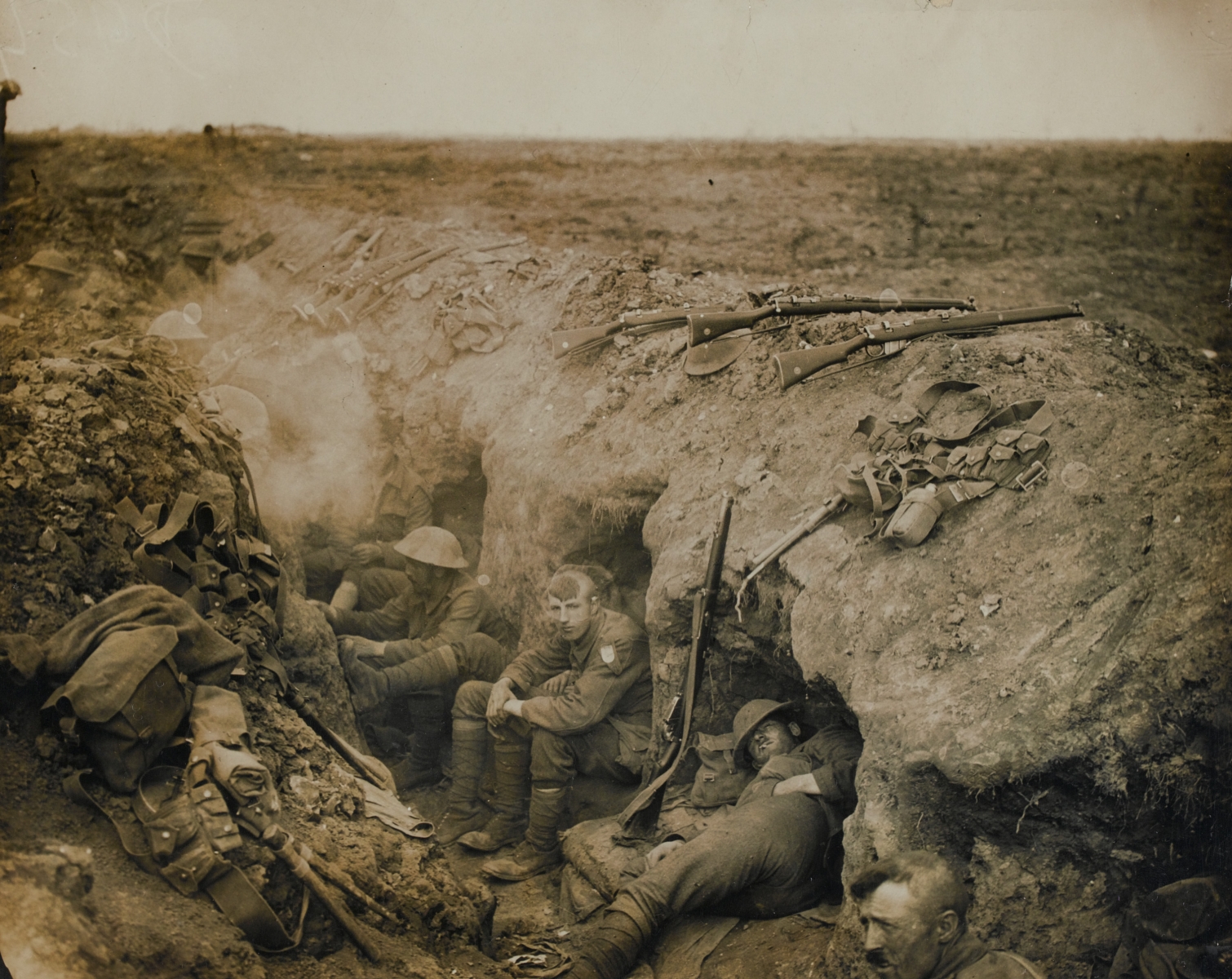
1916 (July–November) Battle of the Somme: British and Allied forces battle with German army near the River Somme in northern France in one of the bloodest conflicts in history.
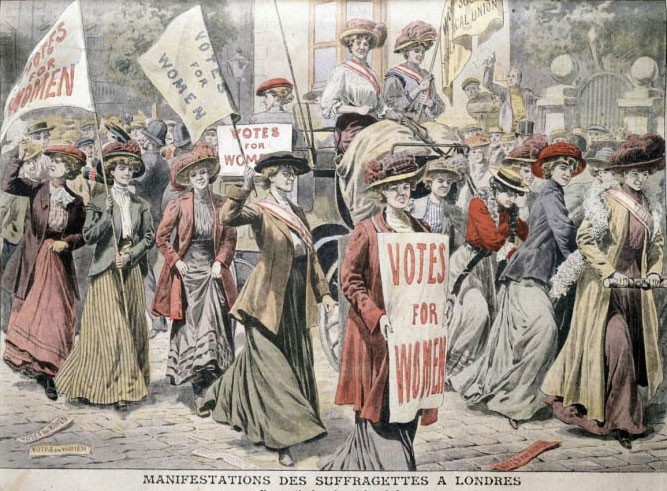
1918 (February) The Representation of the People Act is passed, giving all women over the age of 30 the right to vote. Later the same year, the Parliament (Qualification of Women) Act 1918 is passed, allowing women to be elected to Parliament.
1918 (August) Allied forces launch the Hundred Days Offensive against German positions and secure victory. Armistice (ceasefire) comes into force at 11 a.m. on 11th November.
1919–21 Anglo-Irish War: British forces fight the Irish Republican Army (IRA), set up to defend the new republican parliament, or Dáil, in Dublin
1921 Anglo-Irish Treaty: Irish Republicans agree to an independent Irish Free State for the 26 largely Catholic Republican counties in the south of Ireland, while the six mostly Protestant Unionist counties in the north remain part of the UK.
1926 General Strike: called by the Trades Union Congress (TUC) in support of coal miners and their pay dispute with mine owners, a general strike causes the entire country to grind to a halt. It is called off after only eight days, with a defeat for the miners.
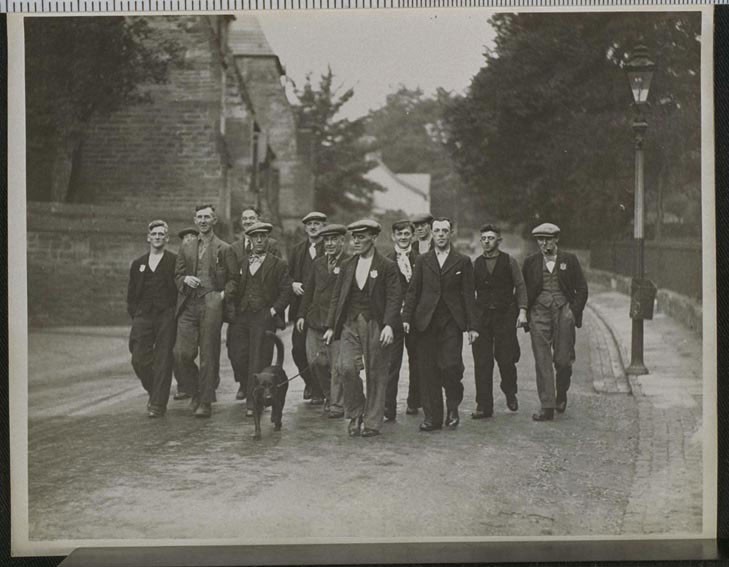
1929 The Wall Street crash leads to economic slump, known as the Great Depression, in Britain. A Labour government, elected for the first time in 1929, fails to tackle the crisis and is replaced by a Conservative-led National government in 1931. Unemployed soars, reaching three million (one in four workers) by 1933.
1931 The Statute of Westminster grants the Dominions of the British Empire—Canada, Australia, New Zealand, Irish Free State and South Africa—full independence
1936 King Edward VIII abdicates to marry Wallis Simpson, a twice-divorced American.
1939 Outbreak of World War II: Britain declares war on Germany after it invades Poland. Conscription is introduced for all men aged 18–41. Blackout begins and evacuation plans are put into action.
1940 Rationing is introduced (January). Winston Churchill replaces Neville Chamberlain as Prime Minister (May). British troops sent across the Channel to help defend France from the German onslaught are forced to evacuate from Dunkirk (May–June). Battle of Britain fought between the British Royal Airforce (RAF) and the German Luftwaffe, ending in victory for the RAF (July–October).
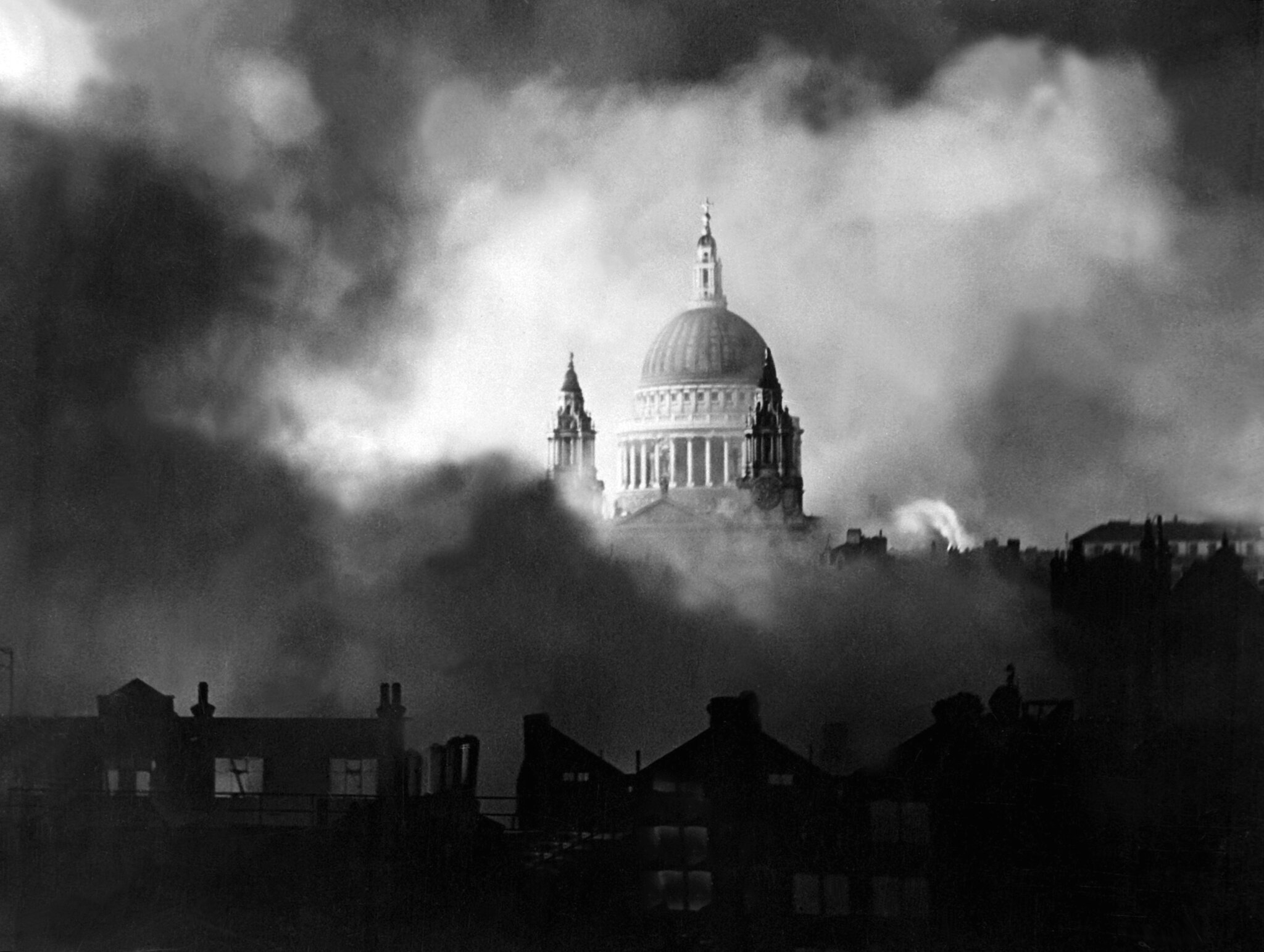
1940–41 The Blitz, the Luftwaffe's campaign of bombing British towns and cities, begins on 7th September, causing great loss of life and destruction across the country. Coventry is destroyed on the night of 14th November 1940. The air raids last until May 1941.
1942–43 British stronghold of Singapore surrenders to the Japanese with 80,000 British and Commonwealth troops taken prisoner (February 1942). British army defeats German army at El Alamein, Egypt (November 1942). Allied forces invade Italy (September 1943)
1944 (March) Education Act: secondary education is made free and compulsory for all children in England and Wales.
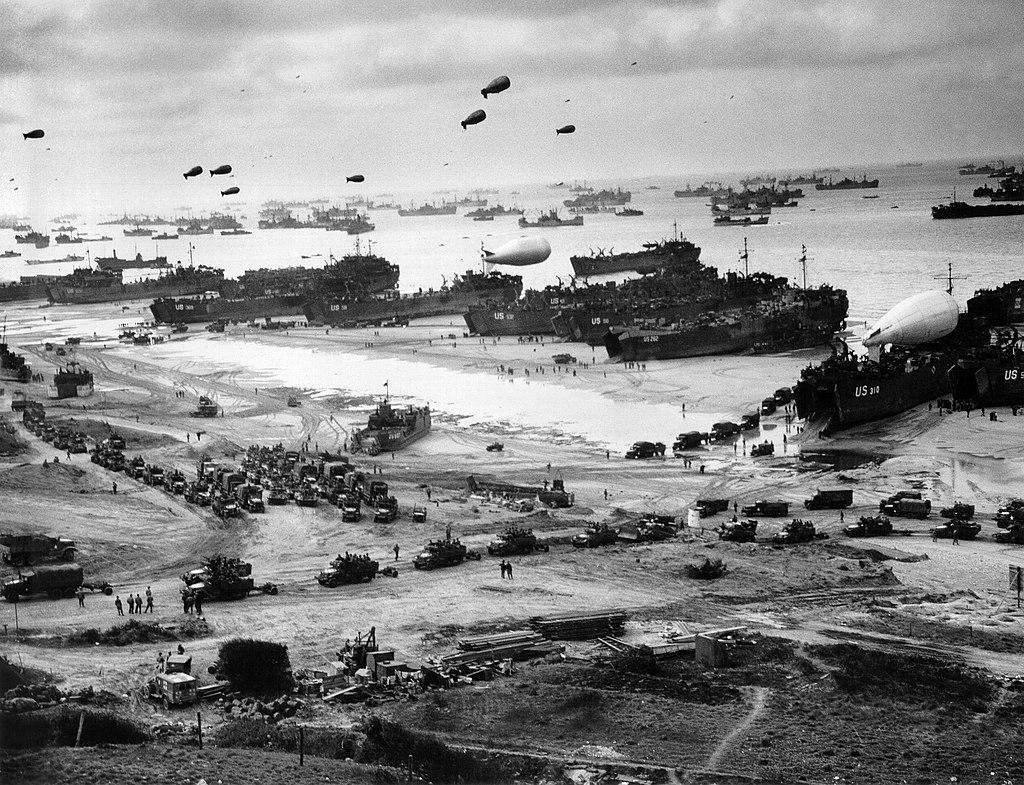
1944 (6th June) D-Day: Allied troops are successfully landed on the beaches of Normandy, from where they begin their liberation of continental Europe
1945 VE Day (Victory in Europe Day, 8th May): celebrations at the defeat of Nazi Germany. The end of the war comes on 2nd September with the surrender of Japan. (October) Britain becomes one of the five permanent members of the United Nations Security Council.
1947 British India is partitioned between Muslim-majority Pakistan and Hindu-majority India, which both become independent nations. The partition displaces between 10 and 20 million people along religious lines, creating a massive refugee crisis and triggering large-scale violence, with estimates of the loss of life varying between 200,000 and 1 million.
1948 (June) Invited to work in Britain, around 800 people arrive from the Caribbean Islands on a ship called the Empire Windrush. They, along with the 300,000 or so West Indians who follow them over the next 20 years, become known as the Windrush Generation. (July) The National Health Service is created to provide free health care for everyone, regardless of income.
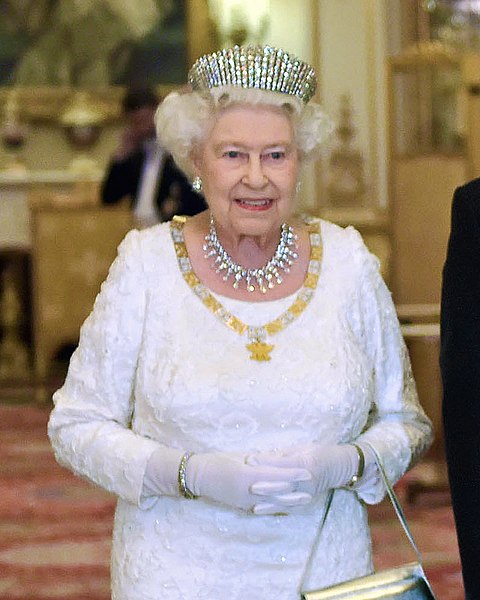
1952 Elizabeth II becomes queen of the United Kingdom.
1956 Suez Crisis: Egypt's president, Gamal Abdul Nasser, nationalizes Suez Canal, prompting an invasion by Britain and France to retake it. Facing opposition from US President Eisenhower, Britain withdraws its forces.
1957–81 Nearly all British colonies are granted full independence
1969 The Troubles break out in Northern Ireland with rioting by Protestant mobs resulting in the British Army being sent to protect Catholics. Northern Irish government is suspended in 1972 and direct rule from London is set up. Provisional IRA, a Catholic paramilitary group, begins a guerrilla campaign against British security forces and targets on mainland Britain in 1970s and 80s.

1973 Britain joins the European Economic Community (EEC), which becomes the European Union (EU) in 1992.
1982 Falklands War: Argentina invades and occupies the Falkland Islands, a British possession in the South Atlantic Ocean. Britain sends troops to reclaim the islands which they do so after 10 weeks of fighting.
1997 Following an agreement reached between Britain and China in 1984, Hong Kong is handed back to China, marking the end of the British Empire.
1998 The Good Friday Agreement (Belfast Agreement) is signed in Northern Ireland and approved by voters across the island of Ireland in referendums held on 22nd May. Through restoring self-government to Northern Ireland on the basis of "power sharing" and the introduction of other measures, the Troubles are brought to an end.
1999 Elections are held to the new Scottish Parliament and Welsh Assembly and devolved governments are formed.
21st century
2001 British troops join a United States-led coalition invading Afghanistan in response to the 9/11 attacks carried out by al-Qaeda, toppling the Taliban government. From 2003, the Taliban begin an insurgency against the new Afghan government and coalition forces. British troops withdraw in 2014, but Britain has a military presence there until 2021.
2003 British troops join a United States-led coalition invading Iraq in order to overthrow of the Ba'athist government of Saddam Hussein. The conflict persists with an Iraqi uprising against coalition forces and the new Iraqi government The last British forces withdraw in 2011.

2014 In a referendum, the Scottish people vote against independence.
2016 The British people vote to leave the European Union in a referendum. Britain's withdrawal takes place in January 2020.
2017 A fire breaks out in the Grenfell Tower block of flats in North Kensington, London, killing 72 people. It is the worst residential fire in Britain since the Blitz of World War II.
2020–21 The Covid-19 pandemic has a severe impact on the UK's economy, causes major disruptions to education and has far-reaching impacts on society. Britain is first country in the world to use an approved vaccine, developed through a collaboration between Oxford University and AstraZeneca.
2022 Queen Elizabeth II dies. Her reign of 70 years and 214 days is the longest of any British monarch. She is succeeded by her son, Charles III.
pics
Without in any way limiting Q-files Ltd’s exclusive rights under copyright, any use of this publication to “train” generative artificial intelligence (AI) technologies to generate text is expressly prohibited. Q-files Ltd reserves all rights to license use of this work for generative AI training and development of machine learning language models.