
Story of humans

CITE
We have made every effort to follow citation style rules, but there may be some minor differences. If in doubt, please refer to the appropriate citation style manual.
Homo sapiens. (2026). In Q-files Encyclopedia, Prehistoric, Story of humans. Retrieved from
https://www.q-files.com/prehistoric/story-of-humans/homo-sapiens
"Homo sapiens." Prehistoric, Story of humans, Q-files Encyclopedia, 2 Jun. 2026.
https://www.q-files.com/prehistoric/story-of-humans/homo-sapiens.
Accessed 6 Aug. 2026.
Homo sapiens 2026. Prehistoric, Story of humans. Retrieved 6 August 2026, from
https://www.q-files.com/prehistoric/story-of-humans/homo-sapiens
Prehistoric, Story of humans, s.v. "Homo sapiens," accessed August 6, 2026.
https://www.q-files.com/prehistoric/story-of-humans/homo-sapiens


Homo sapiens
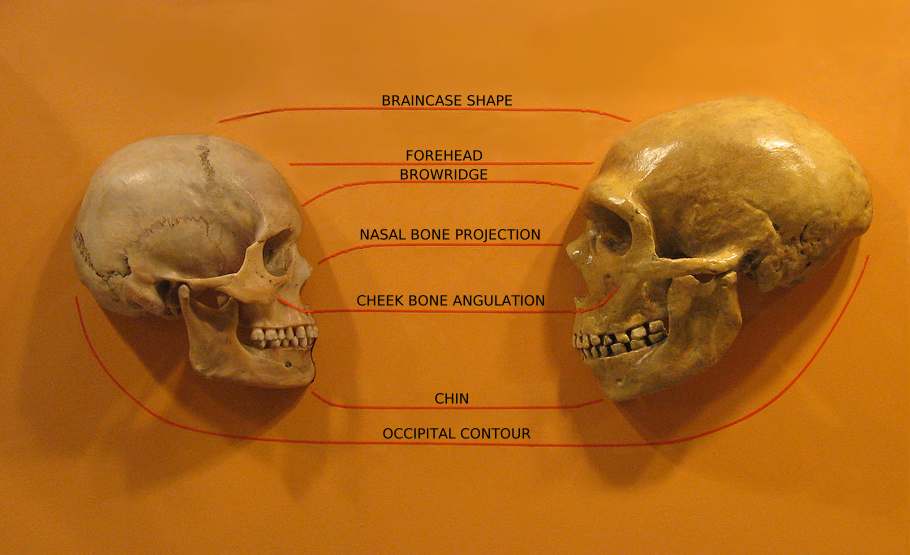
Homo sapiens ("wise man")—modern humans—probably evolved from Homo erectus, an earlier type of human, or its descendants. Discoveries of bones, tools and weapons in Africa all provide evidence that Homo sapiens emerged on that continent. They no longer had the jutting brows and large jaws of earlier types of human, but high foreheads and bony chins. Their brains were larger than those of any other human, apart from the Neanderthals. Their bodies had a different shape, with narrower shoulders and hips. Homo sapiens later spread from Africa to all parts of the world. Today, we are the only species of human still in existence. But that was not the case until just a few thousand years ago.
2nd June 2026
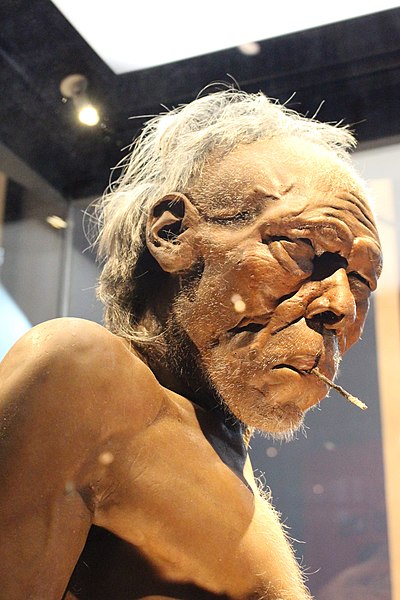
Origins of Homo sapiens
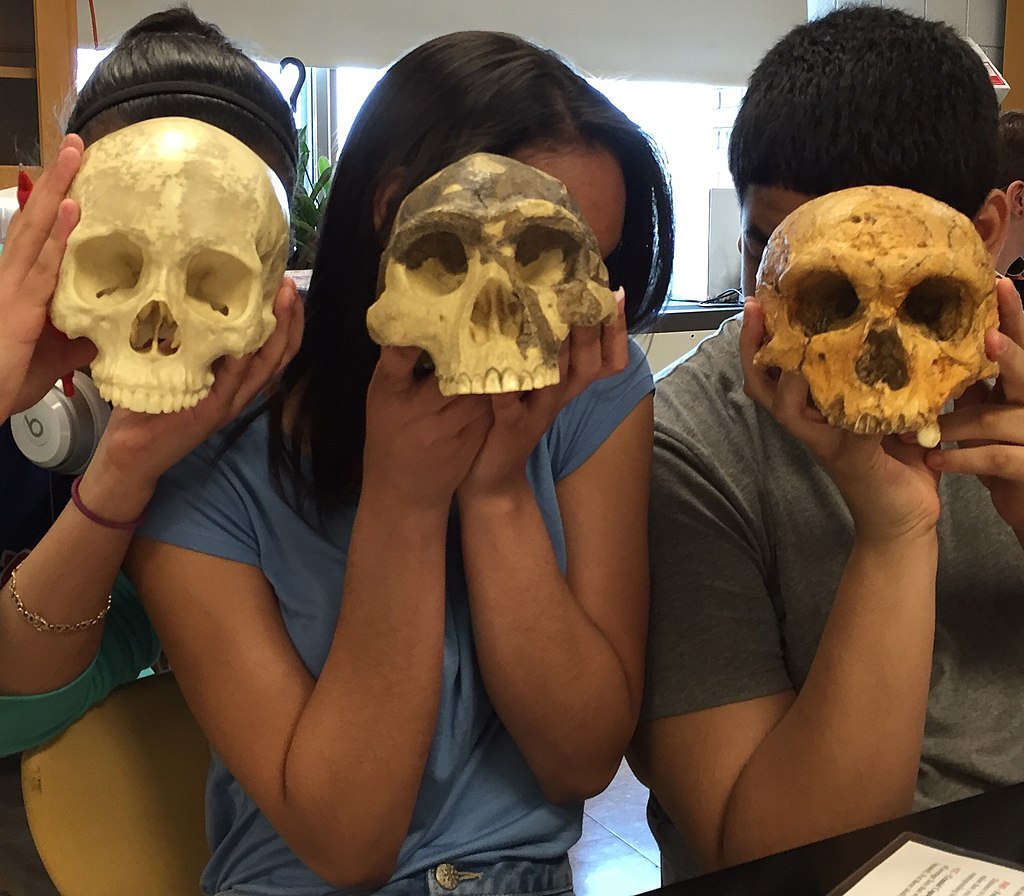

Modern humans probably evolved from Homo erectus (or Homo ergaster) or its descendants, along with our close relatives the Denisovans and the Neanderthals. Scientists are not certain exactly when and where this happened. According to a study published in September 2025, some scientists think the ancestors of modern humans may have branched off from those relatives at least 1 million years ago. This may have happened in China, although much evidence points to Homo sapiens later evolving in Africa.
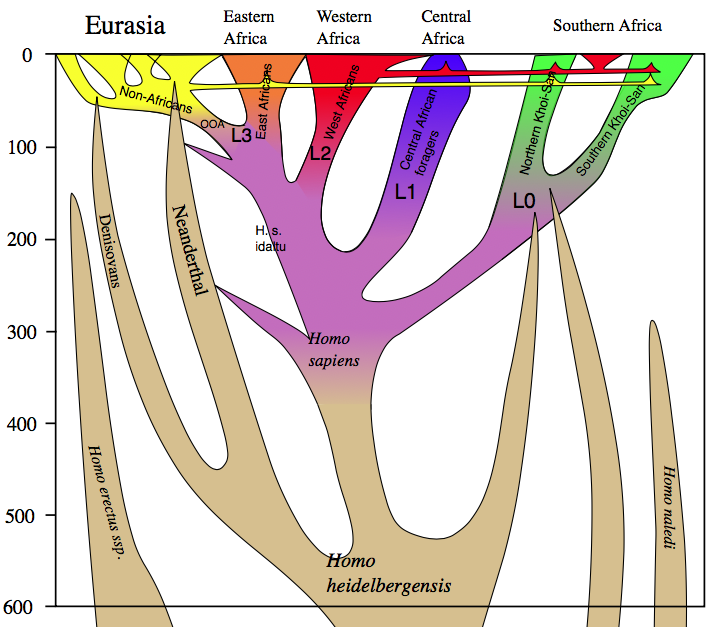
Scientists think that different populations of humans, all with varying physical characteristics, evolved in different parts of Africa. Spread across the vastness of that continent, their populations became isolated, then overlapped from time to time—perhaps as their numbers dwindled and expanded according to the changing climate. As these different peoples mingled and interbred during times of plenty—for instance, when the Sahara became a lush, green grassland rather than the arid desert it is today—their physical traits gradually merged to become a new, distinct species: Homo sapiens.
It is very likely that culture—the accumulation of knowledge, beliefs and values in a society or tribe—were also shared when the different populations came together, and were passed down the generations. These cultural traits, the product of our ancestors' instinct to be social (like people today), were key to Homo sapiens' evolution and their eventual dominance over other types of human that lived in Africa at the time.
So Homo sapiens evolved probably not in one place (as was once thought), but all over Africa. By about 300,000 years ago, the oldest date we have fossil evidence for, we know that Homo sapiens was living in what is now Morocco, northwestern Africa. A skull of Homo sapiens, dated to around 259,000 years ago, has been found at the Florisbad site in South Africa. Since the 1970s, scientists have found fossils of Homo sapiens from the Omo Valley, Ethiopia, dating to 200,000 years ago. Until recently, these were long held to be the oldest known fossils of Homo sapiens.

Homo sapiens in Africa
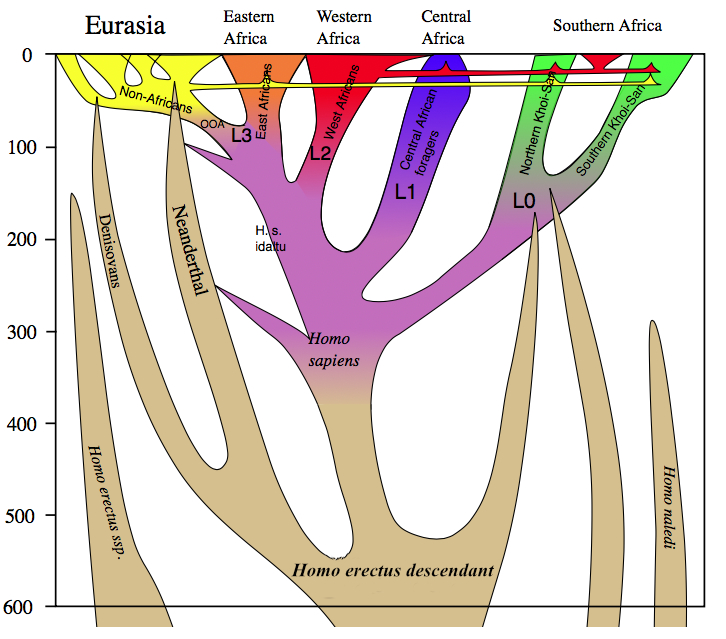

Some time between 350,000 and 260,000 years ago, a group diverged (became separated) from the rest of the population of Homo sapiens. As a result, two clusters of Homo sapiens lived separately on the African continent for tens of thousands of years: one, in Southern Africa, the ancestors of the Khoi-San (hunters-gatherers who still live in Southern Africa today); the other in Eastern Africa, the ancestors of everyone else living on Earth today.
By around 130,000 years ago—probably a time of severe and widespread drought—a third group, the ancestors of present-day Baka, Batwa and other pygmy hunter-gatherer peoples, had diverged from the Eastern African population and expanded into Central Africa. Later, a fourth group migrated to Western Africa.
Early migrations
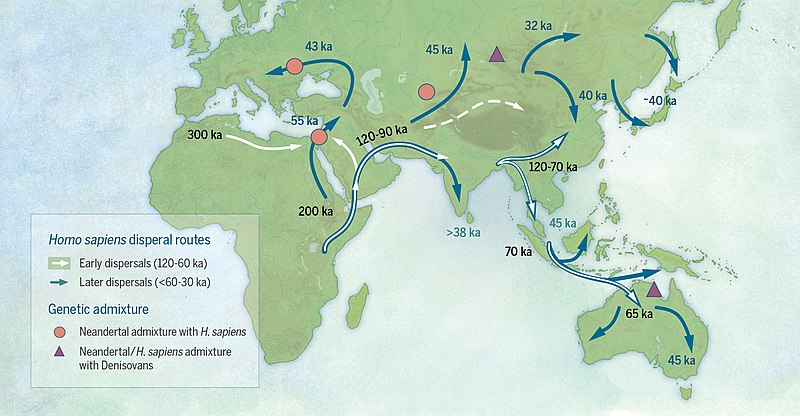
Recent fossil discoveries from Asia and Europe, provide evidence that some Homo sapiens—called "early modern humans" to distinguish them from more recent migrants (see below)—first left Africa more than 200,000 years ago, possibly as much as 270,000 years ago.
In 2015, researchers in China discovered teeth belonging to Homo sapiens, dating perhaps as early as 120,000 years old in a cave in Hunan province. A jawbone dating to between 177,000 and 194,000 years old was discovered in the the Misliya Cave in Israel in 2018. Even older stone tools found in rock layers beneath the jaw suggest that humans could have been present there even longer. Also in 2018, advanced stone tools, probably the work of Homo sapiens, discovered in India were dated to at least 170,000 years ago. In July 2019, studies of a skull discovered in Apidima Cave, Peloponnese, Greece, in the 1970s established that it actually belonged to a Homo sapiens and was more than 210,000 years old.
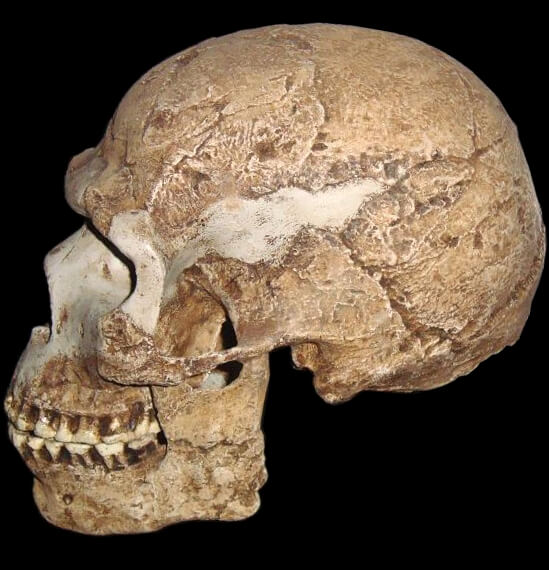
Scientists have also discovered through DNA analysis that Neanderthals (other kinds of humans who lived in Europe and the Near East between around 400,000 and 40,000 years ago) and early modern humans met and interbred. This appears to have happened about 270,000 years ago as the first wave of migrant Homo sapiens arrived on lands in the Near East already settled by Neanderthals. Later migrants probably also interbred.
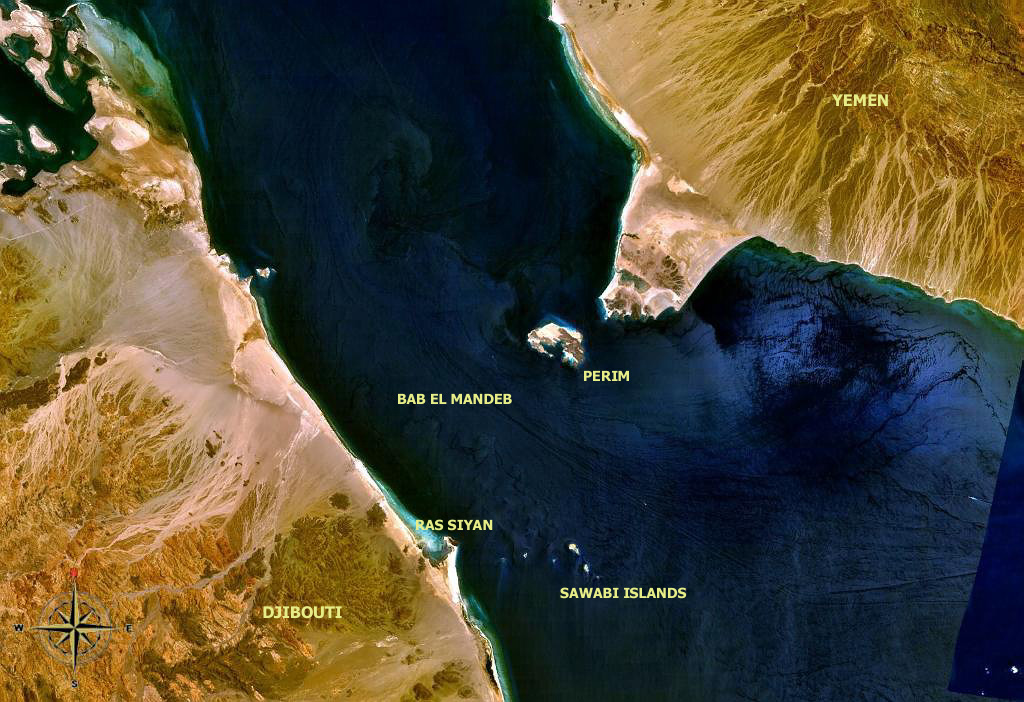
From this evidence, it is likely that there were several waves of migration out of Africa made by Homo sapiens, beginning possibly around 270,000 years ago. Humans probably took two separate routes out of the continent. In the north, they travelled via Egypt and Sinai to the Near East. Further south, they also found a bridging point across the narrow strait at the southern end of the Red Sea—even narrower and shallower than it is today. The drought of 130,000 years ago might have driven Homo sapiens out of Africa's parched interior and towards the coast. Those from Eastern Africa arriving on the shores of the Red Sea would then have crossed over to the Arabian Peninsula and from there on to South Asia.
For some reason, these early migrations appear to have tailed off by around 80,000 years ago. By this time, Homo sapiens had probably reached China. Around 70,000 years ago, they made it to Sumatra in Indonesia and, by 65,000 years ago, to northern Australia, getting there by travelling across the sea "island-hopping" aboard simple rafts.
Modern humans
By around 55,000–50,000 years ago, Homo sapiens achieved what scientists term "behavioural modernity". This means they had become more "advanced"—more like us today. According to the evidence found at archaeological digs, we know they were burying their dead, creating art and musical instruments, making more sophisticated tools and weapons, using animal hides to make clothes and hunting with cleverer "big game" hunting techniques, such as using trapping pits or driving animals off cliffs. These patterns of behaviour were the natural product of cultural evolution, in particular the development of language and the growing readiness of humans to live and work together among others who were not closely related.
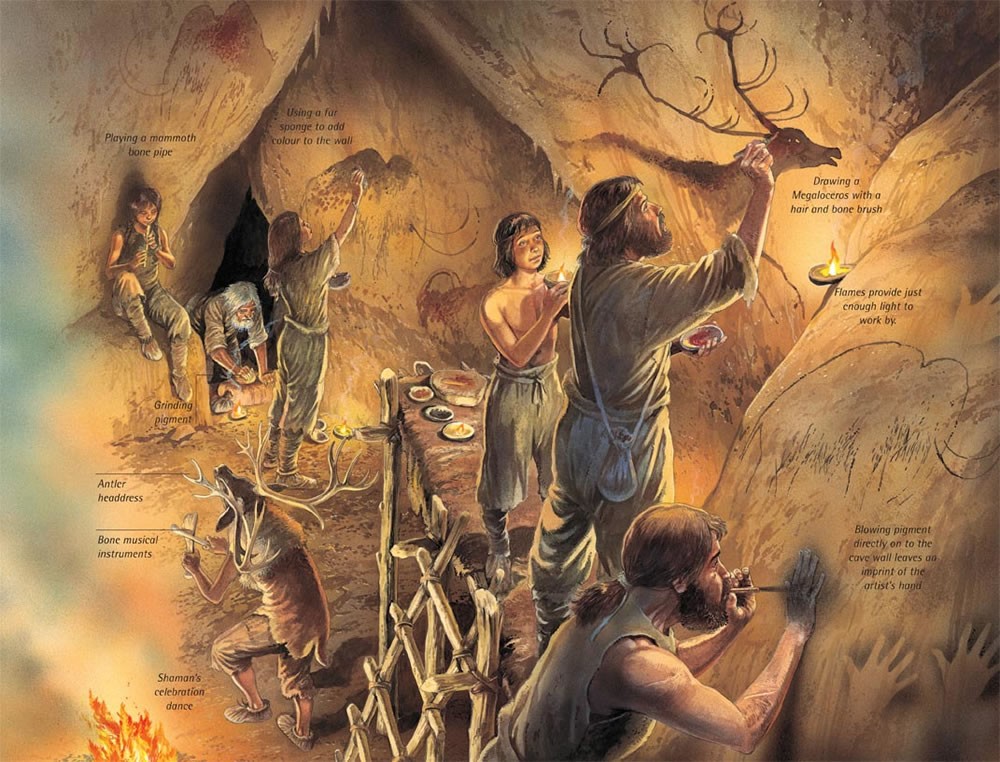
The emergence of this modern version of Homo sapiens, with traits that clearly distinguish them from Homo sapiens from earlier times was, according to some scientists, quite a sudden development, one that took place over just a few thousand years. They describe it as the "Great Leap Forward", "Upper Palaeolithic Revolution" or "Cognitive Revolution".
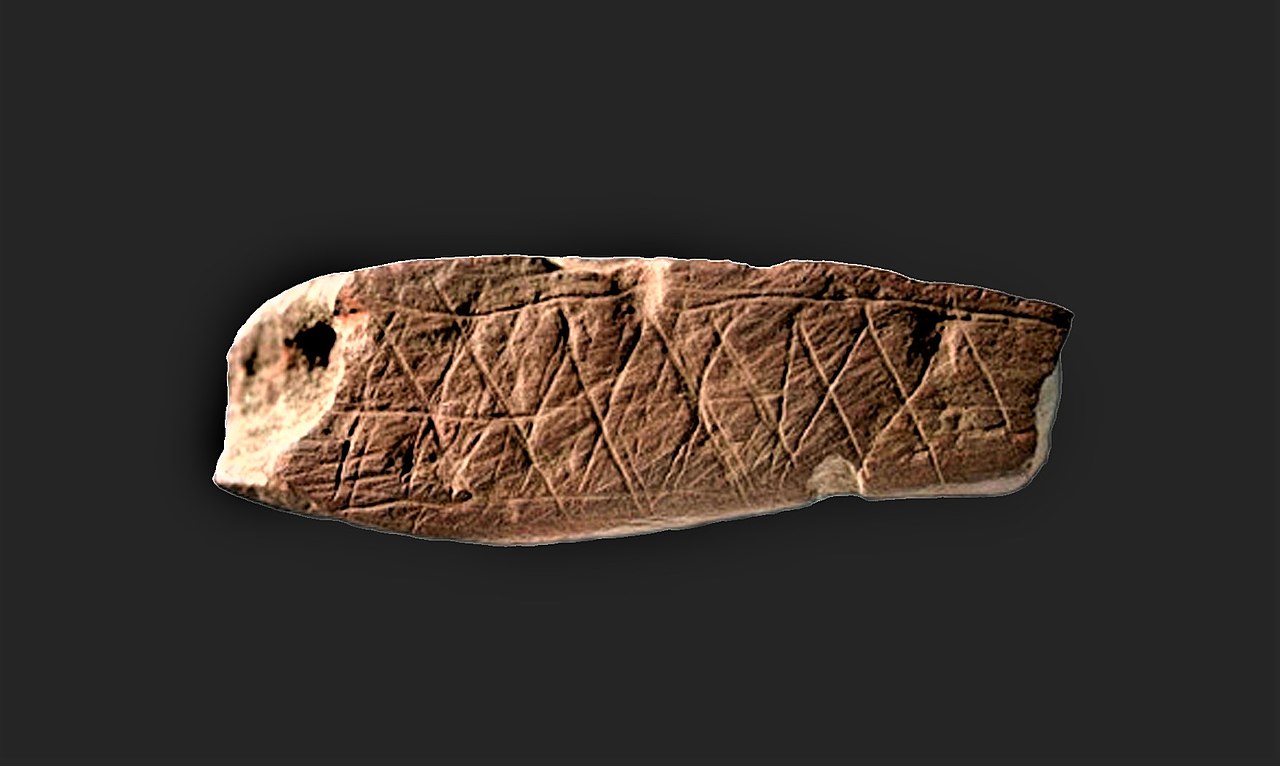
Other experts argue that it was actually a more gradual process. They note that these developments had already started to appear progressively among Homo sapiens over tens of thousands of years, perhaps beginning around 70,000 years ago. Still other researchers think Homo sapiens had been undergoing a gradual behavioural evolution ever since the species emerged more than 300,000 years ago.
Recent migrations
Homo sapiens, both anatomically—and now behaviourally—modern, soon (about 55,000 years ago) embarked on waves of migration from Africa into Europe that, in terms of sheer numbers, dwarfed the migrations made by their ancestors. Spreading further and further afield in just a few thousand years, modern humans made their way across Asia—with some branching off to Europe—and all the way to the far southeast of the continent, probably reaching Australia between 50,000 and 40,000 years ago.
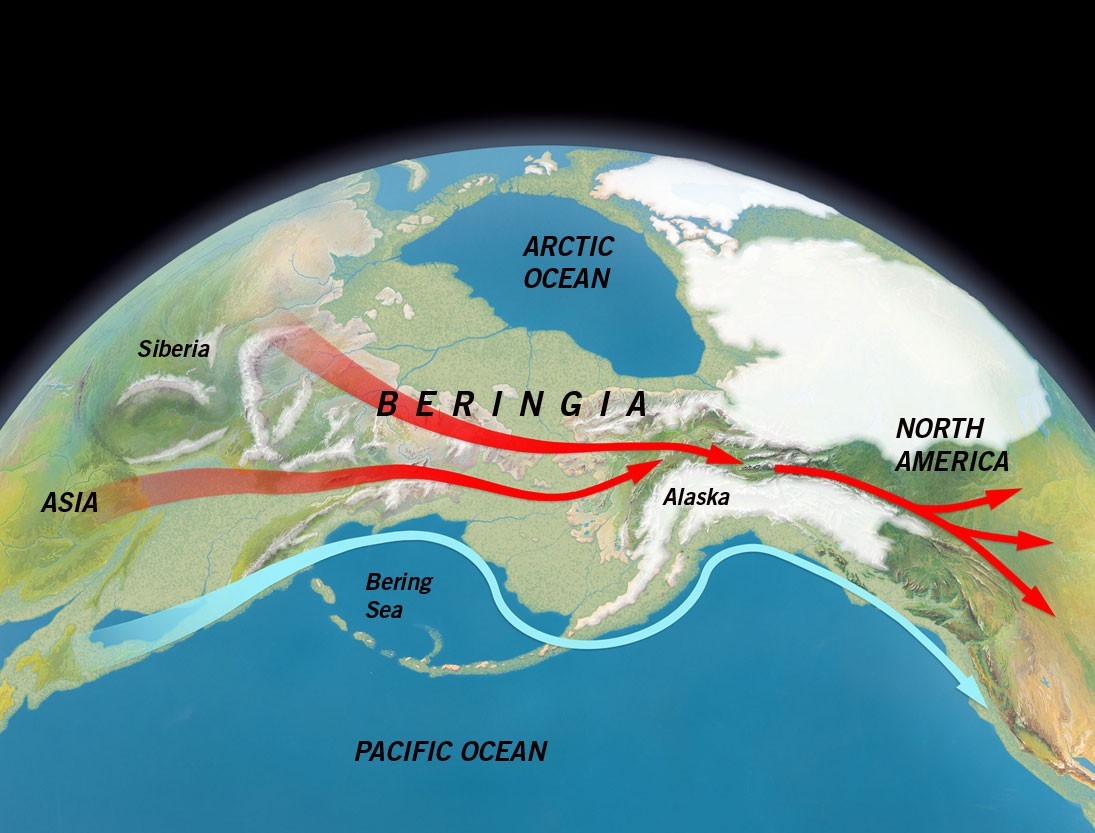
Some headed northwards through East Asia and Siberia to cross into North America via the Bering land bridge around 26,500 years ago. Despite the presence of large ice sheets covering the continent during the last Ice Age, groups of people made their way south between 23,000 and 21,000 years ago, reaching the very tip of South America about 14,600 years ago, possibly earlier.

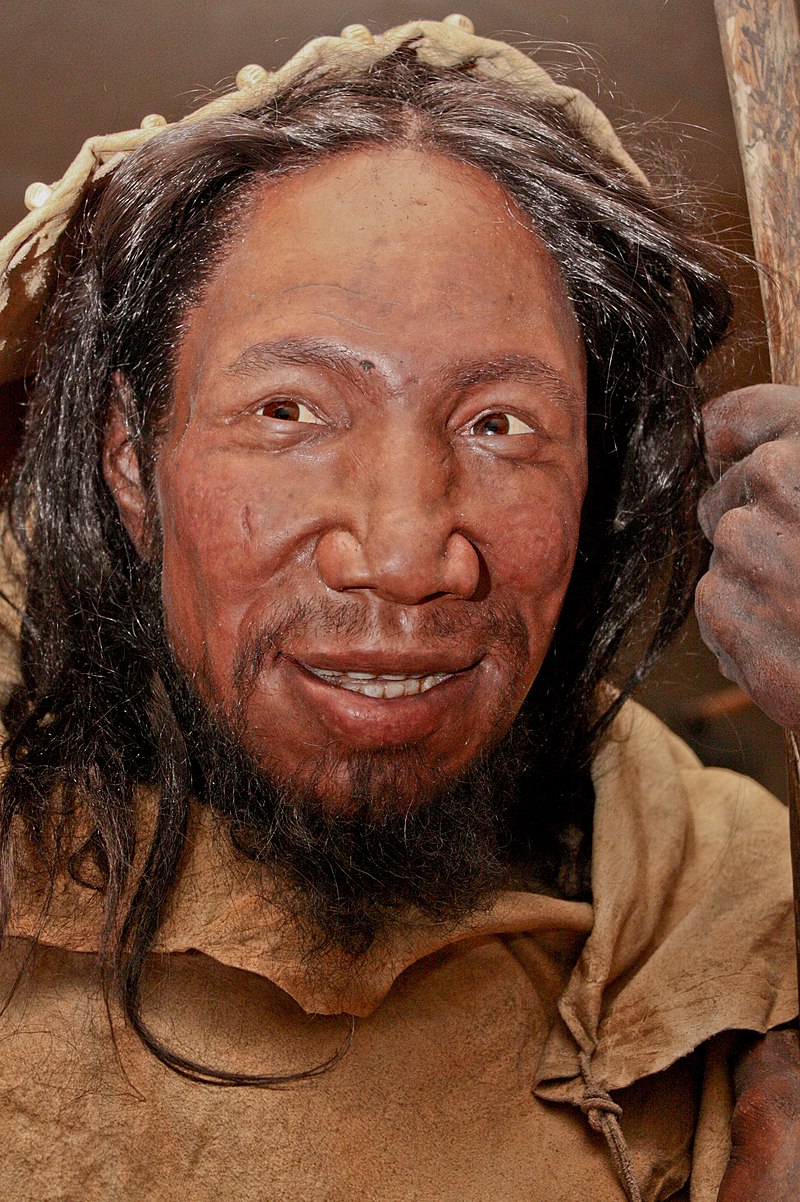
From DNA analysis, almost all present-day non-Africans have been found to be directly related to the people involved in this second wave of African migrations. This means that modern humans eventually replaced—or absorbed, by interbreeding—all the other humans who were already living in various parts of the world at this this time (including the "early modern humans" who had migrated from Africa many years before).
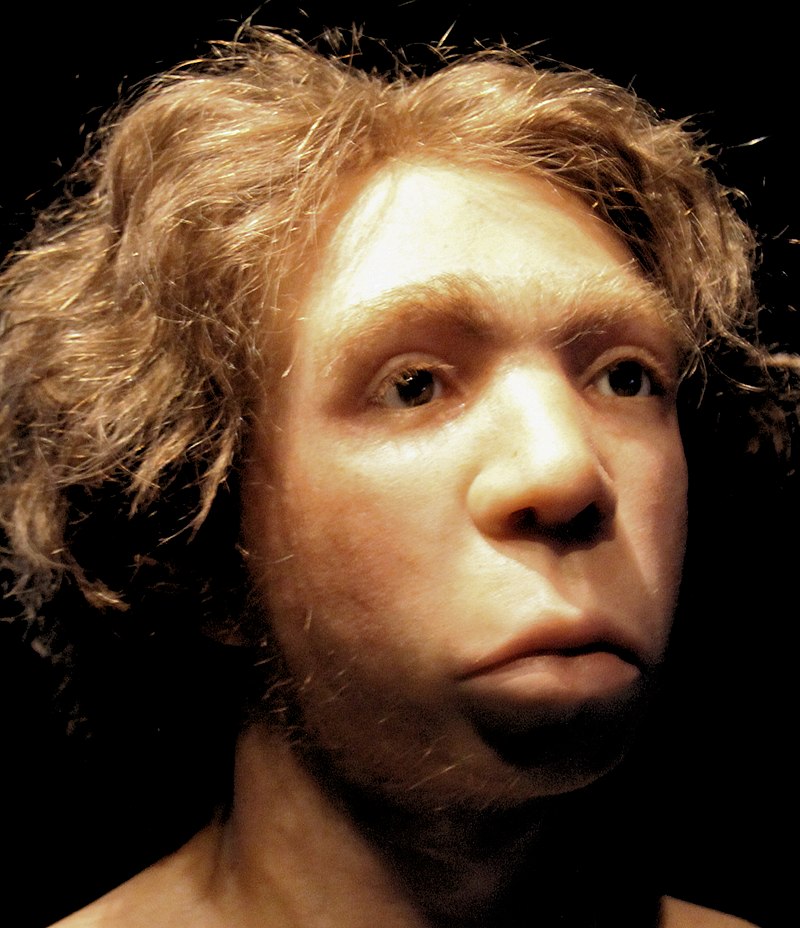
Once again, on reaching the Near East, Homo sapiens encountered Neanderthals and interbred with them. We know from the 2022 discovery of a child's tooth in a cave in southern France that some Homo sapiens went on to reach Europe as early as 54,000 years ago, before spreading out across the continent. Other bands of Homo sapiens travelling east through India and into Southeast Asia also encountered and interbred with Denisovans, a separate species of humans who were closely related to the Neanderthals.
Homo sapiens' modern behavioural traits, gained during their recent "Great Leap Forward", gave them a huge advantage over Neanderthals, Denisovans and all other ancient species of human who already lived in the lands that modern Homo sapiens arrived in. These other human species would all die out over the next 40,000 years or so—either because they were less resourceful than Homo sapiens at finding food, or because Homo sapiens wiped them out. Whatever the cause, modern Homo sapiens, was left the sole human species living on Earth.

Consultant: Chris Jarvis
pics

Without in any way limiting Q-files Ltd’s exclusive rights under copyright, any use of this publication to “train” generative artificial intelligence (AI) technologies to generate text is expressly prohibited. Q-files Ltd reserves all rights to license use of this work for generative AI training and development of machine learning language models.