
Music and dance

CITE
We have made every effort to follow citation style rules, but there may be some minor differences. If in doubt, please refer to the appropriate citation style manual.
Classical music. (2026). In Q-files Encyclopedia, Culture, Music and dance. Retrieved from
https://www.q-files.com/culture/music-and-dance/classical-music
"Classical music." Culture, Music and dance, Q-files Encyclopedia, 13 May. 2026.
https://www.q-files.com/culture/music-and-dance/classical-music.
Accessed 22 Sep. 2026.
Classical music 2026. Culture, Music and dance. Retrieved 22 September 2026, from
https://www.q-files.com/culture/music-and-dance/classical-music
Culture, Music and dance, s.v. "Classical music," accessed September 22, 2026.
https://www.q-files.com/culture/music-and-dance/classical-music


Classical music
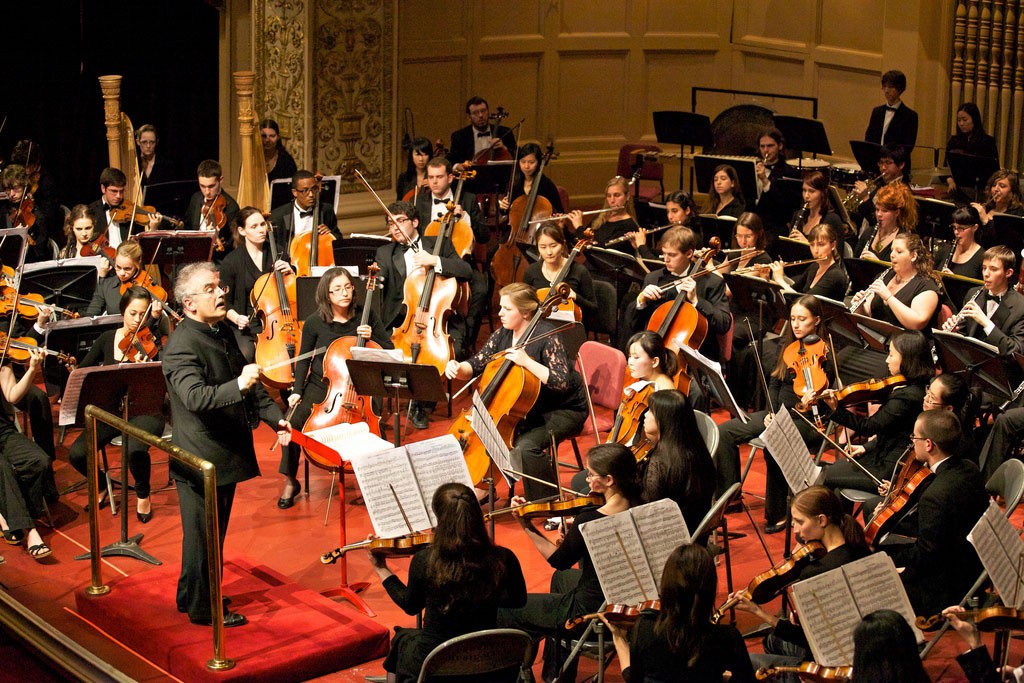
Music is the organization of sounds and silences to produce a work that is designed to give pleasure to the listener. Music can be written down in advance or improvised (made up on the spot) but it is always intended to be performed. Classical music is the serious, written music of western countries. Music can be performed by one person, a group or a whole orchestra. It can be sung or played with an instrument. Music can be listened to in its own right or heard as part of the soundtrack to a play, movie or TV programme.
Origins
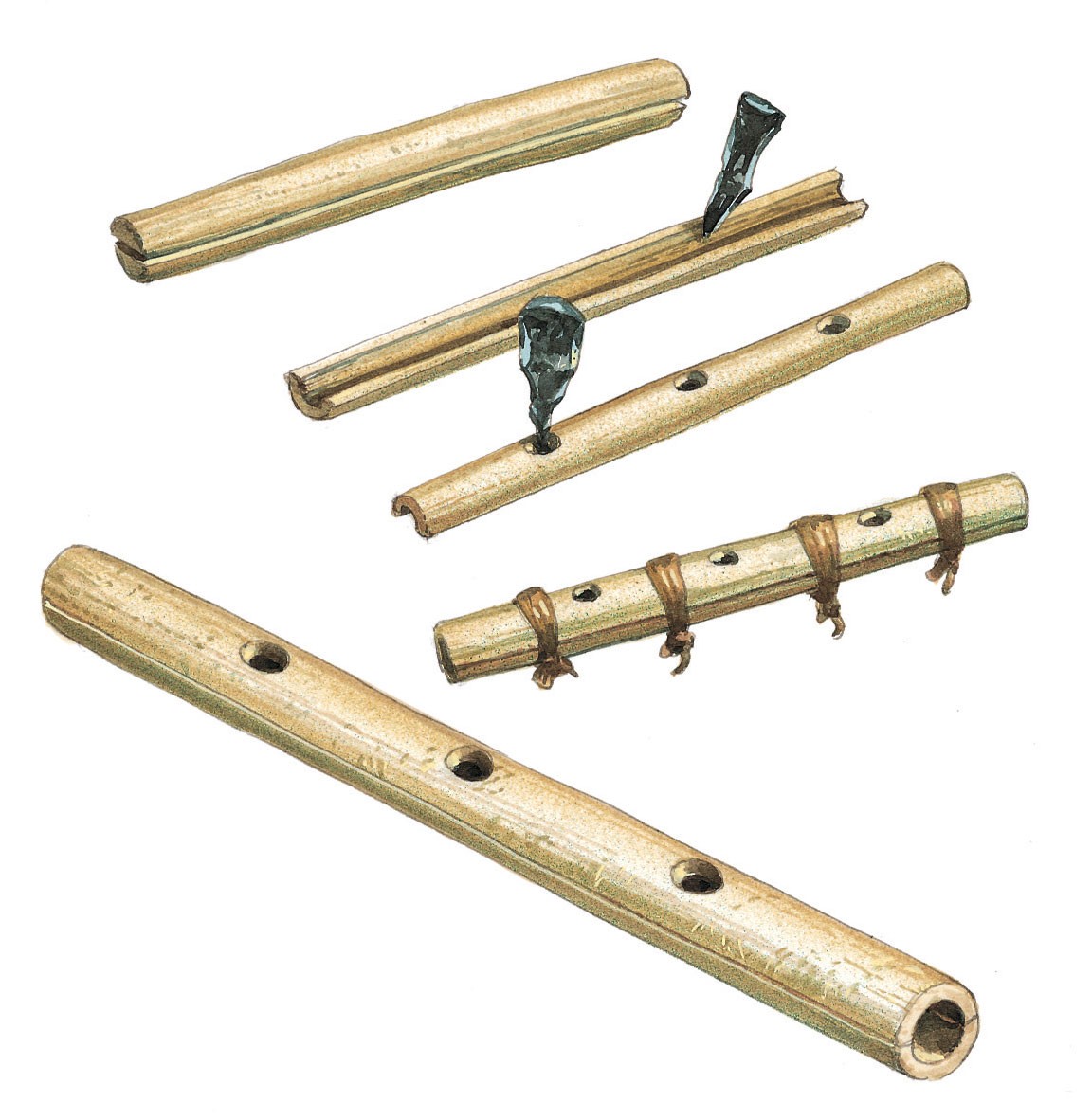
We know little about the origins of music, as none of it was recorded or written down. We do not know who first started to sing a song or make up a tune. The earliest instruments, flutes made of wood, bone or ivory, date back 40,000 years or more.
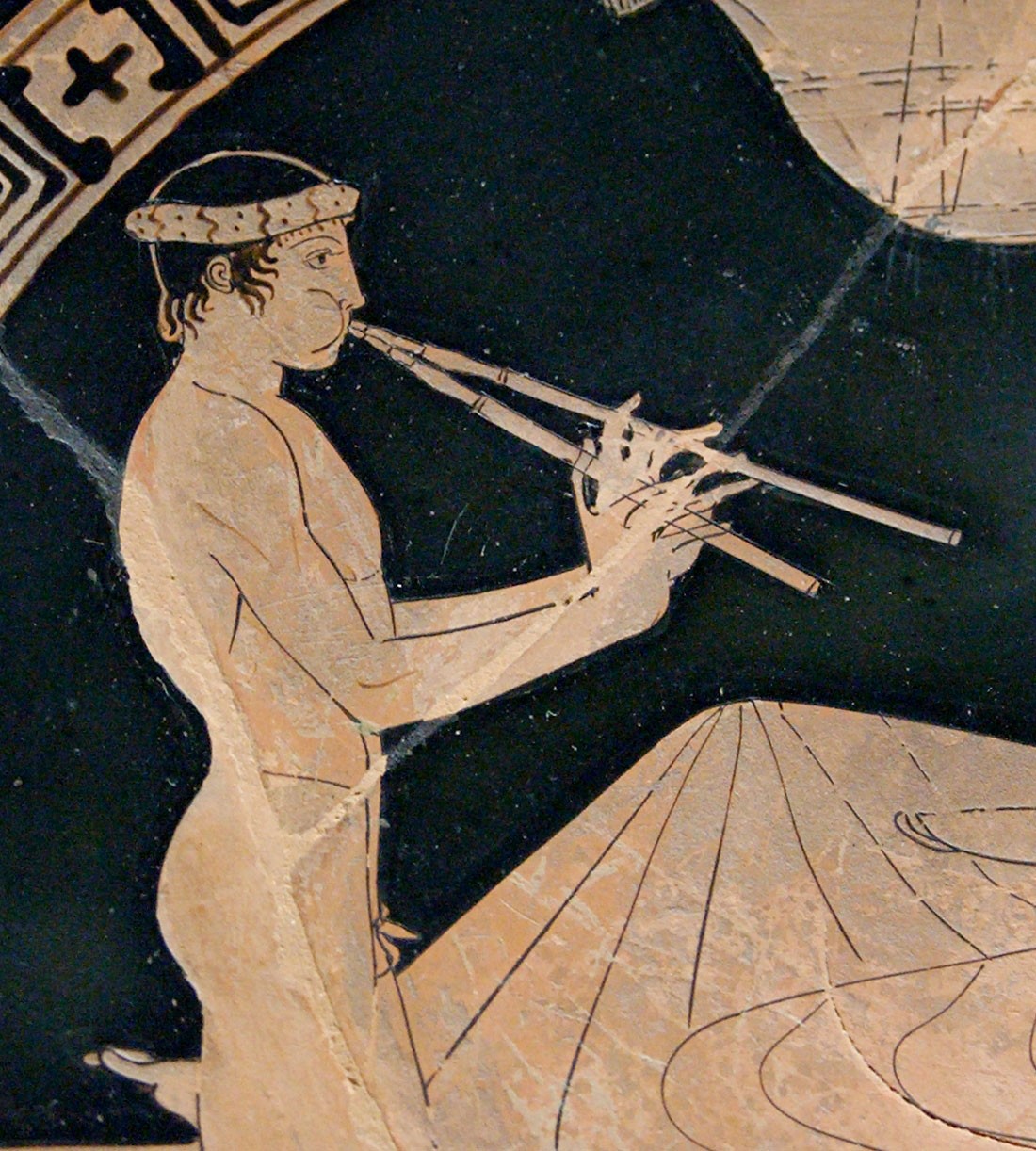
Ancient instruments have been found in China dating back to 7000 BC, in the Indus Valley of Pakistan and India, and in the Middle East and Egypt, where the god Thoth was said to have invented music. The oldest known songs were written on clay tablets in the Syrian city of Ugarit around 1400 BC. Music was popular in ancient Greece, where musicians plucked a stringed lyre and blew a double reed pipe called an aulos.
Middle Ages
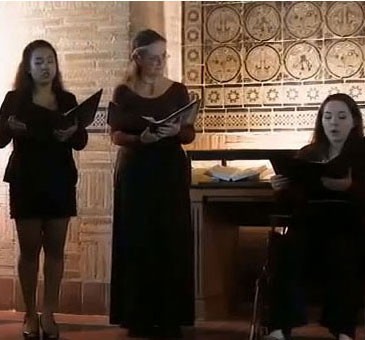
Music played an important part in early church services, as priests sung and chanted parts of the mass. They all sang the simple melodies in unison—singing the same notes together. This style is known as plainsong or Gregorian chant, after Pope Gregory I (reigned AD 590–604), although this music actually dates from around 800. In around 1030 the Italian monk Guido d’Arezzo devised a four-line staff or stave on which to write down music. For the first time the pitch of the note, somewhere on the scale of low to high, could be specified precisely.
Plainsong was sung by the tenor voice, the higher of the male voices. In around 800, church musicians began to add a bass line to accompany the main melody, thus creating a two-part harmony to lighten the plainchant. Two hundred years later, they added a third voice above the tenor, creating a style known as polyphony ("many voices"). Complex pieces of music could now be written, to beautiful effect, such as those by Hildegard of Bingen (1098–1179), one of the world’s first known composers.
Renaissance
By the 1400s composers were writing rich, polyphonic music, mainly for the church, although music was increasingly written and performed in royal courts. Giovanni di Palestrina (1525–94), for example, wrote more than 100 settings of the Mass but also composed madrigals, or polyphonic settings of poems. Minstrels performed and sang songs of love, travelling from town to town to entertain the rich and powerful.

Baroque style
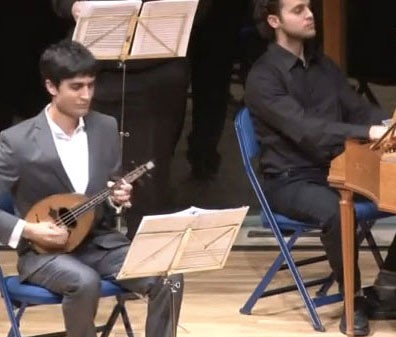
Baroque music flourished in Europe between 1600 and 1750. The music was more elaborate than the polyphony of earlier music. It made extensive use of counterpoint, in which the different musical lines move independently from each other but sound harmonious when played together. Another feature was basso continuo, in which a low-register instrument such as a cello or bassoon played with a higher-register harpsichord or lute to strengthen the bass part and enrich the harmony.
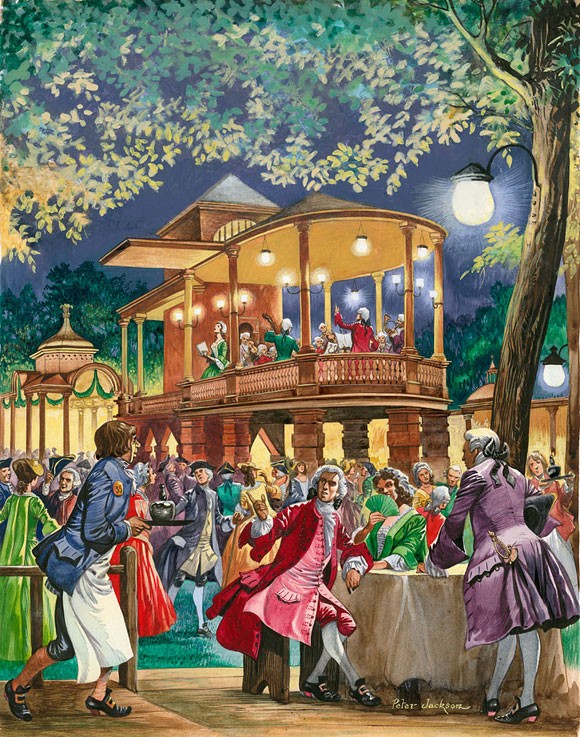
Although much Baroque music was written for performance in both Catholic and Protestant churches, much was also written for performance in royal courts and other private houses. Genres such as opera, cantata, oratorio, concerto and sonata were established during the Baroque period. Among the most famous Baroque composers were Antonio Vivaldi (1678–1741), Johann Sebastian Bach (1685–1750) and George Frideric Handel (1685–1759).
Classical style
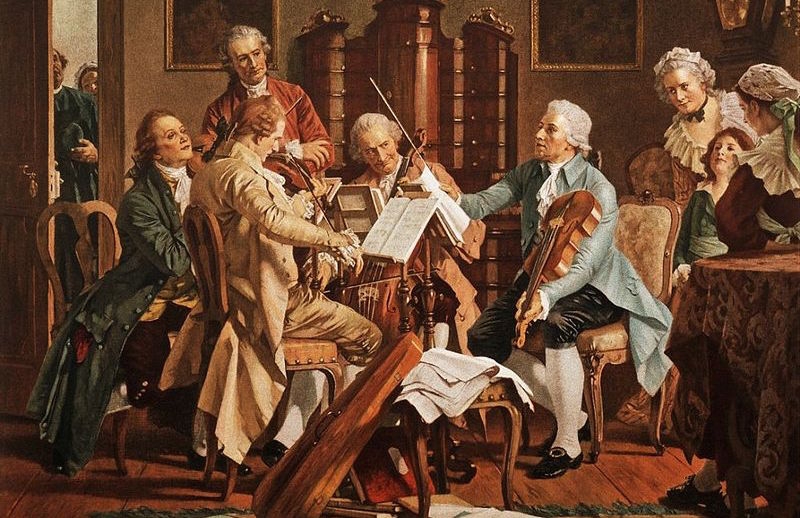
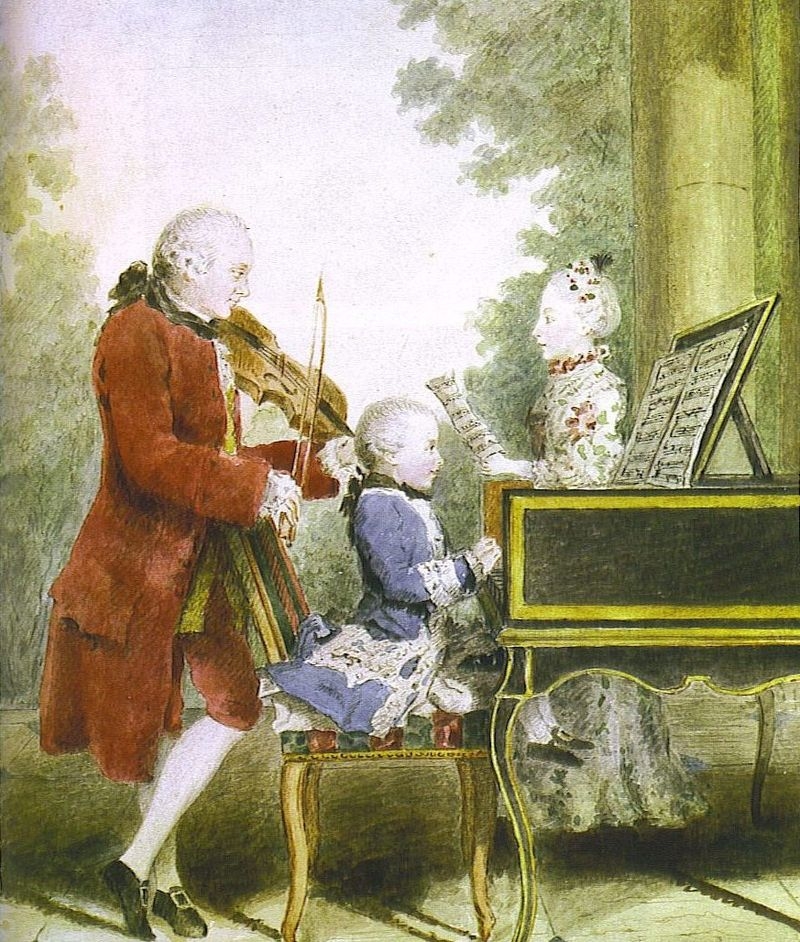
Music in the Classical style dominated Europe from about 1750 to 1820. The term, however, has also come to mean the whole of western music from the 800s to the present day. Classical music moved away from the elaborate style of the Baroque towards a simpler sound, in which the melody was played over the chords of an underlying harmony. The Classical style is always elegant and tuneful.
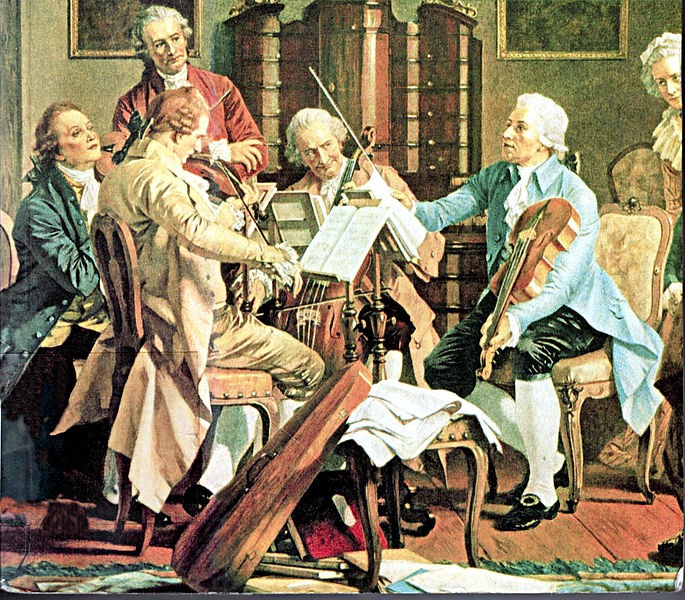
During this period, the orchestra expanded to include a full range of woodwind, plus some brass and percussion instruments. The piano replaced the harpsichord. The centre of this new music was Austria, where the Classical composers Joseph Haydn (1732–1809) and Wolfgang Amadeus Mozart (1756–91) lived and worked. Haydn composed a vast amount of music, and largely created two of the great forms of western music: the string quartet and symphony.
Romantic period
Composers of the Classical period wrote music mainly for the entertainment of their employers—the nobility. From the early 19th century, at the beginning of the Romantic period, composers no longer worked for rich patrons, but composed works mostly for public concerts with large audiences. Romantic music began with the compositions of Ludwig van Beethoven (1770–1827) and Franz Schubert (1797–1828) and lasted well into the 20th century. It was emotional, and reflected the composer's personal thoughts. The orchestra was larger, and compositions longer than those of the Classical period. Composers made full use of the different instruments to obtain a wide range of musical colours in their work.
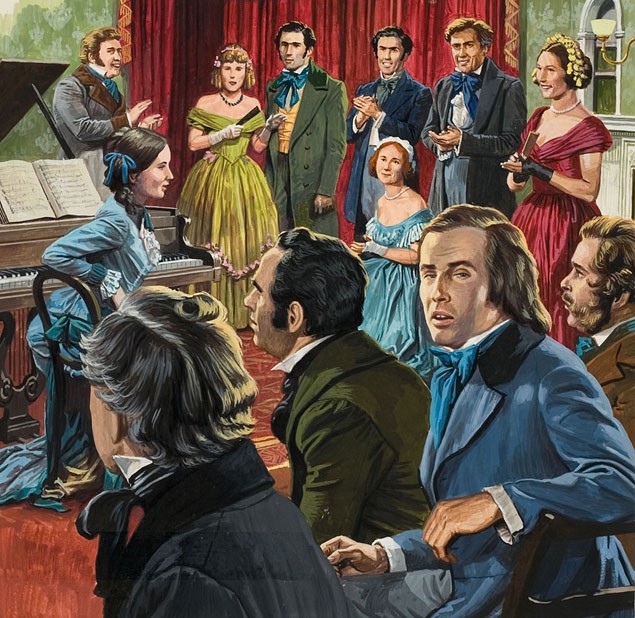
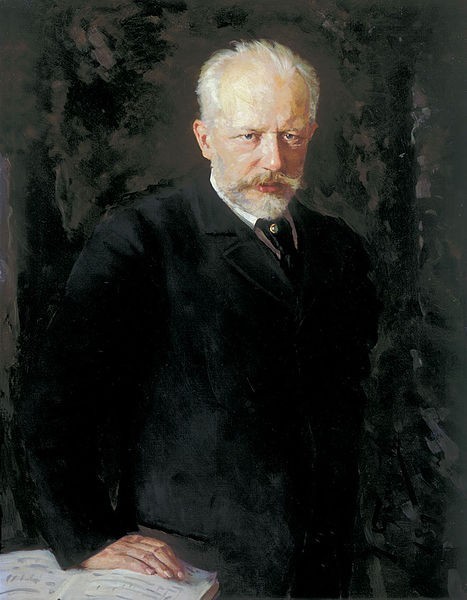
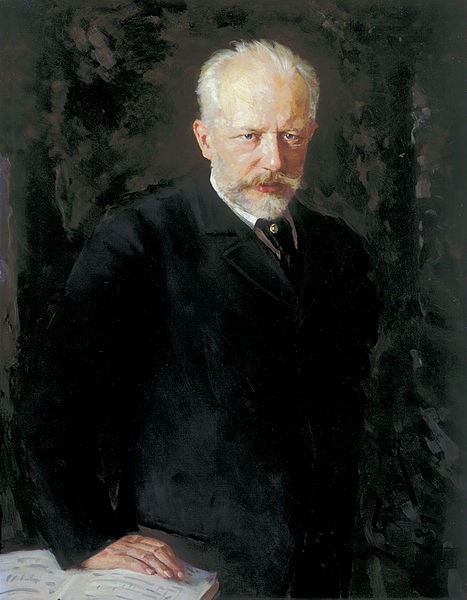
Romantic composers included Hector Berlioz (1803–69), Robert Schumann (1810–56), Frédéric Chopin (1810–49), Felix Mendelssohn (1809–47), Johannes Brahms (1833–97), Franz Liszt (1811–86), Pyotr Tchaikovsky (1840–93), Gustav Mahler (1860–1911) and the opera composers Giuseppe Verdi (1813–1901) and Richard Wagner (1813–83).
By the end of the 19th century, a number of composers, such as the Czech composer Antonín Dvorák (1841–1904), the Norwegian composer Edvard Grieg (1843–1907) and Finnish composer Jean Sibelius (1865–1957), took to writing works influenced by the national feelings of their homelands.
Origins of
popular music
All forms of popular music of the 20th and 21st centuries can be traced back to their roots in types of music played in the Southern United States at the end of the 19th century. Ragtime was one of the first. It came from the jigs and marches played by African American bands. It was so-called because of its characteristic syncopations (the placing of rhythmic stresses where they would not normally occur), otherwise known as "ragged" rhythms.
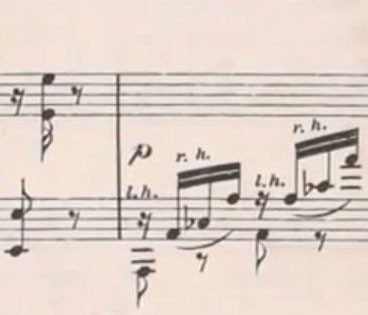
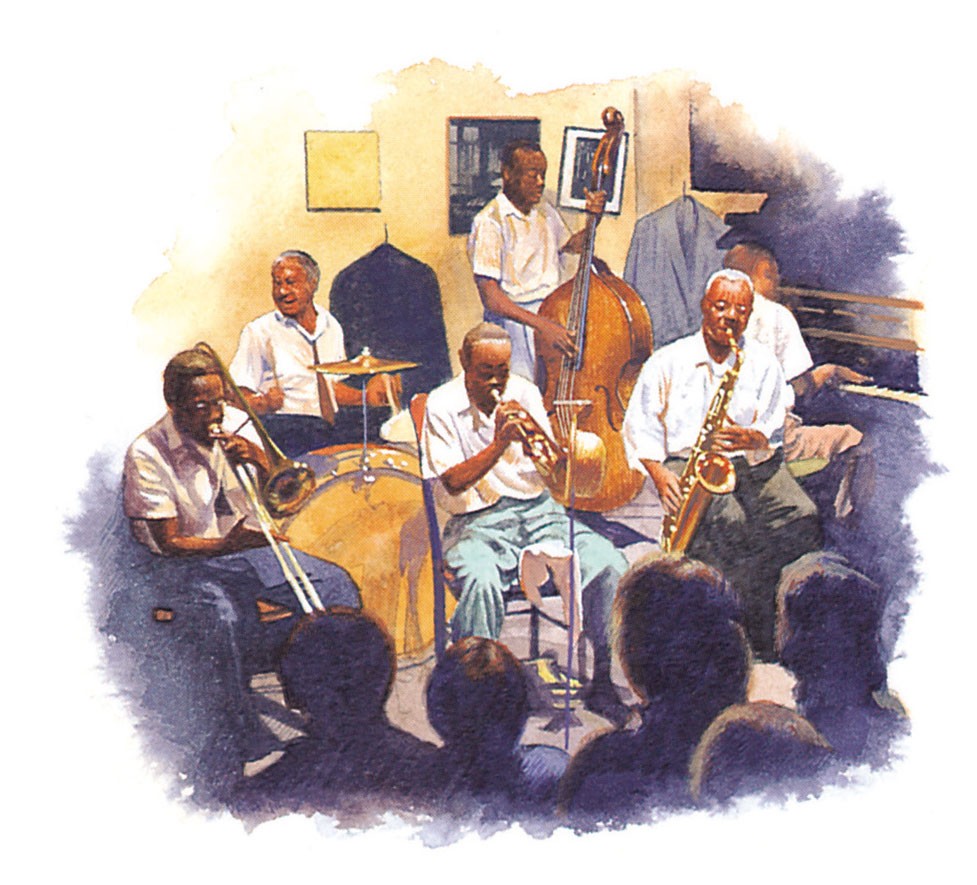
A second type of music popular among African American communities of the Deep South was the blues. It originated around the end of the 19th century from spirituals, work songs and simple ballads, and featured "blue notes" (also called "worried" notes, sung or played at a slightly lower pitch on the scale than would be expected in classical music). Jazz overtook ragtime in popularity at the beginning of the 20th century. It combined African American traditions—the use of blue notes, syncopation, swing dance rhythms and improvisation—with harmonies from European classical music.
Modern music
In the 20th century, composers developed new styles and ways of composing that broke with traditions and the rules estabished by composers writing in the Romantic style. Arnold Schoenberg (1874–1951) developed serialism or 12-tone music, an alternative system to the use of major or minor keys that were always used in music up until then. Igor Stravinsky (1882–1971) also pushed the boundaries with his use of dissonance (clashing notes) and rhythmic freedom, in works such as the ballet The Rite of Spring (1913).
Music in the late 20th century was also transformed by the use of electronics, used both to amplify existing instruments and develop new electronic instruments such as the synthesizer.
Consultant: Philip Wilkinson
Musical instruments and forms
Brass instrument
Instrument, such as a horn or trumpet, with a long tube of metal and a mouthpiece; a slide, valve or key is used to change the length of tubing and thus the sound produced. The brass section of an orchestra usually includes French horns (or, simply horns), trumpets, trombones and tuba
Cantata
A musical setting of religious words, performed as part of a church service
Chamber music
Music for small group of instruments, such as string quartet, traditionally one that could fit in a palace chamber or room
Chorale
Hymn originally sung in church
Concerto
Composition for a solo instrument, such as a piano, violin or cello, accompanied by an orchestra; it usually has several movements
Concerto grosso
Composition in which the main musical themes are passed between a small group of soloists and a full orchestra
Key
A group of notes based on a particular note and its corresponding scale
Mass
A musical setting of the Catholic liturgy (service)
Oratorio
Large musical composition for orchestra, choir and soloists, often historical or religious in subject
Passion
Oratorio with the death of Christ as its subject
Percussion instruments
Musical instruments that are sounded by being struck or scraped. The percussion section of an orchestra usually includes timpani, a snare drum, a bass drum, cymbals, a triangle and a tambourine
Quartet
Work for four musicians, often for a string quartet of two violins, viola and cello
Scale
A sequence of notes with certain intervals between them, and from which a large number of chords (different notes sounded at the same time) can be formed
Sonata
A work for solo instrument, or solo with piano accompaniment
String instruments
Musical instruments such as violins, guitars and harps that produce sound from vibrating strings by bowing or plucking. The string section of an orchestra includes violin, violas, cellos, double basses and often harps
Symphony
Extended musical composition for full orchestra, usually in several movements
Woodwind instruments
Instruments that make a sound when the player uses the breath to make a reed (or pair of reeds) vibrate (bassoon, clarinet or oboe); or when the player blows a stream of air across a hole in a tube (flute). The woodwind (or, simply, wind) section of an orchestra usually includes flutes, piccolo, oboes, cor anglais, clarinets and bassoons
pics
Without in any way limiting Q-files Ltd’s exclusive rights under copyright, any use of this publication to “train” generative artificial intelligence (AI) technologies to generate text is expressly prohibited. Q-files Ltd reserves all rights to license use of this work for generative AI training and development of machine learning language models.