
Music and dance

CITE
We have made every effort to follow citation style rules, but there may be some minor differences. If in doubt, please refer to the appropriate citation style manual.
Woodwind instruments. (2026). In Q-files Encyclopedia, Culture, Music and dance. Retrieved from
https://www.q-files.com/culture/music-and-dance/woodwind-instruments
"Woodwind instruments." Culture, Music and dance, Q-files Encyclopedia, 13 May. 2026.
https://www.q-files.com/culture/music-and-dance/woodwind-instruments.
Accessed 22 Sep. 2026.
Woodwind instruments 2026. Culture, Music and dance. Retrieved 22 September 2026, from
https://www.q-files.com/culture/music-and-dance/woodwind-instruments
Culture, Music and dance, s.v. "Woodwind instruments," accessed September 22, 2026.
https://www.q-files.com/culture/music-and-dance/woodwind-instruments


Woodwind instruments
The woodwind section of the modern orchestra consists of flute, oboe, clarinet and bassoon. Often added to these instruments are the piccolo, cor anglais, bass clarinet and contrabassoon. A woodwind instrument may be made of any material, not just wood. All woodwinds produce their sounds when a column of air inside a tube is made to vibrate. The vibrations are set off by a player’s breath. The longer the tube and its column of air, the lower the note produced by the instrument. To produce different notes, holes are cut in the walls of the tube. When these are sealed off, using a system of keys operated by the fingers (or in the case of the recorder, the fingers themselves), the air vibrates along the full length of the tube, producing the lowest note. As different holes are uncovered, air columns of different lengths vibrate, and so produce notes of different pitches. Players can also produce different notes by varying the degree of pressure they use when blowing into the instrument.
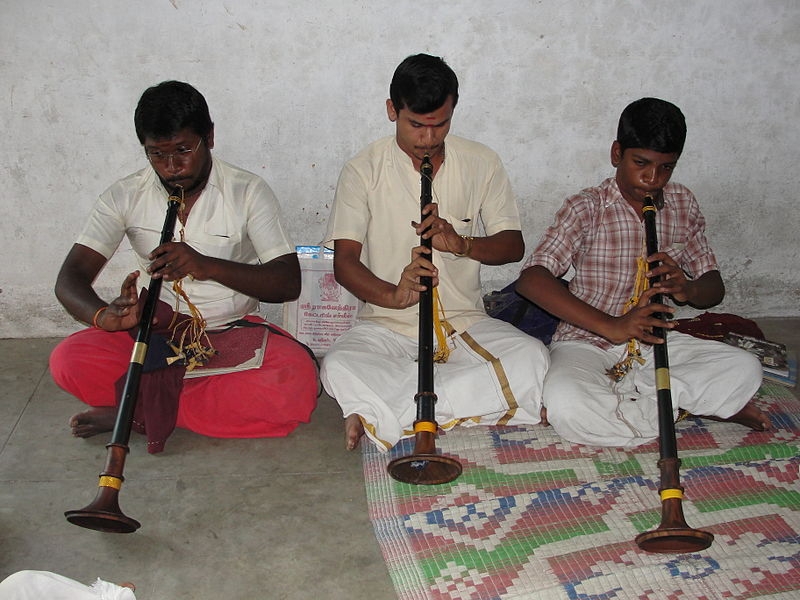

Flute
A flute is a reedless wind instrument. Flutes are the oldest of all musical instruments. Some flutes, no more than simple tubes made out of bone or tusk with holes punched into them, date back more than 40,000 years. The side-blown or transverse flute, which is held horizontally while the player blows across a hole near one end, may have originated in India in around 1500 BC. Wooden transverse flutes, today known as traversos or Baroque flutes, were played in European classical music from the early 18th century to the early 19th century.
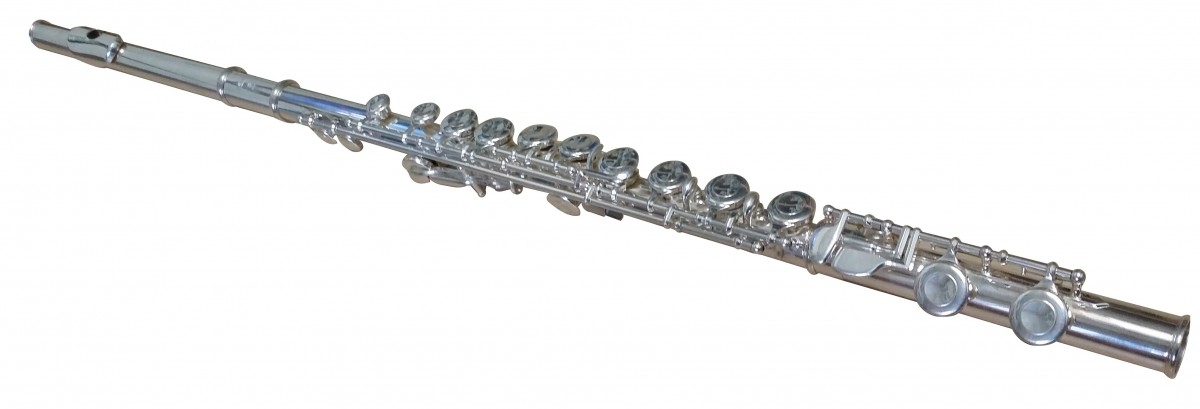
A modern flute is 67 centimetres (26.3 inches) long. Made of metal (nickel, silver, silver-plated brass, gold or sometimes platinum), it is closed at one end. The embouchure hole, across which the player blows, is positioned near this end. The instrument consists of three or four sections, or joints, with a conical bore from the head joint down. A musician who plays the flute is called a flautist or flutist.
The player produces a sound from shaping the lips in a certain way and blowing across the embouchure hole. This creates a vibration, which excites the air inside the instrument. The player changes the pitch of the sound by pressing keys to open or close holes in the body of the instrument, effectively altering its length. A player can also change the pitch by varying the breath pressure—blowing more strongly or weakly across the embouchure hole.
The piccolo is a half-sized flute that plays an octave higher than the regular treble flute. It is made from a range of materials, including plastic, brass, nickel, silver or wood.


Oboe
The oboe is a double reed woodwind instrument. Usually made of wood (grenadilla, also known as African blackwood), the instrument is roughly 65 centimetres (25 inches) long and consists of three sections or joints: upper, middle and bell. It has metal keys, a narrow conical bore (the interior tube gradually widens towards the bottom) and a flared bell. The double reed consists of two thin blades of cane tied together and fitted to the top of the instrument. The sound is produced by blowing into the reed and vibrating a column of air.

The oboe first appeared in the mid-17th century; until around 1770, it was known as a hautbois (from the French, meaning “high wood”). A musician who plays the oboe is called an oboist.
Another member of the oboe family that features regularly in a modern orchestra is the cor anglais, or English horn. Roughly one and a half times the length of an oboe, it has a lower pitch lower than its relative. The reed is attached to a curved metal tube and the bell has a bulbous shape.

Clarinet


The clarinet was invented in around 1700 by German instrument maker Johann Christoph Denner. He refined an existing instrument, the chalumeau, by adding extra sound holes and keys. Further improvements appeared later in the century; by the 1780s it had started to appear in orchestras. The modern clarinet dates from the 1840s.
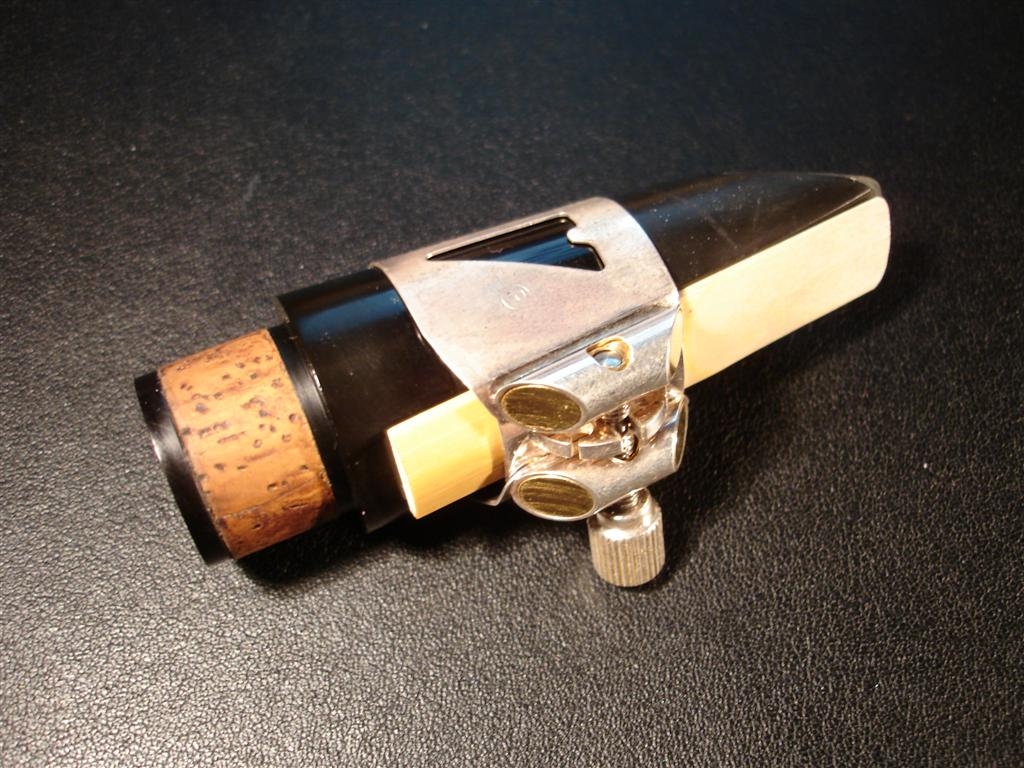
The clarinet has a single-reed mouthpiece, a straight tube with a cylindrical bore and a flared bell. Made of wood (usually grenadilla), the clarinet consists of five sections or joints: mouthpiece, barrel, upper, lower and bell. The single reed is fixed to the underside of the mouthpiece by a metal ligature. With the reed held against the lower lip, the player produces a sound by blowing down the instrument. The air rushing past the reed causes it to vibrate. The tone quality can be adjusted by varying the pressure of the lower lip on the reed. Covering or uncovering the tone holes changes the length of the tube, altering the pitch.
A person who plays a clarinet is called a clarinetist (sometimes spelled clarinettist). The instrument has a wide range, with different registers having different qualities. The low-pitched chalumeau register, named after the clarinet’s ancestor, has a dark tone, while the higher pitched clarino register is brighter. Orchestral players use two nearly identical instruments: one pitched in the key of A, the other in B flat. The tone of the E flat clarinet is brighter, and is often used in military bands.

A bass clarinet is pitched an octave below the B flat clarinet. It has an upward curving, silver-coloured metal bell and its mouthpiece is mounted on a curved metal tube, or crook. A fairly heavy instrument, it is supported with a neck strap or endpin. A bass clarinet is not always used in orchestral music, but almost always features in concert bands. It has a dark, gravelly tone quality.
Bassoon

The bassoon is the largest woodwind instrument and has the lowest pitch. Made of wood, usually maple, the body of the instrument breaks down into four sections or joints: from top to bottom, the bell, bass, wing and butt. A double reed, made from two pieces of cane tied together, fits on the end of the crook or bocal, a curved metal tube which is attached to the wing joint. The bore inside the instrument is conical in shape, widening gradually from the wing joint to bell. The total length of tube is 2.80 metres (9 feet 2 inches), but, because this is bent back on itself, the instrument stands just 1.34 metres (4 feet 5 inches) tall. Tone holes are bored into the walls of the bassoon. The player presses keys with fingers and thumb to change the pitch as he or she blows into the reed.
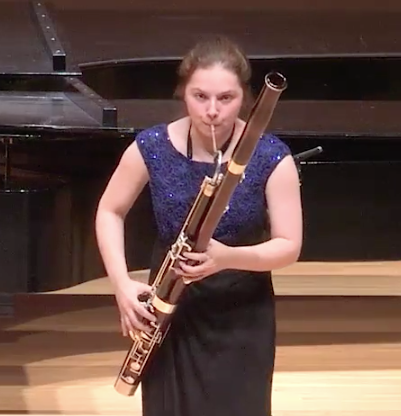
The bassoon was first developed in the 1650s. Improvements were gradually made and by the beginning of the 18th century it was a regular member of the orchestra. In the early 19th century, the bassoon was refined by both the Buffet family in France and Wilhelm Heckel in Germany. It is the Heckel design that is most in use today.
A musician who plays the bassoon is called a bassoonist. The instrument is held diagonally in front of the player, who holds the butt with the right hand and the bass and wing joints with the left. A neck strap attached to the top of the butt helps support the instrument.
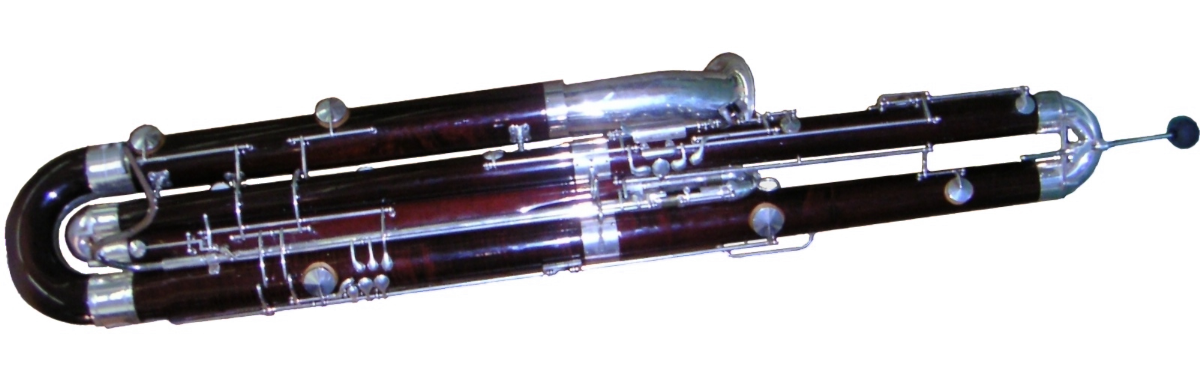
The contrabassoon or double bassoon is a larger version and sounds an octave lower. The instrument is twice as long as an ordinary bassoon, curves around on itself twice, and is supported by an endpin rather than a neck strap.

Saxophone
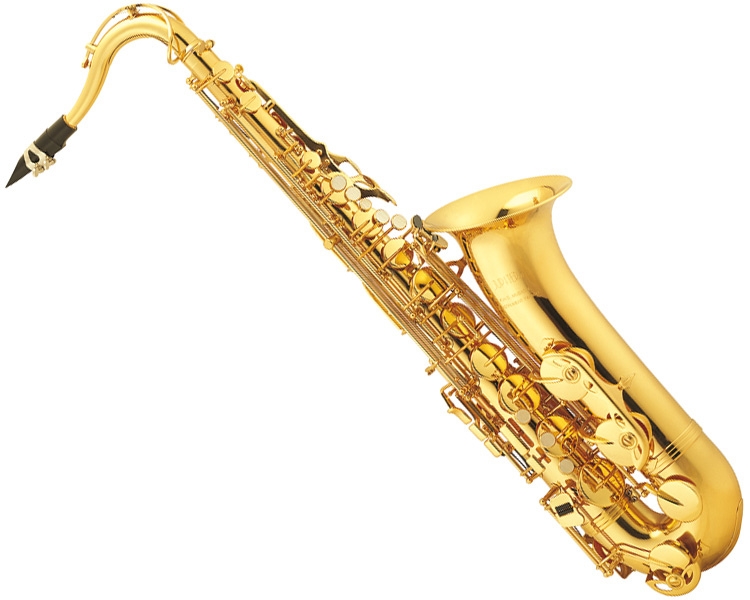
Although made of brass, the saxophone (often abbreviated to “sax”) is classified as a woodwind instrument. It is played with a single-reed mouthpiece similar to that of the clarinet. Like the clarinet, the saxophone has holes which the player closes using a system of keys and with the same fingering. The saxophone family (soprano, alto, tenor, baritone and bass) was invented by the Belgian instrument maker Adolphe Sax in the 1840s. The soprano saxophone has a straight conical tube, but all the other family members have a large, upturned, flared bell and a curved neck or crook to which the mouthpiece is attached. Today it is used more in jazz and military bands than in orchestras. Saxophone players are called saxophonists.

Recorder
The recorder is an end-blown flute, which the player holds vertically and blows down one end through a mouthpiece. Recorders come in different sizes, including the soprano (or "descant" recorder), alto (or “treble"), tenor and bass. They are traditionally made from wood or ivory, although most recorders are now constructed from moulded plastic. The recorder has a thumb-hole for the upper hand and seven finger-holes: three for the upper hand and four for the lower. The bore is generally reverse conical: it narrows towards the bottom end.
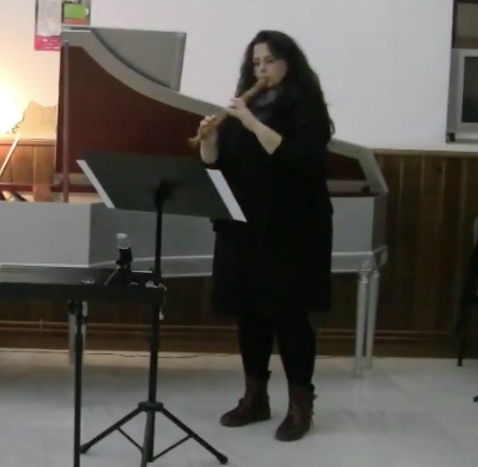

The recorder first appeared in Europe in the Middle Ages (as "a pipe called Recordour" dating from 1388), and was popular until the mid-18th century. Little used in the Classical and Romantic periods, it was revived in the 20th century and, while it is rarely appears in a modern orchestra, it is commonly included in authentic performances of Renaissance and Baroque music. It is also a popular educational instrument.
pics
Without in any way limiting Q-files Ltd’s exclusive rights under copyright, any use of this publication to “train” generative artificial intelligence (AI) technologies to generate text is expressly prohibited. Q-files Ltd reserves all rights to license use of this work for generative AI training and development of machine learning language models.