
Music and dance

CITE
We have made every effort to follow citation style rules, but there may be some minor differences. If in doubt, please refer to the appropriate citation style manual.
Johann Sebastian Bach. (2026). In Q-files Encyclopedia, Culture, Music and dance. Retrieved from
https://www.q-files.com/culture/music-and-dance/johann-sebastian-bach
"Johann Sebastian Bach." Culture, Music and dance, Q-files Encyclopedia, 13 May. 2026.
https://www.q-files.com/culture/music-and-dance/johann-sebastian-bach.
Accessed 22 Sep. 2026.
Johann Sebastian Bach 2026. Culture, Music and dance. Retrieved 22 September 2026, from
https://www.q-files.com/culture/music-and-dance/johann-sebastian-bach
Culture, Music and dance, s.v. "Johann Sebastian Bach," accessed September 22, 2026.
https://www.q-files.com/culture/music-and-dance/johann-sebastian-bach


Johann Sebastian Bach
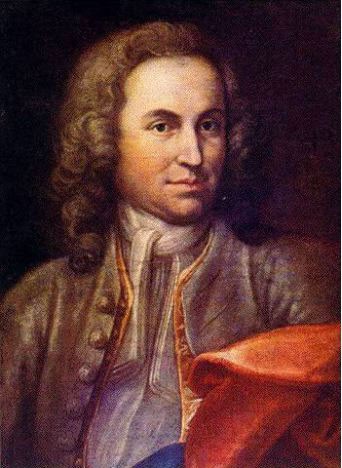
The German composer and musician Johann Sebastian Bach (1685–1750) is one of the most-loved and admired composers of all time. He composed during the first half of the 18th century in what is known as the Baroque style, in which music was elaborate and often very decorated. His use of counterpoint, in which different melodic lines are interwoven in a harmonious way, was particularly masterful. Bach's main work was composing pieces for performance in church, but he also wrote lots of instrumental music for social occasions. His music is frequently played in concert halls and churches around the world—and is often performed on instruments, and in the particular style, of Bach's own time. Many people consider Bach to be one of the most important composers of all time.

Early life
Johann Sebastian Bach was born in Eisenach, Germany, on 31st March 1685. His family was very musical: his father, who taught Bach to play the violin and harpsichord, was director of the town musicians and all his uncles were professional musicians. In 1694 Bach’s mother died when he was only nine, followed by his father eight months later. Bach then moved in with his older brother, Johann Christoph Bach, himself a church organist, and began to study music. In 1699, aged 14, Bach won a choral scholarship to study at St Michael’s School in Lüneburg. Here he met many famous organists and learned much about European music.
First compositions
In 1706 he married Maria Barbara Bach, his second cousin, and they went on to have seven children. Throughout his early career, Bach worked as an organist and court musician at the courts of various German nobles, including a particularly fruitful period at Weimar (1708–17). He began to compose cantatas (works for choir and orchestra), organ pieces and concert works, notably the six Brandenburg Concertos that are among his most popular works today.
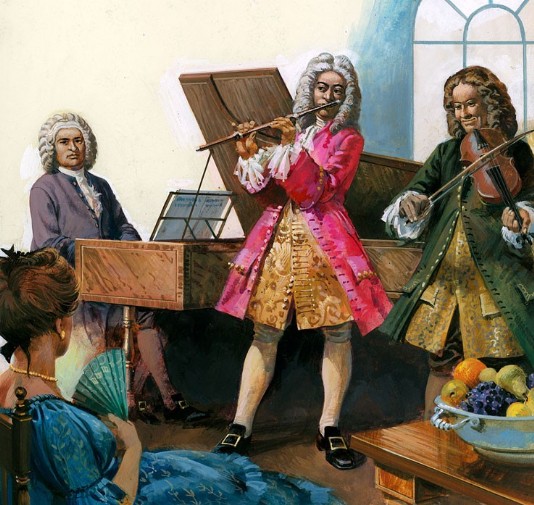
Maria died suddenly in 1720. The following year, Bach married a young singer, Anna Magdalena Wilcke. Together they had a further 13 children, six of whom survived into adulthood. Several of Bach’s 20 children, including Carl Philipp Emanuel, Johann Christian and Wilhelm Friedemann, became important composers in their own right.

Leipzig
In 1723, Bach was appointed cantor or head of music at St Thomas Church in Leipzig and director of music for the main churches in the city. Here he wrote numerous cantatas, as well as other choral works for the church choir and many non-religious choral and instrumental pieces. Bach remained in Leipzig for the rest of his life and died in the city on 28th July 1750, aged 65.
Compositions
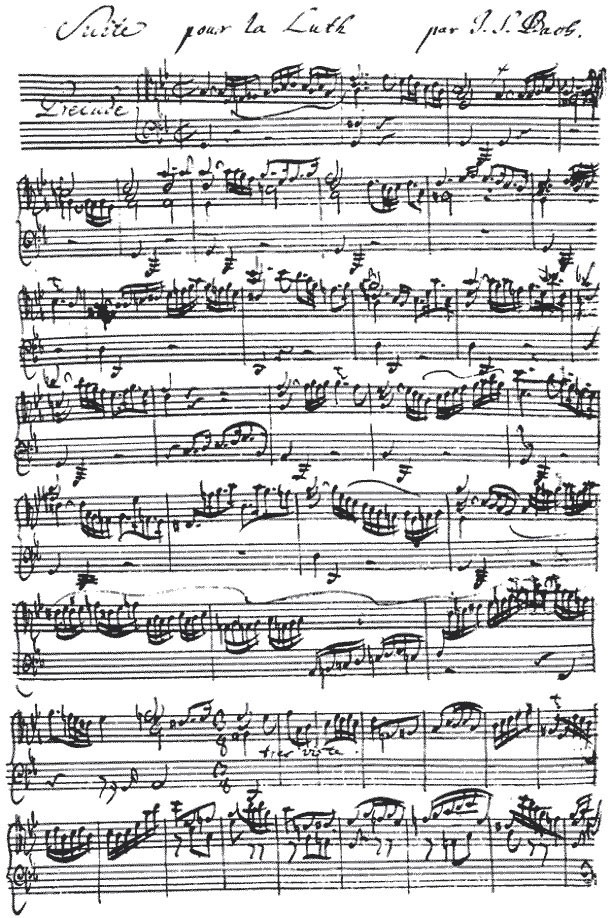
During his life, Bach wrote 1126 pieces of music. He wrote music almost every day. While he was in Leipzig, for example, he had to write a new cantata—a religious text set to music—for every Sunday service. He wrote enough new cantatas for three complete years of services, of which 224 survive. He also wrote 275 chorales or hymns to be sung in church; 25 larger-scale choral works; 224 works for the organ; 223 works for the harpsichord and other keyboard instruments; 40 works of chamber music for a single or small group of instruments; and 31 pieces for orchestra.

Choral works
Bach wrote two passions to be performed on Good Friday. A passion is an oratorio—a composition for orchestra, choir and soloists—telling the story of the death of Christ. The St Matthew Passion and the St John Passion contain some of Bach’s most moving and magnificent music.
He also wrote the Christmas Oratorio, a set of six cantatas to be performed at Christmas, and two smaller oratorios for Easter and Ascension. His other major choral work, the Mass in B minor, was composed incorporating the music from several previously performed cantatas. The Mass was never performed in Bach’s lifetime, but is now considered to be one of his most important compositions.
Keyboard works
During his lifetime, Bach was best known as an organist. He composed more than 200 pieces for the organ, as well as many works for the harpsichord, a keyboard instrument in which the strings are plucked to make a sound, rather than hit as they are in a piano. The Well-Tempered Clavier contains 48 preludes, or short pieces, and 48 fugues, in which themes are heard in counterpoint to each other and developed during the course of the piece. Bach wrote two preludes and fugues for every one of the 24 major and minor keys on the keyboard. His Goldberg Variations, named after Johann Gottlieb Goldberg, a German harpsichordist, consist of an aria, or tune, with 30 variations of that tune.

Consultant: Philip Wilkinson
pics


Without in any way limiting Q-files Ltd’s exclusive rights under copyright, any use of this publication to “train” generative artificial intelligence (AI) technologies to generate text is expressly prohibited. Q-files Ltd reserves all rights to license use of this work for generative AI training and development of machine learning language models.