
Music and dance

CITE
We have made every effort to follow citation style rules, but there may be some minor differences. If in doubt, please refer to the appropriate citation style manual.
Orchestra. (2026). In Q-files Encyclopedia, Culture, Music and dance. Retrieved from
https://www.q-files.com/culture/music-and-dance/orchestra
"Orchestra." Culture, Music and dance, Q-files Encyclopedia, 13 May. 2026.
https://www.q-files.com/culture/music-and-dance/orchestra.
Accessed 22 Sep. 2026.
Orchestra 2026. Culture, Music and dance. Retrieved 22 September 2026, from
https://www.q-files.com/culture/music-and-dance/orchestra
Culture, Music and dance, s.v. "Orchestra," accessed September 22, 2026.
https://www.q-files.com/culture/music-and-dance/orchestra


Orchestra
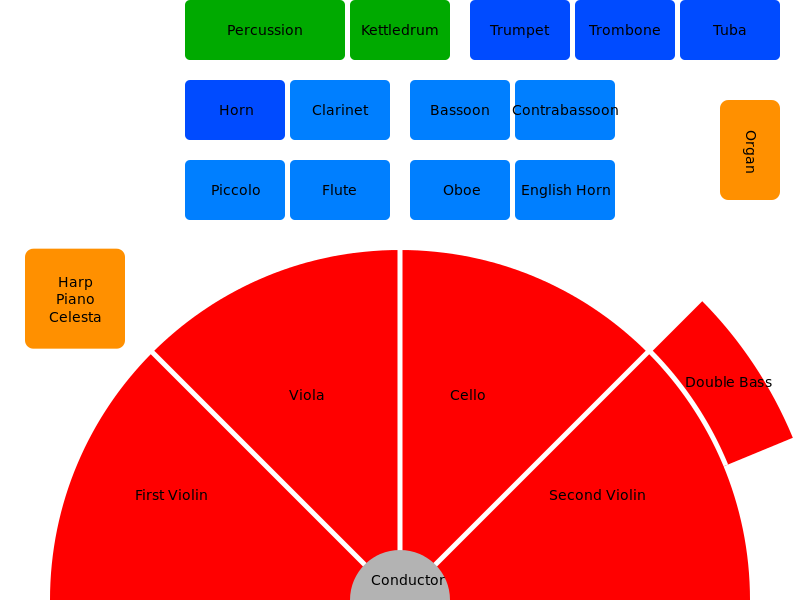
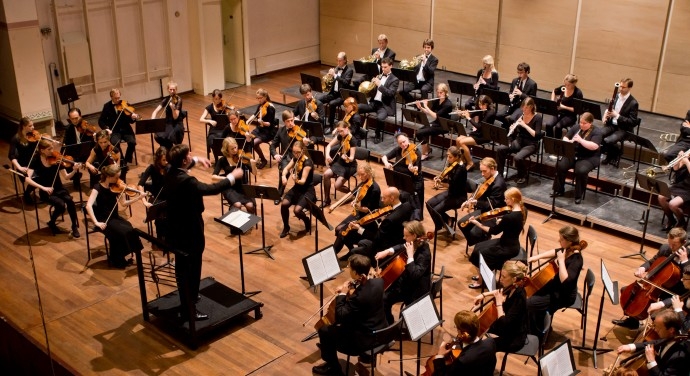
An orchestra is a large group of musicians playing instruments usually from different families, such as strings, woodwind, brass and percussion. A classical symphony orchestra usually consists of bowed string instruments (violin, viola, cello and double bass), as well as brass (horn, trumpet, trombone and tuba), woodwinds (flute, oboe, clarinet and bassoon), and percussion instruments (including timpani or kettledrums). Other instruments, such as the harp or celesta, may sometimes be included. The term "orchestra" comes from the ancient Greek word for the area in front of the stage in the theatre reserved for the chorus. A full-size orchestra may consist of over 100 musicians, depending on the piece being played. The term chamber orchestra refers to smaller-sized ensembles (groups) of about 50 players or fewer.


Origins
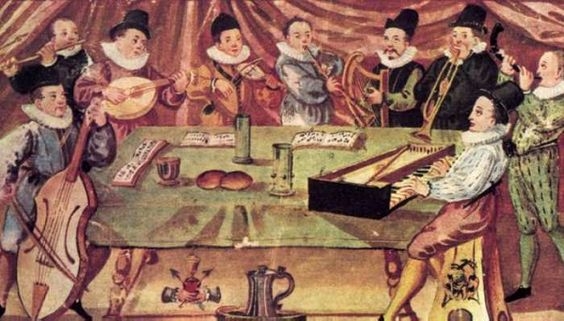
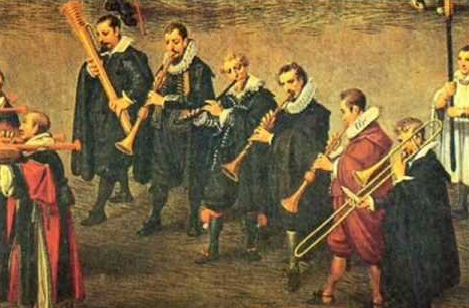
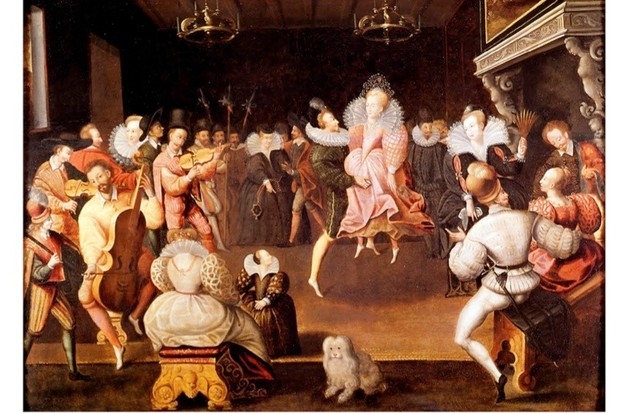
The nobility of Renaissance Europe hired groups of musicians, called consorts, to provide music for dancing. They played instruments like the cornett, sackbut, shawm (an early oboe) and curtal (an early bassoon). But the music they played was written for only small groups of instruments—often not specified—so consorts could not be considered to be true orchestras.
Venetian composer Giovanni Gabrieli (1557–1612) wrote music for specific instruments arranged in separate groups. His Sonata pian' e forte of 1597 was intended for two instrumental groups, one consisting of cornett and three sackbuts (trombones), the other a viola and three more sackbuts. It is the earliest known piece of music to call for specific brass instruments. The players were placed in opposite sides of the cathedral of San Marco, Venice.
Monteverdi
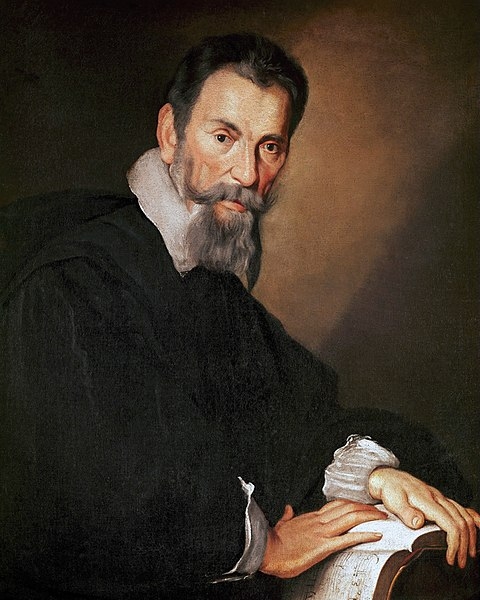
It was the emergence of the opera in the early 17th century, the beginning of the Baroque period, that called for music to be written for groups of players in particular combinations. The Italian composer Claudio Monteverdi (1567–1643) wrote the first great opera, L’Orfeo (1607), and knew exactly which instruments he wanted to accompany the singers: an orchestra of more than 40 players consisting of fifteen viols of different sizes, two violins, four flutes (two large and two medium size), two hautbois (early oboes), two cornetts (types of wind instrument), four trumpets, five sackbuts, a harp, two or three chitarroni (types of lute), two harpsichords and three small organs. The modern orchestra was beginning to take shape.
Court of Louis XIV
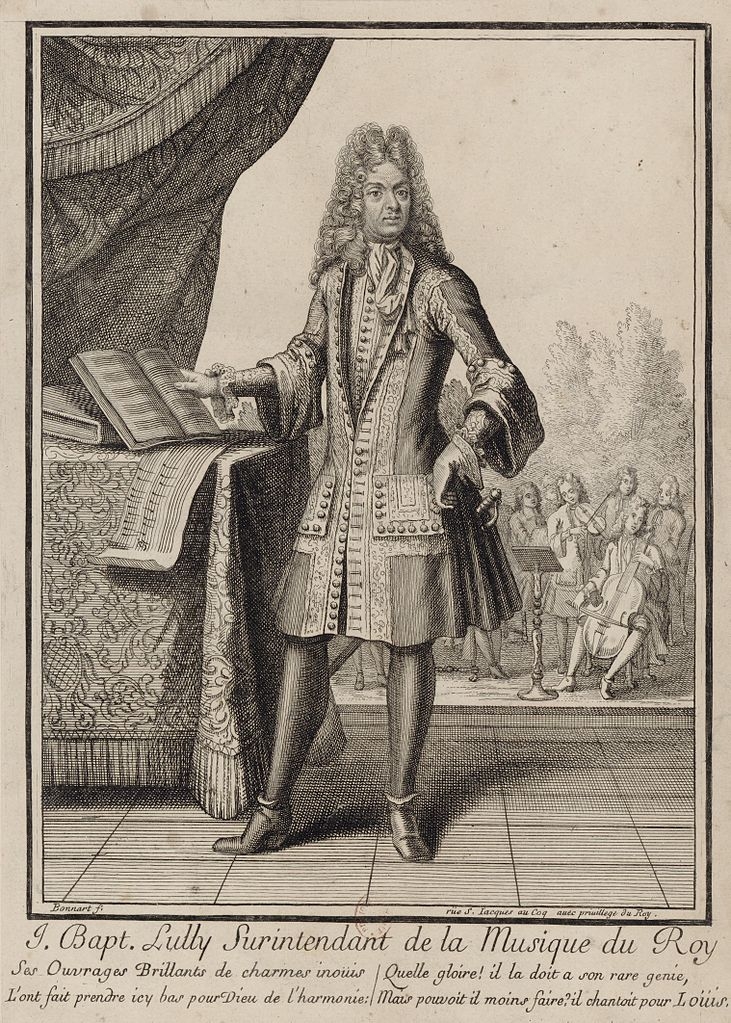
Jean-Baptiste Lully (1632–87) was an Italian-born French composer and dancer who spent most of his life working in the court of King Louis XIV of France, the “Sun King”. Lully wrote vocal and instrumental music for court ballets. Louis made Lully director of his orchestras: the Petits Violons ("Little Violins”), which Lully used for ballets, along with the Grands Violons ("Great Violins”), or 24 Violins du Roi, and 12 Grandes Hautbois (10 oboes and two bassoons), which he used for his operas. Lully divided the violins—actually violins, violas and cellos—into five "voices" (melody, bass and three inner parts), with the oboes and bassoons joining in to reinforce top and bottom parts. Recorders, flutes and brass were sometimes added for certain effects.
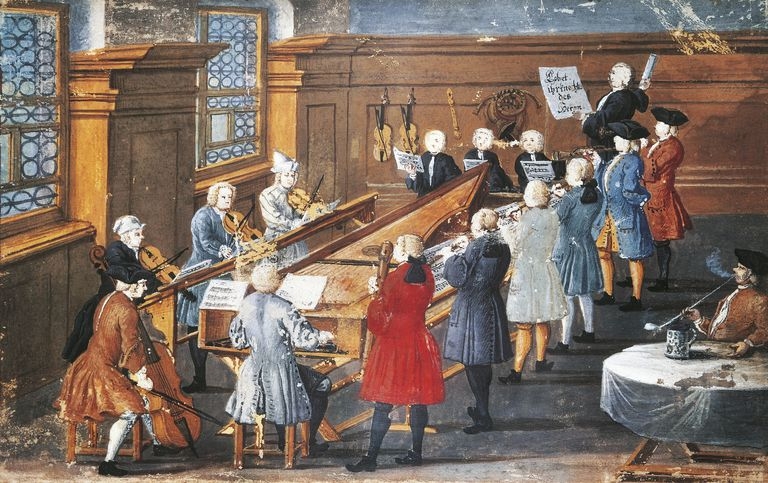
Baroque orchestra
Lully’s orchestra was copied by other courts around Europe in the late 17th century. This helped to establish the violin family (replacing the viols) as the basis for all orchestras in the Baroque period. Another key member of the Baroque orchestra was the basso continuo, in which a low-register instrument like the cello or bassoon played with a harpsichord or lute to provide the harmony.
By the first half of the 18th century, the time of J.S. Bach, Handel and Vivaldi, the standard composition of the orchestra had been established. It consisted of strings (first and second violins, violas, cellos and double basses) and harpsichord continuo, with woodwinds (flutes, oboes and bassoons), brass (horns and trumpets) and percussion (two timpani) as frequent additions.
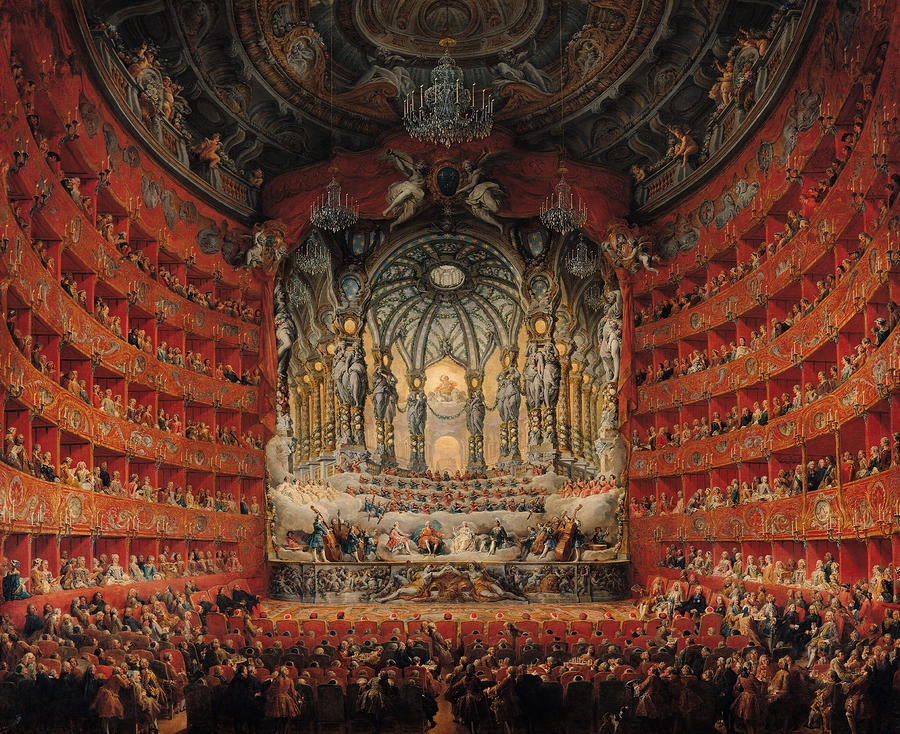
Mannheim School
The nobility of the period began to hire musicians to form orchestras of their own. These players worked together over long periods of time, making it possible for orchestral playing to improve significantly. In 1742, Duke Charles Theodore, Elector Palatine, engaged the violinist Johann Stamitz (1717–57) to seek out the finest musicians in Europe to form an orchestra for his court at Mannheim. The players transformed the way music was played, introducing dynamics and phrasing. As composers, they abandoned many aspects of Baroque style, including the continuo and complex counterpoint, introducing the more melodic qualities and symphonic form of the Classical style.

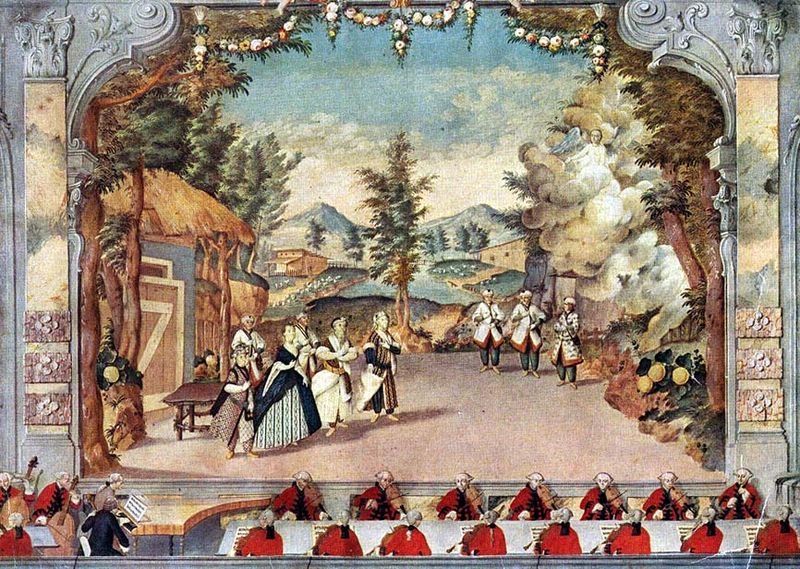
Classical orchestra
Some composers of the Classical period, such as Joseph Haydn (1732–1809), who found employment with the wealthy Esterházy family, were given their own orchestras to work with. Other composers became travelling performers, arranging concerts in different places and bringing together musicians to make up orchestras for particular performances.
Then, in 1781, the Leipzig Gewandhaus Orchestra was organized: it began a trend for establishing permanent orchestras in towns and cities. The New York Philharmonic and the Vienna Philharmonic were formed in 1842, and in 1858, the Hallé Orchestra was founded in Manchester.
The basic composition of the modern symphony orchestra was established during the Classical period: four sections, consisting of woodwinds (flutes, oboes and bassoons), brass (horns and trumpets), percussion (timpani) and strings (first and second violins, violas, cellos and double basses). Clarinets were adopted into the orchestra during this period, while the earlier continuo instruments, such as the harpsichord and lute, disappeared.

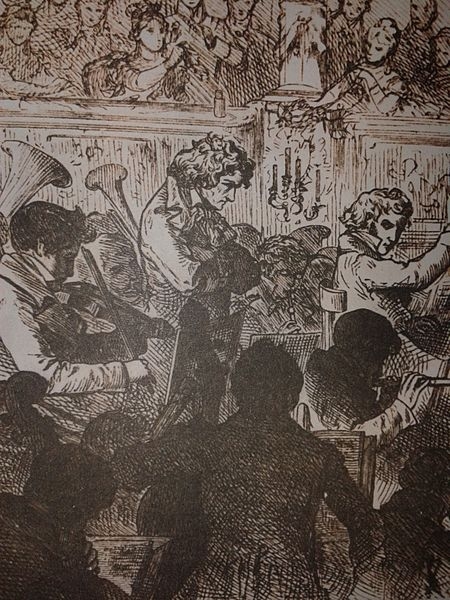
Romantic orchestra
The improvement in the mechanism of woodwind and brass instruments, enabling them to become more flexible and agile, combined with a demand for new music that was more emotional and expressive, led to orchestras becoming larger at the beginning of the Romantic period in the early 19th century.
Beethoven (1770–1827) called for pairs of flutes, oboes, clarinets, bassoons, horns and trumpets for nearly all of his orchestral works. Sometimes he added a piccolo, contrabassoon, trombones and extra horns to achieve certain effects. For several decades after his death, symphonic instrumentation generally followed Beethoven's established model.
As the 19th century went on, other instruments became standard members, including trombones, tuba, cor anglais, bass clarinet, harp and a range of percussion instruments. By the end of the century, the size of the average orchestra had increased significantly: 35 players were required for Beethoven’s 1st Symphony while forces of 100 or more were needed for works by Richard Strauss or Gustav Mahler. This was largely made up of extra string players and an enlargement of the wind from double to triple—even quadruple—players.
Conductor

Orchestras are usually led by a conductor, who directs the performance with movements of the hands and arms, often using a baton, a thin stick. The conductor sets the tempo (precise speed) and shapes the sound of the orchestra, ensuring the musicians play with the right balance and phrasing. He or she also prepares the orchestra by leading rehearsals, during which they guide the musicians through their own interpretation of the music.
In the Baroque period (1600–1750), orchestras were directed by the person playing the continuo instrument, such as the harpsichord. After the phasing out of the continuo in the late 18th century, the principal first violin, known as the concertmaster or leader, took over the role. Once the orchestra had reached a certain size and the music performed had become more complex, however, it became necessary to have someone who did not also play an instrument to direct the performance. Starting in the the 1820s, some composers, such as Louis Spohr, Hector Berlioz or Felix Mendelssohn, began to stand on a podium and conduct the orchestra with a baton.

pics

Without in any way limiting Q-files Ltd’s exclusive rights under copyright, any use of this publication to “train” generative artificial intelligence (AI) technologies to generate text is expressly prohibited. Q-files Ltd reserves all rights to license use of this work for generative AI training and development of machine learning language models.