
Music and dance

CITE
We have made every effort to follow citation style rules, but there may be some minor differences. If in doubt, please refer to the appropriate citation style manual.
String instruments. (2026). In Q-files Encyclopedia, Culture, Music and dance. Retrieved from
https://www.q-files.com/culture/music-and-dance/string-instruments
"String instruments." Culture, Music and dance, Q-files Encyclopedia, 13 May. 2026.
https://www.q-files.com/culture/music-and-dance/string-instruments.
Accessed 22 Sep. 2026.
String instruments 2026. Culture, Music and dance. Retrieved 22 September 2026, from
https://www.q-files.com/culture/music-and-dance/string-instruments
Culture, Music and dance, s.v. "String instruments," accessed September 22, 2026.
https://www.q-files.com/culture/music-and-dance/string-instruments


String instruments
The string section of the modern orchestra are all members of the violin family and consist of the violin, viola, cello (short for violoncello) and double bass. The violin family was developed in Italy in the 16th century. At the time, the name of this family of instruments was viola da braccio (“string instrument for the arm”), a term used to distinguish it from the viol family (viola da gamba, or “string instrument for the leg”). Viols are played while held between the legs, like a modern cello.


Viols
Viols, or gambas, first appeared in the 15th century. They were most popular during the Renaissance and Baroque (1600–1750) periods. Although they look quite similar, viols are different in many respects to instruments of the violin family. Viols have flat rather than curved backs, sloped rather than rounded shoulders, C-holes rather than F-holes, and between five and seven strings rather than four. The viol fingerboard has frets (like a guitar) and the bow is held with an underhand ("German") grip rather than with the overhand ("French") grip used for violins. All members of the viol family are played upright and held between the legs (unlike the violin or the viola which are held under the chin). Viols come in a number of sizes, ranging from pardessus to contrabass, also known as the violone.
Playing a string instrument
The sound of a string instrument is produced when a bow is drawn across a tightly stretched string, causing the string to vibrate. The strings may also be plucked (pizzicato). The vibrations travel to the body of the instrument, a wooden box, via the bridge. The body controls and amplifies the vibrations, converting them to sound waves.
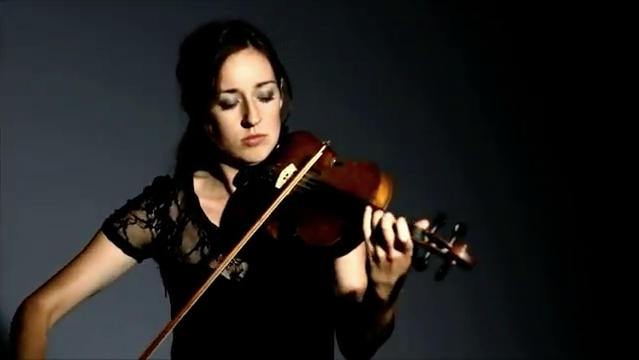
As the bow, held in the right hand, is passed backwards and forwards across the strings between the bridge and the fingerboard, one or more of the fingers of the left hand presses down on, or “stops”, a string at certain distance from the end of the fingerboard. This shortens the length of string that can vibrate, raising the pitch of the note. Notes can be played smoothly (legato) or in a clipped fashion (staccato).

Parts of a string instrument
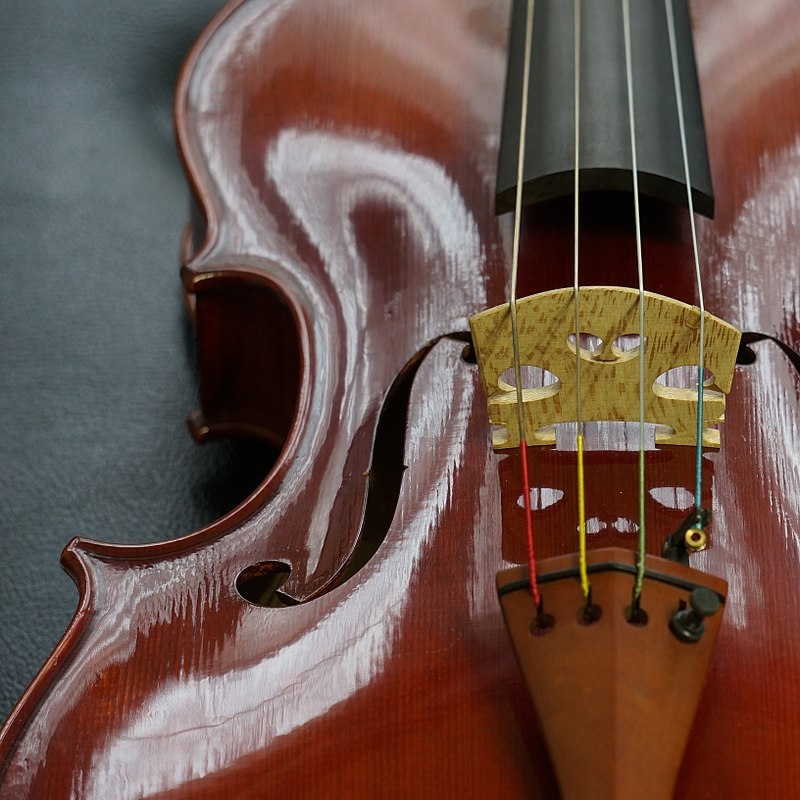
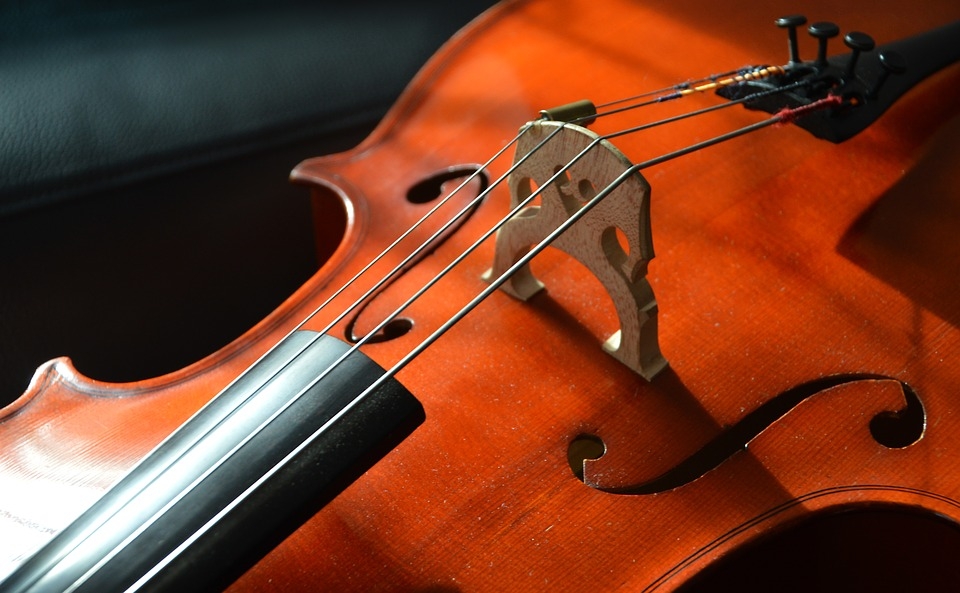
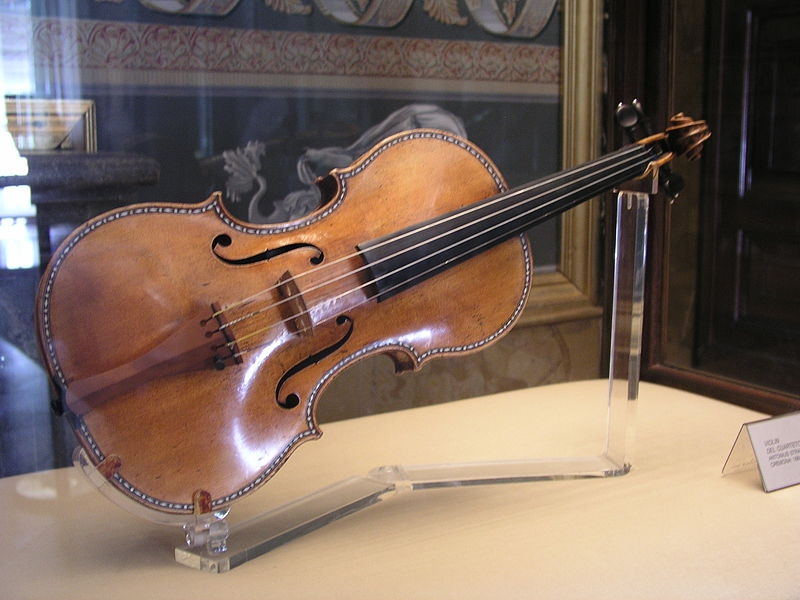
At the upper end of a string instrument is the neck, which supports part of the fingerboard. It ends in a peg box and an ornamental scroll. The strings are attached to pegs pushed into the sides of the peg box. They pass over the nut, the raised edge of the peg box, then down just above the fingerboard across the bridge to a tailpiece held in place by an endpin. The bridge lifts the strings clear of the body.
Inside the body is the soundpost, a short wooden rod fixed between the front and back of the instrument just below the left foot of the bridge. There is also a bass bar, a strip of wood glued to the underside of the front plate and running parallel to the strings. These fittings help spread the vibrations from the strings around the body.

The body consists of a front plate (the “belly”) carved from softwood, and a back plate of hardwood, usually maple, sycamore or fruitwood. Both are convex in shape and held apart by shallow hardwood ribs. The waist, also called the bout, allows the bow clearance when playing on the outside strings. Sound holes, known as “F-holes” because of their shape, are cut into the belly to either side of the bridge. The body is varnished. The precise shaping of the body governs the quality of sound of the instrument.
Players of the violin and viola hold their instrument under the chin with the thumb of their left hand supporting the neck, while holding the bow in the right hand. Most players use a chin rest, a small, shaped, wooden platform clamped to the instrument alongside the tailpiece. Many also add a shoulder pad, which is fixed to the underside of the instrument while it is being played.
The cello, which is played in a sitting position, is supported by a metal peg or “spike”, which slides out of the instrument's body just below the tailpiece. Double bass players either stand or sit on a high stool to play their instrument.

Strings
Strings were once made of sheeps' intestines (called "catgut"), stretched, dried and twisted. Modern strings most commonly commonly have synthetic core, usually perlon (stranded nylon), wound with various metals. The uppermost string of the violin, the E strings, is usually unwound, either plain or plated steel.
String instruments in some modern orchestras that want to recreate more closely the original sound of music composed before the 20th century are fitted with gut strings.
Bow
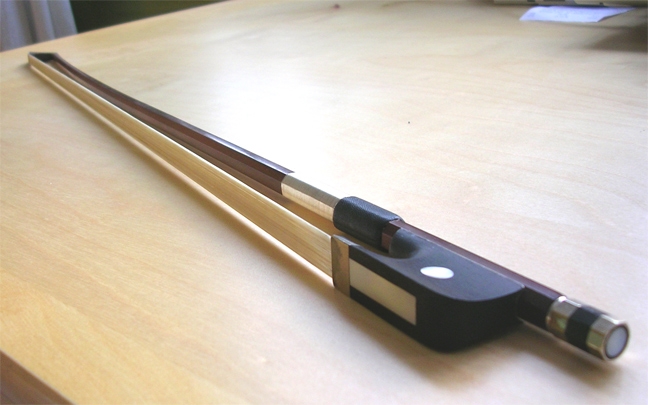
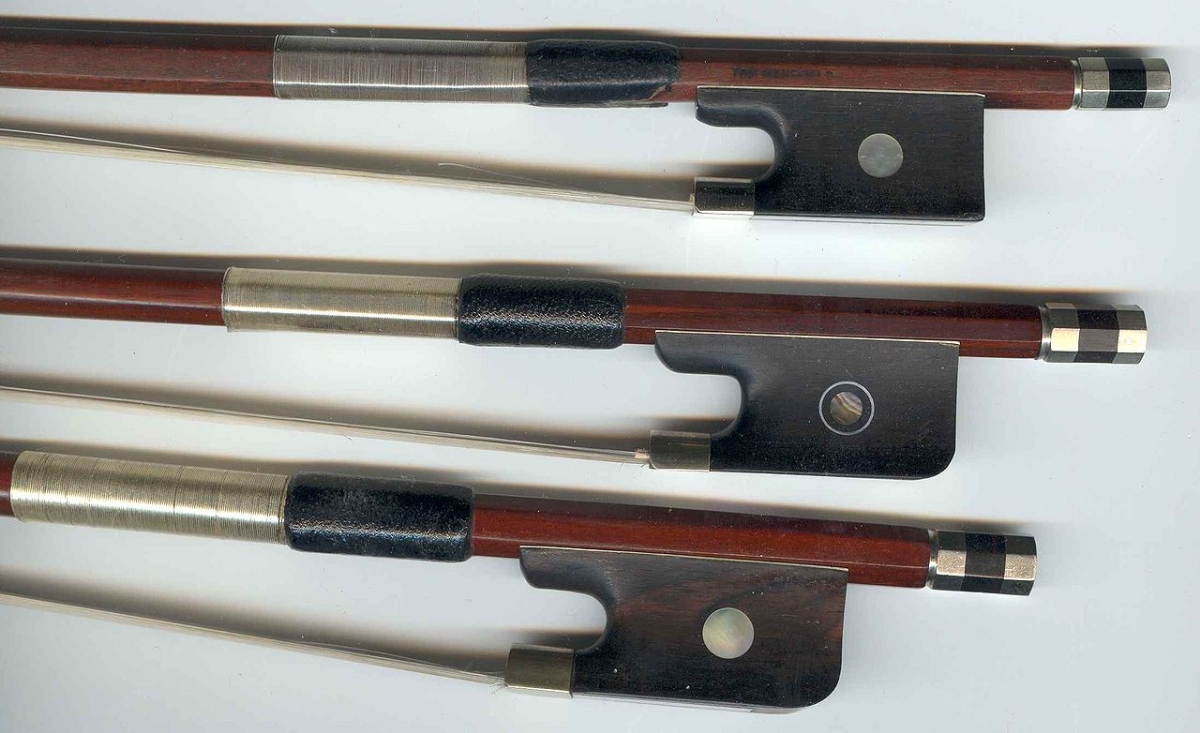
The bow consists of a long stick with a ribbon of horsehair strung between the tip at the upper end and a moveable “frog” (or “nut”) at the lower end. It is the lower end, called the “butt”, that is held between the player’s thumb and fingers. A screw adjuster, attached to the frog, tightens or loosens the hair. The stick was traditionally made of pernambuco, the heartwood of the brazilwood tree, but now other woods and materials, such as ironwood, graphite or fibreglass, are commonly used. The bow has a gentle inward curve (bows from before the end of the 18th century usually curved outwards).
Viewed through the microscope, horsehair has a serrated edge: it is these microscopic teeth that grip the strings and cause them to vibrate. The hair must be rubbed with rosin (a solid form of resin, obtained from pine trees) before playing to maintain the grip: new or unrosined bow hair simply slides over the strings and produces no sound.
Violin
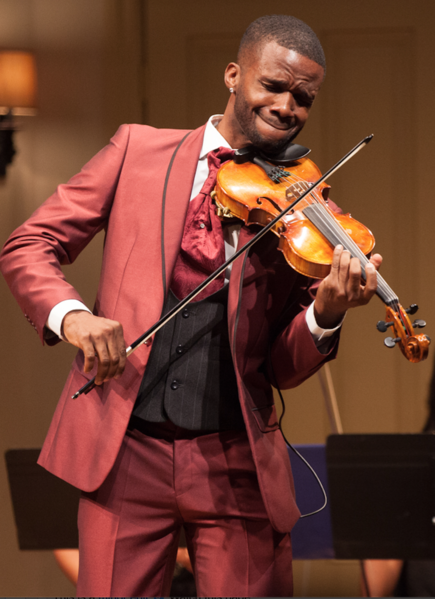
Also known by its nickname, the fiddle, the violin is the smallest and highest-pitched instrument in the violin family. The first true violins date from the 1530s, becoming popular by the middle of the 16th century. Most violins were made in northern Italy, firstly in Brescia, later in Cremona, by famous makers such as Andrea Amati (1520–78), Giovanni Maggini (1580–1623), Antonio Stradivari (1644–1737) and Giuseppe Guarneri (1698–1744). They also made violas and cellos. The violin measures just under 60 centimetres (23.5 inches). Its strings are tuned in fifths to G, D, A and E. A player of the violin is called a violinist.
Viola
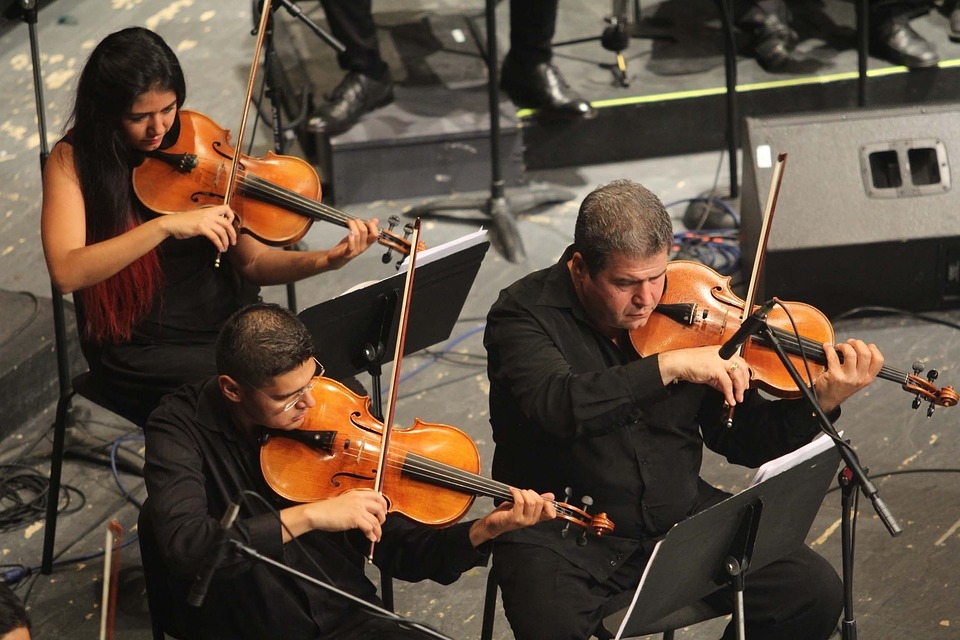
The viola is larger than the violin—about 69 centimetres (27.2 inches)—and has a lower and deeper sound. The bow is a little thicker and heavier than a violin bow. The strings are tuned in fifths to C, G, D and A. Since the 18th century, it has been the middle, or alto, member of the violin family, between the violin and the cello. A player of the viola is called a violist.
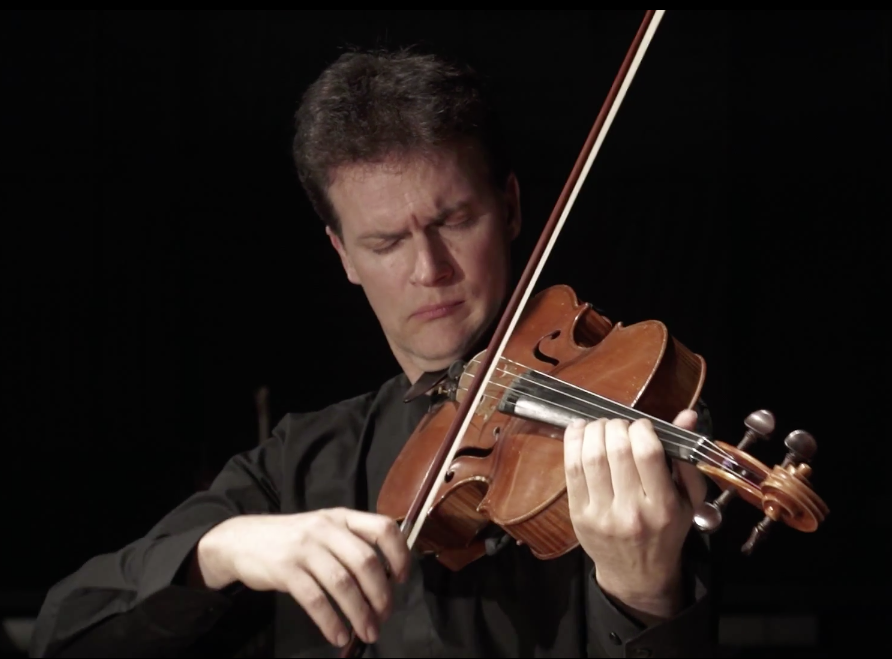

Cello
More properly called the violoncello, the cello is the bass member of the violin family. Like the violin and viola, it was developed in the 1500s, but became important in the early 17th century, at the beginning of the Baroque era, when it was used as a basso continuo instrument in various groups, enriching the harmony. It is about 122 centimetres (4 feet) long, with string tuned in fifths to C, G, D and A, an octave below the viola. The cello bow is shorter and thicker than a violin or viola bow. A player of the cello is called a cellist.
Double bass
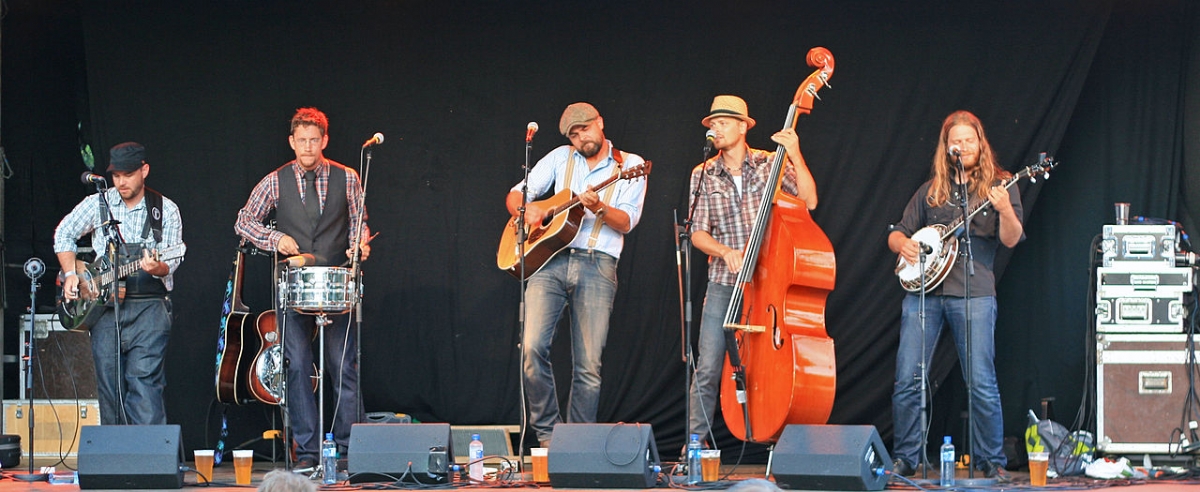
The double bass, or simply the bass, is the largest and lowest-pitched bowed string instrument in the modern symphony orchestra. In the orchestral repertoire, both bowed playing (arco) and plucking (pizzicato) are used. In jazz, blues and folk, pizzicato is much more often used. The double bass player stands, or sits on a high stool, and leans the instrument against his or her body, turning it slightly inwards to bring the strings comfortably within reach. The bass's sloped shoulders, which sets it apart from the other members of the violin family, make it easier to play the strings in their higher registers (the fingers need to reach down the fingerboard). A player of the bass is called a bassist or bass player.
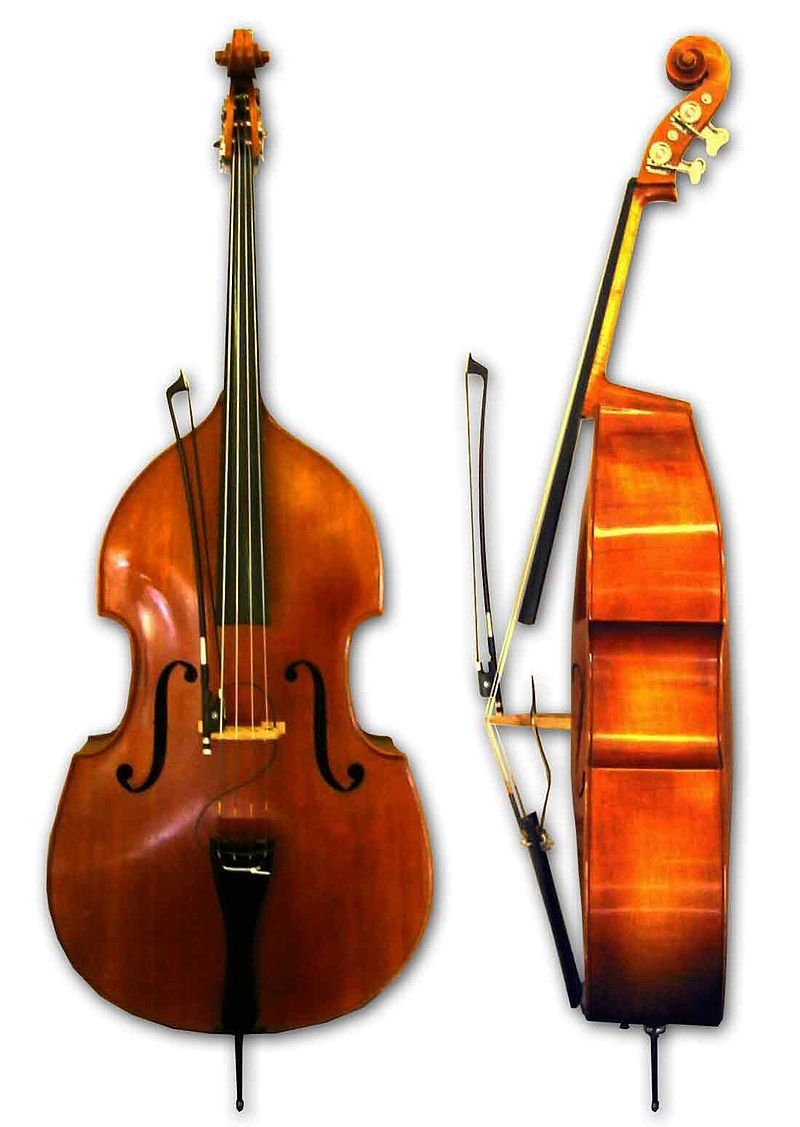
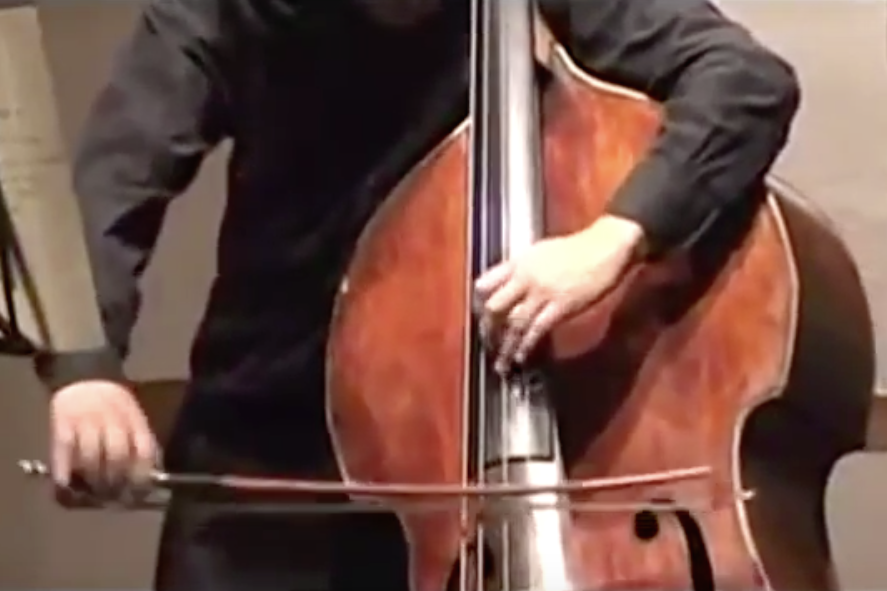
The double bass might have developed from the double bass viol, called the violone, and so may not be a true member of the violin family. Its shape is more similar to that of members of the viol family and it is tuned in fourths, E, A, D and G, also like viols (and unlike violins, which are tuned in fifths). However, the internal construction of the double bass is nearly identical to instruments in the violin family.
pics
Without in any way limiting Q-files Ltd’s exclusive rights under copyright, any use of this publication to “train” generative artificial intelligence (AI) technologies to generate text is expressly prohibited. Q-files Ltd reserves all rights to license use of this work for generative AI training and development of machine learning language models.