
Energy

CITE
We have made every effort to follow citation style rules, but there may be some minor differences. If in doubt, please refer to the appropriate citation style manual.
Sound. (2026). In Q-files Encyclopedia, Science, Energy. Retrieved from
https://www.q-files.com/science/energy/sound
"Sound." Science, Energy, Q-files Encyclopedia, 10 Mar. 2026.
https://www.q-files.com/science/energy/sound.
Accessed 21 Sep. 2026.
Sound 2026. Science, Energy. Retrieved 21 September 2026, from
https://www.q-files.com/science/energy/sound
Science, Energy, s.v. "Sound," accessed September 21, 2026.
https://www.q-files.com/science/energy/sound


Sound
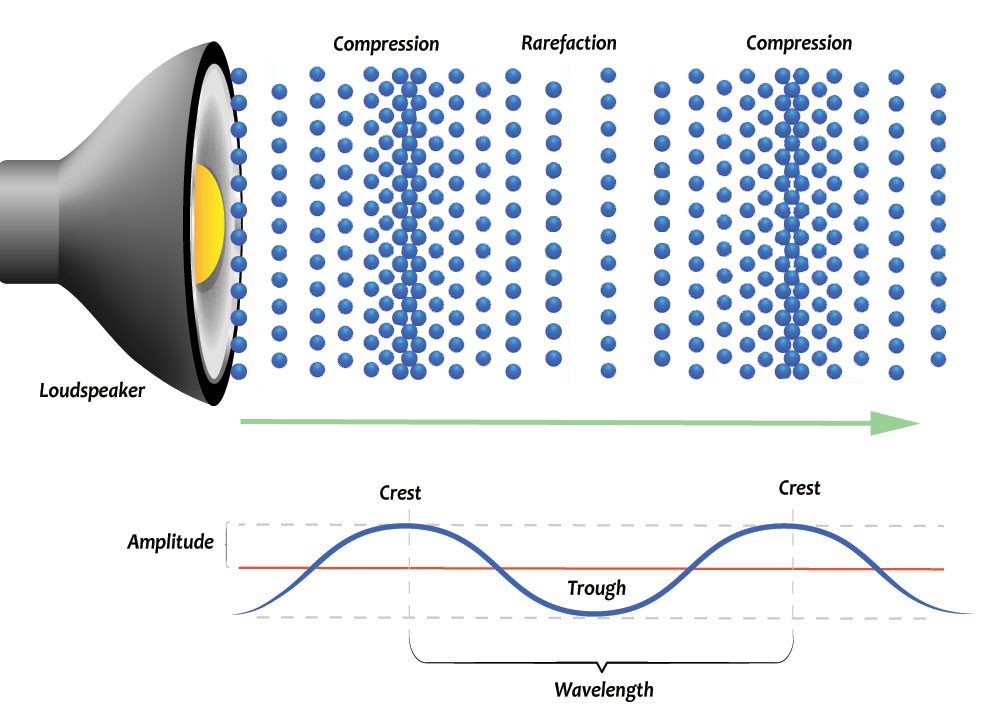
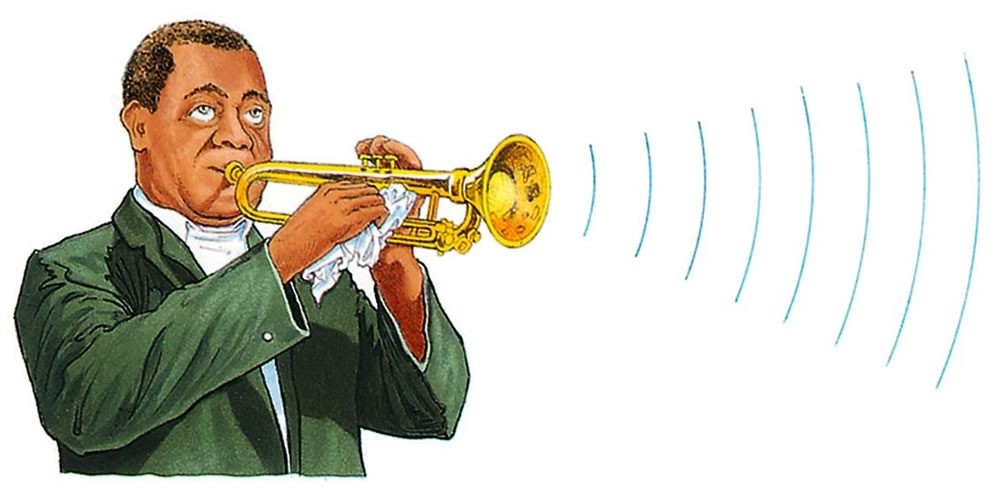
Sound is a form of energy made when objects vibrate (move to and fro rapidly). As an object vibrates it sets the air around it vibrating, too: molecules of the gases in the air press close together and then pull apart. These regions of higher and lower air pressure move away from the source and are called sound waves. Sounds also travel through liquids and solids. Sound waves usually move away from the sound source in all directions, like ripples in a pond.


Sound waves
Sound waves travel as a series of alternating high and low pressure regions, called compressions and rarefactions. As they move, the distance between compressions and rarefactions remains the same. The distance between one compression and the next is the wavelength of the sound. The difference between the low pressure of a rarefaction and the high pressure of a compression is the amplitude of the sound wave. The greater the amplitude of the wave, the greater its energy.
Frequency
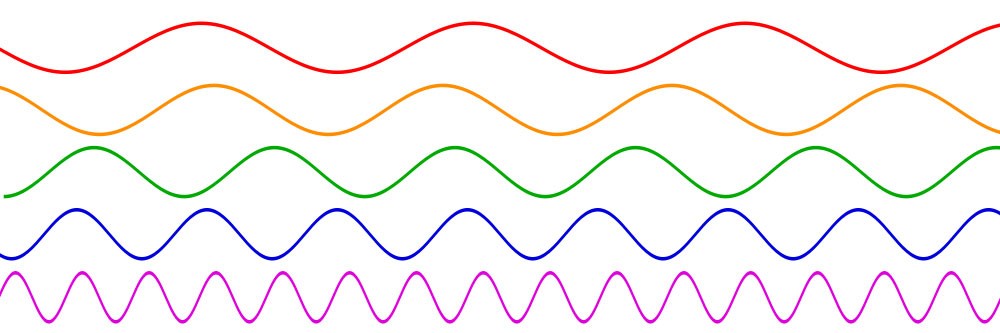
The number of compressions that passes a point in one second is called the frequency of the wave: this is always the same for a particular wave. The unit of frequency, a measure used to compare frequencies of all waves (including sound, radio and light waves), is the hertz (Hz), named after the German physicist Heinrich Hertz (1857–94).

Echoes
As sound waves spread out, their energy has to spread over a greater and greater area. So the sound gradually gets weaker and fades away. However if there is a hard, smooth surface in the way, such as a wall, then some sound waves bounce off it and come back again. The bouncing is known as reflection and, if the surface is many metres away, we hear the returning sound as an echo.
Acoustics
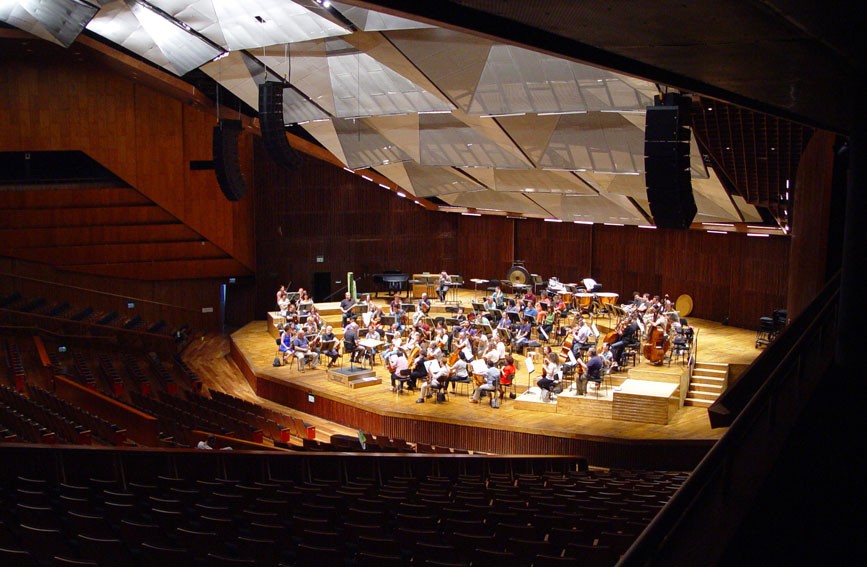
The way sounds are reflected around an internal space such as a room or concert hall is called acoustics. Large buildings that have many bare surfaces, such as cathedrals, may be full of reflected sounds. If the walls are close together, or if the reflected sounds overlap, we do not hear separate echoes. Instead, we hear a jumbled sound that may take many seconds to die away. This effect is called reverberation. If there is too much reverberation, the original sound may become lost and difficult to hear; if there is too little, the sound may be too thin.

In a concert hall, the acoustics are adjusted for exactly the right quality of sound. Panels, curtains and the bodies of the audience themselves all absorb the sounds: they prevent it from being reflected.
The speed of sound
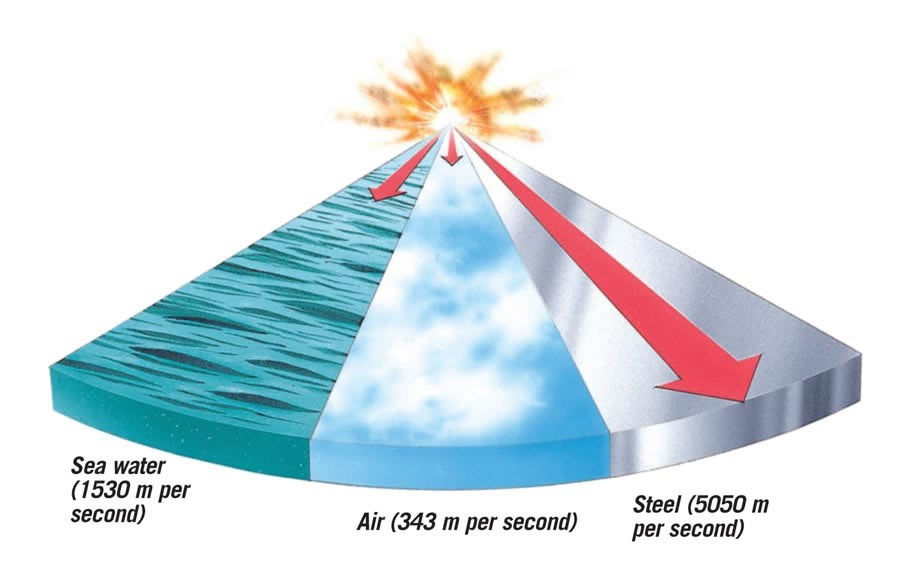
Sound travels through the air, of course, but it also travels through liquids, such as water, and solids, including metals. The speed of sound varies according to the substance it moves through. It goes at a slower speed slower through more compressible substances—those that are easier to squeeze smaller.
Pitch and volume
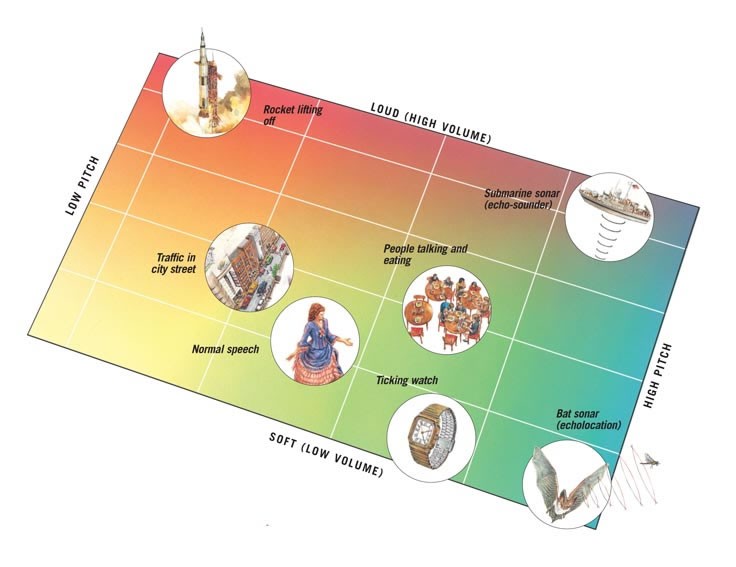
Sound has two important features. One is pitch. A low-pitched sound is deep, like a roll of thunder or a booming big drum. A high-pitched sound is shrill, like a snake’s hiss or the tinkle of a triangle. Pitch depends on the frequency of sound waves—the number of waves per second. High-pitched sounds have high frequencies.
The second important feature of sound is its loudness or volume. Some sounds are so quiet that we can only just hear them, like a ticking watch or the rustling of leaves. Other sounds are so loud, like the roar of engines or the powerful music in a disco, that they may damage the ears. Decibels (dB) are used to tell us how loud a sound is. Sounds louder than 90 dB are dangerously loud.

Doppler effect
When a vehicle sounding a siren approaches you, the pitch of the sound gets higher; it then becomes lower as the vehicle moves away. This is because each sound wave takes slightly less time to reach you than the previous one as the vehicle comes nearer and nearer. The sound waves "bunch together", giving them a higher frequency. They spread apart as the vehicle gets further and further away, resulting in a lower frequency. This is called the Doppler effect.
Consultant: Mike Goldsmith
pics

Without in any way limiting Q-files Ltd’s exclusive rights under copyright, any use of this publication to “train” generative artificial intelligence (AI) technologies to generate text is expressly prohibited. Q-files Ltd reserves all rights to license use of this work for generative AI training and development of machine learning language models.