
Energy

CITE
We have made every effort to follow citation style rules, but there may be some minor differences. If in doubt, please refer to the appropriate citation style manual.
Nuclear energy. (2026). In Q-files Encyclopedia, Science, Energy. Retrieved from
https://www.q-files.com/science/energy/nuclear-energy
"Nuclear energy." Science, Energy, Q-files Encyclopedia, 10 Mar. 2026.
https://www.q-files.com/science/energy/nuclear-energy.
Accessed 21 Sep. 2026.
Nuclear energy 2026. Science, Energy. Retrieved 21 September 2026, from
https://www.q-files.com/science/energy/nuclear-energy
Science, Energy, s.v. "Nuclear energy," accessed September 21, 2026.
https://www.q-files.com/science/energy/nuclear-energy


Nuclear energy
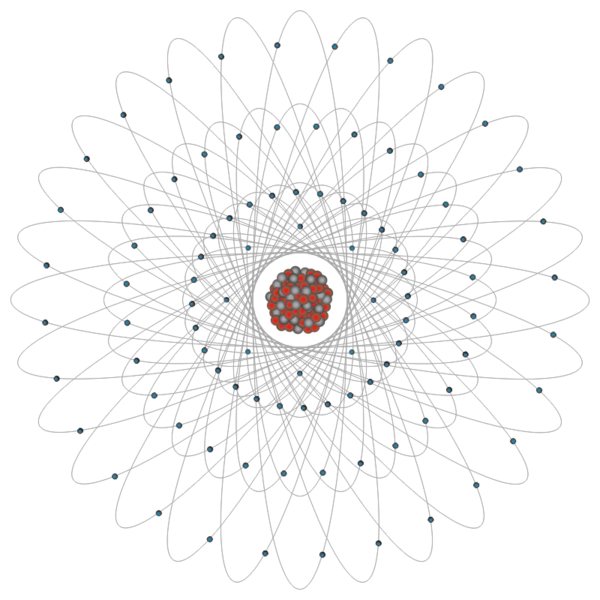
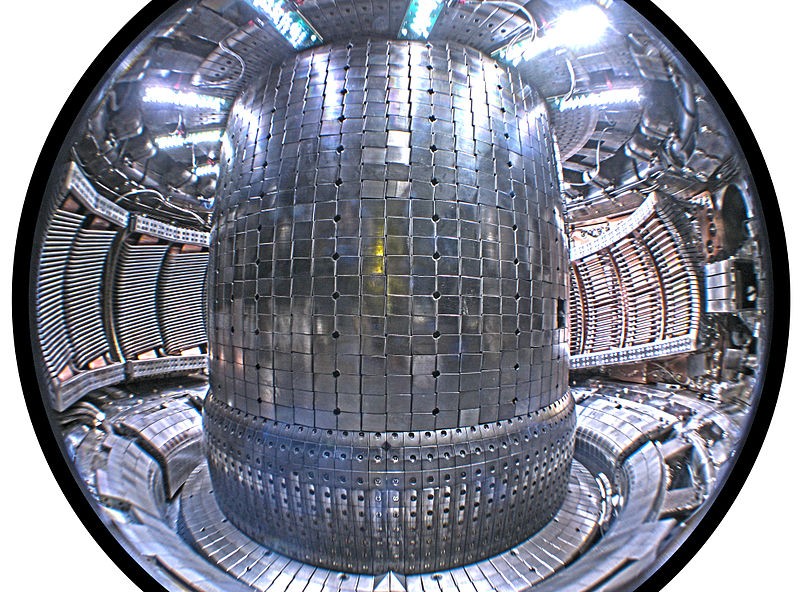
Nuclear energy is the energy contained by an atom, due to the strong force that holds together the protons and neutrons in its nucleus. Nuclear energy is released naturally inside the Sun. It can also be released by technological means by one of two ways: nuclear fission and nuclear fusion. They are both forms of nuclear reaction. Nuclear power can so far be produced from harnessing the energy obtained from atoms of only certain elements. These are uranium and plutonium (fission); deuterium and tritium (fusion power).
Nuclear fission
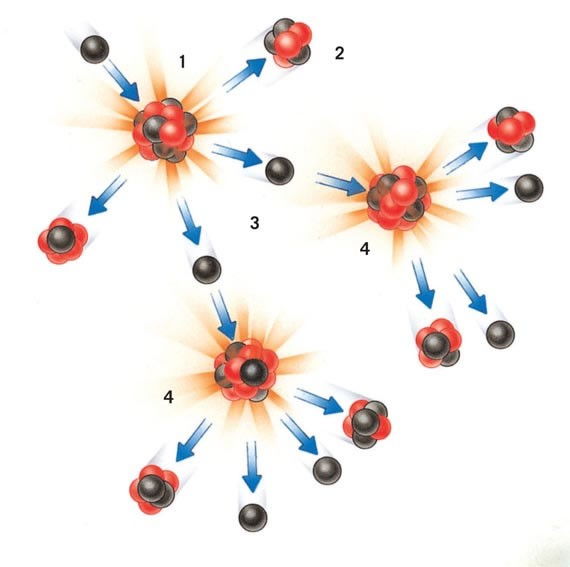
Matter can be converted into energy and energy can be changed into matter. This conversion is used in nuclear power stations. A nuclear particle called a neutron smashes into the nucleus of a uranium atom (1). The nucleus breaks into two parts (2). This releases large amounts of heat and other energy and also two more fast-moving neutrons (3). These smash into more uranium nuclei and so on in what is called a chain reaction (4). Splitting of nuclei is known as nuclear fission. During the process bits of matter cease to exist and become vast quantities of energy instead.
Nuclear fusion
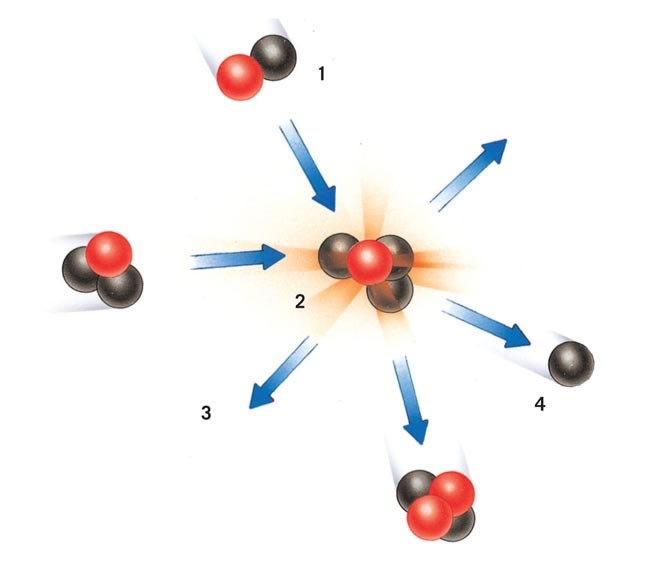
A similar process of changing matter into energy happens naturally in the Sun. The Sun is made mainly of hydrogen. Tremendous temperatures and pressures at its centre squeeze or fuse together the nuclei of the atoms (1) to form the nucleus of a helium atom (2). Vast amounts of energy are given off (3) which emerge from the Sun mainly as light and heat. A neutron may also be given off to continue the reaction (4). Since the nuclei join or fuse, this is called nuclear fusion.
Discovery of
nuclear fission
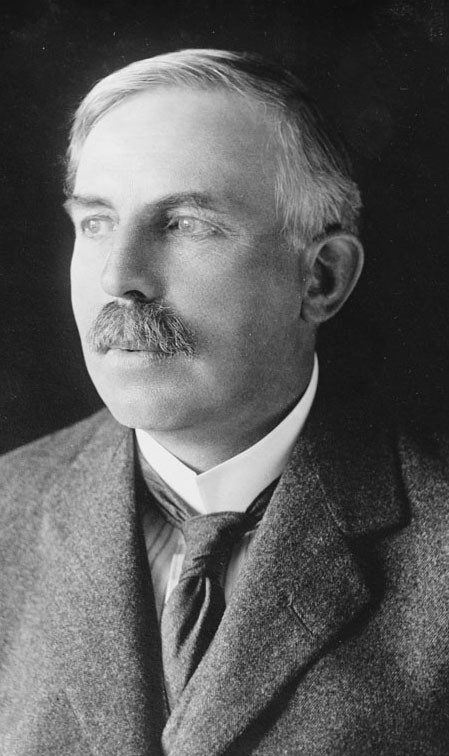
Between 1898 and 1907, New Zealand-born physicist Ernest Rutherford (1871–1937) investigated the newly-discovered phenomenon of radioactivity. He showed that the atoms of some heavy elements such as thorium naturally decay into slightly lighter, and chemically different, atoms. During this process they give off rays or particles, which Rutherford termed alpha, beta and gamma. A substance that emits any of these kinds of radiation is described as radioactive.
In 1917, Rutherford's student Patrick Blackett discovered that the nuclei of certain elements, such as nitrogen, could be “broken up” by the impact of alpha particles coming from another radioactive source, such as the element radium. The nitrogen atoms were converted, or "transmuted" into oxygen atoms. During this process, high-energy particles were emitted. This was the first observation of a nuclear transmutation: particles from one decaying atom being used to transform another atomic nucleus.
In 1932, a fully artificial nuclear reaction and transmutation was achieved by Rutherford's colleagues Ernest Walton and John Cockcroft. They used artificially accelerated protons against the element lithium to split its nucleus into two alpha particles. This became known as "splitting the atom".
Also in 1932 English physicist James Chadwick discovered that the atomic nucleus was made up of two types of particle: protons and neutrons.
Italian physicist Enrico Fermi (1901–54) showed that, during an experiment conducted in 1934, bombarding a uranium nucleus with neutrons could cause the nucleus to split into two smaller nuclei, releasing a number of neutrons—along with massive amounts of energy.
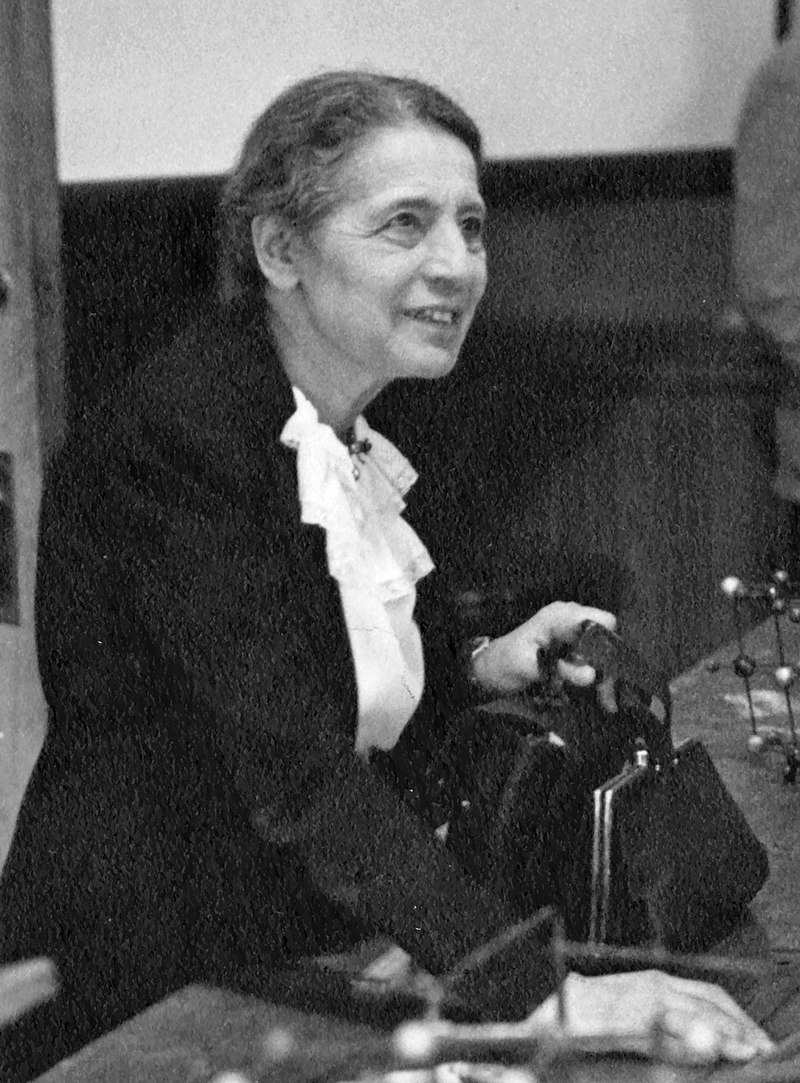
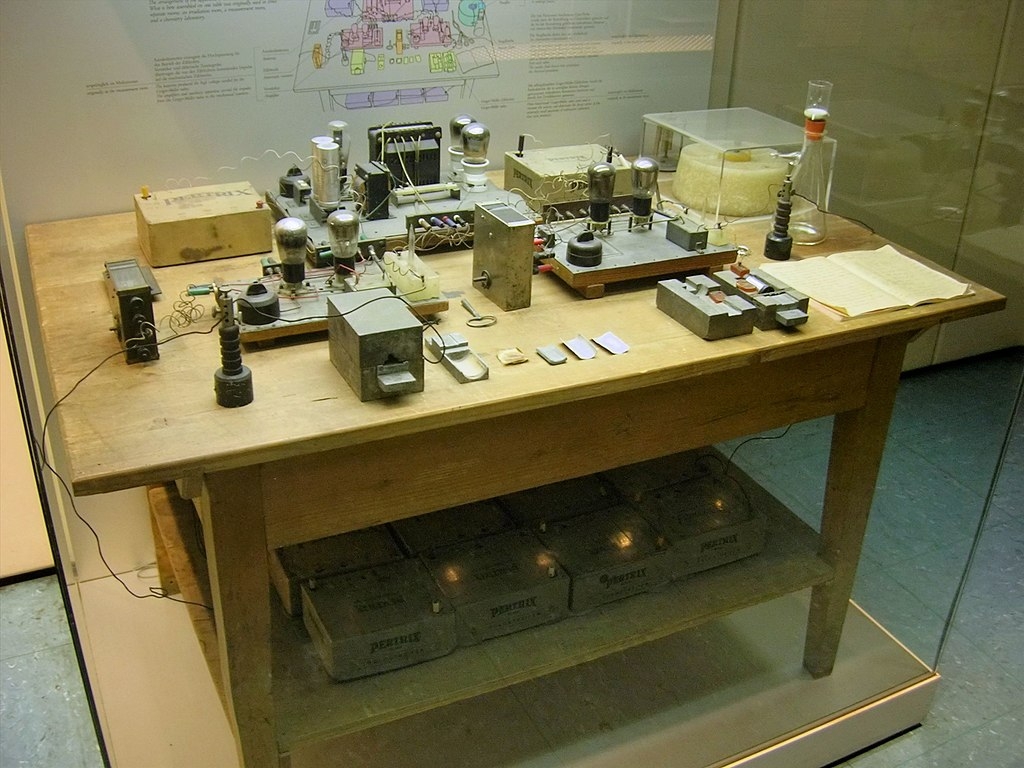
Austrian physicist Lise Meitner (1878–1968), along with German chemist Otto Hahn (1879–1968) and his assistant Fritz Strassmann, began performing similar experiments to Fermi's in Berlin. In March 1938, Meitner, an Austrian Jew, lost her citizenship when Austria was annexed by Nazi Germany and was forced to flee to Sweden. However, she remained in touch with her former colleagues by post. A few months later, Hahn wrote to her describing his finding that some of the product of the bombardment of uranium with neutrons was the element barium. This puzzled him, because barium had a much smaller mass than uranium. Meitner realised that the uranium nucleus had split roughly in half, evidence that nuclear fission had taken place.
In 1944, Hahn received the Nobel Prize for Chemistry for the discovery of nuclear fission. Despite the fact that Strassmann had been acknowledged as an equal collaborator in the discovery and that Meitner had played a crucial role, neither shared the prize that was rightfully theirs.
Consultant: Mike Goldsmith
pics
Without in any way limiting Q-files Ltd’s exclusive rights under copyright, any use of this publication to “train” generative artificial intelligence (AI) technologies to generate text is expressly prohibited. Q-files Ltd reserves all rights to license use of this work for generative AI training and development of machine learning language models.