
Materials

CITE
We have made every effort to follow citation style rules, but there may be some minor differences. If in doubt, please refer to the appropriate citation style manual.
Metals. (2026). In Q-files Encyclopedia, Science, Materials. Retrieved from
https://www.q-files.com/science/materials/metals
"Metals." Science, Materials, Q-files Encyclopedia, 10 Mar. 2026.
https://www.q-files.com/science/materials/metals.
Accessed 20 Sep. 2026.
Metals 2026. Science, Materials. Retrieved 20 September 2026, from
https://www.q-files.com/science/materials/metals
Science, Materials, s.v. "Metals," accessed September 20, 2026.
https://www.q-files.com/science/materials/metals


Metals
There are many hundreds of metals, including the vast majority of elements in the Periodic Table. Metals are often shiny and solid at room temperature. Often they can be easily moulded and are good conductors of heat and electricity. These qualities have made certain metals highly attractive and useful to humankind for thousands of years. The first metal to be discovered was copper, which was used for jewellery from about 9000 BC. Most metals occur inside rocks. Rock especially rich in a certain metal is called a metal ore. The metal is separated from its ore by various means. Iron is obtained from ores by heating them until they melt, a process called smelting. Aluminium ore is known as bauxite. To separate the aluminium, it is treated with chemicals and electricity is passed through it, a process called electrolysis.

Properties of metals
Metals have several features that non-metals lack. They conduct heat and electricity very well compared to non-metals. Most are solid at room temperature. Some are strong, hard and tough, and many can be polished to give a smooth, shiny surface. When they are squeezed under great pressure, many metals change shape or deform and become squashed, rather than splinter apart or shatter. These features are true of most metals, but not all. The metal sodium is very soft, while the metal mercury is a silvery liquid at normal temperature.
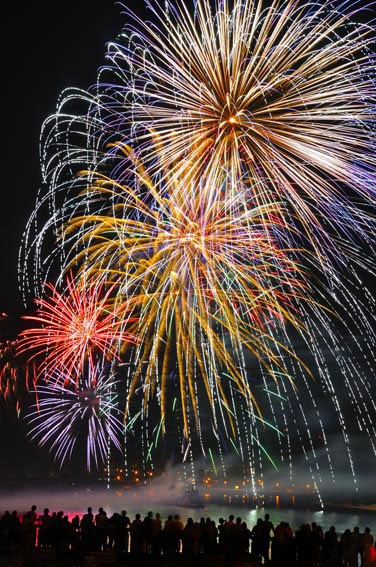
Some metals can burn very brightly, especially in powdered form. Fireworks contain mixtures of powdered metals such as magnesium as well as other substances, to make them flare up with bright colours.
Uses of metals
Metals such as iron and aluminium are very strong and resistant to damage, so they are frequently used in construction, vehicles, rail tracks, pipes and tools. Metals such as aluminium, copper and iron are excellent conductors of heat, making them useful for pans and woks.
Electrical power grids often use cables (thick wires) made of aluminium, which can carry electric current over a long distance—from the power plant to homes and offices—with little energy being lost. Within homes and inside electrical appliances, wires and circuit boards are usually made of copper.

Some highly reflective metals—such as steel, mercury, silver, aluminium, gold and copper—are used for mirrors, particularly those fitted in cameras, telescopes and lasers. Metals such as uranium and plutonium are radioactive (they give off a stream of particles or waves). They are used in nuclear power plants to produce energy.
Precious metals
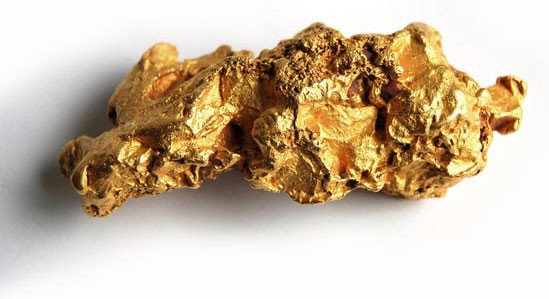
Certain types of metals are precious or valuable. This may be because they are rare and difficult to obtain from their ores, so owning them has become a symbol of power and wealth. Some metals are prized for their beautiful colours and lustre or sheen. Some are valuable because they are easy to hammer or cast into detailed, intricate shapes such as thin wires or leaves.
Two of the main precious metals are gold and silver. People have fought wars and killed for them. Often made into jewellery, these metals are also excellent carriers of electricity. They are used in switches, circuits and other devices in electrical equipment. Another important precious metal is platinum.

Mercury
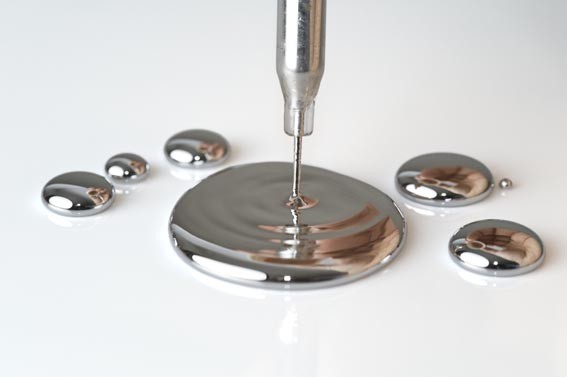
Mercury is the only metal that is liquid at room temperature, and, like all substances, its volume changes with the temperature. It is used in thermometers (but not household ones any more, as mercury is poisonous), pressure gauges, blood pressure meters, switches and fluorescent lighting.
Alloys and their uses
Many pure metals are too soft, brittle or easily corroded (worn away) for practical uses. An alloy is a mixture of a metal with one or more other elements. Most alloys are created to improve a metal’s usefulness. One of the earliest alloys was bronze, a tough mix of copper and tin that dates back more than 5000 years. Lightweight but very strong alloys of aluminium, titanium and magnesium are used in aeroplanes, road vehicles and spacecraft. Modern coins are made of alloys including bronze and nickel-brass.


Iron and steel
Iron is the fourth most common element in the Earth’s crust, but it reacts easily with oxygen, so it is most often found as iron oxide minerals such as magnetite, haematite or siderite. Iron can be obtained from these ores by heating them until they melt, a process called smelting. The iron ore is mixed with limestone and coke, a form of carbon.
The mixture is heated to more than 1000°C in a blast furnace, so-called because the heat is supplied by blasting hot air. The carbon reacts chemically with the oxygen in the air to form carbon dioxide, then carbon monoxide. This takes oxygen atoms from the iron oxide in the ore, leaving behind what is known as pig iron, which contains a small amount of carbon in it. The limestone, meanwhile, mixes with the sand, clay and other impurities in the ore to form a waste, called slag, that floats on top of the molten iron.
Nearly all iron is converted to steel, an alloy, for which much of the remaining carbon needs to be removed. In basic oxygen steelmaking, this is done by blowing a jet of oxygen over the molten pig iron, mixed with scrap steel. This oxidation process burns impurities, chiefly carbon, sulphur, phosphorus and silicon, out of the pig iron. Elements such as manganese, nickel, chromium, carbon and vanadium are then added to produce different grades of steel.
There are hundreds of different kinds of alloy steels, each mixed with slightly different amounts of elements and designed to do a different task. Steel’s strength makes it useful for construction of buildings, ships, cars, machines and tools. With the addition of chromium, steel becomes stainless steel, which is resistant to rust and water stains, making it a popular choice for sinks and cutlery. Titanium and vanadium steels resist very high temperatures without melting.


Electric arc furnace (EAF) steelmaking is a more modern method of producing steel. It uses much less energy than a blast furnace. Scrap steel or direct reduced iron are the main feed materials for an EAF. Direct reduced iron, also called sponge iron, is produced from the direct reduction of iron ore (usually in pellet or lump form) that has had the oxygen removed from it by using a reducing gas— either carbon monoxide or hydrogen. The ore is then converted into metallic iron by being heated, but not enough to melt it.
The EAF is filled ("charged") with a batch of metallic iron and (or) scrap steel. Electrodes are lowered in and electric currents are passed through them. The current heats up the furnace like an oven and melts the feed material. As in basic oxygen steelmaking, oxygen is blown into the molten pool to remove excess carbon and other impurities. Slag is formed by adding burnt lime, dolomite or magnesite.


Across the world, around 75% of steel is still made in coal-fired blast furnaces. These pump large amounts of carbon dioxide, a greenhouse gas, into the atmosphere. Overall, steel production accounts for around 8% of global emissions. The manufacturing of steel without the use of fossil fuels is called "green steel". The use of green hydrogen (hydrogen produced via electrolysis using water and renewable electricity) in the production of direct reduced iron for EAFs is one way to achieve this.

Metalworking
Metalworking is the skill of working with metals to create small parts (such as jewellery rings), assemblies (such as engine parts), or large structures (struts for bridges). Metalworking can be split into three basic areas: forming, cutting and joining.
Forming can be accomplished by casting (pouring molten metal into a mould and allowing it to cool), bulk forming (applying heat and force to shape metal, as in traditional blacksmithing) and sheet forming (applying force but not heat). Metal is cut, using hand tools such as saws and chisels, machines, using drills and grinders, by burning using lasers or plasma and by erosion, using water. Metal is joined by processes such as welding, melting the pieces to be joined and adding a filler material, and riveting, bolting pieces together through drilled holes.
Consultant: Mike Goldsmith
pics


Without in any way limiting Q-files Ltd’s exclusive rights under copyright, any use of this publication to “train” generative artificial intelligence (AI) technologies to generate text is expressly prohibited. Q-files Ltd reserves all rights to license use of this work for generative AI training and development of machine learning language models.