
Electrical power

CITE
We have made every effort to follow citation style rules, but there may be some minor differences. If in doubt, please refer to the appropriate citation style manual.
Renewable energy. (2026). In Q-files Encyclopedia, Technology, Electrical power. Retrieved from
https://www.q-files.com/technology/electrical-power/renewable-energy
"Renewable energy." Technology, Electrical power, Q-files Encyclopedia, 23 Jul. 2026.
https://www.q-files.com/technology/electrical-power/renewable-energy.
Accessed 4 Nov. 2026.
Renewable energy 2026. Technology, Electrical power. Retrieved 4 November 2026, from
https://www.q-files.com/technology/electrical-power/renewable-energy
Technology, Electrical power, s.v. "Renewable energy," accessed November 4, 2026.
https://www.q-files.com/technology/electrical-power/renewable-energy


Renewable energy
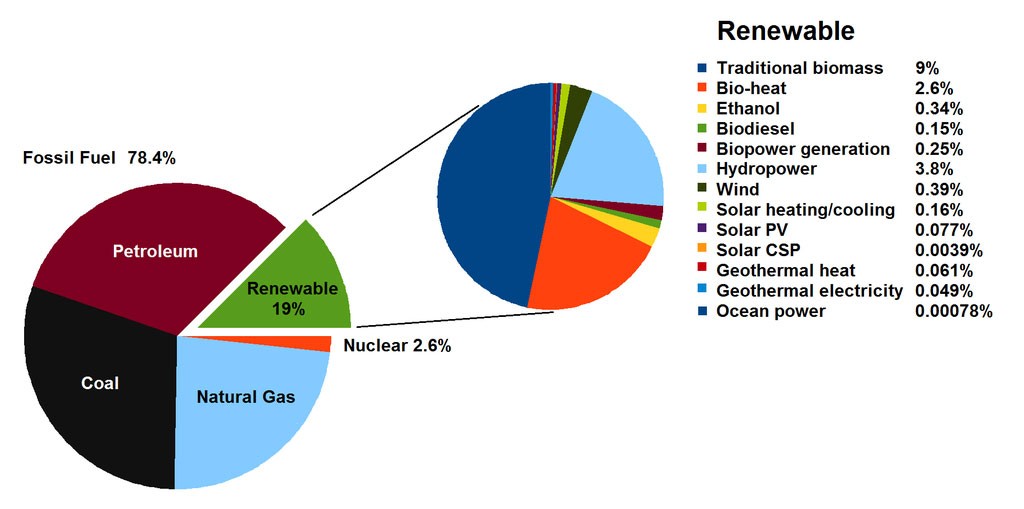
Renewable energy comes from natural resources that are constantly replenished. These resources include rivers, oceans, wind, sunlight, geothermal heat and biomass (material from living organisms such as plants and algae). Unlike fossil fuels—coal, oil and natural gas—renewable energy resources will not be used up within humanity’s foreseeable future. Renewable energies are sometimes called alternative energies, as they are alternatives to fossil fuels. Nuclear power is not currently classified as a renewable energy because it needs a supply of uranium, which is not naturally renewed. Renewable energies are used for generating electricity, heating of buildings and water, cooking, vehicle fuel and off-grid energy for rural homes that are not connected to the electricity grid.
Updated 23rd July 2026


Why turn to renewable energy?
The burning of fossil fuels in power stations and vehicles releases carbon dioxide into the air. This is a greenhouse gas that contributes to global warming. Burning fossil fuels also releases other pollutants, leading to acid rain and smog. Many people are also concerned by the radioactive waste created by nuclear power.
Reserves of fossil fuels are being used up faster than they are formed. They are also not spread evenly across the world. This leaves some countries unable to meet their own need for fossil fuels. They are also vulnerable to rises in the cost of importing them.
In contrast, every country has access to some renewable energy resources, giving the chance of “energy security”. Many renewable energy technologies, such as solar panels, wind turbines and hydropower, are suitable for use in rural areas in developing countries. Access to renewable energy could lift millions of people living in these regions out of poverty.


How renewable is our energy supply?
Across the world, renewable energies currently supply about 30% of the world's electricity. Over the past few decades, some countries have moved swiftly towards adoption of renewable energies, while others have not yet invested heavily. For example, Iceland makes all its electricity from geothermal heat and hydropower. In contrast, countries such as Turkmenistan make almost none of their electricity from renewable resources. Scientists predict that, if current levels of investment continue, the world could (and should) get all its energy from renewable resources by the year 2050.

Hydropower
Hydropower, which uses the energy of falling and running water, is mainly used to generate electricity. In a hydro-electric power station, the water from a river is stored in a reservoir behind a dam. Some of the water from the reservoir is allowed to flow out through inlets below the water level and along pipes into the turbines inside the power station. Each turbine has angled blades that are spun by the force of the water. A shaft connects the turbines to generators. An electrical generator consists of a magnet surrounded by copper wire. The turbine makes the magnet spin, producing an electric current in the wire.
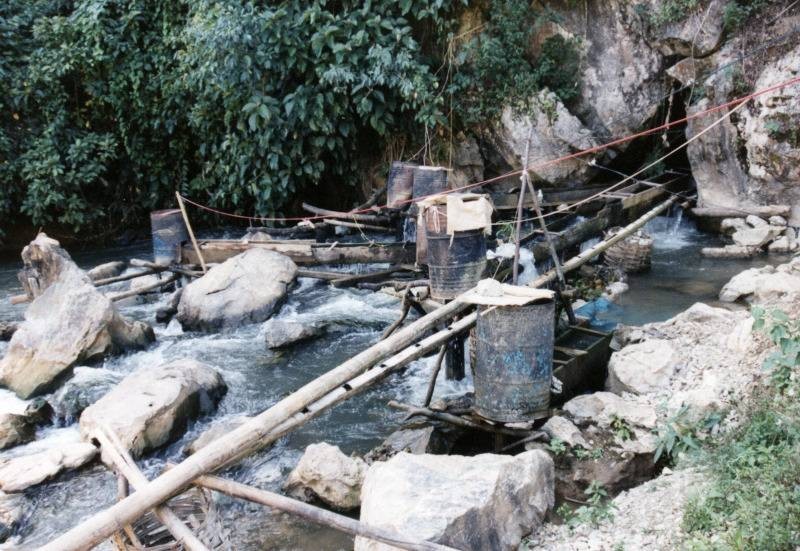
Dams are also useful for supplying water to cities and farms, and for controlling flooding downstream. However, the creation of a reservoir can displace large numbers of people and wildlife. China is the world’s largest producer of hydro-electricity, meeting 18% of its electricity needs with power stations such as the Three Gorges Dam. Small dams, called micro hydro projects, are sometimes used in the developing world to supply electricity to isolated homes and villages.

Tidal power
Tidal power converts the energy of tides into other forms of energy. Although tidal power is not yet widely used, it has the potential to supply a large portion of the world’s electricity. Two forms of tidal power generation are currently in operation. Tidal stream generators are machines placed in the flow of water that use the tidal movement to turn turbines.

Tidal barrages make use of dams across the full width of an estuary. At high tide, water flows in behind the dam. At low tide, this water is released through turbines. A concern about tidal turbines is that they can injure and drive away ocean creatures, while barrages may disrupt the movements of migrating animals.
Wave power
Wave power captures the energy of ocean waves and harnesses it to do work, such as electricity generation. Some wave power devices, such as surface attenuators, float on the water surface. The rise and fall of the waves drives pumps, which are linked to generators. Oscillating water column devices are partly underwater and make use of air trapped in one of their chambers. The movement of waves squeezes the air through a turbine.
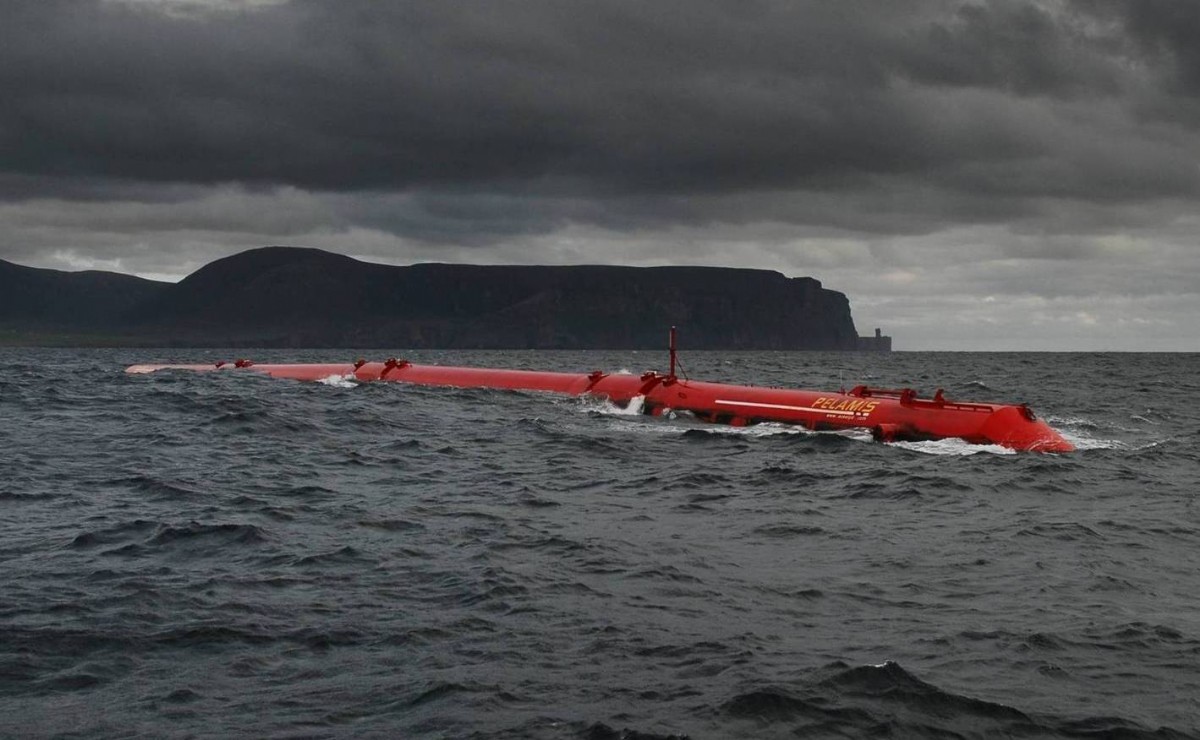

Overtopping devices use the power of waves to fill a reservoir to a higher level than the surrounding ocean. That higher water is released through turbines. Oscillating wave surge converters have one end fixed to the seabed while the other is free to move with the waves, using the movement to generate electricity. Wave power is not yet widely used, but further wave farms are in development. Key concerns with all wave power devices are the possible disruption and injury of sea creatures.
Wind power
Wind power currently supplies around 7.8% of the world’s electricity. Wind farms are being built across the globe, and wind power has the potential to meet all the world’s electricity needs. However, for this to happen, wind farms would need to be built over large areas, particularly on exposed hillsides and offshore, where the wind is strongest. Some people oppose wind farms because they find turbines ugly.

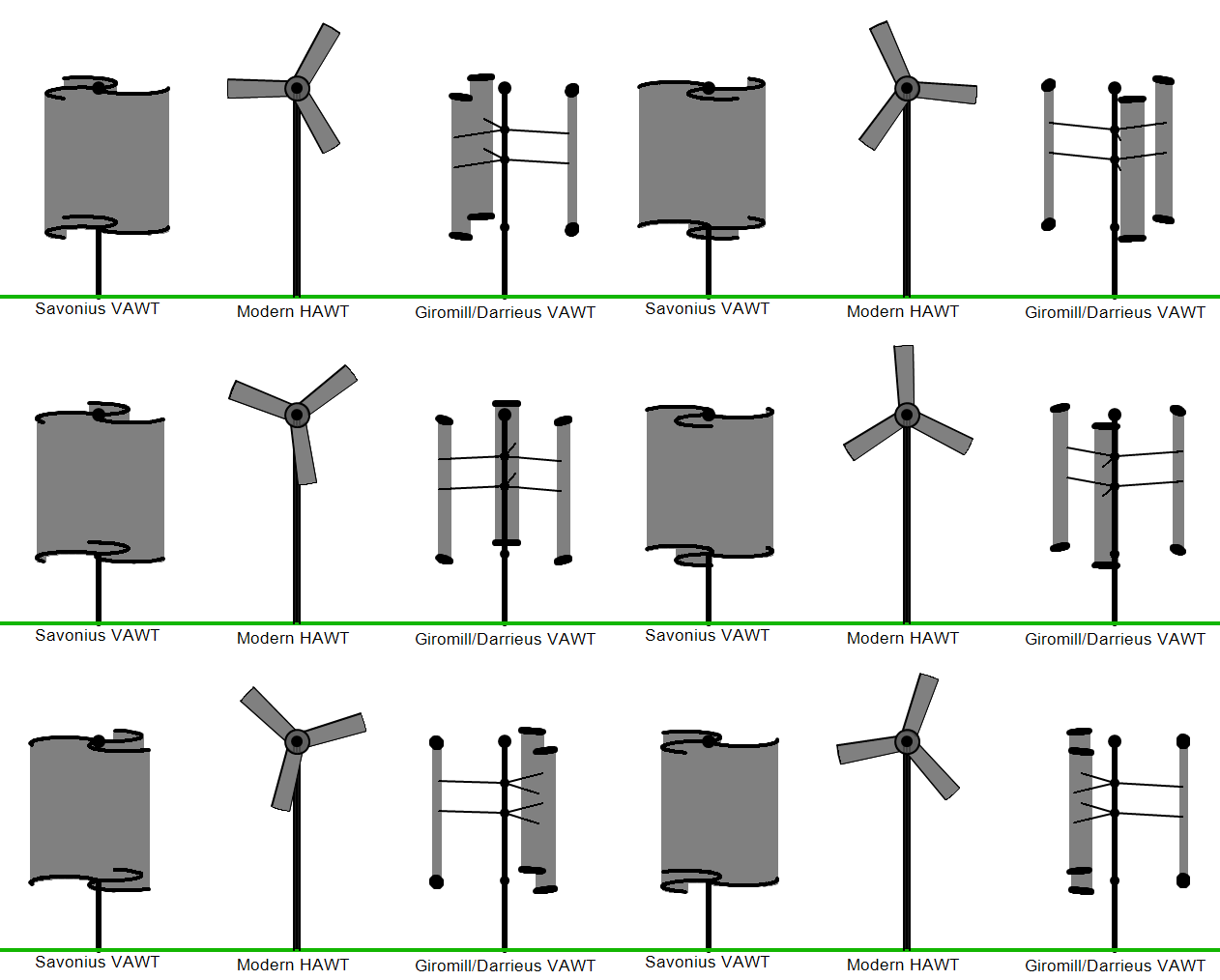
Wind farms have up to several hundred turbines, although single wind turbines are also used to provide power for isolated homes. Most wind turbines are horizontal axis (HAWT), but vertical axis (VAWT) designs are also in use. All work on the principle that the wind spins a rotor, which drives an electrical generator.

Floating wind turbines
Most offshore wind turbines are anchored to the ocean floor on fixed foundations, limiting them to depths of about 50 metres (165 feet). Floating turbines are tethered to the sea bed by mooring lines, allowing the turbine to generate electricity in much deeper waters, where winds are usually stronger and more consistent. Being positioned away from the coast reduces their impact on views.
Floating offshore wind is still in its early stages. But experts say the new technology could become much more significant if ways could be found to reduce costs (currently they are about double those of fixed offshore wind) and address fishing industry concerns that the turbine cables could interfere with fishing equipment.
Developing floating wind turbines opens up vast areas of the ocean to generate renewable wind power. The world’s first floating wind farm, Hywind Scotland, lies 24 kilometres (15 miles) offshore in the North Sea from Peterhead, Aberdeenshire, where the water is up to 120 metres (400 feet) deep. Here, five floating offshore wind turbines deliver 30 megawatts, sufficient to power approximately 20,000 households.

Solar power
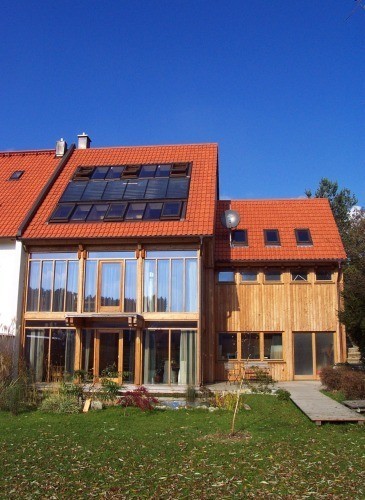
Solar power converts sunlight into energy using either photovoltaics or concentrated solar power. Photovoltaic cells, also called solar cells, convert light into electric current. They do this using the photovoltaic effect, in which photons of light excite electrons in atoms in the cell, allowing them to become part of a current in an electric circuit.
Today, solar panels, made up of photovoltaic cells, are increasingly installed on roofs or built into the walls of homes, often providing a renewable alternative to the grid electricity supply. A photovoltaic power station, also known as a solar park, solar farm or solar power plant, is made up of a large array of solar panels supplying electricity to the grid. The vast Gonghe Talatan Solar Park in Qinghai, China—which is close to the land area of Singapore—is the largest solar park in the world.

Concentrated solar power is used to generate electricity in power plants in some of the world’s sunniest regions, such as the southern USA and Spain. The method uses mirrors or lenses to concentrate sunlight into a small area, creating heat. This usually heats water to drive a steam turbine, which is connected to an electrical generator.

Geothermal energy
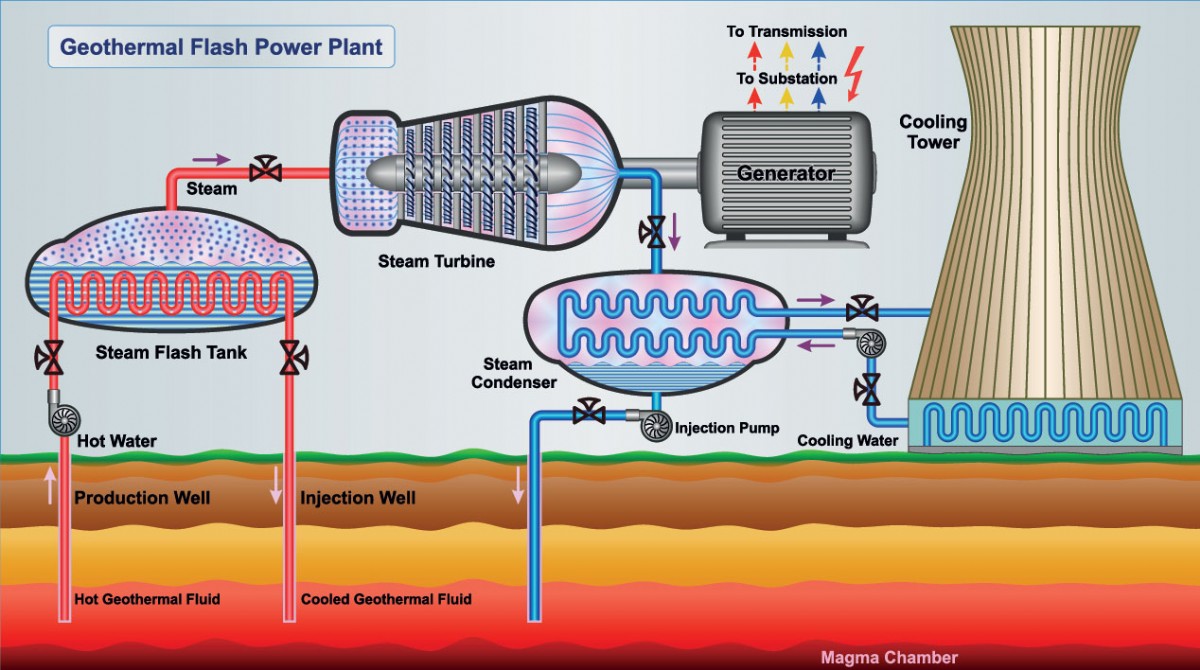
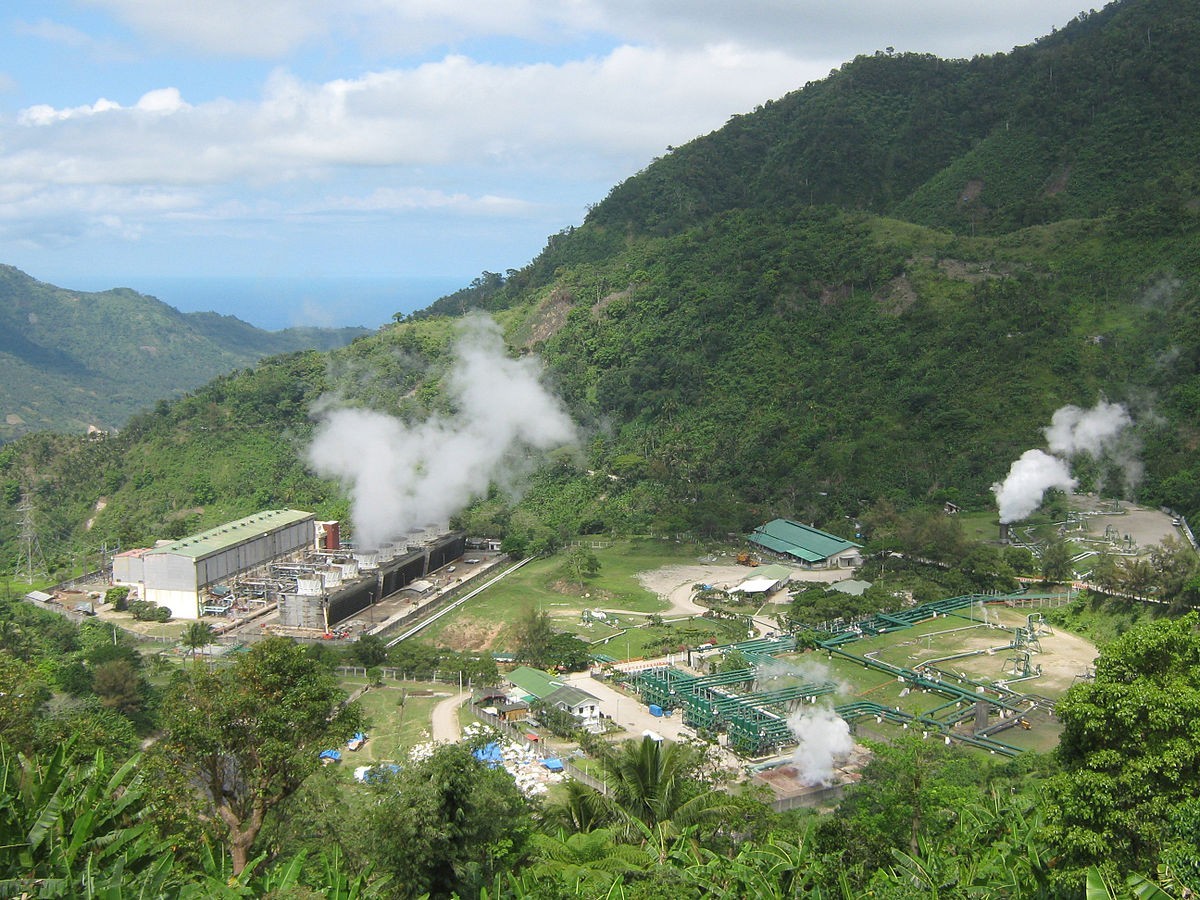
Geothermal energy is heat generated and stored inside the Earth. Some of that heat was generated by the Earth’s formation, while the rest is continuously generated by the radioactive decay of minerals. In the past, the harnessing of geothermal heat was only possible near tectonic plate boundaries, where high temperatures are reached close to the Earth’s surface. Today, improved methods mean that geothermal energy can be harnessed in a wider range of areas.
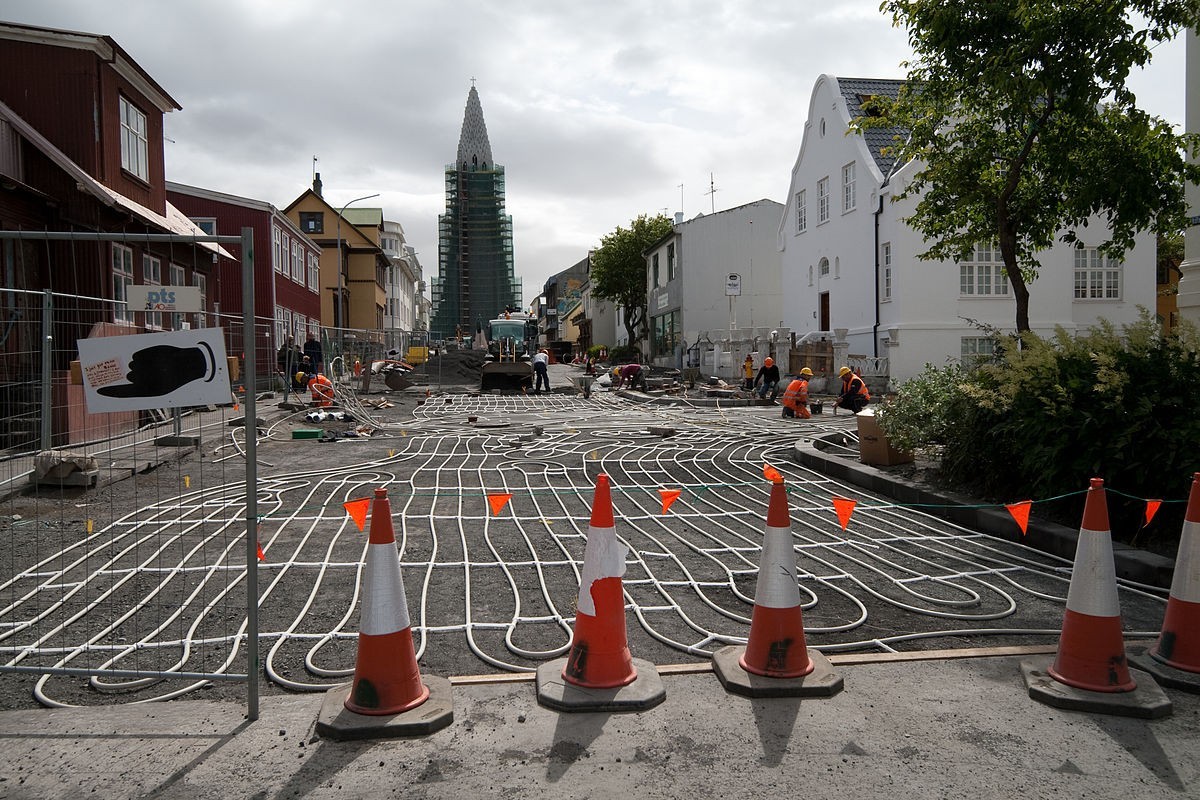
Twenty-six countries use geothermal energy for electricity production. Of all these countries, the USA generates the most electricity from geothermal energy, while the Philippines is number one in Asia, Italy in Europe, New Zealand in Oceania, and Kenya in Africa. The electricity is generated by using geothermal heat to boil water, creating steam to turn turbines. Geothermal heat can also be used directly for heating buildings and powering industrial processes.


Biomass
There are five main types of biomass used for fuel: wood, “energy crops” grown especially for fuel, agricultural waste, food waste and industrial waste. Raw biomass—such as wood, hay and animal manure—is often burnt as fuel for cooking and heating, particularly in the developing world.
When raw biomass is inconvenient to use—as in the case of sawdust and agricultural and domestic waste—it can be processed into usable forms, such as pellets, cubes or other biofuels. Although biomass fuels release fewer pollutants than fossil fuels, they do release some carbon dioxide when burnt.
Biofuels

Biomass can be converted into gas biofuels and liquid biofuels, including bioalcohols, such as bioethanol, and oils, such as biodiesel. Bioethanol and biodiesel can be used to power vehicles in their pure form but are currently more often mixed with petrol or diesel to reduce harmful emissions. Bioethanol can be produced by fermenting starchy or sugary crops such as maize or sugar cane. Biodiesel is made from animal fats or vegetable oils such as those obtained from soya beans, rapeseed and algae. Critics of biofuels say that growing energy crops for biofuels requires the turning over of large areas of land from food production. Using algae (which can grow in water) to produce liquid biofuels, may one day solve this problem.
Gas biofuels can be burnt to generate electricity, used as fuel for heating and cooking, or to power vehicles. A commonly produced gas biofuel is biogas. It is a mixture of gases produced by the breakdown of organic matter such as crops, agricultural waste, domestic waste, manure and sewage. It can be produced at landfill sites or by using anaerobic digesters, which use micro-organisms to break down matter.


Waste-to-energy
Incineration is the most common method of converting waste products (such as domestic and industrial waste) into energy. After all recyclable materials have been removed, the waste is burnt in a waste-to-energy plant. This heats water to create steam, which powers turbines linked to electrical generators. Incinerators must strictly control the release of pollutants. Newer waste-to-energy methods produce liquid or gas fuels from waste: for example, anaerobic digestion produces biogas, fermentation produces the liquid fuel ethanol, and gasification can produce burnable wood gas.
Energies in development
In the future, thermal energy conversion machines could use the temperature difference between cooler deep ocean waters and warmer surface water to run engines and produce electricity. Marine current power will one day use the movement of ocean currents to drive turbines.

PaveGen is a new system of paving slabs that can convert the energy of people’s footsteps into electrical power. In 2014, the slabs were used on a football pitch in a favela (shantytown) in Brazil. When children play matches, the energy of their steps generates the electricity to floodlight the pitch after dark.
Artificial photosynthesis
Each year, using sunlight, plants turn more than 1000 billion tonnes of CO2 into organic matter: sugars that serve as food for the plants. The technology for capturing sunlight and using it as a renewable energy source already exists in the form of photovoltaic cells, which convert it to electricity—although this energy cannot be stored. An artificial photosynthesis system that mimics what happens in plants could create an endless supply of electricity and in a storable form, too. It also puts to use the excess CO2 in the air that acts as a greenhouse gas causing global warming.

Artificial leaves
Artificial leaves, designed to float on lakes and river estuaries, could turn sunlight, water and CO2 into fuels for powering cars, ships and aircraft. In this new technology, the devices, just one millimetre thick, consist of chemical light absorbers and catalysts. Using sunlight, these convert CO2 and water into a mixture of carbon monoxide and hydrogen. This combination is known as syngas and is already used in the production of many chemicals and fuels. Although CO2 will be given off by burning the fuels, it will not be from ancient sources of carbon—the fossil fuels coal, oil and gas—and adding greenhouse gases to the atmosphere. Fuel produced by this method, using CO2 drawn down from the air, could therefore be considered net-zero.

Hydrogen and methanol
Two renewable fuel technologies in development are hydrogen and methanol power. Hydrogen, which must first be extracted from compounds such as water or methane, is usable in fuel cells as a generator of electricity. Methanol, an alcohol, can be made from biomass or manufactured via a process using carbon dioxide and hydrogen. An alternative biofuel for internal combustion engines, as a liquid it is easier to store than gas fuels, is biodegradable and has a low toxicity. Methanol fuel is currently used by racing cars, but is not in widespread use otherwise. Burning methanol results in carbon emissions, however, whereas burning hydrogen releases only water.
Consultant: Nina Notman
pics
Without in any way limiting Q-files Ltd’s exclusive rights under copyright, any use of this publication to “train” generative artificial intelligence (AI) technologies to generate text is expressly prohibited. Q-files Ltd reserves all rights to license use of this work for generative AI training and development of machine learning language models.