
Chemistry

CITE
We have made every effort to follow citation style rules, but there may be some minor differences. If in doubt, please refer to the appropriate citation style manual.
Chemical reactions. (2026). In Q-files Encyclopedia, Science, Chemistry. Retrieved from
https://www.q-files.com/science/chemistry/chemical-reactions
"Chemical reactions." Science, Chemistry, Q-files Encyclopedia, 10 Mar. 2026.
https://www.q-files.com/science/chemistry/chemical-reactions.
Accessed 21 Sep. 2026.
Chemical reactions 2026. Science, Chemistry. Retrieved 21 September 2026, from
https://www.q-files.com/science/chemistry/chemical-reactions
Science, Chemistry, s.v. "Chemical reactions," accessed September 21, 2026.
https://www.q-files.com/science/chemistry/chemical-reactions


Chemical reactions
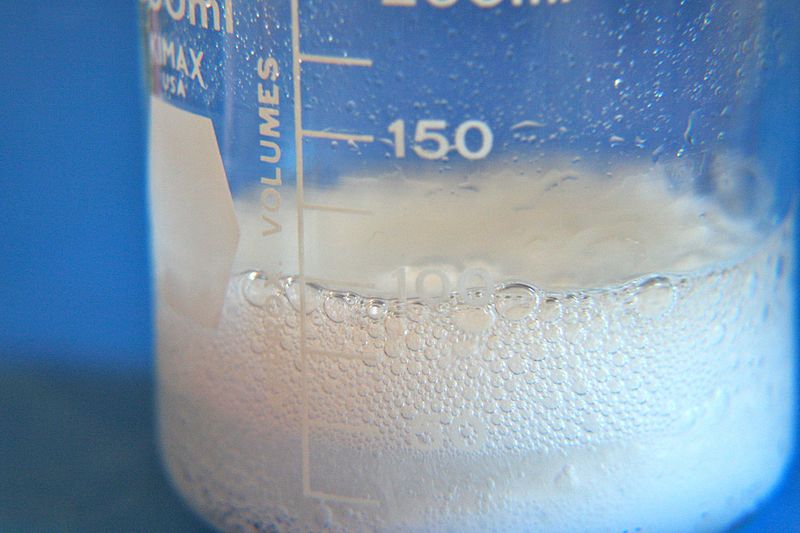
A chemical reaction takes place when two or more different substances join together to form one or more new substances. The change involves the movement of electrons in both the forming and breaking of bonds between atoms. The changes may be described by chemical equations, e.g. 2HCl + 2Na → 2NaCl + H2 (hydrochloric acid reacts with sodium to form sodium chloride and hydrogen). Chemical reactions are taking place all around us. Some happen naturally. For example, the food we eat is chemically changed inside our bodies to produce energy; certain gases in the air react with rainwater to form acids that, over time, may dissolve rocks such as limestone. Other reactions can be made to take place artificially, for example in the manufacture of medicinal drugs.
Chemical and physical change
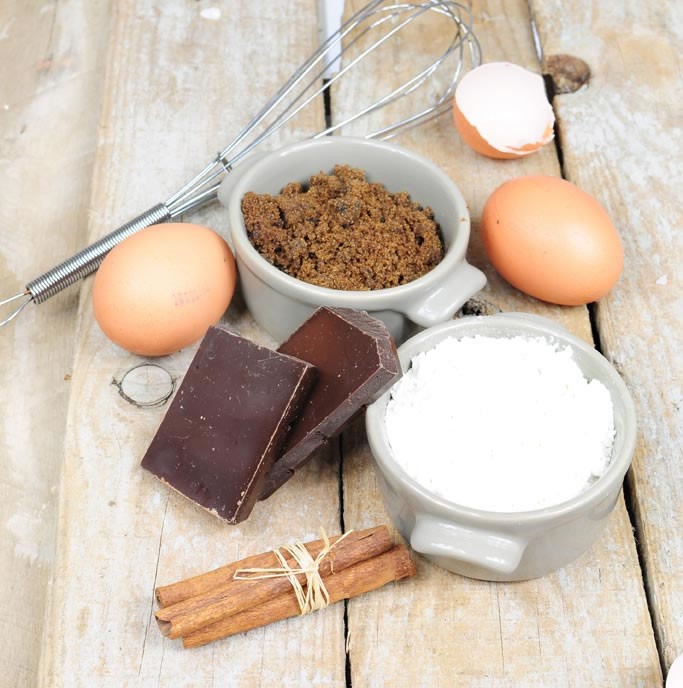
Baking a cake is an example of using chemical reactions to make things. The molecules that make up a cake’s ingredients, flour, eggs, butter and others, are re-arranged using energy (the heat of the oven). The resulting cake is chemically different from its ingredients. Most (though not all) chemical changes are irreversible: the baked cake cannot be turned back into its separate ingredients.
A physical change, for example, the melting of butter by heating it, is reversible. The butter's chemical composition has not changed: it can be restored to a solid by cooling it. If salt is dissolved in water, the solution looks clear and colourless. But the salt can be obtained once more by letting the water evaporate. So in both these examples a physical change, not a chemical change, has taken place.
Chemical equations
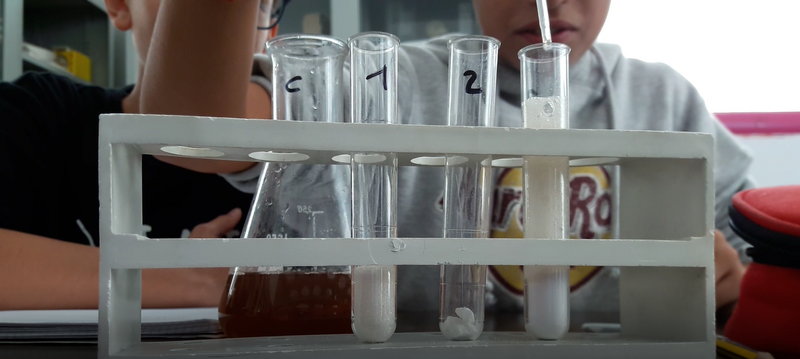
Reactions are described by chemists using chemical equations, using chemical formulae. When a chemical reaction occurs, the atoms do not disappear: they are simply rearranged. For this reason, the equation must be balanced, with the number of atoms the same either side of the equation. Here is an example of a chemical equation:
CaCO3(s) + 2HCl(aq) → CaCl2(aq) + CO2(g) + H2O(l)
Calcium carbonate, a solid (s), when combined with hydrochloric acid dissolved in water (aq) produces calcium chloride, another solution, along with carbon dioxide, a gas (g) and water, a liquid (l).
Types of reaction
There are different types of chemical reactions. In a synthesis reaction, two or more simple substances join together to form a more complex one. An example is hydrogen (H2) and oxygen (O2), which combine to form water (H2O). A decomposition reaction is the opposite: a complex substance breaks down into simpler elements or compounds.
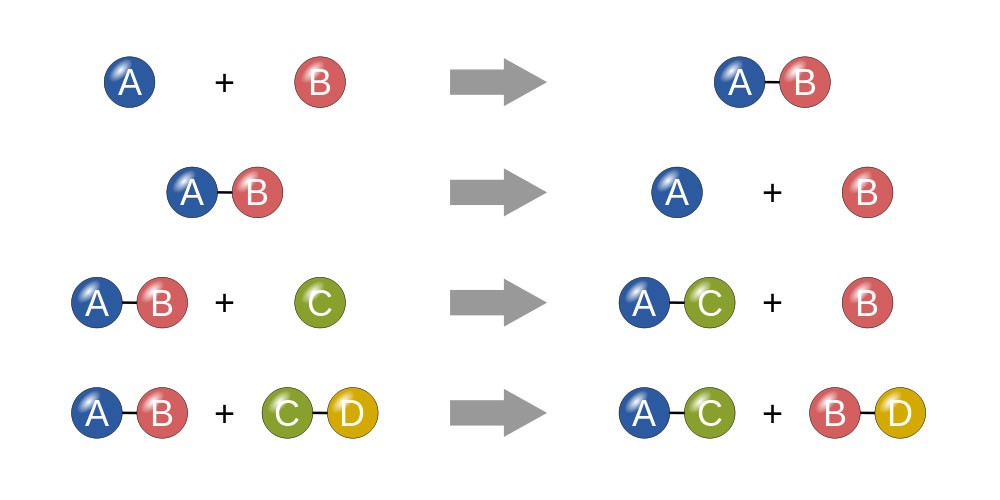
Certain decomposition reactions, a second type of chemical reaction, can be brought about using electrolysis, a technique involving the use of electricity. Water can be separated into hydrogen and oxygen, a solution of sodium chloride (NaCl) into sodium hydroxide (NaOH) and chlorine (Cl), using this method.
Reactants and products
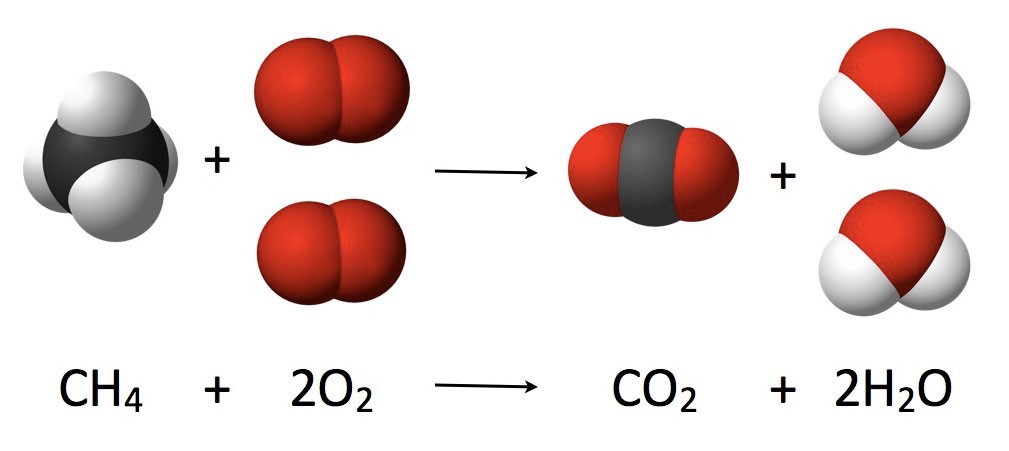
Reactants are the starting materials in a chemical reaction that are consumed during the reaction. Reactants undergo a chemical change in which their chemical bonds are broken and new ones formed to make products. In a chemical equation, reactants are shown on the left side of the arrow while products are on the right side. For example, H2 (hydrogen) and O2 (oxygen) are reactants in the reaction that forms the product, liquid water: 2H2+ O2 → 2 H2O.
Chemical decomposition
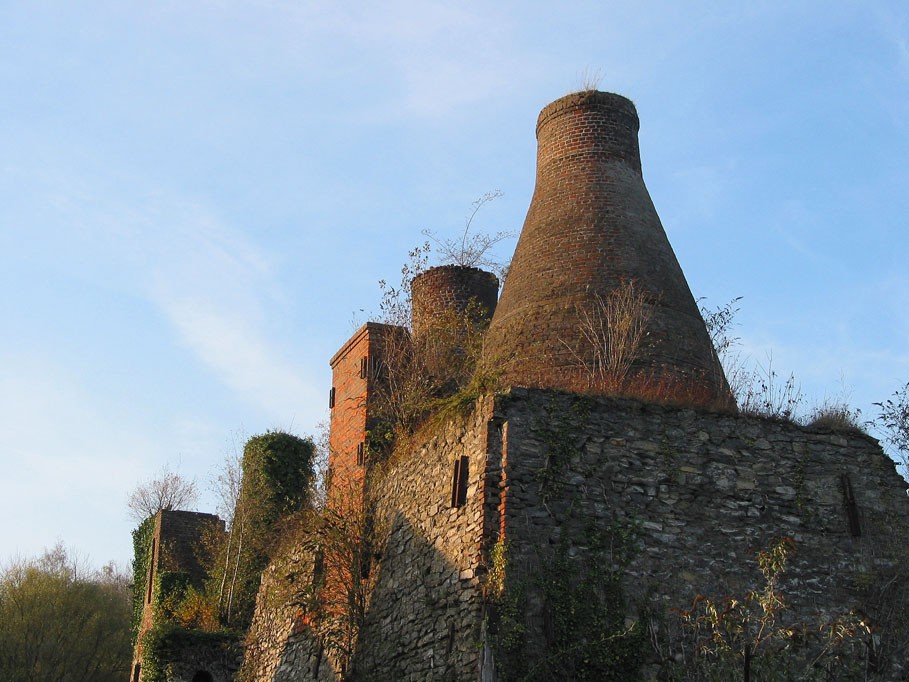
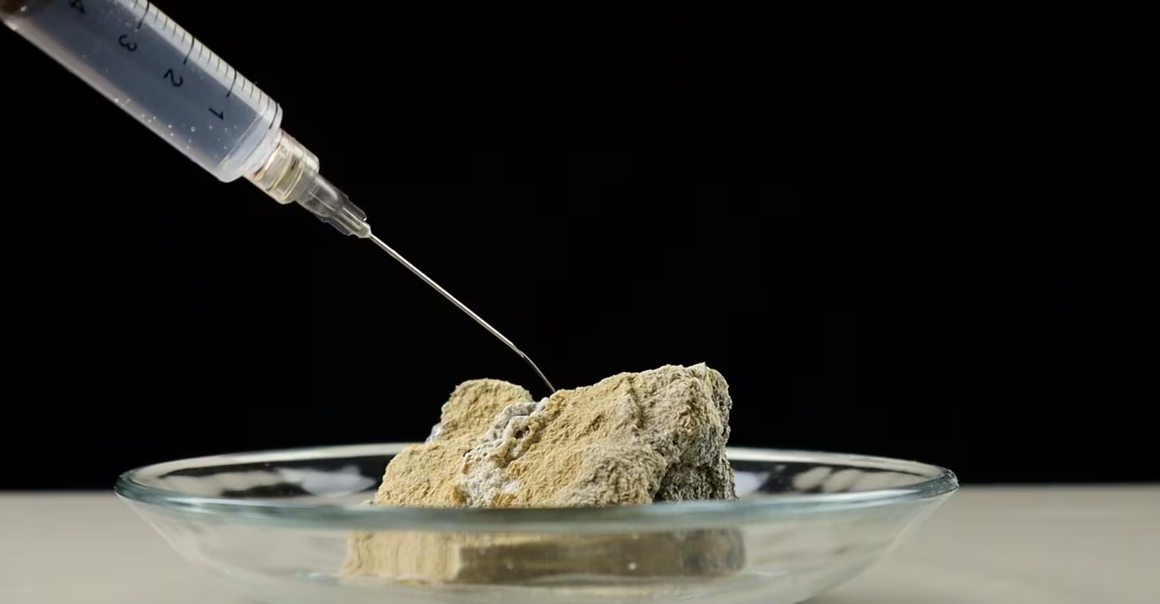
Besides electrolysis, chemical decomposition can be brought about through heating, which can break the chemical bonds holding compounds together. Metal carbonates, such as calcium carbonate, can be separated into calcium oxide (quicklime) and carbon dioxide by this method, called thermal decomposition or thermolysis. Chemical decomposition also occurs naturally: hydrogen peroxide will slowly decompose into water and oxygen without any heating.
Chemical decomposition is used in chemical analysis, for example, mass spectrometry, a technique that helps identify the type and amount of chemicals present in a substance.
Changing bonds
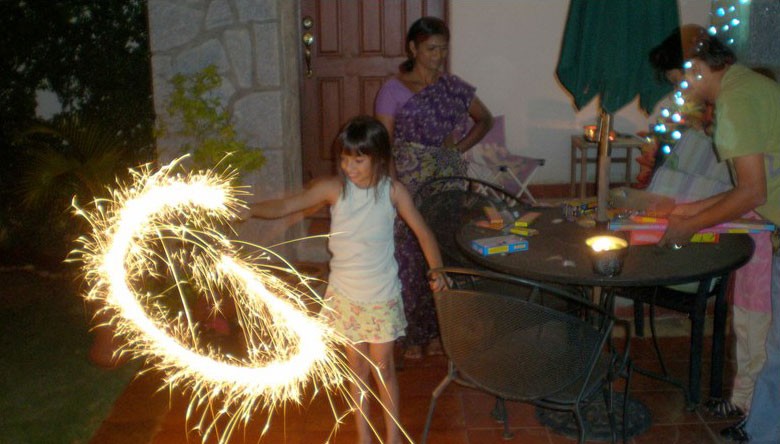
Whenever a chemical reaction takes place, a new substance is produced. This means the making and breaking of chemical bonds. Breaking a bond requires energy, while making a bond always releases energy. This energy can be in the form of, say, light, electricity or heat. An example of a reaction that gives off light is when magnesium in a sparkler reacts with oxygen in the air to form magnesium oxide. A chemical reaction inside the body of an electric eel produces electricity—enough to stun its prey, a small fish, say.
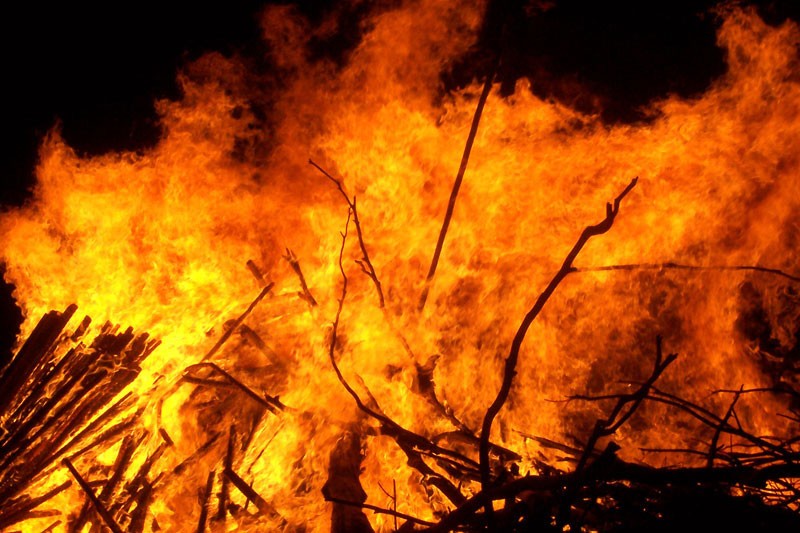
Reactions that require heat to take place are known as endothermic reactions. Dissolving ammonium chloride, a chemical used for fertilizer, in water is an example of an endothermic reaction. Reactions that release heat are called exothermic reactions: the burning of wood is an example of this.
Speed of reaction
Most chemical reactions are speeded up at higher temperatures. This is because the reacting molecules have more energy and move more rapidly, and so are more likely to collide with each other. A higher concentration of reacting substances or conditions of high pressure will achieve the same effect. Low temperatures slow down reactions, which is why fridges can keep food preserved for longer: reactions between food and air molecules are slowed down.
Catalysts
A catalyst is a substance that speeds up a reaction, but is chemically unchanged at the end of the reaction. Catalysts work by offering a different pathway for the reaction to follow. This alternative pathway needs less energy, called activation energy, for the chemical reaction to take place. The energy that a reaction needs is usually in the form of heat. Catalysts called enzymes are at work inside the human body. These protein molecules speed up complex chemical reactions happening inside you all the time, such as when you breathe and digest food.
Reactivity of metals
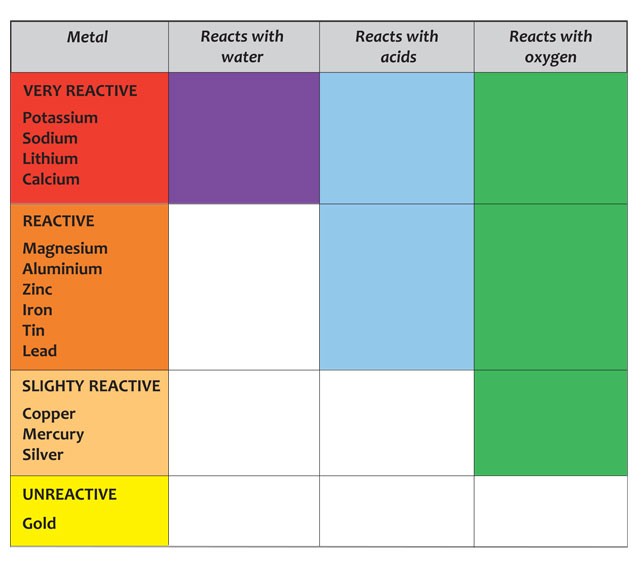
If two metals, for example potassium and silver, were to "compete" in a reaction with another element such as chlorine, potassium would "win", because it is more reactive than silver. Potassium, sodium, calcium and lithium are all highly reactive metals: they are found in nature only as compounds. Gold and silver, on the other hand, have very low reactivity: they exist as elements in nature. Some metals such as copper and mercury react quite slowly: they need to be heated continuously to react with another element.
Metals can be classified according to whether they react with water (only the most reactive metals do this), acid (most metals) or oxygen (all metals except gold, the least reactive). This is called the reactivity series.
Extracting iron
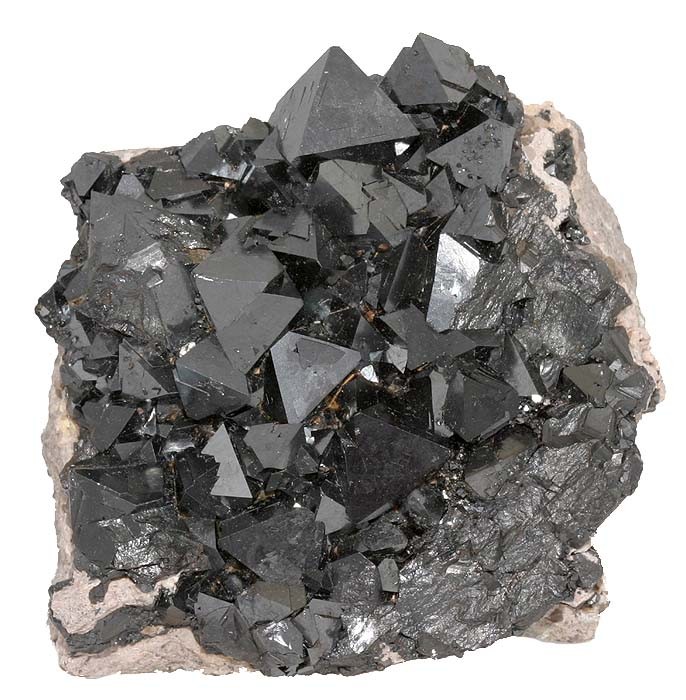
Many metals are too reactive to exist as pure elements in the ground: they react with other elements, such as oxygen, to form oxides. Iron ores, the rocky material from which iron ore is extracted, are rich in iron oxides: they include magnetite (Fe3O4), haematite (Fe2O3) and siderite (FeCO3). To separate iron from its ore, a chemical reaction is used. By a process called smelting, iron ore is mixed with limestone (calcium carbonate, CaCO3) and coke, a form of carbon (C).
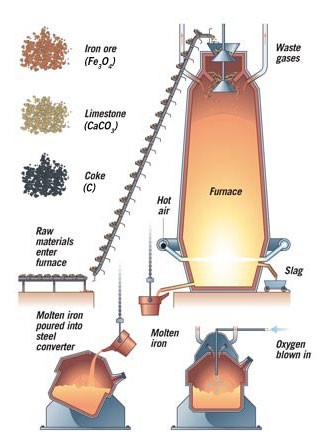
The mixture is heated in a blast furnace, so-called because of the blast of hot air that heats up the materials. The carbon reacts chemically with the oxygen in the air to form carbon dioxide (CO2), then carbon monoxide (CO). This takes oxygen atoms from the iron oxide (Fe2O3) in the ore, leaving behind what is known as pig iron (Fe), which contains a small amount of carbon in it. The chemical equation for this process is: Fe2O3 + 3CO → 2Fe + 3CO2. The limestone, meanwhile, mixes with the sand, clay and other impurities in the ore to form a waste, called slag, that floats on top of the molten iron.
Nearly all iron is converted to steel, for which much of the remaining carbon needs to be removed. This is done by blowing a jet of oxygen over the molten pig iron, mixed with scrap steel. In another chemical reaction, the oxygen combines with the carbon in the iron to make carbon monoxide (CO), which is carried away.
Extracting copper and aluminium
Chemical reactions are used to extract other metals, too. Copper is found in nature in ores such as chalcopyrite, a sulphide compound (CuFeS2). Oxygen in a furnace is used to react with the iron and sulphur in the ore, leaving behind a near-pure molten copper.
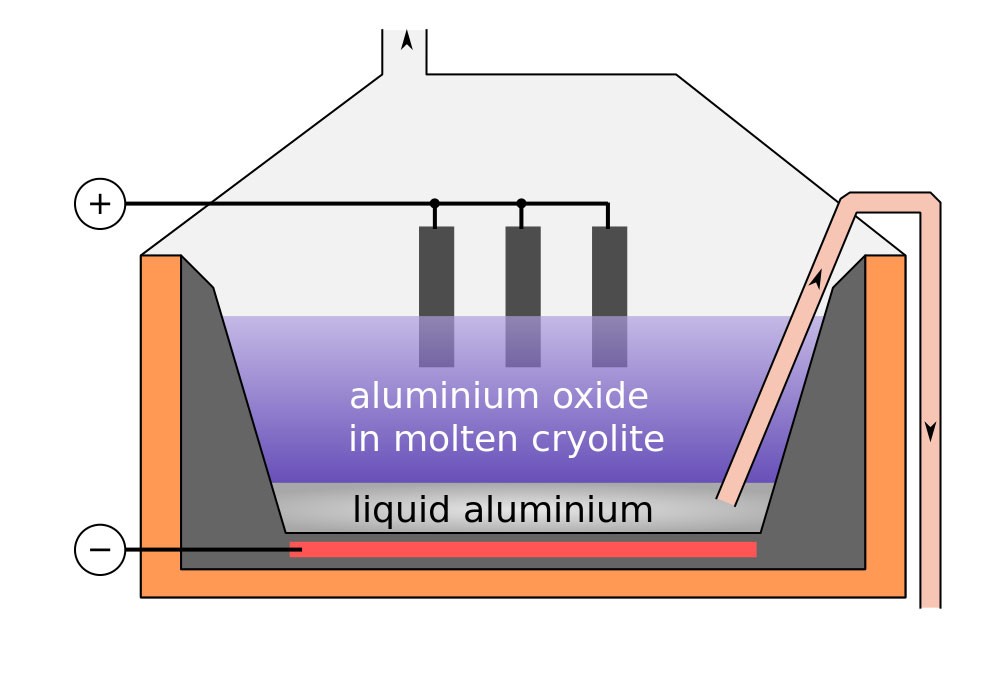
Aluminium is extracted from its ore, bauxite, by the Bayer process. Adding sodium hydroxide (caustic soda) to the crushed bauxite and subjecting it to a combination of heat and high pressure inside a digester results in the formation of pure aluminium oxide crystals (alumina). This is dissolved at high temperatures into molten cryolite. Passing an electric current through the cryolite produces the metallic aluminium by electrolysis.
Photosynthesis
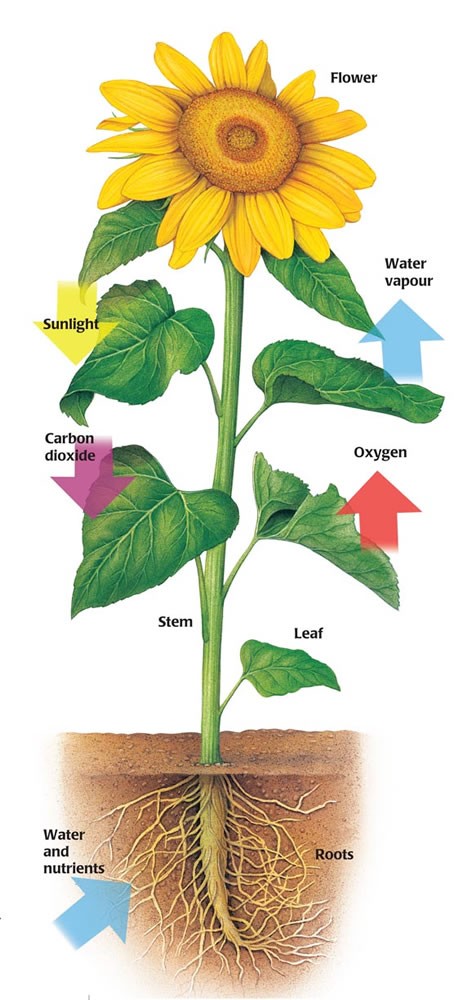
The way a plant makes its food is a very important kind of natural chemical reaction. In a process called photosynthesis, a plant takes in carbon dioxide from the air and water from the soil and turns them into glucose, a type of sugar that contains lots of energy. The plant then uses this sugar to power its life activities. It also produces oxygen as part of the process.
A chemical in a plant’s leaves, called chlorophyll, uses sunlight to provide the energy to carry out this reaction. The equation for photosynthesis is
6CO2 + 6H2O → C6H12O6 + 6O2 (carbon dioxide reacts with water to form glucose and oxygen).
The oxygen in the air, released by plants during photosynthesis, is used in another natural chemical reaction—this time, in our own bodies. The food we eat is converted into energy by combining it with the oxygen we breathe in, another example of oxidation.
Consultant: Nina Notman
pics
Without in any way limiting Q-files Ltd’s exclusive rights under copyright, any use of this publication to “train” generative artificial intelligence (AI) technologies to generate text is expressly prohibited. Q-files Ltd reserves all rights to license use of this work for generative AI training and development of machine learning language models.