
Chemistry

CITE
We have made every effort to follow citation style rules, but there may be some minor differences. If in doubt, please refer to the appropriate citation style manual.
Chemical analysis. (2026). In Q-files Encyclopedia, Science, Chemistry. Retrieved from
https://www.q-files.com/science/chemistry/chemical-analysis
"Chemical analysis." Science, Chemistry, Q-files Encyclopedia, 10 Mar. 2026.
https://www.q-files.com/science/chemistry/chemical-analysis.
Accessed 21 Sep. 2026.
Chemical analysis 2026. Science, Chemistry. Retrieved 21 September 2026, from
https://www.q-files.com/science/chemistry/chemical-analysis
Science, Chemistry, s.v. "Chemical analysis," accessed September 21, 2026.
https://www.q-files.com/science/chemistry/chemical-analysis


Chemical analysis
Chemical analysis is the study of the chemical composition and structure of substances. It is split into two areas. Qualitative analysis aims to discover the elements or compounds in a sample of unknown material. Quantitative analysis aims to find out the amount of each element or compound in the sample. In order to analyse a sample, first scientists often have to split it into its separate “ingredients”, using techniques such as chromatography or distillation. Then they work out the composition of the sample using chemical tests or instruments such as spectroscopes and mass spectrometers.
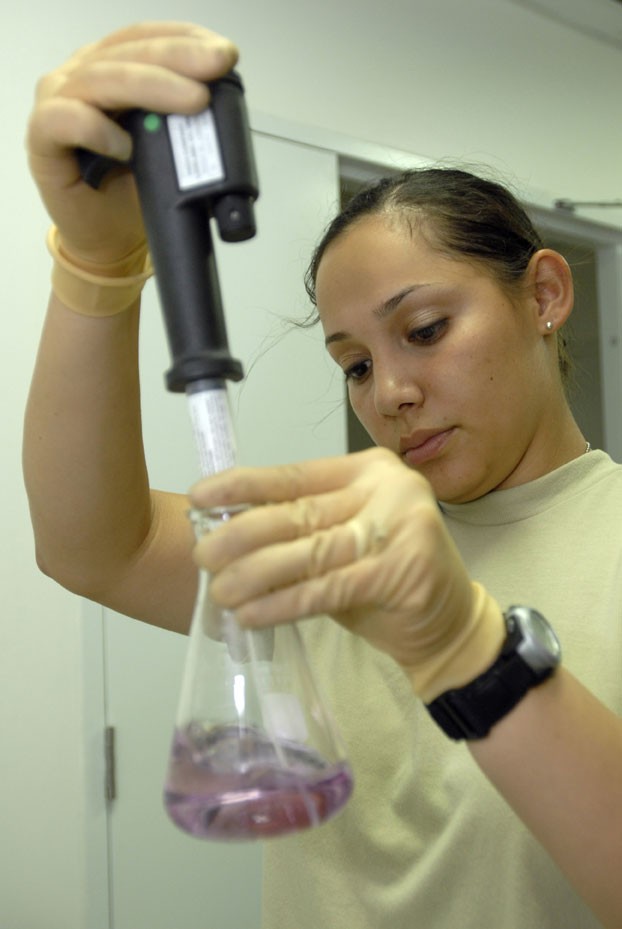
Uses of chemical analysis
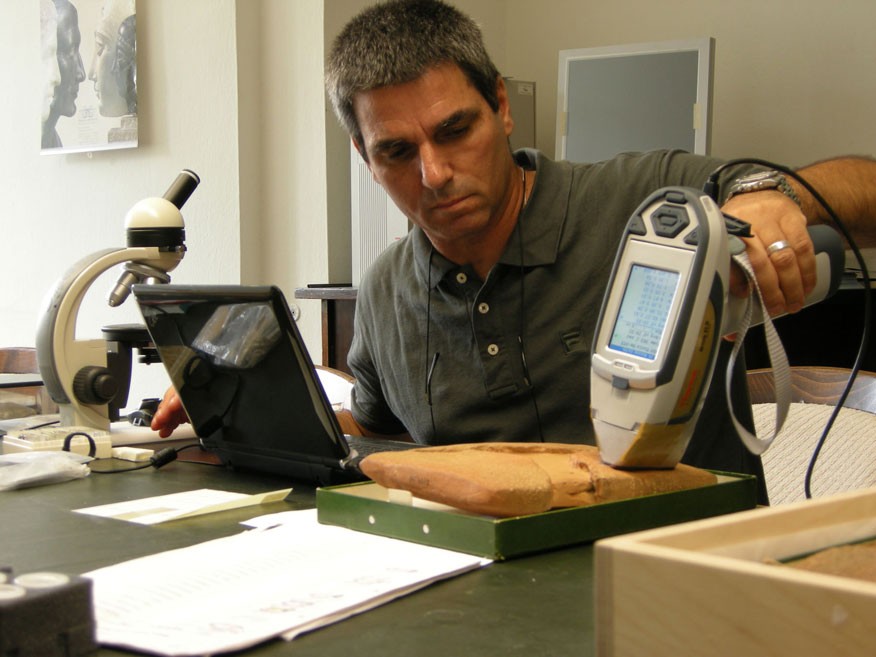
Chemical analysis is central to forensics, in which tests are used to detect crime. In the pharmaceutical industry, chemical analysis helps with the development of drugs and the study of their effects. In medical testing, analysis is used to check samples such as blood or urine for signs of infection. Environmental testing uses analysis to measure pollutants in the atmosphere, water or soil. Chemical analysts may also work in materials development, testing metal alloys, ceramics and polymers, in archaeology, to find out about the materials used in the past, and in space exploration, identifying rock samples from Mars, moons, asteroids or comets.
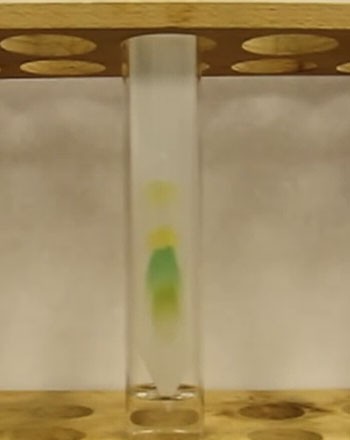
Chromatography
Chromatography is one method that scientists use to separate mixtures before they are analysed. First, the mixture is dissolved in a fluid. Then the fluid is allowed to creep slowly over another substance—for example, over paper. The different components (“ingredients”) in the mixture travel at different speeds, making them separate. This is because the different types of molecules in the fluid behave differently on the surface of the paper: some of them stick to it for longer before continuing to creep forward. This sticking effect is called adsorption (not absorption, when molecules of one substance are trapped inside another).
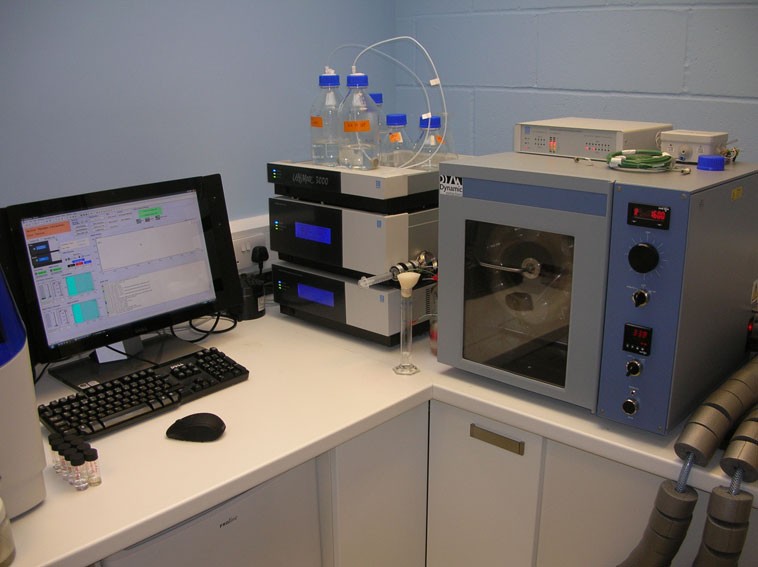
Modern chromatography is carried out using a machine called a chromatograph. It often contains a vertical jar (called a column) coated with a layer of very adsorbent material. In liquid chromatography, the fluid to be separated is pumped through the column. A gas chromatograph separates gases rather than liquids. After separation, a detector analyses the nature and quantity of the components.
Chemical tests
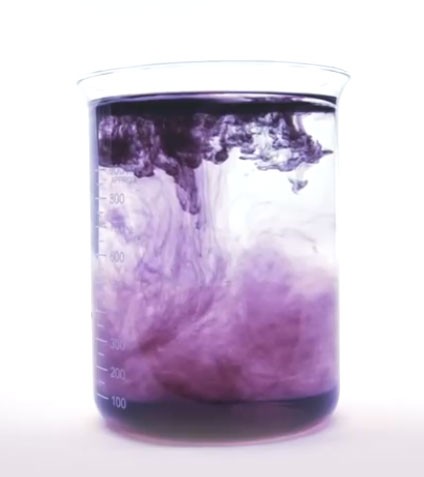
In chemical tests another substance is added to a sample to see if a chemical reaction takes place. If the expected reaction does happen, the scientist knows that a particular element or compound is present. For example, if urine is being tested for glucose (a possible sign of diabetes), a special strip may be dipped into the urine. The strip is covered in an enzyme that reacts with glucose to produce gluconic acid and hydrogen peroxide. Another enzyme on the strip then reacts with the hydrogen peroxide to produce a coloured dye. The shade of the colour also gives the tester a measure of the quantity of glucose in the urine.
Flame tests
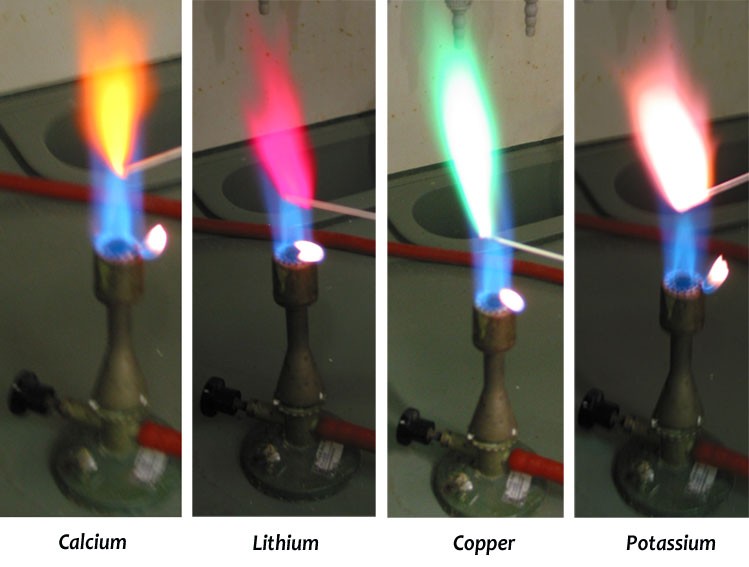
Flame tests can be used to test for the presence of different metals. The metal is placed in a flame and the colour of the flame produced is noted. Different metals produce different coloured flames. This is because each chemical element has a different emission spectrum—as it gets hot, it emits different wavelengths of visible light, which we see as different coloured flames.
Spectroscopy
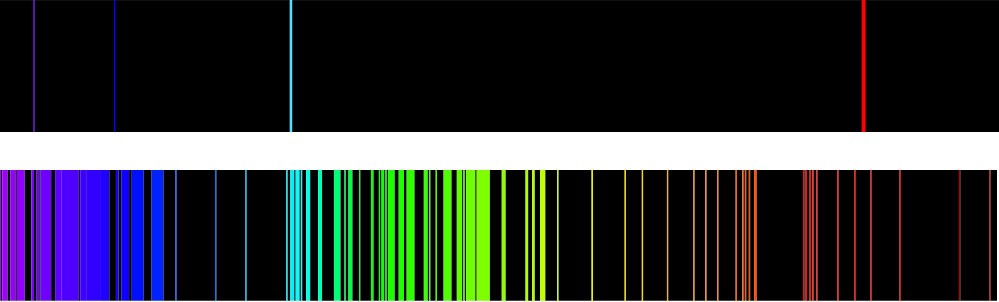
Spectroscopy measures how different elements react to—or emit—electromagnetic radiation. Each element behaves in a unique manner. Emission spectroscopy works in a similar way to a flame test. It measures the emission spectrum of a sample to work out which elements it contains. Using a machine called a spectroscope, the sample is heated until it emits light. The machine separates the different wavelengths of this light, using a “diffraction grating” (for example, a plate of ridged glass). The spectrum of the sample appears as a series of coloured lines called the line spectrum. A scientist then analyses the line spectrum.
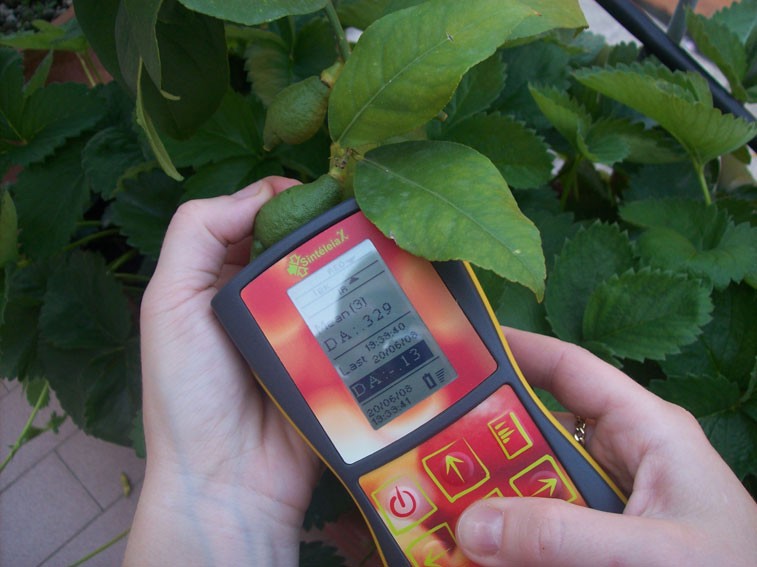
Several other forms of spectroscopy are used in chemical analysis to give both qualitative and quantitative analysis. For example, X-ray fluorescence measures how samples react to being bombarded with X-rays. Atomic absorption spectroscopy measures how much visible light is absorbed by the atoms in a sample. Infrared spectroscopy measures how much infrared light is absorbed.
Mass spectrometry
A mass spectrometer is a machine that weighs atoms. Since the atoms of each element have a different mass (“weight”), this is a method of working out which atoms are in a sample. Weighing something as tiny as an atom would be impossible using normal measuring equipment. A spectrometer does it using an ionization chamber, a mass analyser and a detector. In the ionization chamber, the sample is bombarded with electrons, which knock away electrons from it. When atoms lose electrons (which are negatively charged), they become positively charged. The atoms are then known as ions.
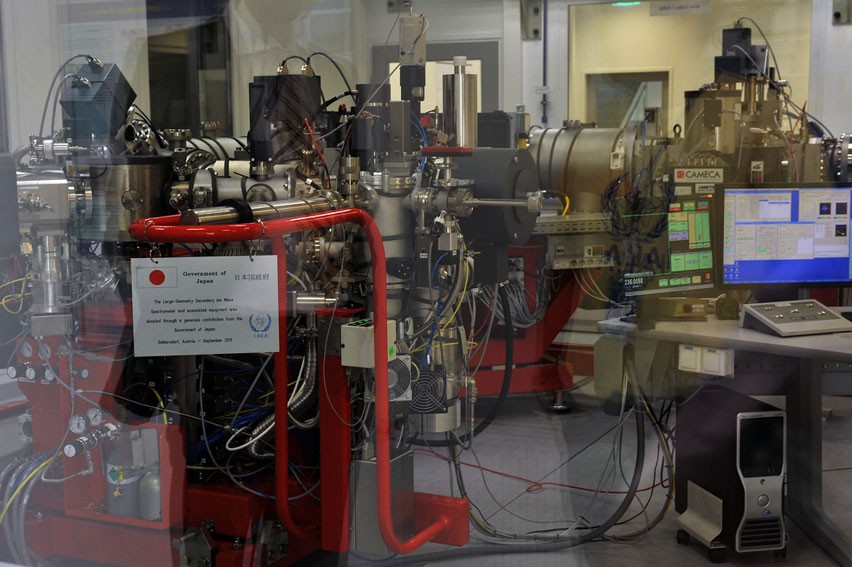
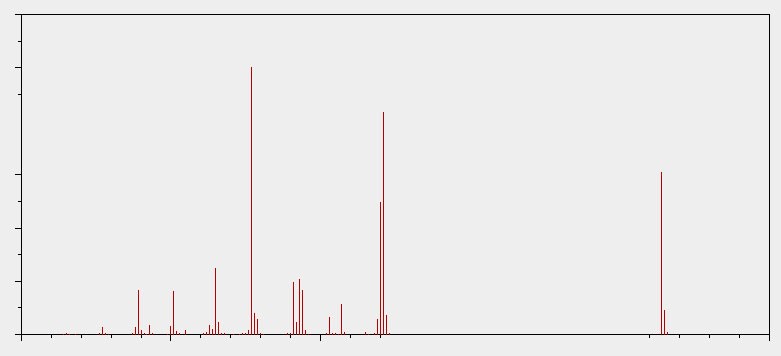
A negatively charged grid attracts the positively charged ions towards it. The ions speed through the grid, but lighter ions travel faster than heavier ions. The mass analyser then applies a magnetic field to the ions, which causes their paths to bend—they are “deflected”. Lighter ions and ions with a greater positive charge are deflected more than heavier ions and ions with a smaller charge.
The streams of ions hit the detector at different speeds and at different places. A computer analyses all the information to work out the weights and quantities of ions in the sample.
Forensic science
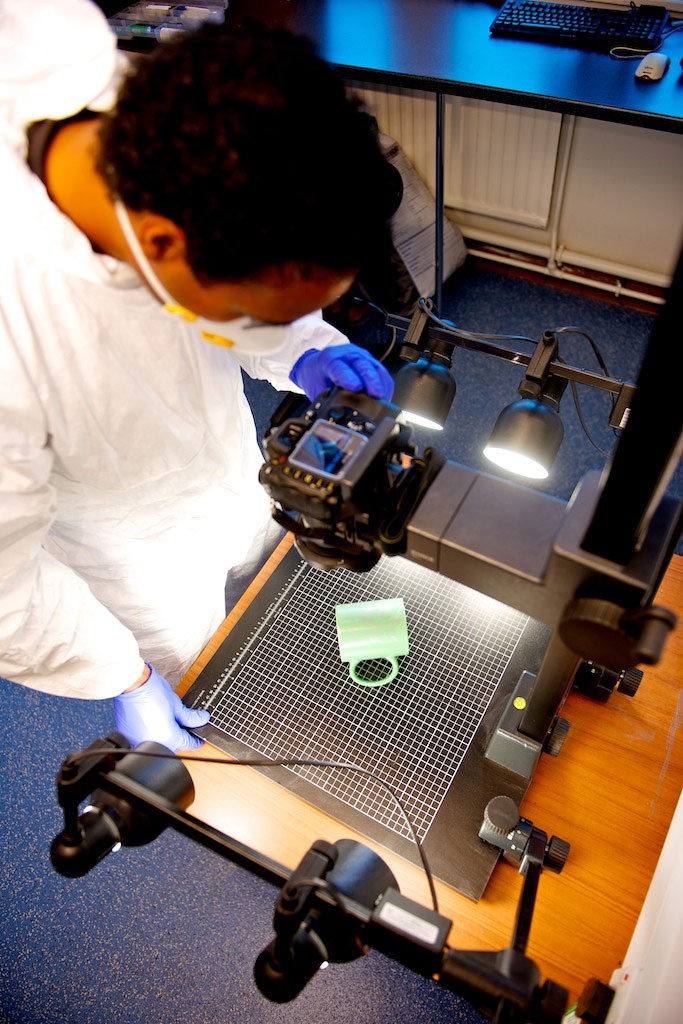
Forensic scientists use chemical analysis to detect crime and uncover evidence. For example, chemical testing might reveal the presence of poison in a person’s blood. The Kastle–Meyer test is used to detect invisible blood stains, using phenolphthalein. It turns bright pink when it comes into contact with the haemoglobin in blood. The Phadebas test can detect invisible saliva stains. It reacts to the enzyme amylase in saliva, turning bright blue.
Chemical analysis is just one technique used by forensic scientists. Others include ballistics (study of the behaviour of bullets), blood spatter analysis, DNA analysis, fingerprinting, pathology (examination of dead bodies) and psychology.
Consultant: Nina Notman
pics
Without in any way limiting Q-files Ltd’s exclusive rights under copyright, any use of this publication to “train” generative artificial intelligence (AI) technologies to generate text is expressly prohibited. Q-files Ltd reserves all rights to license use of this work for generative AI training and development of machine learning language models.