
Chemistry

CITE
We have made every effort to follow citation style rules, but there may be some minor differences. If in doubt, please refer to the appropriate citation style manual.
What is a flame?. (2026). In Q-files Encyclopedia, Science, Chemistry. Retrieved from
https://www.q-files.com/science/chemistry/what-is-a-flame
"What is a flame?." Science, Chemistry, Q-files Encyclopedia, 10 Mar. 2026.
https://www.q-files.com/science/chemistry/what-is-a-flame.
Accessed 21 Sep. 2026.
What is a flame? 2026. Science, Chemistry. Retrieved 21 September 2026, from
https://www.q-files.com/science/chemistry/what-is-a-flame
Science, Chemistry, s.v. "What is a flame?," accessed September 21, 2026.
https://www.q-files.com/science/chemistry/what-is-a-flame


What is a flame?
We are all familiar with flames, the flickering tongues of coloured light that ripple upwards from bonfires and burning candles. Flames are the visible portion of hot gases that are produced when something burns. Only the hottest portion of the gases emits light, and it is this portion that we see as coloured flames. The cooler portion of the gases remains invisible.

Burning
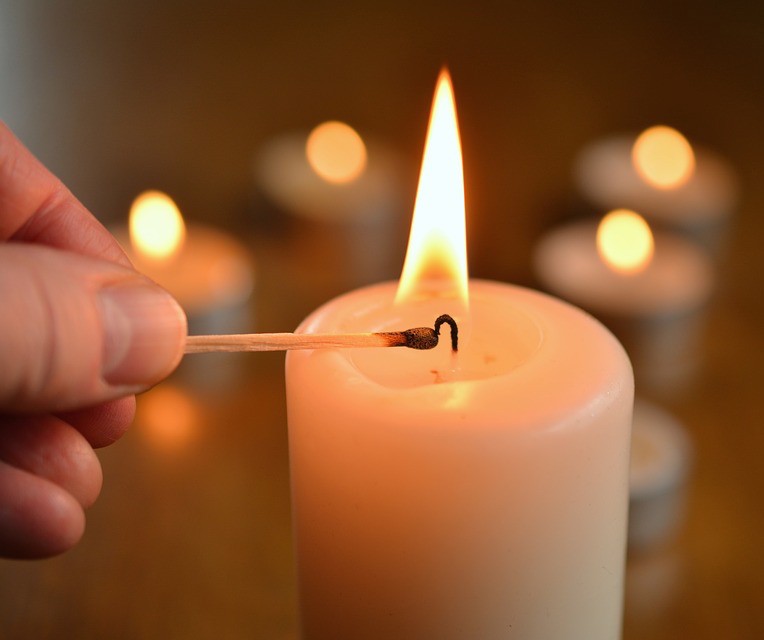
To get something to burn (the scientific term is “combust”), oxygen, fuel and a source of heat are needed. The heat comes from striking a match, or focused light, or something else that is already burning. A candle is lit by lighting its wick, the cord sticking out of the top, with a match or a lighter. The rest of the candle is made of wax. The wax contains atoms—the basic building blocks of matter—of the elements carbon and hydrogen. They are the fuel for the combustion process.
Glowing gas
The heat causes the atoms in the candle wax to turn into gas. This is called pyrolysis. The atoms of carbon and hydrogen leave the surface of the wax through the wick, and immediately start to react with oxygen in the air. This chemical reaction is known as oxidation, and releases heat—which we can feel if we place our hand near the flame. As the atoms go through this process of oxidation, they radiate light. This is a process known as chemiluminescence.
Flame colours
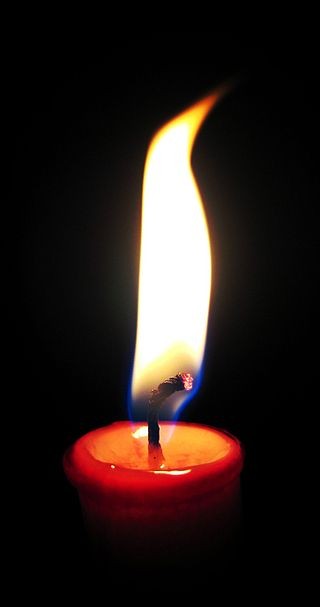
Flames from a candle or a bonfire are a mixture of colours, including red, orange and yellow as well. How are these other colours produced? When a candle burns, some of the carbon is left behind after oxidation. These collect together to form tiny particles we call soot (smoke is the name we give to clouds of soot particles mixed in with gases). In the intense heat of the flame, these minute black bodies start to glow. This is called incandescence, and it gives a flame the red, orange and yellow colours we usually see. These colours depend on the temperature: beginning with red, then with higher and higher temperatures, turning to orange and yellow.
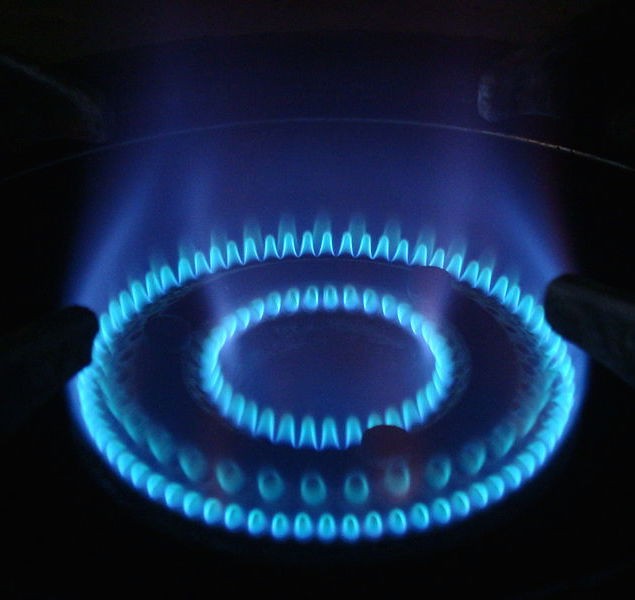
The flame itself has its own colour, but this is dimmer than the colours of the glowing soot, so it can only seen when there is no soot present, such as when gas burns on a stove. A pure (sootless) flame from a fuel made of carbon and hydrogen atoms (hydrocarbons) glows blue.
Consultant: Mike Goldsmith
Other Q-&-As to explore:
For a full list of all our Q&As, please click here.
If you have a question that you would like to see answered on Q-files, please send us an email to info@Q-files.com or use the contact us page.
pics
Without in any way limiting Q-files Ltd’s exclusive rights under copyright, any use of this publication to “train” generative artificial intelligence (AI) technologies to generate text is expressly prohibited. Q-files Ltd reserves all rights to license use of this work for generative AI training and development of machine learning language models.