
Chemistry

CITE
We have made every effort to follow citation style rules, but there may be some minor differences. If in doubt, please refer to the appropriate citation style manual.
Oxygen. (2026). In Q-files Encyclopedia, Science, Chemistry. Retrieved from
https://www.q-files.com/science/chemistry/oxygen
"Oxygen." Science, Chemistry, Q-files Encyclopedia, 10 Mar. 2026.
https://www.q-files.com/science/chemistry/oxygen.
Accessed 5 Nov. 2026.
Oxygen 2026. Science, Chemistry. Retrieved 5 November 2026, from
https://www.q-files.com/science/chemistry/oxygen
Science, Chemistry, s.v. "Oxygen," accessed November 5, 2026.
https://www.q-files.com/science/chemistry/oxygen


Oxygen
Oxygen is one of the commonest chemical elements on the Earth's surface. It forms about half the weight of the planet’s hard outer rock layer or crust, as it is found in most minerals, including quartz and feldspar. A colourless and odourless gas, it makes up one fifth of the air. Joined with hydrogen it forms the water which covers more than two thirds of Earth’s surface. Oxygen joins up easily with many other elements in chemical reactions to form compounds called oxides. This kind of reaction is called oxidation. Sometimes this is a slow process, as seen when iron turns to rust (iron oxide) in damp air. But if oxygen reacts very quickly, a process called combustion, or burning, takes place—and flames, light and heat are the result.


Respiration
We cannot see, smell or taste oxygen, yet it is essential for life. Oxygen is a vital part of chemical changes inside each microscopic living cell, which break apart food substances to obtain the energy for life. This is why oxygen is essential for all living things (except for a few specialized types of microbes): they must breathe oxygen to stay alive. Respiration, the action of breathing, is a chemical reaction: the nutrients from the food we eat reacts with the oxygen we breathe in to produce energy.
Electrolysis
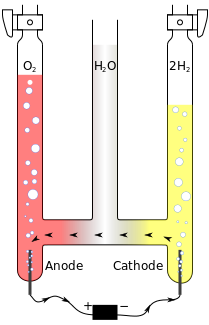
Oxygen can be produced by the electrolysis of water: the breakdown of water, a compound (H2O), into molecules of oxygen (O2) and hydrogen (H2) using electricity. An electric current is passed through the water. The power source is connected to two metal or carbon rods, called electrodes, and electricity is allowed to flow through the liquid. Hydrogen forms at the cathode, the negatively charged electrode and oxygen forms at the anode, the positively charged electrode. Because water contains two hydrogen atoms for every oxygen atom, twice as much hydrogen as oxygen is produced. The gases bubble up through the water to collect in tubes above the cathode and anode.
Consultant: Mike Goldsmith
pics

Without in any way limiting Q-files Ltd’s exclusive rights under copyright, any use of this publication to “train” generative artificial intelligence (AI) technologies to generate text is expressly prohibited. Q-files Ltd reserves all rights to license use of this work for generative AI training and development of machine learning language models.