
Human body

CITE
We have made every effort to follow citation style rules, but there may be some minor differences. If in doubt, please refer to the appropriate citation style manual.
Cells. (2026). In Q-files Encyclopedia, Life, Human body. Retrieved from
https://www.q-files.com/life/human-body/cells
"Cells." Life, Human body, Q-files Encyclopedia, 23 Mar. 2026.
https://www.q-files.com/life/human-body/cells.
Accessed 21 Sep. 2026.
Cells 2026. Life, Human body. Retrieved 21 September 2026, from
https://www.q-files.com/life/human-body/cells
Life, Human body, s.v. "Cells," accessed September 21, 2026.
https://www.q-files.com/life/human-body/cells


Cells
If you looked at a piece of skin under a powerful microscope, you would see that it was made up of tiny "bricks", called cells. Every part, or tissue, of your body is made of these tiny cells—more than 100 million million of them. There are over 200 different cell types, each with a size and shape related to the job it does: for example, message-carrying nerve cells are long and thin, while red blood cells are doughnut-shaped, ideal for carrying oxygen.
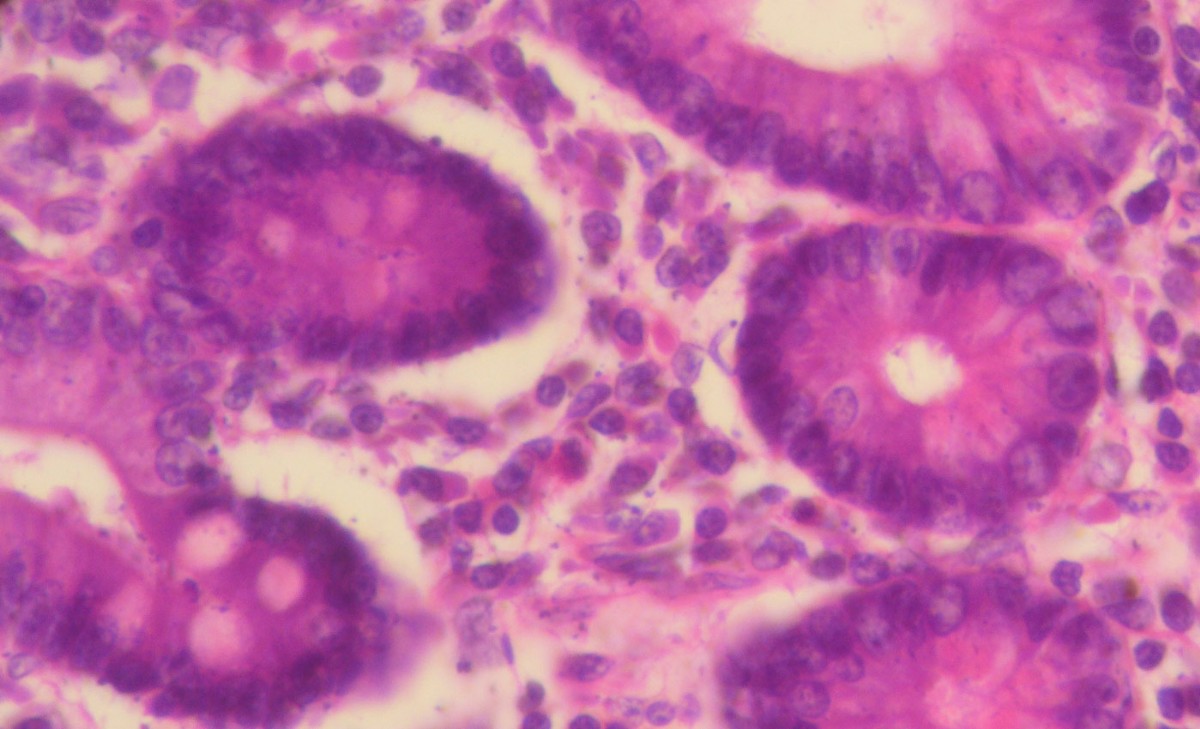
Inside a cell
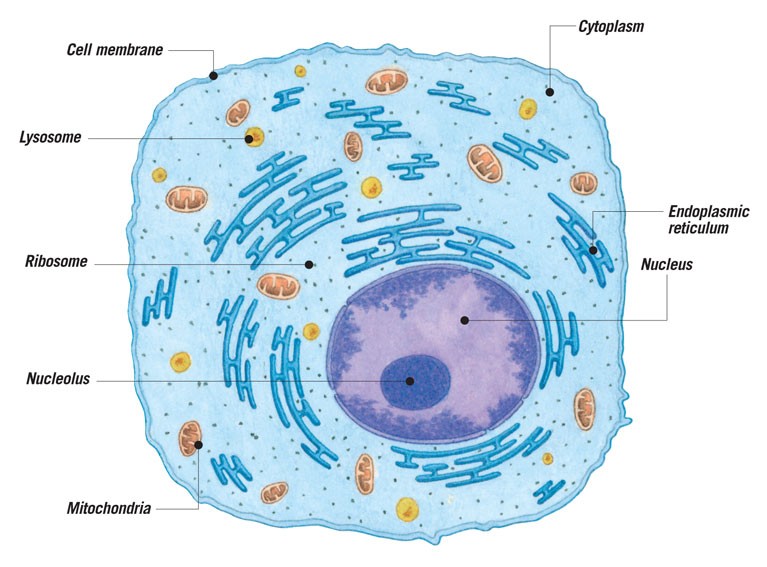
All cells have the same basic structure, including a thin outer covering, called a cell membrane. Inside, there are “little organs”, or organelles, that float in the jelly-like cytoplasm. At the centre of the cell is the nucleus. Other organelles include the mitochondria, ribosomes and the endoplasmic reticulum.
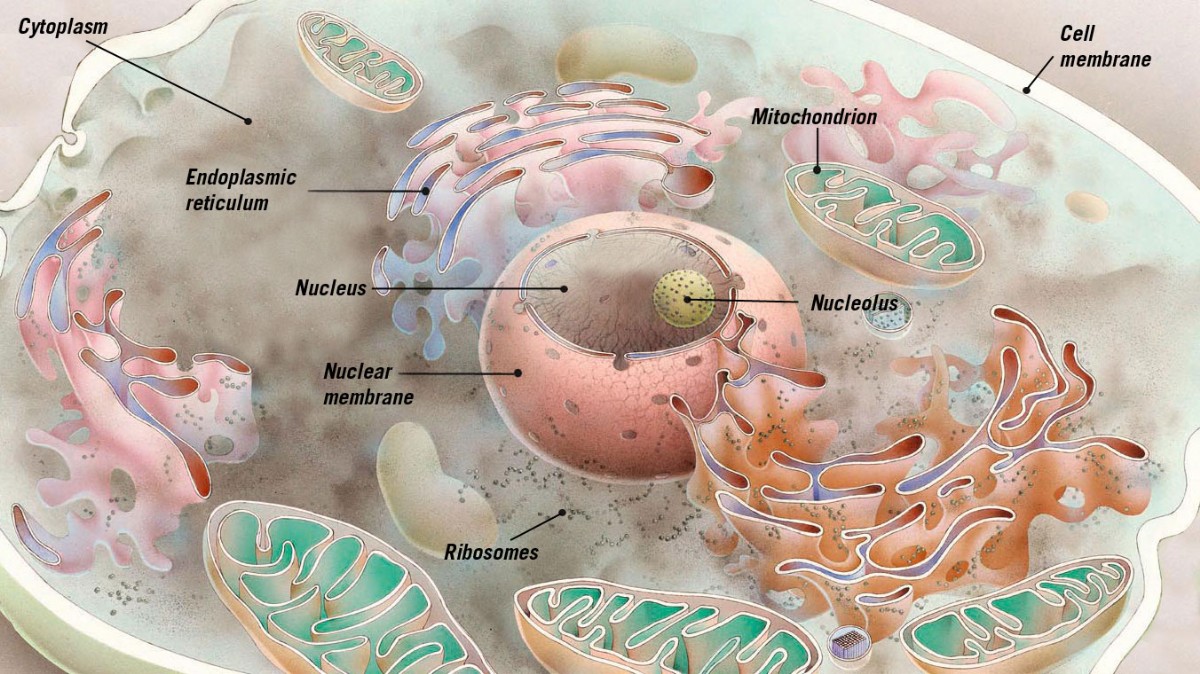
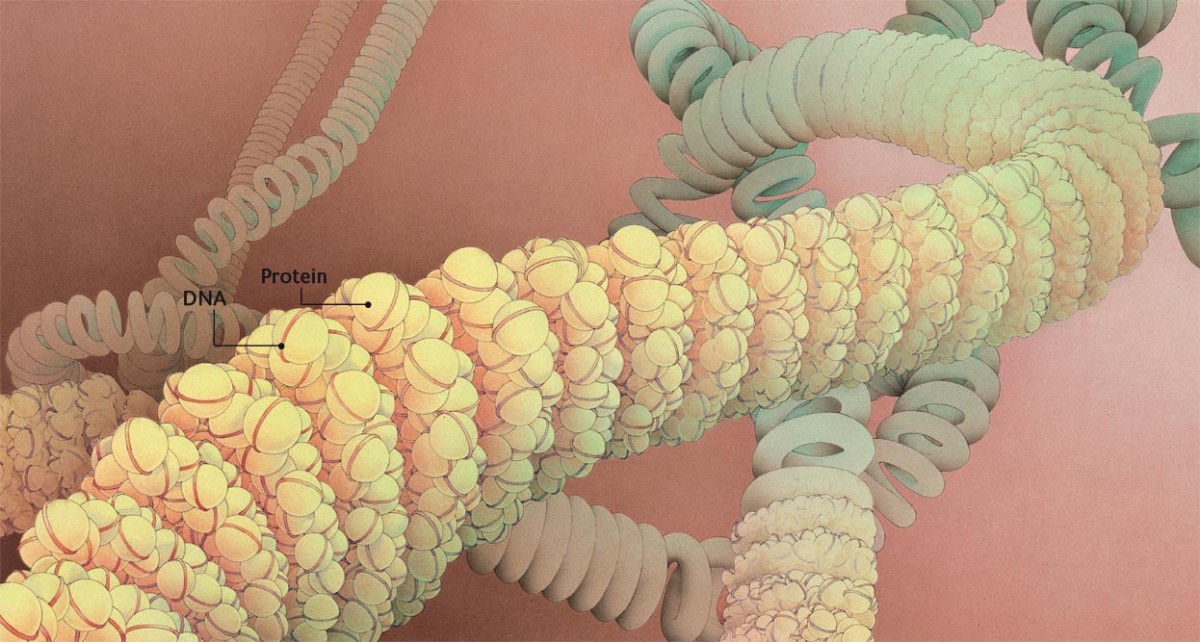
The largest organelle, the nucleus is surrounded by a membrane. The nucleus is packed with chromosomes, tightly wound strands of a substance called DNA. Here are to be found your genes: tiny instruction manuals containing all the information necessary to create your body in a certain way—blue eyes or brown eyes, curly or straight hair, tall or short, and so on. The nucleus sends out chemical instructions to the cell through tiny pores in the nuclear membrane. The nucleolus, a round blob inside the nucleus, makes ribosomes.
Sausage-shaped mitochondria are the cell’s energy releasers. They break up substances such as sugar (glucose) to release energy for use in the cell. The endoplasmic reticulum, a network of membranes, is the cell’s factory, which processes and transports cell-building substances called proteins.
Under the control of the nucleus, the cell works like a little factory. Fuel, in the form of sugars from the blood, is brought in through the cell membrane. Using energy released by the mitochondria, the ribosomes manufacture proteins, the basic building blocks of the body itself.
Cell division
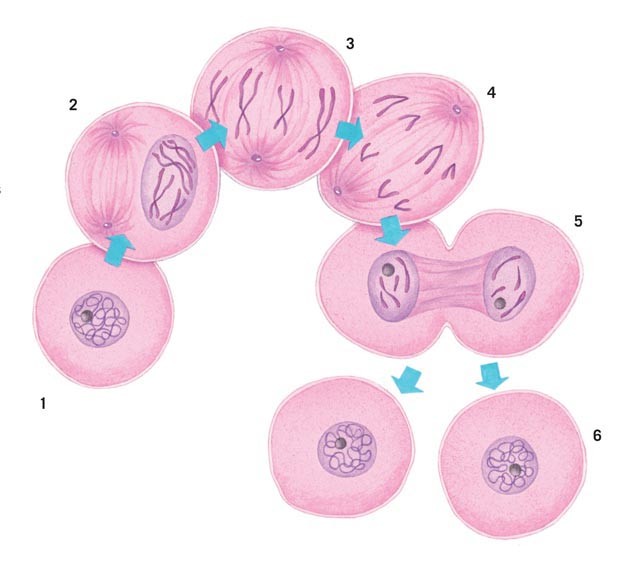
Cell division happens all over the body as cells wear away or die and need replacing. The genetic material, DNA, usually lies in long lengths inside the cell’s nucleus (1). As division starts, the DNA coils into thicker, shorter objects called chromosomes (2). The X-shaped chromosomes line up across the middle of the cell (3). Each splits into two new chromosomes that are pulled to opposite ends of the cell by micro-threads (4). A new nucleus forms around each set of chromosomes (5). Finally the original cell pinches into two new cells (6). The DNA in the chromosomes is copied and the cells grow larger before the next cell division.
Consultant: Richard Walker
pics
Without in any way limiting Q-files Ltd’s exclusive rights under copyright, any use of this publication to “train” generative artificial intelligence (AI) technologies to generate text is expressly prohibited. Q-files Ltd reserves all rights to license use of this work for generative AI training and development of machine learning language models.