
Human body

CITE
We have made every effort to follow citation style rules, but there may be some minor differences. If in doubt, please refer to the appropriate citation style manual.
Why do our ears pop when we fly in a plane?. (2026). In Q-files Encyclopedia, Life, Human body. Retrieved from
https://www.q-files.com/life/human-body/why-do-our-ears-pop-when-we-fly-in-a-plane
"Why do our ears pop when we fly in a plane?." Life, Human body, Q-files Encyclopedia, 24 Mar. 2026.
https://www.q-files.com/life/human-body/why-do-our-ears-pop-when-we-fly-in-a-plane.
Accessed 6 Aug. 2026.
Why do our ears pop when we fly in a plane? 2026. Life, Human body. Retrieved 6 August 2026, from
https://www.q-files.com/life/human-body/why-do-our-ears-pop-when-we-fly-in-a-plane
Life, Human body, s.v. "Why do our ears pop when we fly in a plane?," accessed August 6, 2026.
https://www.q-files.com/life/human-body/why-do-our-ears-pop-when-we-fly-in-a-plane


Why do our ears pop when we fly in a plane?
If you have flown in plane, you will know all too well that stuffy, plugged up feeling in your ears before they suddenly “pop” open again after you have swallowed. The reason for this is to do with atmospheric pressure: the higher up you are, the lower this is. A column of air above you—which goes all the way up to the top of the atmosphere—pushes down on top of you. This column of air becomes shorter the higher up you go, so the weight of it becomes less and less. You don’t even have to climb very high to experience this: your ears can pop when you ride in a car as it goes up a hill. When we go up in a plane, we may reach heights of more than 10 kilometres (6 miles) above sea level. Although the cabin inside a plane is pressurized, the air pressure is still much lower than normal.
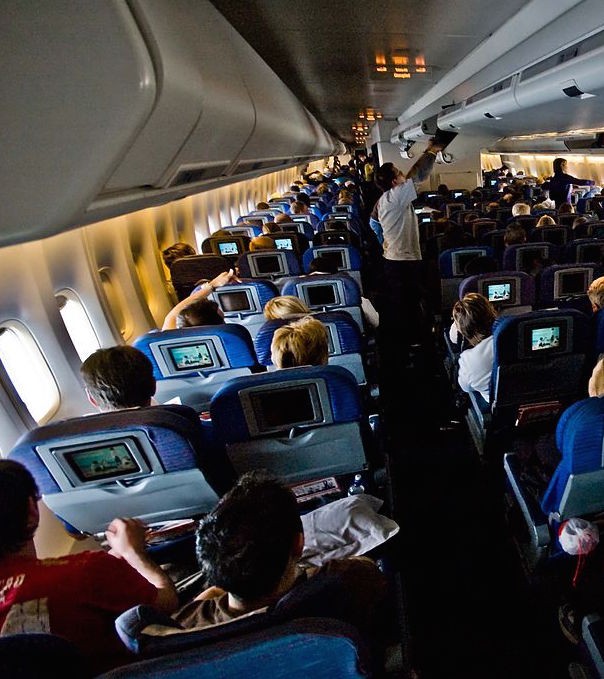
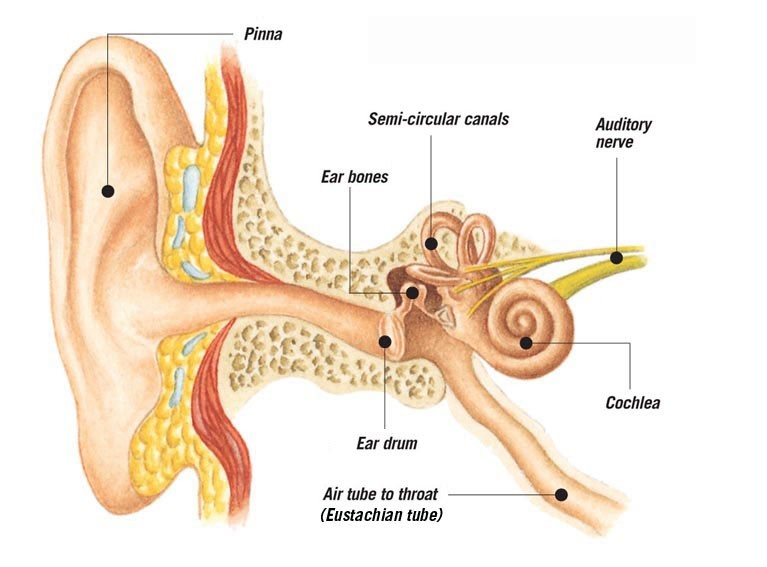

At or near sea level, where most of us live, the air pressure inside your ear is normally the same as the air pressure outside it. As you ascend in a plane and the air pressure decreases, the pocket of air behind your eardrum where the tiny bones sit (called the "middle ear") now has a higher pressure than the air outside it. This makes your eardrum push outwards, causing discomfort in your ears.
The opposite happens as the plane descends: the air pressure outside your ear increases, with the pocket of air trapped inside now at a pressure lower than that outside it. Your eardrum is pushed inwards, causing the same discomfort.
You can “equalize” the pressure between your middle ear and the atmosphere by allowing some air from your middle ear to escape through the Eustachian tube. This is the channel (there is one for each ear) that runs from the middle ear to the throat. When it opens, you feel the pressure being released as a "pop”. Swallowing, yawning or chewing a sweet can all make this happen. But if you have a cold and your ears are congested or your throat is swollen, this is less easy to do.

Consultant: Kristina Routh
Other Q-&-As to explore:
For a full list of all our Q&As, please click here.
If you have a question that you would like to see answered on Q-files, please send us an email to info@Q-files.com or use the contact us page.
pics
Without in any way limiting Q-files Ltd’s exclusive rights under copyright, any use of this publication to “train” generative artificial intelligence (AI) technologies to generate text is expressly prohibited. Q-files Ltd reserves all rights to license use of this work for generative AI training and development of machine learning language models.