
Human body

CITE
We have made every effort to follow citation style rules, but there may be some minor differences. If in doubt, please refer to the appropriate citation style manual.
Body chemistry. (2026). In Q-files Encyclopedia, Life, Human body. Retrieved from
https://www.q-files.com/life/human-body/body-chemistry
"Body chemistry." Life, Human body, Q-files Encyclopedia, 23 Mar. 2026.
https://www.q-files.com/life/human-body/body-chemistry.
Accessed 27 Oct. 2026.
Body chemistry 2026. Life, Human body. Retrieved 27 October 2026, from
https://www.q-files.com/life/human-body/body-chemistry
Life, Human body, s.v. "Body chemistry," accessed October 27, 2026.
https://www.q-files.com/life/human-body/body-chemistry


Body chemistry
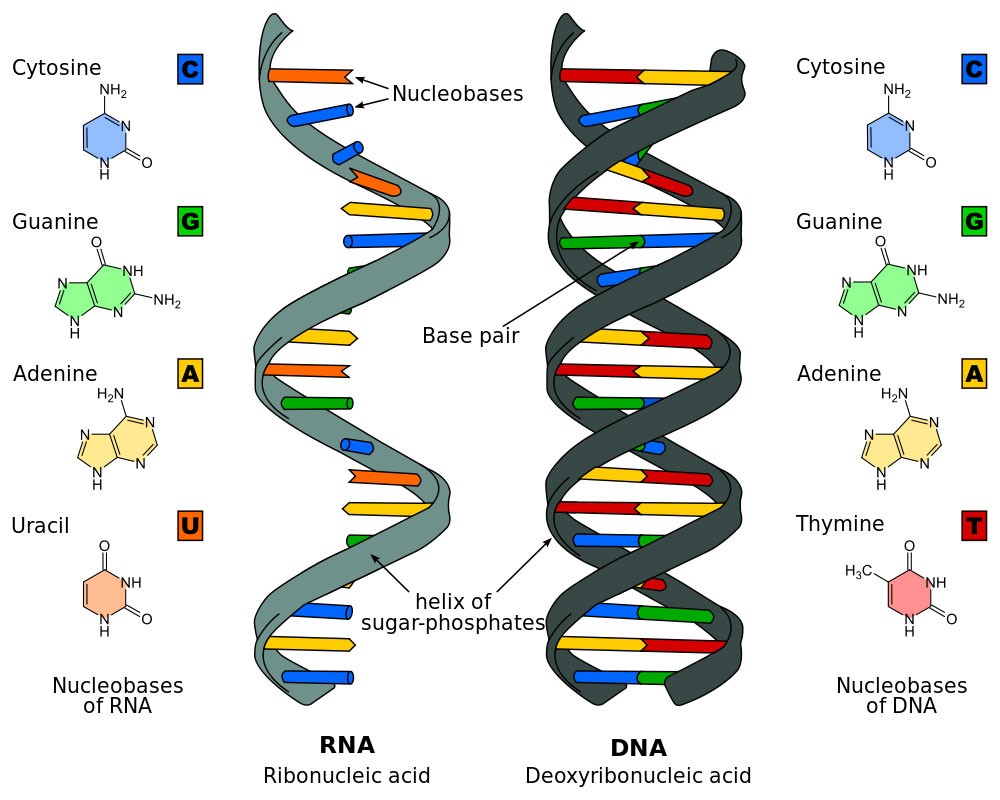
All the time, our bodies are carrying out two processes: storing the energy that we take in as food, and spending that energy. Our bodies do this by creating chemical reactions. A chemical reaction changes one set of chemicals into another. A series of chemical reactions turns the food we eat into energy that can be used by our cells. Other series of reactions spend that energy by building cells, growing and exercising. Six chemical elements make up 99% of the human body: oxygen, carbon, hydrogen, nitrogen, calcium and phosphorus. These elements form the key types of molecules in the body: carbohydrates, lipids, nucleic acids and proteins. These molecules form all our cells and carry out most of the chemical processes needed for life.


Metabolism
Metabolism is the name for the whole set of chemical reactions that the body needs to function. Metabolism comes from the Greek for “change”—because it is a set of changes in which substances are transformed into other substances. Three groups of molecules are central to metabolism: carbohydrates, lipids and proteins. If we think of the body as a building site, these molecules are the workers as well as the bricks themselves. Most reactions either break down these molecules to use them for energy, or build them up to make cells and tissues.


Lipids (often called fats) are also made from carbon, hydrogen and oxygen. The main function of lipids is to store energy but they also carry signals and, in the form of cholesterol, make up a vital part of the structure of cell membranes.
Proteins are made up of long chains of amino acids, which are compounds containing carbon, oxygen, hydrogen and nitrogen. Many proteins are enzymes, but others perform roles such as transport, signalling and maintaining cell shape.
Enzymes
Enzymes are special proteins that help to produce and speed up chemical reactions in the body. They are biological catalysts: they speed up certain chemical reactions in the body's cells so that they occur at the rates needed for an organism to stay alive.
Almost all the reactions that take place in our bodies, from the digestion of food to the building of cells, are made possible by enzymes. Each type of enzyme will react only with a certain sort of substance, so the body makes over 1000 different enzymes to perform many different tasks.
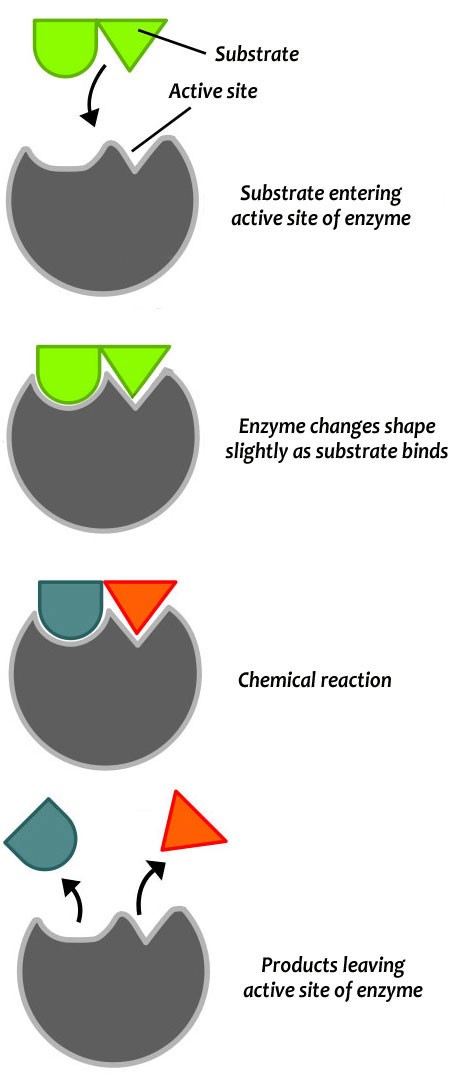
Enzymes have a pocket called an “active site”. The molecule that they are supposed to react with—called the “substrate”—fits into that pocket. A reaction then takes place between the enzyme and the substrate.
The reaction breaks or forms bonds between molecules, creating “products”: new molecules needed by the body. The enzyme itself is unchanged by the reaction, so it can go on to do the same job again and again.

Catabolism
Catabolism is the name for the series of chemical reactions that turn the food we eat into energy that can be used by our cells. Foods are generally in the form of proteins, lipids and carbohydrates. These molecules are polymers—long chains—which are too large to be used by our cells. The first part of catabolism is to break down these polymers into monomers: molecules that are small and simple enough to be used by cells in our bodies. This is done by enzymes in the digestive system.
Digestive enzymes called proteases break down proteins into amino acids. Enzymes called lipases break down lipids into fatty acids and glycerol. Carbohydrates are changed into simple sugars.
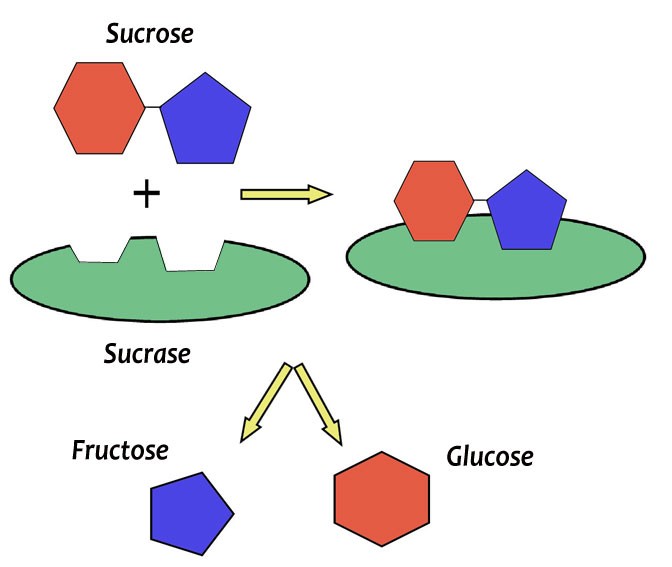
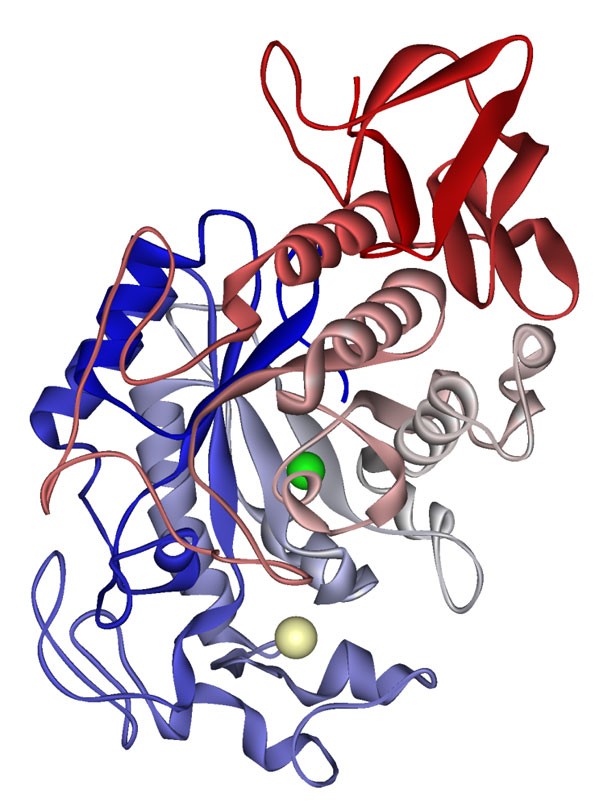
The most common carbohydrate in our diets is starch, which is found in foods such as potatoes, wheat and rice. The process of breaking down starch begins with the work of the enzyme amylase, which is made in the salivary glands and pancreas. Amylase reacts with starches to produce sugars (simpler carbohydrates) such as maltose, which are then broken down by enzymes such as maltase to produce the simplest sugar, glucose. Glucose is our cells’ key energy source. Glucose can also be obtained from sucrose (from sugar cane or sugar beet) and lactose (from milk).

Aerobic respiration
The bloodstream carries the simple nutrients supplied by the digestive system—amino acids, sugars, fatty acids and glycerol—to the body's cells. Catabolism continues as the cells convert these nutrients into a chemical called adenosine triphosphate (ATP). ATP is used to power nearly all cell activities.
To make ATP, a chemical reaction takes place in every cell in our body. For this reaction, called aerobic respiration, to take place, our cells need oxygen—which we get by breathing. Heat and the waste products carbon dioxide and water are also produced during the reaction. The heat is used to keep the body at the right temperature.
Anaerobic respiration
If muscle cells are working very hard, they may exhaust their supply of oxygen. This may happen when you are running fast and, even though you are breathing faster, you cannot take in enough oxygen to meet the needs of your muscles. Instead, a different chemical reaction, called anaerobic respiration (also known as fermentation), takes place. It does not require oxygen, but produces less energy than aerobic respiration. It also produces lactic acid.

You can feel the build-up of lactic acid in your muscles as a burning sensation. Extra oxygen is required to break down the lactic acid, which is why you need to take deep breaths at the end of a race. Once your body slows down, oxygen becomes available again for aerobic respiration.
Anabolism
Anabolism is the name for the process of building up large molecules in the body: carbohydrates, lipids, nucleic acids and proteins. These molecules form all our cells and carry from smaller ones in the body. The body needs to use energy, usually in the form of the ATP produced by cells, to do this. Whereas catabolism broke down molecules into smaller and smaller units, anabolism does the opposite.
Through a series of chemical reactions the body builds up more complex molecules: the carbohydrates, lipids and proteins that it needs to function. In turn, these molecules build up cells and tissues, replacing worn-out material. Our bones and muscles can then grow.
Metabolic rate
The metabolic rate is the speed at which all catabolic and anabolic reactions take place. It varies from person to person for a number of reasons: age, whether we are male or female, the amount of physical exercise we do, and the genes we have inherited from our parents.
Hormones, chemical "messengers" carried in the bloodstream, control the rate of metabolism in our bodies. The main hormone performing this role is called thyroxine, and is produced by the thyroid gland in the neck. The rate of release of thyroxine from the thyroid gland plays an important part in speeding up or slowing down the rate at which chemical reactions take place.
If there is a disorder of the thyroid gland so that it produces too much or too little thyroxine, the metabolic rate will become abnormal. Too much thyroxine (hyperthyroidism) leads to a high metabolic rate which may cause weight loss, diarrhoea and an abnormally high heart rate. Too little thyroxine (hypothyroidism) leads to a low metabolic rate which may cause weight gain, constipation and tiredness.

Metabolism is delicately balanced. If we take in less energy from food than we are using up, we will become thin as our body uses up our fat stores. If we take in more energy than we need, the body stores that energy, usually as body fat and we may become overweight.
Consultant: Kristina Routh
pics

Without in any way limiting Q-files Ltd’s exclusive rights under copyright, any use of this publication to “train” generative artificial intelligence (AI) technologies to generate text is expressly prohibited. Q-files Ltd reserves all rights to license use of this work for generative AI training and development of machine learning language models.